which lens has the most 3D POP?
p.156 #1which lens has the most 3D POP?
jojib wrote:
BTW, how are the fall colours there in your area?
So far so good around Lake Ontario
Almost there... but I'm still holding on to a touch of summer.
The first shot was taken in a greenhouse. I wanted to see how an ND filter would perform, and I was pleasantly surprised by how naturally the colors came out.
The second shot is all about that Zeiss-like / 3D Pop / Pop... whatever that's supposed to mean. Sorry, I just couldn't resist. To be honest, I was quite surprised myself. The funny thing is that my most interesting photos usually happen by accident. 😄

Greenhouse Flowers - Leica Camera AG LEICA M10-R Summilux 50mm ASPH II 1/500 ISO100 ND - Wide Open

On the patio - Leica Camera AG LEICA M10-R Summilux 50mm ASPH II 1/1000 ISO100 ND - Wide Open
BTW, how are the fall colours there in your area?
So far so good around Lake Ontario
Almost there... but I'm still holding on to a touch of summer.
The first shot was taken in a greenhouse. I wanted to see how an ND filter would perform, and I was pleasantly surprised by how naturally the colors came out.
The second shot is all about that Zeiss-like / 3D Pop / Pop... whatever that's supposed to mean. Sorry, I just couldn't resist. To be honest, I was quite surprised myself. The funny thing is that my most interesting photos usually happen by accident. 😄
© 4ALL 2026
Greenhouse Flowers - Leica Camera AG LEICA M10-R Summilux 50mm ASPH II 1/500 ISO100 ND - Wide Open
© 4ALL 2026
On the patio - Leica Camera AG LEICA M10-R Summilux 50mm ASPH II 1/1000 ISO100 ND - Wide Open
Oct 01, 2026 at 06:02 PM
p.156 #2which lens has the most 3D POP?
4ALL wrote:
So far so good around Lake OntarioAlmost there... but I'm still holding on to a touch of summer.
The first shot was taken in a greenhouse. I wanted to see how an ND filter would perform, and I was pleasantly surprised by how naturally the colors came out.
The second shot is all about that Zeiss-like / 3D Pop / Pop... whatever that's supposed to mean. Sorry, I just couldn't resist. To be honest, I was quite surprised myself. The funny thing is that my most interesting photos usually happen by accident. 😄
Those reds look very nice and the skin tones are very attractive.
jojib wrote
BTW, how are the fall colours there in your area?So far so good around Lake Ontario
The first shot was taken in a greenhouse. I wanted to see how an ND filter would perform, and I was pleasantly surprised by how naturally the colors came out.
The second shot is all about that Zeiss-like / 3D Pop / Pop... whatever that's supposed to mean. Sorry, I just couldn't resist. To be honest, I was quite surprised myself. The funny thing is that my most interesting photos usually happen by accident. 😄
Those reds look very nice and the skin tones are very attractive.
Oct 01, 2026 at 07:50 PM
p.156 #3which lens has the most 3D POP?
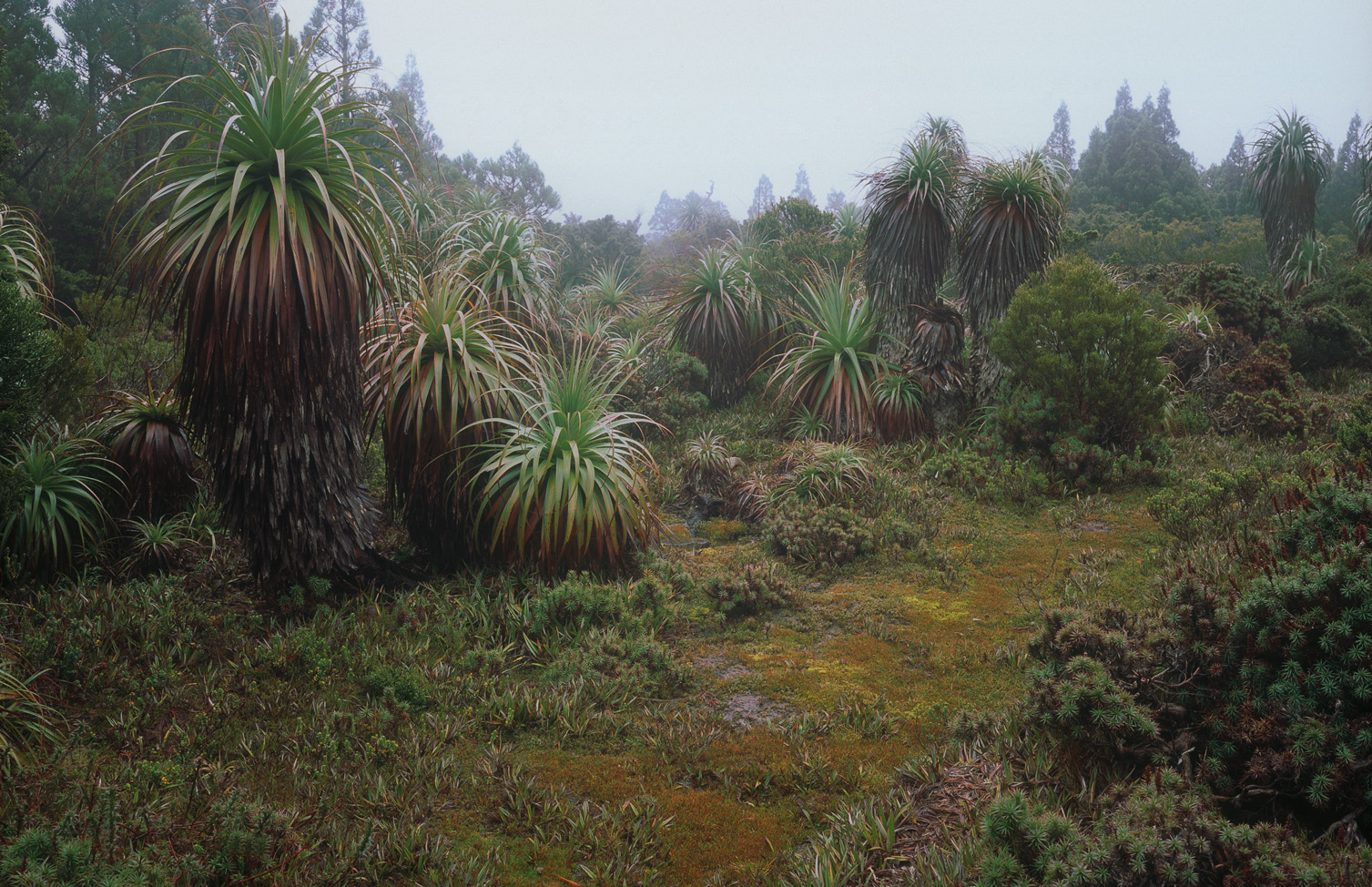
A couple from the film era. Color tone separation was always very important to my landscape work, providing depth and reality - dimensionality in other words. (Mamiya 7II 65/4)
tonal richness rare in digital
took ten minutes to burn off the leeches after this one
 |
||
 |
||
|
tonal richness rare in digital
|
||
 |
||
|
took ten minutes to burn off the leeches after this one
Oct 02, 2026 at 12:00 AM
p.156 #4which lens has the most 3D POP?
philip_pj wrote:
A couple from the film era. Color tone separation was always very important to my landscape work, providing depth and reality - dimensionality in other words. (Mamiya 7II 65/4)
Yes, the first one surprised me as well. This is actually a very strange subject...............
I deliberately chose shots like these because they show a person, which is usually the easiest way to judge sharpness, and also make it possible to see how the depth of field behaves and how much sharpness is retained within it.
I also chose to shoot wide open because that's generally the easiest way to create this effect, although there are exceptions to that, which I'll talk about later.
These aren't carefully planned photo-session images, but rather my personal snapshots. Anyone can look at them and see how the lens behaves, and that's the reason I shared them. The point wasn't whether the photos are beautiful or not, but to show what the lens is doing.
What prompted me to do this was a conversation I had recently with a bank employee. While we were waiting for a process to finish, he started making small talk and asked about my camera. He then showed me a photo on his phone that his brother had taken with a Sony.He couldn't really describe it, other than saying that it seemed to "pop out" of the image.
So I got curious and decided to dig back into my own archives. I still have material online dating back more than 20 years, from old galleries and even discussion groups that ran entirely through email... hard to believe nowadays. Time really does fly. 😊📷
1.
I remember very well that the first time I noticed this effect was with a Jupiter 3 lens. The images weren't particularly sharp, but somehow they looked beautiful in prints.
2.
A few years later I noticed something similar again with a Contax Planar 50mm f/1.7. It produced a very pleasing sense of depth and space, a genuinely three-dimensional look, but it didn't have quite the same "pop-out" effect that I had seen with the Jupiter.
3.
When I replaced the Planar 1.7 with the Planar 1.4, things became even more interesting. In some situations it produced an effect that, to my eyes, was even stronger than the Jupiter 3. At the time I didn't really know how to describe it.
A friend of mine, who has spent more than 40 years professionally scanning photographs and historical glass plates from all over the world, simply referred to it as the classic Zeiss look, or what he described as the characteristic image plasticity of Zeiss lenses.
Please keep in mind that these files haven't been touched in over two decades. They were scanned on a humble Arcus 1200 home scanner and processed with nothing more than Photoshop and the famous Fred Miranda plugins of the day. Thanks, Fred! 😊
Times changed, of course. In my opinion, the Sony F717 was one of the cameras that helped popularize what many people now call the "pop" or "pop-out" effect, the impression that the subject is literally jumping out of the frame. This look had been associated with Zeiss lenses, T coatings, and later the collaboration between Zeiss and Sony.*
Over the years I have owned cameras from many different brands. Personally, I never noticed this effect to the same degree with Olympus or Fuji, although I absolutely loved Fuji for its color rendering. I think improvements in sensor technology and display quality have also played a role. It's not sharpness itself that creates the impression of depth, but rather the way depth of field, local contrast, tonal transitions, and subject separation work together.
I've also noticed that I perceive this effect much less on a laptop screen than on a good 4K iMac display. The presentation medium matters more than many people realize.
And finally, I have a little treat that I'll share later. At some point Sony managed to produce this effect with a lens that, on paper, shouldn't really have been capable of it, and at apertures around f/2 or f/2.8. That one still makes me scratch my head. 😊📷
Just to be clear, everything I've written above reflects my personal observations and opinions based on my own photographs and my interpretation of the material I've collected over the years.

Bessa R3A Jupiter 3 sn. 53xxxx 50mm [email protected] Kodak Portra NC 400@320 Arcus 1200FM BW
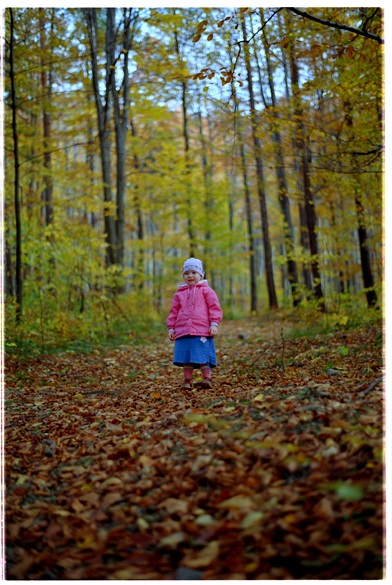
Contax Aria Planar 50mm [email protected]

Contax Aria Planar 50mm [email protected]
A couple from the film era. Color tone separation was always very important to my landscape work, providing depth and reality - dimensionality in other words. (Mamiya 7II 65/4)
Yes, the first one surprised me as well. This is actually a very strange subject...............
I deliberately chose shots like these because they show a person, which is usually the easiest way to judge sharpness, and also make it possible to see how the depth of field behaves and how much sharpness is retained within it.
I also chose to shoot wide open because that's generally the easiest way to create this effect, although there are exceptions to that, which I'll talk about later.
These aren't carefully planned photo-session images, but rather my personal snapshots. Anyone can look at them and see how the lens behaves, and that's the reason I shared them. The point wasn't whether the photos are beautiful or not, but to show what the lens is doing.
What prompted me to do this was a conversation I had recently with a bank employee. While we were waiting for a process to finish, he started making small talk and asked about my camera. He then showed me a photo on his phone that his brother had taken with a Sony.He couldn't really describe it, other than saying that it seemed to "pop out" of the image.
So I got curious and decided to dig back into my own archives. I still have material online dating back more than 20 years, from old galleries and even discussion groups that ran entirely through email... hard to believe nowadays. Time really does fly. 😊📷
1.
I remember very well that the first time I noticed this effect was with a Jupiter 3 lens. The images weren't particularly sharp, but somehow they looked beautiful in prints.
2.
A few years later I noticed something similar again with a Contax Planar 50mm f/1.7. It produced a very pleasing sense of depth and space, a genuinely three-dimensional look, but it didn't have quite the same "pop-out" effect that I had seen with the Jupiter.
3.
When I replaced the Planar 1.7 with the Planar 1.4, things became even more interesting. In some situations it produced an effect that, to my eyes, was even stronger than the Jupiter 3. At the time I didn't really know how to describe it.
A friend of mine, who has spent more than 40 years professionally scanning photographs and historical glass plates from all over the world, simply referred to it as the classic Zeiss look, or what he described as the characteristic image plasticity of Zeiss lenses.
Please keep in mind that these files haven't been touched in over two decades. They were scanned on a humble Arcus 1200 home scanner and processed with nothing more than Photoshop and the famous Fred Miranda plugins of the day. Thanks, Fred! 😊
Times changed, of course. In my opinion, the Sony F717 was one of the cameras that helped popularize what many people now call the "pop" or "pop-out" effect, the impression that the subject is literally jumping out of the frame. This look had been associated with Zeiss lenses, T coatings, and later the collaboration between Zeiss and Sony.*
Over the years I have owned cameras from many different brands. Personally, I never noticed this effect to the same degree with Olympus or Fuji, although I absolutely loved Fuji for its color rendering. I think improvements in sensor technology and display quality have also played a role. It's not sharpness itself that creates the impression of depth, but rather the way depth of field, local contrast, tonal transitions, and subject separation work together.
I've also noticed that I perceive this effect much less on a laptop screen than on a good 4K iMac display. The presentation medium matters more than many people realize.
And finally, I have a little treat that I'll share later. At some point Sony managed to produce this effect with a lens that, on paper, shouldn't really have been capable of it, and at apertures around f/2 or f/2.8. That one still makes me scratch my head. 😊📷
Just to be clear, everything I've written above reflects my personal observations and opinions based on my own photographs and my interpretation of the material I've collected over the years.
© 4ALL 2026
Bessa R3A Jupiter 3 sn. 53xxxx 50mm [email protected] Kodak Portra NC 400@320 Arcus 1200FM BW
© 4ALL 2026
Contax Aria Planar 50mm [email protected]
Contax Aria Planar 50mm [email protected]
Oct 02, 2026 at 06:27 AM
p.156 #5which lens has the most 3D POP?
I absolutely love the second picture! Perfect composition for showing the 3D pop not to mention the adorable subject in her colorful outfit!
Oct 02, 2026 at 06:53 AM
p.156 #6which lens has the most 3D POP?
ruthenium wrote:
A word in support of Dan - I don't think this is rude, and I share the feeling expressed above.
I am all for avoiding offending others, but there are limits to this generosity, and maybe a poorly composed or a poorly developed image posted in a technical thread should be rightly noted (in a non-personal way).
To be clear, my post wasn’t about the aesthetic qualities of the photographs offered as proof that some lens has “pop.” It is perfectly valid to use “clinical” photographs to demonstrate some technical point.
(When it comes to calling out that aspect of a photo offered to demonstrate something technical, I don’t think I’ve ever “gone there.”)
My point was that the photographs in question (and I’ll let others figure out which ones they might be) simply don’t “pop,” either at all or in a way that isn’t explained by the other visual aspects of the images that I and others have described in this thread.
gdanmitchell wrote
Sometimes I think that the people posting examples here that supposedly demonstrate the outstanding “pop” of this or that lens are actually engaged in some kind of comedy routine at the expense of gullible FM members. ;-)I am all for avoiding offending others, but there are limits to this generosity, and maybe a poorly composed or a poorly developed image posted in a technical thread should be rightly noted (in a non-personal way).
To be clear, my post wasn’t about the aesthetic qualities of the photographs offered as proof that some lens has “pop.” It is perfectly valid to use “clinical” photographs to demonstrate some technical point.
(When it comes to calling out that aspect of a photo offered to demonstrate something technical, I don’t think I’ve ever “gone there.”)
My point was that the photographs in question (and I’ll let others figure out which ones they might be) simply don’t “pop,” either at all or in a way that isn’t explained by the other visual aspects of the images that I and others have described in this thread.
Oct 02, 2026 at 08:37 AM
p.156 #7which lens has the most 3D POP?
gdanmitchell wrote:
A word in support of Dan - I don't think this is rude, and I share the feeling expressed above.
I am all for avoiding offending others, but there are limits to this generosity, and maybe a poorly composed or a poorly developed image posted in a technical thread should be rightly noted (in a non-personal way).To be clear, my post wasn’t about the aesthetic qualities of the photographs offered as proof that some lens has “pop.” It is perfectly valid to use “clinical” photographs to demonstrate some technical point.
(When it comes to calling out that aspect of a photo offered to demonstrate something technical, I don’t think I’ve ever “gone there.”)
My point was that the photographs in question (and I’ll let others figure out which ones they might be) simply don’t “pop,” either at all or in a way that isn’t explained by the other visual aspects of the images that I and others have...Show more →
Since things like “pop” or other aesthetic features have no right or wrong answer…they are all subjective…how can you have such a definitive view.
ruthenium wrote
gdanmitchell wrote
Sometimes I think that the people posting examples here that supposedly demonstrate the outstanding “pop” of this or that lens are actually engaged in some kind of comedy routine at the expense of gullible FM members. ;-)I am all for avoiding offending others, but there are limits to this generosity, and maybe a poorly composed or a poorly developed image posted in a technical thread should be rightly noted (in a non-personal way).
(When it comes to calling out that aspect of a photo offered to demonstrate something technical, I don’t think I’ve ever “gone there.”)
My point was that the photographs in question (and I’ll let others figure out which ones they might be) simply don’t “pop,” either at all or in a way that isn’t explained by the other visual aspects of the images that I and others have...Show more →
Since things like “pop” or other aesthetic features have no right or wrong answer…they are all subjective…how can you have such a definitive view.
Oct 02, 2026 at 09:15 AM
p.156 #8which lens has the most 3D POP?
I would be a little cautious about following that line of reasoning and reducing everything to 3D, the Zeiss look, or "Pop." These concepts have evolved over time and are still interpreted differently by different people. In many ways, they are simplifications of a much more complex visual experience.
For example, when discussing photographs made with telephoto lenses, it is often difficult to speak about the three-dimensional appearance of the subject itself, because perspective compression tends to flatten facial features and shapes. Yet images taken with telephoto lenses can still produce a strong sense of depth, separation, or what some people would describe as "Pop".
In fact, if we define "Pop" purely as 3D, many classic telephoto portraits would struggle to qualify, since the subjects often appear relatively flat due to compressed perspective. Nevertheless, those same images can still create a remarkable impression of depth and subject separation through tonal transitions, local contrast, rendering, and the overall visual impression.
That is one of the reasons why I think these concepts are broader than simply "3D" and why they continue to be interpreted in different ways.
I won't revisit whether someone sees it or does not see it, as that point has already been discussed many times. However, I would be cautious about positioning oneself as the final judge of what is and is not "pop." The topic has been debated for decades and remains open to interpretation. What one photographer attributes to perspective, another may associate with rendering, tonal transitions, micro-contrast, subject separation, or simply the overall visual impression.
For that reason, I believe the most productive approach is simply to present examples and allow people to draw their own conclusions rather than trying to establish a single definitive definition of what is and is not "3D Pop."
Just my personal opinion. 😊📷
Oct 02, 2026 at 09:17 AM
p.156 #9which lens has the most 3D POP?
I have yet to meet an AF f/1.2 that I didn't like :-)

SONY ILCE-7M5
1/5000s f/1.2 at 35.0mm iso100

SONY ILCE-7M5
1/4000s f/1.2 at 35.0mm iso100

Canon EOS R6 Mark II
1/640s f/1.2 at 50.0mm iso100
SONY ILCE-7M5
1/5000s f/1.2 at 35.0mm iso100
SONY ILCE-7M5
1/4000s f/1.2 at 35.0mm iso100
Canon EOS R6 Mark II
1/640s f/1.2 at 50.0mm iso100
Oct 02, 2026 at 09:27 AM
p.156 #10which lens has the most 3D POP?
As others are saying, even though this thread started solely on "3D pop" (which no one can fully define, let alone validate), the thread has become more of a place to share photos where to one person's eye...they see something special. There is banter around whether other people think it does (or doesn't), but there are very few threads here that can lead to an absolutely "decided" end.
I often enjoy seeing "depth" or dimensionality in shots, even if don't know whether anyone else sees it. Like this shot which was taken at f/11. Hard to say it has pop, but I still see a depth that I'm drawn to. Maybe the lens plays some part, maybe just a small part (maybe none). And of course, it's possible no one else even sees it.

But ideally it shouldn't be a thread where people get "riled up". I doubt anyone posting samples here is expecting that.
I often enjoy seeing "depth" or dimensionality in shots, even if don't know whether anyone else sees it. Like this shot which was taken at f/11. Hard to say it has pop, but I still see a depth that I'm drawn to. Maybe the lens plays some part, maybe just a small part (maybe none). And of course, it's possible no one else even sees it.
But ideally it shouldn't be a thread where people get "riled up". I doubt anyone posting samples here is expecting that.
Oct 02, 2026 at 09:30 AM
|
p.156 #11which lens has the most 3D POP?
tsdevine wrote:
As others are saying, even though this thread started solely on "3D pop" (which no one can fully define, let alone validate), the thread has become more of a place to share photos where to one person's eye...they see something special. There is banter around whether other people think it does (or doesn't), but there are very few threads here that can lead to an absolutely "decided" end.
In many ways, this is actually a perfect example of why we should be careful about declaring that something is, or is not, a particular effect based solely on our own definition.
The discussion has evolved over the years and continues to evolve today. My own understanding has certainly changed. For a long time, I thought this was primarily the domain of lenses used wide open, where shallow depth of field naturally enhances subject separation. Over time, however, I've come to realize that the phenomenon is much broader than that.
In fact, your photograph is one of the best examples. I would never have expected to see such a strong impression of depth, separation, and visual presence from an image shot at f/11, yet that is exactly what makes it so fascinating to me. It challenges some of the assumptions I used to have and shows that these effects cannot always be reduced to aperture, depth of field, or a single technical explanation.
That is precisely why I prefer to keep an open mind and look at examples rather than rely on rigid definitions. To me, your image is a great example of how this topic remains interesting and open to interpretation.
Oct 02, 2026 at 09:39 AM
p.156 #12which lens has the most 3D POP?
4ALL wrote:
In many ways, this is actually a perfect example of why we should be careful about declaring that something is, or is not, a particular effect based solely on our own definition.
The discussion has evolved over the years and continues to evolve today. My own understanding has certainly changed. For a long time, I thought this was primarily the domain of lenses used wide open, where shallow depth of field naturally enhances subject separation. Over time, however, I've come to realize that the phenomenon is much broader than that.
In fact, your photograph is one of the best examples. I would...Show more →
Sometimes I see things when people posts shots, sometimes I don't. I do believe people posting here do see something in the shot they are posting. Even if someone were yanking our chains, a majority of us would say "nah...don't really see it", not in an offensive way.
tsdevine wrote
As others are saying, even though this thread started solely on "3D pop" (which no one can fully define, let alone validate), the thread has become more of a place to share photos where to one person's eye...they see something special. There is banter around whether other people think it does (or doesn't), but there are very few threads here that can lead to an absolutely "decided" end.The discussion has evolved over the years and continues to evolve today. My own understanding has certainly changed. For a long time, I thought this was primarily the domain of lenses used wide open, where shallow depth of field naturally enhances subject separation. Over time, however, I've come to realize that the phenomenon is much broader than that.
In fact, your photograph is one of the best examples. I would...Show more →
Sometimes I see things when people posts shots, sometimes I don't. I do believe people posting here do see something in the shot they are posting. Even if someone were yanking our chains, a majority of us would say "nah...don't really see it", not in an offensive way.
Oct 02, 2026 at 10:31 AM
p.156 #13which lens has the most 3D POP?
tsdevine wrote:
In many ways, this is actually a perfect example of why we should be careful about declaring that something is, or is not, a particular effect based solely on our own definition.
The discussion has evolved over the years and continues to evolve today. My own understanding has certainly changed. For a long time, I thought this was primarily the domain of lenses used wide open, where shallow depth of field naturally enhances subject separation. Over time, however, I've come to realize that the phenomenon is much broader than that.
In fact, your photograph is one of the best examples. I would never have expected to see such a strong impression of depth, separation, and visual presence from an image shot at f/11, yet that is exactly what makes it so fascinating to me. It challenges some of the assumptions I used to have and shows that these effects cannot always be reduced to aperture, depth of field, or a single technical explanation.
That is precisely why I prefer to keep an open mind and look at examples rather than rely on rigid definitions. To me, your image is a great example of how this topic remains interesting and open to interpretation.Sometimes I see things when people posts shots, sometimes I don't. I do believe people posting here do see something in the shot they are posting. Even if someone were yanking our chains, a majority of us would say "nah...don't really see it", not in an offensive way.
I have to commend you for a job well done. These landscape shots like the one you showed illustrating the 3D effect is very hard to compose. Also, to come up with great lighting as well.
4ALL wrote
tsdevine wrote
As others are saying, even though this thread started solely on "3D pop" (which no one can fully define, let alone validate), the thread has become more of a place to share photos where to one person's eye...they see something special. There is banter around whether other people think it does (or doesn't), but there are very few threads here that can lead to an absolutely "decided" end.The discussion has evolved over the years and continues to evolve today. My own understanding has certainly changed. For a long time, I thought this was primarily the domain of lenses used wide open, where shallow depth of field naturally enhances subject separation. Over time, however, I've come to realize that the phenomenon is much broader than that.
In fact, your photograph is one of the best examples. I would never have expected to see such a strong impression of depth, separation, and visual presence from an image shot at f/11, yet that is exactly what makes it so fascinating to me. It challenges some of the assumptions I used to have and shows that these effects cannot always be reduced to aperture, depth of field, or a single technical explanation.
That is precisely why I prefer to keep an open mind and look at examples rather than rely on rigid definitions. To me, your image is a great example of how this topic remains interesting and open to interpretation.
I have to commend you for a job well done. These landscape shots like the one you showed illustrating the 3D effect is very hard to compose. Also, to come up with great lighting as well.
Oct 02, 2026 at 10:41 AM
p.156 #14which lens has the most 3D POP?
I wish the examples posted here were more selective, e.g., one per post, or possibly two, but not a series of several. Also, it would be nice if the examples were not repetitive.
This is not a general thread for posting pictures, and it should not be used as such. Dumping a series of repetitive pictures simply because the poster likes them is o.k. in a general picture thread, but this makes this particular thread less interesting and useful.
Furthermore, it is reasonable to expect the examples posted here to be of reasonable size, in terms of the number of pixels. Super small jpegs are not the best way of posting in a technical thread.
The last, it is reasonable to expect that sufficient technical information should be included with the posted images. This is useful to know whether they originate straight out of camera, or have gone through some processing. The basic information on the SS, aperture, camera, and lens can be expected.
Oct 02, 2026 at 11:00 AM
p.156 #15which lens has the most 3D POP?
tsdevine wrote:
Sometimes I see things when people posts shots, sometimes I don't. I do believe people posting here do see something in the shot they are posting. Even if someone were yanking our chains, a majority of us would say "nah...don't really see it", not in an offensive way.
Personally, I often find that the first time I see an image with this kind of effect, my reaction is simply, "Wow!" Later, after looking at the same photograph repeatedly, that effect may seem to diminish. The initial sense of surprise fades, but I still recognize and appreciate the qualities that first drew me to the image.
That is probably a bit of an off-topic observation, but I sometimes wonder whether part of this has to do with how our brains process visual information. Of course, this is only my personal impression, but it seems that certain visual cues can trigger an immediate emotional response, whereas repeated viewing may lead us to analyze an image more consciously rather than react to it instinctively.
One simple example is the classic illusion of red text on a black background, or vice versa. Under certain conditions, some people perceive a subtle sense of depth or a stereoscopic effect even though the image itself is completely flat. That alone shows how strongly perception can be influenced by the way our visual system and brain interpret what we are seeing.
I also own a Fuji 3D camera and have always enjoyed using it. By modern standards, the 5 MP files are nothing special, but the stereoscopic effect on the camera's display, or when viewed on a proper 3D television, can be absolutely astonishing. At the same time, not everyone enjoys that kind of image, and not everyone perceives the effect equally well, which again reminds us that visual perception can vary quite a lot from one person to another.
Oct 02, 2026 at 11:09 AM


p.156 #17which lens has the most 3D POP?
4ALL wrote:
I would be a little cautious about following that line of reasoning and reducing everything to 3D, the Zeiss look, or "Pop." These concepts have evolved over time and are still interpreted differently by different people. In many ways, they are simplifications of a much more complex visual experience.
For example, when discussing photographs made with telephoto lenses, it is often difficult to speak about the three-dimensional appearance of the subject itself, because perspective compression tends to flatten facial features and shapes. Yet images taken with telephoto lenses can still produce a strong sense of depth, separation, or what some people...Show more →
+1 that it is not a consensus situation.
That said, my perspective of 3D-(ishness) is that of dimensionality / spatial perspectives associated with depth transitions.
"pop" then is the abrupt, uber rapid transition that is more rapid than what one considers to be a "normal" rate of transition. If we take the word as it is generally defined / used, we see applications for a "pop" gun, "pop" goes the weasel, "pop"corn ... all things that have an abruptness to them that occurs with a degree of suddenness. I have proposed this numerous times over the years, and never any takers, only persistent rejectors that it cannot be defined. Ummm, well, ummm ...
To that end, (imo) we can have spatial depth that is gradual, uniform in transition(s) and we can have spatial transitions that are non-linear, and thus have areas that are MORE rapid than other areas within the image. In that regard, we can transitions that "pop". Such transitions can be attributes of focal acuity, aberration correction, contrast levels, or any other attribute that can be modulated. The rate of change (imo) is what is being referred to when folks talk about "pop" ... I'm quite certain that folks can noodle a bevy / host of applications where the term "pop" has been used to infer such abruptness / rate of change / suddenness (i.e. "pops" around the corner).
For those who ardently REFUSE to even TRY to associate an understanding to the definition of the term, they'll continue to stick to their guns of "not possible" to define. I'm of the perspective that there are sufficiently intelligent members here that if that collective effort were to be well applied, rather than the games of "can't be done" ... we might actually achieve what some say can't be done. I've proffered my .02 ... feel free to offer up other suggestions ... just leave the "can't be done" conversation at home, it gets old / tiresome that the best some folks can come up with is a refusal to even try, or play sophomoric snarky games about it.
Tough nut to crack (getting consensus, etc.) ... okay, sure, why not. The talent pool of FM is more than capable of cracking it, if we actually work toward doing so vs. incessant impossible / refusal banter (imo). Say you "can" or say you "can't" ... either way, you might be right about yourself, especially when refusal to try is baked in to someone's DNA.
Oct 02, 2026 at 07:42 PM
p.156 #18which lens has the most 3D POP?
4ALL wrote:
I would be a little cautious about following that line of reasoning and reducing everything to 3D, the Zeiss look, or "Pop." These concepts have evolved over time and are still interpreted differently by different people. In many ways, they are simplifications of a much more complex visual experience.
For example, when discussing photographs made with telephoto lenses, it is often difficult to speak about the three-dimensional appearance of the subject itself, because perspective compression tends to flatten facial features and shapes. Yet images taken with telephoto lenses can still produce a strong sense of depth, separation, or what some people...Show more →
I agree with the above. Shooting with a fast 85mm or 135mm is difficult to do 3D with because like you said due to the compressed perspective. Personally I would not chase the '3D per se look'. I don't really care if my images are just two dimensional with lots of background separation. One thing though sometimes I want the background to be more readable and in the second picture I thought f/2 was enough (should have gone f/4 or f/5.6)---because when I surveyed the scene I thought I saw the CN Tower but it's gone .

Canon EOS R6 Mark II
1/2500s f/1.2 at 85.0mm iso100

Canon EOS R6 Mark II
1/1000s f/2.0 at 85.0mm iso100
I would be a little cautious about following that line of reasoning and reducing everything to 3D, the Zeiss look, or "Pop." These concepts have evolved over time and are still interpreted differently by different people. In many ways, they are simplifications of a much more complex visual experience.
For example, when discussing photographs made with telephoto lenses, it is often difficult to speak about the three-dimensional appearance of the subject itself, because perspective compression tends to flatten facial features and shapes. Yet images taken with telephoto lenses can still produce a strong sense of depth, separation, or what some people...Show more →
I agree with the above. Shooting with a fast 85mm or 135mm is difficult to do 3D with because like you said due to the compressed perspective. Personally I would not chase the '3D per se look'. I don't really care if my images are just two dimensional with lots of background separation. One thing though sometimes I want the background to be more readable and in the second picture I thought f/2 was enough (should have gone f/4 or f/5.6)---because when I surveyed the scene I thought I saw the CN Tower but it's gone
.Canon EOS R6 Mark II
1/2500s f/1.2 at 85.0mm iso100
Canon EOS R6 Mark II
1/1000s f/2.0 at 85.0mm iso100
Oct 02, 2026 at 08:34 PM
p.156 #19which lens has the most 3D POP?
@jojib
Are you aware that EFCS causes asymmetric bokeh at high shutter speeds and large apertures? Almost all of your 35/1.2 shots have wonky bokeh because of this. To get rid of it, just use mechanical shutter when using fast lenses wide open in daylight.
Edit: The images also look very compressed with a ton of JPG artefacts even though the file sizes are reasonable. Not sure what's up with that...
Personally I can't see any 3D if it's too obvious that I look at an image, which is the case because of the above.
Oct 03, 2026 at 02:43 AM
p.156 #20which lens has the most 3D POP?
No I shot mostly with mechanical shutter as this subject prefers to hear the click. I think that’s probably because of pbase as the bokeh looks as smooth as a Steph Curry jump shot to me :—)
Oct 03, 2026 at 03:12 AM