This topic is in the 2025 archive. You can read it and like its posts here. It is read only.
Archive 2025Voigtlander VM 28mm f/2.0 APO

p.5 #1Voigtlander VM 28mm f/2.0 APO
Steve Spencer wrote:
The tricky part is how much of that is visible in real world images, e.g the significant drop in the tangential line for the Leica towards the corners vs the sagittal line staying on an extreme high level throughout the frame.Well this isn't really a matter of opinion. Even if they are both measured, they aren't measured in the same way, which makes them not comparable.I'd suggest they are not "reported" the same. That doesn't mean the information contained isn't comparable. You just have to use your noodle to understand the difference in expectation of 20 vs. 30 ... you know, that 30 is gonna perform closer to 40 and 20 is gonna perform closer to 10, in your expectation / interpretation. Getting bent by the reporting for 20 vs. 30 ... no reason to toss the baby out with the bathwater. 
That's kinda like saying a ruler that is marked in 1/8ths vs. a ruler marked in 1/10ths doesn't let you understand how long something is, because one is reporting a different incremement. Yet, if you have a 3 inch item, they both can let you know it's three inches ... or a smidge under / over 3 inches, etc.Well, until Leica tells us a lot more about how they measure their MTFs (and even make it clear they whether they measure and then adjust them in som way) I don't think they are comparable. Keep in mind, MTFs are a complex calculation with many decisions that have to be made. These include things like what wavelength of light you use, and whether you refocus for the corners and mid frame when test. Things that can make a big difference in the percent contrast. If those things are done the same way, then they graphs are comparable even if you can interpolate for different lp/mm.I'm quite certain that if we were to go through the archives ... we'd find somewhere that I took up a similar position that I used to (and still can be) splittin' hairs similarly. But, I've gotten to a place where I realize that the margin of difference between 0.78 vs. 0.81 isn't gonna make / break things. Seeing a straight line, with a skinny / none birdmouth ... vs. a diagonal line with a big dip, strong crossover or gaping birdmouth ... imo, that tells the story more importantly than worrying about test methods and reporting variance. The nature of beast is still presented well enough that I get a good vibe that it's gonna be pretty darn "tight and right".
As to the 5 ... does it really matter if it is 99.2 or 98.6?Kent,
I know you are a scientist. As such you know that what you are talking about in this post is a question of precision. You are right we have way more precision for MTFs than we need and focus on very precise measurements is not relevant.
What I am talking about is not precision, but making inferences from evidence. In science we do not make inferences when there are competing compelling hypotheses for the results, and there are competing compelling hypotheses when we compare Zeiss (and or Cosina) MTF graphs with Leica MTF graphs. The competing hypotheses are that any...Show more →
Steve ... I hear ya. I'm just sayin' the proof is in the pudding, and the recipe (yeah, I know) card says it's gonna be yummy.
Aunt Jo's and Grandma Kate's recipe's aren't the same ... One uses a measuring cup, the other just doles it out "to taste" ... but, dang they both taste good.
The Voigt looks like it'll be yummy (in the APO realm).
RustyBug wrote
Steve Spencer wrote
RustyBug wrote
Steve Spencer wrote
fjablo wrote
Imo they are as comparable as they can be. Both are measured, not theoretical, and both include 40 lp/mm lines.The tricky part is how much of that is visible in real world images, e.g the significant drop in the tangential line for the Leica towards the corners vs the sagittal line staying on an extreme high level throughout the frame.
That's kinda like saying a ruler that is marked in 1/8ths vs. a ruler marked in 1/10ths doesn't let you understand how long something is, because one is reporting a different incremement. Yet, if you have a 3 inch item, they both can let you know it's three inches ... or a smidge under / over 3 inches, etc.
As to the 5 ... does it really matter if it is 99.2 or 98.6?
I know you are a scientist. As such you know that what you are talking about in this post is a question of precision. You are right we have way more precision for MTFs than we need and focus on very precise measurements is not relevant.
What I am talking about is not precision, but making inferences from evidence. In science we do not make inferences when there are competing compelling hypotheses for the results, and there are competing compelling hypotheses when we compare Zeiss (and or Cosina) MTF graphs with Leica MTF graphs. The competing hypotheses are that any...Show more →
Steve ... I hear ya. I'm just sayin' the proof is in the pudding, and the recipe (yeah, I know) card says it's gonna be yummy.
Aunt Jo's and Grandma Kate's recipe's aren't the same ... One uses a measuring cup, the other just doles it out "to taste" ... but, dang they both taste good.
The Voigt looks like it'll be yummy (in the APO realm).
Jun 13, 2025 at 05:57 AM
p.5 #2Voigtlander VM 28mm f/2.0 APO
I guess Leica and Cosina plots were acquired at the same focusing distance (infinity?). Otherwise, data aren't comparable.
Under this hypothesis, if we look at the MTF plots of the VM APO 28/2 and Leica SL 28/2 Apo we note that the Leica lens seems optimized at f/2, and shows more astigmatism, particularly in the corners.
We don't have the f/4 MTF plot of the Leica 28/2, so we don't know if it is diffraction limited at that aperture. The VM Apo shows slightly higher MTF values at f/4, but with a little bit more astigmatism.
Anyway, both lenses seem outstanding.
Jun 13, 2025 at 06:01 AM
p.5 #3Voigtlander VM 28mm f/2.0 APO
Ripolini wrote:
Anyway, both lenses seem outstanding.
Yup.
Anyway, both lenses seem outstanding.
Yup.
Jun 13, 2025 at 06:03 AM
p.5 #4Voigtlander VM 28mm f/2.0 APO
Juha Kannisto wrote:
Today Cosina announced the new 28/2 APO-Lanthar VM officially for July release (specific date not yet given):
English Product Page:
https://www.cosina.co.jp/voigtlander/en/vm-mount/apo-lanthar-28mm-f2-aspherical/
Japanese Product Page:
https://www.cosina.co.jp/voigtlander/vm-mount/apo-lanthar-28mm-f2-aspherical/
Official Japan Price set by Cosina is 135K yen (before tax).
Map Camera has it at 126720 JPY (including tax): https://www.mapcamera.com/item/4530076132917
Thanks for posting, Juha. I got the alert email from Cosina about this release too.
From the published MTF and overall size, it's pretty incredible what Cosina managed to pull off with this one. Performance looks on par with, if not better than, the excellent Voigtlander 35mm and 50mm f2 APO-Lanthar.
There is really no competition for this 28mm from Leica or anybody else, and if there were, it would cost a fortune. Comparing it to the massive SL 28mm f/2 APO just does not feel like a fair comparison.
I wish Cosina would also offer a Silver anodized version like they did with the CV 90/2 APO-Ultron.
Jun 13, 2025 at 09:28 AM
p.5 #5Voigtlander VM 28mm f/2.0 APO
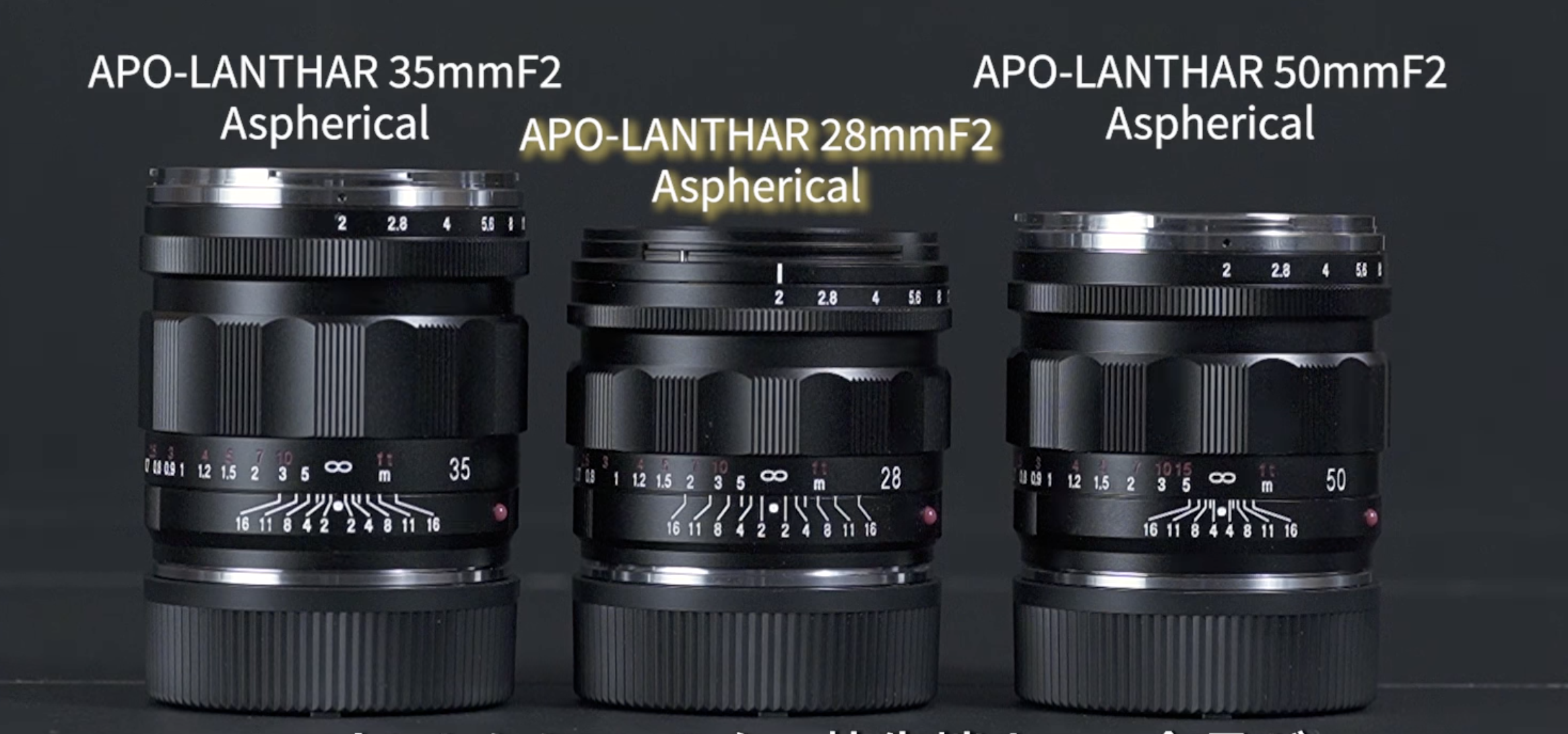
I have a feeling Cosina may update the current 35 and 50mm f/2 APO-Lanthar lenses with a black nose to match the new 28mm.
 |
||
 |
||
|
Jun 13, 2025 at 09:33 AM
p.5 #6Voigtlander VM 28mm f/2.0 APO
Any chance that we will see the 28mm Apo in e-mount soon?
Im longing for this so much!
Im longing for this so much!
Jun 13, 2025 at 10:04 AM
p.5 #7Voigtlander VM 28mm f/2.0 APO
Knut. wrote:
Any chance that we will see the 28mm Apo in e-mount soon?
Im longing for this so much!
It's speculation but please see Juha's comment here on the previous page.
I agree this would be a good candidate for mirrorless because its high performance demands optimization for each brand's sensor stack.
RustyBug wrote:
Seeing a straight line, with a skinny / none birdmouth ... vs. a diagonal line with a big dip, strong crossover or gaping birdmouth ... imo, that tells the story more importantly than worrying about test methods and reporting variance. The nature of beast is still presented well enough that I get a good vibe that it's gonna be pretty darn "tight and right".
I agree that the MTFs can at least give us an impression about certain characteristics. That it's generally at 40lp/mm "tight and right" means it will be very sharp, at least on my measly 24MP M 240.
Edited on Jun 13, 2025 at 06:07 PM · View previous versions
Jun 13, 2025 at 12:24 PM
p.5 #8Voigtlander VM 28mm f/2.0 APO
Fred Miranda wrote:
I have a feeling Cosina may update the current 35 and 50mm f/2 APO-Lanthar lenses with a black nose to match the new 28mm.
....and, hopefully, reducing their lenght by, say, half an inch....In my mind (at least), the widest FL should be the biggest.
I have a feeling Cosina may update the current 35 and 50mm f/2 APO-Lanthar lenses with a black nose to match the new 28mm.
....and, hopefully, reducing their lenght by, say, half an inch....In my mind (at least), the widest FL should be the biggest.
Jun 13, 2025 at 12:30 PM
p.5 #9Voigtlander VM 28mm f/2.0 APO
Length reduction would be helpful with reducing viewfinder obstruction but I'd also appreciate skinnier lenses. But it would require an entire optical redesign. If you look at the front element diameter and the amount of 'dead space' between it and the filter ring, it seems like there is room for improvement at least when addressing girth. Cosina is probably being conservative with a 49mm thread to minimize vignetting, but my 28 Lux (one stop faster) is also 49mm and I have no issues using a non-slim polarizer on it. The current 'chunky' lens body design is nicer for mirrorless where viewfinder obstruction is a non-issue.
Knut. wrote:
Any chance that we will see the 28mm Apo in e-mount soon?
Im longing for this so much!
Check out the hood design:
https://www.cosina.co.jp/wp/wp-content/uploads/2025/06/VM-28_20-APO-01-sdfrew.jpg
It's a totally non-RF design that just screams mirrorless to me.
TBH, as an M shooter (for this kind of lens anyway), the hood is a bit of a disappointment because it does nothing to mitigate viewfinder encroachment, which the wide girth of this lens will certainly cause.
Edited on Jun 13, 2025 at 12:48 PM · View previous versions
Jun 13, 2025 at 12:47 PM
p.5 #10Voigtlander VM 28mm f/2.0 APO
Wish lower price than 35/2 APO or 50/2 APO
Jun 13, 2025 at 12:47 PM
p.5 #11Voigtlander VM 28mm f/2.0 APO
Probably have to wait 1-2 years for the early adopter premium to ease and it becomes eligible for seasonal discounts. Considering how the recent f/1.2 series refresh are priced and where this lens sits price-wise in Japan, it'll likely be USD 1,200-1,300.
Jun 13, 2025 at 12:58 PM
p.5 #12Voigtlander VM 28mm f/2.0 APO
rscheffler wrote:
Length reduction would be helpful with reducing viewfinder obstruction but I'd also appreciate skinnier lenses. But it would require an entire optical redesign. If you look at the front element diameter and the amount of 'dead space' between it and the filter ring, it seems like there is room for improvement at least when addressing girth. Cosina is probably being conservative with a 49mm thread to minimize vignetting, but my 28 Lux (one stop faster) is also 49mm and I have no issues using a non-slim polarizer on it. The current 'chunky' lens body design is nicer for mirrorless where...Show more →
Im longing for this so much!
That hood design make no sense to me. Perhaps they will sell a separate hood with rangefinder windows.
Length reduction would be helpful with reducing viewfinder obstruction but I'd also appreciate skinnier lenses. But it would require an entire optical redesign. If you look at the front element diameter and the amount of 'dead space' between it and the filter ring, it seems like there is room for improvement at least when addressing girth. Cosina is probably being conservative with a 49mm thread to minimize vignetting, but my 28 Lux (one stop faster) is also 49mm and I have no issues using a non-slim polarizer on it. The current 'chunky' lens body design is nicer for mirrorless where...Show more →
Knut. wrote
Any chance that we will see the 28mm Apo in e-mount soon?Im longing for this so much!
That hood design make no sense to me. Perhaps they will sell a separate hood with rangefinder windows.
Jun 13, 2025 at 03:31 PM
p.5 #13Voigtlander VM 28mm f/2.0 APO
Fred Miranda wrote:
Comparing it to the massive SL 28mm f/2 APO just does not feel like a fair comparison.
Imo, the SL series is a medium format optic (i.e. Leica suggests it performs to that level, etc.) from the S series (ethos) ... with an L mount ... thus, the SL designator. So, yup ... a honkin' massive amount of glass from the SL vs. a FF rangefinder sizes optic should be taken with a grain of salt regarding realistic performance differences / expectations.
Jun 13, 2025 at 06:54 PM
p.5 #14Voigtlander VM 28mm f/2.0 APO
RustyBug wrote:
Imo, the SL series is a medium format optic (i.e. Leica suggests it performs to that level, etc.) from the S series ... with an L mount ... thus, the SL designator. So, yup ... a honkin' massive amount of glass from the SL vs. a FF rangefinder sizes optic should be taken with a grain of salt regarding realistic performance differences / expectations.
Agreed, it makes more sense to compare M lenses with other M lenses, and L with L.
I should be testing the new CV 28mm f/2 APO-Lanthar soon, and if real-world performance matches the published MTF charts, it might end up being the best 28mm M-mount lens available.
Fred Miranda wrote
Comparing it to the massive SL 28mm f/2 APO just does not feel like a fair comparison.Agreed, it makes more sense to compare M lenses with other M lenses, and L with L.
I should be testing the new CV 28mm f/2 APO-Lanthar soon, and if real-world performance matches the published MTF charts, it might end up being the best 28mm M-mount lens available.
Jun 13, 2025 at 06:59 PM
p.5 #15Voigtlander VM 28mm f/2.0 APO
RustyBug wrote:
Imo, the SL series is a medium format optic (i.e. Leica suggests it performs to that level, etc.) from the S series (ethos) ... with an L mount ... thus, the SL designator. So, yup ... a honkin' massive amount of glass from the SL vs. a FF rangefinder sizes optic should be taken with a grain of salt regarding realistic performance differences / expectations.
I think the SL APO primes are possibly f/1.4-capable designs that have been 'throttled' to f/2 to optimize optical performance. Comparing size of the optics to the recent Canon VCM line of f/1.4 prime lenses reveals a lot of similarities.
Along this line, if one compares the VM 28 APO against their 28 Ultron v2, both are f/2 lenses but the APO is an optically wider diameter design. I did a rough measurement of around 22-23mm of my Ultron's front element and based on the product photos, the APO looks like it should be bigger. Also consider the Ultron is 39mm filter thread vs. 49mm for the APO. The block diagram suggests the rear element of the APO is also quite large in diameter and possibly slightly larger than the front element (the Ultron's rear element appears to be the same diameter as the front).
One of the complaints about the Ultron is bokeh swirl that is likely a consequence of the compact design.
https://www.cosina.co.jp/wp/wp-content/uploads/2024/07/VM-28_02_02c.jpg
https://www.cosina.co.jp/wp/wp-content/uploads/2025/06/VM-28_20-APO-03-liuy.jpg
Perhaps the APO is 'over-specced' and then throttled to f/2 like the SL APOs to achieve higher optical performance relative to the Ultron and other 28mm rangefinder lenses.
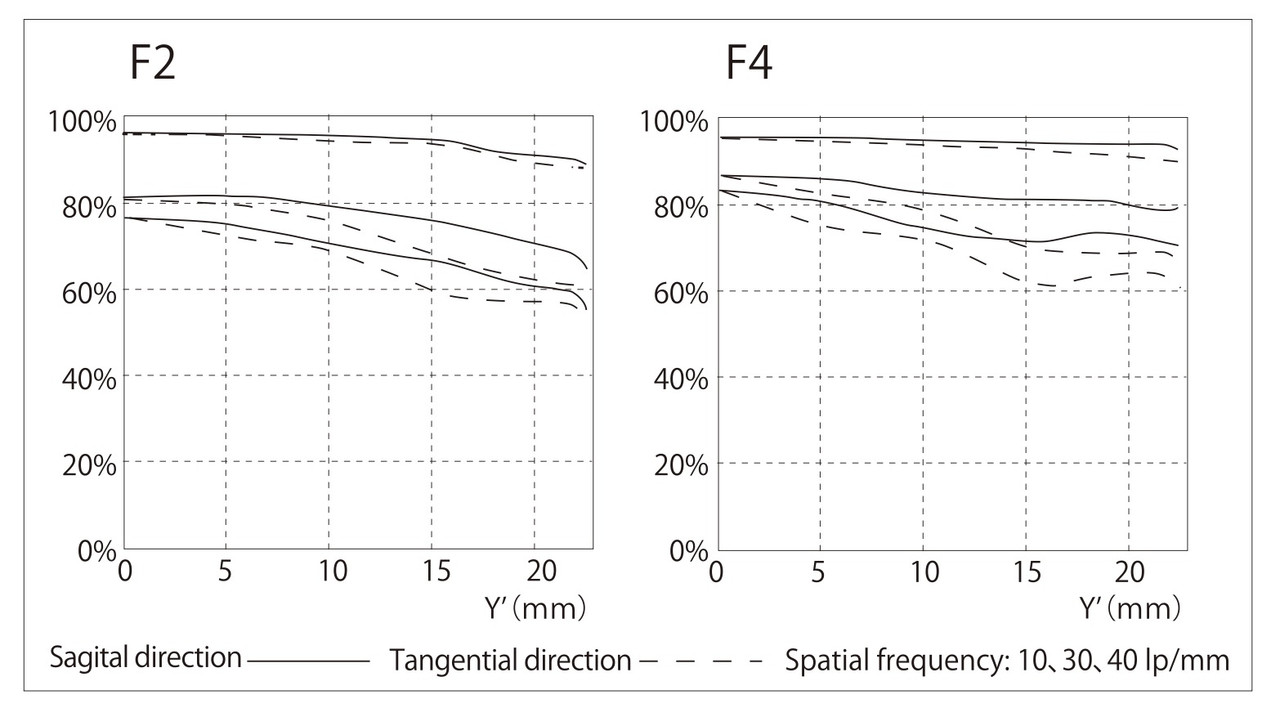
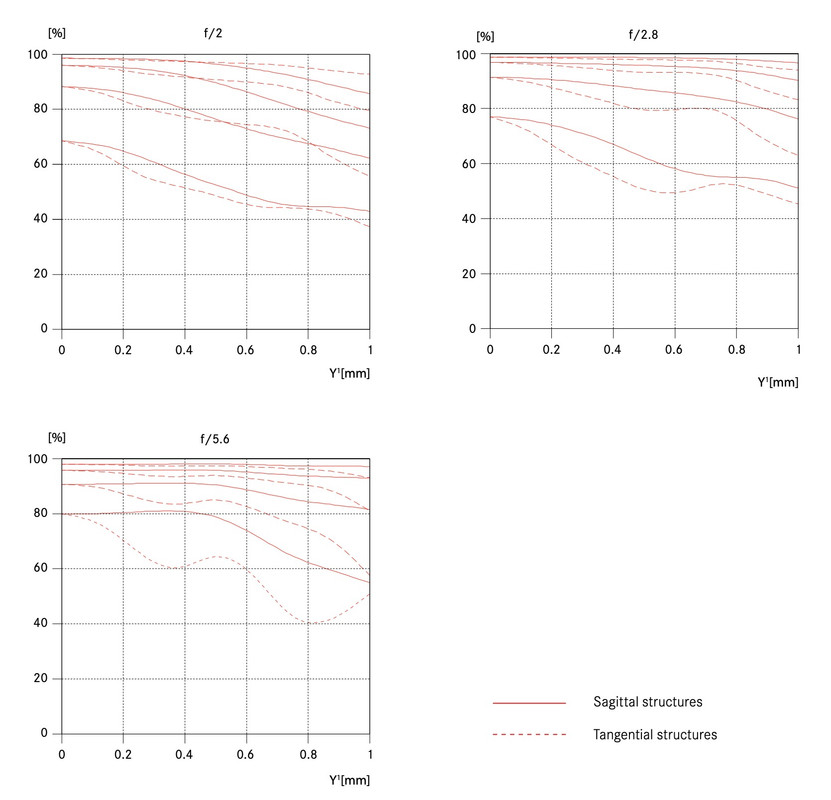
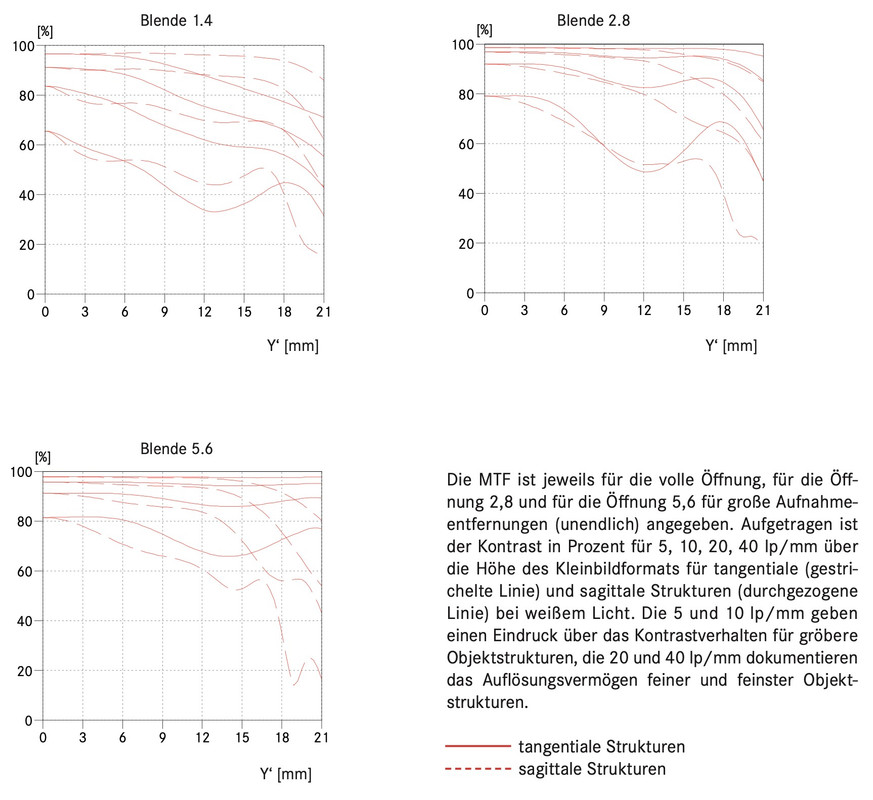
A comparison of a few M mount 28mm MTFs:
VM 28 APO:
Leica 28 Cron v3:
Leica 28 Lux:
Thypoch 28/1.4:

Fred Miranda wrote
Comparing it to the massive SL 28mm f/2 APO just does not feel like a fair comparison.I think the SL APO primes are possibly f/1.4-capable designs that have been 'throttled' to f/2 to optimize optical performance. Comparing size of the optics to the recent Canon VCM line of f/1.4 prime lenses reveals a lot of similarities.
Along this line, if one compares the VM 28 APO against their 28 Ultron v2, both are f/2 lenses but the APO is an optically wider diameter design. I did a rough measurement of around 22-23mm of my Ultron's front element and based on the product photos, the APO looks like it should be bigger. Also consider the Ultron is 39mm filter thread vs. 49mm for the APO. The block diagram suggests the rear element of the APO is also quite large in diameter and possibly slightly larger than the front element (the Ultron's rear element appears to be the same diameter as the front).
One of the complaints about the Ultron is bokeh swirl that is likely a consequence of the compact design.
https://www.cosina.co.jp/wp/wp-content/uploads/2024/07/VM-28_02_02c.jpg
https://www.cosina.co.jp/wp/wp-content/uploads/2025/06/VM-28_20-APO-03-liuy.jpg
Perhaps the APO is 'over-specced' and then throttled to f/2 like the SL APOs to achieve higher optical performance relative to the Ultron and other 28mm rangefinder lenses.
A comparison of a few M mount 28mm MTFs:
VM 28 APO:
Leica 28 Cron v3:
Leica 28 Lux:
Thypoch 28/1.4:
Jun 13, 2025 at 07:49 PM
p.5 #16Voigtlander VM 28mm f/2.0 APO
Looks like an awesome lens! Definitely getting one.
Jun 13, 2025 at 08:49 PM
p.5 #17Voigtlander VM 28mm f/2.0 APO
I’m really curious about the new Apo. I usually prefer 35mm, but having a slightly wider angle of view is never a bad thing — and if needed, you can always crop a little. Especially when it comes to straightening in post, that extra room is a blessing 😉 Who knows, maybe the 28 will end up being the better 35mm Apo 🙃
Too bad it won’t arrive in time for my Hamburg trip next week 🥲
@fred: Really looking forward to seeing your first real-life shots with this gem.
Too bad it won’t arrive in time for my Hamburg trip next week 🥲
@fred: Really looking forward to seeing your first real-life shots with this gem.
Jun 14, 2025 at 01:18 AM
p.5 #18Voigtlander VM 28mm f/2.0 APO
gammarART wrote:
I’m really curious about the new Apo. I usually prefer 35mm, but having a slightly wider angle of view is never a bad thing — and if needed, you can always crop a little. Especially when it comes to straightening in post, that extra room is a blessing 😉 Who knows, maybe the 28 will end up being the better 35mm Apo 🙃
Too bad it won’t arrive in time for my Hamburg trip next week 🥲
@fred@: Really looking forward to seeing your first real-life shots with this gem.
+1 regarding straightening comes in handy a bit, sometimes.
As to the "better than" ... we often get into this comparative against others and lose sight of its relevance. A new Corvette may not be better than last years Ferrari ... but, it's still gonna beat the snot out of Yugo.
The other thing is that "the wider you go, the tougher it gets". When "comparing" mtf's ... the collimation difference between focal lengths renders a "not the same" expectation. The difference between a 35 vs. 28 isn't huge, but the incidence angles are different, so I accept some variance (i.e. no expectation of same / better). For me, the challenges of things are the matters of distortion, vignetting, CA. It used to be (a while back, and with film) that a 30% contrast (and at 30 lp/mm, iirc) was considered sufficient to qualify as a "good lens".
These days we're routinely talking about 40 lp/mm being north of 60% in the field / corners and knockin' on the door of 80% on axis, and living in the land of > 90% for 10 lp/mm. Yeah, I know the digital vs. film thing, but still it's a pretty high bar that mfr's are achieving ... and we quibble about the minute differences of "better". There's better, better at what and meaningfully better vs. trivially better. The good news ... still dang good, even if not "better" than something else.
+1 for seeing what it looks like, once Fred get his hands on it.
Jun 14, 2025 at 03:51 AM
p.5 #19Voigtlander VM 28mm f/2.0 APO
GBP 799 - deposit taken! Dealer says release date is July 25.
Jun 14, 2025 at 09:45 AM
p.5 #20Voigtlander VM 28mm f/2.0 APO
799.00 Pound Sterling =1,083.76 US Dollar
GBP x 1.36 = US dollar
Which means $1049 in US market.(VM 50/2 APO = $1049)
Possibly $999 (hopefully)
GBP x 1.36 = US dollar
Which means $1049 in US market.(VM 50/2 APO = $1049)
Possibly $999 (hopefully)
Jun 14, 2025 at 09:48 AM