CanadaMark
Offline
• • • • •
Upload & Sell: Off
|
 p.11 #15 · Official Nikon Z 180-600mm f5.6-6.3 VR Image Thread p.11 #15 · Official Nikon Z 180-600mm f5.6-6.3 VR Image Thread | |
SCoombs wrote:
In a way I understand why it's so common, but I still think people are too quick to jump to blame the user anytime someone mentions or asks for help with a problem they're having on any of the various photography forums. Like I said, there's a theme out there that people switch to the 500pf or some other lens and their BIF photos start being in focus. It's the same user with the same technique and the settings on their camera.
In fact, in the current age of subject detection amd auto-everything I think it's even less likely that a person's problem is technique, but of course it is still possible. I don't know how we can say someone tracked poorly when tracking consists of doing nothing while the camera's AF follows the subject.
I apologize if I'm coming across too harshly to you, as it's not my intention. I just get a bit frustrated with how many times I've seen a person ask for help on one forum or another and the first 10 replies question everything about their basic ability or understanding, and especially when the comments raise things that the person clearly already addressed in their question.
In any case, like I said I rented a Sigma Sports after being frustrated with my 200-500. I instantly noticed two things: 1) the sport was far, far more demanding on technique than the Nikon on account of its dramatically greater weight and noticeably worse sterilization and 2) in spite of its much more difficult handling it was way, way easier to get good in focus shots of action and flight because the AF was much stickier and hung on the subjects far more reliably.
I was the same photographer with the same camera and settings. The hand holding and panning were a lot harder for me. But I, the same guy, could get the lens to track in ways my Nikkor never did.
I thought about paying the LensRentals guys to just keep that lens, but ultimately I didn't for two reasons. One is I was waiting to see what the Nikon 200-600 would be. The second is that every time I went out with the Sigma, even as I sat or stood there and got hit after hit without much effort, I kept wishing I was shooting with my Nikkor because it was much sharper than the Sports. Optically, anyways, I won the sample lottery with the lens.
The next thing I considered was just what you said: that the lens was defective and could use repair. Ultimately I decided that was unlikely. Why? Because I started searching forums and videos and reviews and I found a pretty healthy contingent of people with similar experiences with their 200-500s: sharp enough, but very poor results with action and flight, results which improved dramatically with the use of a 500pf or a Sigma or some other Nikon prime. Could all of these be down to technique? Sure, if they weren't suddenly getting good results with different lenses. You don't switch from a Nikkor 200-500mm to a Sigma Sports or a Nikon 500 f/4 or some other monster lens and start getting more well focused shots if your technique is poor.
The best I could figure, then, is some kind ofnsample variation that affects AF performance. I suppose it may be possible if the AF motors don't move with the same level of accuracy or responsiveness from one unit to the other. Or maybe not. All I know is that it doesn't make sense to put the same person behind the camera with one lens and get poor results and another and get good ones and have it not be the lens.
...Show more →
I get what you're trying to say, but in my mind what it doesn't address is how so many people are not having issues, which based on all the fantastic images posted here and elsewhere, seems to be the majority of users. The other thing it doesn't address is why some people are seemingly having the exact same issues with the highest tiers of equipment featuring the fastest available AF motors. If one person is having issues and the other is not, the burden of proof would be on the person who is having the issue because the person not having the issue has already demonstrated the product is capable of performing in a certain way. I respect your opinion that people can be too fast to blame the user, but my counterpoint would be that I think the human factor is often underestimated, especially in a realm were the tiniest things can make big difference, and people in general are naturally resistant to considering themselves as part of the problem - even more so if they have spent a lot of money. In my experience, the user is most often the problem, and that includes my own problems  The fact of the matter is that defective gear is extremely rare and BIF is one of the most challenging types of photography. Good long lens technique and a deep understanding of the complicated mirrorless AF systems is not something anyone learns overnight. The fact of the matter is that defective gear is extremely rare and BIF is one of the most challenging types of photography. Good long lens technique and a deep understanding of the complicated mirrorless AF systems is not something anyone learns overnight.
The other thing that makes me skeptical that it's the lens (assuming it's working properly) is the situations you described you were having issues in. The words you used to describe the situations were things like "gliding across", "coasting down" and "soaring through the air". All of those scenarios sound like larger, slow moving birds with movement that is typically perpendicular to the camera - in those situations the AF motor is barely even working because the distance changes are quite minor. Please feel free to correct me as I am making an assumption there. There aren't many camera/lens combinations that can't handle that kind of movement and those types of scenarios would not be a challenge whatsoever for a Z8 + 200-500. The other comment you made that gave me pause was "I don't know how we can say someone tracked poorly when tracking consists of doing nothing while the camera's AF follows the subject.". If it were that easy, nothing would ever be OOF and we'd all be submitting our images to NatGeo. AI subject detection is not a substitute for skill, and it doesn't mean you can be lazy tracking your subjects or with your technique. It requires even more technical knowledge of the camera's AF for best results. I also think that if someone is expecting the camera to more/less do everything for them, they are more likely to be disappointed and are going to be far less likely to consider themselves as part of the problem.
And don't get me wrong, I am not saying the 200-500 is a very fast focusing lens nor am I saying it would be my first choice for shooting fast action, but a great deal of proof exists that it is capable of keeping up to some of the most demanding action subjects, and I think most would agree it can very easily keep up to perpendicular BIF or slower moving birds. Once there is proof of concept, if someone else can't achieve the same thing, I think it's reasonable to have a default assumption that the user is the issue (generally speaking, I don't mean you personally). It would then be up to the person having the issue to show that something else is wrong, and I have yet to see any evidence that suggests there is meaningful sample variation in the AF performance of the 200-500. If it turns out that the lens is defective, then of course we know the issue is likely not with the user/settings/technique.
Whenever a performance metric is being evaluated that also includes a massive human variable, the best results are the ones we generally accept. To use yet another car analogy, if a particular vehicle can go around a track in, say, one minute with a professional driver, if a customer buys the same vehicle and can't achieve the same time, nobody is going to think the vehicle is defective. Now, put that same customer in a car that does everything better, and they might be able to get a similar lap time to the professional driver in the lesser vehicle for any number of reasons - maybe not so different to some people needing a 500PF to get similar results that others get from a 200-500, especially if one is expecting the gear to do all the work. Maybe switching to a 500PF does improve keepers for some people, but how do you determine that it's due to the AF motor when so many other variables are also changing at the same time? Maybe the increased keeper rate is because the lens is so much easier to hold/maneuver and has much better ergonomics than the 200-500.
Speaking of the 500PF, I've been around quite a while and I've never noticed a theme of people switching from the 200-500 to a 500PF due to AF issues. The 200-500 is big, heavy, poorly balanced, and the zoom ring has way too much travel - the people I know who made the switch to the 500PF were either for those reasons or for better performance with teleconverters. I don't doubt that some people have switched specifically due to perceived AF issues, but what is the scale of this theme? 5 people? 10? 20? How many individual accounts have you read about? Out of tens of thousands of lenses sold, that number would have to be pretty big to suggest any kind of widespread issue. Nikon is also hypersensitive of any issues and regularly releases voluntary service advisories for things the internet isn't even aware of until Nikon reveals it. The 200-500 has been in use since 2015 and I think if there was any kind of well known or widespread issue with the AF performance it would have been addressed by now. Do you zoom while shooting? If so, there is a firmware update for the 200-500 that addressed an issue where the AF would occasionally fail to operate while using the zoom ring at the same time. As far as I know this only affected early units (~2015) but it's something to be aware of.
At the end of the day, you need to use what works for you, regardless of the reason. If that isn't the 200-500, then get something else  Lucky for you the 180-600 is a worthy successor, and this thread has plenty of evidence that it is performing at or above expectations, so if you like that style of lens you are unlikely to be disappointed by it. Lucky for you the 180-600 is a worthy successor, and this thread has plenty of evidence that it is performing at or above expectations, so if you like that style of lens you are unlikely to be disappointed by it.
|



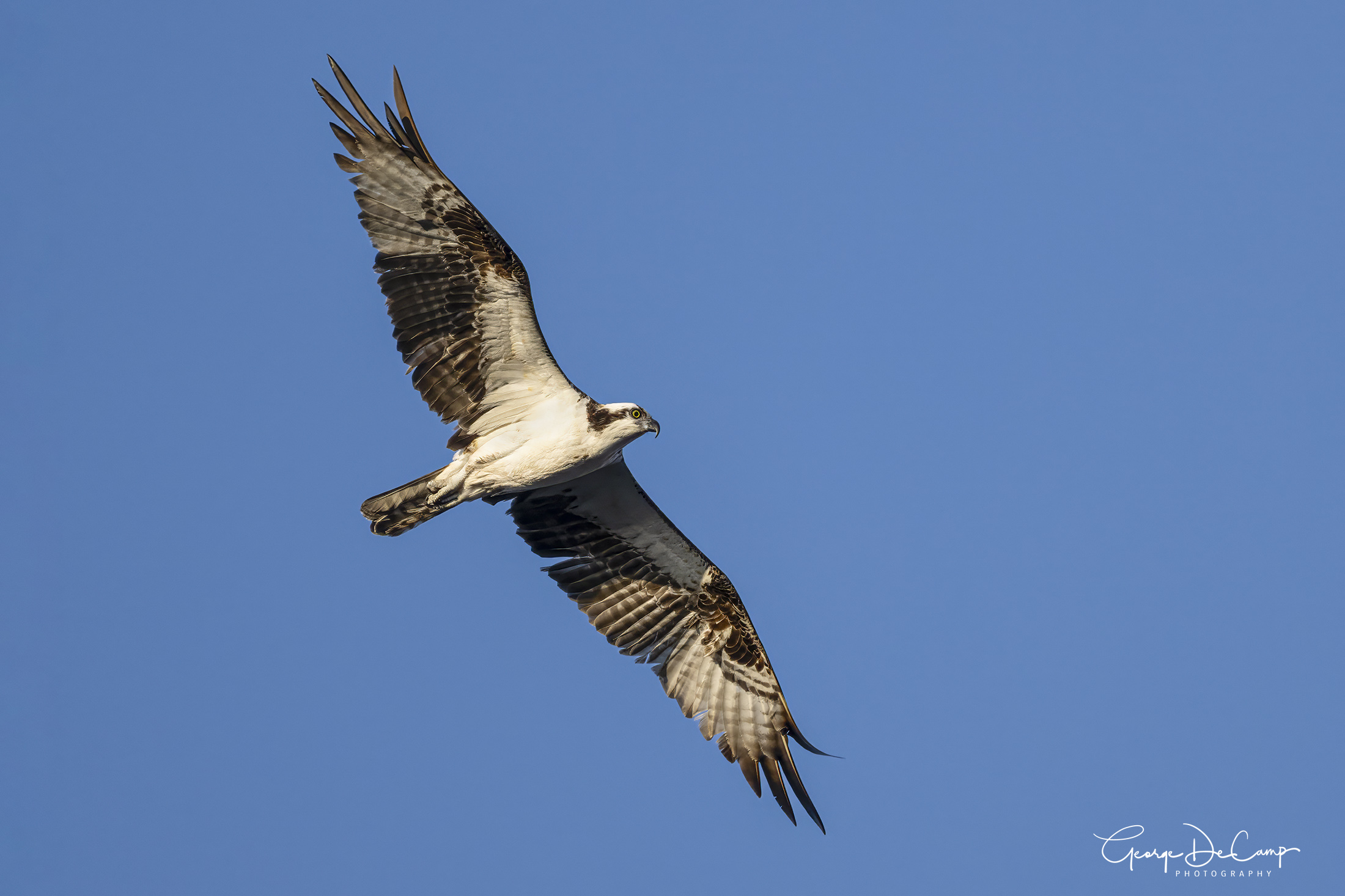



 Photos for attention.