This topic is in the 2017 archive. You can read it and like its posts here. It is read only.
Archive 2017Are you falling for the new Zeiss Batis?
p.6 #1Are you falling for the new Zeiss Batis?
philber wrote:
Thanks for the kind words, Eric! My 135 APO was my long lens, so I called it Long John Silver.
hilarious - but next to those 2 Oti.....
you may limit yourself to "only" 3 lenses, but how many kilograms is that!
in any case, you're in the top tier, so whatever you're doing, keep doing so i can enjoy and learn - have a great weekend!
ecarlino wrote
btw - i know you guys like to nickname your lenses, looking at your line-up, do you refer to your 135 APO as "TINY TIM"?hilarious - but next to those 2 Oti.....
you may limit yourself to "only" 3 lenses, but how many kilograms is that!
in any case, you're in the top tier, so whatever you're doing, keep doing so i can enjoy and learn - have a great weekend!
Apr 07, 2017 at 03:52 PM
p.6 #2Are you falling for the new Zeiss Batis?
Don't get me wrong, who wouldn't want perfectly sharp images across the whole frame. I sure would in all my lenses...but not at extreme cost in both aperture and price. What I'm saying if there is any category of lens that can stand having softer corners, its your traditional portrait lens where the majority of subjects are not put into the corners. Sure you can pull some samples out where this is contradicted, but if you look at the portfolio of the majority of portrait photographers, I think you'll see having the subject in the deep corners is not the norm...not even close.
Apr 07, 2017 at 04:05 PM
p.6 #3Are you falling for the new Zeiss Batis?
chez wrote:
Don't get me wrong, who wouldn't want perfectly sharp images across the whole frame. I sure would in all my lenses...but not at extreme cost in both aperture and price. What I'm saying if there is any category of lens that can stand having softer corners, its your traditional portrait lens where the majority of subjects are not put into the corners. Sure you can pull some samples out where this is contradicted, but if you look at the portfolio of the majority of portrait photographers, I think you'll see having the subject in the deep corners is not the...Show more →
Lots of photographers are willing to pay the price for sharpness across the field at wide apertures. For some, aberration control and color accuracy is also very important. There're cheaper/smaller alternatives without high level of correction and/or resolution across the field and that's why it's nice to have so many options. We can choose lenses based on our budgets and most importantly the right one for our applications.
Here is an example for you. The FE 28/2 is a loved lens because it's very sharp in the center and price is right. However, once you place your subject towards the "rule of thirds" area, it's not that special anymore. Are you going to say next that rules of thirds is overrated?
Apr 07, 2017 at 04:14 PM
p.6 #4Are you falling for the new Zeiss Batis?
Fred Miranda wrote:
Lots of photographers are willing to pay the price for sharpness across the field at wide apertures. For some, aberration control and color accuracy is also very important. There're cheaper/smaller alternatives without high level of correction and/or resolution across the field and that's why it's nice to have so many options. We can choose lenses based on our budgets and most importantly the right one for our applications.
Here is an example for you. The FE 28/2 is a loved lens because it's very sharp in the center and price is right. However, once you place your subject towards the...Show more →
That's an extreme. My 135L is very sharp in the center, but tapers off on the corners, but I have no issue at all placing my subject towards the "rule of thirds" area. It still produces great images...maybe if someone peeks at 100% they might see some degradation in quality, but when printed to 24", I see no degradation at all.
Landscapes to me is where I need sharpness across the frame as the subject is the entire frame and not isolated to one spot in the image. I typically print my landscapes very large so any drop in sharpness will be noticeable.
I'm not arguing with anyone...I'd love perfectly sharp lenses...but there is a cost to bear for this sharpness and I personally would rather have a cheaper 135mm lens that is not pin sharp in the corners for say $1200 - $1500 than one that is perfectly sharp, but expensive. I can live with some detail loss in corners for portraits or stage shots...I don't like to live with detail loss in corners for landscape photos.
chez wrote
Don't get me wrong, who wouldn't want perfectly sharp images across the whole frame. I sure would in all my lenses...but not at extreme cost in both aperture and price. What I'm saying if there is any category of lens that can stand having softer corners, its your traditional portrait lens where the majority of subjects are not put into the corners. Sure you can pull some samples out where this is contradicted, but if you look at the portfolio of the majority of portrait photographers, I think you'll see having the subject in the deep corners is not the norm...not even close.Here is an example for you. The FE 28/2 is a loved lens because it's very sharp in the center and price is right. However, once you place your subject towards the...Show more →
That's an extreme. My 135L is very sharp in the center, but tapers off on the corners, but I have no issue at all placing my subject towards the "rule of thirds" area. It still produces great images...maybe if someone peeks at 100% they might see some degradation in quality, but when printed to 24", I see no degradation at all.
Landscapes to me is where I need sharpness across the frame as the subject is the entire frame and not isolated to one spot in the image. I typically print my landscapes very large so any drop in sharpness will be noticeable.
I'm not arguing with anyone...I'd love perfectly sharp lenses...but there is a cost to bear for this sharpness and I personally would rather have a cheaper 135mm lens that is not pin sharp in the corners for say $1200 - $1500 than one that is perfectly sharp, but expensive. I can live with some detail loss in corners for portraits or stage shots...I don't like to live with detail loss in corners for landscape photos.
Apr 07, 2017 at 04:24 PM
p.6 #5Are you falling for the new Zeiss Batis?
chez wrote:
Don't get me wrong, who wouldn't want perfectly sharp images across the whole frame. I sure would in all my lenses...but not at extreme cost in both aperture and price. What I'm saying if there is any category of lens that can stand having softer corners, its your traditional portrait lens where the majority of subjects are not put into the corners. Sure you can pull some samples out where this is contradicted, but if you look at the portfolio of the majority of portrait photographers, I think you'll see having the subject in the deep corners is not the...Show more →
you keep talking like the only use for 135mm is portraits.
it's not.
and while for portraits i could see only wanting the fastest aperture and not caring as much about the corners (well not really, i prefer most things off-center), what about any other type of photograph?
besides 135mm primes (which have traditionally been f/1.8 or f/2 --- or something like f/4 for landscapes) there are also countless zooms that cover 135mm (either high quality usually f/2.8 or consumer lenses of varying lesser IQ).
so there are a ton of people with tons of uses for 135mm.
There will be more prime lenses @ 135 for the Sony FE mount. Instead of talking about why this lens sucks so bad in so many ways and doesn't fit your needs --- why not either (a) ignore this lens completely and wait for one that suits you better, or (b) open your mind and consider what it might be used for and see what it is good at.
Yesterday you made some stupid smug remark to me about how i was trying to convince myself about this lens - you miss the point - if there's something I might be interested in, I try to see what it's capable of, even if those capabilities weren't my obvious primary objective ($2000 and f/2.8 weren't what i had in mind, that's for sure) - otherwise I miss the point of what the tool is really able to do. I may not end up with this lens, but it's certainly close enough to my purposes that i want to learn its ins and outs so that when something else is released i can make an informed decision. In fact, while yesterday I had 2 pre-orders in, today i have zero. That's not to say I won't be back in there right after the release.
Edited on Apr 08, 2017 at 01:44 PM · View previous versions
Apr 07, 2017 at 04:27 PM
p.6 #6Are you falling for the new Zeiss Batis?
ecarlino wrote:
you keep talking like the only use for 135mm is portraits.
it's not.
and while for portraits i could see only wanting the fastest aperture and not caring as much about the corners (well not really, i prefer most things off-center), what about any other type of photograph?
besides 135mm primes (which have traditionally been f/1.8 or f/2 --- or something like f/4 for landscapes) there are also countless zooms that cover 135mm (either high quality usually f/2.8 or consumer lenses of varying lesser IQ).
so there are a ton of people with tons of uses for 135mm.
There will be more prime lenses @...Show more →
Ecarlino...this thread is asking if you are falling for the Batis 135...a discussion of yes or no and why. It is not a love-in with this lens, but an honest discussion as to what people like about it and are planning on buying it and what people do not like about it and are not buying it.
Seems to me you just want the former and close your ears to the latter.
chez wrote
Don't get me wrong, who wouldn't want perfectly sharp images across the whole frame. I sure would in all my lenses...but not at extreme cost in both aperture and price. What I'm saying if there is any category of lens that can stand having softer corners, its your traditional portrait lens where the majority of subjects are not put into the corners. Sure you can pull some samples out where this is contradicted, but if you look at the portfolio of the majority of portrait photographers, I think you'll see having the subject in the deep corners is not the norm...not even close.it's not.
and while for portraits i could see only wanting the fastest aperture and not caring as much about the corners (well not really, i prefer most things off-center), what about any other type of photograph?
besides 135mm primes (which have traditionally been f/1.8 or f/2 --- or something like f/4 for landscapes) there are also countless zooms that cover 135mm (either high quality usually f/2.8 or consumer lenses of varying lesser IQ).
so there are a ton of people with tons of uses for 135mm.
There will be more prime lenses @...Show more →
Ecarlino...this thread is asking if you are falling for the Batis 135...a discussion of yes or no and why. It is not a love-in with this lens, but an honest discussion as to what people like about it and are planning on buying it and what people do not like about it and are not buying it.
Seems to me you just want the former and close your ears to the latter.
Apr 07, 2017 at 04:34 PM
p.6 #7Are you falling for the new Zeiss Batis?
Fred Miranda wrote:
Lots of photographers are willing to pay the price for sharpness across the field at wide apertures. For some, aberration control and color accuracy is also very important. There're cheaper/smaller alternatives without high level of correction and/or resolution across the field and that's why it's nice to have so many options. We can choose lenses based on our budgets and most importantly the right one for our applications.
Here is an example for you. The FE 28/2 is a loved lens because it's very sharp in the center and price is right. However, once you place your subject towards the...Show more →
I'd prefer to have the choice of a dreamy f/2 shot or stop down to f/2.8 for sharpness across the frame. This new Batis doesn't offer this flexibility.
chez wrote
Don't get me wrong, who wouldn't want perfectly sharp images across the whole frame. I sure would in all my lenses...but not at extreme cost in both aperture and price. What I'm saying if there is any category of lens that can stand having softer corners, its your traditional portrait lens where the majority of subjects are not put into the corners. Sure you can pull some samples out where this is contradicted, but if you look at the portfolio of the majority of portrait photographers, I think you'll see having the subject in the deep corners is not the norm...not even close.Here is an example for you. The FE 28/2 is a loved lens because it's very sharp in the center and price is right. However, once you place your subject towards the...Show more →
I'd prefer to have the choice of a dreamy f/2 shot or stop down to f/2.8 for sharpness across the frame. This new Batis doesn't offer this flexibility.
Apr 07, 2017 at 04:37 PM
p.6 #8Are you falling for the new Zeiss Batis?
virtualrain wrote:
Lots of photographers are willing to pay the price for sharpness across the field at wide apertures. For some, aberration control and color accuracy is also very important. There're cheaper/smaller alternatives without high level of correction and/or resolution across the field and that's why it's nice to have so many options. We can choose lenses based on our budgets and most importantly the right one for our applications.
Here is an example for you. The FE 28/2 is a loved lens because it's very sharp in the center and price is right. However, once you place your subject towards the "rule of thirds" area, it's not that special anymore. Are you going to say next that rules of thirds is overrated?I'd prefer to have the choice of a dreamy f/2 shot or stop down to f/2.8 for sharpness across the frame. This new Batis doesn't offer this flexibility.
I'm with you on that one.
Fred Miranda wrote
chez wrote
Don't get me wrong, who wouldn't want perfectly sharp images across the whole frame. I sure would in all my lenses...but not at extreme cost in both aperture and price. What I'm saying if there is any category of lens that can stand having softer corners, its your traditional portrait lens where the majority of subjects are not put into the corners. Sure you can pull some samples out where this is contradicted, but if you look at the portfolio of the majority of portrait photographers, I think you'll see having the subject in the deep corners is not the norm...not even close.Here is an example for you. The FE 28/2 is a loved lens because it's very sharp in the center and price is right. However, once you place your subject towards the "rule of thirds" area, it's not that special anymore. Are you going to say next that rules of thirds is overrated?
I'm with you on that one.
Apr 07, 2017 at 04:41 PM
p.6 #9Are you falling for the new Zeiss Batis?
I am a bokeh slut, but, even so, rarely shoot my lenses wide open, excellent though they are. Stopping down one stop usually delivers better performance. However, slower lenses, at least the better ones tend to suffer less wide open. My Leica Elmar 24, for example, a f:3.8 lens, was very, very good wide open.
Unless Zeiss are total idiots, which I rather think not, they must know that, for that lens to sell at that price and with that spec, they need sterling performance wide open, meaning, on a par or almost with a f:2.0 lens stopped down one stop. That is a tall order. But so was to get people interested in the 85mm f:2.4 Loxia, in the face of mutliple faster native lenses. Yet Zeiss did it.
The shots that went with their press release show serious promise IMHO, so, as far as I am concerned, the jury is out.
Apr 07, 2017 at 04:58 PM
p.6 #10Are you falling for the new Zeiss Batis?
chez wrote:
Lots of photographers are willing to pay the price for sharpness across the field at wide apertures. For some, aberration control and color accuracy is also very important. There're cheaper/smaller alternatives without high level of correction and/or resolution across the field and that's why it's nice to have so many options. We can choose lenses based on our budgets and most importantly the right one for our applications.
Here is an example for you. The FE 28/2 is a loved lens because it's very sharp in the center and price is right. However, once you place your subject towards the "rule of thirds" area, it's not that special anymore. Are you going to say next that rules of thirds is overrated?That's an extreme. My 135L is very sharp in the center, but tapers off on the corners, but I have no issue at all placing my subject towards the "rule of thirds" area. It still produces great images...maybe if someone peeks at 100% they might see some degradation in quality, but when printed to 24", I see no degradation at all.
Landscapes to me is where I need sharpness across the frame as the subject is the entire frame and not isolated to one spot in the image. I typically print my landscapes very large so any drop in sharpness will...Show more →
It really sounds like your main issue is with the price of this lens and it's more than you're willing to pay for a single lens but what you're failing to see is that $2k for the package offered isn't unreasonable, it just doesn't fit your needs. I would pay $2,000 for this batis 135mm over the $1400 for a new Canon 135mm f2 L + metabones adapter any day.
Fred Miranda wrote
chez wrote
Don't get me wrong, who wouldn't want perfectly sharp images across the whole frame. I sure would in all my lenses...but not at extreme cost in both aperture and price. What I'm saying if there is any category of lens that can stand having softer corners, its your traditional portrait lens where the majority of subjects are not put into the corners. Sure you can pull some samples out where this is contradicted, but if you look at the portfolio of the majority of portrait photographers, I think you'll see having the subject in the deep corners is not the norm...not even close.Here is an example for you. The FE 28/2 is a loved lens because it's very sharp in the center and price is right. However, once you place your subject towards the "rule of thirds" area, it's not that special anymore. Are you going to say next that rules of thirds is overrated?
Landscapes to me is where I need sharpness across the frame as the subject is the entire frame and not isolated to one spot in the image. I typically print my landscapes very large so any drop in sharpness will...Show more →
It really sounds like your main issue is with the price of this lens and it's more than you're willing to pay for a single lens but what you're failing to see is that $2k for the package offered isn't unreasonable, it just doesn't fit your needs. I would pay $2,000 for this batis 135mm over the $1400 for a new Canon 135mm f2 L + metabones adapter any day.
Apr 07, 2017 at 04:58 PM
p.6 #11Are you falling for the new Zeiss Batis?
tzhang4284 wrote:
Lots of photographers are willing to pay the price for sharpness across the field at wide apertures. For some, aberration control and color accuracy is also very important. There're cheaper/smaller alternatives without high level of correction and/or resolution across the field and that's why it's nice to have so many options. We can choose lenses based on our budgets and most importantly the right one for our applications.
Here is an example for you. The FE 28/2 is a loved lens because it's very sharp in the center and price is right. However, once you place your subject towards the "rule of thirds" area, it's not that special anymore. Are you going to say next that rules of thirds is overrated?That's an extreme. My 135L is very sharp in the center, but tapers off on the corners, but I have no issue at all placing my subject towards the "rule of thirds" area. It still produces great images...maybe if someone peeks at 100% they might see some degradation in quality, but when printed to 24", I see no degradation at all.
Landscapes to me is where I need sharpness across the frame as the subject is the entire frame and not isolated to one spot in the image. I typically print my landscapes very large so any drop in sharpness will be noticeable.
I'm not arguing with anyone...I'd love perfectly sharp lenses...but there is a cost to bear for this sharpness and I personally would rather have a cheaper 135mm lens that is not pin sharp in the corners for say $1200 - $1500 than one that is perfectly sharp, but expensive. I can live with some detail loss in corners for portraits or stage shots...I don't like to live with detail loss in corners for landscape photos.It really sounds like your main issue is with the price of this lens and it's more than you're willing to pay for a single lens but what you're failing to see is that $2k for the package offered isn't unreasonable, it just doesn't fit your needs. I would pay $2,000 for this batis 135mm over the $1400 for a new Canon 135mm f2 L + metabones adapter any day.
Its price for an f2.8 135mm lens. If the lens was an f2 or better yet an f1.8 for that price, I would totally consider it...but not a 2.8 lens...not at that focal length. I shoot theater and concerts with the 135 and lens speed is important for me. Hell, if I was to use a f2.8 lens, I might as well purchase the 70-200GM.
Others might feel it's a bargain...they can line up. I'll stick with my 135L for the time being.
Edited on Apr 07, 2017 at 05:12 PM · View previous versions
chez wrote
Fred Miranda wrote
chez wrote
Don't get me wrong, who wouldn't want perfectly sharp images across the whole frame. I sure would in all my lenses...but not at extreme cost in both aperture and price. What I'm saying if there is any category of lens that can stand having softer corners, its your traditional portrait lens where the majority of subjects are not put into the corners. Sure you can pull some samples out where this is contradicted, but if you look at the portfolio of the majority of portrait photographers, I think you'll see having the subject in the deep corners is not the norm...not even close.Here is an example for you. The FE 28/2 is a loved lens because it's very sharp in the center and price is right. However, once you place your subject towards the "rule of thirds" area, it's not that special anymore. Are you going to say next that rules of thirds is overrated?
Landscapes to me is where I need sharpness across the frame as the subject is the entire frame and not isolated to one spot in the image. I typically print my landscapes very large so any drop in sharpness will be noticeable.
I'm not arguing with anyone...I'd love perfectly sharp lenses...but there is a cost to bear for this sharpness and I personally would rather have a cheaper 135mm lens that is not pin sharp in the corners for say $1200 - $1500 than one that is perfectly sharp, but expensive. I can live with some detail loss in corners for portraits or stage shots...I don't like to live with detail loss in corners for landscape photos.
Its price for an f2.8 135mm lens. If the lens was an f2 or better yet an f1.8 for that price, I would totally consider it...but not a 2.8 lens...not at that focal length. I shoot theater and concerts with the 135 and lens speed is important for me. Hell, if I was to use a f2.8 lens, I might as well purchase the 70-200GM.
Others might feel it's a bargain...they can line up. I'll stick with my 135L for the time being.
Edited on Apr 07, 2017 at 05:12 PM · View previous versions
Apr 07, 2017 at 05:10 PM
p.6 #12Are you falling for the new Zeiss Batis?
Being portrait or tabletop, my subjects are never at infinity, so defocus qualities are a top concern: smooth bokeh fore and aft, with no defocus color fringing. I seek every opportunity to use the Rok 135 for those reasons, not because it's f/2. In fact, I prefer to shoot it at f/16 in many cases to increase DOF and to reduce moire. Even at f/8, AF is very desirable for 135mm portraits and Batis would work for me if if can render similarly. Sadly, I just don't think B135 can measure up to the Rok optically in any way. $2K for AF alone doesn't work for me.
Apr 07, 2017 at 05:12 PM
p.6 #13Are you falling for the new Zeiss Batis?
ecarlino wrote:
I know when I compose a portrait, I don't put the subject onto the edge of the frame.
I would think bokeh quality would be much more important in this type of lens compared to far corner sharpness.Batis 135 @ 2.8,
corner compositions
....just say'n
https://c1.staticflickr.com/3/2915/33854298165_b0ebfe537f_k.jpg
https://c1.staticflickr.com/4/3950/33854275245_6aeab79fe7_k.jpg
Great examples showing how a wide-open 135mm lens that is sharp away from the center area is absolutely crucial for some applications.
chez wrote
But when we say corners, it usually ends up in pretty extreme corners where I highly doubt very many portraits are taken. Looking at the samples that are posted, seems to me the subject is much closer to the center than the edges.I know when I compose a portrait, I don't put the subject onto the edge of the frame.
I would think bokeh quality would be much more important in this type of lens compared to far corner sharpness.
corner compositions
....just say'n
https://c1.staticflickr.com/3/2915/33854298165_b0ebfe537f_k.jpg
https://c1.staticflickr.com/4/3950/33854275245_6aeab79fe7_k.jpg
Great examples showing how a wide-open 135mm lens that is sharp away from the center area is absolutely crucial for some applications.
Apr 07, 2017 at 05:34 PM
p.6 #14Are you falling for the new Zeiss Batis?
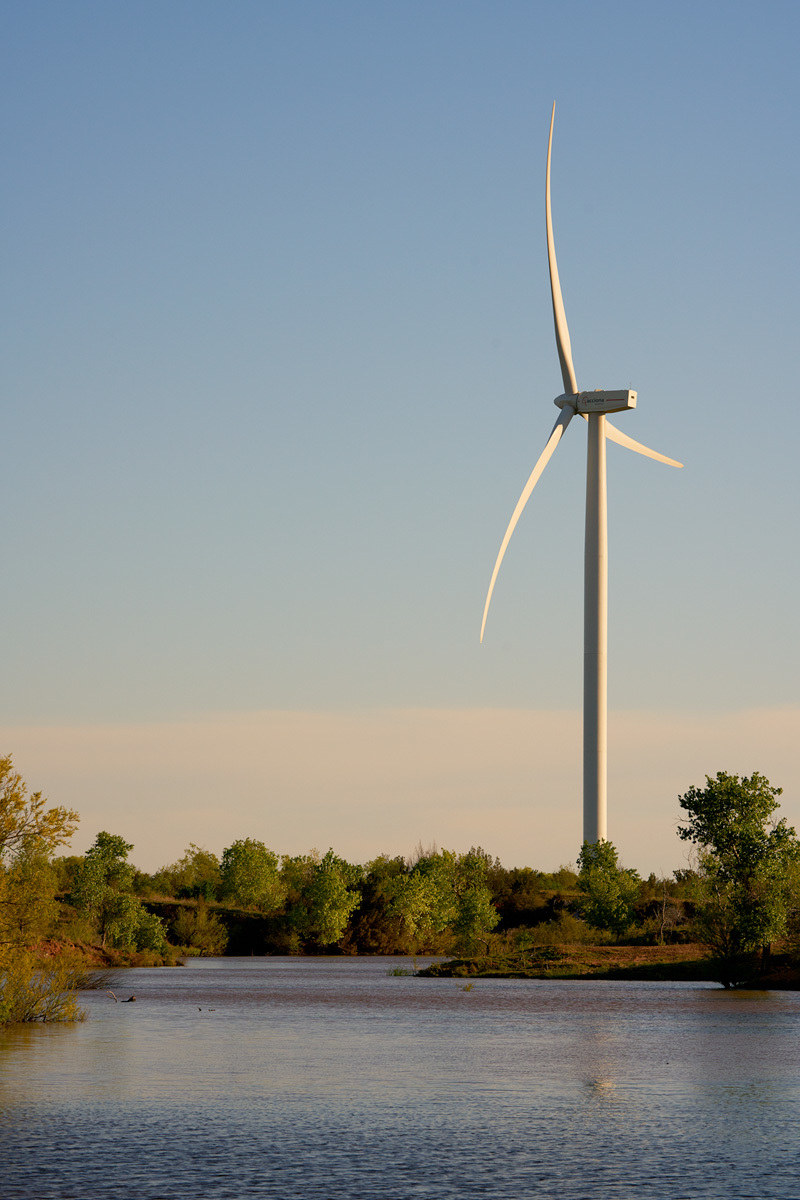
Quick out take. Barely processed. Rokinon 135. My guess F6.3
Apr 07, 2017 at 05:36 PM
p.6 #15Are you falling for the new Zeiss Batis?
chez wrote:
Lots of photographers are willing to pay the price for sharpness across the field at wide apertures. For some, aberration control and color accuracy is also very important. There're cheaper/smaller alternatives without high level of correction and/or resolution across the field and that's why it's nice to have so many options. We can choose lenses based on our budgets and most importantly the right one for our applications.
Here is an example for you. The FE 28/2 is a loved lens because it's very sharp in the center and price is right. However, once you place your subject towards the "rule of thirds" area, it's not that special anymore. Are you going to say next that rules of thirds is overrated?That's an extreme. My 135L is very sharp in the center, but tapers off on the corners, but I have no issue at all placing my subject towards the "rule of thirds" area. It still produces great images...maybe if someone peeks at 100% they might see some degradation in quality, but when printed to 24", I see no degradation at all.
Landscapes to me is where I need sharpness across the frame as the subject is the entire frame and not isolated to one spot in the image. I typically print my landscapes very large so any drop in sharpness will be noticeable.
I'm not arguing with anyone...I'd love perfectly sharp lenses...but there is a cost to bear for this sharpness and I personally would rather have a cheaper 135mm lens that is not pin sharp in the corners for say $1200 - $1500 than one that is perfectly sharp, but expensive. I can live with some detail loss in corners for portraits or stage shots...I don't like to live with detail loss in corners for landscape photos.It really sounds like your main issue is with the price of this lens and it's more than you're willing to pay for a single lens but what you're failing to see is that $2k for the package offered isn't unreasonable, it just doesn't fit your needs. I would pay $2,000 for this batis 135mm over the $1400 for a new Canon 135mm f2 L + metabones adapter any day.Its price for an f2.8 135mm lens. If the lens was an f2 or better yet an f1.8 for that price, I would totally consider it...but not a 2.8 lens...not at that focal length. I shoot theater and concerts with the 135 and lens speed is important for me. Hell, if I was to use a f2.8 lens, I might as well purchase the 70-200GM.
Others might feel it's a bargain...they can line up. I'll stick with my 135L for the time being.
Lots of reasons to avoid spending $2k on this lens that I can certainly understand and I think the 70-200mm GM is a legitimate alternative if you want a zoom instead.
However on the low light point, I think you might be discounting the improvement in sensor technology that has occurred in recent years. I'd argue that on an A7S or a A7R II, the Batis 135mm f2.8 wide open will give you better low light image quality at a higher ISO than the Canon 135mm f2 L wide open at a slightly lower ISO assuming same shutter speed and etc. Don't have the data to validate obviously but I've seen this with many lenses where I get better sharpness by going up on the ISO vs. going wide open on the lens - Loxia 35 for example is better at 35mm f2.8 at a higher ISO than 35mm f2 at a lower ISO for sharpness.
Given how good the Batis 135mm is supposed to be, I would expect it to offer better image quality for theater and concerts too even if you have to use a higher ISO over the Canon 135mm f2. The only disadvantage is if you heavily rely on shooting at 135mm f2 for the depth of field but the 135mm f2.8 isn't bad at all for generating bokeh.
tzhang4284 wrote
chez wrote
Fred Miranda wrote
chez wrote
Don't get me wrong, who wouldn't want perfectly sharp images across the whole frame. I sure would in all my lenses...but not at extreme cost in both aperture and price. What I'm saying if there is any category of lens that can stand having softer corners, its your traditional portrait lens where the majority of subjects are not put into the corners. Sure you can pull some samples out where this is contradicted, but if you look at the portfolio of the majority of portrait photographers, I think you'll see having the subject in the deep corners is not the norm...not even close.Here is an example for you. The FE 28/2 is a loved lens because it's very sharp in the center and price is right. However, once you place your subject towards the "rule of thirds" area, it's not that special anymore. Are you going to say next that rules of thirds is overrated?
Landscapes to me is where I need sharpness across the frame as the subject is the entire frame and not isolated to one spot in the image. I typically print my landscapes very large so any drop in sharpness will be noticeable.
I'm not arguing with anyone...I'd love perfectly sharp lenses...but there is a cost to bear for this sharpness and I personally would rather have a cheaper 135mm lens that is not pin sharp in the corners for say $1200 - $1500 than one that is perfectly sharp, but expensive. I can live with some detail loss in corners for portraits or stage shots...I don't like to live with detail loss in corners for landscape photos.
Others might feel it's a bargain...they can line up. I'll stick with my 135L for the time being.
Lots of reasons to avoid spending $2k on this lens that I can certainly understand and I think the 70-200mm GM is a legitimate alternative if you want a zoom instead.
However on the low light point, I think you might be discounting the improvement in sensor technology that has occurred in recent years. I'd argue that on an A7S or a A7R II, the Batis 135mm f2.8 wide open will give you better low light image quality at a higher ISO than the Canon 135mm f2 L wide open at a slightly lower ISO assuming same shutter speed and etc. Don't have the data to validate obviously but I've seen this with many lenses where I get better sharpness by going up on the ISO vs. going wide open on the lens - Loxia 35 for example is better at 35mm f2.8 at a higher ISO than 35mm f2 at a lower ISO for sharpness.
Given how good the Batis 135mm is supposed to be, I would expect it to offer better image quality for theater and concerts too even if you have to use a higher ISO over the Canon 135mm f2. The only disadvantage is if you heavily rely on shooting at 135mm f2 for the depth of field but the 135mm f2.8 isn't bad at all for generating bokeh.
Apr 07, 2017 at 05:50 PM
p.6 #16Are you falling for the new Zeiss Batis?
tzhang4284 wrote:
Lots of photographers are willing to pay the price for sharpness across the field at wide apertures. For some, aberration control and color accuracy is also very important. There're cheaper/smaller alternatives without high level of correction and/or resolution across the field and that's why it's nice to have so many options. We can choose lenses based on our budgets and most importantly the right one for our applications.
Here is an example for you. The FE 28/2 is a loved lens because it's very sharp in the center and price is right. However, once you place your subject towards the "rule of thirds" area, it's not that special anymore. Are you going to say next that rules of thirds is overrated?That's an extreme. My 135L is very sharp in the center, but tapers off on the corners, but I have no issue at all placing my subject towards the "rule of thirds" area. It still produces great images...maybe if someone peeks at 100% they might see some degradation in quality, but when printed to 24", I see no degradation at all.
Landscapes to me is where I need sharpness across the frame as the subject is the entire frame and not isolated to one spot in the image. I typically print my landscapes very large so any drop in sharpness will be noticeable.
I'm not arguing with anyone...I'd love perfectly sharp lenses...but there is a cost to bear for this sharpness and I personally would rather have a cheaper 135mm lens that is not pin sharp in the corners for say $1200 - $1500 than one that is perfectly sharp, but expensive. I can live with some detail loss in corners for portraits or stage shots...I don't like to live with detail loss in corners for landscape photos.It really sounds like your main issue is with the price of this lens and it's more than you're willing to pay for a single lens but what you're failing to see is that $2k for the package offered isn't unreasonable, it just doesn't fit your needs. I would pay $2,000 for this batis 135mm over the $1400 for a new Canon 135mm f2 L + metabones adapter any day.Its price for an f2.8 135mm lens. If the lens was an f2 or better yet an f1.8 for that price, I would totally consider it...but not a 2.8 lens...not at that focal length. I shoot theater and concerts with the 135 and lens speed is important for me. Hell, if I was to use a f2.8 lens, I might as well purchase the 70-200GM.
Others might feel it's a bargain...they can line up. I'll stick with my 135L for the time being.Lots of reasons to avoid spending $2k on this lens that I can certainly understand and I think the 70-200mm GM is a legitimate alternative if you want a zoom instead.
However on the low light point, I think you might be discounting the improvement in sensor technology that has occurred in recent years. I'd argue that on an A7S or a A7R II, the Batis 135mm f2.8 wide open will give you better low light image quality at a higher ISO than the Canon 135mm f2 L wide open at a slightly lower ISO assuming same shutter speed and etc....Show more →
How much better? My 135L is paid for and sitting in my pack...I can maybe get $900 CAN for it. So I would have to shell out another $2100CAN for the Batis. Will I notice that much improvement in my prints? You can see my dilemma now.
chez wrote
tzhang4284 wrote
chez wrote
Fred Miranda wrote
chez wrote
Don't get me wrong, who wouldn't want perfectly sharp images across the whole frame. I sure would in all my lenses...but not at extreme cost in both aperture and price. What I'm saying if there is any category of lens that can stand having softer corners, its your traditional portrait lens where the majority of subjects are not put into the corners. Sure you can pull some samples out where this is contradicted, but if you look at the portfolio of the majority of portrait photographers, I think you'll see having the subject in the deep corners is not the norm...not even close.Here is an example for you. The FE 28/2 is a loved lens because it's very sharp in the center and price is right. However, once you place your subject towards the "rule of thirds" area, it's not that special anymore. Are you going to say next that rules of thirds is overrated?
Landscapes to me is where I need sharpness across the frame as the subject is the entire frame and not isolated to one spot in the image. I typically print my landscapes very large so any drop in sharpness will be noticeable.
I'm not arguing with anyone...I'd love perfectly sharp lenses...but there is a cost to bear for this sharpness and I personally would rather have a cheaper 135mm lens that is not pin sharp in the corners for say $1200 - $1500 than one that is perfectly sharp, but expensive. I can live with some detail loss in corners for portraits or stage shots...I don't like to live with detail loss in corners for landscape photos.
Others might feel it's a bargain...they can line up. I'll stick with my 135L for the time being.
However on the low light point, I think you might be discounting the improvement in sensor technology that has occurred in recent years. I'd argue that on an A7S or a A7R II, the Batis 135mm f2.8 wide open will give you better low light image quality at a higher ISO than the Canon 135mm f2 L wide open at a slightly lower ISO assuming same shutter speed and etc....Show more →
How much better? My 135L is paid for and sitting in my pack...I can maybe get $900 CAN for it. So I would have to shell out another $2100CAN for the Batis. Will I notice that much improvement in my prints? You can see my dilemma now.
Apr 07, 2017 at 05:59 PM
p.6 #17Are you falling for the new Zeiss Batis?
Timely article by kirk tuck on how good 1in sensor cameras are for theater and lowlight: https://visualsciencelab.blogspot.com/2017/04/full-frame-versus-one-inch-nope-its-not.html
If you can get good professional grade theater photos using a RX10 III or I believe a Sony A7R II + 70-200mm f4, then you can do it with a Batis 135mm f2.8 in low light
If you can get good professional grade theater photos using a RX10 III or I believe a Sony A7R II + 70-200mm f4, then you can do it with a Batis 135mm f2.8 in low light
Apr 07, 2017 at 06:01 PM
p.6 #18Are you falling for the new Zeiss Batis?
tzhang4284 wrote:
Timely article by kirk tuck on how good 1in sensor cameras are for theater and lowlight: https://visualsciencelab.blogspot.com/2017/04/full-frame-versus-one-inch-nope-its-not.html
If you can get good professional grade theater photos using a RX10 III or I believe a Sony A7R II + 70-200mm f4, then you can do it with a Batis 135mm f2.8 in low light
Or a 135L
Apr 07, 2017 at 06:02 PM
p.6 #19Are you falling for the new Zeiss Batis?
chez wrote:
Here is an example for you. The FE 28/2 is a loved lens because it's very sharp in the center and price is right. However, once you place your subject towards the "rule of thirds" area, it's not that special anymore. Are you going to say next that rules of thirds is overrated?That's an extreme. My 135L is very sharp in the center, but tapers off on the corners, but I have no issue at all placing my subject towards the "rule of thirds" area. It still produces great images...maybe if someone peeks at 100% they might see some degradation in quality, but when printed to 24", I see no degradation at all.
Landscapes to me is where I need sharpness across the frame as the subject is the entire frame and not isolated to one spot in the image. I typically print my landscapes very large so any drop in sharpness will be noticeable.
I'm not arguing with anyone...I'd love perfectly sharp lenses...but there is a cost to bear for this sharpness and I personally would rather have a cheaper 135mm lens that is not pin sharp in the corners for say $1200 - $1500 than one that is perfectly sharp, but expensive. I can live with some detail loss in corners for portraits or stage shots...I don't like to live with detail loss in corners for landscape photos.It really sounds like your main issue is with the price of this lens and it's more than you're willing to pay for a single lens but what you're failing to see is that $2k for the package offered isn't unreasonable, it just doesn't fit your needs. I would pay $2,000 for this batis 135mm over the $1400 for a new Canon 135mm f2 L + metabones adapter any day.Its price for an f2.8 135mm lens. If the lens was an f2 or better yet an f1.8 for that price, I would totally consider it...but not a 2.8 lens...not at that focal length. I shoot theater and concerts with the 135 and lens speed is important for me. Hell, if I was to use a f2.8 lens, I might as well purchase the 70-200GM.
Others might feel it's a bargain...they can line up. I'll stick with my 135L for the time being.Lots of reasons to avoid spending $2k on this lens that I can certainly understand and I think the 70-200mm GM is a legitimate alternative if you want a zoom instead.
However on the low light point, I think you might be discounting the improvement in sensor technology that has occurred in recent years. I'd argue that on an A7S or a A7R II, the Batis 135mm f2.8 wide open will give you better low light image quality at a higher ISO than the Canon 135mm f2 L wide open at a slightly lower ISO assuming same shutter speed and etc. Don't have the data to validate obviously but I've seen this with many lenses where I get better sharpness by going up on the ISO vs. going wide open on the lens - Loxia 35 for example is better at 35mm f2.8 at a higher ISO than 35mm f2 at a lower ISO for sharpness.
Given how good the Batis 135mm is supposed to be, I would expect it to offer better image quality for theater and concerts too even if you have to use a higher ISO over the Canon 135mm f2. The only disadvantage is if you heavily rely on shooting at 135mm f2 for the depth of field but the 135mm f2.8 isn't bad at all for generating bokeh.How much better? My 135L is paid for and sitting in my pack...I can maybe get $900 CAN for it. So I would have to shell out another $2100CAN for the Batis. Will I notice that much improvement in my prints? You can see my dilemma now.
Agree, probably doesn't justify the ROI on it if you had a paid for Canon 135mm f2 L. I think the point a lot of people are making is that even if they're not going to buy it for whatever reason, it's an excellent lens in general that the lucky few who own it will get great images out of it.
tzhang4284 wrote
chez wrote
tzhang4284 wrote
chez wrote
Fred Miranda wrote
Lots of photographers are willing to pay the price for sharpness across the field at wide apertures. For some, aberration control and color accuracy is also very important. There're cheaper/smaller alternatives without high level of correction and/or resolution across the field and that's why it's nice to have so many options. We can choose lenses based on our budgets and most importantly the right one for our applications.Here is an example for you. The FE 28/2 is a loved lens because it's very sharp in the center and price is right. However, once you place your subject towards the "rule of thirds" area, it's not that special anymore. Are you going to say next that rules of thirds is overrated?
Landscapes to me is where I need sharpness across the frame as the subject is the entire frame and not isolated to one spot in the image. I typically print my landscapes very large so any drop in sharpness will be noticeable.
I'm not arguing with anyone...I'd love perfectly sharp lenses...but there is a cost to bear for this sharpness and I personally would rather have a cheaper 135mm lens that is not pin sharp in the corners for say $1200 - $1500 than one that is perfectly sharp, but expensive. I can live with some detail loss in corners for portraits or stage shots...I don't like to live with detail loss in corners for landscape photos.
Others might feel it's a bargain...they can line up. I'll stick with my 135L for the time being.
However on the low light point, I think you might be discounting the improvement in sensor technology that has occurred in recent years. I'd argue that on an A7S or a A7R II, the Batis 135mm f2.8 wide open will give you better low light image quality at a higher ISO than the Canon 135mm f2 L wide open at a slightly lower ISO assuming same shutter speed and etc. Don't have the data to validate obviously but I've seen this with many lenses where I get better sharpness by going up on the ISO vs. going wide open on the lens - Loxia 35 for example is better at 35mm f2.8 at a higher ISO than 35mm f2 at a lower ISO for sharpness.
Given how good the Batis 135mm is supposed to be, I would expect it to offer better image quality for theater and concerts too even if you have to use a higher ISO over the Canon 135mm f2. The only disadvantage is if you heavily rely on shooting at 135mm f2 for the depth of field but the 135mm f2.8 isn't bad at all for generating bokeh.
Agree, probably doesn't justify the ROI on it if you had a paid for Canon 135mm f2 L. I think the point a lot of people are making is that even if they're not going to buy it for whatever reason, it's an excellent lens in general that the lucky few who own it will get great images out of it.
Apr 07, 2017 at 06:05 PM
p.6 #20Are you falling for the new Zeiss Batis?
ecarlino wrote:
 I think it's worth stating again that this forum is not a representative sample of potential customers - people here are exacting with very specific requirements, I'd probably buy the lens if it were a little be lighter or a little bit cheaper or a little bit faster, or if the timing was different, but as it is it falls just outside my very narrow criteria!It's also worth pointing out that FM members do not shy from expensive gear so price is not what's really driving these numbers. I believe the slower a aperture is a deal breaker for a lot of shooters.imagine if they had done a 2.4 like you had speculated a few weeks ago - but otherwise same specs (APO etc)
it might have as much as 10-15% more diameter
but i think psychologically it'd be less of a hump for people to get over.
it still wouldn't be the f/1.8 or f/2 that many want, but i think there is an excessive drop off in interest relative to the difference in light gathering between 2.4 and 2.8 - i think that my have been their Achilles heel with this.
f/2.4 and $1900 would have probably captured a lot of hearts and minds."...i think there is an excessive drop off in interest relative to the difference in light gathering between 2.4 and 2.8"
Excessive drop off? According to the (unscientific) poll herein, over 40% either have bought the lens, or are likely buying this lens assuming the reviews hold up as expected, or will buy the lens used when it's available. Sure, we're all a bunch of tweaker lens whores on this forum, but that seems like a pretty good number!you are either misinterpreting or misstating the polling data:
the 40% you refer to are not likely buyers at the $2000 price point.
only 4% are with an additional 12% waiting for reviews to make a decision.
the next 27% might be interested in a year if reviews are solid and the price drops at least 25%.
that is a big difference.
Please don't overlook the smiley face, and yes, I'm doing the most with the limited, non-scientific data we have (as are we all). Price affects demand, of course, but the fact remains that 40%+ are interested in/considering this lens at some current or realistically projected future price, so they are all prospective customers for the product who are apparently not deterred by the aperture specification of the lens. We're dealing with a self-selected sample of the population, but that still seems like surprisingly strong demand.
Sorry if I misunderstood you, but my reading of what you wrote was that people were dramatically turned off by the fact that it's only a 2.8 when you wrote this passage (which does not mention price):
"...but i think there is an excessive drop off in interest relative to the difference in light gathering between 2.4 and 2.8..."
There doesn't seem to be an excessive drop off based on F2.8, and it seems apparent that there are also additional customers who want a future, faster lens (at some price, which they also may or may not pay). Anyway, I'm sorry you didn't get the lens you wanted. Sony will get around to you at some point!
Parariss wrote
ecarlino wrote
Fred Miranda wrote
Matt Grum wrote
Fred Miranda wrote
The results from this poll do not look good for the new Batis 135/2.8.it might have as much as 10-15% more diameter
but i think psychologically it'd be less of a hump for people to get over.
it still wouldn't be the f/1.8 or f/2 that many want, but i think there is an excessive drop off in interest relative to the difference in light gathering between 2.4 and 2.8 - i think that my have been their Achilles heel with this.
f/2.4 and $1900 would have probably captured a lot of hearts and minds.
Excessive drop off? According to the (unscientific) poll herein, over 40% either have bought the lens, or are likely buying this lens assuming the reviews hold up as expected, or will buy the lens used when it's available. Sure, we're all a bunch of tweaker lens whores on this forum, but that seems like a pretty good number!
the 40% you refer to are not likely buyers at the $2000 price point.
only 4% are with an additional 12% waiting for reviews to make a decision.
the next 27% might be interested in a year if reviews are solid and the price drops at least 25%.
that is a big difference.
Please don't overlook the smiley face, and yes, I'm doing the most with the limited, non-scientific data we have (as are we all). Price affects demand, of course, but the fact remains that 40%+ are interested in/considering this lens at some current or realistically projected future price, so they are all prospective customers for the product who are apparently not deterred by the aperture specification of the lens. We're dealing with a self-selected sample of the population, but that still seems like surprisingly strong demand.
Sorry if I misunderstood you, but my reading of what you wrote was that people were dramatically turned off by the fact that it's only a 2.8 when you wrote this passage (which does not mention price):
"...but i think there is an excessive drop off in interest relative to the difference in light gathering between 2.4 and 2.8..."
There doesn't seem to be an excessive drop off based on F2.8, and it seems apparent that there are also additional customers who want a future, faster lens (at some price, which they also may or may not pay). Anyway, I'm sorry you didn't get the lens you wanted. Sony will get around to you at some point!
Apr 08, 2017 at 03:22 PM