morpheus2891 wrote:
I'd love to know the lens and exposure details for this shot. Most modern cameras aren't great for recording emission nebulas due to the IR filter being too aggressive (kill the prominent H-alpha line), but this shot shows a decent amount of the Orion and Flaming Tree nebulas, despite there being not that many field stars (so I'm guessing not a very long exposure, and no stacking). Like I said, more details (iso/exposure time/lens/processing) would be great!
The shot has a fair amount of coma, but it for a quick test it was okay. The exposure was 10s at f/2 on the 50/1.5 Nokton. No stacking or tracking of any kind, just a static tripod. For processing I ajusted the WB in lightroom then sharpened it using rather agressive high pass sharpening, but only applying it locally, not image wide. I may try again tonight with a different lens, I don't think the CV50/1.5 is the best choice for night sky work.
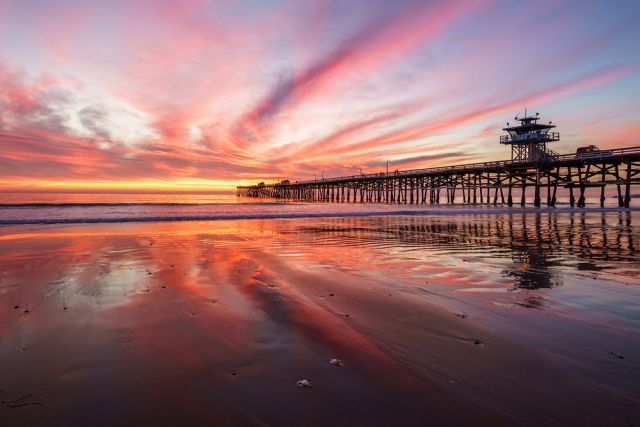
Great stuff, Fred! My preference follows the order in which you posted, or maybe 2 slightly ahead of 1. But any one of the 3 is a fine wall-hanger iMHO!
alba63 wrote:
Fred, how do you control the aperture of your TS-E on the Sony camera? What adapter do you use?
Thanks
Bernhard
There are a couple of adapters that allow you to control the aperture from the camera, just like a Sony lens. I use the Metabones III, and it works fine. Even get the correct EXIF data.
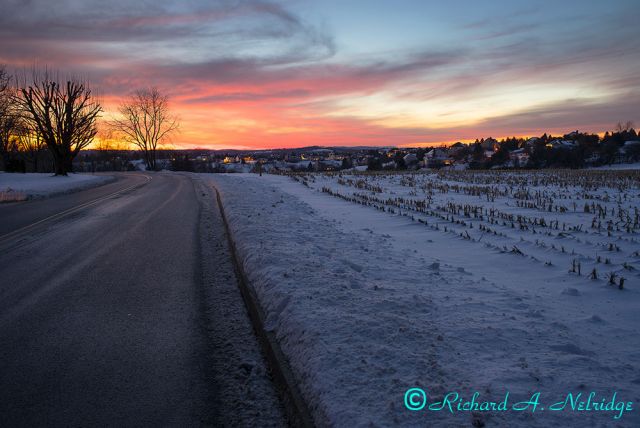
Here is one more from last evening taken near the Trexler Nature Preserve, Schnecksville, PA.with my A7r and my Leica R 28mm f2.8 Elmarit V2 lens. Image shot at ISO 100 30 minutes after sunset for 4 seconds and is the last of the series taken after sunset. Image processed in LR5.3.
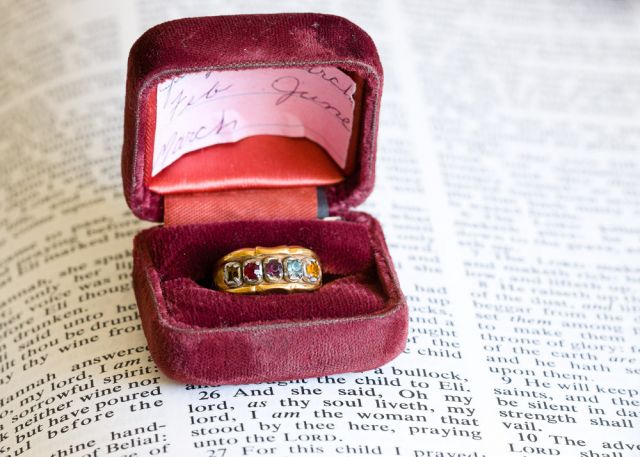
I setup my Sig 150 macro to see how it handles on tripod (needed a pic of this antique ring before I give it to my cousin). No problems at all. The Sig has a tripod food, and the A7 dangles off the back of it without any trouble. Very solid & balanced on a good tripod & heavy ballhead. This is wide open. Lovin' the A7 articulating screen & WYSIWYG exposure.