Sony FE Images Thread
p.295 #1Sony FE Images Thread
Samuli Vahonen wrote:
I don't have hood for S-Planar - the front element is +50mm inside the lens, I maybe could use one of my Contax metal hoods, but I don't see any point doing it - and those metal hoods are very much eating reflections. Also Zeiss ZE/ZF series lenses have their metal hoods lined with some material, only bad thing with that is that it tends to wear out.
I think that in extreme lighting situations the recessed front element is not enough. That's why lenses like PC-E Micro-Nikkor 85/2.8G also comes with quite long lens hood albeit having its front element deep inside the lens barrel. With optimally designed lens hood the "hat trick" would not be needed or would it?
Also according to my studies (see Adapter flare demystified) majority of lenses, benefit only little from killing reflections using flock paper - the root cause is that light enters wrong place or wrong angle to "mirror chamber" (yes I know there is no mirror...), masking helps a lot. I have noticed that specially TSE-lens users have complained Metabones III reflections, but with my lenses Metabones haven't caused much trouble.
Well, I ment real optical flock material which are fe. used in telescopes and effectively kills reflections from any angle that hits it. They're also quite thin and the self adhesive stuff is quite easy to use. I have seen tests which confirmed benefits of using that stuff for the Metabones III. Black metal or plastic on a problematic surface will still reflect light and is not as effective in eating reflections.
I once compared Zeiss Makro-Planar 120/4 CF T* for Hasselblad vs. EF 100/2.8 Macro USM both equipped with hoods while shooting a studio setup with side/back lighting. The Zeiss had much lower contrast due to veiling flare in that situation.
May 14, 2014 at 12:07 PM


p.295 #4Sony FE Images Thread
paah75 wrote:
I think that in extreme lighting situations the recessed front element is not enough. That's why lenses like PC-E Micro-Nikkor 85/2.8G also comes with quite long lens hood albeit having its front element deep inside the lens barrel. With optimally designed lens hood the "hat trick" would not be needed or would it?
With optimally designed lens hood the "hat trick" would not be needed. Outside movie industry I haven't seen any optimal lens hoods. The petal hoods don't work very well, this far there haven't been any hood, which couldn't be helped with "hat trick" . I have done for years "hat trick" with pretty good petal hoods Canon L, Zeiss ZE, Sigma and less optimal hoods (=every other brand round cylinderical hoods). Zeiss ZE/ZF-series hoods, as well as EF L-series hoods, are pretty good compromises, but they usually come useless when you use filter/filters (assuming photographer cares sun shining to filters, which usually doesn't do much harm as long as it won't get in to the lens).
If there would be optimal hood, most likely I would leave it home, as nature photographer I could not fit 4 optimal hoods in top of everything else into my bag, my bag might not even fit one. Also every large format nature photographer I know, used (used = nobody shoot large format anymore...) "hat trick" or used something like Flare Buster - few used similar hoods what are used shooting movies, but their setup is tricky and takes some time, and you may need extra stuff to connect them to tripod, like in movie cameras.
On situations like the S-Planar sample picture; sun is just few degrees above (or left/right) from visible "frame" of image, there just isn't any standard hood which would prevent sun shining to lens. If the lens would be manufactured to block sun from this setup then it most likely would cause vignetting when focusing to infinity/other distances (depending on lens design, of course if lens is designed to have no " target="_blank" rel="nofollow">breathing then same hood might work on multiple focus distances).
For me it's no issue to use "hat trick", as I shoot +99% from tripod. I find "hat trick" cumbersome only in some situations:
- with multiple lights, e.g. when also snow reflects to lens in addition to sun and have to block from multiple directions
- when using wide lenses and holding hat requires accessories (to avoid hand visible in corner of image) e.g. holding the hat with stick etc.
- when holding reflector to fill in shadows on backlight situations
In handheld situations I usually shoot without filters and prefer lenses with very effective hoods.
paah75 wrote:
Well, I ment real optical flock material which are fe. used in telescopes and effectively kills reflections from any angle that hits it. They're also quite thin and the self adhesive stuff is quite easy to use. I have seen tests which confirmed benefits of using that stuff for the Metabones III.
Sure, these things can be optimized once the main issue has been handled (e.g. using Metabones III = masking handled). For adapters with "round hole" masking takes care first 95% of the issue, then rest MAYBE can be optimized with flocking. PS. If you find place to buy this material (in consumer quantities, I don't need whole pallet...) from Finland/EU, please PM me.
Also I doubt there is much difference in reflectivity between "real optical flock" material vs. material I used on testing masking vs. flocking. In real world test flocking (on "round hole" adapters, not talking about Metabones III, as I have zero issues with it I have done nothing with it) provided minimal help, but masking eliminated all issues almost completely, maybe reason why Sony has masked all their own lenses.
paah75 wrote:
I once compared Zeiss Makro-Planar 120/4 CF T* for Hasselblad vs. EF 100/2.8 Macro USM both equipped with hoods while shooting a studio setup with side/back lighting. The Zeiss had much lower contrast due to veiling flare in that situation.
Point was that medium format lens on "full" frame with medium format hood is less effective as lens and hood optimized for smaller format? In addition FOV of Hasselblad lens is 36 degrees diagonal (square ratio), while Canon is 24 degrees diagonal (3:2 ratio). So yes, I agree, this is to be expected test result.
Any idea is the LA-EA3 as bad as Metabones III (thou any of my EF-mount lenses didn't cause issue, but Canon TSEs at least seem to cause issues with Metabones III)? I have been thinking getting one to use my 24-70 with A7&A7r, and maybe also get Alpha 16-35.
Samuli
May 14, 2014 at 03:02 PM
p.295 #5Sony FE Images Thread
Samuli Vahonen wrote:
PS. If you find place to buy this material (in consumer quantities, I don't need whole pallet...) from Finland/EU, please PM me.
Have you looked here:
http://www.micro-tools.de/
PS. If you find place to buy this material (in consumer quantities, I don't need whole pallet...) from Finland/EU, please PM me.
Have you looked here:
http://www.micro-tools.de/
May 14, 2014 at 04:42 PM
p.295 #6Sony FE Images Thread
Can't really get a better or smaller lens with this camera then the FE 35mm, easy to shoot with, light and fast...for me. Handheld with an ND8 filter today.

Superior East End by xposhore, on Flickr

Dog on the Tracks by xposhore, on Flickr
Superior East End by xposhore, on Flickr
Dog on the Tracks by xposhore, on Flickr
May 14, 2014 at 05:09 PM

p.295 #8Sony FE Images Thread
Have had very little time to shoot lately and even less time to post, but its so nice that Spring has finally arrived.....
A7 with C/Y 50 1.7....
A7 with C/Y 50 1.7....
 |
||
 |
||
|
May 14, 2014 at 07:14 PM
p.295 #9Sony FE Images Thread
A 5 images stitch (handheld), 4 to each side one shot of the middle, with the ZE 18/3.5 at ISO 5000.
The stitched image has 150 MP and could be printed in native resolution (240 dpi) 1,25 m by 1,25 m (ca 50x50 inch)
The detail (see at Flickr) in the mosaic is fantastic.
"Cupola Del Battistero, Firenze"

DSC06511 Panorama-3.jpg by W.Utsch, on Flickr
The stitched image has 150 MP and could be printed in native resolution (240 dpi) 1,25 m by 1,25 m (ca 50x50 inch)
The detail (see at Flickr) in the mosaic is fantastic.
DSC06511 Panorama-3.jpg by W.Utsch, on Flickr
May 14, 2014 at 11:38 PM
p.295 #10Sony FE Images Thread
Samuli Vahonen wrote:
If there would be optimal hood, most likely I would leave it home, as nature photographer I could not fit 4 optimal hoods in top of everything else into my bag, my bag might not even fit one.
Of course, but using always official or 3rd party hood would propably eliminate issues in many cases. If not, use any additional trick that is most suitable. Like some easily movable attachment on top of the hood.
Also I doubt there is much difference in reflectivity between "real optical flock" material vs. material I used on testing masking vs. flocking. In real world test flocking (on "round hole" adapters, not talking about Metabones III, as I have zero issues with it I have done nothing with it) provided minimal help, but masking eliminated all issues almost completely, maybe reason why Sony has masked all their own lenses.
I don't know, but the "real" material should absorb 99% of light from any angle while being not as thick. I used this for flocking:
http://www.fpi-protostar.com/flock.htm
While reading about your own test case and images you provided, it looked like that your flocking material gave almost the same result as masking. So large part of the light source was originally reflected from adapter tube, atleast in that case? I think with some adapters the problem might be the smaller tube that connects to the camera body. Some of the cheaper adapters even have very reflective black paint in their interior. Might cause internal reflections when light hits an adapter barrel at high angle. But of course well designed mask that is both thin and made of non-reflecting material would be even more efficient. Just my 2 cents...
With the Metabones mk III the problem is that the mask edges actually create additional reflections because of the design of the mask. TS-E lenses (like my 17/4L and 24/3.5L II) have very large imaging circle so I quess the change of hitting inner surfaces of an adapter is also higher.
Edited on May 15, 2014 at 03:03 AM · View previous versions
May 15, 2014 at 12:55 AM
|

p.295 #12Sony FE Images Thread
Thanks, Michiel.
I like these prism effects!
I like these prism effects!
May 15, 2014 at 07:00 AM
p.295 #13Sony FE Images Thread
Great stitch Werner! I like the prism too, Michiel! Great BW tjack..
Here is one I took when I first received the FE 55.
Gregg
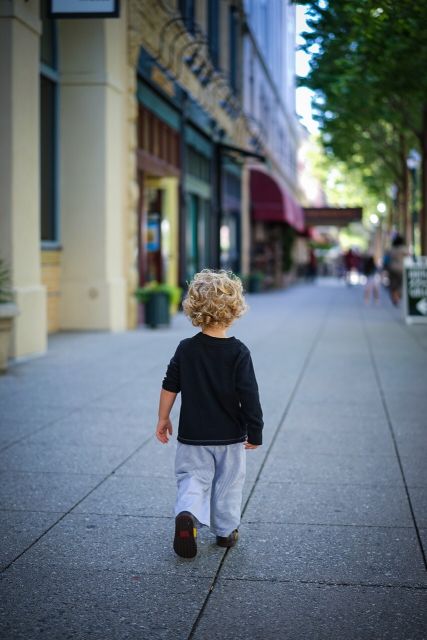
Here is one I took when I first received the FE 55.
Gregg
May 15, 2014 at 08:01 AM

p.295 #15Sony FE Images Thread
tjack wrote:
Can't really get a better or smaller lens with this camera then the FE 35mm, easy to shoot with, light and fast...for me. Handheld with an ND8 filter today.
https://farm8.staticflickr.com/7427/14187935365_f92af5bfa5_b.jpg
Superior East End by xposhore, on Flickr
https://farm6.staticflickr.com/5474/14208036333_a8d10bb4cf_b.jpg
Dog on the Tracks by xposhore, on Flickr
Agree.. But I do wish it was a bit beefy, it doesn't inspire confidence that it will last long enough. The FE 55 seems to have higher built quality..
Yesterday, my A7 was shocked quite badly when I was trying to pick it up but the straps were accidentally stuck to an obstacle. The A7 continued to work normally but the FE 35 attached didn't want to focus and the aperture blades keep closing down. The lens also fail to communicate with the camera, no lens indication turned on the LCD.
For FE 35 owners, please beware to handle it with care.
Very nice pictures by the way!
May 15, 2014 at 08:25 AM
p.295 #16Sony FE Images Thread
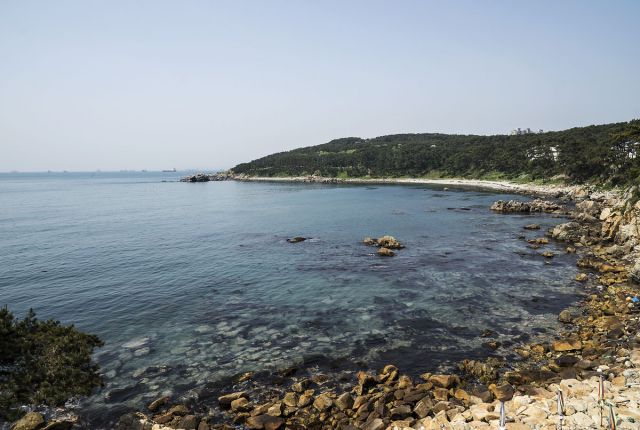
The Euganean Hills are ancient formations after volcanic eruptions in the middle of the vast Po Valley in the north of Italy, walks and bike rides up to 600m above sea level. For those who need baths, mud baths, the small towns around the hills offer solutions very popular. Abano Terme and Montegrotto are the most famous.
some sunsets with 24mm f2,8 Minolta Rokkor MC
last one is by 45G

24mm f2,8 Minolta MC Rokkor di albasana, su Flickr

24mm f2,8 Minolta MC Rokkor di albasana, su Flickr

sunset runs on the train di albasana, su Flickr
some sunsets with 24mm f2,8 Minolta Rokkor MC
last one is by 45G
24mm f2,8 Minolta MC Rokkor di albasana, su Flickr
24mm f2,8 Minolta MC Rokkor di albasana, su Flickr
sunset runs on the train di albasana, su Flickr
May 15, 2014 at 09:24 AM


May 15, 2014 at 09:39 AM
p.295 #18Sony FE Images Thread
frezeiss wrote:
https://farm8.staticflickr.com/7427/14187935365_f92af5bfa5_b.jpg
Superior East End by xposhore, on Flickr
https://farm6.staticflickr.com/5474/14208036333_a8d10bb4cf_b.jpg
Dog on the Tracks by xposhore, on FlickrAgree.. But I do wish it was a bit beefy, it doesn't inspire confidence that it will last long enough. The FE 55 seems to have higher built quality..
I remember my Sony 1.8/50 OSS which hat a metal shell but after less than a year of use it showed many signs of use while my manual Rokkors which hadn't been used any less were still in great condition. I would really like to see Roger disassembling one and giving us an assessment of its longevity.
Edited on May 16, 2014 at 12:38 AM · View previous versions
tjack wrote
Can't really get a better or smaller lens with this camera then the FE 35mm, easy to shoot with, light and fast...for me. Handheld with an ND8 filter today.https://farm8.staticflickr.com/7427/14187935365_f92af5bfa5_b.jpg
Superior East End by xposhore, on Flickr
https://farm6.staticflickr.com/5474/14208036333_a8d10bb4cf_b.jpg
Dog on the Tracks by xposhore, on Flickr
I remember my Sony 1.8/50 OSS which hat a metal shell but after less than a year of use it showed many signs of use while my manual Rokkors which hadn't been used any less were still in great condition. I would really like to see Roger disassembling one and giving us an assessment of its longevity.
Edited on May 16, 2014 at 12:38 AM · View previous versions
May 15, 2014 at 09:48 AM
p.295 #19Sony FE Images Thread
frezeiss wrote:
Nice set, Roxsan..
A couple with the FE 55
https://farm3.staticflickr.com/2932/14004122597_90567c99aa_o.jpgMono
https://farm3.staticflickr.com/2917/14005174190_8961b50d5b_o.jpgUntitled
thank you frezeiss, love yours as well,
first one, where in Indonesia? miss your Country ...
Nice set, Roxsan..
A couple with the FE 55
https://farm3.staticflickr.com/2932/14004122597_90567c99aa_o.jpgMono
https://farm3.staticflickr.com/2917/14005174190_8961b50d5b_o.jpgUntitled
thank you frezeiss, love yours as well,
first one, where in Indonesia? miss your Country ...
May 15, 2014 at 09:52 AM