Sony FE Images Thread


p.294 #2Sony FE Images Thread
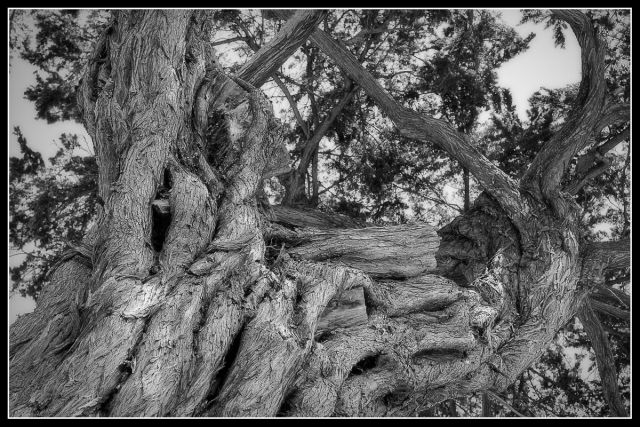
Immediately thought of Samuli when passing this scene...

May 13, 2014 at 11:32 PM
p.294 #3Sony FE Images Thread
springiness with the tamron 90/2.5 macro wide open:


May 13, 2014 at 11:59 PM


p.294 #6Sony FE Images Thread
phillip, all those geese look very angry at you. perhaps they take offense to being called ducks?
May 14, 2014 at 12:53 AM
p.294 #7Sony FE Images Thread
The thread is moving very fast, and so many excellent images 
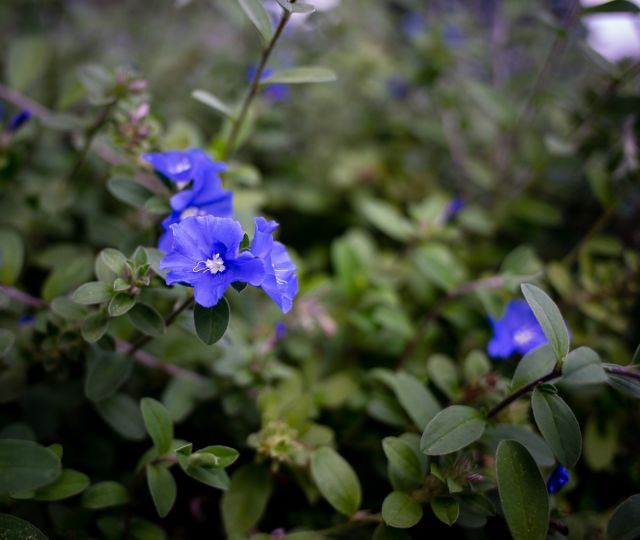
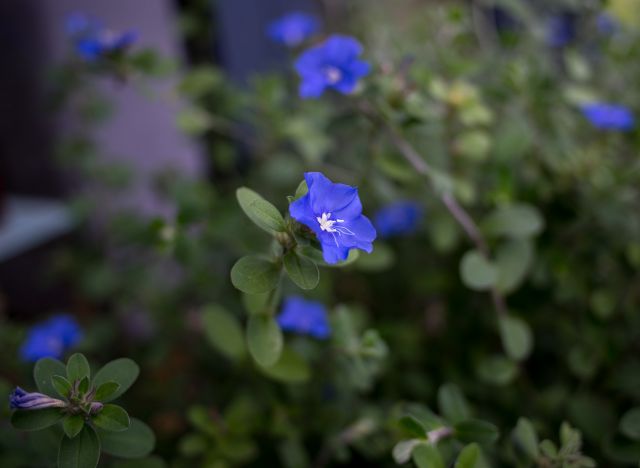
First couple shots with the Nikkor 28/2.8 AI S and A7r
Edited on May 14, 2014 at 06:39 AM · View previous versions
First couple shots with the Nikkor 28/2.8 AI S and A7r
 |
||
 |
||
|
|
||
 |
||
|
Edited on May 14, 2014 at 06:39 AM · View previous versions
May 14, 2014 at 12:54 AM
p.294 #8Sony FE Images Thread
sculptormic wrote:
smdl: Those are great city horizons! Congratulations!
Fooling around with a prism filter.
https://farm3.staticflickr.com/2939/14175452242_01fcca0247_o.jpg
https://farm8.staticflickr.com/7379/14174801011_7d562c3242_o.jpg
https://farm8.staticflickr.com/7363/14154943666_9f4821abc7_o.jpg
https://farm8.staticflickr.com/7348/13991431259_39609dd8da_o.jpg
Thanks a lot ! And great shots as usual. And more, thanks also for your Amsterdam and Netherlands pictures. I well know your country, love it, and you help me to keep an eye on his beauties.
smdl: Those are great city horizons! Congratulations!
Fooling around with a prism filter.
https://farm8.staticflickr.com/7379/14174801011_7d562c3242_o.jpg
https://farm8.staticflickr.com/7363/14154943666_9f4821abc7_o.jpg
https://farm8.staticflickr.com/7348/13991431259_39609dd8da_o.jpg
Thanks a lot ! And great shots as usual. And more, thanks also for your Amsterdam and Netherlands pictures. I well know your country, love it, and you help me to keep an eye on his beauties.
May 14, 2014 at 01:08 AM
p.294 #9Sony FE Images Thread
sebboh wrote:
phillip, all those geese look very angry at you. perhaps they take offense to being called ducks?
didn't you call a tortoise duck just yesterday? I think it's only for that I may call a duck a duck, even if it is strictly not a duck

two more ducks:


see? that horse sized duck is perfectly fine with beeing called a duck. Which is lucky because i don't like beging chased by horse sized ducks

phillip, all those geese look very angry at you. perhaps they take offense to being called ducks?
didn't you call a tortoise duck just yesterday?
I think it's only for that I may call a duck a duck, even if it is strictly not a duck two more ducks:
see? that horse sized duck is perfectly fine with beeing called a duck. Which is lucky because i don't like beging chased by horse sized ducks
May 14, 2014 at 01:08 AM
p.294 #10Sony FE Images Thread
Phillip Reeve wrote:
didn't you call a tortoise duck just yesterday? I think it's only for that I may call a duck a duck, even if it is strictly not a duck
that was totally a turtle not a tortoise and it had a pretty beakish looking snout. i admit i was tempted to claim the baby sparrow above was a duck.
Phillip Reeve wrote:
two more ducks:
see? that horse sized duck is perfectly fine with beeing called a duck. Which is lucky because i don't like beging chased by horse sized ducks
i assume you must be familiar with this meme then?
here's a few more of your angry "ducks" with the rokkor 58/1.2:


didn't you call a tortoise duck just yesterday?
I think it's only for that I may call a duck a duck, even if it is strictly not a duck that was totally a turtle not a tortoise and it had a pretty beakish looking snout. i admit i was tempted to claim the baby sparrow above was a duck.
Phillip Reeve wrote:
two more ducks:
see? that horse sized duck is perfectly fine with beeing called a duck. Which is lucky because i don't like beging chased by horse sized ducks
i assume you must be familiar with this meme then?
here's a few more of your angry "ducks" with the rokkor 58/1.2:
May 14, 2014 at 01:22 AM
|
p.294 #11Sony FE Images Thread
Samuli Vahonen wrote:
Technique #1 with Sony seems to be "hat" (holding hat between sun and lens), I have done it before with 5DmkII, but usually it did mean minor improvement on contrast. On Sony it seems to be completely different story; light sources close to image "frame" cause enormous flare, reflections and something else random depending lens. This scene was shoot with C/Y adapter, which was masked, but even it didn't help. Photo was shoot with polarizer, but has almost no effect (did try first without polarizer and photo seemed as bad).
Well, I've experienced sensor flare with 5D mkII too when there is highlights next to image edges. Also many legacy lenses (including some Zeiss) are much more prone to internal reflections because of not so modern coatings. I've found that my EF lenses are quite flare resistant.
For all of my adapters including Metabones EOS-NEX mk III (which has sort of built in mask) I've now coated inner parts with self adhesive optical flock paper. For Metabones the most problematic part AFAIK are the sides of its inner mask which caused reflections. Black plastic or paint will reflect light anyway. So best solution would propably be a mask coated with black flock material.
Also, what kind of lens hood did you use for the lens on that example? I just began to wonder if using flock paper on inner surfaces of a lens hood would be helpfull too. Now as I think of it, Canon uses this sort of interior material for lens hoods and extension tubes as well. It might help to prevent sun light from bouncing back from lens hood to a front element of a lens.
May 14, 2014 at 01:35 AM

p.294 #13Sony FE Images Thread
...
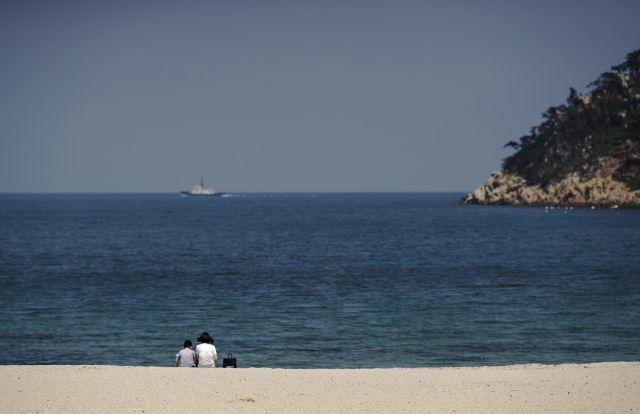
Carl Zeiss Distagon T* 2/25 @ f/11, HDR (1/6s, 1/25s, 1/100s), Sony A7 @ ISO 100, no polarizer
http://www.zeissimages.com/gallery/686/U686I1390890543.SEQ.0.jpg
Samuli
I love this image.
I think that It would make a magnificent large print.
-evan
Carl Zeiss Distagon T* 2/25 @ f/11, HDR (1/6s, 1/25s, 1/100s), Sony A7 @ ISO 100, no polarizer
http://www.zeissimages.com/gallery/686/U686I1390890543.SEQ.0.jpg
Samuli
I love this image.
I think that It would make a magnificent large print.
-evan
May 14, 2014 at 06:21 AM
p.294 #14Sony FE Images Thread
just a very small duck...

The above industar_61 lens was NOS and delivered from Russia for less than $40.
...and a macro shot that just doesn't compare with the stunning ones from 'lumis beans' (what is a lumis bean?)
handheld shot - trying out my new nFD35-105/3.5, bought because I read too many Alt threads on this forum.

Cron 50 Dual Range next

experimenting to see if I can get away with the ZM25 Biogon on the A7R...just occasionally!

and finally, the CV90/3.5APO - all of these on the A7R

The above industar_61 lens was NOS and delivered from Russia for less than $40.
...and a macro shot that just doesn't compare with the stunning ones from 'lumis beans' (what is a lumis bean?)
handheld shot - trying out my new nFD35-105/3.5, bought because I read too many Alt threads on this forum.
Cron 50 Dual Range next
experimenting to see if I can get away with the ZM25 Biogon on the A7R...just occasionally!
and finally, the CV90/3.5APO - all of these on the A7R
May 14, 2014 at 06:53 AM

p.294 #16Sony FE Images Thread
sebboh wrote:
I think it's only for that I may call a duck a duck, even if it is strictly not a duck that was totally a turtle not a tortoise and it had a pretty beakish looking snout. i admit i was tempted to claim the baby sparrow above was a duck.
see? that horse sized duck is perfectly fine with beeing called a duck. Which is lucky because i don't like beging chased by horse sized ducksi assume you must be familiar with this meme then?
here's a few more of your angry "ducks" with the rokkor 58/1.2:
http://farm6.staticflickr.com/5517/14071874605_1c4366862e_o.jpg
http://farm8.staticflickr.com/7347/14068721562_e049563301_o.jpg
You never know when and what kind of duck you'll meet.For example,I have recently came across three furry quadruped ducks with tales and whiskers .
A7+Samyang 24/1.4 wo


A7+Samyang 35/1.4 wo

Phillip Reeve wrote
didn't you call a tortoise duck just yesterday? I think it's only for that I may call a duck a duck, even if it is strictly not a duck Phillip Reeve wrote
two more ducks:see? that horse sized duck is perfectly fine with beeing called a duck. Which is lucky because i don't like beging chased by horse sized ducks
here's a few more of your angry "ducks" with the rokkor 58/1.2:
http://farm6.staticflickr.com/5517/14071874605_1c4366862e_o.jpg
http://farm8.staticflickr.com/7347/14068721562_e049563301_o.jpg
You never know when and what kind of duck you'll meet.For example,I have recently came across three furry quadruped ducks with tales and whiskers
.A7+Samyang 24/1.4 wo
A7+Samyang 35/1.4 wo
May 14, 2014 at 08:40 AM
p.294 #17Sony FE Images Thread
Some fantastic shots since I last checked in, and too many lens temptations.
I was so glad to have have a light weight option when I got a last minute invite recently, only took the Konica 40mm, and was thankful after the climb.
These were in the middle of the day and very cloudy but who could say no to the opportunity


I was so glad to have have a light weight option when I got a last minute invite recently, only took the Konica 40mm, and was thankful after the climb.
These were in the middle of the day and very cloudy but who could say no to the opportunity
May 14, 2014 at 08:51 AM
p.294 #18Sony FE Images Thread
eheffa wrote:
I love this image.
I think that It would make a magnificent large print.
-evan
Thanks Evan!
paah75 wrote:
Well, I've experienced sensor flare with 5D mkII too when there is highlights next to image edges.
I have shoot from 2008 to 2014 with 5DmkII (mainly with same lenses I now shoot with A7/A7r) and I never had ANY sensor flare except that strong light sources are reflected from sensor back to rear lens element (mirrored to "other side" of centerpoint of sensor e.g. if light source top left, then reflection was in bottom right).
paah75 wrote:
Also many legacy lenses (including some Zeiss) are much more prone to internal reflections because of not so modern coatings. I've found that my EF lenses are quite flare resistant.
I have quite the opposite experience with C/Y lenses vs. Canon EF, I had much less flare issues with C/Y Contaxes and backlight performance was major consideration for me to move away from EF towards C/Y lenses and later ZE/ZF series. Zeiss and Pentax have had really good coatings already on 1980s, much better than the EF-coatings before the nano stuff. However it's obvious that 1980s' Minolta, Canon FD, Olympus OM coatings are not as good as EF-coatings - however many of their lens designs are taking flare much better account than most EF-lenses. Flaring is not just fault of coatings, also the design of lens plays big role.
I only did EF primes (few normal, mostly L), no experience of nature shooting with zooms, they may be better, but I doubt so. I sold all Canons before they started doing "mkII" lenses with nano-coating, they might be better than 28/1.8, 35L, 45TSE, 50/1.4, 50/1.8, 50/2.5, 85/1.8, 85LmkII, 100 makro, 100L(it may have the nano thing ), 135L, 200L, 300L, 400L, if there happens to be mkII(or mkIII in case of 85) made with new coatings, all mentioned didn't have any special coatings or design for exceptional flare resistance. I shoot weddings and other "people stuff" with 17-40L, 24-70L, 70-200L, but there hardly were any challenging lightning conditions, and technical quality wasn't that important anyways.
paah75 wrote:
For all of my adapters including Metabones EOS-NEX mk III (which has sort of built in mask) I've now coated inner parts with self adhesive optical flock paper. For Metabones the most problematic part AFAIK are the sides of its inner mask which caused reflections. Black plastic or paint will reflect light anyway. So best solution would propably be a mask coated with black flock material.
Mask with no surface to reflect (as thin as possible) is also good choice, see how I masked Contac G adapter: link. There is no point to have longer than needed mask.
paah75 wrote:
Also, what kind of lens hood did you use for the lens on that example? I just began to wonder if using flock paper on inner surfaces of a lens hood would be helpfull too. Now as I think of it, Canon uses this sort of interior material for lens hoods and extension tubes as well. It might help to prevent sun light from bouncing back from lens hood to a front element of a lens.
I don't have hood for S-Planar - the front element is +50mm inside the lens, I maybe could use one of my Contax metal hoods, but I don't see any point doing it - and those metal hoods are very much eating reflections. Also Zeiss ZE/ZF series lenses have their metal hoods lined with some material, only bad thing with that is that it tends to wear out.
In this case it's 100% the camera, this is one of my favorite lights to shoot in (I have shoot thousands or tens of thousands photos with 5DmkII(and other Canons before that) and same lenses as with A7/A7r in these kind of conditions), and with majority of lenses in this scenario would at most create random red blob somewhere in image.
Also according to my studies (see Adapter flare demystified) majority of lenses, benefit only little from killing reflections using flock paper - the root cause is that light enters wrong place or wrong angle to "mirror chamber" (yes I know there is no mirror...), masking helps a lot. I have noticed that specially TSE-lens users have complained Metabones III reflections, but with my lenses Metabones haven't caused much trouble.
Other example - the red blob would most likely also be also visible with Canon 5DmkII, the white top left corner is just Sony generated issue:
"Hat trick #2 - no hat" - Leica Elmarit-R 28mm f/2.8 v2 @ f/11, 0.6s, Sony A7r @ ISO 100, B+W Circular Polarizer 55mm

"Hat trick #2 - with hat" - Leica Elmarit-R 28mm f/2.8 v2 @ f/11, 1s, Sony A7r @ ISO 100, B+W Circular Polarizer 55mm

(also my Leica-R adapters are masked, and polarizer makes no difference in this scene either, except saturation of some parts of the image)
Samuli
I love this image.
I think that It would make a magnificent large print.
-evan
Thanks Evan!
paah75 wrote:
Well, I've experienced sensor flare with 5D mkII too when there is highlights next to image edges.
I have shoot from 2008 to 2014 with 5DmkII (mainly with same lenses I now shoot with A7/A7r) and I never had ANY sensor flare except that strong light sources are reflected from sensor back to rear lens element (mirrored to "other side" of centerpoint of sensor e.g. if light source top left, then reflection was in bottom right).
paah75 wrote:
Also many legacy lenses (including some Zeiss) are much more prone to internal reflections because of not so modern coatings. I've found that my EF lenses are quite flare resistant.
I have quite the opposite experience with C/Y lenses vs. Canon EF, I had much less flare issues with C/Y Contaxes and backlight performance was major consideration for me to move away from EF towards C/Y lenses and later ZE/ZF series. Zeiss and Pentax have had really good coatings already on 1980s, much better than the EF-coatings before the nano stuff. However it's obvious that 1980s' Minolta, Canon FD, Olympus OM coatings are not as good as EF-coatings - however many of their lens designs are taking flare much better account than most EF-lenses. Flaring is not just fault of coatings, also the design of lens plays big role.
I only did EF primes (few normal, mostly L), no experience of nature shooting with zooms, they may be better, but I doubt so. I sold all Canons before they started doing "mkII" lenses with nano-coating, they might be better than 28/1.8, 35L, 45TSE, 50/1.4, 50/1.8, 50/2.5, 85/1.8, 85LmkII, 100 makro, 100L(it may have the nano thing
), 135L, 200L, 300L, 400L, if there happens to be mkII(or mkIII in case of 85) made with new coatings, all mentioned didn't have any special coatings or design for exceptional flare resistance. I shoot weddings and other "people stuff" with 17-40L, 24-70L, 70-200L, but there hardly were any challenging lightning conditions, and technical quality wasn't that important anyways.paah75 wrote:
For all of my adapters including Metabones EOS-NEX mk III (which has sort of built in mask) I've now coated inner parts with self adhesive optical flock paper. For Metabones the most problematic part AFAIK are the sides of its inner mask which caused reflections. Black plastic or paint will reflect light anyway. So best solution would propably be a mask coated with black flock material.
Mask with no surface to reflect (as thin as possible) is also good choice, see how I masked Contac G adapter: link. There is no point to have longer than needed mask.
paah75 wrote:
Also, what kind of lens hood did you use for the lens on that example? I just began to wonder if using flock paper on inner surfaces of a lens hood would be helpfull too. Now as I think of it, Canon uses this sort of interior material for lens hoods and extension tubes as well. It might help to prevent sun light from bouncing back from lens hood to a front element of a lens.
I don't have hood for S-Planar - the front element is +50mm inside the lens, I maybe could use one of my Contax metal hoods, but I don't see any point doing it - and those metal hoods are very much eating reflections. Also Zeiss ZE/ZF series lenses have their metal hoods lined with some material, only bad thing with that is that it tends to wear out.
In this case it's 100% the camera, this is one of my favorite lights to shoot in (I have shoot thousands or tens of thousands photos with 5DmkII(and other Canons before that) and same lenses as with A7/A7r in these kind of conditions), and with majority of lenses in this scenario would at most create random red blob somewhere in image.
Also according to my studies (see Adapter flare demystified) majority of lenses, benefit only little from killing reflections using flock paper - the root cause is that light enters wrong place or wrong angle to "mirror chamber" (yes I know there is no mirror...), masking helps a lot. I have noticed that specially TSE-lens users have complained Metabones III reflections, but with my lenses Metabones haven't caused much trouble.
Other example - the red blob would most likely also be also visible with Canon 5DmkII, the white top left corner is just Sony generated issue:
"Hat trick #2 - no hat" - Leica Elmarit-R 28mm f/2.8 v2 @ f/11, 0.6s, Sony A7r @ ISO 100, B+W Circular Polarizer 55mm
"Hat trick #2 - with hat" - Leica Elmarit-R 28mm f/2.8 v2 @ f/11, 1s, Sony A7r @ ISO 100, B+W Circular Polarizer 55mm
(also my Leica-R adapters are masked, and polarizer makes no difference in this scene either, except saturation of some parts of the image)
Samuli
May 14, 2014 at 09:29 AM
p.294 #19Sony FE Images Thread
The continuos trend here seems to be duck & tree barks
Philip, I pretty much enjoyed your 300L landscape shot, the last one.
Philip, I pretty much enjoyed your 300L landscape shot, the last one.
May 14, 2014 at 10:33 AM

