This topic is in the 2013 archive. You can read it and like its posts here. It is read only.
Archive 20133D effect! Let's see your best photo - discuss how it happens.
p.4 #13D effect! Let's see your best photo - discuss how it happens.
Here's one with the D5100 + 18-105mm kit:
http://horshack.smugmug.com/Other/SanFrancisco/i-tqGTC6G/0/X2/sf_217-X2.jpg
http://horshack.smugmug.com/Other/SanFrancisco/i-tqGTC6G/0/X2/sf_217-X2.jpg
Jun 16, 2013 at 11:36 PM
p.4 #23D effect! Let's see your best photo - discuss how it happens.
Taylor Sherman wrote:
I agree w/ Wilhelm about jojomon's B&W tire picture. Very 3D to me.
Meanwhile - Wilhelm, the EXIF in your 2/100 picture of the two guys says it was 1.4/50? I was wondering what aperture that one was shot at because the DOF is really great, not as super-thin as it would be at f/2 with the 100mm, but still shallow enough to give the subject isolation.
The first shot, with the 2.8/28, is really great.
Thanks. Yes EXIF is 50/1.4 because of the cheapo adapters I use. You can program them but I seldom bother to. So they come with 50/1.4.
It should be F/2 on the shooting-guys image (with a slim chance that it could be F/2.8). Maybe it's the detailed environment that sort of expands the DOF?
Shot with a Canon 5D2 for the record,
Jun 17, 2013 at 01:11 AM
Emacs
Offline
Activity
[X]
Details
p.4 #33D effect! Let's see your best photo - discuss how it happens.
IMO 3D is not in bokeh:
NEX-5n + Leica SE 18 @ f/11 or f/8


NEX-5n + Leica SE 18 @ f/11 or f/8
Jun 17, 2013 at 02:58 AM
p.4 #43D effect! Let's see your best photo - discuss how it happens.
I used to use the word "popped out" rather than 3D ... cause the word "3D" tends to make other people mock or make fun on your photos ... hahaha 
My lens that often gives me a popped out look is Summicron-R 90 ... but it depends on several factors as already described in the older thread.
Edited on Jun 17, 2013 at 06:52 PM · View previous versions
My lens that often gives me a popped out look is Summicron-R 90 ... but it depends on several factors as already described in the older thread.
 |
||
 |
||
|
Edited on Jun 17, 2013 at 06:52 PM · View previous versions
Jun 17, 2013 at 04:17 AM
p.4 #53D effect! Let's see your best photo - discuss how it happens.
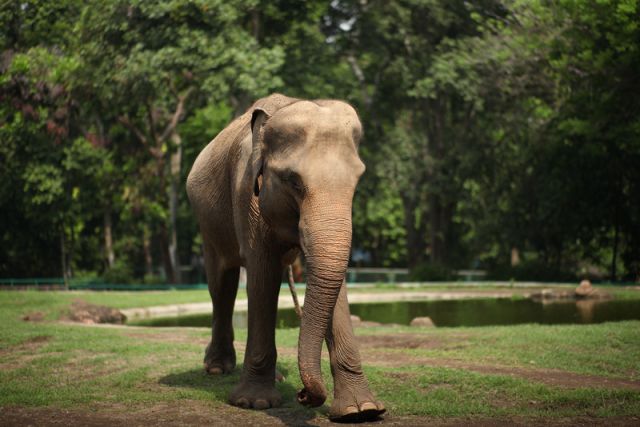
ok this elephant looks like he's about to walk out of the picture
Jun 17, 2013 at 05:03 AM
p.4 #63D effect! Let's see your best photo - discuss how it happens.
Spyro P. wrote:
ok this elephant looks like he's about to walk out of the picture
Right, nice one nixland :-)
ok this elephant looks like he's about to walk out of the picture
Right, nice one nixland :-)
Jun 17, 2013 at 05:06 AM
p.4 #73D effect! Let's see your best photo - discuss how it happens.
The 21 Distagon and a dead rose...

Dead rose 223 by Jeaunse23, on Flickr
Dead rose 223 by Jeaunse23, on Flickr
Jun 17, 2013 at 06:18 AM

p.4 #93D effect! Let's see your best photo - discuss how it happens.
Heh I remember that elephant. Very good example.
sebbohs "all-in-focus" buildings show that 3D dont need shallow DOF.
That "3D" effect is just how contrast levels are layered on each other. Cause you can actually make "3D" even without sharp lens. Its all in contrast and mostly only Leica and Zeiss know how. Tho there are some examples outside these (old Minolta MDs have sometimes similar look).
Jun 17, 2013 at 08:39 AM
p.4 #103D effect! Let's see your best photo - discuss how it happens.
D700 with nikon 50 f1.4 I think.

untitled-62-Edit.jpg by lifthard1, on Flickr
Edited on Jun 17, 2013 at 04:22 PM · View previous versions
untitled-62-Edit.jpg by lifthard1, on Flickr
Edited on Jun 17, 2013 at 04:22 PM · View previous versions
Jun 17, 2013 at 08:53 AM
p.4 #113D effect! Let's see your best photo - discuss how it happens.
Any lens with high micro-contrast can achieve the look. It doesn't have to say Leica or Zeiss on it.
3D = High Microcontrast + excellent technique + weak AA filters
Sometimes add sharp DoF transitions but to me, those are more layman examples.
3D = High Microcontrast + excellent technique + weak AA filters
Sometimes add sharp DoF transitions but to me, those are more layman examples.
Jun 17, 2013 at 09:04 AM
p.4 #123D effect! Let's see your best photo - discuss how it happens.
FlyPenFly wrote:
Any lens with high micro-contrast can achieve the look. It doesn't have to say Leica or Zeiss on it.
3D = High Microcontrast + excellent technique + weak AA filters
The AA filter has little to do with it, since we are to judge 3D-ishness from web-sized images.
Previous 3D threads in this forum abounded in examples from cameras equipped with a decent AA filter.
Jun 17, 2013 at 09:29 AM

p.4 #133D effect! Let's see your best photo - discuss how it happens.
+1 @ Mescalamba and FlyPenFly (parts of each) ...
Imo, Zeiss and Leica have a tendency to put forth the effort into their designs a bit more so than other mfr's. I'd say Zeiss leads the pack in aspiring to do so because of how they use different (layered, if you will) rates of transition through zones A,B,C.
Get you subjects/edges in one zone and your bg in another zone and they can really "stand out" even when dof is a non-issue. But, essentially all other mfrs have some glass that will as well, just not nearly so many offerings or the extent of zone transition variance that Zeiss applies.
Micro-contrast isn't the sole producer ... but it is a bit tougher to do without micro-contrast. Not to be confused with DOF/bokeh ... but the transition from an area of greater micro-contrast to lesser micro-contrast (usually in association with zones) within the frame can make for good placement to augment separation to increase the "3D-ishness pop".
How you process can also have an impact ... as was shown in the old thread. As to AA filter, since processing can replicate micro-contrast (to a degree), it can also offset the amount of AA. But, as one who shoots primarily with an SLR/C (no AA filter), my posted example (evergreen/old bell) came from a 1D II (fairly weak AA filter) and Mamiya glass.
Going back to the zones aspect, I think that some of the better "portrait" glass tends to employ this into the lens design also ... notably, the C/Y 135/2.8, Nikon 105/2.5 AIS, etc. Even my little Oly 135/3.5 was featured in the old thread. Once you go outside of the "portrait range" ... I think the number of "3D-ishness" producing glass drops off quite a bit for many mfrs, leaving Zeiss/Leica to stand out a bit more ... with "The King" Zeiss 21mm notably so on the UWA end of things (although my 24 TS-E II does a nice job with only a modest assist from pp).
Edited on Jun 17, 2013 at 10:10 AM · View previous versions
Jun 17, 2013 at 09:38 AM
p.4 #143D effect! Let's see your best photo - discuss how it happens.
Would these qualify as 3D?

Canon 5D and EF70-200mm f4 L IS

Canon 5D and EF 135mm f2 L
© Joseph Ferrari 2013
Canon 5D and EF70-200mm f4 L IS
Canon 5D and EF 135mm f2 L
Jun 17, 2013 at 10:01 AM
p.4 #153D effect! Let's see your best photo - discuss how it happens.
FlyPenFly wrote:
Any lens with high micro-contrast can achieve the look. It doesn't have to say Leica or Zeiss on it.
3D = High Microcontrast + excellent technique + weak AA filters.
I disagree, at least from my own subjective evaluations --- some truly excellent lenses (by any objective measure of microcontrast/sharpness/resolving power/aberration control) tend towards producing images with a more pronounced "flat, painting" look, while others create a stronger sense of dimensionality. Lighting and composition, of course, play the largest role. In my opinion, the defining "look" of many of Leica's finest lenses is producing a "two flat plane" composition: subjects are sharply defined and evidently "pop" from the background, but in a style of "cardboard cutouts in front of a flat abstract plane." I actually like seeing that look pulled off distinctively; but it's not "3D" in the "looking through a window" sense to me.
Jun 17, 2013 at 10:04 AM
p.4 #163D effect! Let's see your best photo - discuss how it happens.
Atlasman2 wrote:
Would these qualify as 3D?
In my opinion, the second (dog) much more than the first (kid with pool) --- while both have sharp subject/background separation from shallow depth of field, in the first the in-focus portions look flat and "pasted in" in front of a disconnected flat background. A large part of this is just the composition: the pool blocks the transition space from foreground to background (which is open in the dog photo), making it hard to get an intuitive sense of the whole surrounding space.
Jun 17, 2013 at 10:09 AM
p.4 #173D effect! Let's see your best photo - discuss how it happens.
mpmendenhall wrote:
In my opinion, the second (dog) much more than the first (kid with pool) --- while both have sharp subject/background separation from shallow depth of field, in the first the in-focus portions look flat and "pasted in" in front of a disconnected flat background. A large part of this is just the composition: the pool blocks the transition space from foreground to background (which is open in the dog photo), making it hard to get an intuitive sense of the whole surrounding space.
+1 ... taking notice of the difference in lenses.
One is stellar, fast portrait, the other is general purpose zoom. Two very different (both excellent quality) designs regarding how to handle zones/transitions.
Atlasman2 wrote
Would these qualify as 3D?+1 ... taking notice of the difference in lenses.
One is stellar, fast portrait, the other is general purpose zoom. Two very different (both excellent quality) designs regarding how to handle zones/transitions.
Jun 17, 2013 at 10:13 AM
p.4 #183D effect! Let's see your best photo - discuss how it happens.
I am running to get some peanuts to stop that elephant before he comes into my living room. Great photo.
Jun 17, 2013 at 11:25 AM
p.4 #193D effect! Let's see your best photo - discuss how it happens.
Trees seem to lend themselves to 3d.
Jun 17, 2013 at 11:26 AM
p.4 #203D effect! Let's see your best photo - discuss how it happens.
Does this pic have "3D" look? 

And how about this one?

And how about this one?
Jun 17, 2013 at 11:32 AM