This topic is in the 2013 archive. You can read it and like its posts here. It is read only.
Archive 20133D effect! Let's see your best photo - discuss how it happens.
p.11 #13D effect! Let's see your best photo - discuss how it happens.
Love the FlyPenFly flower shot & Phillip Reeve river shot .... looks popped out to me 
Apr 10, 2014 at 11:38 PM
p.11 #23D effect! Let's see your best photo - discuss how it happens.
F5.6 on an FE 35mm F2.8.
To me, the edges of the dancers look almost like traces. I think it might be from the strong backlight.

To me, the edges of the dancers look almost like traces. I think it might be from the strong backlight.
Apr 13, 2014 at 08:21 PM
p.11 #33D effect! Let's see your best photo - discuss how it happens.
Bump - A7R + Leica 50 Lux
http://www.lotuscreativeworks.com/photos/i-JgXL582/0/XL/i-JgL582-L.jpg
http://www.lotuscreativeworks.com/photos/i-JgXL582/0/XL/i-JgL582-L.jpg
Apr 21, 2014 at 09:48 PM
p.11 #43D effect! Let's see your best photo - discuss how it happens.
carstenw wrote:
An oldie. D3, 50P:
http://throughthelensdarkly.com/forums/CW_20110420_NikonD3_37904.jpg
Great example Carsten. I find a lot of images here show bokeh, not 3D..Hard to explain but studying the whole 3D thing further, I started noticing that shallow DOF photos have a sense of subject isolation, but the effect is more immediate than progressive, which, to my eyes results in "flat" images, with a clear differentiation between front and back, but no 3D.
If I were to verbalize my experience, would be that the eye moves from the subject to the background too swiftly to feel "drawn in", thus realizing a certain manufactured quality to the image.
In contrast, I remember the most successful 3D images in the original thread were in pretty much full focus, with light, subject placement and the camera /lens combo creating the effect, not the lack of focus.
Apr 22, 2014 at 07:07 AM
p.11 #53D effect! Let's see your best photo - discuss how it happens.
Here's one I took that (to me anyway) demonstrates the effect. Some amazing photos in this thread though.
http://beardedspoooon.smugmug.com/Animals/Riverbanks-Zoo/i-rfWPkf5/0/L/DSC03391-2-L.jpg
http://beardedspoooon.smugmug.com/Animals/Riverbanks-Zoo/i-rfWPkf5/0/L/DSC03391-2-L.jpg
Apr 23, 2014 at 04:42 PM
p.11 #63D effect! Let's see your best photo - discuss how it happens.
I followed (and have been part of) the previous lengthy thread about 2-D images with the appearance of 3-D. I have seen some images that did not employ selective focus and still achieved the effect -- images in which most planes were in focus. How the eye (brain) interprets things can be very complex and I would emphasize that I see differences with 2 different types of monitors -- which may explain why some people don't see it and others do.
Here's an example which (for me) shows a strong 3-D effect (you may have to stare at it for a second or two). Don't know what it proves, however.
http://www.la-tierra.net/abq8/temp/depth.jpg
Here's an example which (for me) shows a strong 3-D effect (you may have to stare at it for a second or two). Don't know what it proves, however.
http://www.la-tierra.net/abq8/temp/depth.jpg
Apr 24, 2014 at 10:10 AM
p.11 #73D effect! Let's see your best photo - discuss how it happens.
Interesting topic. This shot exhibits a bit of the 3D effect I think.
 Zeiss APO 135 Sony A7R by jraposo3072, on Flickr
Apr 24, 2014 at 11:39 AM
p.11 #83D effect! Let's see your best photo - discuss how it happens.
"3D" has always been something of a mystery to me because I'll buy lenses that are known for it and not see it, and other times get a pretty good sense of depth from even a lowly kit lenses
This shot for example was from testing the Sony FE 28-70 "kit" zoom I got last week, on my patio, with the whole area in shade from the house, yet I think its got a pretty good sense of depth. But no fancy glass, no special light...

This shot for example was from testing the Sony FE 28-70 "kit" zoom I got last week, on my patio, with the whole area in shade from the house, yet I think its got a pretty good sense of depth. But no fancy glass, no special light...
Apr 24, 2014 at 06:51 PM
p.11 #93D effect! Let's see your best photo - discuss how it happens.
I also don't really get the 3D thing, but trawling through some old photos there were some that did "pop". A few here (if I can remember how to post images here ...)
 |
||
| https://farm8.staticflickr.com/7249/7058983891_8a2c2f05f8_z_d.jpg | ||
|
|
||
| https://farm6.staticflickr.com/5240/7058983889_dc94783362_z_d.jpg | ||
|
|
||
| https://farm8.staticflickr.com/7265/7058983895_bf64557657_b_d.jpg | ||
|
Apr 25, 2014 at 06:05 PM
p.11 #103D effect! Let's see your best photo - discuss how it happens.
All pictures below show 3D look to some extent,without any PP.Most often achieved with Zeiss lenses,but other primes esp. Minolta Rokkors,Konica Hexanons and Voigtlanders SL/SL II can also do that quite often.
Taken with NEX 5/5N:
Makro Planar C 60/2.8 C/Y
http://zeissimages.com/gallery/951/U951I1304529274.SEQ.0.jpg
http://zeissimages.com/gallery/951/U951I1307904329.SEQ.3.jpg
Vario Sonnar 80-200/4 C/Y at about 80mm and 200mm
http://zeissimages.com/gallery/951/U951I1307904328.SEQ.1.jpg
http://zeissimages.com/gallery/951/U951I1307904327.SEQ.0.jpg
28/2.8 Distagon C/Y
http://zeissimages.com/gallery/951/U951I1309712143.SEQ.0.jpg
http://zeissimages.com/gallery/951/U951I1320142138.SEQ.0.jpg
Planar 50/1.7
http://zeissimages.com/gallery/951/U951I1307904386.SEQ.0.jpg
http://zeissimages.com/gallery/951/U951I1320142139.SEQ.2.jpg
ZF Distagon 25/2.8
http://zeissimages.com/gallery/951/U951I1313221894.SEQ.0.jpg
http://zeissimages.com/gallery/951/U951I1313221895.SEQ.2.jpg
C/Y Distagon 25/2.8
http://zeissimages.com/gallery/951/U951I1381685414.SEQ.1.jpg
ZF Distagon 35/2
http://zeissimages.com/gallery/951/U951I1313221936.SEQ.2.jpg
Canon 5D2+Makro Planar 100/2
http://zeissimages.com/gallery/951/U951I1320143465.SEQ.2.jpg
Apr 26, 2014 at 03:10 AM

p.11 #123D effect! Let's see your best photo - discuss how it happens.
Pentax FA77

Apr 26, 2014 at 05:26 AM
p.11 #133D effect! Let's see your best photo - discuss how it happens.
nixland wrote:
I used to use the word "popped out" rather than 3D ... cause the word "3D" tends to make other people mock or make fun on your photos ... hahaha
My lens that often gives me a popped out look is Summicron-R 90 ... but it depends on several factors as already described in the older thread.
Now THAT is the 3D most talk about, no question about it.
Apr 26, 2014 at 08:30 AM
p.11 #143D effect! Let's see your best photo - discuss how it happens.
MIRANDA1 wrote:
Interesting topic. This shot exhibits a bit of the 3D effect I think.
https://farm8.staticflickr.com/7008/13478066025_da590fd0c4_b.jpgZeiss APO 135 Sony A7R by jraposo3072, on Flickr
Indeed it does. Great example of the 3D effect.
There needs to be quite a bit of space around the subject for the 3D effect to be really effective and this shot has it.
It is hard to get shallow enough DOF when composing shots like that. Only fast lenses and larger formats apply.
Apr 26, 2014 at 08:32 AM

p.11 #153D effect! Let's see your best photo - discuss how it happens.
PhotoDes wrote:
I followed (and have been part of) the previous lengthy thread about 2-D images with the appearance of 3-D. I have seen some images that did not employ selective focus and still achieved the effect -- images in which most planes were in focus. How the eye (brain) interprets things can be very complex and I would emphasize that I see differences with 2 different types of monitors -- which may explain why some people don't see it and others do.
Here's an example which (for me) shows a strong 3-D effect (you may have to stare at it for a...Show more →
I also was part of the epic "What is 3D?" thread.
https://www.fredmiranda.com/forum/topic/829238/0?keyword=3d#7701654
A study of Trompe L'oeil and how painters create the effect can give some insight into the perceptual issues that our eye/brain system yields from visual cues toward dimensionality. Even in "real world", some people have difficulty perceiving 3D as well as others. I would imagine that great baseball hitters have developed excellent visual dimensional cue recognition so they can "read the ball". For others, the ball looks the same no matter what is thrown their way.
To that end, imo much of the photographic 3D-ish effect is rooted in the rate of transition changes that certain lens designs employ (yes, Zeiss does it quite a bit more than others, but they aren't the only ones) ... AND ... having your subject in one area of transition rate vs. the non-subject portion in a different transition rate. When your subject is positioned relative (within, or near the edge of) to the transition zones of the lens, the distinction of the difference is more noticeable. Combine this with a DOF that also changes in harmony with the transition rate change of a given glass and the effect can be rather notably accentuated (which is not the same as simply a shallow DOF).
Without a rate of transition transition, we often see that "cutout" look from an isolated shallow DOF. Granted it can yield a "pop" and a projection effect from the bg/fg, however the subject itself then lacks its own dimensionality cues.
Color,tonal value contrasts and sharpness transitions can all be visual cues to how our eye/brain assesses depth. So yes, while we are certainly in a 2D medium, the 3D-ish perception can be generated to a greater / lesser degree based on these (and others, i.e. lighting contrast, scale, perspective, etc.) factors ... just like a painter who is masterful in Trompe L'oeil.
Which, btw is translated @ "fools the eye" ... i.e. eye/brain cue assessment.
http://arthistory.about.com/od/glossary/g/t_trompe_loeil.htm
HTH
Apr 26, 2014 at 09:11 AM
p.11 #163D effect! Let's see your best photo - discuss how it happens.
I think the Sigma foveon sensors impart a 3D look at times:

_SDI0074 by Amin Sabet, on Flickr

_SDI0301c Portra 400VC - LoFi by Amin Sabet, on Flickr
_SDI0074 by Amin Sabet, on Flickr
_SDI0301c Portra 400VC - LoFi by Amin Sabet, on Flickr
Apr 26, 2014 at 09:49 AM
p.11 #173D effect! Let's see your best photo - discuss how it happens.
A few other,non Zeiss 3D examples:
MC W.Rokkor HH 35/1.8+A7
http://zeissimages.com/gallery/951/U951I1387725645.SEQ.1.jpg
http://zeissimages.com/gallery/951/U951I1370765532.SEQ.0.jpg
Nikon D7000+Nikkor VR 105/2.8 Macro
http://zeissimages.com/gallery/951/U951I1376248123.SEQ.3.jpg
http://zeissimages.com/gallery/951/U951I1370205891.SEQ.1.jpg
MC Rokkor 85/1.7+NEX5N
http://zeissimages.com/gallery/951/U951I1370765533.SEQ.3.jpg
Hexanon AR 85/1.8 AE+NEX5N
http://zeissimages.com/gallery/951/U951I1367399064.SEQ.1.jpg
Rokkor MD 50/1.2+NEX5N
http://zeissimages.com/gallery/951/U951I1366003238.SEQ.0.jpg
Nikkor Micro 105/5.6,Fujichrome Velvia rollcasette 6x7cm,Linhof Technika IV
http://zeissimages.com/gallery/951/U951I1356212341.SEQ.3.jpg
Apr 26, 2014 at 01:24 PM
p.11 #183D effect! Let's see your best photo - discuss how it happens.
Diggin' the "frog & finger" @ diff planes ... nice. 
Apr 26, 2014 at 05:08 PM
p.11 #193D effect! Let's see your best photo - discuss how it happens.
Cross post from the Fuji X photo thread, EL-Nikkor 50/2.8N on focusing helicoid:

Blue on blue by scepticswe, on Flickr
Blue on blue by scepticswe, on Flickr
Jun 09, 2014 at 01:02 PM
p.11 #203D effect! Let's see your best photo - discuss how it happens.
Focus tracking practice with radio controlled targets 200 f2 with D7000 and D800
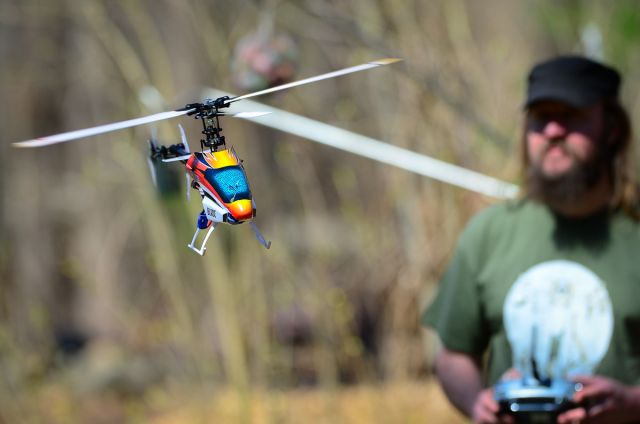
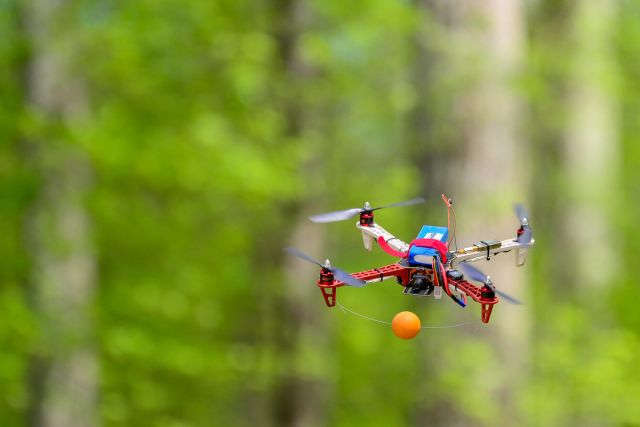
200 f2 with D7000 and D800Jun 09, 2014 at 05:43 PM