This topic is in the 2013 archive. You can read it and like its posts here. It is read only.
Archive 20133D effect! Let's see your best photo - discuss how it happens.
p.2 #13D effect! Let's see your best photo - discuss how it happens.
mp - I'm just learning here but you seem to be saying that 3d is more an aspect of the spatial relationships of the composition and less the nature of a given lens?
Jun 16, 2013 at 10:02 AM
p.2 #23D effect! Let's see your best photo - discuss how it happens.
I can't see any "3D" at all in the OP photo.
My interpretation is that the 3D-look is caused by hard, clean edges (no abberations) of the well focused main subject, against an unfocused background. It's an optical illusion that makes the subject "pop" against the background. Leaves can often show this effect.

Autumn Leaves by briantho, on Flickr
My interpretation is that the 3D-look is caused by hard, clean edges (no abberations) of the well focused main subject, against an unfocused background. It's an optical illusion that makes the subject "pop" against the background. Leaves can often show this effect.
Autumn Leaves by briantho, on Flickr
Jun 16, 2013 at 10:36 AM
p.2 #33D effect! Let's see your best photo - discuss how it happens.
I'll play. What do you guys think of these?


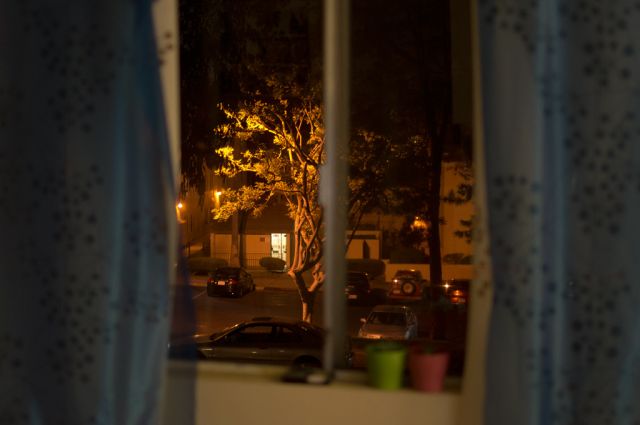

Jun 16, 2013 at 10:41 AM

p.2 #43D effect! Let's see your best photo - discuss how it happens.
Nice example @ leaves. +1 @ point edges (crisp, sharp, well corrected, well lit, proper WB, etc.)
Jun 16, 2013 at 10:59 AM
p.2 #53D effect! Let's see your best photo - discuss how it happens.
This photo was (obviously) taken several years ago when I first acquired the 200 f2.
People always commented on how "3D" it looked...just sayin'

People always commented on how "3D" it looked...just sayin'
Jun 16, 2013 at 11:19 AM
p.2 #63D effect! Let's see your best photo - discuss how it happens.
i really do wonder if the touits or other lens will have this 3D pop.
i havent seen something.
r
i havent seen something.
r
Jun 16, 2013 at 11:21 AM
p.2 #73D effect! Let's see your best photo - discuss how it happens.
With Leica M9 and zeiss 35 2 Biogon
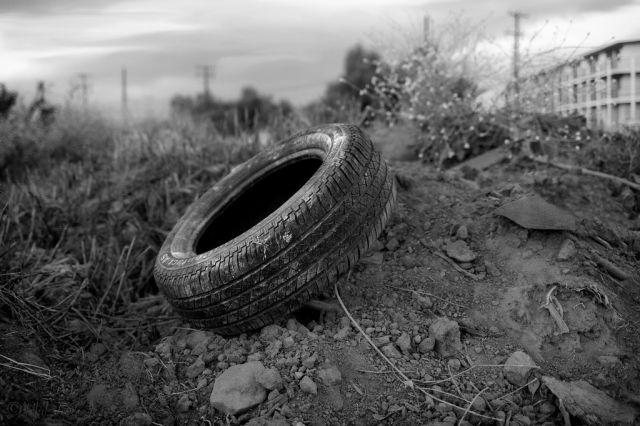
Edited on Jun 16, 2013 at 11:56 AM · View previous versions
Edited on Jun 16, 2013 at 11:56 AM · View previous versions
Jun 16, 2013 at 11:54 AM
p.2 #83D effect! Let's see your best photo - discuss how it happens.
With Canon and contax 85 1.4G EOS converted
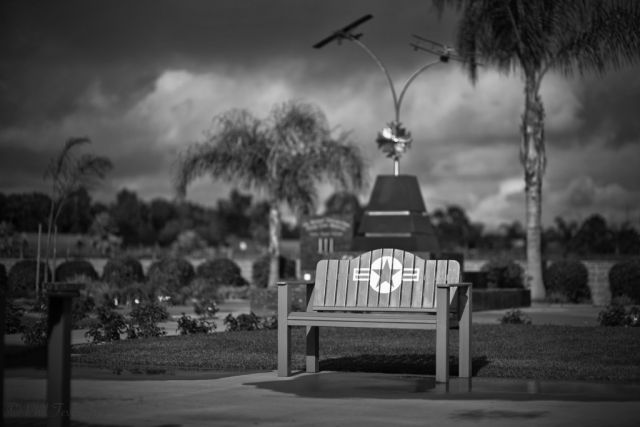
Edited on Jun 16, 2013 at 03:31 PM · View previous versions
Edited on Jun 16, 2013 at 03:31 PM · View previous versions
Jun 16, 2013 at 11:55 AM
p.2 #93D effect! Let's see your best photo - discuss how it happens.
35 asph 1.4 FLE
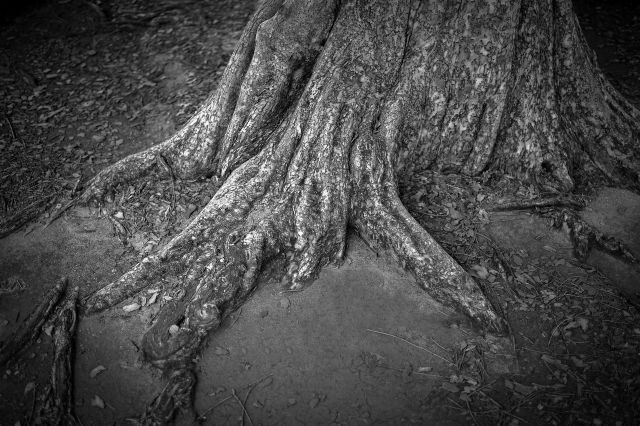
Jun 16, 2013 at 12:00 PM
p.2 #103D effect! Let's see your best photo - discuss how it happens.
briantho wrote:
I can't see any "3D" at all in the OP photo.
My interpretation is that the 3D-look is caused by hard, clean edges (no abberations) of the well focused main subject, against an unfocused background. It's an optical illusion that makes the subject "pop" against the background. Leaves can often show this effect.
http://farm9.staticflickr.com/8056/8145485405_8872e3faab_b.jpg
Autumn Leaves by briantho, on Flickr
Exactly. Bokeh and or thin DOF alone, at least to me, do not make an image 3-d. A sharply outlined, in-focus subject plane with great separation from a recognizable background is what does it for me. Micro-contrast goes a long ways towards helping this but isn't the only determinant.
I also have to agree with others, I see nothing in the OP photo which portrays a 3d effect. Maybe I can dig up a few I have later, which aren't a lot in number .
I can't see any "3D" at all in the OP photo.
My interpretation is that the 3D-look is caused by hard, clean edges (no abberations) of the well focused main subject, against an unfocused background. It's an optical illusion that makes the subject "pop" against the background. Leaves can often show this effect.
http://farm9.staticflickr.com/8056/8145485405_8872e3faab_b.jpg
Autumn Leaves by briantho, on Flickr
Exactly. Bokeh and or thin DOF alone, at least to me, do not make an image 3-d. A sharply outlined, in-focus subject plane with great separation from a recognizable background is what does it for me. Micro-contrast goes a long ways towards helping this but isn't the only determinant.
I also have to agree with others, I see nothing in the OP photo which portrays a 3d effect. Maybe I can dig up a few I have later, which aren't a lot in number
. Jun 16, 2013 at 12:18 PM
p.2 #113D effect! Let's see your best photo - discuss how it happens.
briantho wrote: My interpretation is that the 3D-look is caused by hard, clean edges (no abberations) of the well focused main subject, against an unfocused background. It's an optical illusion that makes the subject "pop" against the background.
Brian, just to add to your comment, I feel that there are, IMO, at least two 3D effects in 2D images; one where a single subjects 'pops' or creates an illusion of being isolated in space from its background, and second where multiple planes/layers are present in DoF (Orio's example posted earlier)
Please see below. 'Pop' in the first image isolates pipes creating kinda 3D effect. However, the second image is more interesting as it shows multiple layers; the yellow info card (clearly positioned in the middle of a stove), cardboard image of a woman (positioned between stove and the second stove/back wall) and background image (approximately 6' behind the cardboard image)
ebookman's image on previous page clearly shows multiple layers as well.
http://www.kozera.ca/photos/images/_D8E3728_640.jpg
http://www.kozera.ca/photos/images/_D8E3698_640.jpg
Jun 16, 2013 at 12:34 PM
p.2 #123D effect! Let's see your best photo - discuss how it happens.
While I don't really make an effort to pursue a 3D effect in my images, this one comes to mind because it was one of the first of mine where I felt the effect was kind of obvious. M9 & 21/1.4. It's an interesting lens because one isn't accustomed to seeing shallow depth of field at this focal length. I believe this was done very near to the minimum focusing distance of 70 cm, which also gives you a pretty good idea that the lens is not great for close ups.
http://ronscheffler.com/samples/fmm9/20120906/20120906_0253.jpg
Edited on Jun 16, 2013 at 12:54 PM · View previous versions
http://ronscheffler.com/samples/fmm9/20120906/20120906_0253.jpg
Edited on Jun 16, 2013 at 12:54 PM · View previous versions
Jun 16, 2013 at 12:53 PM
p.2 #133D effect! Let's see your best photo - discuss how it happens.
JaKo wrote:
Brian, just to add to your comment, I feel that there are, IMO, at least two 3D effects in 2D images; one where a single subjects 'pops' or creates an illusion of being isolated in space from its background, and second where multiple planes/layers are present in DoF (Orio's example posted earlier)
Please see below. 'Pop' in the first image isolates pipes creating kinda 3D effect. However, the second image is more interesting as it shows multiple layers; the yellow info card (clearly positioned in the middle of a stove), cardboard image of a woman (positioned between stove and the second...Show more →
I agree, great examples, but we're talking about lenses giving a 3D effect. The second image is kinda staged to render a 3D-like result, and it wouldn't matter much which lens was used to get a feeling of 3D. The first image displays the spontaneous effect that Zeiss lenses are famous for.
Earlier quote
briantho wrote: My interpretation is that the 3D-look is caused by hard, clean edges (no abberations) of the well focused main subject, against an unfocused background. It's an optical illusion that makes the subject "pop" against the background.Please see below. 'Pop' in the first image isolates pipes creating kinda 3D effect. However, the second image is more interesting as it shows multiple layers; the yellow info card (clearly positioned in the middle of a stove), cardboard image of a woman (positioned between stove and the second...Show more →
I agree, great examples, but we're talking about lenses giving a 3D effect. The second image is kinda staged to render a 3D-like result, and it wouldn't matter much which lens was used to get a feeling of 3D. The first image displays the spontaneous effect that Zeiss lenses are famous for.
Jun 16, 2013 at 12:53 PM
p.2 #143D effect! Let's see your best photo - discuss how it happens.
@jako. I would argue the layers explanation also includes the aforementioned "outline" theory.
For instance, there are many great photos of distant mountain / fog layers which while pretty, often display no 3d effect because of this lack of distinctive outlining.
I would instead modify your points into two subsets.
1). A "bokeh" outline with smooth transitions.
2). A layered one
For instance, there are many great photos of distant mountain / fog layers which while pretty, often display no 3d effect because of this lack of distinctive outlining.
I would instead modify your points into two subsets.
1). A "bokeh" outline with smooth transitions.
2). A layered one
Jun 16, 2013 at 12:54 PM
p.2 #163D effect! Let's see your best photo - discuss how it happens.
Thank you briantho & cputeq for sharing your opinions.
It's clear from current and previous posts on FM and elsewhere that we all have different takes and explanations when it comes to 3D in two dimensional imaging.
On Sunday morning with a cup of java in hand all opinions are welcome and fun to read.
Cheers
PS
This image was not 'staged' for 3D effect, but I feel it has multiple layers within (sign --> red bush --> tree & the background)
http://www.kozera.ca/photos/images/D7K_0786_640.jpg
Jun 16, 2013 at 01:15 PM
p.2 #173D effect! Let's see your best photo - discuss how it happens.
A few of mine where the main subject really stands out from the background and could be interpreted to have some "3D".
This subject mostly just seems to make people mad so I'll leave it at saying I like the drawing style!

2013_04_27_0604_upd by dthrog00, on Flickr

2013_04_07_0231_upd_bw by dthrog00, on Flickr

2013_05_01_0892_upd by dthrog00, on Flickr
Thanks for viewing.
Dave
This subject mostly just seems to make people mad so I'll leave it at saying I like the drawing style!
2013_04_27_0604_upd by dthrog00, on Flickr
2013_04_07_0231_upd_bw by dthrog00, on Flickr
2013_05_01_0892_upd by dthrog00, on Flickr
Thanks for viewing.
Dave
Jun 16, 2013 at 01:16 PM
p.2 #183D effect! Let's see your best photo - discuss how it happens.
dthrog00, to me your first image is a great example of 3D, especially clearly visible back/front elements of the well.
Jun 16, 2013 at 01:27 PM
p.2 #193D effect! Let's see your best photo - discuss how it happens.
This is from the Zeiss 21, and appears to me somewhat 3d-ish.

fresh up by craig_coonrad, on Flickr
fresh up by craig_coonrad, on Flickr
Jun 16, 2013 at 01:28 PM
p.2 #203D effect! Let's see your best photo - discuss how it happens.
great,
and now i would like to see some samples made with a nex!
r-?
and now i would like to see some samples made with a nex!
r-?
Jun 16, 2013 at 01:32 PM