which lens has the most 3D POP?
p.143 #1which lens has the most 3D POP?
Examples of side light adding to the image by showing less of the subject.
Loxia 85mm is a fine portrait lens despite its APD elements. note the texture.
high ISO with the Sony 55/1.8
to show what happens to skin/eyes with over-specified lenses - Zeiss ML 85/1.4
 |
||
 |
||
|
Loxia 85mm is a fine portrait lens despite its APD elements. note the texture.
|
||
 |
||
|
high ISO with the Sony 55/1.8
|
||
 |
||
|
to show what happens to skin/eyes with over-specified lenses - Zeiss ML 85/1.4
Jul 29, 2026 at 06:57 PM
p.143 #2which lens has the most 3D POP?
Nice portraits Philip. I think more than a decade ago I remember one guy (he's a fashion pro photographer in NYC) in the Canon DSLR forum told me that sometimes fill-in light is overrated.
Jul 29, 2026 at 07:00 PM
p.143 #3which lens has the most 3D POP?
Pale faces from the 'best' of lenses. These images put visual distance between subject and viewer. You can't easily see the contours of the faces. Often, not at all. The antithesis of dimensionality.
Leica SL 50/2 APO - 'the look'
Sony GM 50/1.2
Sony GM 50/1.2
|
||
 |
||
|
Leica SL 50/2 APO - 'the look'
|
||
 |
||
|
Sony GM 50/1.2
|
||
 |
||
|
Sony GM 50/1.2
Jul 29, 2026 at 07:19 PM
p.143 #4which lens has the most 3D POP?
Feeling pretty fortunate: clean air, golden hour at a marsh setting, beautiful subject with a mega-watt smile and of course a fast lens
Love the copy and paste look!!
Viltrox 35/1.2 LAB N + Sony A7V


Edited on Jul 30, 2026 at 06:23 AM · View previous versions
Love the copy and paste look!!
Viltrox 35/1.2 LAB N + Sony A7V
Edited on Jul 30, 2026 at 06:23 AM · View previous versions
Jul 29, 2026 at 08:08 PM
p.143 #5which lens has the most 3D POP?
philip_pj wrote:
Pale faces from the 'best' of lenses. These images put visual distance between subject and viewer. You can't easily see the contours of the faces. Often, not at all. The antithesis of dimensionality.
So, the two portraits (not the photo of a photo) are your examples of the remarkable pop of the "best" lenses?
Jul 29, 2026 at 08:16 PM
p.143 #6which lens has the most 3D POP?
How faces in full and/or even light can be handled, that is, if the person's appearance in the image matters more than the blanket of white seen above. It's a fashion I hope we see the end of - soon.
Contax 100/3.5
Loxia 85/2.4
Loxia 85/2.4
|
||
 |
||
|
Contax 100/3.5
|
||
 |
||
|
Loxia 85/2.4
|
||
 |
||
|
Loxia 85/2.4
Jul 29, 2026 at 08:19 PM
p.143 #7which lens has the most 3D POP?
That third photo. How can you use that as an exemplar of "pop," much less of that vaunted lens? It isn't even in focus? Same with the second one, though less OOF. And the first one? Again I ask, is that your example of the remarkable "pop" of this lens? How so?
Is anyone else seeing these as examples of this thing called "pop" from the lens?
I'm sorry, but if seems like someone should give this emperor some clothes...
Is anyone else seeing these as examples of this thing called "pop" from the lens?
I'm sorry, but if seems like someone should give this emperor some clothes...
Jul 29, 2026 at 08:54 PM
p.143 #8which lens has the most 3D POP?
RustyRus wrote:
There is a Leica look though-
Shoot with any Leica lens and you have it- That one is extremely simple to quantify!
Hier ist die Übersetzung als flüssiger, natürlicher Forumsbeitrag:
How can there be one single “Leica look” when people have been talking about it for decades, even though Leica lenses differ so dramatically in their rendering and character that there simply isn’t one consistent visual style?
There are the Mandler lenses, the Karbe lenses and the much older designs. Some have an incredible glow wide open, while others are already extremely sharp at maximum aperture, with no glow at all, strong contrast, lots of microcontrast, punchy colours and a very modern rendering. Others look completely retro, vintage and nostalgic.
Then there are the SL lenses, which seem to aim for near-perfection. You could hardly make a lens more clinical, if that’s how you want to describe it.
There’s the famous 35mm APO-Summicron-M, which many consider to be the ultimate M lens. People talk about its “Leica look”, but they also talk about the “Leica look” of the 35mm Summilux Steel Rim. Those two lenses could hardly be more different, yet both supposedly have the Leica look.
The same applies to the cameras.
In the days of film, the colour rendering came entirely from the combination of the film stock and the lens mounted in front of it. The camera itself was basically just an empty box. Yet people still talked about the Leica look.
Then came Leica’s first digital rangefinders, the M8 and M9. Their colours could hardly be more different, but both are still said to have a Leica look. With the M9, I can understand it to some extent. Its old CCD sensor produces very distinctive colours with a character of its own.
The M240 generation rendered colours completely differently, yet again people spoke about the Leica look. The M10 and M10-R changed things again. The colours of the M10-R in particular have become almost legendary, but they are very different from those of every Leica digital camera that came before it.
Then the M11 renders colours differently yet again. The original SL, the SL2, SL2-S and the various SL3 models all have their own colour rendering as well.
So colour cannot be what defines the Leica look.
Strictly speaking, the lenses cannot define it either, because their character varies so enormously. Some have a very distinctive character, while others are designed to have almost none at all.
It cannot simply be high microcontrast either, because not every Leica lens has strong microcontrast wide open. Some are so glowy that it is difficult to speak of real sharpness, let alone strong contrast.
So what is left?
Perhaps there are some characteristics associated with rangefinder photography. The subject is often placed near the centre because that is where the rangefinder patch is located and where focusing happens. Placing the subject near the edge can be more difficult, especially since many fast Leica lenses also show some very interesting, although technically far from perfect, behaviour towards the edges of the frame. You really have to appreciate that kind of rendering.
Slightly missed focus is not exactly uncommon with the M system either. But of course, a good photograph does not require perfect sharpness.
So in the end, although people constantly talk about one Leica look, nobody can really define or describe it. There have been countless discussions about it, yet you never find one clear and universally accepted definition.
What you can define are different Leica looks, depending on what exactly you are talking about: the colours of a particular camera generation, Mandler lenses, Karbe lenses, SL lenses or lenses with a Steel Rim-style rendering.
But at that point, we are no longer talking about the Leica look. At best, we are talking about Leica looks, in the plural. And those looks differ so fundamentally that it makes little sense to describe them as one consistent visual identity.
The best definition I’ve ever heard is still this one:
The Leica look is the look on your wife’s face when she sees how much you spent on your Leica cameras and lenses.
Jul 30, 2026 at 05:02 AM

p.143 #9which lens has the most 3D POP?
gammarART wrote:
Shoot with any Leica lens and you have it- That one is extremely simple to quantify!Hier ist die Übersetzung als flüssiger, natürlicher Forumsbeitrag:
How can there be one single “Leica look” when people have been talking about it for decades, even though Leica lenses differ so dramatically in their rendering and character that there simply isn’t one consistent visual style?
There are the Mandler lenses, the Karbe lenses and the much older designs. Some have an incredible glow wide open, while others are already extremely sharp at maximum aperture, with no glow at all, strong contrast, lots of microcontrast, punchy colours and a very modern rendering. Others look completely retro, vintage and nostalgic.
Then there are the SL...Show more →
+1
The Leica ethos ... micro-contrast + spatial transition rates might apply across a variety of lenses more broadly, but the salient point is that the term of "Leica look" spawned from a time in history when it had a vastly more applicable meaning than it could. possibly correlate to in today's increased variation from Leica.
Recalling back to many years ago, the Leica vs. Zeiss ... I tend to think of the two as both being interested in micro-contrast and spatial transitions. (Generally) I tend to think in terms of Zeiss being a bit more "aggressive" in their transitions, and Leica being just a kiss less so. So, even there folks have referenced the "Zeiss look".
I guess we could almost take it to an era perspective. Meaning that Ralph Lauren designs of 40 years ago may be different from designs of 10 years ago, but there are certain ethos in design that is aspired toward. So, yeah the Mandler era vs. the Karbe era ... definitely different, but even though they differ, I think there's an ideology behind the ethos of their approach. Thypoch, otoh has a different ethos ... cinematic perspectives. To that end, I think broadly associated to the ethos of approach, the diff mfr's do try and bring that in to their designs.
But, as mentioned, the increased variation in lineup intent (i.e. SL APO vs. Mandler M) do in fact yield different outcomes ... so, yeah, "looks" (plural) would need to be in play, even if only stated as a singular "look".
RustyRus wrote
There is a Leica look though-Shoot with any Leica lens and you have it- That one is extremely simple to quantify!
How can there be one single “Leica look” when people have been talking about it for decades, even though Leica lenses differ so dramatically in their rendering and character that there simply isn’t one consistent visual style?
There are the Mandler lenses, the Karbe lenses and the much older designs. Some have an incredible glow wide open, while others are already extremely sharp at maximum aperture, with no glow at all, strong contrast, lots of microcontrast, punchy colours and a very modern rendering. Others look completely retro, vintage and nostalgic.
Then there are the SL...Show more →
+1
The Leica ethos ... micro-contrast + spatial transition rates might apply across a variety of lenses more broadly, but the salient point is that the term of "Leica look" spawned from a time in history when it had a vastly more applicable meaning than it could. possibly correlate to in today's increased variation from Leica.
Recalling back to many years ago, the Leica vs. Zeiss ... I tend to think of the two as both being interested in micro-contrast and spatial transitions. (Generally) I tend to think in terms of Zeiss being a bit more "aggressive" in their transitions, and Leica being just a kiss less so. So, even there folks have referenced the "Zeiss look".
I guess we could almost take it to an era perspective. Meaning that Ralph Lauren designs of 40 years ago may be different from designs of 10 years ago, but there are certain ethos in design that is aspired toward. So, yeah the Mandler era vs. the Karbe era ... definitely different, but even though they differ, I think there's an ideology behind the ethos of their approach. Thypoch, otoh has a different ethos ... cinematic perspectives. To that end, I think broadly associated to the ethos of approach, the diff mfr's do try and bring that in to their designs.
But, as mentioned, the increased variation in lineup intent (i.e. SL APO vs. Mandler M) do in fact yield different outcomes ... so, yeah, "looks" (plural) would need to be in play, even if only stated as a singular "look".
Jul 30, 2026 at 06:29 AM
p.143 #10which lens has the most 3D POP?
philip_pj wrote:
Pale faces from the 'best' of lenses. These images put visual distance between subject and viewer. You can't easily see the contours of the faces. Often, not at all. The antithesis of dimensionality.
Is the last image a picture of a picture i.e. 50/1.2 GM shooting Zeiss image? I'm really interested in the 50GM but I can't afford it. However, if Viltrox would come out with a 50/1.2 LAB in the near future with a price similar or even slightly higher than the 35/1.2---I'll get that one instead.
Jul 30, 2026 at 09:35 AM
|
p.143 #11which lens has the most 3D POP?
I don't know if it was written tongue-in-cheek, so I will just answer it. The Leica Look was coined as a term back when Mandler lenses were the only lenses, and so that is the look. Some may be better, or worse, but overall, there was a good consistency to the lenses. A sort of soft over sharp look.
Jul 30, 2026 at 10:45 AM
p.143 #12which lens has the most 3D POP?
carstenw wrote:
I don't know if it was written tongue-in-cheek, so I will just answer it. The Leica Look was coined as a term back when Mandler lenses were the only lenses, and so that is the look. Some may be better, or worse, but overall, there was a good consistency to the lenses. A sort of soft over sharp look.
Anytime we talk about art or something abstract, there’s never going to be one definitive answer. It’s like telling someone they’re wrong for liking a particular painting or photograph.
So whenever someone talks about the “Leica look,” it should be viewed as something abstract that can’t truly be defined—just like the endless discussion around “3D pop.”
People write paragraph after paragraph trying to explain it, then someone posts a photo and says it has it “in spades,” while most people looking at it completely disagree.
For example - This photograph has the Leica look and 3d pop in spades!
|
||
 |
||
|
LEICA M11-P Summilux-M 1:1.4/50 ASPH. lens 50mm f/3.4 1/250s 125 ISO +1.3 EV
Jul 30, 2026 at 12:14 PM
p.143 #13which lens has the most 3D POP?
The Contax 45mm f2.8 Tessar has pop. The first time I saw it in one of my photos I was pretty shocked and freaked out a little bit.. Never really seen it on any of my other lenses.
Jul 31, 2026 at 04:33 AM
p.143 #14which lens has the most 3D POP?
gdanmitchell wrote:
That third photo. How can you use that as an exemplar of "pop," much less of that vaunted lens? It isn't even in focus? Same with the second one, though less OOF. And the first one? Again I ask, is that your example of the remarkable "pop" of this lens? How so?
Is anyone else seeing these as examples of this thing called "pop"3 from the lens?
I'm sorry, but if seems like someone should give this emperor some clothes...
This thread can now be officially renamed into "People and Portraits taken recently with my latest favorite lens" thread.
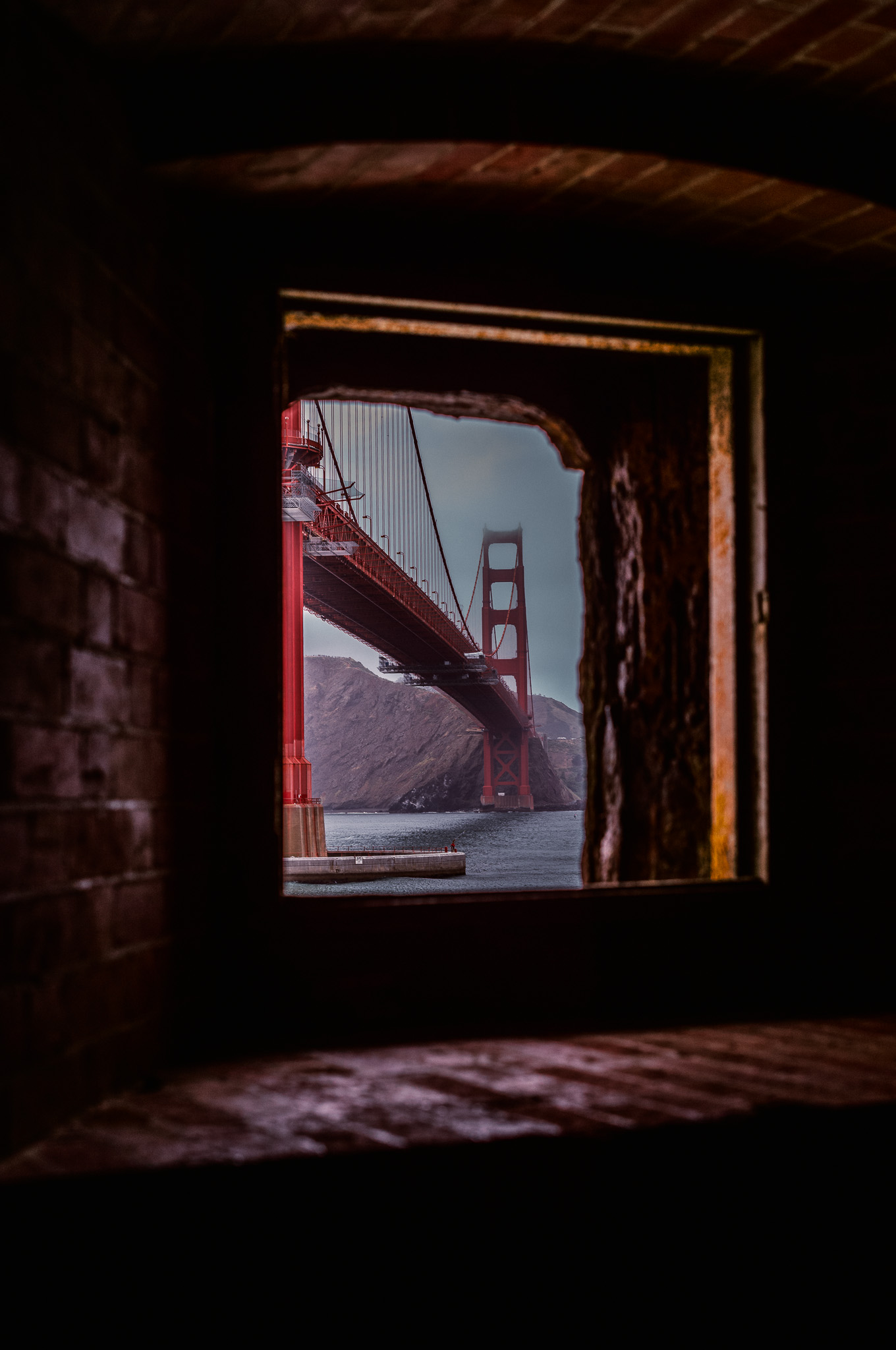
The multiple photos on this page (except one, with the view through a window) alone should make anyone wonder what has been the point of posting, other than "look at my nice pictures!"
Jul 31, 2026 at 06:52 AM
p.143 #15which lens has the most 3D POP?
Happy Friday 3D popists! Another great day and Aloha from Lake Ontario!
Absolutely love that look of subject trying to leap from my monitor while the background stays behind.


Absolutely love that look of subject trying to leap from my monitor while the background stays behind.
Jul 31, 2026 at 07:13 AM
p.143 #16which lens has the most 3D POP?
jojib wrote:
Happy Friday 3D popists! Another great day and Aloha from Lake Ontario!
Absolutely love that look of subject trying to leap from my monitor while the background stays behind.
https://a4.pbase.com/o12/30/64330/1/176457142.0V17BOmy.1DSC09886.jpg
https://a4.pbase.com/o12/30/64330/1/176460007.ua8KNp4j.1DSC00115.jpg
what lens was this?
Jul 31, 2026 at 07:22 AM
p.143 #17which lens has the most 3D POP?
goo0h wrote:
Absolutely love that look of subject trying to leap from my monitor while the background stays behind.
https://a4.pbase.com/o12/30/64330/1/176457142.0V17BOmy.1DSC09886.jpg
https://a4.pbase.com/o12/30/64330/1/176460007.ua8KNp4j.1DSC00115.jpgwhat lens was this?
goo0h, it's the Viltrox 35/1.2 LAB N shot with the Sony A7V. Shot during the golden hour.
EXIF on 1st pic is
SONY ILCE-7M5
1/4000s f/1.2 at 35.0mm iso100
2nd
SONY ILCE-7M5
1/640s f/1.2 at 35.0mm iso100
jojib wrote
Happy Friday 3D popists! Another great day and Aloha from Lake Ontario!Absolutely love that look of subject trying to leap from my monitor while the background stays behind.
https://a4.pbase.com/o12/30/64330/1/176457142.0V17BOmy.1DSC09886.jpg
https://a4.pbase.com/o12/30/64330/1/176460007.ua8KNp4j.1DSC00115.jpg
goo0h, it's the Viltrox 35/1.2 LAB N shot with the Sony A7V. Shot during the golden hour.
EXIF on 1st pic is
SONY ILCE-7M5
1/4000s f/1.2 at 35.0mm iso100
2nd
SONY ILCE-7M5
1/640s f/1.2 at 35.0mm iso100
Jul 31, 2026 at 07:27 AM
p.143 #18which lens has the most 3D POP?
ruthenium wrote:
Is anyone else seeing these as examples of this thing called "pop"3 from the lens?
I'm sorry, but if seems like someone should give this emperor some clothes...This thread can now be officially renamed into "People and Portraits taken recently with my latest favorite lens" thread.
The multiple photos on this page (except one, with the view through a window) alone should make anyone wonder what has been the point of posting, other than "look at my nice pictures!"
I (obviously) agree.
I usually try to avoid commenting on the photographic quality of examples posted in thread on ostensibly technical subjects. That is pretty much a personal rule. That I'm about to break...
(Too often I see people do that — insult the photo and the photographer — as a way of distracting from the technical points under discussion. E.g., someone posts a photo that shows, say, how sharp their lens is and since the image IS sharp some frustrated respondent comes back with something along the lines of “that’s a terrible composition” or “ your highlights are over-exposed” or “don’t you know anything about lighting?”)
But in this case, where the supposed magical quality of lenses is the claim, and posted examples supposedly demonstrate that exceptional quality, we can’t simply ignore the fact that quite a few of the examples are simply not showing what they claim.
That particular set is a (remarkable) case in point. We’re supposed to think that THOSE photos are somehow evidence of some the exceptional quality of the lens used, quality that not only sets such photographs above and beyond the norm but which raises them to a level of exceptional quality that stands out from all other lenses and cannot be achieved by them… and that this should be obvious to any viewer who sees these images.
Sorry, but no.
If those photographs were posted in a random set of similar images made with a wide range of lenses and equipment, from smartphone cameras and beginner-level mirrorless/dslr cameras and lenses up to, say, high end contemporary FF mirrorless gear… and a panel of experienced photographers (or anyone, for that matter) was asked to pick out which images exhibited qualities suggestive of the use of exceptional lenses…
… those would not make the cut. I’m not addressing aesthetic issues here, simply pointing out that on the basis of pure “image quality” those examples are, to be generous, unremarkable.
I’m sorry if that sounds like a personal attack on that poster (or anyone else sharing such images in this sad thread) — it isn’t meant to be that, but at some point we have to face facts. It is an “emperor’s new clothes” moment, where people need to step back and admit that the emperor isn't wearing anything.
- - -
One of the most ironic aspects of this thread is the oscillation between posts like the one in question, which do not provide visual evidence of lens magic, and the posts that suggest that it exists but if you can’t see it then your perception is somehow deficient. That logic doesn’t fly. It is like the person claiming that fairies are stealing tomatoes from the garden who answers the person who counts the tomatoes and finds none or missing by saying, “Well SOME of us CAN see fairies!”
There have been some very nice photographs posted in this thread, and some that clearly have the thing that some describe with the shorthand term “pop,” but so far every single one of those examples I’ve seen in the thread accomplished that by means of the usual photographic techniques and qualities that are known to do this: lighting, color relationships, composition, selective focus, relationships among elements of the scene, and more — the same ways that painters have understood how to do this stuff for centuries.
Edited on Jul 31, 2026 at 10:48 AM · View previous versions
gdanmitchell wrote
That third photo. How can you use that as an exemplar of "pop," much less of that vaunted lens? It isn't even in focus? Same with the second one, though less OOF. And the first one? Again I ask, is that your example of the remarkable "pop" of this lens? How so?Is anyone else seeing these as examples of this thing called "pop"3 from the lens?
I'm sorry, but if seems like someone should give this emperor some clothes...
The multiple photos on this page (except one, with the view through a window) alone should make anyone wonder what has been the point of posting, other than "look at my nice pictures!"
I (obviously) agree.
I usually try to avoid commenting on the photographic quality of examples posted in thread on ostensibly technical subjects. That is pretty much a personal rule. That I'm about to break...
(Too often I see people do that — insult the photo and the photographer — as a way of distracting from the technical points under discussion. E.g., someone posts a photo that shows, say, how sharp their lens is and since the image IS sharp some frustrated respondent comes back with something along the lines of “that’s a terrible composition” or “ your highlights are over-exposed” or “don’t you know anything about lighting?”)
But in this case, where the supposed magical quality of lenses is the claim, and posted examples supposedly demonstrate that exceptional quality, we can’t simply ignore the fact that quite a few of the examples are simply not showing what they claim.
That particular set is a (remarkable) case in point. We’re supposed to think that THOSE photos are somehow evidence of some the exceptional quality of the lens used, quality that not only sets such photographs above and beyond the norm but which raises them to a level of exceptional quality that stands out from all other lenses and cannot be achieved by them… and that this should be obvious to any viewer who sees these images.
Sorry, but no.
If those photographs were posted in a random set of similar images made with a wide range of lenses and equipment, from smartphone cameras and beginner-level mirrorless/dslr cameras and lenses up to, say, high end contemporary FF mirrorless gear… and a panel of experienced photographers (or anyone, for that matter) was asked to pick out which images exhibited qualities suggestive of the use of exceptional lenses…
… those would not make the cut. I’m not addressing aesthetic issues here, simply pointing out that on the basis of pure “image quality” those examples are, to be generous, unremarkable.
I’m sorry if that sounds like a personal attack on that poster (or anyone else sharing such images in this sad thread) — it isn’t meant to be that, but at some point we have to face facts. It is an “emperor’s new clothes” moment, where people need to step back and admit that the emperor isn't wearing anything.
- - -
One of the most ironic aspects of this thread is the oscillation between posts like the one in question, which do not provide visual evidence of lens magic, and the posts that suggest that it exists but if you can’t see it then your perception is somehow deficient. That logic doesn’t fly. It is like the person claiming that fairies are stealing tomatoes from the garden who answers the person who counts the tomatoes and finds none or missing by saying, “Well SOME of us CAN see fairies!”
There have been some very nice photographs posted in this thread, and some that clearly have the thing that some describe with the shorthand term “pop,” but so far every single one of those examples I’ve seen in the thread accomplished that by means of the usual photographic techniques and qualities that are known to do this: lighting, color relationships, composition, selective focus, relationships among elements of the scene, and more — the same ways that painters have understood how to do this stuff for centuries.
Edited on Jul 31, 2026 at 10:48 AM · View previous versions
Jul 31, 2026 at 08:25 AM
p.143 #19which lens has the most 3D POP?
ruthenium wrote:
This thread can now be officially renamed into "People and Portraits taken recently with my latest favorite lens" thread.
The multiple photos on this page (except one, with the view through a window) alone should make anyone wonder what has been the point of posting, other than "look at my nice pictures!"
Yeah, this whole thread has gone pretty far off topic now. I was going through it for awhile to learn about 3D pop lenses and what it means and for examples but the last many... pages are largely really just what you just said
Jul 31, 2026 at 10:31 AM
p.143 #20which lens has the most 3D POP?
@philip_pj just a follow up on the Sony 50/1.2 G. I've seen some used ones on my FB Marketplace. It seems that a couple of photographers have switched to the 28-70/2. I'm very interested in it but given the inventory I will hold off until Viltrox releases theirs.
Also about the lens, are you shooting it for headshots? Tough to 3D (headshots) it but I am 100% it will pop. Regarding standard zoom lenses, the Sigma 28-105/2.8 DG DN ART is flying under the radar although there are a couple of fans on FB A7users group. It's a heavy lens but I love bringing it for travel and walkaround. Personally, I prefer the 105mm @ f/2.8 than a zoom with the 70mm @ f/2 for headshots.

SONY ILCE-7M5
1/250s f/2.8 at 105.0mm iso125
Also about the lens, are you shooting it for headshots? Tough to 3D (headshots) it but I am 100% it will pop. Regarding standard zoom lenses, the Sigma 28-105/2.8 DG DN ART is flying under the radar although there are a couple of fans on FB A7users group. It's a heavy lens but I love bringing it for travel and walkaround. Personally, I prefer the 105mm @ f/2.8 than a zoom with the 70mm @ f/2 for headshots.
SONY ILCE-7M5
1/250s f/2.8 at 105.0mm iso125
Jul 31, 2026 at 10:43 AM