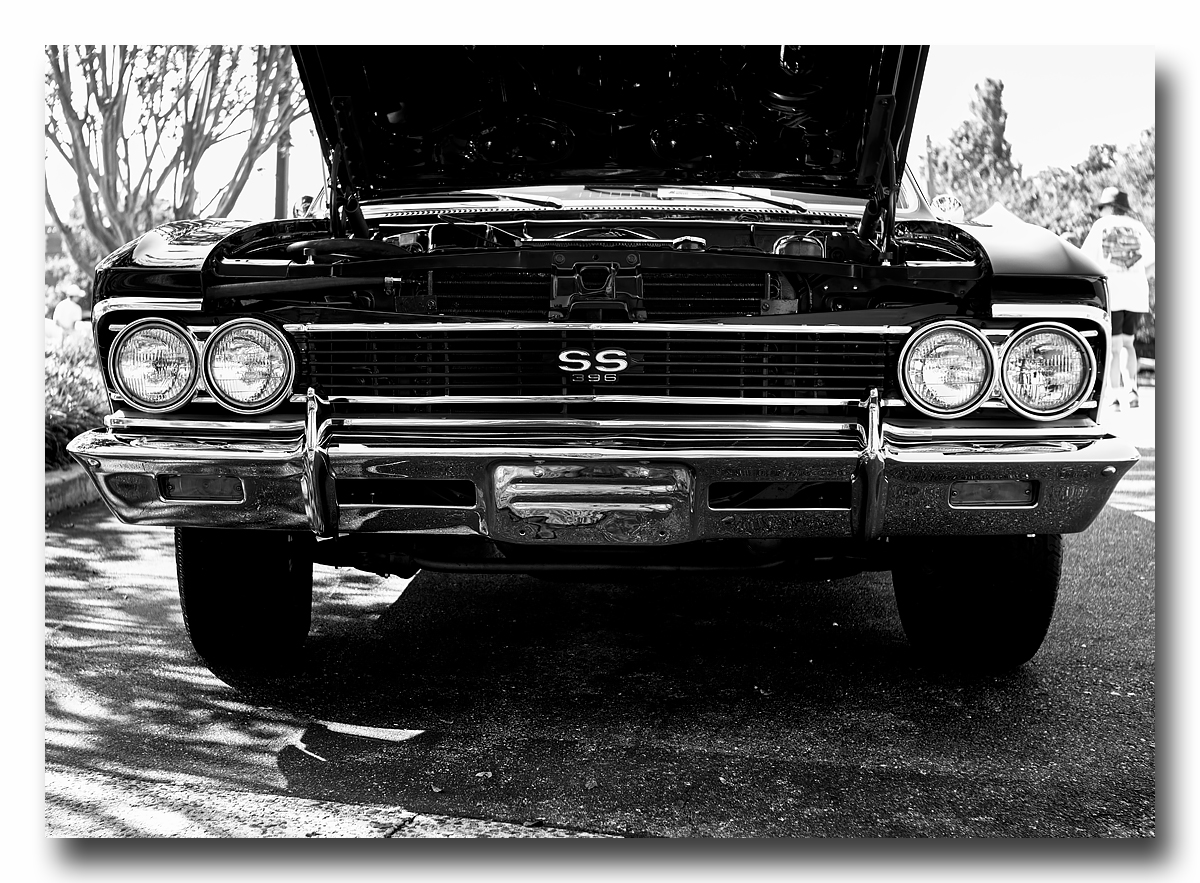
I picked up some XP2 at the shop closest to me. They only develop C-41 so was the only black and white they had. The couple rolls I had them develop were very thin compared to TRI-X. Did not really like it. I still have two rolls left. May try another lab for those and see if I get better results.
George
I had the same experience with lighter density compared to Tri-X.
Upper part of the cliff trail with D800 and 24mm PC-E
GeorgeBo wrote:
I picked up some XP2 at the shop closest to me. They only develop C-41 so was the only black and white they had. The couple rolls I had them develop were very thin compared to TRI-X. Did not really like it. I still have two rolls left. May try another lab for those and see if I get better results.
George
I can’t remember the negative being thin. Did you rate it higher than 400? By thin, you mean clear areas in the neg?
It’s a very convenient stock though, but just doesn’t seem to have that “bite” or nice looking grain like TRI-X has. It’s very nice to scan compared to TRI-X though in that it doesn’t curl and the ICE of the Nikon scanner works on it. I love TRI-X, but every single time I’ve had it developed here it comes back full of scratches and marks all over the negatives. Unless I get back to developing myself I doubt I’ll shoot much of it. I should probably find a decent B&W lab … or get off my ass and go down the monobath route as you’ve recommended previously. I’m just too lazy
deang001 wrote:
I can’t remember the negative being thin. Did you rate it higher than 400? By thin, you mean clear areas in the neg?
It’s a very convenient stock though, but just doesn’t seem to have that “bite” or nice looking grain like TRI-X has. It’s very nice to scan compared to TRI-X though in that it doesn’t curl and the ICE of the Nikon scanner works on it. I love TRI-X, but every single time I’ve had it developed here it comes back full of scratches and marks all over the negatives. Unless I get back to developing myself I doubt I’ll shoot much of it. I should probably find a decent B&W lab … or get off my ass and go down the monobath route as you’ve recommended previously. I’m just too lazy
No, the film was rated at 400 and was on a camera with a known good meter and I get good results with other black and white film. Was just with the C-41 processed XP2. It may be the lab. Will try another. Or just settle with the TriX and my monobath developing. Only person to blame then is me
I like XP2 for its convenience. Tonality can be good in some light IMO. Couple of my favorites were on a Ikon Nettar with XP2. Have you tried it at ISO200 yet?
GeorgeBo wrote:
I picked up some XP2 at the shop closest to me. They only develop C-41 so was the only black and white they had. The couple rolls I had them develop were very thin compared to TRI-X. Did not really like it. I still have two rolls left. May try another lab for those and see if I get better results.
AdaptedLenses wrote:
I like XP2 for its convenience. Tonality can be good in some light IMO. Couple of my favorites were on a Ikon Nettar with XP2. Have you tried it at ISO200 yet?
I haven’t tried at 200, but good idea. May give one of my last 2 rolls a try with that.
Tri-X is great film for shadow and highlight detail. I always used Rodinal, Acufine Diafine, Kodak D-76, or Kodak HC-110. If it was bright lighting (sun or bright overcast) then I used Acufine at a bit lower temp than recommended. If lighting was flat I used Rodinal at the recommended temp. A super PS plugin for the Tri-X grain was Grain Surgery v2 (no longer available) I should sell my tanks and reels....
Just recently I got a new gimbal head (Oben GH-30) that is really well constructed. Once balanced, it is magic to be able to just point and shoot - having the camera remain right where you leave it without having to tighten it down. For 30 years I have used the Bogen 755B tripod with a Bogen pistol grip ball head. It holds the camera steady by brute force pressure on the ball and is extremely fast at repositioning. I also employed my remote trigger this time on a favorite stationary 100+ yard target - a power pole insulator. Between the gimbal and trigger I can see definite improvement in image sharpness. Chuffed! BTW, I also compared this to the EF 300mm f4.0 USM IS + the 2X Canon TC mkIII and the results were almost a tie, but the Nikkor was a bit better. However, I may have left the IS on by mistake?
In April I compared the Nikon TC-200 to the Nikon TC-301 - Here are the new combo results
Many decades ago I worked as a photographic chemist. I wish I could remember what the developing agent in C-41 chemistry is, but alas I can’t.
Some developing agents’ reaction products tan the gelatin emulsion during development. That means they cross-link adjacent gelatin molecules. This produces a relief image in the emulsion. This was very evident in the old Kodachrome processes. This tanned gelatin was slightly yellow in comparison to the untanned gelatin and it strongly absorbed in the UV part of the spectrum, to which B&W printing papers were very sensitive. So negatives developed in those developers had more actinic density than the visible density produced by the silver image.
The chromogenic B&W films like XP 2that use the C-41 process produce a dye image and not a silver image as in conventional B&W films like Tri-X. If the C-41 process uses a tanning developer, then the total density is probably calibrated for paper prints rather than for scanning using visible light.
Devloping agents with 2 functional hydroxyl groups produce the maximum tanning effect, those with 1 group somewhat less, and those with no hydroxyl groups produce little if any tanning. So if somebody here can find out what the developing agent is, it would be easy to determine if this explains the seemingly thin negatives. If that is the case, then perhaps XP2 should be overexposed for scanning compared to printing.
It might also be interesting to look at the spectral absorption curve of the XP2 dye image. It may have high UV absorption, so the printing density in that case would also be higher than the visible density.
I’ve only shot one roll of chromogenic B&W film decades ago when it was first introduced. I wasn’t impressed, so I stuck with Tri-X, Plus-X, and Panatomic-X (and occasionally Technical Pan).
Feel free to ignore if this just confuses the issue.
Ken, Google says "The developing ingredient (in C41) is a paraphenylene diamine-based chemical known as CD-4."
I have a different question for you - since you know chemistry. I built a working film processor out of two broken Wing-Lynch processors. It had both E6 and C41 tanks, and all the chemistry went down the sink. It was explained to me that the chemistry was made so that each successive chemical would "neutralize" the preceding one. Deep down I found this hard to believe, is that claim true?
Jim
Ballard wrote:
George,
Many decades ago I worked as a photographic chemist. I wish I could remember what the developing agent in C-41 chemistry is, but alas I can’t.
Some developing agents’ reaction products tan the gelatin emulsion during development. That means they cross-link adjacent gelatin molecules. This produces a relief image in the emulsion. This was very evident in the old Kodachrome processes. This tanned gelatin was slightly yellow in comparison to the untanned gelatin and it strongly absorbed in the UV part of the spectrum, to which B&W printing papers were very sensitive. So negatives developed in those developers had more actinic density than the visible density produced by the silver image.
The chromogenic B&W films like XP 2that use the C-41 process produce a dye image and not a silver image as in conventional B&W films like Tri-X. If the C-41 process uses a tanning developer, then the total density is probably calibrated for paper prints rather than for scanning using visible light.
Devloping agents with 2 functional hydroxyl groups produce the maximum tanning effect, those with 1 group somewhat less, and those with no hydroxyl groups produce little if any tanning. So if somebody here can find out what the developing agent is, it would be easy to determine if this explains the seemingly thin negatives. If that is the case, then perhaps XP2 should be overexposed for scanning compared to printing.
It might also be interesting to look at the spectral absorption curve of the XP2 dye image. It may have high UV absorption, so the printing density in that case would also be higher than the visible density.
I’ve only shot one roll of chromogenic B&W film decades ago when it was first introduced. I wasn’t impressed, so I stuck with Tri-X, Plus-X, and Panatomic-X (and occasionally Technical Pan).
Feel free to ignore if this just confuses the issue. ...Show more →
James Markus wrote:
Ken, Google says "The developing ingredient (in C41) is a paraphenylene diamine-based chemical known as CD-4."
I have a different question for you - since you know chemistry. I built a working film processor out of two broken Wing-Lynch processors. It had both E6 and C41 tanks, and all the chemistry went down the sink. It was explained to me that the chemistry was made so that each successive chemical would "neutralize" the preceding one. Deep down I found this hard to believe, is that claim true?
Jim
So CD-4 would probably produce some, but not much, gelatin tanning.
As for each successive C41 and E6 chemical neutralizing the preceding one, I think what was meant was that the effects in the film emulsion would be stopped. As for eliminating the toxicity of chemicals going down the drain, I think that’s a bit of a stretch.
Many decades ago I worked as a photographic chemist. I wish I could remember what the developing agent in C-41 chemistry is, but alas I can’t.
Some developing agents’ reaction products tan the gelatin emulsion during development. That means they cross-link adjacent gelatin molecules. This produces a relief image in the emulsion. This was very evident in the old Kodachrome processes. This tanned gelatin was slightly yellow in comparison to the untanned gelatin and it strongly absorbed in the UV part of the spectrum, to which B&W printing papers were very sensitive. So negatives developed in those developers had more actinic density than the visible density produced by the silver image.
The chromogenic B&W films like XP 2that use the C-41 process produce a dye image and not a silver image as in conventional B&W films like Tri-X. If the C-41 process uses a tanning developer, then the total density is probably calibrated for paper prints rather than for scanning using visible light.
Devloping agents with 2 functional hydroxyl groups produce the maximum tanning effect, those with 1 group somewhat less, and those with no hydroxyl groups produce little if any tanning. So if somebody here can find out what the developing agent is, it would be easy to determine if this explains the seemingly thin negatives. If that is the case, then perhaps XP2 should be overexposed for scanning compared to printing.
It might also be interesting to look at the spectral absorption curve of the XP2 dye image. It may have high UV absorption, so the printing density in that case would also be higher than the visible density.
I’ve only shot one roll of chromogenic B&W film decades ago when it was first introduced. I wasn’t impressed, so I stuck with Tri-X, Plus-X, and Panatomic-X (and occasionally Technical Pan).
Feel free to ignore if this just confuses the issue. ...Show more →
Ken,
Thanks for the great explanation! That is one thing I love about this thread. There is such a diverse group of contributors that it is rarely a day that goes by that I don’t learn something.
Ken,
Thank you for your answer. In particular blix made me very nervous. When i decommission both
processors I was left with many gallons of concentrated unmixed chemistry. I didn't trust the
literature from Kodak, Agfa, nor the service manuals from Wing-Lynch. It just seemed like sales
copy, and not based on fact. So, I held onto the chemistry for years. The federal government
established a drop off area about 2005 near my home for people to bring paint, old cans of
chemicals, and other suspect items. When they saw what I had they made me wait a day until
they checked if they could accept them. Fortunately they could. At one time in America there
was a steady stream of C41 and E6 flowing into our water treatment facilities. When I saw what
blix did to metals it was one of the motivating factors in me giving up film.
Jim
Ballard wrote:
So CD-4 would probably produce some, but not much, gelatin tanning.
As for each successive C41 and E6 chemical neutralizing the preceding one, I think what was meant was that the effects in the film emulsion would be stopped. As for eliminating the toxicity of chemicals going down the drain, I think that’s a bit of a stretch.
I have that ability to see those things for some strange reason. I wasn't sure if you were gallivanting around the country or not...
Good to know this was in Maine.
HCE HCE wrote:
I did not see the face until you mentioned it!
I am revisiting some old shots and staying home. These are from a very rainy and cloudy June visit to Maine. The fresh leaves in the NE were a characteristic bright yellow green that I call the spring foliage season.
Lieutenant Z wrote:
Ben, congrats on the new toy - I don't know if that old thing makes great images but for sure it looks way more beautiful than modern lenses.
After16 weeks I finally received my D610 back from its IR conversion.
Excuse after excuse from the company invlolved but they seem to have done a good clean job.
It has been away all summer so that really annoys me.
D610 IR and the flare master 24/2.8 NC
The 24/2.8 has been a go-to lens on the D7100 so it is really nice to use its wide angle capabilities to the full.
The 16/3.5 works really well but I now detect a hint of a hotspot at f/8 which was never present in DX
Again a go-to lens on the D7100 IR where the fish-eye effect was subdued.
Not anymore - so it might not get so much camera time.
Interestingly the 18-35G lens was useless on the D7100 IR but is actually very good in the 18-28mm range on FX. Better than the 28/2.8 NC and it goes to 18mm
So I still have a lot lens evaluations/comparisons to perform on the D610 IR.
The 50/2 H is stellar but I only have boring test shots of neighbours' chimneys.
Philippe,
Shouldn't there be a speech bubble by the woman saying: "regarde un touriste américain dans une chemise banlon avec ses poches bourrées de camelote"? Hoping google translate did that correctly.
Jim
Lieutenant Z wrote:
Ben, congrats on the new toy - I don't know if that old thing makes great images but for sure it looks way more beautiful than modern lenses.
DeltaSigma wrote:
After16 weeks I finally received my D610 back from its IR conversion.
Excuse after excuse from the company invlolved but they seem to have done a good clean job.
It has been away all summer so that really annoys me.
D610 IR and the flare master 24/2.8 NC
The 24/2.8 has been a go-to lens on the D7100 so it is really nice to use its wide angle capabilities to the full.
The 16/3.5 works really well but I now detect a hint of a hotspot at f/8 which was never present in DX
Again a go-to lens on the D7100 IR where the fish-eye effect was subdued.
Not anymore - so it might not get so much camera time.
Interestingly the 18-35G lens was useless on the D7100 IR but is actually very good in the 18-28mm range on FX. Better than the 28/2.8 NC and it goes to 18mm
So I still have a lot lens evaluations/comparisons to perform on the D610 IR.
The 50/2 H is stellar but I only have boring test shots of neighbours' chimneys.
Philippe - I've already commented on Flickr, so I won't repeat it all, but yeah, wonderful.
Colin - I'm a total sucker for IR. Does the 24m really have such prominent hexagonal flare spots . That's a weird shape for flare. Have you accentuated it in post or is it an IR artefact?
George - good to see someone else using the old Nikkor LTMs.
This is Villa Borghese with the 10.5cm f2.5 LTM, and as Steve would say, it's Nikon on Canon of course, where it belongs.