Mandler 50mm f/1.4 Summilux pre-asph E46 (V3)
p.17 #1Mandler 50mm f/1.4 Summilux pre-asph E46 (V3)
philip_pj wrote:
The 35/2 and the 50/1.4 being instant success stories (for impartial observers at least), we cast around to see what this lens maker might do next as they draw from the Mandler portfolio. I see three lenses, one of which would horrify some Leicaphiles.
.....
It is interesting because, marketing-wise, Mandler is doing something very similar to what Voigtländer did three decades ago. Back then, Voigtländer was also priced considerably lower than Carl Zeiss glass, while offering a very compelling alternative.
Today, however, I feel that some of these lenses are simply overpriced. And in many cases, the real-world price drops significantly after purchase. The market is also not really valued the same way everywhere — the exact same product can be much, much cheaper on the Japanese market.
I remember when I used to buy Voigtländer lenses. I could often sell them years later without losing money, and sometimes even make a profit, much like with Leica glass. Today, it seems to work almost the opposite way: you buy a lens, and then it loses value. On top of that, we are seeing constant updates and manufacturers filling every possible niche.
There is also an interesting historical connection here. Mandler is taking things further, and I think it is a good thing to see real competition for Voigtländer. Without brands like LLL or now Mandler, we would probably be paying not one-quarter of the Leica price for these kinds of lenses, but at least half.
So, personally, I see this as healthy competition. The entry barrier to this hobby has dropped significantly, and we can finally talk about genuinely different optical characteristics rather than endlessly pixel-peeping to determine which lens is a fraction sharper.
That part, however, is no longer my cup of tea. I have already fought that battle, and I don't really want to spend my time arriving at the same conclusion for the Nth time.
What I do wonder about is whether, if I had gone straight to Leica decades ago, I would have noticed the differences in these lenses as clearly as I do today. I think I probably wouldn't have. Now I feel that I see more, and I recognize those differences much faster.
Nov 06, 2026 at 07:17 AM
p.17 #2Mandler 50mm f/1.4 Summilux pre-asph E46 (V3)
4ALL wrote:
.....It is interesting because, marketing-wise, Mandler is doing something very similar to what Voigtländer did three decades ago. Back then, Voigtländer was also priced considerably lower than Carl Zeiss glass, while offering a very compelling alternative.
Today, however, I feel that some of these lenses are simply overpriced. And in many cases, the real-world price drops significantly after purchase. The market is also not really valued the same way everywhere — the exact same product can be much, much cheaper on the Japanese market.
I remember when I used to buy Voigtländer lenses. I could often sell them years later without losing...Show more →
+1. My conclusion after using all kind of lenses in several decades that rarely anyone cares about the quality when looking at a larger printed photo shown at an exhibit. Nobody ever mentioned slight corner blur when I adapted some wider rangefinder lenses on my Sony A7R camera. Nobody ever saw the difference between silver gelatin darkroom print and B&W prints coming directly from my Pro-100 printer. Only one a spectator admired a hexagon based bokeh effect deriving from a lens flare of one of my Hasselblad-Zeiss VF lenses mounted on my Hasselblad 500 C/M. I am not a big fan of this flare effect here, but I got positive feedback about it on one of my printed photos. What I am saying is that all this MTF-chart based pixel-peeping ("Is my lens sharp enough?") is totally overrated to make a photo intriguing for others - nowadays you can actually take excellent photos simply with a cellphone, too. I am using my Leica M lenses because I personally enjoy working with them - not because I believe they allow me to take sharper or better photos than with my cheaper Voigtlander or TTArtisan lenses for example (which of course I am using as well).
philip_pj wrote
The 35/2 and the 50/1.4 being instant success stories (for impartial observers at least), we cast around to see what this lens maker might do next as they draw from the Mandler portfolio. I see three lenses, one of which would horrify some Leicaphiles......
Today, however, I feel that some of these lenses are simply overpriced. And in many cases, the real-world price drops significantly after purchase. The market is also not really valued the same way everywhere — the exact same product can be much, much cheaper on the Japanese market.
I remember when I used to buy Voigtländer lenses. I could often sell them years later without losing...Show more →
+1. My conclusion after using all kind of lenses in several decades that rarely anyone cares about the quality when looking at a larger printed photo shown at an exhibit. Nobody ever mentioned slight corner blur when I adapted some wider rangefinder lenses on my Sony A7R camera. Nobody ever saw the difference between silver gelatin darkroom print and B&W prints coming directly from my Pro-100 printer. Only one a spectator admired a hexagon based bokeh effect deriving from a lens flare of one of my Hasselblad-Zeiss VF lenses mounted on my Hasselblad 500 C/M. I am not a big fan of this flare effect here, but I got positive feedback about it on one of my printed photos. What I am saying is that all this MTF-chart based pixel-peeping ("Is my lens sharp enough?") is totally overrated to make a photo intriguing for others - nowadays you can actually take excellent photos simply with a cellphone, too. I am using my Leica M lenses because I personally enjoy working with them - not because I believe they allow me to take sharper or better photos than with my cheaper Voigtlander or TTArtisan lenses for example (which of course I am using as well).
Nov 06, 2026 at 07:52 AM
p.17 #3Mandler 50mm f/1.4 Summilux pre-asph E46 (V3)
retrofocus wrote:
+1. My conclusion after using all kind of lenses in several decades that rarely anyone cares about the quality when looking at a larger printed photo shown at an exhibit. Nobody ever mentioned slight corner blur when I adapted some wider rangefinder lenses on my Sony A7R camera. Nobody ever saw the difference between silver gelatin darkroom print and B&W prints coming directly from my Pro-100 printer. Only one a spectator admired a hexagon based bokeh effect deriving from a lens flare of one of my Hasselblad-Zeiss VF lenses mounted on my Hasselblad 500 C/M. I am not a big...Show more →
These days, cameras are so technologically advanced that, figuratively speaking, you could take a picture with the bottom of a jar or use a pinhole technique and still create something interesting. Creatively, you can produce almost anything you want on a computer, and technologically, AI is pushing things even further.
I’m still amazed at what the M10-R sensor can pull out of the shadows in Lightroom. The quality of the images at higher ISOs is almost hard to believe. I practically use flash only when I really have to, or when I deliberately want to use it creatively to create a contrast between different parts of the scene.
I remember very well the arguments that used to go on for more than two decades in photography groups over the whole “show the full frame / full negative” debate — as if cropping a photograph somehow made it less legitimate. Everyone could crop an image and present the scene in whatever way looked best. Today, nobody even tries to deny it anymore. Instead, cropping is routinely used to get better results from cameras, or even to create final images from 100MP sensors.
But time moves quickly, and we seem to have less and less of it.
For me, that feels almost like a step backward.
The level of perfection I get from my M10-R combined with the Summilux lenses means that I practically don't have to spend any time in front of the computer anymore, apart from importing the images from Lightroom directly to my Raspberry Pi (Kodi) so I can view them on the huge TV — or use them as a screensaver.
I’ve completely forgotten about things like retouching or cropping.
On top of that, the M10-R gives me the freedom to work in pretty much whatever way I want — whether that means using an electronic viewfinder, the optical rangefinder (a very good one, and definitely not like Fuji’s), or even shooting from the hip.
At this point, the camera simply gets out of the way and lets me take pictures. And honestly, that’s exactly what I want from a camera.
Nov 06, 2026 at 10:00 AM
p.17 #4Mandler 50mm f/1.4 Summilux pre-asph E46 (V3)
Curious if anyone has adapted this Mandler 50mm to a GFX or a Hasselblad X camera.
I am curious to know what the sensor coverage is like.
I am curious to know what the sensor coverage is like.
Nov 06, 2026 at 11:58 AM
p.17 #5Mandler 50mm f/1.4 Summilux pre-asph E46 (V3)
philip_pj wrote:
The 35/2 and the 50/1.4 being instant success stories (for impartial observers at least), we cast around to see what this lens maker might do next as they draw from the Mandler portfolio. I see three lenses, one of which would horrify some Leicaphiles.
In order of likely adoption in the ongoing project:
Summilux 75mm f1.4;
Elmarit 28mm f2.8 vIII; and
Noctilux 50mm f1.
All three would be excellent, at some time.
AFA Chinese 75mm lenses go the LLL Z21 75/1.5 and the LLL SPII 75/2.0 are both nice lenses which can easily replace the Leica 75/1.4. That said the VM 75/1.5 is no slouch as is the MS Optcs Sonnetar 73/1.5. And let us not forget the VM 75/1.9 Ultron.
Yikes too many fun 75mm lenses.
Nov 07, 2026 at 06:22 PM
p.17 #6Mandler 50mm f/1.4 Summilux pre-asph E46 (V3)
We must disagree, because most informed enthusiasts will tell you there are no replacements for the 75mm Summilux. It's widely regarded by the cognoscenti as a hallmark optical achievement, along with many of the the other Walter Mandler lenses. This is acutely reflected in the market price for this 45 year old lens, for which a well-kept copy will set one back within the range $3300 to $5000 USD.
This is just what happens when classic lenses with highly sought after imaging capabilities become recognised - the market makes the most accurate assessment of worth (value). So, like the Zeiss Super Speed cine lenses (market value $100,000 for a six lens set in working order, for circa 1975 production items), the lens is irreplaceable.
What (the lens maker) Mandler have done here is to establish their credibility and expertise at improving source designs with modern optical enhancements - within the design philosophy paradigm of the original lens - they understand Mandler, if you will. It's instantly visible to those who know what to look for. The look is very pleasing aesthetically, it's a very appealing rendering style. If your other suggested replacements were up to snuff, we would not be so eager to see the Summilux 75mm reimagined. There are others that are wonderful, that is certainly the case. But none are valued as highly as the Summ 75mm for good reason.
Both the VM lenses you cite contain modern APD elements (three of them each), a design practice that is very different from the layout and glass used in Mandler's design framework. Those are modern lenses with a modern look, one is a gadget lens from what I see, some adjustment. The LLL pair are recreations of other old lenses, some like their look. I (and many others) do not enjoy 'eye disturbing' bokeh. The MS lens is also quirky, all these above suffer issues while satisfying some tastes.
None will become classics, in my opinion. I don't see any one of them fetching $3000 plus in 45 years time. The best CV people lens I have is the 75/2.5, very pleasant but with bokeh that can be tripped up. And that is what a lens that suits you buys you - a higher hit rate, because of the confidence it will inspire.
The 75/1.4 used Mandler's trademark double Gauss expertise and the two doublets that complete the design. It's things like this and the exquisite cross frame fall-off performance and fade character that are the reasons we have a company called 'Mandler'. I'm not being difficult here.
'In 1980, Mandler published a seminal paper (Design of Basic Double Gauss Lenses) detailing a computer-aided design procedure using fifth-order interpolating aberrations and damped-least-squares optimization to move straight from a rough model to a finished lens'. He laid the solid foundation today's Leica was built on. Now we want that back, in an enhanced form using China's best glass and love of the original.
Nov 08, 2026 at 01:03 AM
p.17 #7Mandler 50mm f/1.4 Summilux pre-asph E46 (V3)
I agree with you since the word "replace" should have been "replicate to a degree". I own the 75/1.4 and have done so for well over 15 years. Along with the 50/1.0 lens these will probably stay with me to the end.
P.S. I also owned the R 80/1.4, but in the end found the 75 easier for me to handle on an M.
P.S. I also owned the R 80/1.4, but in the end found the 75 easier for me to handle on an M.
Nov 08, 2026 at 07:29 AM
p.17 #8Mandler 50mm f/1.4 Summilux pre-asph E46 (V3)
I can't imagine devoted fans talking about Walter Mandler's framework but having never heard about this lens:
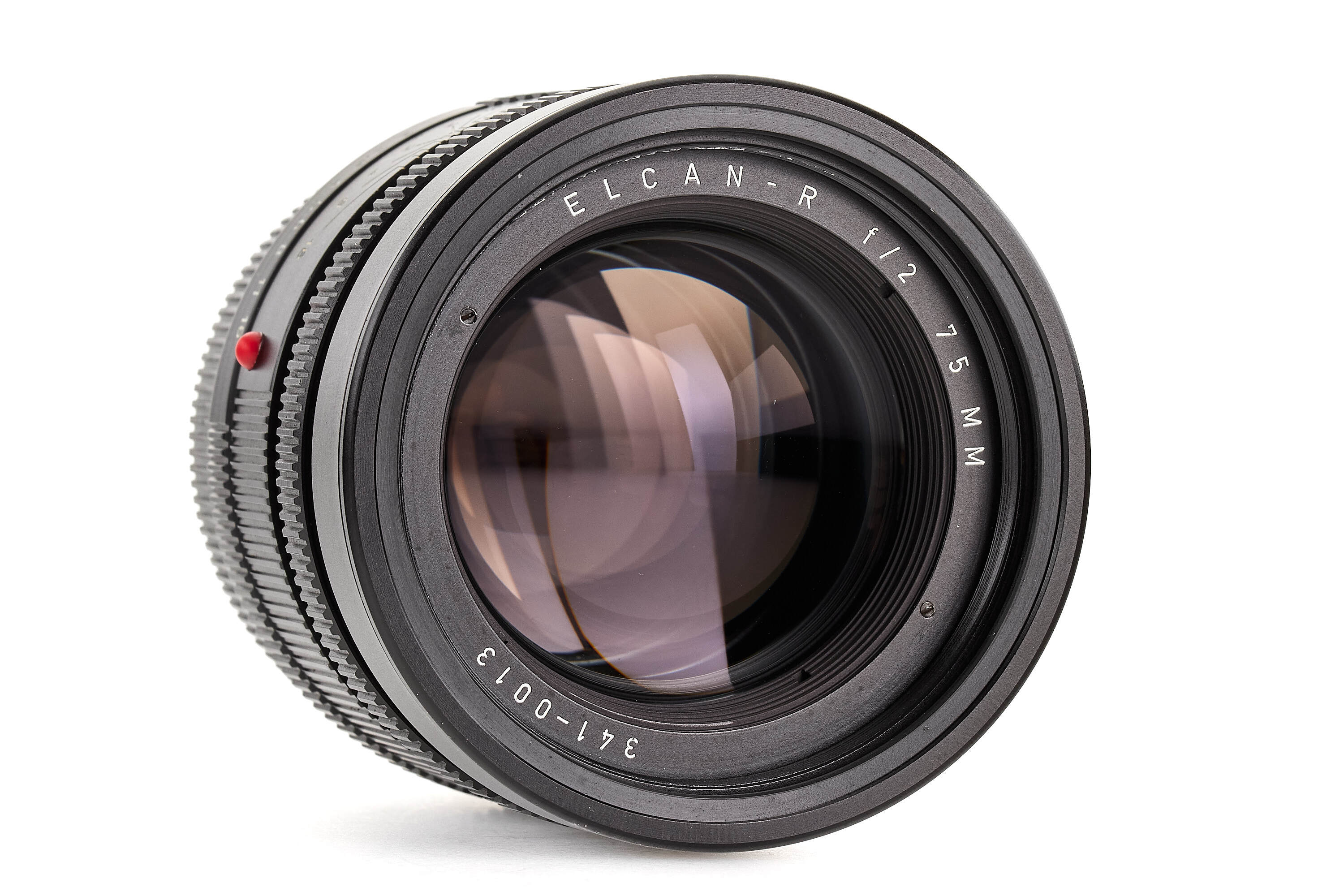
The Elcan-R 75mm f/2, designed by Walter Mandler, with SIX APD elements, even more than most APO-Lanthars (and equal to the APO-Lanthar 28mm).
The answer is YES. Walter Mandler had the chance to apply HRI and ED (APD) elements, since Leica was one of the top 3 leaders in special glass innovation. Almost at the same time, Helmut Marx applied 2 HRI elements in the Noctilux 50/1.2, but Walter Mandler didn't do that in his 50/1.4. The reason is simple, the side-effects of HRI were not suitable for a general-purpose lens.
Would Walter Mandler be happy when a third party 'enhanced' his 50/1.4 formula with HRI?
A Mandler lens is now packed in a white paper box with 'Leica product code 11310'. But if you bought similar lens back in mid-2025 from one of the first batches, it was packed in a Leica-like red box, printed with the Leica lens name "Summi-cron-M." This is not a company 'UNDERSTAND Mandler', it is just a piracy company using his name for commercial profit.
Nov 08, 2026 at 10:00 AM
p.17 #9Mandler 50mm f/1.4 Summilux pre-asph E46 (V3)
philip_pj wrote:
We must disagree, because most informed enthusiasts will tell you there are no replacements for the 75mm Summilux. It's widely regarded by the cognoscenti as a hallmark optical achievement, along with many of the the other Walter Mandler lenses. This is acutely reflected in the market price for this 45 year old lens, for which a well-kept copy will set one back within the range $3300 to $5000 USD.
This is just what happens when classic lenses with highly sought after imaging capabilities become recognised - the market makes the most accurate assessment of worth (value). So, like the Zeiss Super...Show more →
The simple question is what kind of lens performance a user needs from the about 1-2% difference between Leica and third party lens. There will be differences for sure - slight difference in how the bokeh circles might look and maybe there are some more chromatic aberrations in the more affordable lens which might also suffer from more lens flare when pointing against the sun for example. As I mentioned earlier, I am using all kind of lenses from expensive to more affordable - not even once a spectator of one of my printed photos has ever pointed out a lens fault in any of the photos. Neither anyone did when publishing them online.
This said, there is of course another impact why a more expensive Leica lens is more desirable depending on the buyer: the good "feel" to own such lens as part of a collection for example including resale value. This obviously is different than just comparing lens specs and differences from pixel peeping.
For me, my CV 75/1.5 M lens does everything it needs to do both in digital and film. But again, this is all subjective.
Nov 08, 2026 at 10:07 AM
p.17 #10Mandler 50mm f/1.4 Summilux pre-asph E46 (V3)
Agree, there are many reasons for all sorts of decisions and preferences. It might be true that the more you shoot portraits for the interactive pleasure, the fussier you become.
One of my self-appointed missions is to assert the validity of separating the notion of 'Leica-ness' (almost a metaphysical construct) from the assessment of each lens on it own merits, for what it was designed to do. So I don't at all buy the idea of reference to this Leica as unfathomable and unattainable icon, against which all lenses must be measured. People buy them for whatever reason. And here we see Leica's past is at odds with its present.
My interest is how will any lens under consideration produce the picture quality I value. When we look at it historically, there is a rich debate that has decades of past behind it - the pursuit of aesthetics and artistic rendering vs the 'image quality' - quotes because the viewpoint is actually 'aberration purity'.
This debate is close to being decided in the cine world, in favor of the stance of people like me. We must have beauty in the world, the world must be made beautiful again; and it does not flow from aberration purity which is a spiral from humanity's best instincts. New is not better, in so many fields, and the consumer decides.
Take a look at what Erwin Puts had to say about the Summilux-M 50mm v2/v3, quite entertaining and informative, you might agree. Do these people really believe aberration purity is an essential and unfailing guarantor of more appealing imagery? That every small gain in outer frame resolution or plane geometry does that for you, despite it clashing with human vision itself? (rhetorical question, I know most peoples' views):
"There is much speculation in the Leica community whether the different optical characteristics noted sometimes (high image quality in the center and lower performance in the field versus somewhat lower performance in the center but even coverage over the whole image field) are deliberately designed to support certain types or styles of photography.
I cannot support this position. Any designer needs to balance aberrations to get the image quality that is required. As soon as advances can be made, high image quality over the whole field is the prime requirement."
p44, https://wiki.l-camera-forum.com/leica-wiki.en/images/3/3a/Puts-2002-M-lenses.pdf
That was in 2002. So it's a long-lived battle of paradigms. Walter Mandler obviously disagreed, the designers' task is to deliver lenses capable of memorable, attractive imagery. So do most cine lens designers operating today, they know the picture rendering is paramount (no pun meant here). If it looks poor, no one buys a ticket or watches the stream. Doesn't matter if it is shot on the 'best' most corrected lenses Zeiss has to offer. cheers.
Nov 08, 2026 at 01:37 PM
|
p.17 #11Mandler 50mm f/1.4 Summilux pre-asph E46 (V3)
The sales record of the lenses in the future frame for the company Mandler are interesting. Here are a few for those mentioned above:
lens --------- period ------- sales
35/2 IV ---- 1979-93 ----- 17,116
50/1.4 v2 -- 1961-91 ----- 43,505
50/1.4 v3 -- 1992-2005 -- 18,132
--
75/1.4 ----- 1980-2007 --- 14,752
50/1.0 ----- 1976-2008 --- 17,535
Mandler retired in 1985, indicating the durability of his contribution and the lasting appeal of his design philosophy. As time passes, we lose more of these classics each and every year, they get stolen, they break, get dropped, they wear out, they sit in some cabinet. The numbers sold were never great. It might be time for a new crop, perhaps some agree?
Nov 08, 2026 at 02:01 PM
p.17 #12Mandler 50mm f/1.4 Summilux pre-asph E46 (V3)
Since most of my old Mandler M lenses have 6 bit coding I enjoy them even more.
I also like my Mandler R lenses that I have held onto.
I also like my Mandler R lenses that I have held onto.
Nov 08, 2026 at 03:16 PM
p.17 #13Mandler 50mm f/1.4 Summilux pre-asph E46 (V3)
Used Leica cameras and lenses were once relatively affordable. Their prices, however, have gone through two major waves of appreciation, driven largely by the rise of two economic powers: Japan first, and China later.
During the 1980s, as Japan’s economy boomed, Japanese collectors and buyers began purchasing Leica, Nikon, Zeiss, and other collectible cameras, watches, and luxury goods in large numbers. Decades later, China’s economic rise brought another wave of buyers into the market. These two economic developments played a significant role in driving the prices of collectible Leica equipment to extraordinary heights. But price is only one part of the story. For historical significance and the pleasure of owning and using a true masterpiece of optical engineering, there is simply no substitute for an authentic, clean, original Mandler-designed lens. Regardless of how closely a knockoff, alternative, or replica may resemble the original in appearance or even performance, it is still not a genuine Mandler lens. The same principle applies to the Chinese-made Red Flag 20 camera. Its value is not determined solely by its photographic capabilities. Its historical significance and place in China’s industrial and photographic history are also part of what makes it collectible. The price reflects that historical value. Of course, human nature makes us appreciate affordable alternatives. Not everyone can afford an original Leica or a genuine Mandler lens, and replicas offer an accessible way to enjoy a similar look or experience. That is precisely why the counterfeit and imitation market exists and continues to flourish. Still, an affordable imitation and an authentic piece of history are two different things. One may satisfy the desire to own something similar; the other preserves the originality, craftsmanship, and historical significance that made it special in the first place.
During the 1980s, as Japan’s economy boomed, Japanese collectors and buyers began purchasing Leica, Nikon, Zeiss, and other collectible cameras, watches, and luxury goods in large numbers. Decades later, China’s economic rise brought another wave of buyers into the market. These two economic developments played a significant role in driving the prices of collectible Leica equipment to extraordinary heights. But price is only one part of the story. For historical significance and the pleasure of owning and using a true masterpiece of optical engineering, there is simply no substitute for an authentic, clean, original Mandler-designed lens. Regardless of how closely a knockoff, alternative, or replica may resemble the original in appearance or even performance, it is still not a genuine Mandler lens. The same principle applies to the Chinese-made Red Flag 20 camera. Its value is not determined solely by its photographic capabilities. Its historical significance and place in China’s industrial and photographic history are also part of what makes it collectible. The price reflects that historical value. Of course, human nature makes us appreciate affordable alternatives. Not everyone can afford an original Leica or a genuine Mandler lens, and replicas offer an accessible way to enjoy a similar look or experience. That is precisely why the counterfeit and imitation market exists and continues to flourish. Still, an affordable imitation and an authentic piece of history are two different things. One may satisfy the desire to own something similar; the other preserves the originality, craftsmanship, and historical significance that made it special in the first place.
Nov 08, 2026 at 05:25 PM
p.17 #14Mandler 50mm f/1.4 Summilux pre-asph E46 (V3)
Same problem, they shipped another copy which seems to be fine.
ieei.liu wrote:
I just tested it and my copy also can't lock onto the camera. The lens does not lock securely onto the camera body. I can rotate and remove the lens without pressing the lens release button on the camera.
More test images on M11.
https://gallery.ieei.org/playground/Album/mandler_50mm_1.4/20261031/L1002464.jpg
https://gallery.ieei.org/playground/Album/mandler_50mm_1.4/20261031/L1002466.jpg
https://gallery.ieei.org/playground/Album/mandler_50mm_1.4/20261031/L1002468.jpg
https://gallery.ieei.org/playground/Album/mandler_50mm_1.4/20261031/L1002469.jpg
https://gallery.ieei.org/playground/Album/mandler_50mm_1.4/20261031/L1002474.jpg
https://gallery.ieei.org/playground/Album/mandler_50mm_1.4/20261031/L1002475.jpg
https://gallery.ieei.org/playground/Album/mandler_50mm_1.4/20261031/L1002476.jpg
https://gallery.ieei.org/playground/Album/mandler_50mm_1.4/20261031/L1002477.jpg
ieei.liu wrote:
specLegacy wrote
Edit: My copy also does not fully lock onto the camera. The hole for the locking pin is just a touch too small. The camera's pin only goes into the lens as much as the chamfer allows. It does hold the lens in place, but does not represent great quality controlMore test images on M11.
https://gallery.ieei.org/playground/Album/mandler_50mm_1.4/20261031/L1002464.jpg
https://gallery.ieei.org/playground/Album/mandler_50mm_1.4/20261031/L1002466.jpg
https://gallery.ieei.org/playground/Album/mandler_50mm_1.4/20261031/L1002468.jpg
https://gallery.ieei.org/playground/Album/mandler_50mm_1.4/20261031/L1002469.jpg
https://gallery.ieei.org/playground/Album/mandler_50mm_1.4/20261031/L1002474.jpg
https://gallery.ieei.org/playground/Album/mandler_50mm_1.4/20261031/L1002475.jpg
https://gallery.ieei.org/playground/Album/mandler_50mm_1.4/20261031/L1002476.jpg
https://gallery.ieei.org/playground/Album/mandler_50mm_1.4/20261031/L1002477.jpg
Nov 09, 2026 at 09:55 AM
p.17 #15Mandler 50mm f/1.4 Summilux pre-asph E46 (V3)
Unless I am missing something - the images look fine but would love to hear other's opinion on this.
Nov 09, 2026 at 11:36 AM
p.17 #16Mandler 50mm f/1.4 Summilux pre-asph E46 (V3)
lens_payoff_0l wrote:
Unless I am missing something - the images look fine but would love to hear other's opinion on this.
My copy appears to be have a slight susceptibility to flare if anything super bright is in the direction in which the lens is pointing. It's noticeable at f1.4 and f2. At f2.8 it's almost gone.
Unless I am missing something - the images look fine but would love to hear other's opinion on this.
My copy appears to be have a slight susceptibility to flare if anything super bright is in the direction in which the lens is pointing. It's noticeable at f1.4 and f2. At f2.8 it's almost gone.
Nov 09, 2026 at 02:19 PM
p.17 #17Mandler 50mm f/1.4 Summilux pre-asph E46 (V3)
Finally a direct comparison of both the Leica and the Mander shooting into the light at f/1.4. Mandler flare is out of control compared to the Leica (starting at 5:20 mark in the video).
Nov 10, 2026 at 08:51 AM
p.17 #18Mandler 50mm f/1.4 Summilux pre-asph E46 (V3)
highdesertmesa wrote:
Finally a direct comparison of both the Leica and the Mander shooting into the light at f/1.4. Mandler flare is out of control compared to the Leica (starting at 5:20 mark in the video).
The Peace Lens has some really nice flares at 1.4, the same orange(more reddish though on the Peace Lens)arc like artefacts I have seen on the v2 Summilux.
I feel it’s still the best replica as for now.
Nov 10, 2026 at 09:12 AM
p.17 #19Mandler 50mm f/1.4 Summilux pre-asph E46 (V3)
Sonnar-7 wrote:
Finally a direct comparison of both the Leica and the Mander shooting into the light at f/1.4. Mandler flare is out of control compared to the Leica (starting at 5:20 mark in the video).The Peace Lens has some really nice flares at 1.4, the same orange(more reddish though on the Peace Lens)arc like artefacts I have seen on the v2 Summilux.
I feel it’s still the best replica as for now.
Honestly, I've never seen worse flare from a lens than I see coming from the Mander. Given how nicely their KOB replica flares, I have to think there has been a major oversight such as incorrect matte black coatings inside the barrel, missing coatings on one or more internal elements, and/or a serious miscalculation with the optics.
highdesertmesa wrote
Finally a direct comparison of both the Leica and the Mander shooting into the light at f/1.4. Mandler flare is out of control compared to the Leica (starting at 5:20 mark in the video).
I feel it’s still the best replica as for now.
Honestly, I've never seen worse flare from a lens than I see coming from the Mander. Given how nicely their KOB replica flares, I have to think there has been a major oversight such as incorrect matte black coatings inside the barrel, missing coatings on one or more internal elements, and/or a serious miscalculation with the optics.
Nov 10, 2026 at 09:31 AM
p.17 #20Mandler 50mm f/1.4 Summilux pre-asph E46 (V3)
Sonnar-7 wrote:
Finally a direct comparison of both the Leica and the Mander shooting into the light at f/1.4. Mandler flare is out of control compared to the Leica (starting at 5:20 mark in the video).The Peace Lens has some really nice flares at 1.4, the same orange(more reddish though on the Peace Lens)arc like artefacts I have seen on the v2 Summilux.
I feel it’s still the best replica as for now.
I have often heard and read that the Peace lens more closely replicates the optical signature of the Leica 50mm f1.4 pre asph V2/V3 than the Mandler. I hope to be able to test the Peace lens in the near future.
Interestingly the Peace lens has only 10 aperture blades compared compared to the 12 found in both the Mandler and Leica.
Artizlab's own version of the Leica version 2, which looks cosmetically identical to the Peace Ver 2 lens, has 12 apature blades but have no idea if it's optical signature is more like the Peace lens or the Mandler.
highdesertmesa wrote
Finally a direct comparison of both the Leica and the Mander shooting into the light at f/1.4. Mandler flare is out of control compared to the Leica (starting at 5:20 mark in the video).
I feel it’s still the best replica as for now.
I have often heard and read that the Peace lens more closely replicates the optical signature of the Leica 50mm f1.4 pre asph V2/V3 than the Mandler. I hope to be able to test the Peace lens in the near future.
Interestingly the Peace lens has only 10 aperture blades compared compared to the 12 found in both the Mandler and Leica.
Artizlab's own version of the Leica version 2, which looks cosmetically identical to the Peace Ver 2 lens, has 12 apature blades but have no idea if it's optical signature is more like the Peace lens or the Mandler.
Nov 10, 2026 at 09:53 AM