I own the Leica version they're trying to copy and absolutely love it. The one thing I'd like to see improved is axial CA correction...if they could address that without altering the overall rendering, it would be ideal. That said, Mandler seems more focused on similar cosmetics than consistency in performance and rendering; at least their 35mm f/2 renders quite differently from the original, in my opinion.
Jorge Torralba wrote:
Unless i am photographing test patterns, which i do not, mtf are typically meaningless to me.
This is with the reissue released last December. Shot at 3.5 or f4. Not one thought of MTF went through my mind. I'm sure they have their purpose. But for real world use not that important.
Most well designed lenses will asymptotically reach great detail as they are stopped down.
Wide open it is advantageous to pre-visualise where character adds to an image, and the situations where under-corrected effects becomes a distraction. This requires taking sample images to stress them; comparing charted data reenforces the findings.
For the record, I use both a v3 and the reissue 11714.
The mechanical design, and the coatings on the reissue are very good, so even if you never use it at f/1.4, or care about the corners, or foreground, there are benefits to owning it.
Fred Miranda wrote:
I own the Leica version they're trying to copy and absolutely love it. The one thing I'd like to see improved is axial CA correction...if they could address that without altering the overall rendering, it would be ideal. That said, Mandler seems more focused on similar cosmetics than consistency in performance and rendering; at least their 35mm f/2 renders quite differently from the original, in my opinion.
Your opinion about Mandler 35mm is a sign of release as it means original 7-elements 35mm is still has its value in the heart of Leica’s fanboys.
With nowadays manufacturing ability, a perfect lens can be produced but not necessarily a perfect picture. I begin asking myself what kind of problem I want to solve before buying new photographic equipment.
Here's a quote from Mandler's Instagram page:
"To bring this legacy back to the hands of today’s photographers, we have meticulously refined it through four optical revisions..."
It indicates to me that it's not a faithful reproduction of the original in an optical sense (perhaps it is in a cosmetic and mechanical sense), but an attempt to "improve" on it.
If we look at the Mandler 35mm Summicron Type IV lens, we see that it is optically not in the same league as the original, but rather seems to be "inspired" by the Leica lens.
So, essentially, Mandler uses the Leica brand and copies the barrel aesthetics and calls is the lens name “e46 Summilux pre-asph” but the optical signature is not the same?
If so, that is “opportunistic” marketing to put it very nicely.
nehemiahphoto wrote:
So, essentially, Mandler uses the Leica brand and copies the barrel aesthetics and calls is the lens name “e46 Summilux pre-asph” but the optical signature is not the same?
If so, that is “opportunistic” marketing to put it very nicely.
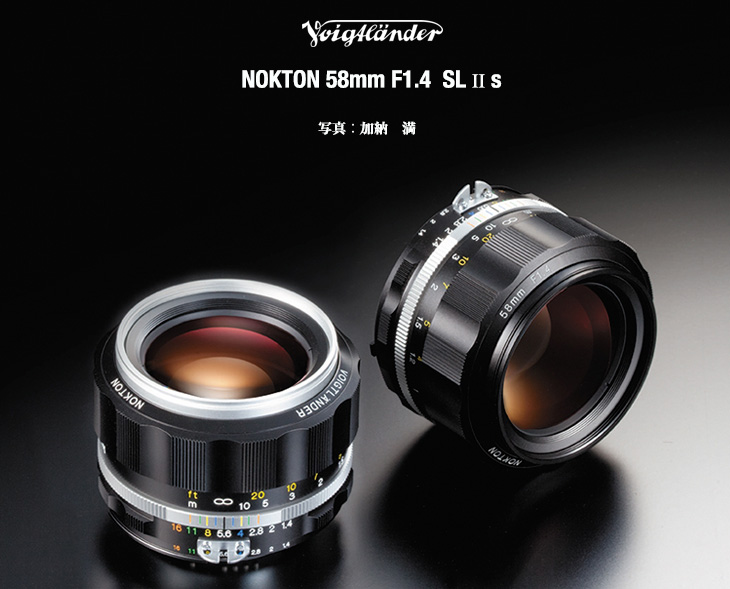
Where was the outcry when Voigtländer copied the barrel style of Nikon lenses? Funny how it's only an issue when a Chinese company copies a German company, despite the optical formula being different in both these cases.
damonnomonon wrote:
Wasn't the Mandler 35mm f2 basically an f2.5-2.8 lens? If I get this I'd wanna make sure if opens to f1.4.
In practice this doesn't bother me, but yes the t-stop seems to be closer to f/2.4 or thereabouts. I would think that Mandler would address this with a legit faster lens.
Where was the outcry when Voigtländer copied the barrel style of Nikon lenses? Funny how it's only an issue when a Chinese company copies a German company, despite the optical formula being different in both these cases.
It may have something to do with Cosina marketing them under their long established brand and not creating a new brand named Wakimoto Sako. Or the fact that there are no similarities to the way they're branded or packaged between the two companies. The company in question takes a sledgehammer to the nostalgia button and Dr. Mandler's name as a marketing tool to get attention to what, thus far, has been just another Chinese-produced 35/2.
I am in no way faulting anyone using the lens who likes it or anyone interested in the coming 50. I love it when bargain-priced lenses work out for me, so I'm in no position to judge. That said, I'm not thrilled that a name deserving of a lot more respect is getting treated as a cheap marketing ploy. And I despise that it works.
raizans wrote:
You’re not allowed to name a camera company after a person.
Victor Hasselblad
Seiichi Mamiya
Carl Zeiss
Johann Christoph Voigtländer
Valentin Linhof
Laben F. Deardorff
Peter Gowland
etc.
Sure, it’s great when a founder or key figure uses their own name as part of a company they’re starting or are directly involved with.
Clearly, that is not what is happening here.
When a company from any country so obviously adopts the name and markets itself in a way that evokes one of the most heralded figures in another companies history, you should expect some pushback.
raizans wrote:
Memorializing greatness isn’t everyone’s cup of tea.
Really? Then please tell us—what exactly has you so excited about yet another 50mm f/1.4 lens?
Is it the game-changing optics? Is it an incredible new company fundamentally changing how lenses are designed and produced, offering some truly unique experience?
Or is it the name and branding that got your attention?
The company itself says the brand is a “tribute to the masters,” and then names the lens:
Mandler 50mm f/1.4 E46 PRE-A
I’m going to go out on a limb and say that if “Mandler,” “E46,” and “PRE-A” weren’t in the name, this lens would probably get lost in the noise.
The same goes for the Mandler 35mm f/2 7-Element.
Without the carefully chosen names and marketing built around Leica history and nostalgia, this would likely be viewed as just another M-mount lens in an already crowded market.
So maybe “memorializing greatness” isn’t your cup of tea—whatever that means—but it sure seems to be in the cup over at the Mandler lens company.
Making classic optical signatures in matching barrel styles for brand new rangefinder lenses *accessible* for more people, especially younger demographics.