A7R6 readout speed
p.6 #1A7R6 readout speed
AJay wrote:
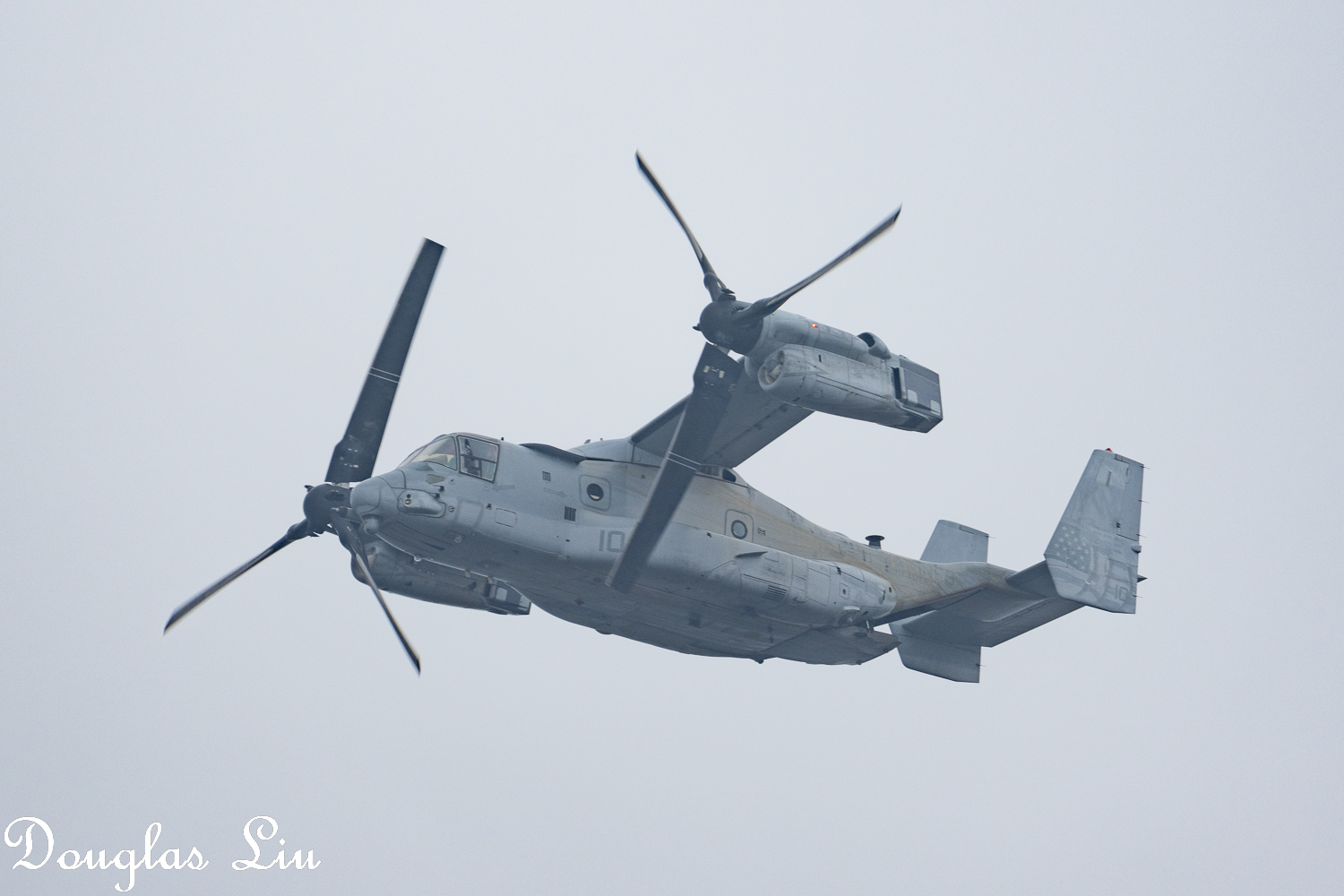
I get that but look at the lower right propeller. Why is only one side of the propeller smeared? I'm assuming the image is being scanned either top to bottom or bottom to top. The smearing should be identical on both sides of the bottom right propeller should it not if the scan is consistent in speed?
Likely because the propellers are at different / opposing vertical positions at the time each was scanned.
snapsy wrote
The degree of artifacts is a function of the vertical movement of the subject across the image plane. The propellers as shot move both horizontally and vertically relative to the image plane, depending on the phase you capture them in a given photo. That's why the amount of rolling shutter distortion varies from one image to the next.Likely because the propellers are at different / opposing vertical positions at the time each was scanned.
Aug 05, 2026 at 12:32 PM
p.6 #2A7R6 readout speed
AJay wrote:
I get that but look at the lower right propeller. Why is only one side of the propeller smeared? I'm assuming the image is being scanned either top to bottom or bottom to top. The smearing should be identical on both sides of the bottom right propeller should it not if the scan is consistent in speed?
One side of the blade is moving in the same direction as the scan and the other side moves in the opposite direction of the scan. The blade moving in the same direction as the scan will produce more distortion, in particular if the rate of movement of the blade and the scan are closely matched, its image will smear across a large portion of the image. A blade moving in the opposite direction of the scan will appear to be narrower, not smeared.
snapsy wrote
The degree of artifacts is a function of the vertical movement of the subject across the image plane. The propellers as shot move both horizontally and vertically relative to the image plane, depending on the phase you capture them in a given photo. That's why the amount of rolling shutter distortion varies from one image to the next.One side of the blade is moving in the same direction as the scan and the other side moves in the opposite direction of the scan. The blade moving in the same direction as the scan will produce more distortion, in particular if the rate of movement of the blade and the scan are closely matched, its image will smear across a large portion of the image. A blade moving in the opposite direction of the scan will appear to be narrower, not smeared.
Aug 05, 2026 at 01:07 PM
p.6 #3A7R6 readout speed
Look at the leaning buildings in the first shot and the extra long blades on both sides of the plane in the second shot.
 |
||
 |
||
|
ILCE-7RM6 FE 200-600mm F5.6-6.3 G OSS lens 600mm f/6.3 1/4000s 640 ISO +0.3 EV
|
||
 |
||
|
ILCE-7RM6 FE 200-600mm F5.6-6.3 G OSS lens 600mm f/6.3 1/1000s 200 ISO 0.0 EV
Aug 05, 2026 at 01:27 PM
p.6 #4A7R6 readout speed
AJay wrote:
I get that but look at the lower right propeller. Why is only one side of the propeller smeared? I'm assuming the image is being scanned either top to bottom or bottom to top. The smearing should be identical on both sides of the bottom right propeller should it not if the scan is consistent in speed?
That's because on the distorted side the blade is moving up or down the frame and that corresponds with the scan direction on the sensor - while on the other side the other blade is moving in the opposite direction of the scan direction.
You can see the different rotors have counter-rotating propellers left and right and front and back which is why only one side shows this gross distortion.
snapsy wrote
The degree of artifacts is a function of the vertical movement of the subject across the image plane. The propellers as shot move both horizontally and vertically relative to the image plane, depending on the phase you capture them in a given photo. That's why the amount of rolling shutter distortion varies from one image to the next.That's because on the distorted side the blade is moving up or down the frame and that corresponds with the scan direction on the sensor - while on the other side the other blade is moving in the opposite direction of the scan direction.
You can see the different rotors have counter-rotating propellers left and right and front and back which is why only one side shows this gross distortion.
Aug 05, 2026 at 03:43 PM
p.6 #5A7R6 readout speed
duncangr wrote:
I get that but look at the lower right propeller. Why is only one side of the propeller smeared? I'm assuming the image is being scanned either top to bottom or bottom to top. The smearing should be identical on both sides of the bottom right propeller should it not if the scan is consistent in speed?That's because on the distorted side the blade is moving up or down the frame and that corresponds with the scan direction on the sensor - while on the other side the other blade is moving in the opposite direction of the scan direction.
You can see the different rotors have counter-rotating propellers left and right and front and back which is why only one side shows this gross distortion.
Makes sense. Thanks for the explanation.
AJay wrote
snapsy wrote
The degree of artifacts is a function of the vertical movement of the subject across the image plane. The propellers as shot move both horizontally and vertically relative to the image plane, depending on the phase you capture them in a given photo. That's why the amount of rolling shutter distortion varies from one image to the next.You can see the different rotors have counter-rotating propellers left and right and front and back which is why only one side shows this gross distortion.
Makes sense. Thanks for the explanation.
Aug 05, 2026 at 06:57 PM
p.6 #6A7R6 readout speed
speedmaster20d wrote:
I think it's best to refrain from framing speculations / rumors as facts without solid proof.Thanks for performing this test! While I said it was unlikely the a7rVI was reading only a single row at a time, it's even more unlikely for the A1. It's implausible the A1 is achieving its readout speeds with a single row readout - that would represent almost half an order of magnitude improvement in sensor technology, over just a single sensor generation. The fact the Z9 sensor has 12-row readouts makes it A1 not having exceedingly unlikely - the Z9 sensor has identical readout speeds as the A1 when normalized for their slight row count differences, indicating they're share the same core sensor IP.
I'm much more apt to believe the absence of the stair-case artifact in your A1 test indicates this particular ceiling fan / speed / arrangement / image noise is failing to manifest it or, more unlikely, that Sony is using one of the alternate, novel readout schemes I referenced from their patent and that this changed for the A1 II vs A1 I sensor.I recently used an R5m2 shooting swallows and the jagis on the wings were clearly visible and awful.
I have seen this on the A9 where they are barely visible but have never seen this on any A1/A1ii or A9iii images - and I have many thousands from the A1 - the edges all appear to be consistently smooth like the edges in the fan images above.
A9 Jaggies
https://duncangroenewald.com/img/tests/Canon_R1/A9-Jagies.jpg
R5M2 Jaggies
https://duncangroenewald.com/img/tests/Canon_R1/R52_20240126_1_8687_DxD.jpg
EDIT:
Couldn't find any evidence of these artifacts in the Z9 swallow images either.Z9 sensor is a variant of the A1 sensor so no surprise there. I assume that R5II image is at high magnification and I can barely see the "horrible" jaggies and I doubt anyone would notice them at 100%. They look less than the A9 jaggies. I never ever noticed jaggies at all on my A9 in 40000 shots, but I never looked beyond 100%.Z8/Z9 exhibits the 12-row staircase pattern, both in Jim Kasson's test and also in third-party flash photography. Which brings into question whether the Z8/Z9 share the same core sensor IP as the A1, which is something I previously assumed based on their nearly-identical readout times after normalizing for their row count differences.
https://blog.kasson.com/z9/nikon-z9-readout-details/so this is where the 12 row thing come from?
it's too bad the blog owner is not here to comment. When I read his comments he does not claim to know what is causing this issue
"’I’m having a hard time figuring out just what’s happening, although it is pretty clear to me that the camera is performing analog to digital conversion on more than one row at a time."
as we know now the conversion can happen in parallel so this his second part of the statement can be true but neither is he saying nor can we conclude...Show more →
Revisiting this. I set up my Arduino readout speed rig and modified the code to alternate two LEDs at very high frequency (16,000 times/sec, 62us) and captured it on my Nikon Z8 @ 1/12,800. Based on my previous readout speed measurements of these two cameras, they have nearly identical readout speeds when normalized for their slight row count differences, they appear to share the same core Sony sensor IP.
I've attached the resulting photos below. Notice the same 12-row bands that Jim Kasson observed using an oscilloscope, but in this case I'm using LEDs to eliminate the possible artifacts you were concerened about with a scope.
The average luminance for each individual row within a 12-row band is nearly identical. The luminance across 12-row bands is noticeably different. This implies that each row within a set of 12 rows shares the same integration start time but each set has a different integration start time. Considering how the multi-row readout I theorized is unlikely based upon your findings in Sony's patent filing, can you theorize what could cause this grouping of integration times if not them sharing the same readout stages, perhaps referencing the technical findings you explained in your post? Would be greatly appreciated - the mystery is gnawing at me
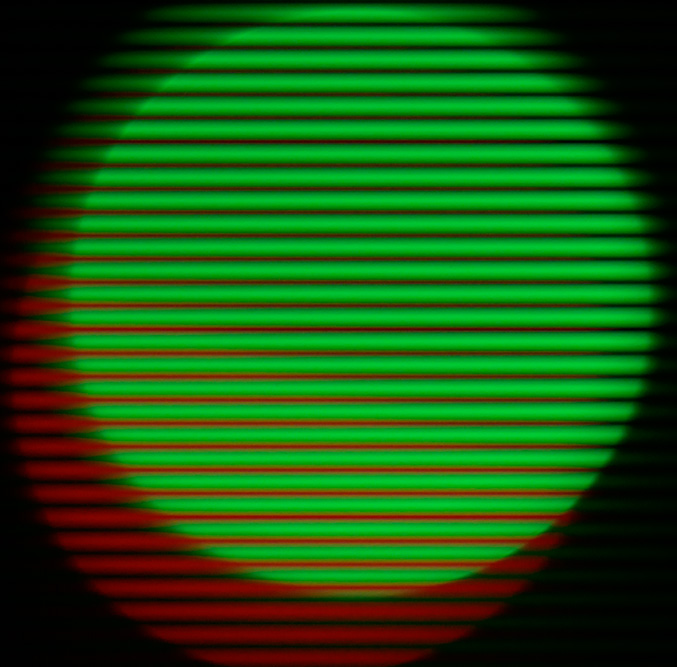
Z8 readout of LEDs cycling between Green and Red @ 62us (full scale)
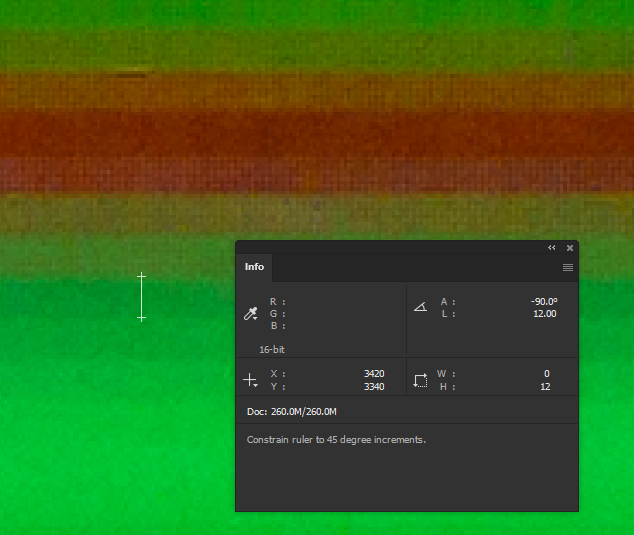
Z8 readout of LEDs cycling between Green and Red @ 62us (zoomed to individual rows)
snapsy wrote
Pixel Perfect wrote
duncangr wrote
snapsy wrote
speedmaster20d wrote
this should debunk the claim / speculation about A1 II is reading in 12 or 8 rows.I think it's best to refrain from framing speculations / rumors as facts without solid proof.
I'm much more apt to believe the absence of the stair-case artifact in your A1 test indicates this particular ceiling fan / speed / arrangement / image noise is failing to manifest it or, more unlikely, that Sony is using one of the alternate, novel readout schemes I referenced from their patent and that this changed for the A1 II vs A1 I sensor.
I have seen this on the A9 where they are barely visible but have never seen this on any A1/A1ii or A9iii images - and I have many thousands from the A1 - the edges all appear to be consistently smooth like the edges in the fan images above.
A9 Jaggies
https://duncangroenewald.com/img/tests/Canon_R1/A9-Jagies.jpg
R5M2 Jaggies
https://duncangroenewald.com/img/tests/Canon_R1/R52_20240126_1_8687_DxD.jpg
EDIT:
Couldn't find any evidence of these artifacts in the Z9 swallow images either.
https://blog.kasson.com/z9/nikon-z9-readout-details/
it's too bad the blog owner is not here to comment. When I read his comments he does not claim to know what is causing this issue
"’I’m having a hard time figuring out just what’s happening, although it is pretty clear to me that the camera is performing analog to digital conversion on more than one row at a time."
as we know now the conversion can happen in parallel so this his second part of the statement can be true but neither is he saying nor can we conclude...Show more →
Revisiting this. I set up my Arduino readout speed rig and modified the code to alternate two LEDs at very high frequency (16,000 times/sec, 62us) and captured it on my Nikon Z8 @ 1/12,800. Based on my previous readout speed measurements of these two cameras, they have nearly identical readout speeds when normalized for their slight row count differences, they appear to share the same core Sony sensor IP.
I've attached the resulting photos below. Notice the same 12-row bands that Jim Kasson observed using an oscilloscope, but in this case I'm using LEDs to eliminate the possible artifacts you were concerened about with a scope.
The average luminance for each individual row within a 12-row band is nearly identical. The luminance across 12-row bands is noticeably different. This implies that each row within a set of 12 rows shares the same integration start time but each set has a different integration start time. Considering how the multi-row readout I theorized is unlikely based upon your findings in Sony's patent filing, can you theorize what could cause this grouping of integration times if not them sharing the same readout stages, perhaps referencing the technical findings you explained in your post? Would be greatly appreciated - the mystery is gnawing at me
Z8 readout of LEDs cycling between Green and Red @ 62us (full scale)
Z8 readout of LEDs cycling between Green and Red @ 62us (zoomed to individual rows)
Aug 18, 2026 at 07:17 PM
p.6 #7A7R6 readout speed
If this is the case then a fast enough pan on a tripod should show clear 12 pixel high steps with each step perfectly vertical if they are exposed at the identical time.
Aug 19, 2026 at 12:53 AM
p.6 #8A7R6 readout speed
duncangr wrote:
If this is the case then a fast enough pan on a tripod should show clear 12 pixel high steps with each step perfectly vertical if they are exposed at the identical time.
Tried this today. As a practical matter, it seems exceeding difficult to get a pan to demonstrate this, for example on the edge of a wall or vertical blind. The combination of aliasing and 12-pixel grouping makes it nearly impossible to visualize.
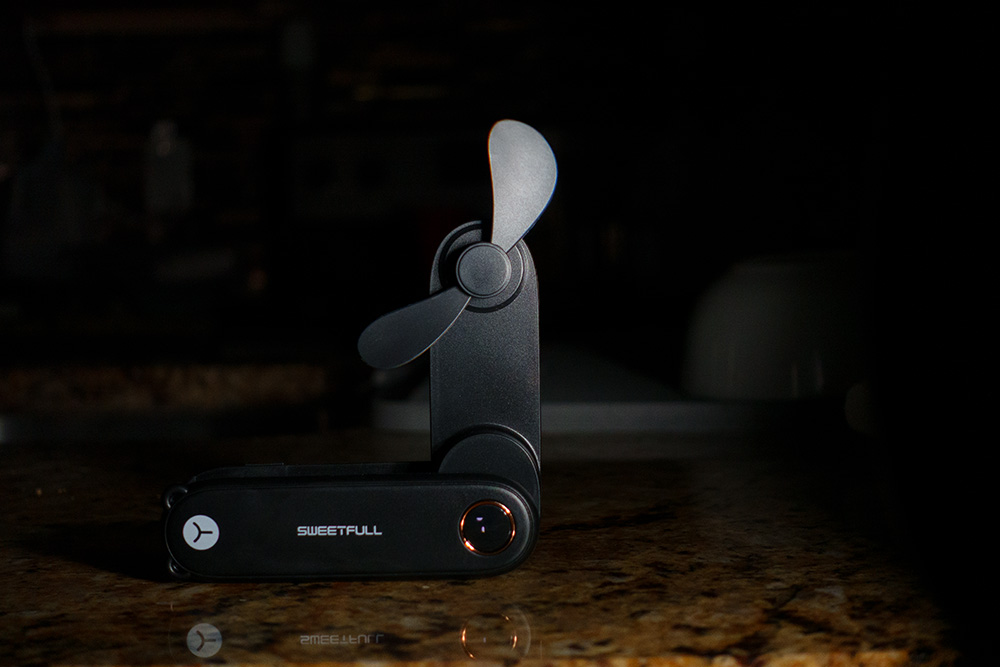
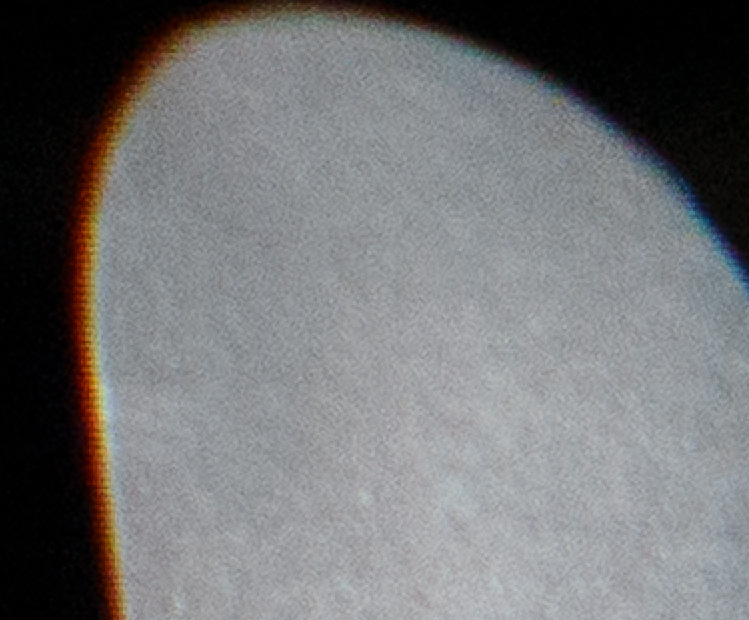
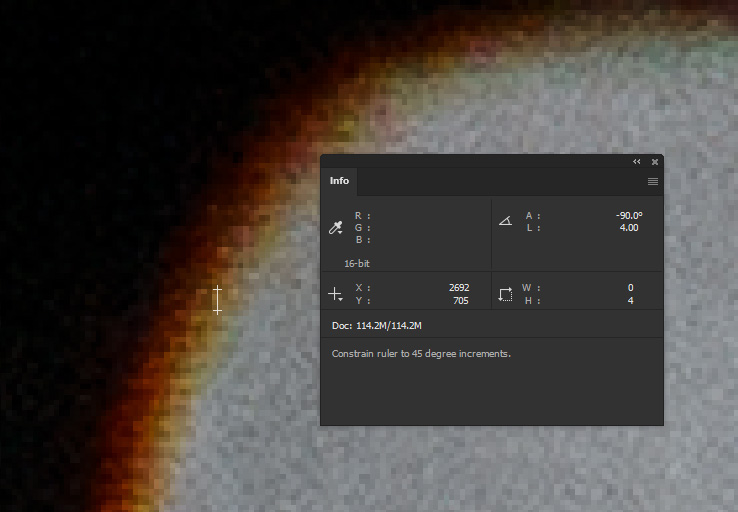
I had better success with a hand-held fan that I just bought from Amazon for this purpose, the results of which are in the images below. Notice in the last image there's a maze-type pattern. You can see this in the LED photos in my OP as well.
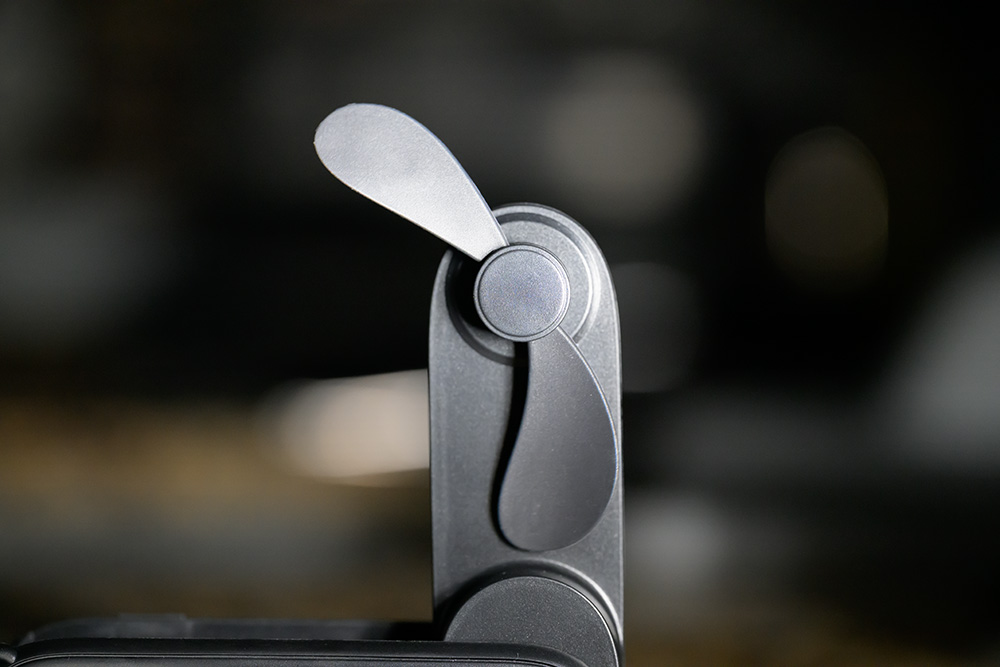
Z8 105mm MC 1/32,000 shutter speed, full scene

Z8 105mm MC 1/32,000 shutter speed, Magnification #1
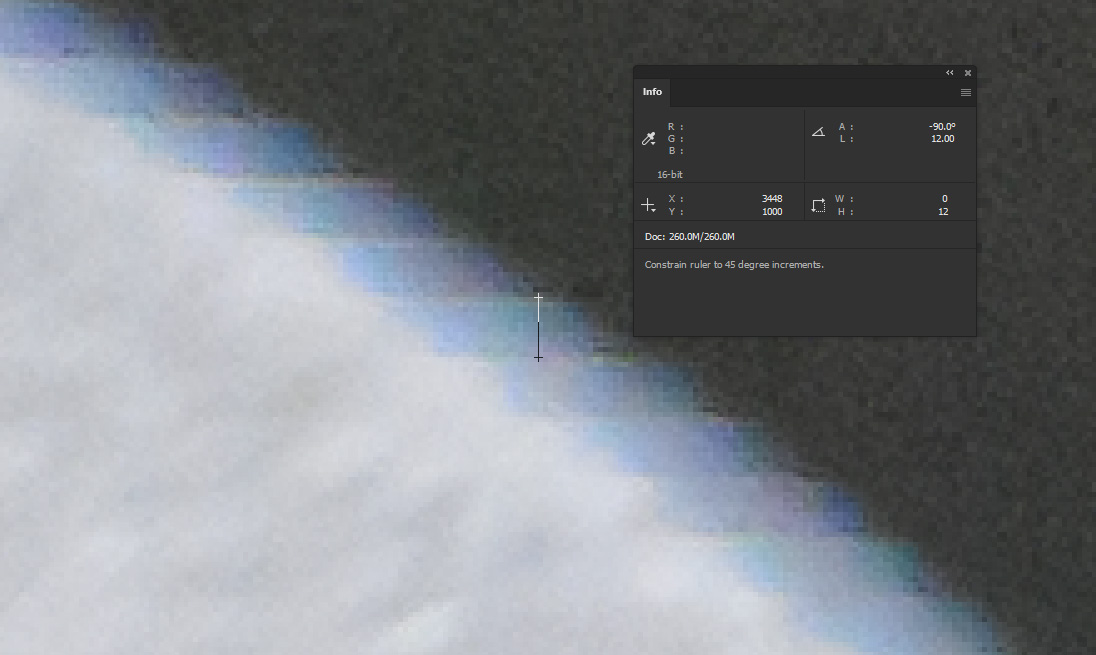
Z8 105mm MC 1/32,000 shutter speed, Magnification #2
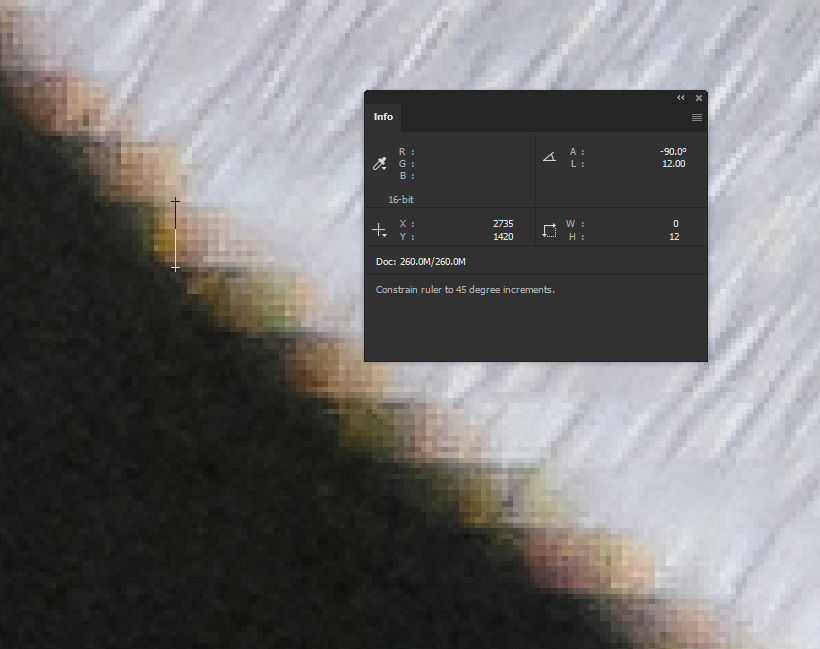
Z8 105mm MC 1/32,000 shutter speed, Magnification #3 (showing maze artifact)
If this is the case then a fast enough pan on a tripod should show clear 12 pixel high steps with each step perfectly vertical if they are exposed at the identical time.
Tried this today. As a practical matter, it seems exceeding difficult to get a pan to demonstrate this, for example on the edge of a wall or vertical blind. The combination of aliasing and 12-pixel grouping makes it nearly impossible to visualize.
I had better success with a hand-held fan that I just bought from Amazon for this purpose, the results of which are in the images below. Notice in the last image there's a maze-type pattern. You can see this in the LED photos in my OP as well.
Z8 105mm MC 1/32,000 shutter speed, full scene
Z8 105mm MC 1/32,000 shutter speed, Magnification #1
Z8 105mm MC 1/32,000 shutter speed, Magnification #2
Z8 105mm MC 1/32,000 shutter speed, Magnification #3 (showing maze artifact)
Aug 19, 2026 at 01:00 PM
p.6 #9A7R6 readout speed
I did the LED test on a Z6III (partially-stacked sensor) and it shows 4-row bands instead of the 12-row bands on the Z8. I suppose this makes sense considering the Z8's per-row readout speed is 5.2x faster than the Z6III (Z8 677ns/row vs Z6III 3,574ns/row). So whatever Sony is doing across multiple rows to facilitate a faster readout, it doesn't need to do as much of it on the Z6III, esp considering the Z6III likely doesn't have stacked DRAM. It would be really nice to see this test done on an a7rVI, not to mention the a7v which possibly shares similar core sensor IP vs the Z6III/S1 II.
Here are Z6III photos of the portable fan. Note the Z6III's max ES shutter speed is 1/16,000 vs 1/32,000 on the Z8. Also note the rolling-shutter warping of the blade itself, owing to the Z6III's slower readout speed vs the Z8.
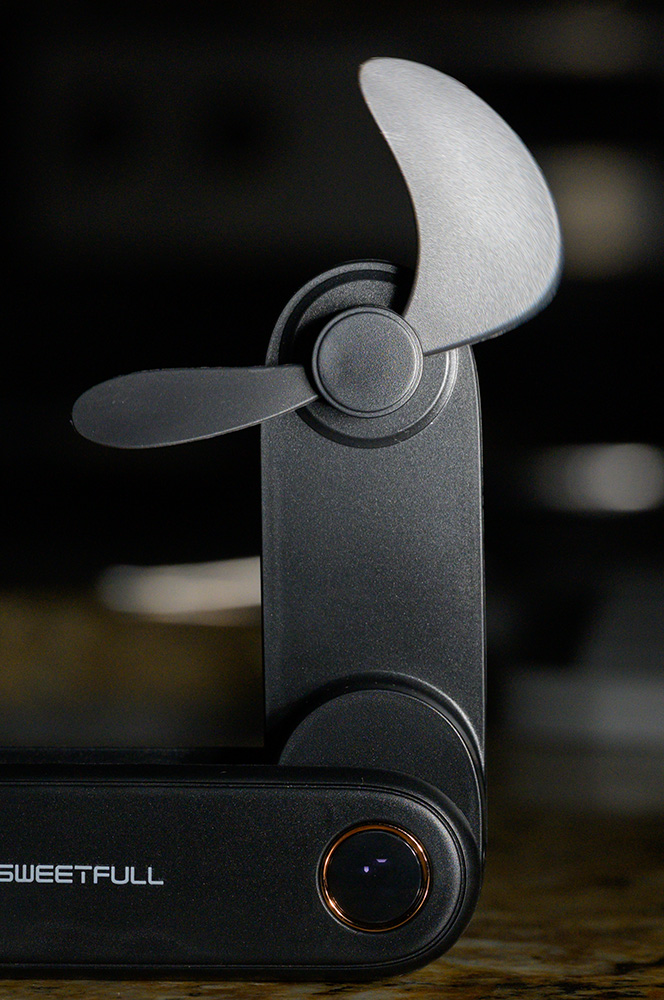
Z6III 105mm MC 1/16,000 shutter speed, full scene
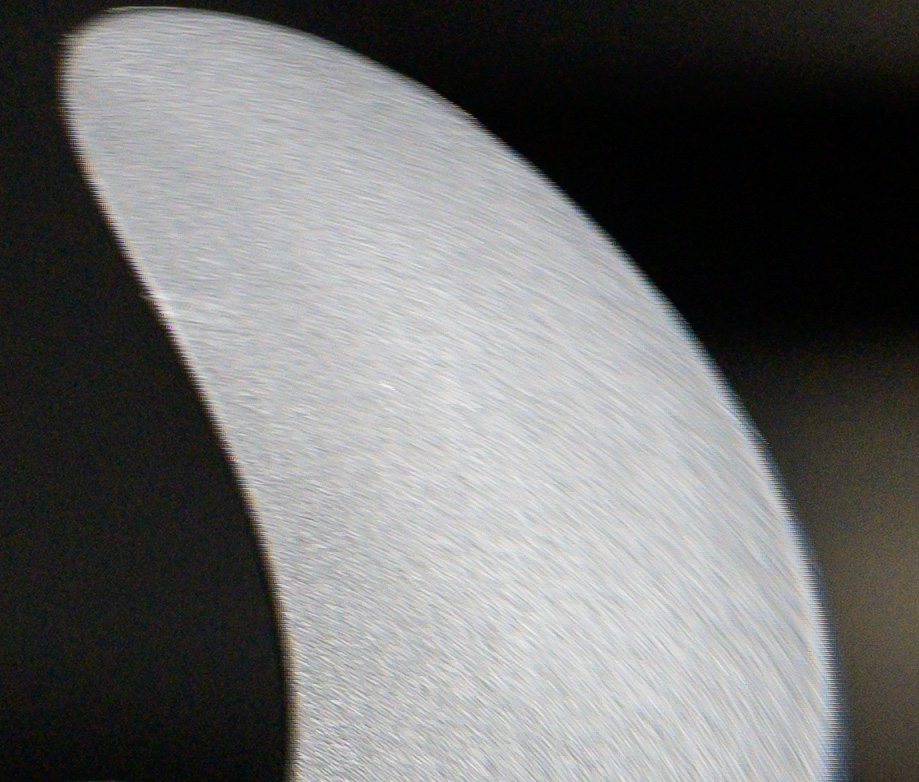
Z6III 105mm MC 1/16,000 shutter speed, Magnification #1
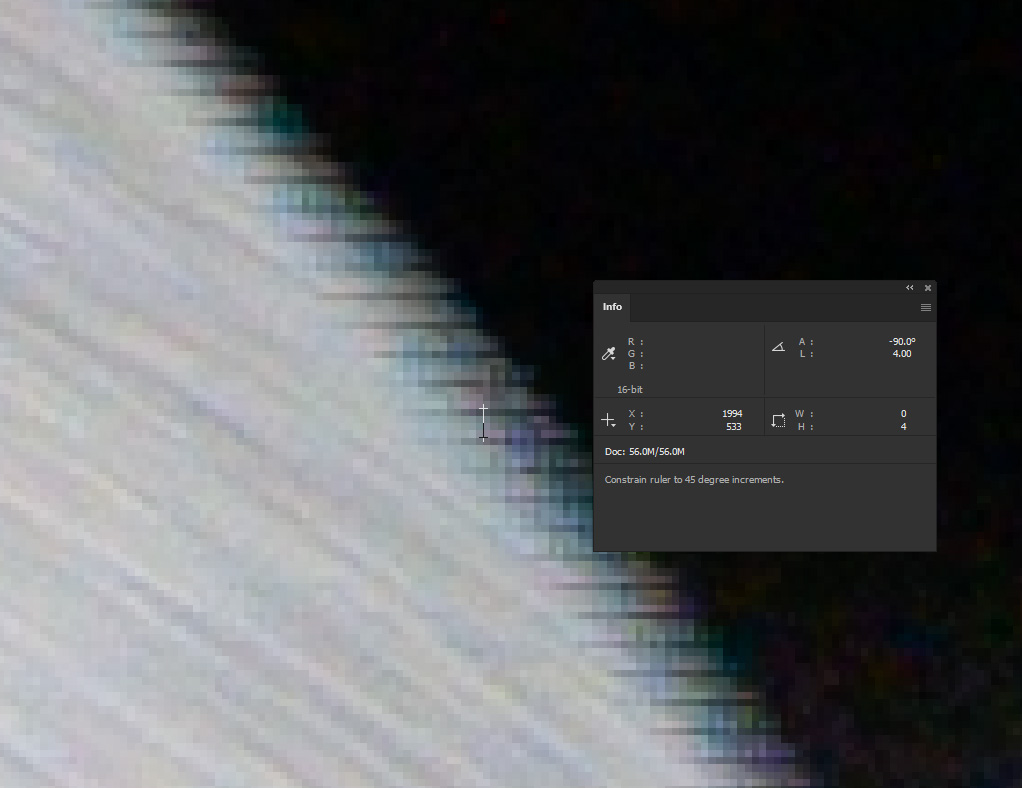
Z6III 105mm MC 1/16,000 shutter speed, Magnification #2
Here are Z6III photos of the portable fan. Note the Z6III's max ES shutter speed is 1/16,000 vs 1/32,000 on the Z8. Also note the rolling-shutter warping of the blade itself, owing to the Z6III's slower readout speed vs the Z8.
Z6III 105mm MC 1/16,000 shutter speed, full scene
Z6III 105mm MC 1/16,000 shutter speed, Magnification #1
Z6III 105mm MC 1/16,000 shutter speed, Magnification #2
Aug 19, 2026 at 02:08 PM
p.6 #10A7R6 readout speed
snapsy wrote:
.... It would be really nice to see this test done on an a7rVI .....
See page 2, #13.
.... It would be really nice to see this test done on an a7rVI .....
See page 2, #13.
Aug 19, 2026 at 04:04 PM
|
p.6 #11A7R6 readout speed
dclark wrote:
See page 2, #13.
Thanks David. To capture the RS artifacts using my portable fan I had to do a fair bit of tinkering with distance and shutter speed. If I hadn't gone into the experiment expecting the result I got I might not have persevered long enough to get the positive capture. What's your sense on the chances a single attempt would be dispositive to disprove artifacts, in case @speedmaster20d didn't have the time to tinker as much as I did?
Also, did you ever personally test the A1 or A1 II for this?
snapsy wrote
.... It would be really nice to see this test done on an a7rVI .....Thanks David. To capture the RS artifacts using my portable fan I had to do a fair bit of tinkering with distance and shutter speed. If I hadn't gone into the experiment expecting the result I got I might not have persevered long enough to get the positive capture. What's your sense on the chances a single attempt would be dispositive to disprove artifacts, in case @speedmaster20d didn't have the time to tinker as much as I did?
Also, did you ever personally test the A1 or A1 II for this?
Aug 19, 2026 at 04:26 PM
p.6 #12A7R6 readout speed
I did a new experiment with very interesting results. Using my Z8 and Z6III, I switched from stills mode to 8K/6K raw video and filmed the same fan blade, using the same ultra-fast shutter speeds, then took a screen grab from each video and compared the RS artifacts. For the Z6III, the 6K video has the same 4-row artifact as its stills mode. However for the Z8, its 8K video has a 4-row artifact, as compared to 12-row for stills mode.
This actually makes sense if you consider how none of the stacked-DRAM sensors seem to run the sensor at full readout speeds for video, apparently because they don't utilized the stack DRAM and instead use the main, off-sensor memory. It's not exactly clear why this is but it's something I started a thread on Dpreview a few years ago (link). In that thread we discovered the A9's data sheet (screen shot) makes a mention of why in the video modes section of the data sheet:
"In video mode, On-Clip DRAM function disabled on WW361847"
Btw, "WW361847" is Sony's internal name for the A9.
In other words, the stacked DRAM functionality on the A9 is disabled for video. This is why the A9's video modes have such slow readouts (link).
The Z6III was the first partially/fully-stacked sensor camera I've tested that runs the sensor at full speed for video. This is why it's video readout rates per row are so similar to stills (link). Note the Z6III video readout is actually a little faster than stills, owing to its 12-bit readout vs 14-bit (3,573 ns/row for stills vs 2,755 ns/row for 6K raw video).
So with the stacked DRAM disabled on the Z8 for video, it switches its readout strategy to a grouping of 4 rows, presumably because the non-stacked main memory can't handle the faster readout delivery from the 12-row grouping. That matches the 4 row grouping for the Z6III. Interestingly, the Z8's 8K raw video and Z6III's 6K raw video have much more similar readout rates when normalized for their row count differences than they do for stills:
Below are the video screen grabs from the cameras.
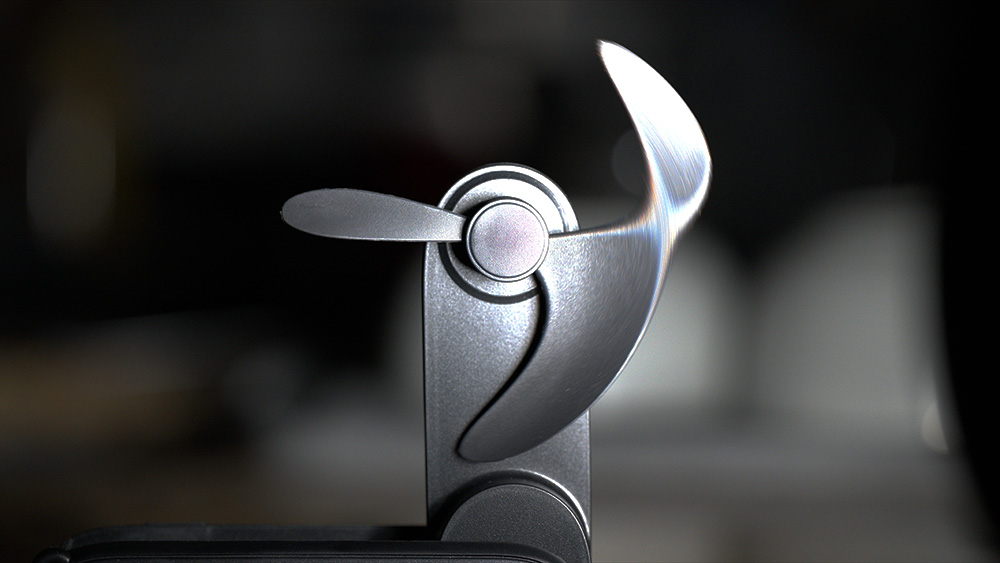
Nikon Z8 8K Raw Video screen grab, full-view
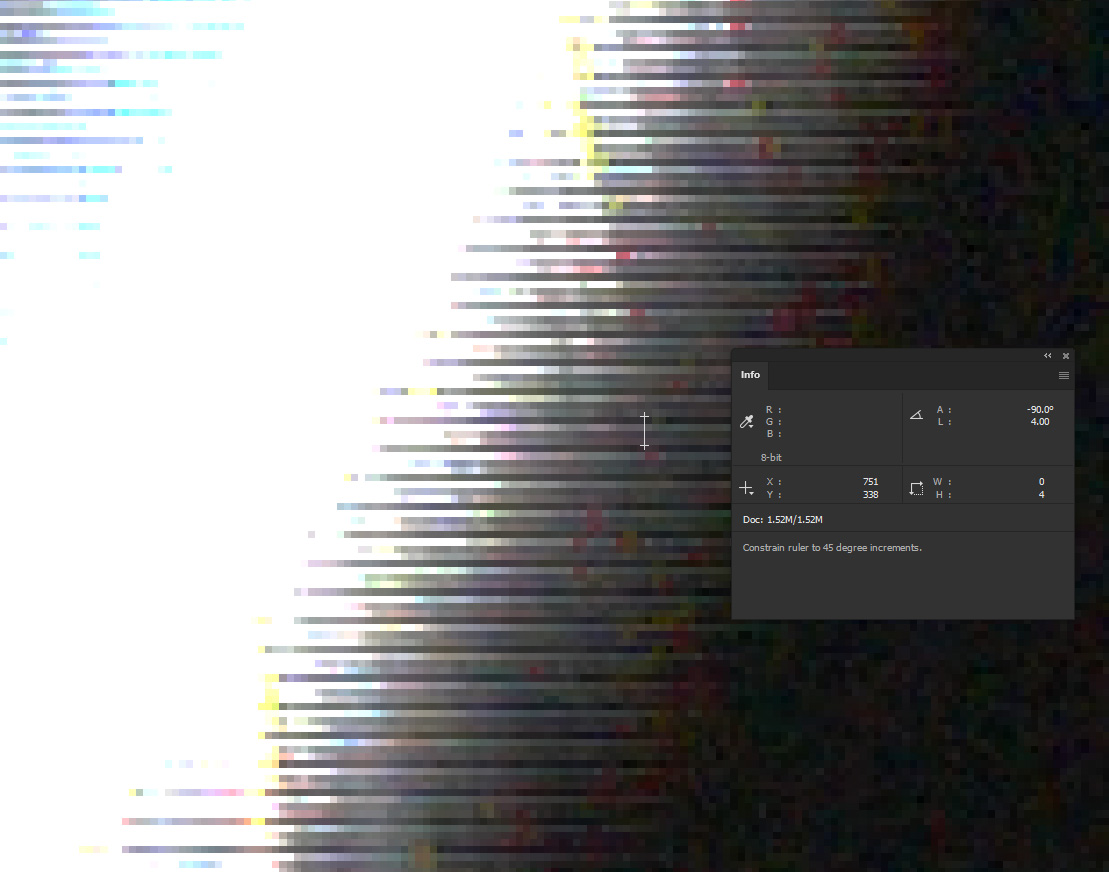
Nikon Z8 8K Raw Video screen grab, magnified
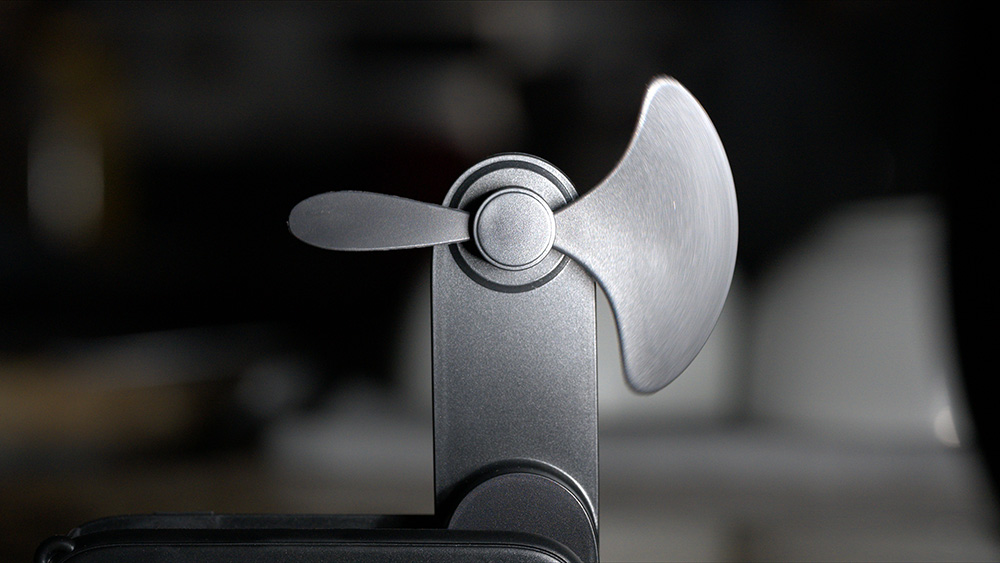
Nikon Z6III 6K Raw Video screen grab, full-view
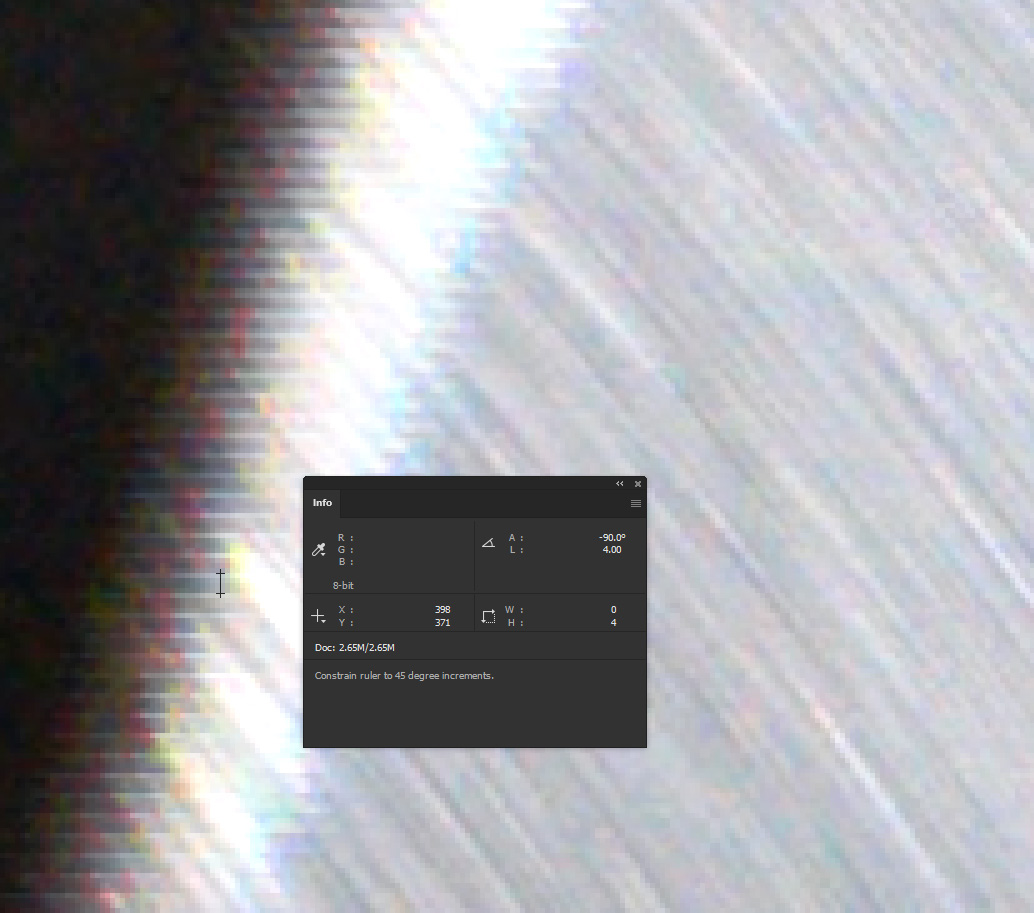
Nikon Z6III 6K Raw Video screen grab, magnified
This actually makes sense if you consider how none of the stacked-DRAM sensors seem to run the sensor at full readout speeds for video, apparently because they don't utilized the stack DRAM and instead use the main, off-sensor memory. It's not exactly clear why this is but it's something I started a thread on Dpreview a few years ago (link). In that thread we discovered the A9's data sheet (screen shot) makes a mention of why in the video modes section of the data sheet:
"In video mode, On-Clip DRAM function disabled on WW361847"
Btw, "WW361847" is Sony's internal name for the A9.
In other words, the stacked DRAM functionality on the A9 is disabled for video. This is why the A9's video modes have such slow readouts (link).
The Z6III was the first partially/fully-stacked sensor camera I've tested that runs the sensor at full speed for video. This is why it's video readout rates per row are so similar to stills (link). Note the Z6III video readout is actually a little faster than stills, owing to its 12-bit readout vs 14-bit (3,573 ns/row for stills vs 2,755 ns/row for 6K raw video).
So with the stacked DRAM disabled on the Z8 for video, it switches its readout strategy to a grouping of 4 rows, presumably because the non-stacked main memory can't handle the faster readout delivery from the 12-row grouping. That matches the 4 row grouping for the Z6III. Interestingly, the Z8's 8K raw video and Z6III's 6K raw video have much more similar readout rates when normalized for their row count differences than they do for stills:
- Z8 photo, 3.72 ms (1/268) full-sensor readout, 677.27 ns/row
- Z6III photo, 14.41 ms (1/69) full-sensor readout, 3,573.98 ns/row
- Difference: Z8 5.27x faster on a per-row basis
- Z8 8K raw video, 14.41 ms (1/69) full-sensor readout, 3,337.96 ns/row
- Z6 III 6K raw video, 9.37 ms (1/107), 2,754.82 ns/row
- Difference: Z6III 21% faster on a per-row basis
Below are the video screen grabs from the cameras.
Nikon Z8 8K Raw Video screen grab, full-view
Nikon Z8 8K Raw Video screen grab, magnified
Nikon Z6III 6K Raw Video screen grab, full-view
Nikon Z6III 6K Raw Video screen grab, magnified
Aug 19, 2026 at 07:21 PM
p.6 #13A7R6 readout speed
A7R6 - vertical line taken with lossless and lossy compressed RAW
I couldn't make out any obvious staircasing but there is something going on.
This taken in sunlight - when I did it inside with lights there are so much banding from the lights that looks like it could be sensor related but that disappears completely when done in sunlight.
Note that the uneven edges may be magnification of the jagged edge of the ballpoint pen on paper and not some sensor artefact. I guess I should take a still image of the same line to compare it.
EDIT: Updated with still image of the line in the middle which is taken from close so not quite the same size as the other two.
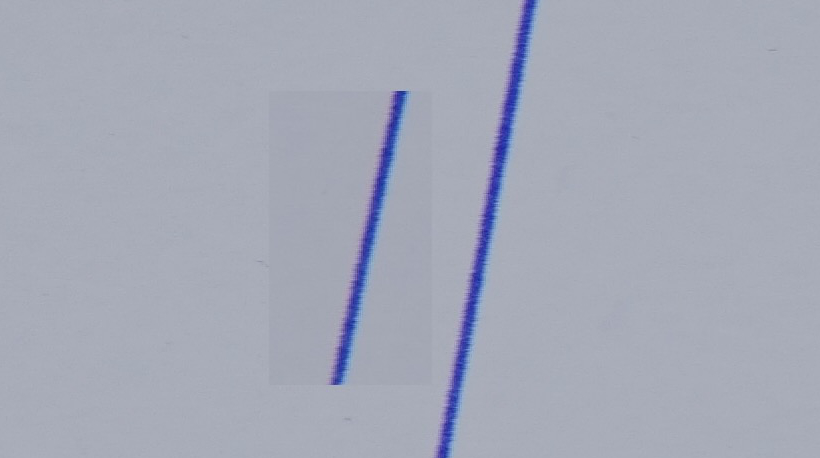
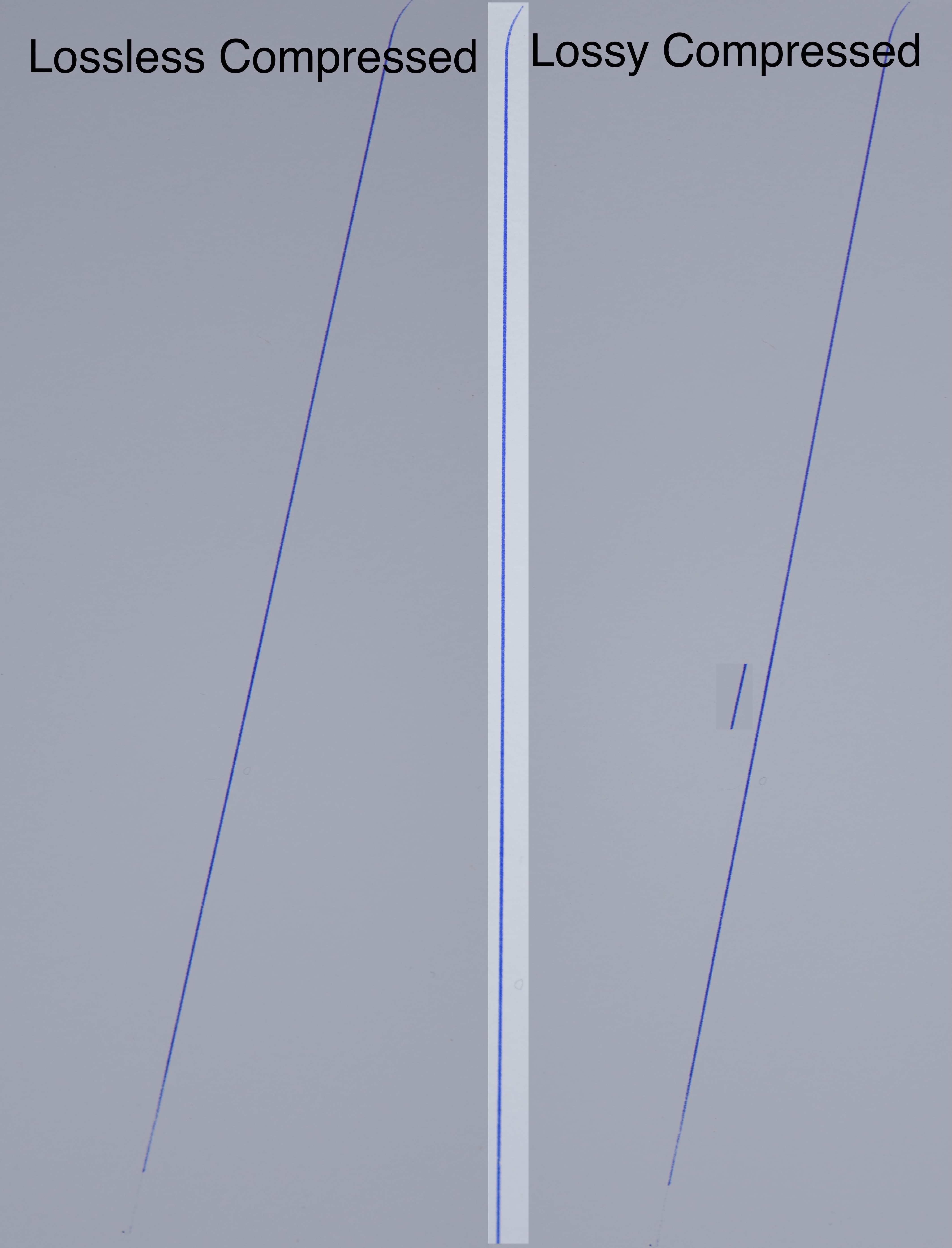
I couldn't make out any obvious staircasing but there is something going on.
This taken in sunlight - when I did it inside with lights there are so much banding from the lights that looks like it could be sensor related but that disappears completely when done in sunlight.
Note that the uneven edges may be magnification of the jagged edge of the ballpoint pen on paper and not some sensor artefact. I guess I should take a still image of the same line to compare it.
EDIT: Updated with still image of the line in the middle which is taken from close so not quite the same size as the other two.
Aug 19, 2026 at 08:00 PM
p.6 #14A7R6 readout speed
snapsy wrote:
I'm much more apt to believe the absence of the stair-case artifact in your A1 test indicates this particular ceiling fan / speed / arrangement / image noise is failing to manifest it or, more unlikely, that Sony is using one of the alternate, novel readout schemes I referenced from their patent and that this changed for the A1 II vs A1 I sensor.I recently used an R5m2 shooting swallows and the jagis on the wings were clearly visible and awful.
I have seen this on the A9 where they are barely visible but have never seen this on any A1/A1ii or A9iii images - and I have many thousands from the A1 - the edges all appear to be consistently smooth like the edges in the fan images above.
A9 Jaggies
https://duncangroenewald.com/img/tests/Canon_R1/A9-Jagies.jpg
R5M2 Jaggies
https://duncangroenewald.com/img/tests/Canon_R1/R52_20240126_1_8687_DxD.jpg
EDIT:
Couldn't find any evidence of these artifacts in the Z9 swallow images either.Z9 sensor is a variant of the A1 sensor so no surprise there. I assume that R5II image is at high magnification and I can barely see the "horrible" jaggies and I doubt anyone would notice them at 100%. They look less than the A9 jaggies. I never ever noticed jaggies at all on my A9 in 40000 shots, but I never looked beyond 100%.Z8/Z9 exhibits the 12-row staircase pattern, both in Jim Kasson's test and also in third-party flash photography. Which brings into question whether the Z8/Z9 share the same core sensor IP as the A1, which is something I previously assumed based on their nearly-identical readout times after normalizing for their row count differences.
https://blog.kasson.com/z9/nikon-z9-readout-details/so this is where the 12 row thing come from?
it's too bad the blog owner is not here to comment. When I read his comments he does not claim to know what is causing this issue
"’I’m having a hard time figuring out just what’s happening, although it is pretty clear to me that the camera is performing analog to digital conversion on more than one row at a time."
as we know now the conversion can happen in parallel so this his second part of the statement can be true but neither is he saying nor can we conclude that the charge transfer itself is happening for groups of row... or that it is responsible for this artifact
I don't think we can explain this bizarre artifact very simply. In fact the patten looks as if there is something different between even and odd columns in those 12 rows... it seems as if one group of rows did not even readout or had their level shifter mess up .... but somehow it only shows up with moving light....
If we had access to the raw images, we could split each image into 2 images, one for even columns and one for off columns to see if the bands appear in just one or both images to shed more light....
It is very difficult to say what is causing this, but it this looks some kind of design bug, some kind unwanted effect that is not result of just rolling shutter.... whatever it was it seems to have been fixed ?
I am having a hard time even coming up with a theory
He also used an analog scope (no one uses those anymore) so making an optical waveform like this is all but almost impossible at homeRevisiting this. I set up my Arduino readout speed rig and modified the code to alternate two LEDs at very high frequency (16,000 times/sec, 62us) and captured it on my Nikon Z8 @ 1/12,800. Based on my previous readout speed measurements of these two cameras, they have nearly identical readout speeds when normalized for their slight row count differences, they appear to share the same core Sony sensor IP.
I've attached the resulting photos below. Notice the same 12-row bands that Jim Kasson observed using an oscilloscope, but in this case I'm using LEDs to eliminate the possible artifacts you were...Show more →
We have no evidence that Sony and Nikon sensors use the same timing scheme or core IP. By evidence I mean confirmed by either manufacturer, reputable industry expert / insider source or peer reviewed engineering / scientific publication. Sony could fabricate a sensor for Nikon with Nikon's propitiatory readout timing design (in fact very common in semiconductor industry). Such information is confidential and will not be disclosed on the internet. Rest is just speculation which I'd like to stay away from.
Edited on Aug 20, 2026 at 12:42 AM · View previous versions
speedmaster20d wrote
snapsy wrote
Pixel Perfect wrote
duncangr wrote
snapsy wrote
Thanks for performing this test! While I said it was unlikely the a7rVI was reading only a single row at a time, it's even more unlikely for the A1. It's implausible the A1 is achieving its readout speeds with a single row readout - that would represent almost half an order of magnitude improvement in sensor technology, over just a single sensor generation. The fact the Z9 sensor has 12-row readouts makes it A1 not having exceedingly unlikely - the Z9 sensor has identical readout speeds as the A1 when normalized for their slight row count differences, indicating they're share the same core sensor IP.I'm much more apt to believe the absence of the stair-case artifact in your A1 test indicates this particular ceiling fan / speed / arrangement / image noise is failing to manifest it or, more unlikely, that Sony is using one of the alternate, novel readout schemes I referenced from their patent and that this changed for the A1 II vs A1 I sensor.
I have seen this on the A9 where they are barely visible but have never seen this on any A1/A1ii or A9iii images - and I have many thousands from the A1 - the edges all appear to be consistently smooth like the edges in the fan images above.
A9 Jaggies
https://duncangroenewald.com/img/tests/Canon_R1/A9-Jagies.jpg
R5M2 Jaggies
https://duncangroenewald.com/img/tests/Canon_R1/R52_20240126_1_8687_DxD.jpg
EDIT:
Couldn't find any evidence of these artifacts in the Z9 swallow images either.
https://blog.kasson.com/z9/nikon-z9-readout-details/
it's too bad the blog owner is not here to comment. When I read his comments he does not claim to know what is causing this issue
"’I’m having a hard time figuring out just what’s happening, although it is pretty clear to me that the camera is performing analog to digital conversion on more than one row at a time."
as we know now the conversion can happen in parallel so this his second part of the statement can be true but neither is he saying nor can we conclude that the charge transfer itself is happening for groups of row... or that it is responsible for this artifact
I don't think we can explain this bizarre artifact very simply. In fact the patten looks as if there is something different between even and odd columns in those 12 rows... it seems as if one group of rows did not even readout or had their level shifter mess up .... but somehow it only shows up with moving light....
If we had access to the raw images, we could split each image into 2 images, one for even columns and one for off columns to see if the bands appear in just one or both images to shed more light....
It is very difficult to say what is causing this, but it this looks some kind of design bug, some kind unwanted effect that is not result of just rolling shutter.... whatever it was it seems to have been fixed ?
I am having a hard time even coming up with a theory
He also used an analog scope (no one uses those anymore) so making an optical waveform like this is all but almost impossible at home
I've attached the resulting photos below. Notice the same 12-row bands that Jim Kasson observed using an oscilloscope, but in this case I'm using LEDs to eliminate the possible artifacts you were...Show more →
We have no evidence that Sony and Nikon sensors use the same timing scheme or core IP. By evidence I mean confirmed by either manufacturer, reputable industry expert / insider source or peer reviewed engineering / scientific publication. Sony could fabricate a sensor for Nikon with Nikon's propitiatory readout timing design (in fact very common in semiconductor industry). Such information is confidential and will not be disclosed on the internet. Rest is just speculation which I'd like to stay away from.
Edited on Aug 20, 2026 at 12:42 AM · View previous versions
Aug 19, 2026 at 11:18 PM
p.6 #15A7R6 readout speed
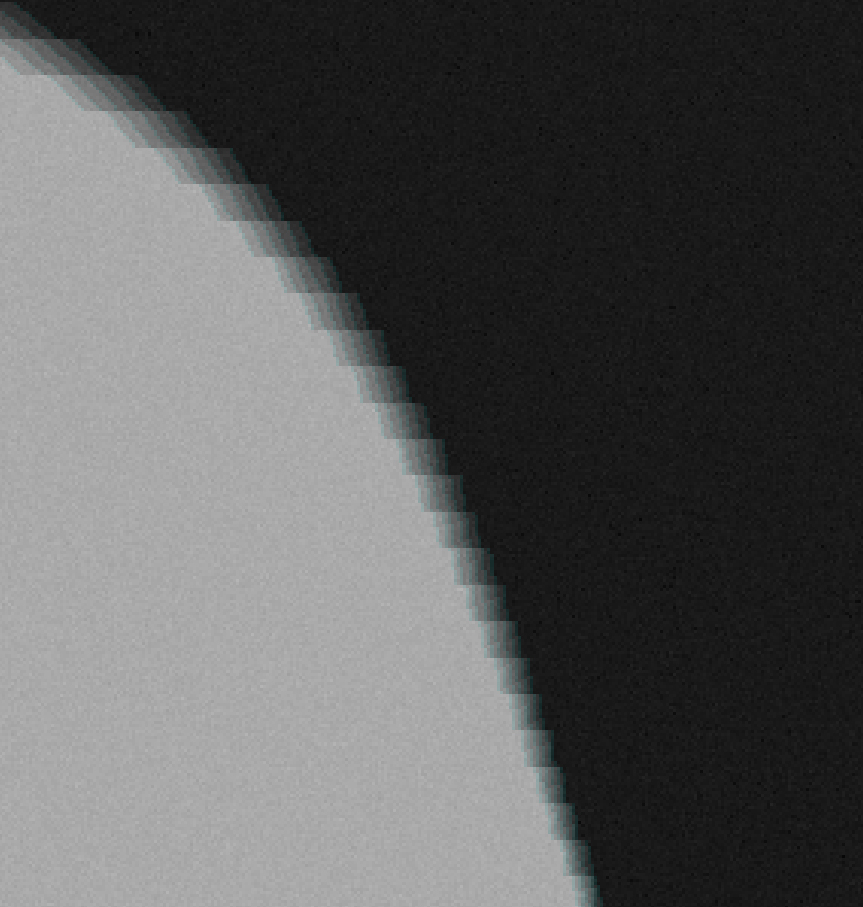
You did a lot of work to do the measurement, it's only fair to complete the hypothesis.... We can test the hypothesis for Nikon by means of simulation software to generate a mockup mage of the fan and compare it with the measurements above. I used the assumptions below
phase groups : assume 12 pixels, phase offset ~ 8.06 usec
shutter speed 1/32,000 sec fan speed 13,500 rpm (from your amazon link) used to compute motion and motion blur
some noise similar to a modern FF sensor added, 1pixel wide CA
simulation height : 3000 pixels
the mockup is qualitatively similar to the measurement result so the hypothesis is likely (although not 100% proven beyond a reasonable doubt as there are some visible differences and there could more layers of the onion to peele)
The maze artifacts might be caused by even/odd columns mismatches
For Sony we cannot say much as there is no evidence of such behavior in the current cameras.
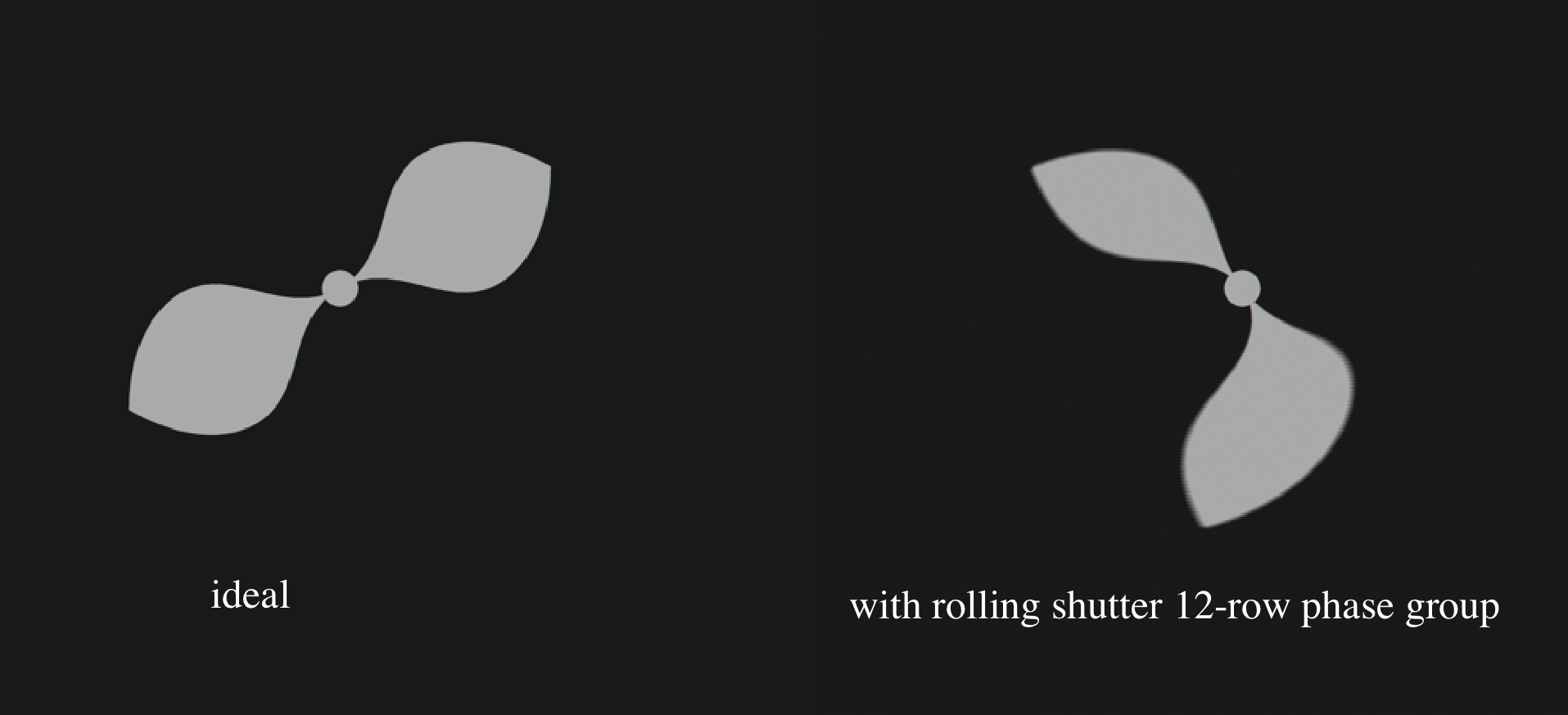
simulation
zoomed
phase groups : assume 12 pixels, phase offset ~ 8.06 usec
shutter speed 1/32,000 sec fan speed 13,500 rpm (from your amazon link) used to compute motion and motion blur
some noise similar to a modern FF sensor added, 1pixel wide CA
simulation height : 3000 pixels
the mockup is qualitatively similar to the measurement result so the hypothesis is likely (although not 100% proven beyond a reasonable doubt as there are some visible differences and there could more layers of the onion to peele)
The maze artifacts might be caused by even/odd columns mismatches
For Sony we cannot say much as there is no evidence of such behavior in the current cameras.
simulation
zoomed
Aug 20, 2026 at 12:34 AM
p.6 #16A7R6 readout speed
speedmaster20d wrote:
I have seen this on the A9 where they are barely visible but have never seen this on any A1/A1ii or A9iii images - and I have many thousands from the A1 - the edges all appear to be consistently smooth like the edges in the fan images above.
A9 Jaggies
https://duncangroenewald.com/img/tests/Canon_R1/A9-Jagies.jpg
R5M2 Jaggies
https://duncangroenewald.com/img/tests/Canon_R1/R52_20240126_1_8687_DxD.jpg
EDIT:
Couldn't find any evidence of these artifacts in the Z9 swallow images either.Z9 sensor is a variant of the A1 sensor so no surprise there. I assume that R5II image is at high magnification and I can barely see the "horrible" jaggies and I doubt anyone would notice them at 100%. They look less than the A9 jaggies. I never ever noticed jaggies at all on my A9 in 40000 shots, but I never looked beyond 100%.Z8/Z9 exhibits the 12-row staircase pattern, both in Jim Kasson's test and also in third-party flash photography. Which brings into question whether the Z8/Z9 share the same core sensor IP as the A1, which is something I previously assumed based on their nearly-identical readout times after normalizing for their row count differences.
https://blog.kasson.com/z9/nikon-z9-readout-details/so this is where the 12 row thing come from?
it's too bad the blog owner is not here to comment. When I read his comments he does not claim to know what is causing this issue
"’I’m having a hard time figuring out just what’s happening, although it is pretty clear to me that the camera is performing analog to digital conversion on more than one row at a time."
as we know now the conversion can happen in parallel so this his second part of the statement can be true but neither is he saying nor can we conclude that the charge transfer itself is happening for groups of row... or that it is responsible for this artifact
I don't think we can explain this bizarre artifact very simply. In fact the patten looks as if there is something different between even and odd columns in those 12 rows... it seems as if one group of rows did not even readout or had their level shifter mess up .... but somehow it only shows up with moving light....
If we had access to the raw images, we could split each image into 2 images, one for even columns and one for off columns to see if the bands appear in just one or both images to shed more light....
It is very difficult to say what is causing this, but it this looks some kind of design bug, some kind unwanted effect that is not result of just rolling shutter.... whatever it was it seems to have been fixed ?
I am having a hard time even coming up with a theory
He also used an analog scope (no one uses those anymore) so making an optical waveform like this is all but almost impossible at homeRevisiting this. I set up my Arduino readout speed rig and modified the code to alternate two LEDs at very high frequency (16,000 times/sec, 62us) and captured it on my Nikon Z8 @ 1/12,800. Based on my previous readout speed measurements of these two cameras, they have nearly identical readout speeds when normalized for their slight row count differences, they appear to share the same core Sony sensor IP.
I've attached the resulting photos below. Notice the same 12-row bands that Jim Kasson observed using an oscilloscope, but in this case I'm using LEDs to eliminate the possible artifacts you were concerened about with a scope.
The average luminance for each individual row within a 12-row band is nearly identical. The luminance across 12-row bands is noticeably different. This implies that each row within a set of 12 rows shares the same integration start time but each set has a different integration start time. Considering how the multi-row readout I theorized is unlikely based upon your findings in Sony's patent filing, can you theorize what could cause this grouping of integration times if not them sharing the same readout stages, perhaps referencing the technical findings you explained in your post? Would be greatly appreciated - the mystery is gnawing at meWe have no evidence that Sony and Nikon sensors use the same timing scheme or core IP. By evidence I mean confirmed by either manufacturer, reputable industry expert / insider source or peer reviewed engineering / scientific publication. Sony could fabricate a sensor for Nikon with Nikon's propitiatory readout timing design (in fact very common in semiconductor industry). Such information is confidential and will not be disclosed on the internet. Rest is just speculation which I'd like to stay away from.
I agree, there is no hard evidence they share the same timing scheme / core sensor IP. Here is how close their readout timing is though, which to me is suggestive:
Basically identical within measurement variance.
I'm working on getting A1 and A7RVI tested with the same model portable fan. I don't own the bodies but I'm trying to arrange someone who does to test them.
snapsy wrote
speedmaster20d wrote
snapsy wrote
Pixel Perfect wrote
duncangr wrote
I recently used an R5m2 shooting swallows and the jagis on the wings were clearly visible and awful.I have seen this on the A9 where they are barely visible but have never seen this on any A1/A1ii or A9iii images - and I have many thousands from the A1 - the edges all appear to be consistently smooth like the edges in the fan images above.
A9 Jaggies
https://duncangroenewald.com/img/tests/Canon_R1/A9-Jagies.jpg
R5M2 Jaggies
https://duncangroenewald.com/img/tests/Canon_R1/R52_20240126_1_8687_DxD.jpg
EDIT:
Couldn't find any evidence of these artifacts in the Z9 swallow images either.
https://blog.kasson.com/z9/nikon-z9-readout-details/
it's too bad the blog owner is not here to comment. When I read his comments he does not claim to know what is causing this issue
"’I’m having a hard time figuring out just what’s happening, although it is pretty clear to me that the camera is performing analog to digital conversion on more than one row at a time."
as we know now the conversion can happen in parallel so this his second part of the statement can be true but neither is he saying nor can we conclude that the charge transfer itself is happening for groups of row... or that it is responsible for this artifact
I don't think we can explain this bizarre artifact very simply. In fact the patten looks as if there is something different between even and odd columns in those 12 rows... it seems as if one group of rows did not even readout or had their level shifter mess up .... but somehow it only shows up with moving light....
If we had access to the raw images, we could split each image into 2 images, one for even columns and one for off columns to see if the bands appear in just one or both images to shed more light....
It is very difficult to say what is causing this, but it this looks some kind of design bug, some kind unwanted effect that is not result of just rolling shutter.... whatever it was it seems to have been fixed ?
I am having a hard time even coming up with a theory
He also used an analog scope (no one uses those anymore) so making an optical waveform like this is all but almost impossible at home
I've attached the resulting photos below. Notice the same 12-row bands that Jim Kasson observed using an oscilloscope, but in this case I'm using LEDs to eliminate the possible artifacts you were concerened about with a scope.
The average luminance for each individual row within a 12-row band is nearly identical. The luminance across 12-row bands is noticeably different. This implies that each row within a set of 12 rows shares the same integration start time but each set has a different integration start time. Considering how the multi-row readout I theorized is unlikely based upon your findings in Sony's patent filing, can you theorize what could cause this grouping of integration times if not them sharing the same readout stages, perhaps referencing the technical findings you explained in your post? Would be greatly appreciated - the mystery is gnawing at me
I agree, there is no hard evidence they share the same timing scheme / core sensor IP. Here is how close their readout timing is though, which to me is suggestive:
- Z8: 3.7277ms (1/268.26) full-sensor readout of 5,504 rows = 677.2773 ns/row
- A1: 3.9117ms (1/255.64) full-sensor readout of 5,760 rows = 679.1171 ns/row
Basically identical within measurement variance.
I'm working on getting A1 and A7RVI tested with the same model portable fan. I don't own the bodies but I'm trying to arrange someone who does to test them.
Aug 20, 2026 at 06:06 AM
p.6 #17A7R6 readout speed
speedmaster20d wrote:
You did a lot of work to do the measurement, it's only fair to complete the hypothesis.... We can test the hypothesis for Nikon by means of simulation software to generate a mockup mage of the fan and compare it with the measurements above. I used the assumptions below
phase groups : assume 12 pixels, phase offset ~ 8.06 usec
shutter speed 1/32,000 sec fan speed 13,500 rpm (from your amazon link) used to compute motion and motion blur
some noise similar to a modern FF sensor added, 1pixel wide CA
simulation height : 3000 pixels
the mockup is qualitatively...Show more →
Very cool, thanks for taking the time to do the simulation and present your results.
Aug 20, 2026 at 06:10 AM
p.6 #18A7R6 readout speed
Here's the portable fan test with the OM System OM-1 Micro-Four Thirds camera. It has a fully-stacked sensor, presumably from Sony. It's readout speed is 7.98 ms (1/125). Results indicate 4-row grouping.
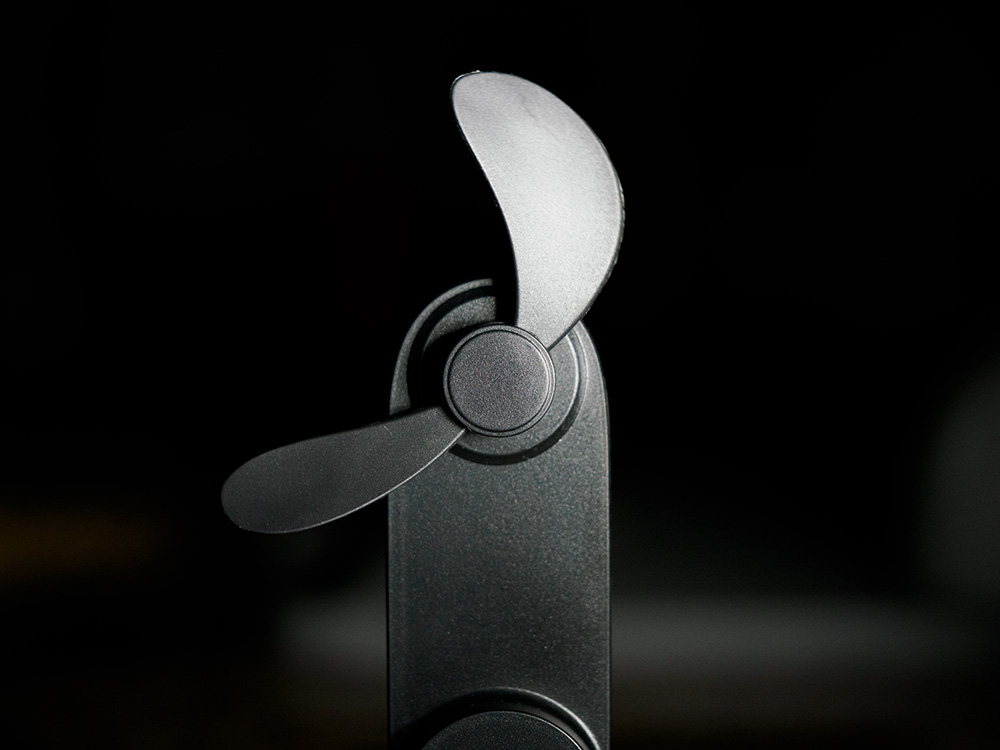
OM-1 90mm 1/32,000 shutter speed, full scene
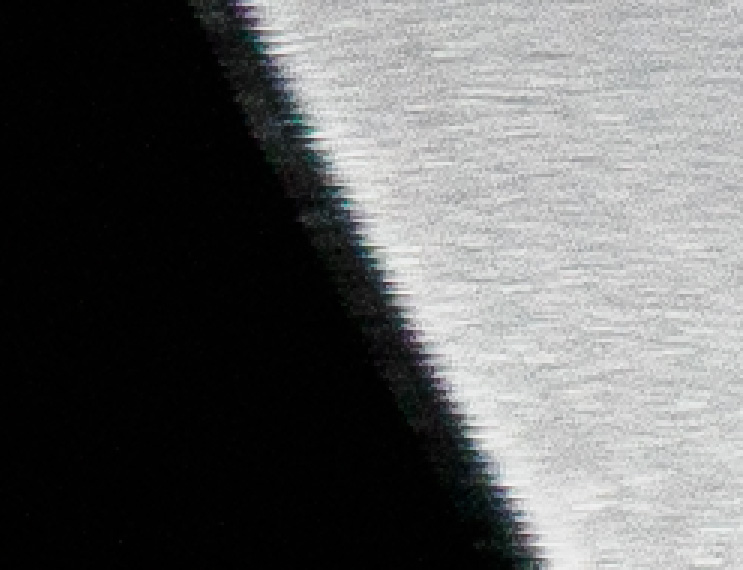
OM-1 90mm 1/32,000 shutter speed, magnification #1
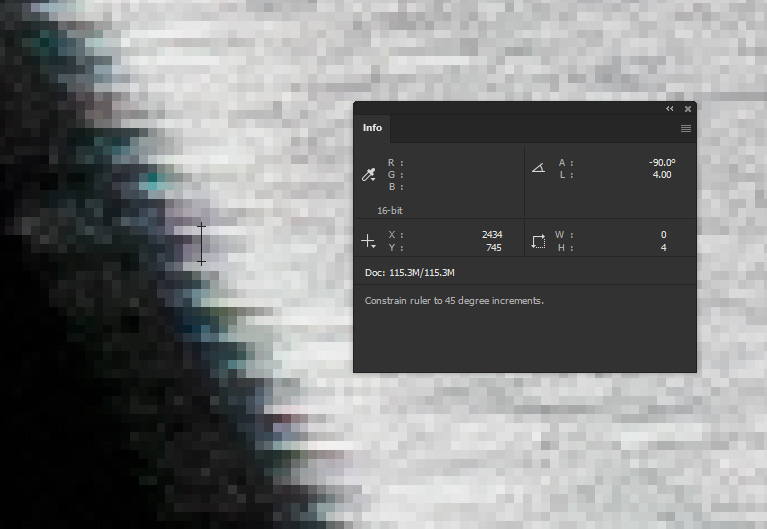
OM-1 90mm 1/32,000 shutter speed, magnification #1
OM-1 90mm 1/32,000 shutter speed, full scene
OM-1 90mm 1/32,000 shutter speed, magnification #1
OM-1 90mm 1/32,000 shutter speed, magnification #1
Aug 20, 2026 at 06:15 AM
p.6 #19A7R6 readout speed
Sony ZV-1 1" stacked-sensor camera with a 7.78 ms (1/128) full-sensor readout speed. Results indicate 4-row grouping.
ZV-1 70mm 1/32,000 shutter speed, full scene
ZV-1 70mm 1/32,000 shutter speed, magnification #1
ZV-1 70mm 1/32,000 shutter speed, magnification #2
ZV-1 70mm 1/32,000 shutter speed, full scene
ZV-1 70mm 1/32,000 shutter speed, magnification #1
ZV-1 70mm 1/32,000 shutter speed, magnification #2
Aug 20, 2026 at 07:28 AM
p.6 #20A7R6 readout speed
snapsy wrote:
Tried this today. As a practical matter, it seems exceeding difficult to get a pan to demonstrate this, for example on the edge of a wall or vertical blind. The combination of aliasing and 12-pixel grouping makes it nearly impossible to visualize.
I had better success with a hand-held fan that I just bought from Amazon for this purpose, the results of which are in the images below. Notice in the last image there's a maze-type pattern. You can see this in the LED photos in my OP as well.
I just have to point out that if you want a photograph of completely stopped fan blades, there’s an easier way to get than buying a camera that can perfectly stop their motion with no distortion…
Turn off the fan to take the picture. ;-)
duncangr wrote
If this is the case then a fast enough pan on a tripod should show clear 12 pixel high steps with each step perfectly vertical if they are exposed at the identical time.I had better success with a hand-held fan that I just bought from Amazon for this purpose, the results of which are in the images below. Notice in the last image there's a maze-type pattern. You can see this in the LED photos in my OP as well.
I just have to point out that if you want a photograph of completely stopped fan blades, there’s an easier way to get than buying a camera that can perfectly stop their motion with no distortion…
Turn off the fan to take the picture. ;-)
Aug 20, 2026 at 08:07 AM