gammarART wrote:
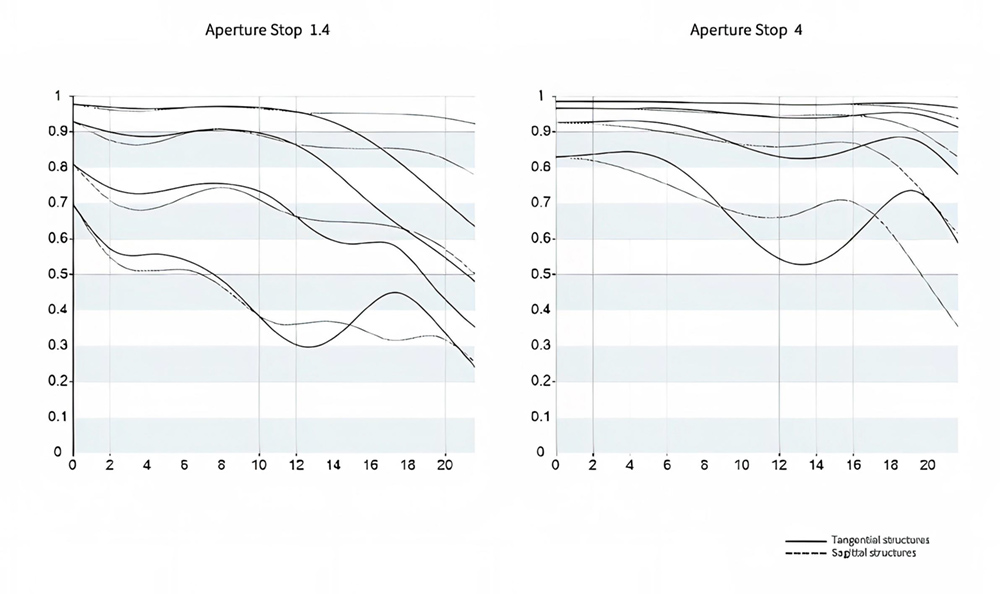
A Leica manager once told me that up until a few years ago, Leica’s lens design philosophy focused almost entirely on wide-open performance in the plane of focus — meaning where the image is actually sharp.
The rendering of out-of-focus areas — the quality of the blur, the shape of the highlights, all the bokeh characteristics — simply wasn’t a priority at all. (Hence the ugly ninja-star bokeh highlights.)
This has changed noticeably in recent years, which you can also see in the increased number of aperture blades.
___
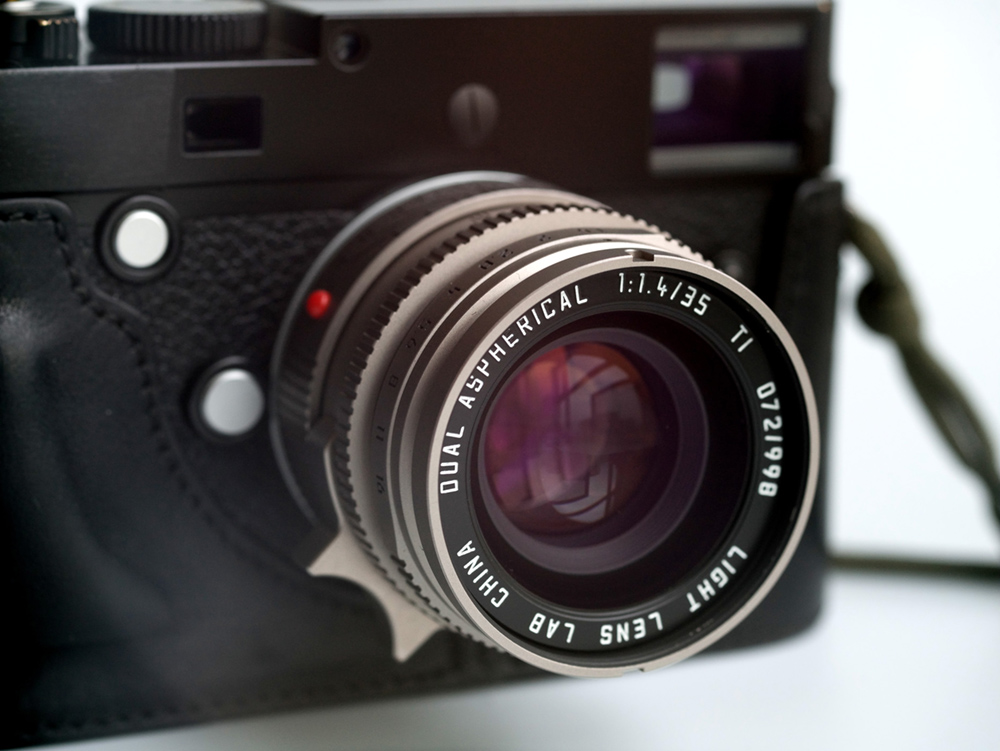
I’m really curious about the upcoming LLL APO. But I do expect the price to land somewhere above 2k....Show more →
If they can get the ergonomics and performance to a similar place as the Leica 35 APO it would still be a reasonable or worth at least considering price in the 2-3k range compared to the retail 9k of the Leica. Grey Market it is still in the 7-8k new and 6.5k used. The Voigtlander is much cheaper but is also ergonomically much larger.
Absolutely. But that also means the LLL has to deliver. It can’t just be the cheaper alternative — image quality needs to be there as well, and things like the minimum focusing distance matter, too. If it only goes down to 0.7 m MFD, it would be instantly uninteresting for me. Even the Voigtländer APO manages 0.5 m.**
gammarART wrote:
Absolutely. But that also means the LLL has to deliver. It can’t just be the cheaper alternative — image quality needs to be there as well, and things like the minimum focusing distance matter, too. If it only goes down to 0.7 m MFD, it would be instantly uninteresting for me. Even the Voigtländer APO manages 0.5 m.**
Definitely agree with that. I’ve been debating diving into the 35 APO from Leica but want to see what the LLL looks like first.
Excerpt from his conclusion:
"The lens performs about as well as the excellent previous version, which already felt very close to the Leica original. This new version actually works even better on my digital sensor, and I am not seeing any noticeable chromatic aberration or flare. I would have been perfectly happy with the earlier version, but this one improves on it. It is everything I have been waiting for."
“Lastly, its rangefinder coupling focused minimally too long, so that for critical focus at f/1.4 I had to use a Visoflex. However, focus was close enough so that for the average shot, in the f/4 – f/5.6 – f/8 range I simply used the rangefinder.”
That part of the review seemed a bit disappointing, if the rangefinder coupling was off on a review unit I’d be concerned about how many in production will have an issue.
Uofoducks15 wrote:
“Lastly, its rangefinder coupling focused minimally too long, so that for critical focus at f/1.4 I had to use a Visoflex. However, focus was close enough so that for the average shot, in the f/4 – f/5.6 – f/8 range I simply used the rangefinder.”
That part of the review seemed a bit disappointing, if the rangefinder coupling was off on a review unit I’d be concerned about how many in production will have an issue.
LightLensLab wrote:
Should be addressed for the production copy.
I Hope so, the rest of the review was very exciting. Once you are at the price level LLL is starting to get into there is really no excuse for QC issues, consistent quality has to be achieved.
Excerpt from his conclusion:
"The lens performs about as well as the excellent previous version, which already felt very close to the Leica original. This new version actually works even better on my digital sensor, and I am not seeing any noticeable chromatic aberration or flare. I would have been perfectly happy with the earlier version, but this one improves on it. It is everything I have been waiting for."
Yeah, already ordered titanium one based on his earlier review. This one just confirms what it is. I may be a bit mad, but do you think it is simlar to the Zeiss?
In any case, when you open up those images, it is excellent!
Fred, thanks for posting this.
Joe D
Please, no. Luckily for those who prefer aesthetic appeal in their images, the Chinese are not so silly to make a bunch of Leica/Zeiss/Cosina style APOs. Beauty matters so much more than lp/mm, and this lot are horrible for people photography. Inanimate objects only! Or blackheads and freckles, with no soft aperture setting.
With relentless public relations and disinformation, it's hard to get out from under it all. It took me some time to put them in the rear view mirror. Think of it as a stage to pass through, as your photographic taste matures, and seeing replaces looking.
philip_pj wrote:
'similar place as the Leica 35 APO'
Please, no. Luckily for those who prefer aesthetic appeal in their images, the Chinese are not so silly to make a bunch of Leica/Zeiss/Cosina style APOs. Beauty matters so much more than lp/mm, and this lot are horrible for people photography. Inanimate objects only! Or blackheads and freckles, with no soft aperture setting.
With relentless public relations and disinformation, it's hard to get out from under it all. It took me some time to put them in the rear view mirror. Think of it as a stage to pass through, as your photographic taste matures, and seeing replaces looking...Show more →
I actually agree with what you wrote. Chasing APO level perfection can feel like a phase we all pass through before realizing that technical correctness does not automatically make a more meaningful photograph..
Some lenses are compelling precisely because of their imperfections, quirks and the way they shape and bend light, the softness or bokeh swirl or glow that gives an image emotional weight. That kind of rendering connects more with how I shoot. Still, ultra sharp and highly corrected lenses absolutely have their place, and there are plenty of photography applications where that look is ideal and even wanted. For me though, especially when I am photographing people or 'moody' scenes, I tend to reach for the lenses that draw character rather than the ones that aim for total optical purity.
I gravitate toward older optical designs because they make it feel like I'm using a little time machine to photograph the present world.
Personally I think there is a time and a place for both, and an individuals taste will always differ from person to person. Leica’s 35 APO for example is highly corrected and from some photos I’ve seen still can make for interesting rendering, though I haven’t been able to take photos with it myself.
A guy I watch made an interesting point recently. He said that engaging imagery of the kind that is propelling several alternative threads in lens design is very important to the culture itself; that we cannot leave it to the technologists to run, if we are to have a workable memorialization of these times. Hence the widening schism between technical perfection and artistic expression.
The threads include: the vintage lens movement, the new aesthetics from China, the many attempts to 'take the edge' off what digital does to our subjects (particularly people), the parallel lens ranges that head in this direction as Nikon is doing, and more besides.
I was a little harsh re APOs, of course they have their place but ask yourself do they really deserve the #1 place - the only game in town according to many in the industry - it's become a whole ideology of more is better. It is pushed relentlessly, to the downgrading of all else.
That is the effect of the technologists like Karbe and the guys with their hands on the tiller at Zeiss. We need more artistic lenses..and the other thing to watch is how versatile is any style of lens going to be for you? You might ask: why does no reviewer talk about the kinds of photography a lens being reviewed is good for? They appear to have limited life experience and so they line up on the side of the technologists.
I think it was a master stroke that Leica has only made one (one!) APO lens for M-mount in 13 years. Those older designs at 50-75-90 had very different glass, and they all serve the portrait focal lengths.
An interesting tidbit: those older APO lenses all use HRI glass, just like Thypoch, Sirui and Viltrox. The 35/2 APO does too, but they try to keep it quiet - its three HRI elements are overshadowed by the six APD elements and four asph surfacings. All in pursuit of the great god of MTF.
We need an artistic version of Hubert Nasse. I am coming across quite a few observers in the cine world saying 'I don't mind a little CA', and I am with them - if the result is worthwhile in final image artistic terms. (thanks for not attacking me too).
Fred Miranda wrote:
I actually agree with what you wrote. Chasing APO level perfection can feel like a phase we all pass through before realizing that technical correctness does not automatically make a more meaningful photograph..
Some lenses are compelling precisely because of their imperfections, quirks and the way they shape and bend light, the softness or bokeh swirl or glow that gives an image emotional weight. That kind of rendering connects more with how I shoot. Still, ultra sharp and highly corrected lenses absolutely have their place, and there are plenty of photography applications where that look is ideal and even wanted. For me though, especially when I am photographing people or 'moody' scenes, I tend to reach for the lenses that draw character rather than the ones that aim for total optical purity.
I gravitate toward older optical designs because they make it feel like I'm using a little time machine to photograph the present world. ...Show more →
One of the best modern character lenses ever made, I would argue maybe the best lens ever made period- one that you don't want to part with is an APO design- Leica 50 Sumilux ASPH
APO has nothing to do with the end product just the lens designers goal of the design.
RustyRus wrote:
One of the best modern character lenses ever made, I would argue maybe the best lens ever made period- one that you don't want to part with is an APO design- Leica 50 Sumilux ASPH
APO has nothing to do with the end product just the lens designers goal of the design.
I agree that the Leica 50/1.4 Summilux ASPH is a fantastic lens, and even though its optical design is over 20 years old, it still feels very modern. It's nearly perfect for a 50mm f/1.4, with smooth rendering, minimal bokeh outlining, and extremely low chromatic aberration. If you are talking about the Leica 50/1.4 Summilux "Pre-asph", though, I'd agree with you even more...it really shows the quirks and personality that give a lens its true character.
Fred Miranda wrote:
I agree that the Leica 50/1.4 Summilux ASPH is a fantastic lens, and even though its optical design is over 20 years old, it still feels very modern. It's nearly perfect for a 50mm f/1.4, with smooth rendering, minimal bokeh outlining, and extremely low chromatic aberration. If you are talking about the Leica 50/1.4 Summilux "Pre-asph", though, I'd agree with you even more...it really shows the quirks and personality that give a lens its true character.
I wish they were as many retelling for the Summilux 50mm 1.4 pre-Asph as there are for some other lenses but I find there is still none that ressembles what it does, even the trend of Summilux 35mm cheaper clones of late don’t feel quite like the originals, it’s not that they are not enough well made but it’s that will to go for more sharpness, less glow and no flaring that make them quite unappealing to me.
With all those new options of hommage lenses, I feel that a bunch miss the point, at least to my taste. They are so close though.