Fred Miranda
Offline
Admin
Upload & Sell: On
|
 p.20 #19 · Voigtlander 28mm f/2 APO-Lanthar Review p.20 #19 · Voigtlander 28mm f/2 APO-Lanthar Review | |
tsdevine wrote:
An AA filter, when the manufacturer decides to employ one, is generally meant to create a certain amount of blur to minimize the chance of moire. But that comes at a cost of detail, since the detail is ultimately what causes the moire. So even in areas of the frame where moire wouldn't have occurred, you are still getting less acutance. For a sensor without an AA filter, the higher the pixel density, it may cause moire to be less noticeable. Because it can successfully resolve more detail. But with a lens at an aperture where it can project more detail than the sensor can resolve, it's possible to see moire.
A poor man's way to avoid moire with a sensor that doesn't have an AA filter is to stop down and let diffraction create enough blur that it in effect is yielding the same result as an AA filter. Since diffraction causes a loss in resolving power, eventually the sensor won't show moire because of the blur.
Again...probably butchering this explanation, but my heart's in the right place....Show more →
---------------------------------------------
Yogifi wrote:
Thank you both, that does explain why I was seeing it show up a bit more at F8 vs F5.6 with the Nokton in my comparison, I think before diffraction there, didn't take at f16 for whatever (typically been testing my 50mm lenses!). The Nokton is decently sharp and I am only using it with the A7Cii. And it was mainly in the very high contrast areas.
A centre crop at 70% zoom with the a7cii and nokton 28mm at f8 during harsh sunlight:

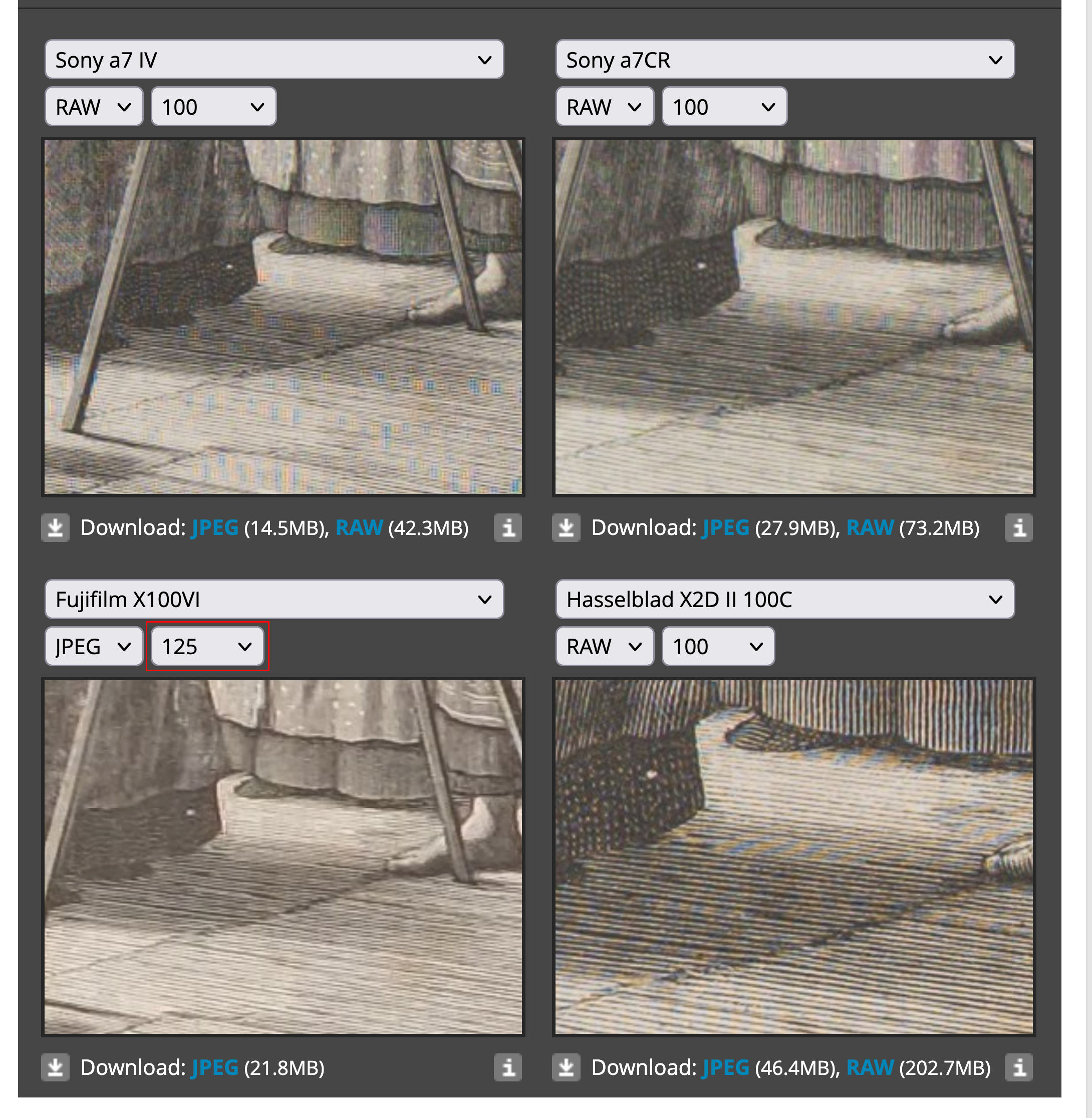
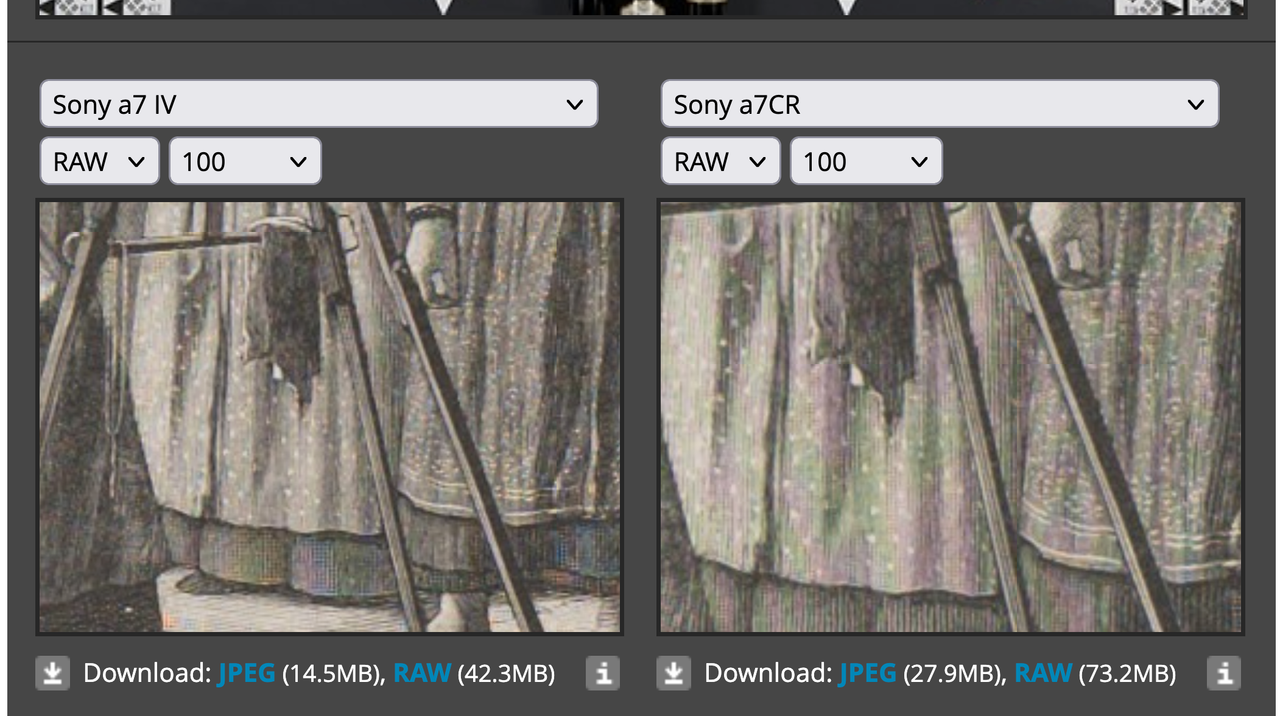
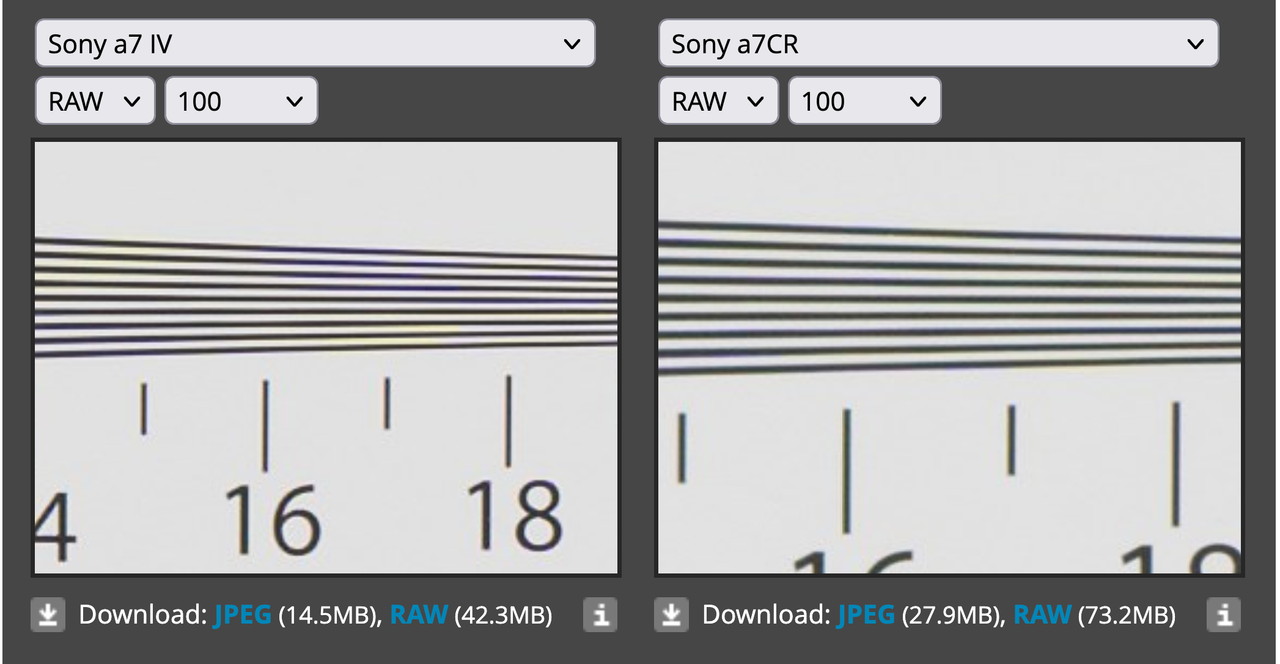
Those funky cyberpunk yellows between the bricks are artefacts. No strong blues there like I'm seeing in similar examples of this strong yellow artefact (mostly in the screenshots posted earlier on this page where the black lines on white paper get closer and closer together) ... so possibly absorbed by the pale yellow-ish filler material between the bricks?
There was an example I had with boats in the distance that also had a similar effect, one big pole was yellow, and smaller poles blue. It was also in the shade in the distance, and stopped down but possibly the sun behind it, between the trees. Next shot same settings 15 seconds later, much less noticeable.
Anyway, if I understand correctly, and assuming the same exact photo in time & space (and light) with the A7Cr instead, it would show it less as the lens doesn't 'out-resolve' quite as much.
With dpreview, I would assume they're not using the same lens since they're doing it for so many different cameras including fixed lens. So maybe with the x1d and x2d II that's the reason - a less sharp lens was used with the x1d... Quite a few uses of 'maybe' and 'possibly' but what can we do.
I was confused because I assumed it was some sort of CA, loca at first because it looked like fringing, but it was showing up at smaller apertures. It was also showing up on the fuji but much more faintly...and lightroom's remove CA toggle (designed for lateral ca I think) was getting rid of it completely, but not with the sony. So I was thinking maybe the apo would show it less in similar conditions, but good to know what to expect.
No more brick walls for a while from me about this, sorry all, and for real this time!...Show more →
Diffraction begins as soon as a lens is stopped down from wide open, but on today's high MP sensors it usually becomes noticeable only after f/5.6-8 and smaller apertures on full frame. High MP sensors don’t directly reduce moire... instead, the smaller pixel pitch allows the sensor to capture fine repeating patterns more accurately across more pixels. (moire less noticeable)
On lower-resolution sensors, fine repeating patterns can create visible moire because the larger pixels cannot fully resolve the detail, making it harder for software to correct through demosaicing. Even with future 100–200 MP sensors, diffraction will still exist, but higher resolution will continue to help control moire because the pixel pitch will be even smaller.
|


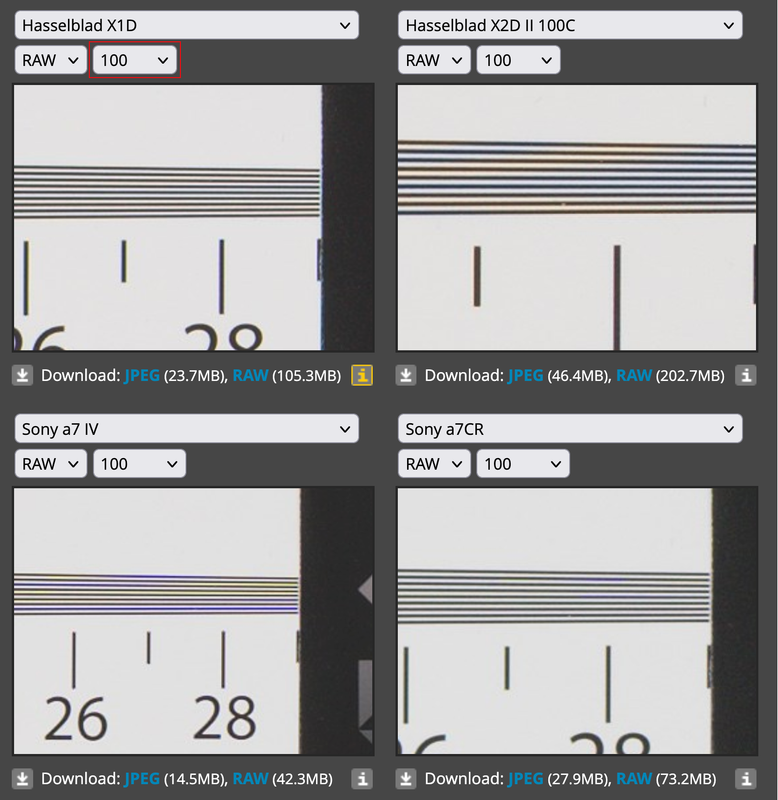
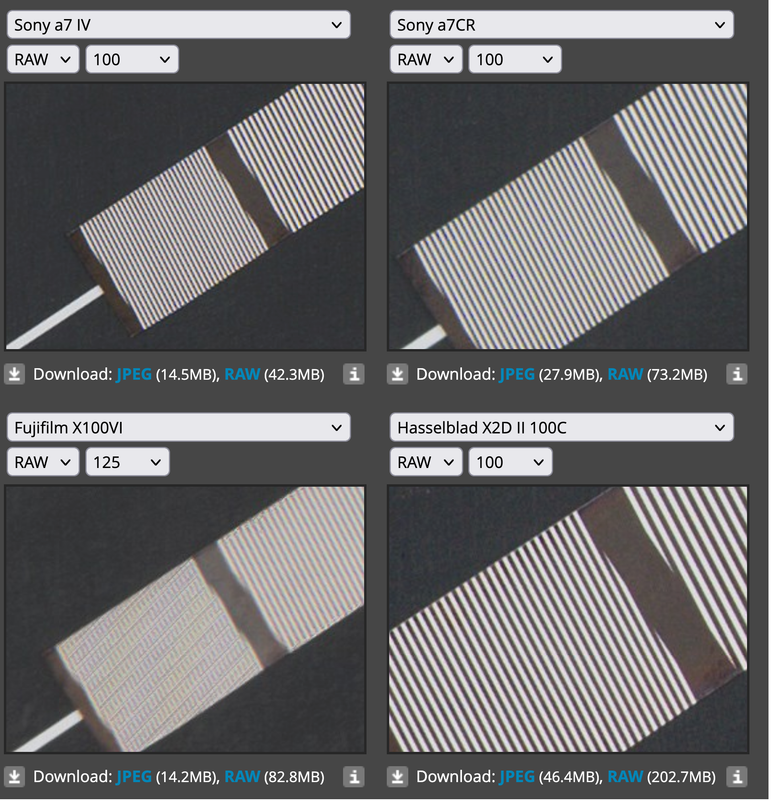
 https://i.postimg.cc/bYZz2BFk/image.png
 https://i.postimg.cc/9Fc9G9s7/image.png">
