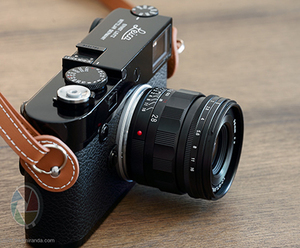
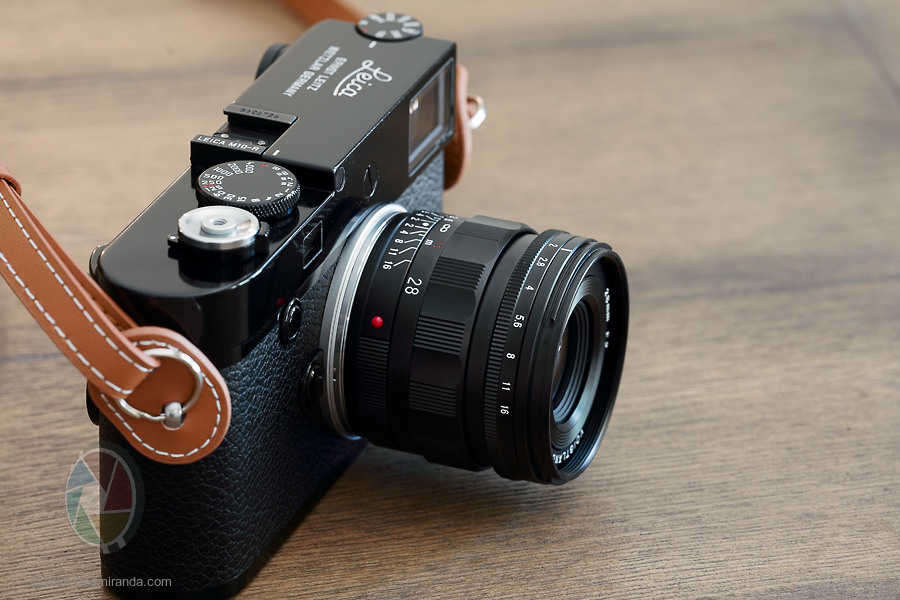
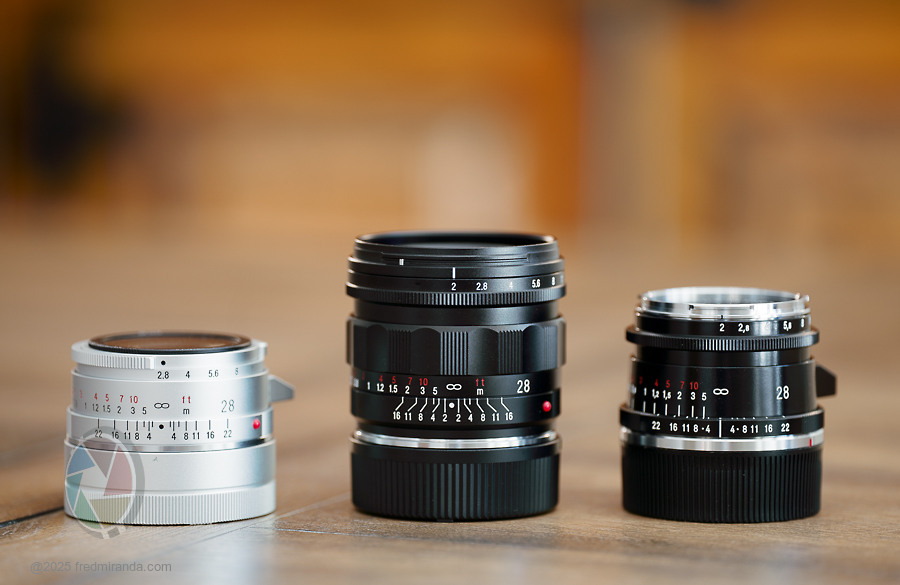
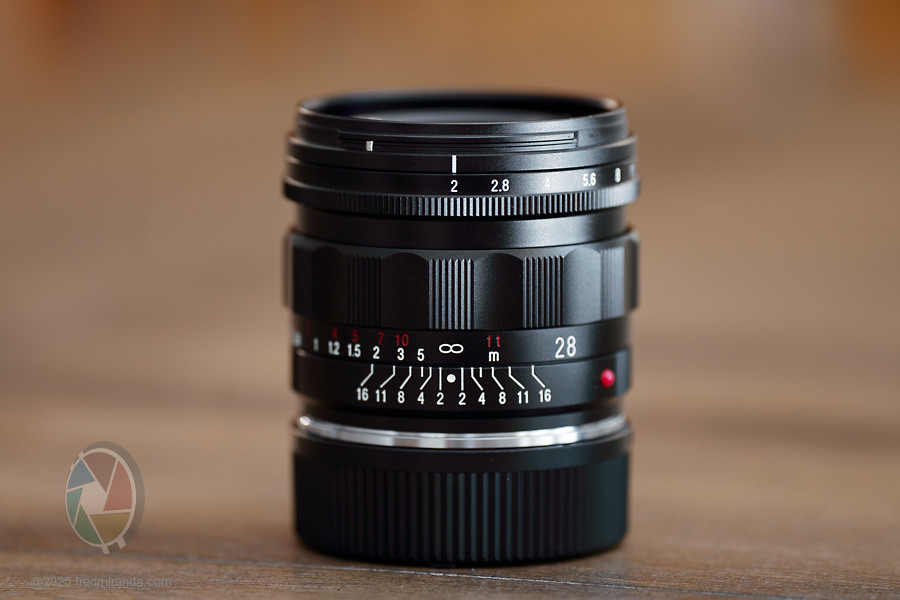
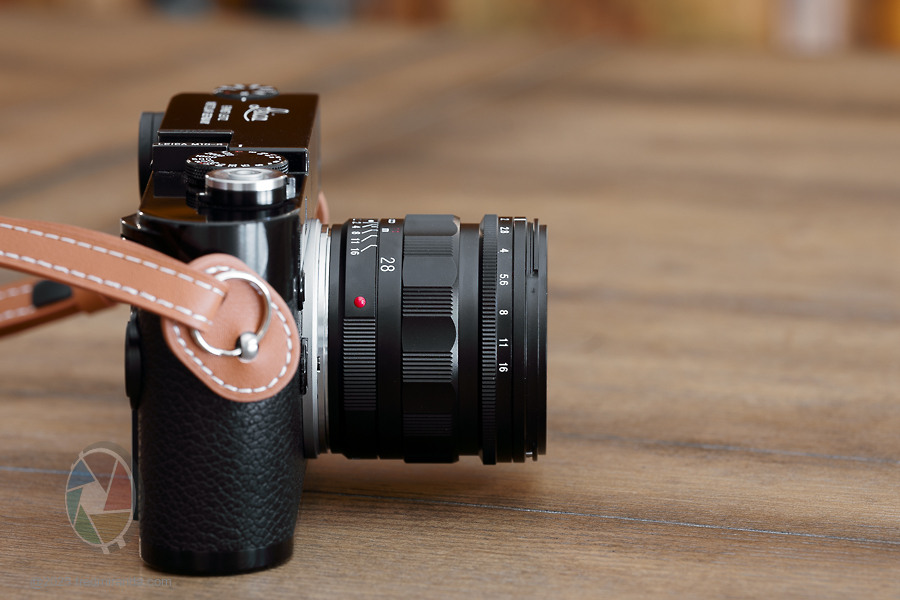
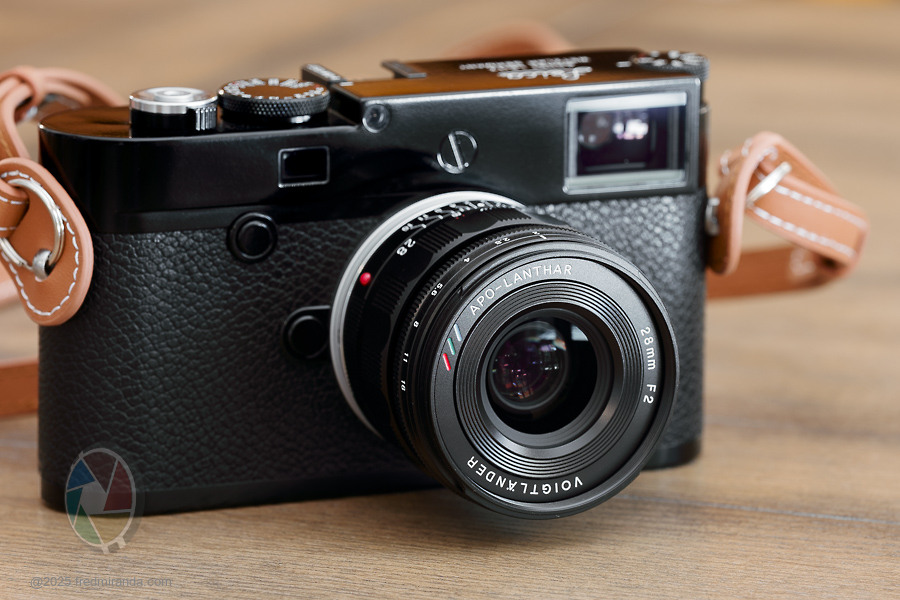
The new Voigtlander 28mm f/2 APO-LANTHAR VM just landed on my desk, and based on Cosina's description, this is being positioned as their highest-performing wide-angle lens to date. It's designed specifically for full-frame M-mount sensors, with an apochromatic optical formula that aims to reduce axial chromatic aberration across the RGB spectrum. According to Cosina, the goal is to thoroughly minimize aberrations and push resolution and contrast as far as possible.
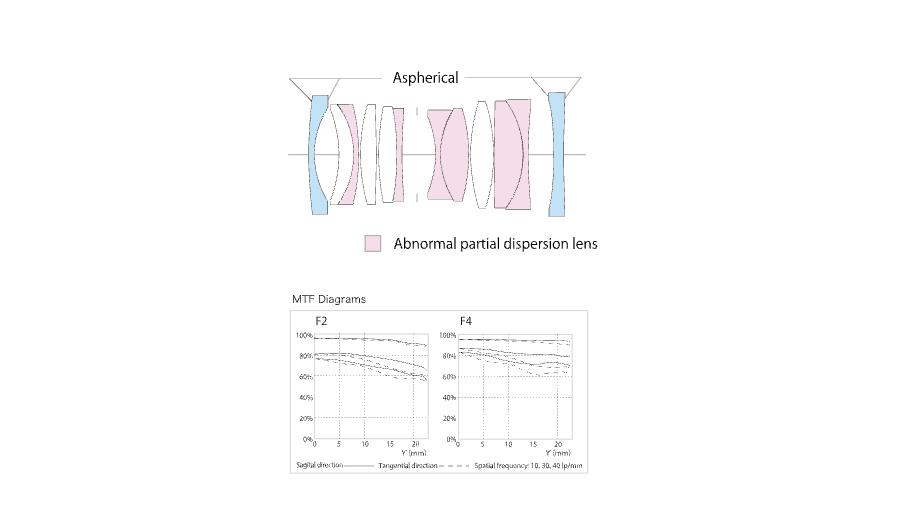
The optical formula consists of 12 elements in 8 groups, including 6 anomalous partial dispersion elements and 2 double-sided asphericals. There's also a floating element system (FLE), which is supposed to maintain high image quality even at closer focus distances.
It features a 12-blade aperture that is designed to stay close to circular throughout the range for smoother bokeh. As with previous Cosina lenses, the blades are not rounded, so stopped-down highlights take on a dodecagon-shaped appearance. The tradeoff is worth noting since this blade shape, combined with the precisely machined aperture mechanism, produces well-defined sunstars with evenly spaced rays due to the tight tolerances in construction.
Even though it's rangefinder-coupled down to 0.7m, it can focus as close as 0.5m using live view. That extra bit could be useful when framing tighter scenes or adding foreground interest.
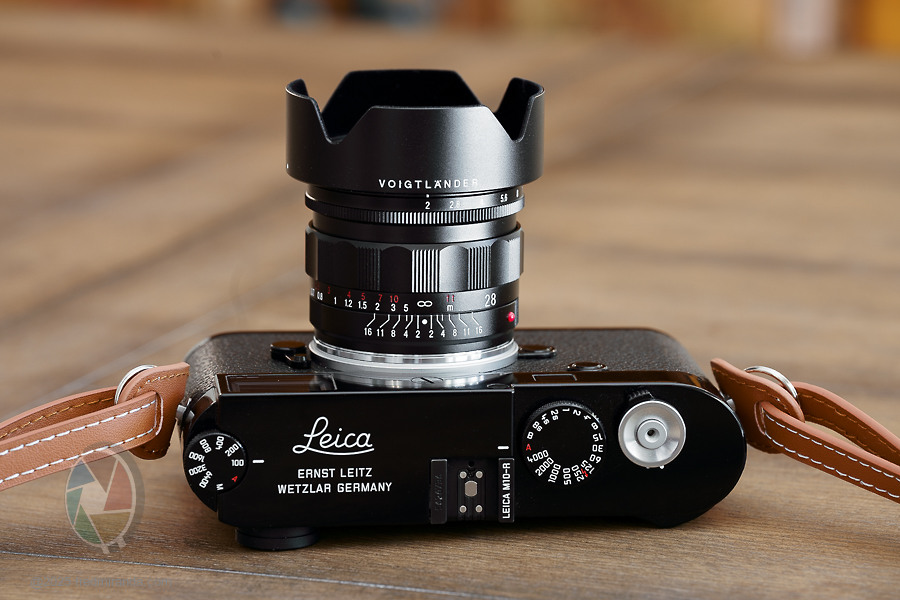
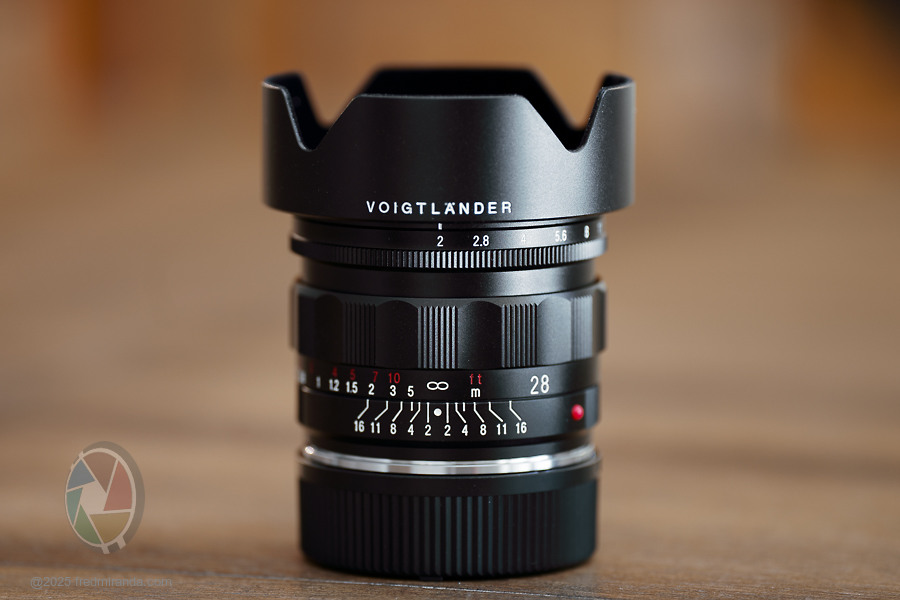
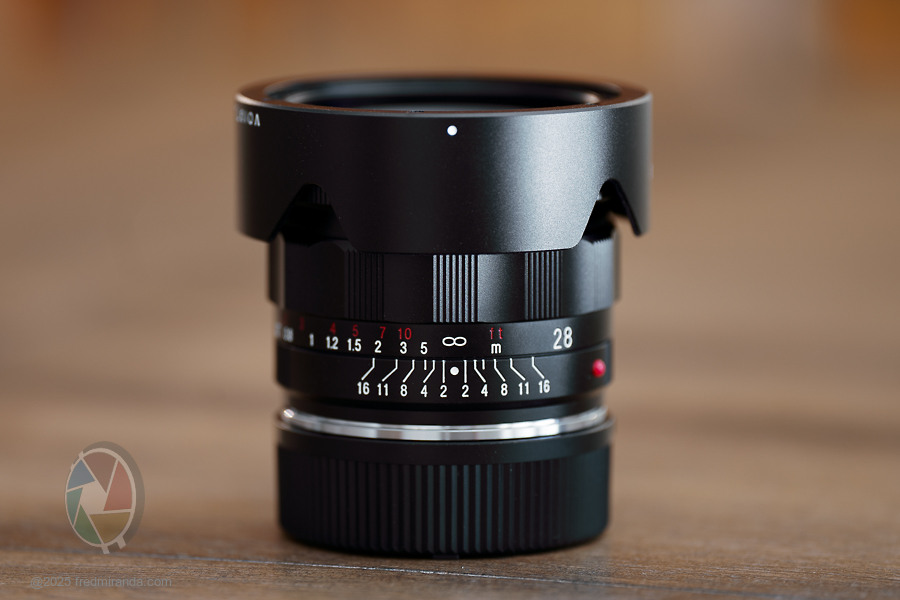
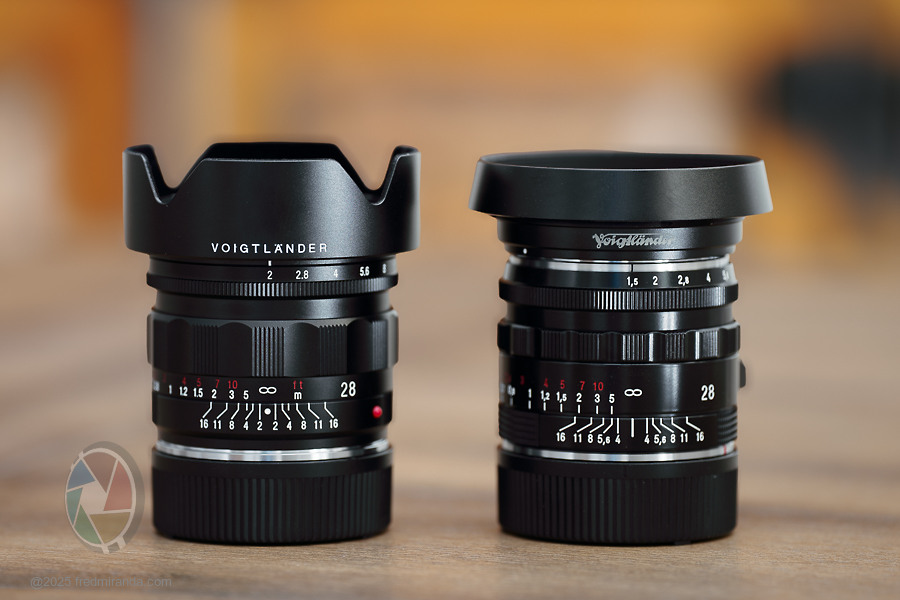
The lens comes with a metal, petal-style bayonet hood designed specifically for this APO version, so unlike previous APO-Lanthars, no need to buy one separately. Cosina says it helps reduce vignetting around the 28mm frameline and improves flare resistance. However, I'm not a fan of the petal design when using it on a Leica M.
Even though there's a cut-out section, it still blocks a good portion of the frameline. A ventilated hood would've made more sense here -- especially since Cosina has shown they can design ventilated, bayonet-style hoods that reverse for storage, like the ones included with their newer Nokton f/1.2 lenses. This petal hood just feels like a step in a different direction, and I'm not quite sure why.
Focus action is handled by a fully metal helicoid, and Cosina claims it's assembled with high precision and greased for consistent resistance. That matches previous Cosina lenses and my first impressions with the Voigtlander 28/2 APO -- the focus throw is smooth and tight, with no detectable play. The aperture ring has solid detents, rotates with a confident click, and is a joy to use.
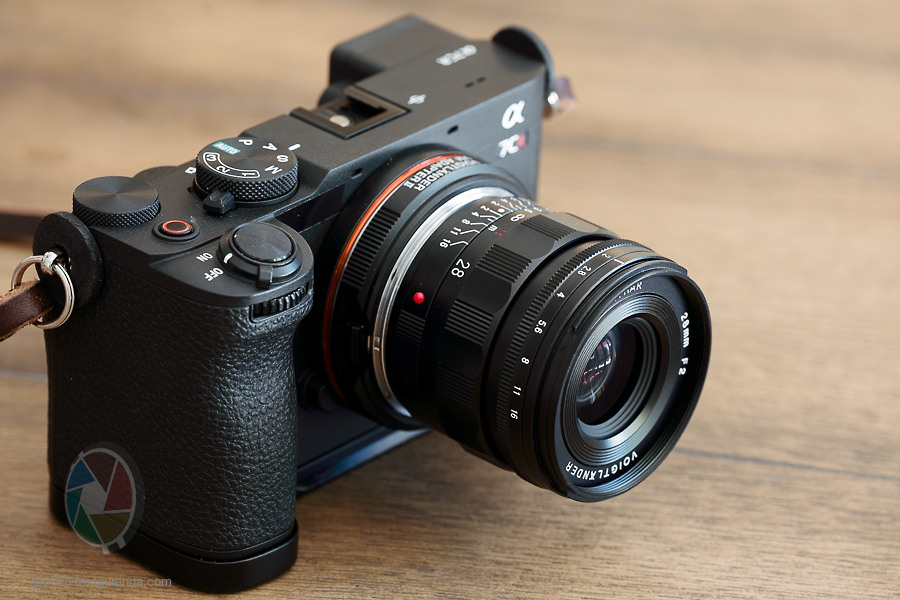
I'll also be testing the Voigtlander 28mm f/2 APO-Lanthar on the Sony A7R II (42MP) to see how it performs with a thicker sensor stack. Shown here is the lens adapted to the A7CR, which makes for a compact and high-performance combination.
What's also worth noting here is that this is the first 28mm apochromatic lens ever designed for the Leica M-mount. Leica has produced several excellent 28mm lenses over the years (Summilux, Summicron, Elmarit) but none of them have been APO designs for the M-mount. That alone makes this lens stand out in the M ecosystem. Cosina is clearly aiming to bring a level of chromatic correction and contrast performance at 28mm that hasn’t been seen in this mount before.
PS: The images of the lens and the lens mounted on the camera were taken with my Sony A7R II and Batis 135/2.8. I used the Ricoh Positive Film Cobalt simulation for processing, which I've really come to appreciate. The deep blacks, rich colors, and smooth tonal transitions make it stand out. In my opinion, it's Ricoh’s best profile.
Watching this one with interest as an M 28mm is one of the few holes left in my Leica kit and none of the Leica 28mm has strong appeal for me. At 28mm APO is a strong feature considering how I use that focal length.
I’m also looking forward to these tests, Fred. I’ll put in my request early to see if you could compare the e-mount version of the Thypoch Simera 28/1.4 with this lens on the Sony camera. 👍🏻
It looks good on that BP camera body, but still can't match the shiny BP of your camera.
Given you value a lot the Nokton 28/1.5 lens, I was wondering if you would compare this APO against it. I have decided to buy the Nokton even knowing that the APO will be released just because I was thinking it offers more options against the APO (e.g.1 stop faster aperture) while still being (hopefully) comparable sharp at f2.8-f4. But I am still curious how much difference against the APO from f2 on.
Bit of a bummer on that 49mm filter thread size! Was hoping it would slot nicely into a 46mm filter thread centered kit like the 28mm Summicron does. Otherwise very excited to see how this one performs!
Sure would like to see you compare this to the newest 28mm Summicron close focus. I finally caved in an bought one but would buy this APO today if it's a better lens.
catacore wrote:
It looks good on that BP camera body, but still can't match the shiny BP of your camera.
Given you value a lot the Nokton 28/1.5 lens, I was wondering if you would compare this APO against it. I have decided to buy the Nokton even knowing that the APO will be released just because I was thinking it offers more options against the APO (e.g.1 stop faster aperture) while still being (hopefully) comparable sharp at f2.8-f4. But I am still curious how much difference against the APO from f2 on.
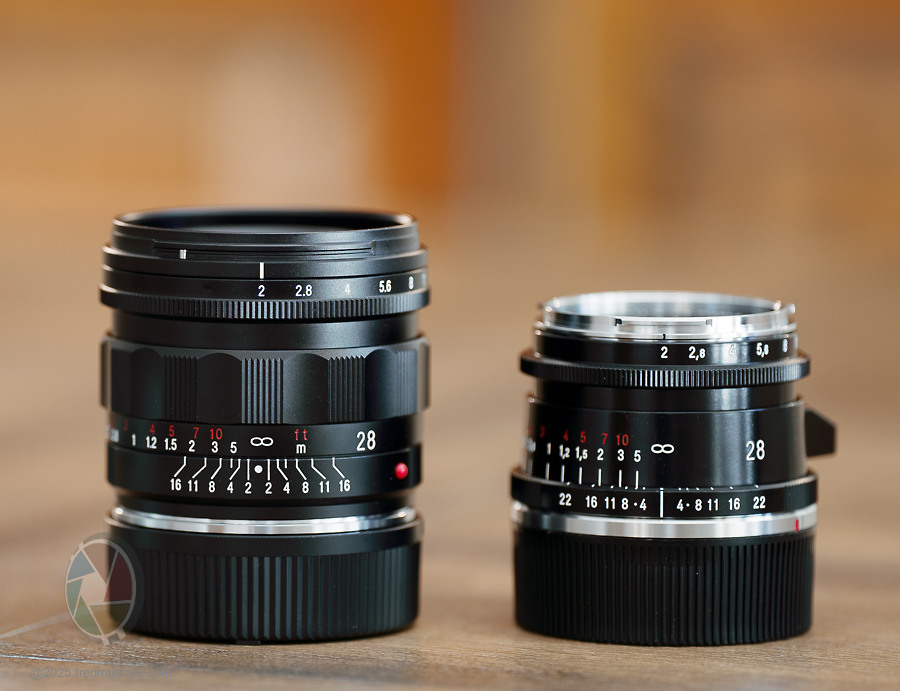
The CV 28mm f/1.5 Nokton, with its black-painted brass construction, pairs better with glossy black paint bodies. On the other hand, the Voigtlander 28mm f/2 APO-Lanthar, with its anodized aluminum finish, has a sheen that matches black chrome and the newer matte black paint bodies more closely..
As for performance, yes, I'll be posting a resolution and contrast comparison against the Nokton as well. Like you mentioned, the Nokton has the advantage of a faster aperture and delivers more blur and character in its rendering. But in terms of optical performance, the APO has the edge at all apertures, especially off-axis, which should not come as a surprise.
Sunyforreal wrote:
Bit of a bummer on that 49mm filter thread size! Was hoping it would slot nicely into a 46mm filter thread centered kit like the 28mm Summicron does. Otherwise very excited to see how this one performs!
If your existing lenses are mostly 46mm filter size and this is what you're mostly using for filters, I'd be extremely surprised if using a 49-46 step down ring and 46mm filters causes any vignetting with the VM 28 APO. Just look at how large the nameplate ring is on the front...
I don't know why Voigtlander doesn't care to align the front plate on the APO lenses. They do it for the Nokton so the text is nice and centered. Looks fantastic otherwise!
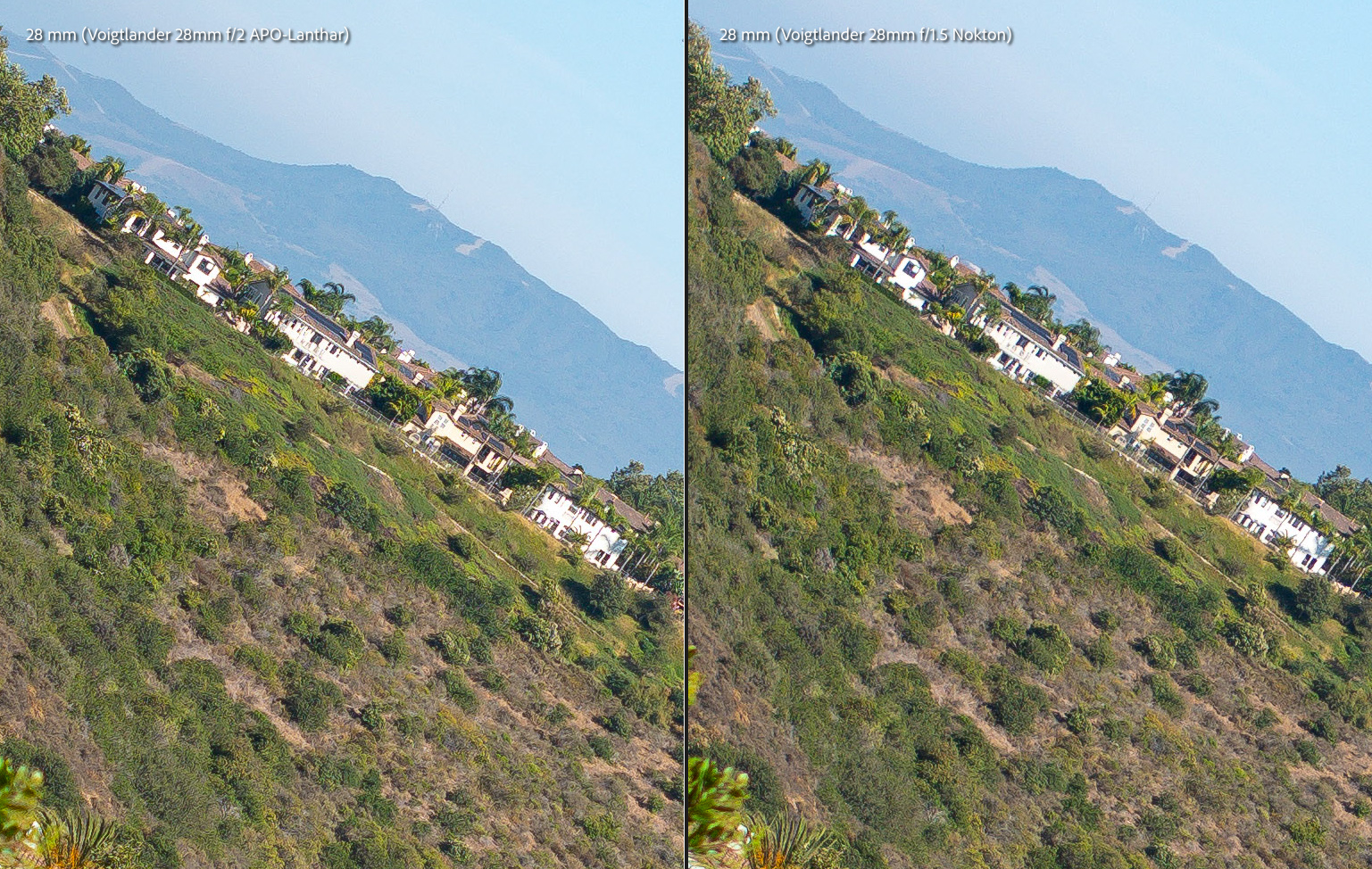
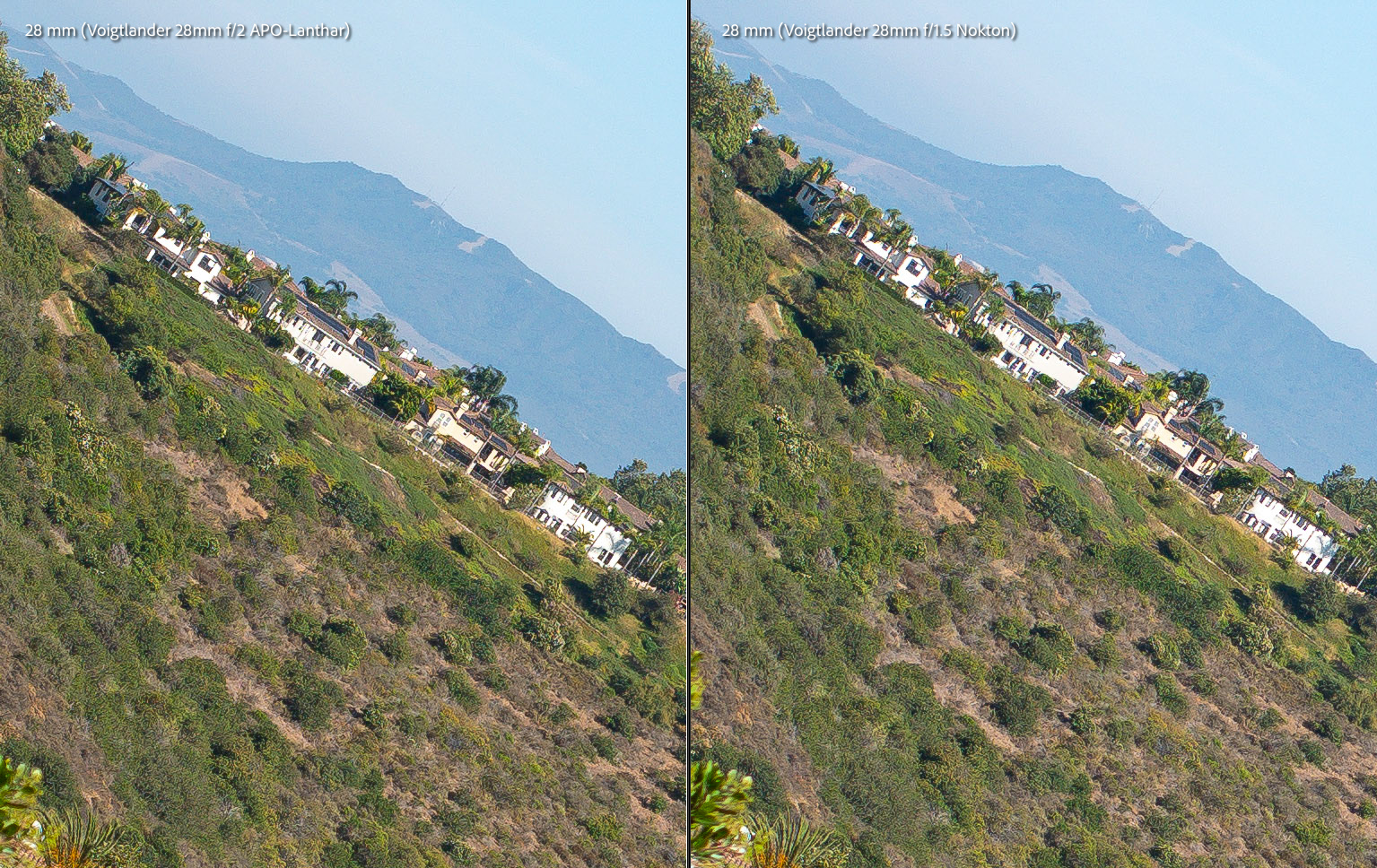
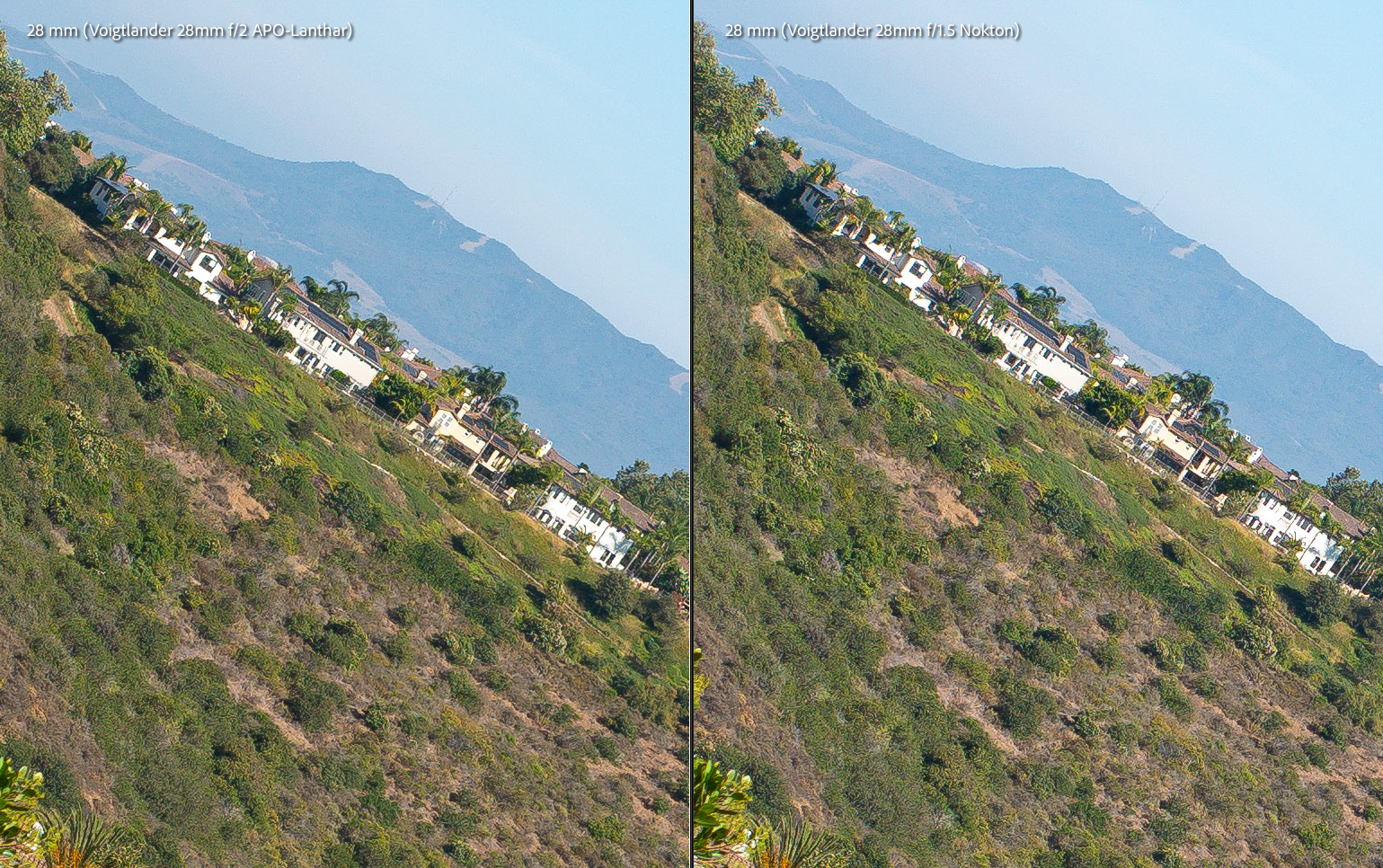
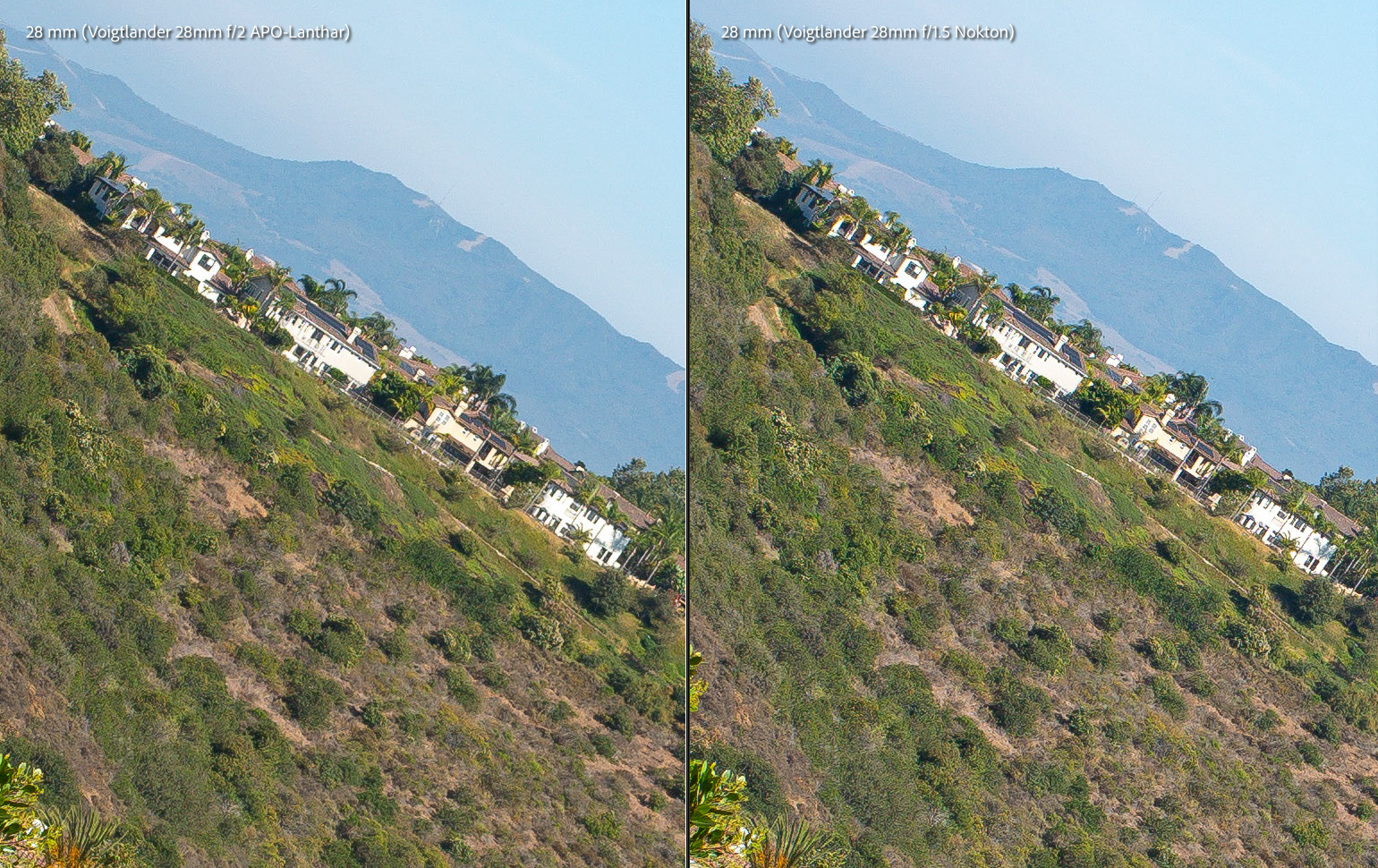
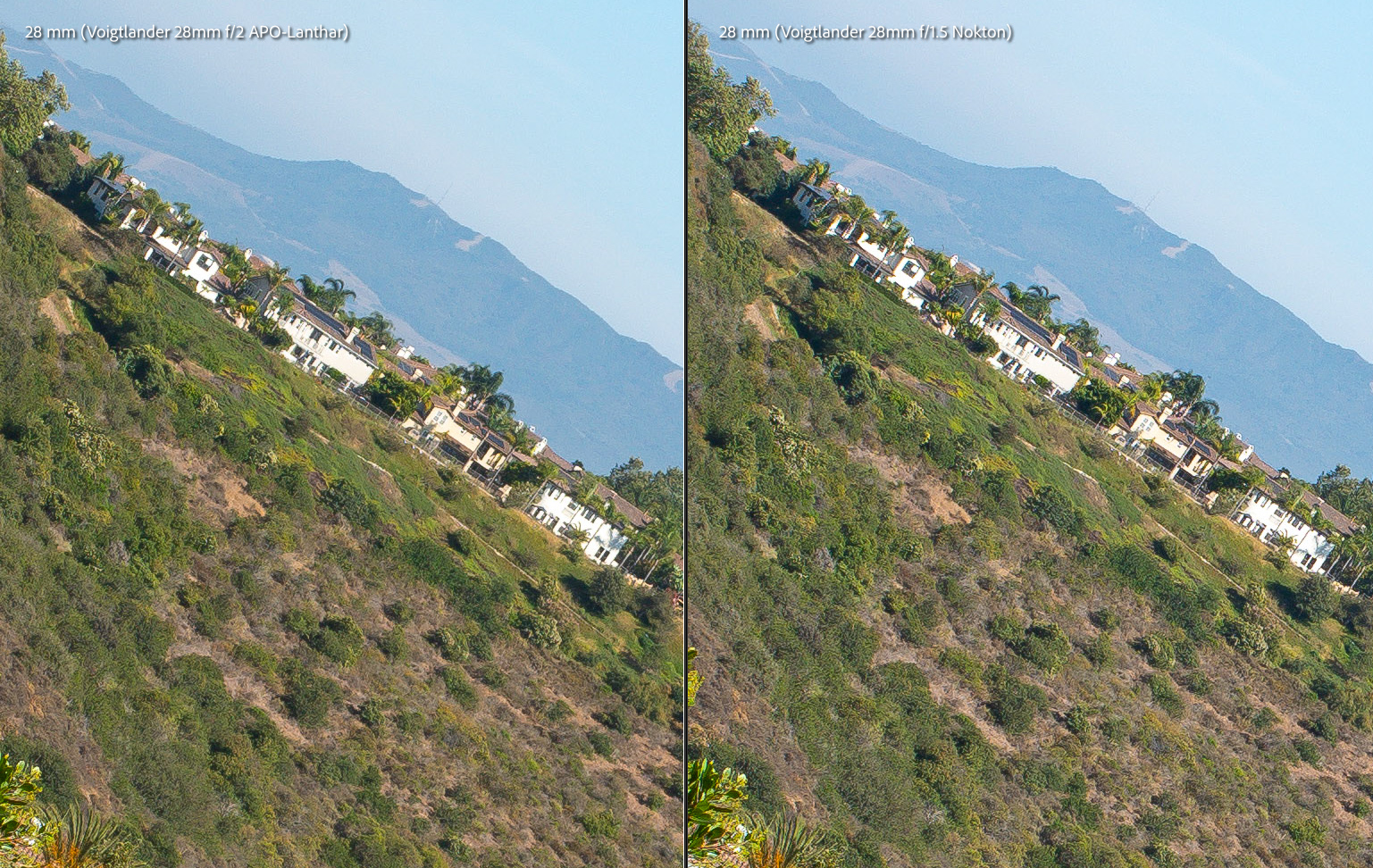
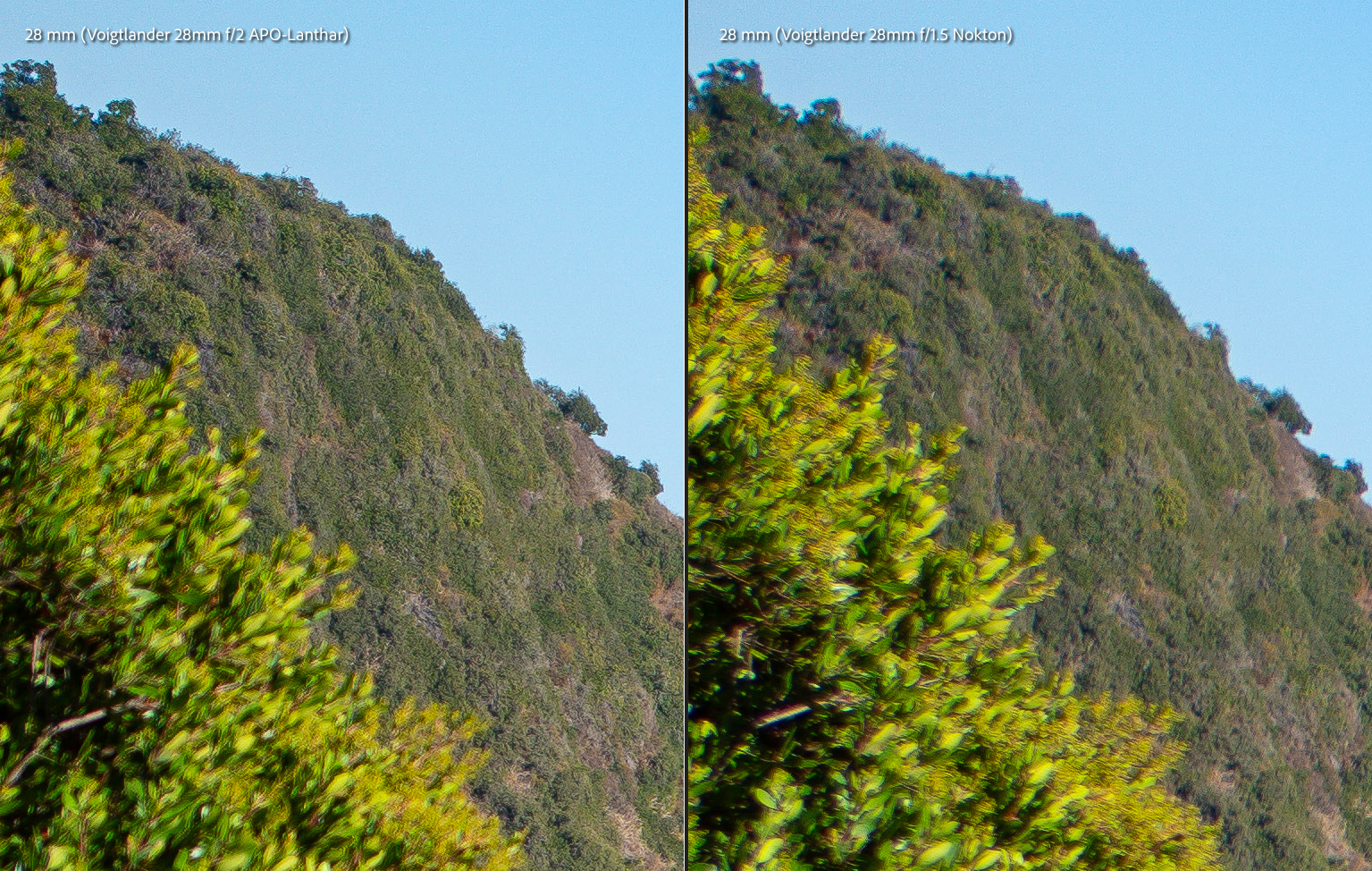
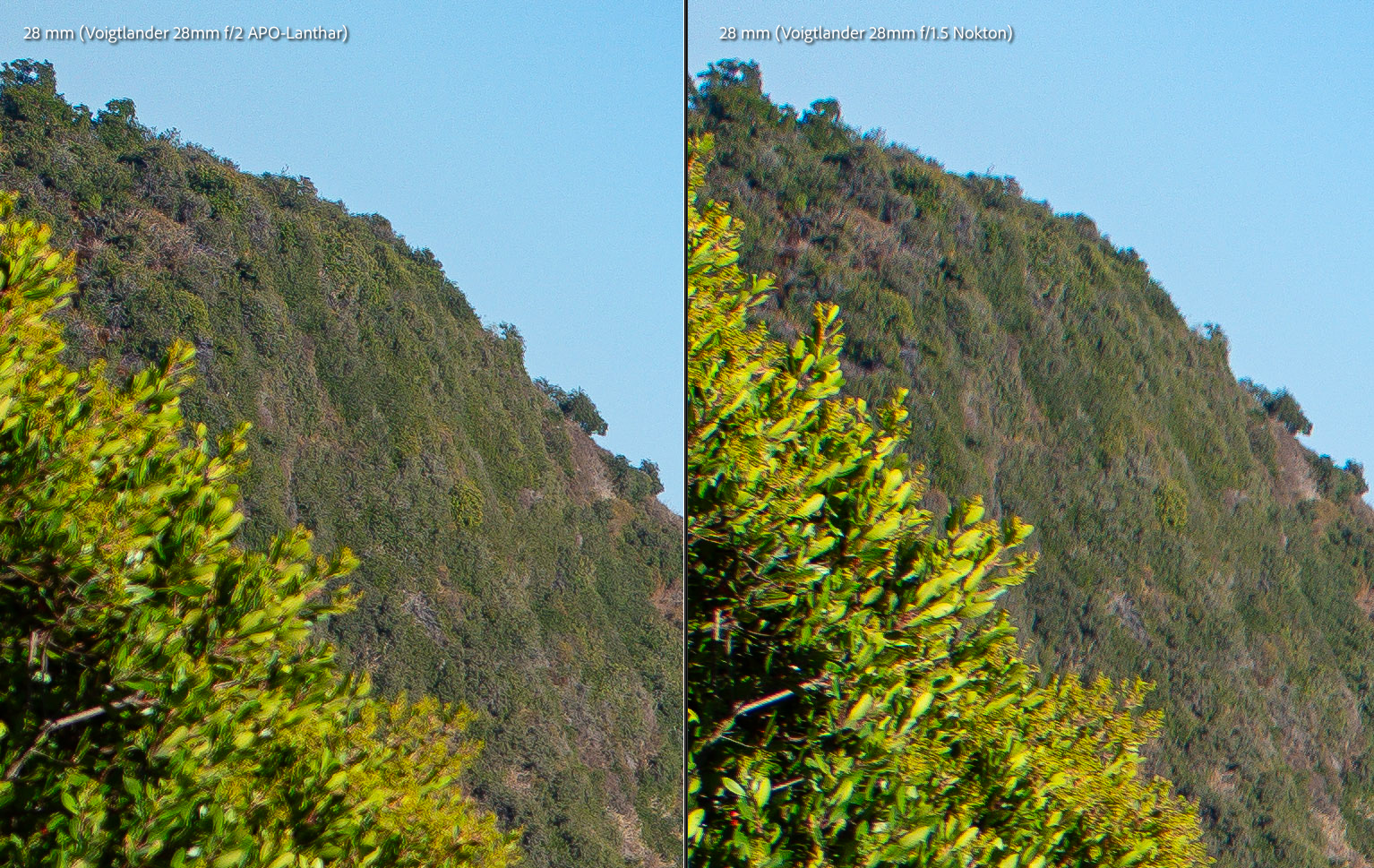
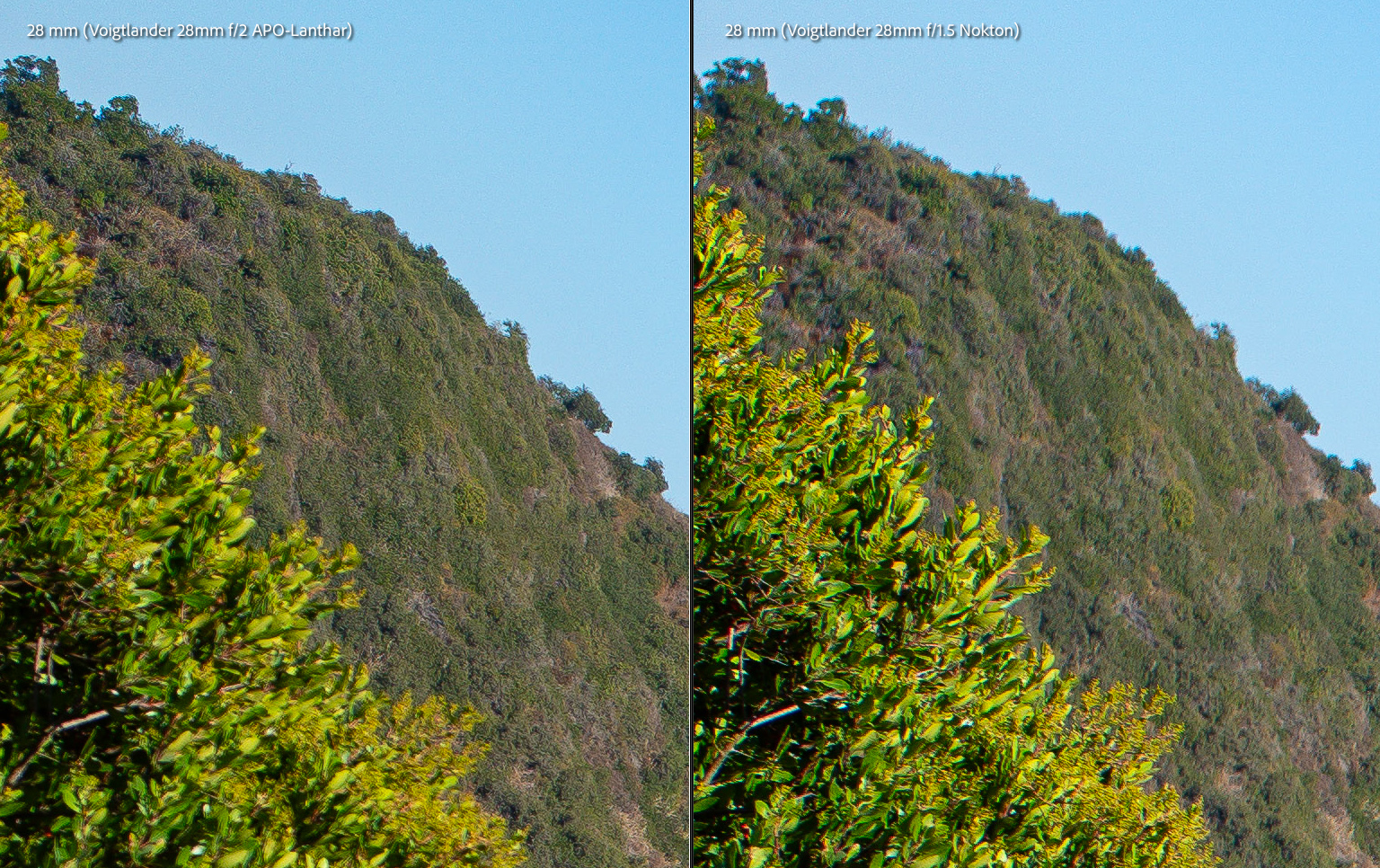
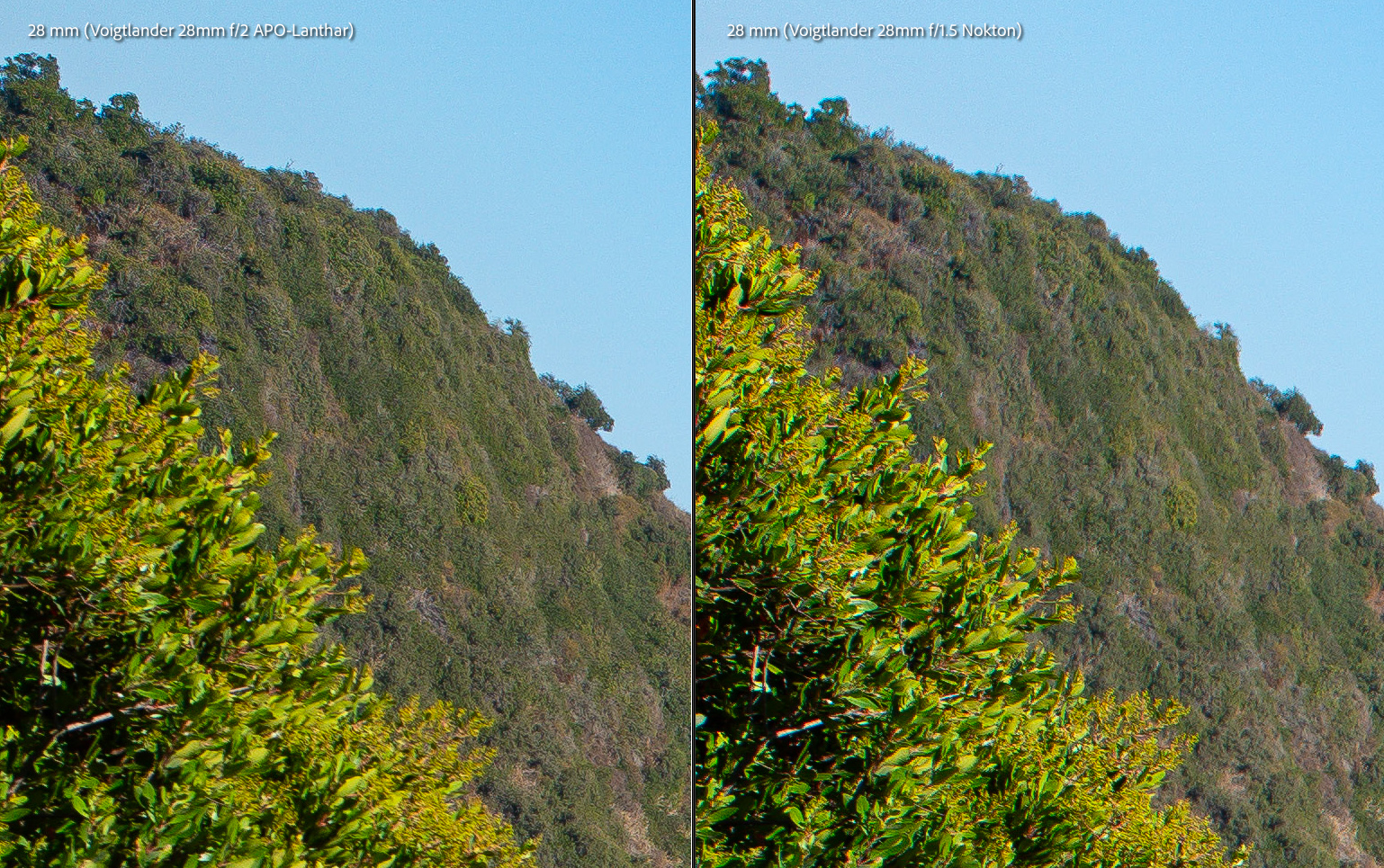
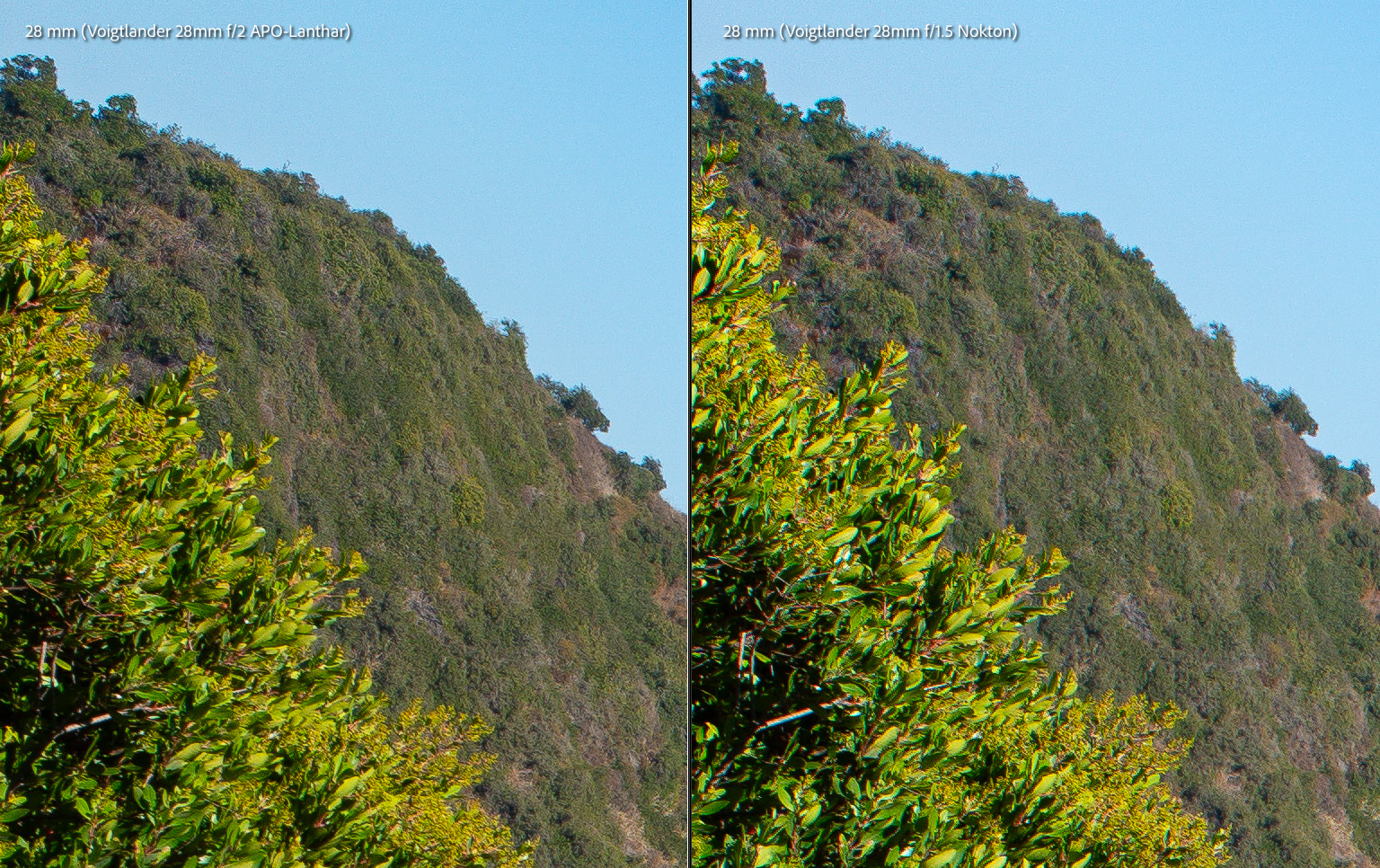
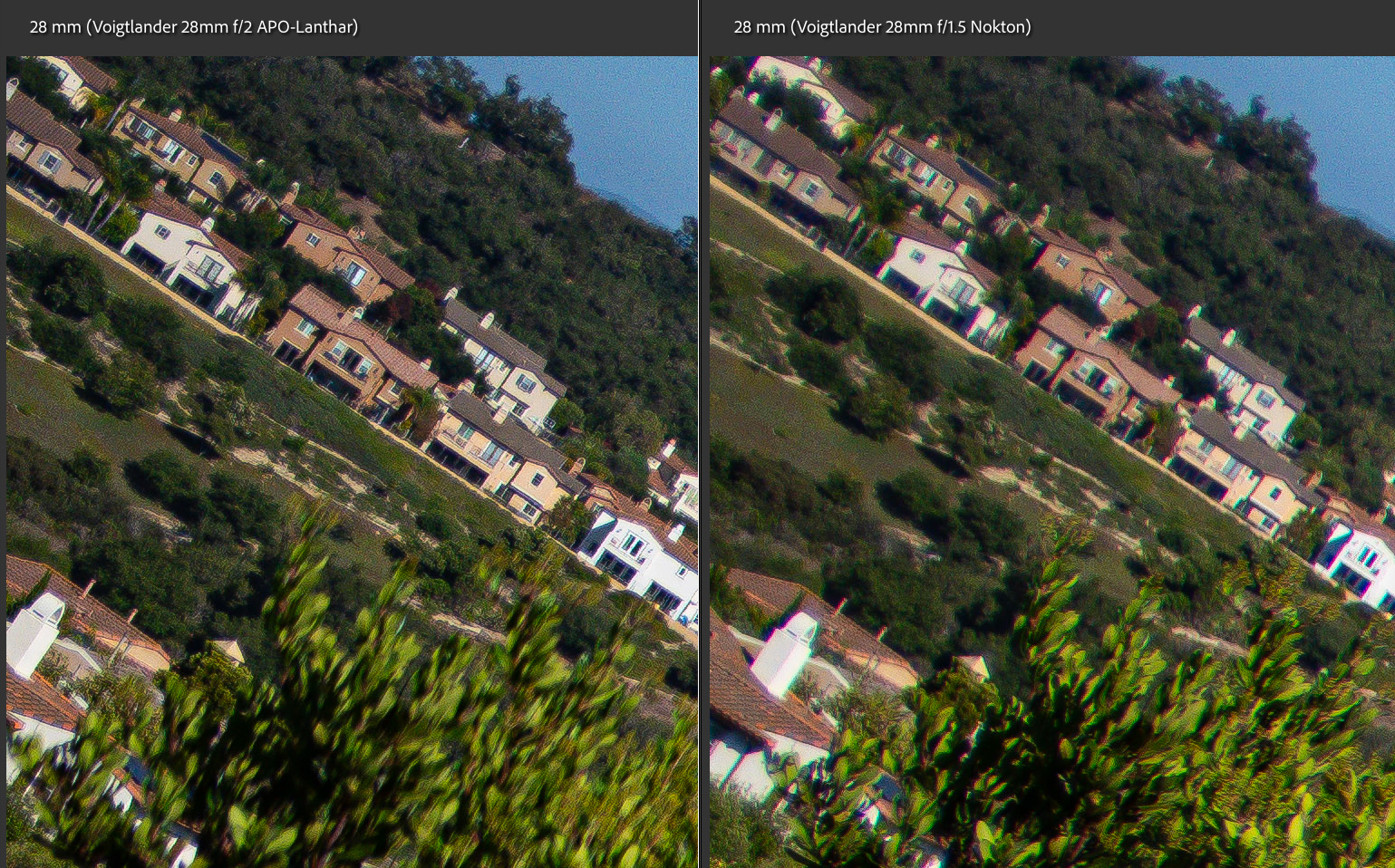
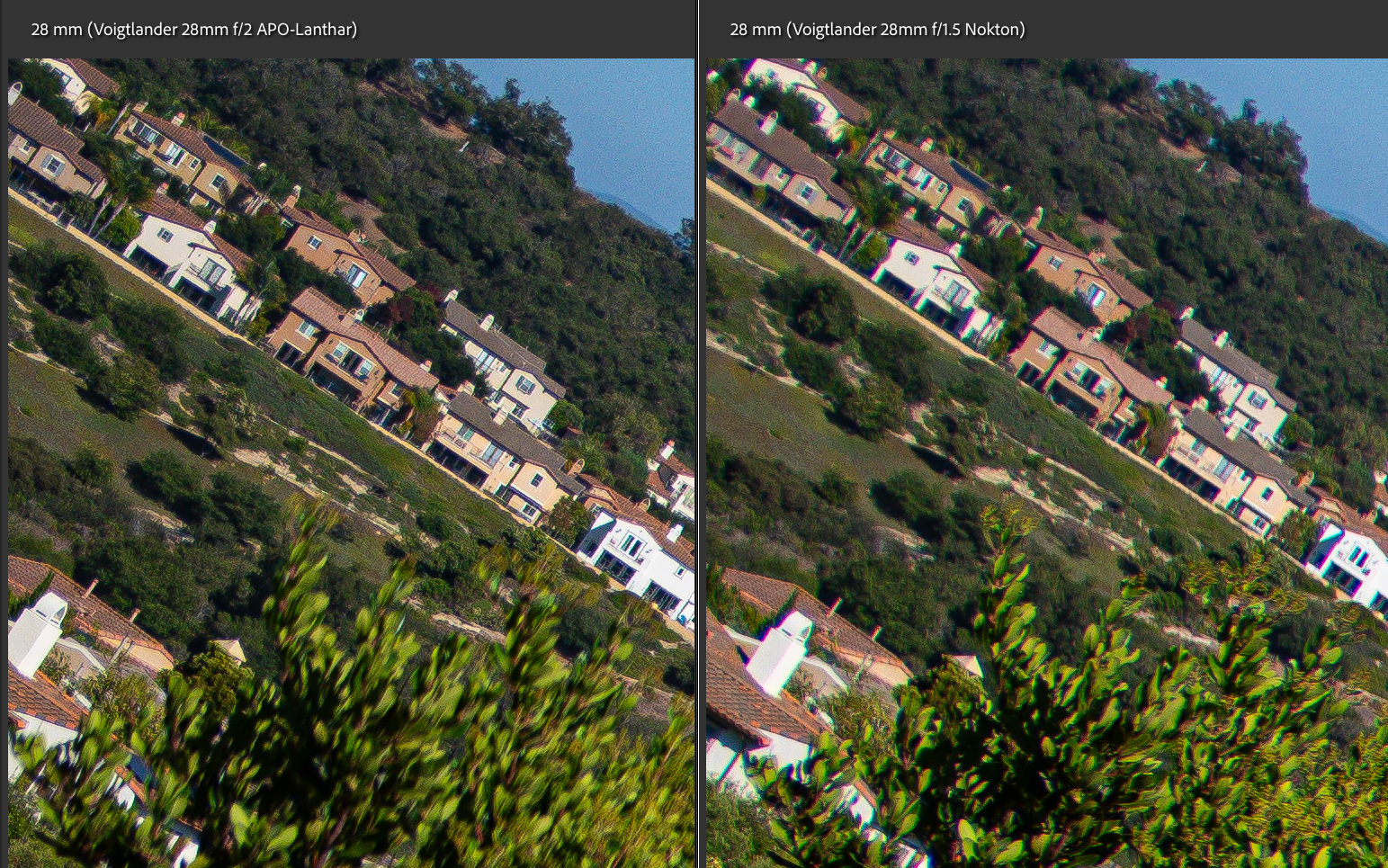
Infinity Resolution and Contrast compared to Voigtlander 28mm f/1.5 Nokton (60MP)
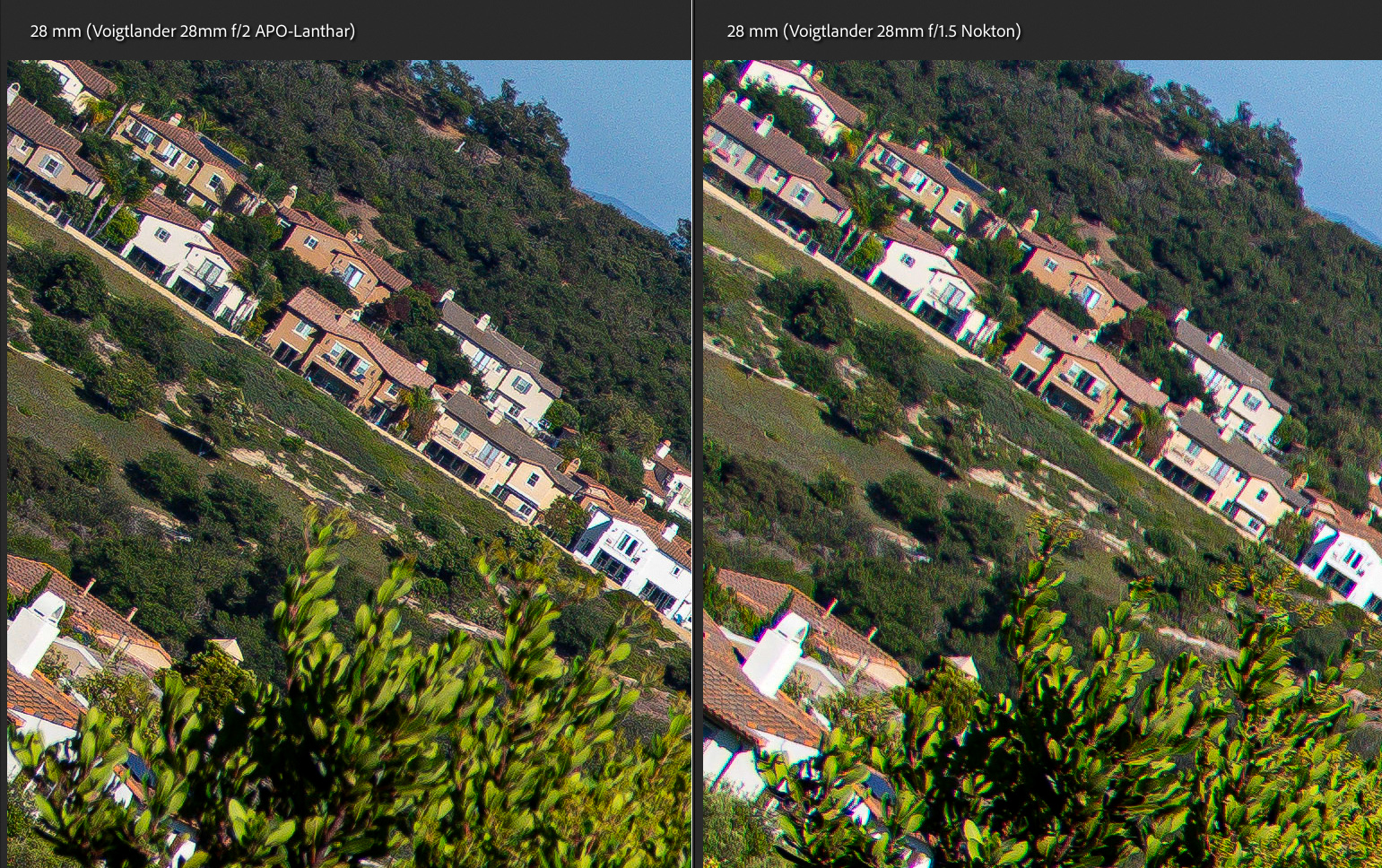
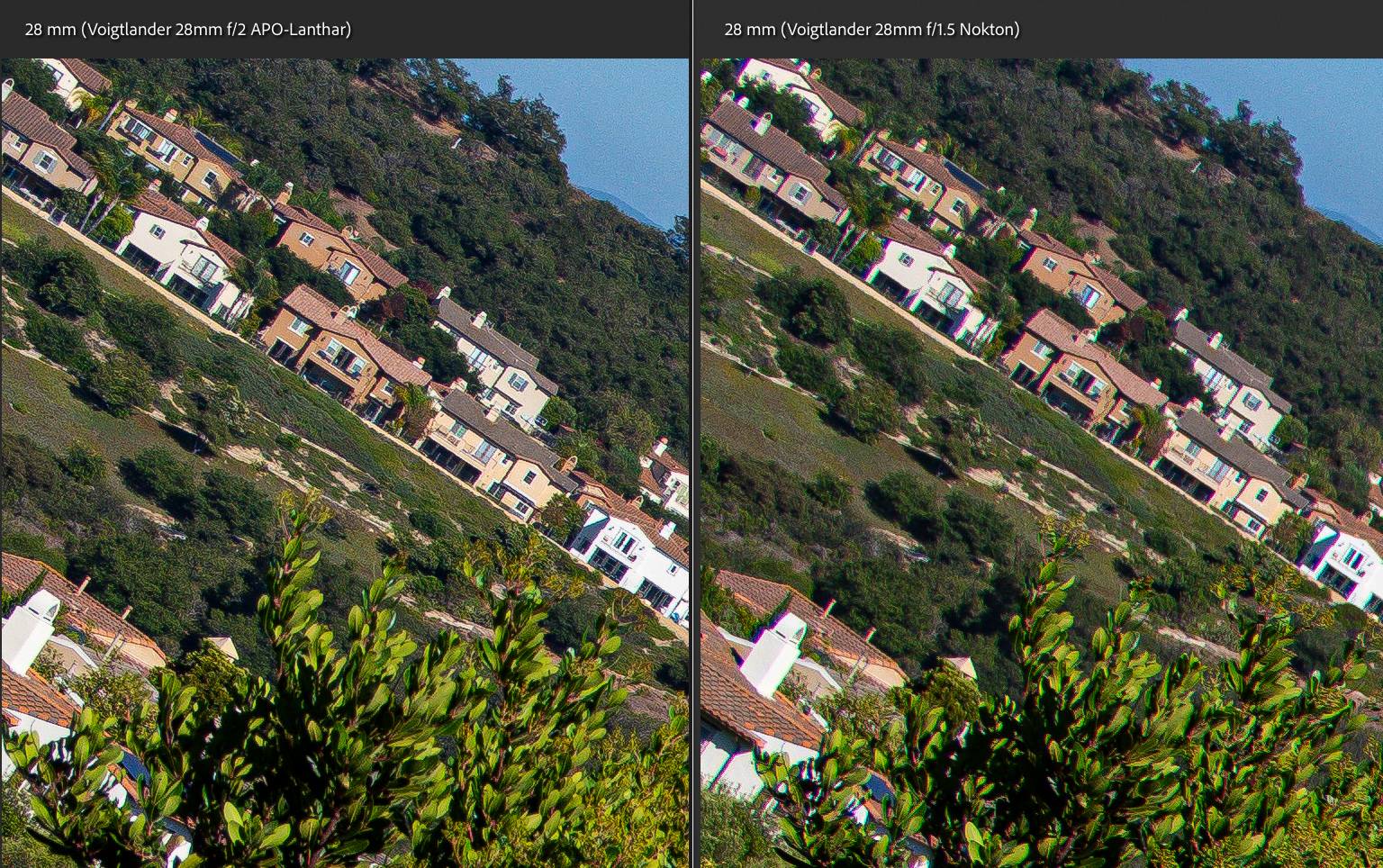
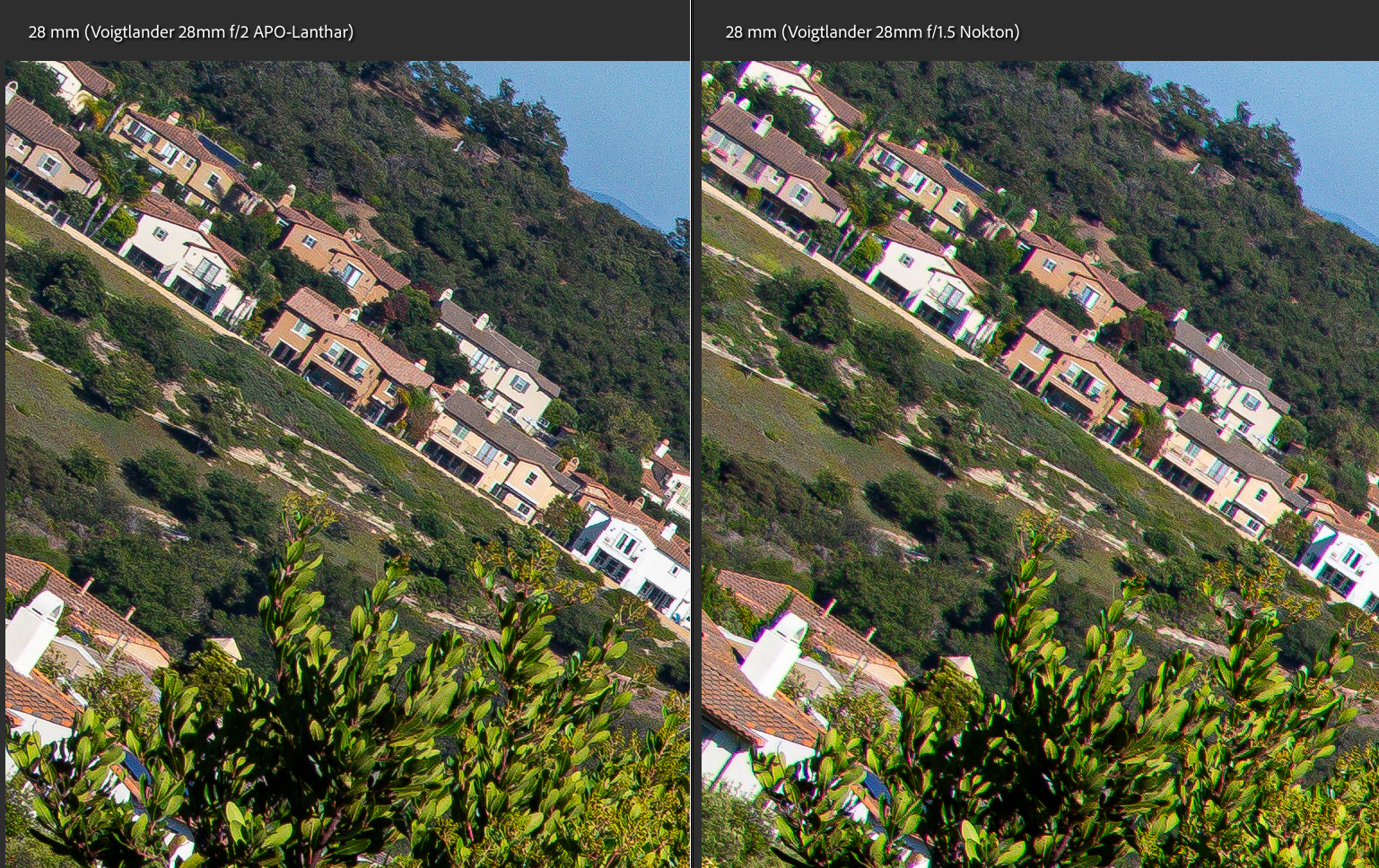
I've owned the Voigtlander 28mm f/1.5 Nokton for a long time and it remains one of my favorite 28mm lenses, mainly because of its unique rendering and fast aperture. It performs well on lower-megapixel sensors like 24MP and even 40MP, but on the M11's 60MP sensor, its optical weaknesses become more noticeable away from the center area. This is especially true at wider apertures and when directly compared to the new Voigtlander 28mm f/2 APO-Lanthar, which is designed to deliver maximum resolution, high contrast, and minimal chromatic aberration.
Up to now, the Voigtlander 28mm f/2 Ultron has been the benchmark among 28mm lenses for the M-mount. It has even outperformed the Leica 28mm Summicron in terms of resolution and contrast at wider apertures. Because of that, it will likely serve as a more meaningful comparison to the new APO. After evaluating the faster Nokton, the Ultron will be the next to be tested in this review. As I have mentioned in several recent reviews, resolution differences become much more obvious on a 60MP sensor.
The 28mm f/1.5 Nokton stands out for its compact size, especially considering its fast aperture, and is noticeably smaller than the Leica 28mm f/1.4 Summilux. That said, the Voigtlander 28mm f/2 APO-Lanthar clearly pushes image quality even further. This raises the question of how they compare in real-world use when shooting wide open, at f/4, and at smaller apertures.
I tested both lenses side by side and the results were mostly as expected. At the center, the 28mm f/1.5 Nokton holds its own and even performs slightly better than the APO at very small apertures. However, the APO shows a clear advantage away from the center, especially at wider apertures. From f/5.6 onward, both lenses produce very similar resolution and contrast across most of the frame, although the APO still retains an edge even at f/8.
It's also worth noting that the APO-Lanthar has a flatter field curvature, but I will go into more detail on that later. The vignetting comparison is also interesting, as is the difference in chromatic aberration. The new APO-Lanthar shows excellent control of axial CA and no visible lateral CA either. I am very impressed so far, but the true test will be how it performs next to the Voigtlander 28mm f/2 Ultron.
Distance: Infinity
Focus: Center - Best of three shots at maximum magnification
White Balance: Daylight
Both lenses are perfectly centered, as verified with my decentering test.
Software used: Lightroom with FM Default Landscape Sharpening; all other settings are at default.
PS: Vignetting, Chromatic Aberration (CA), and distortion were not corrected either in post-processing or in-camera.
Center Resolution and Contrast Infinity Resolution and Contrast compared to Voigtlander 28mm f/1.5 Nokton (60MP)
To my eyes even at narrow apertures the APO Lanthar is outperforming the Nokton. The Nokton puts in a solid performance, but the APO Lanthar look phenomenal.
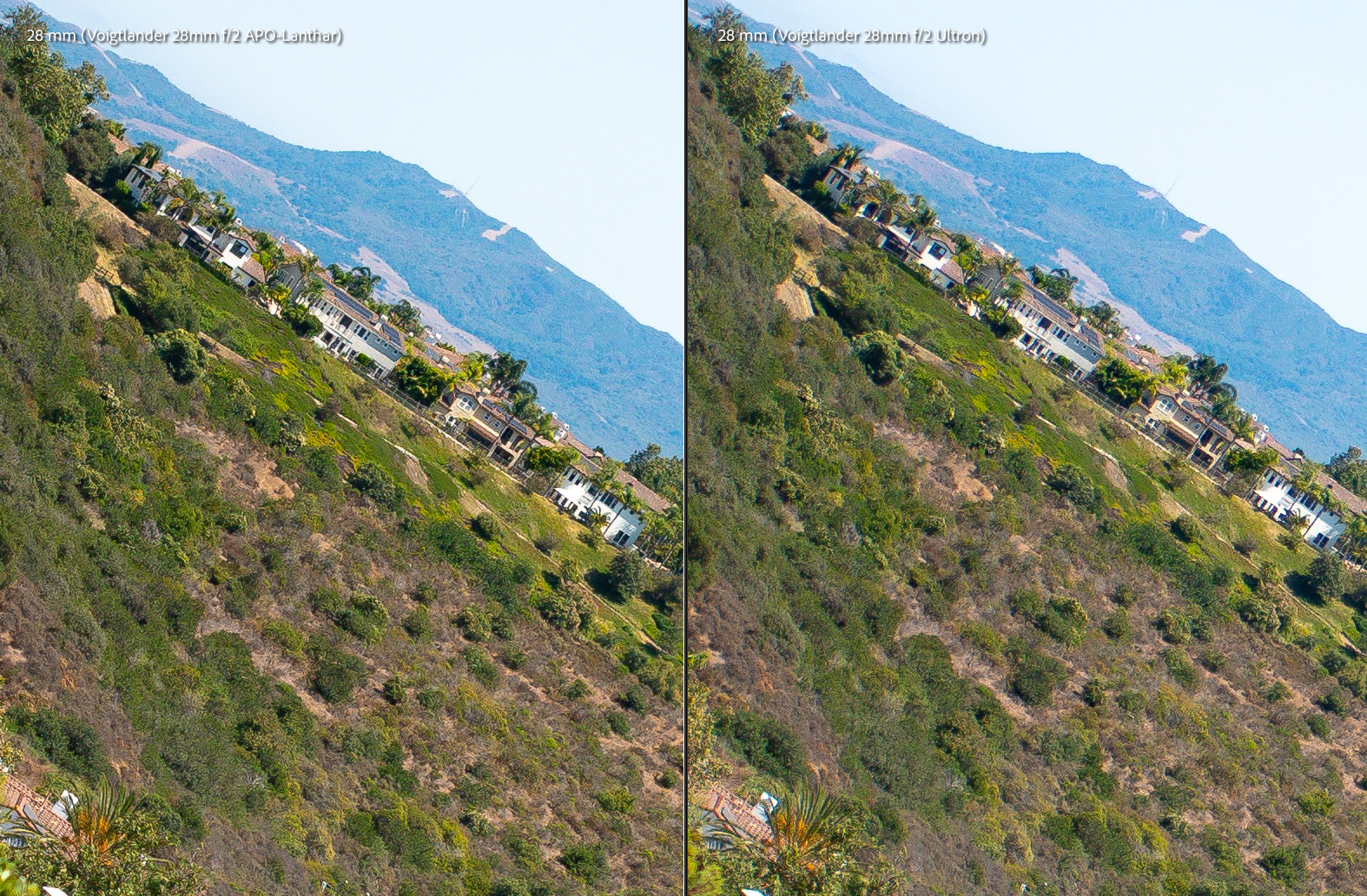
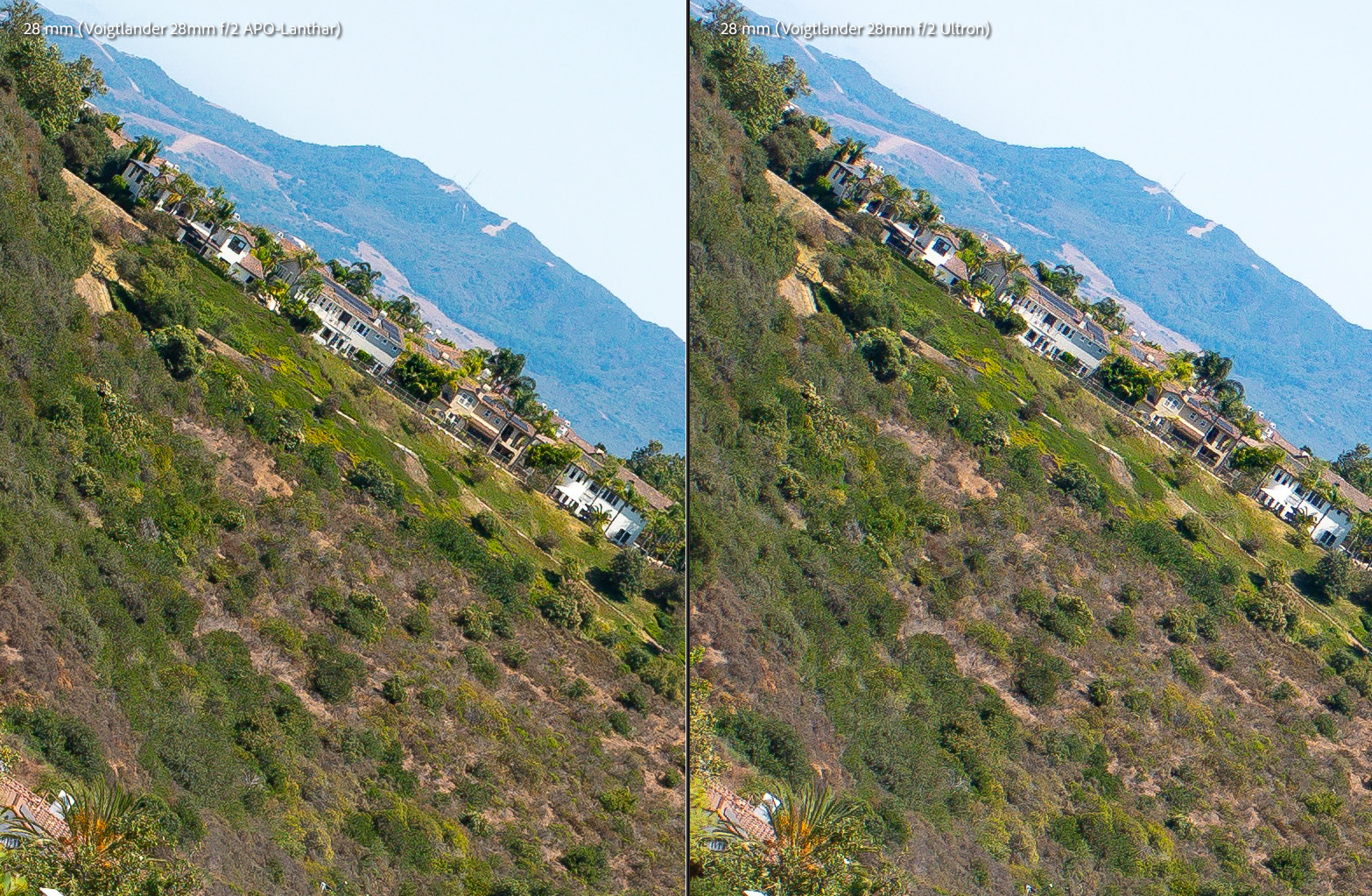
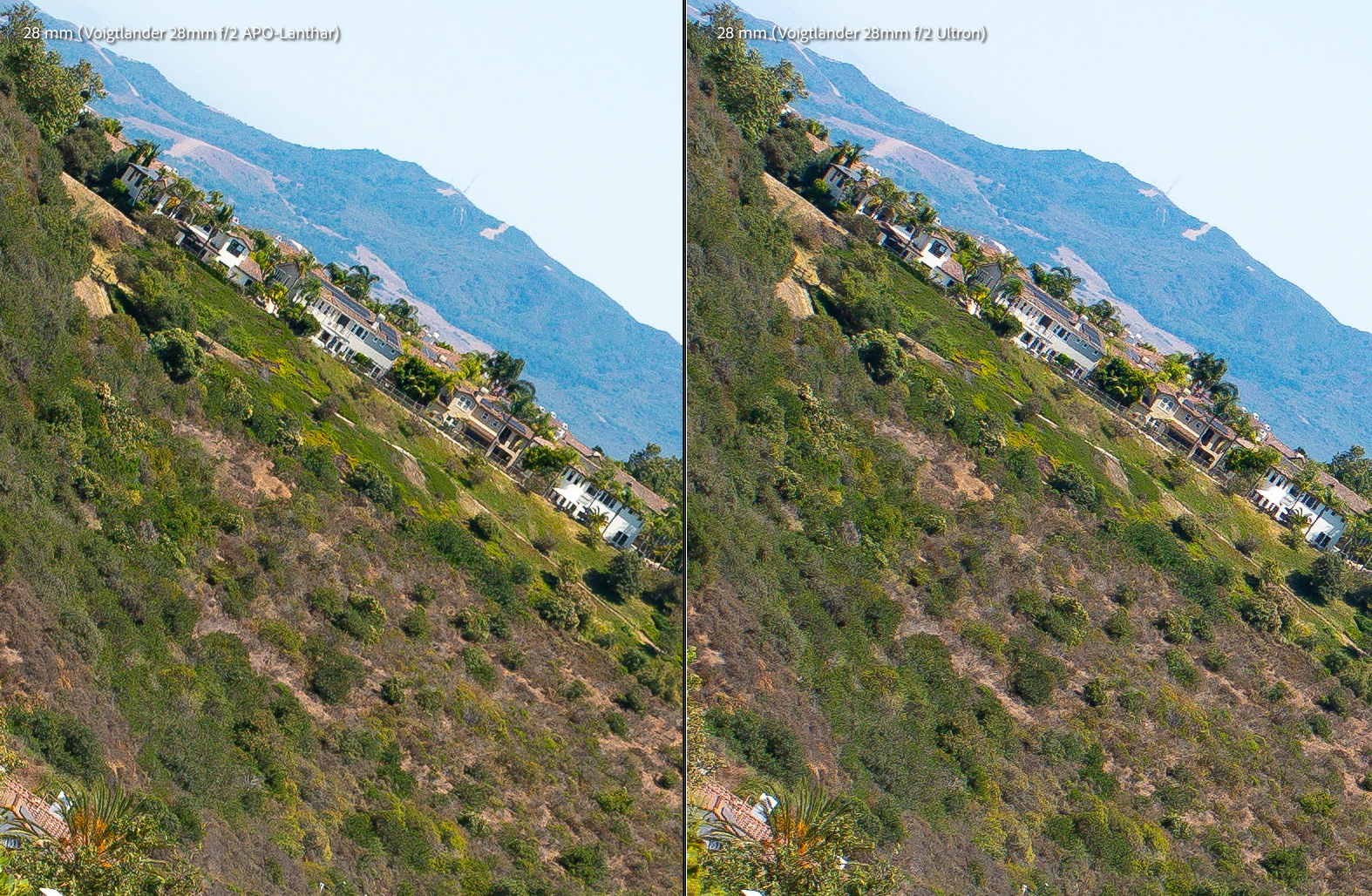
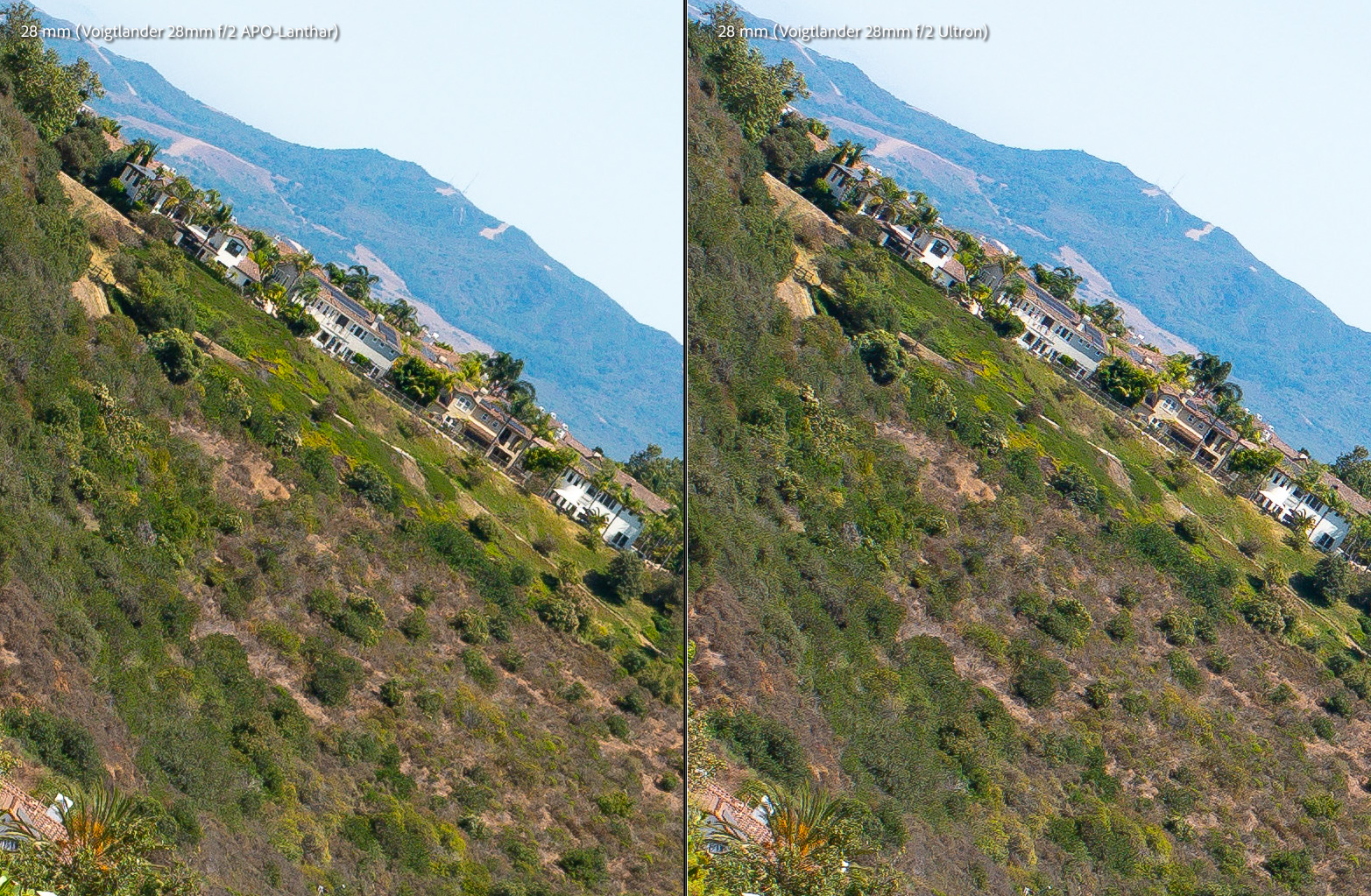
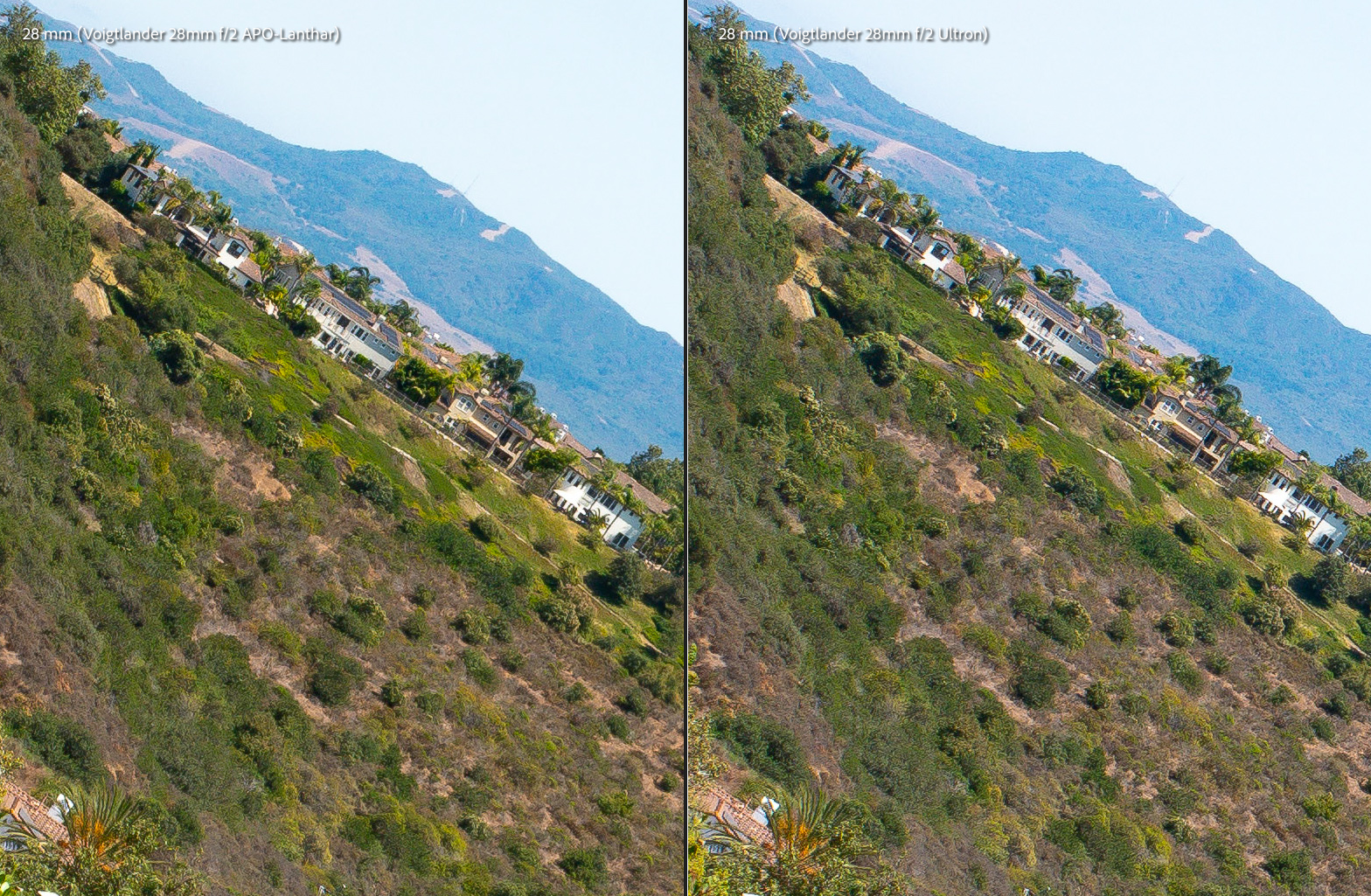
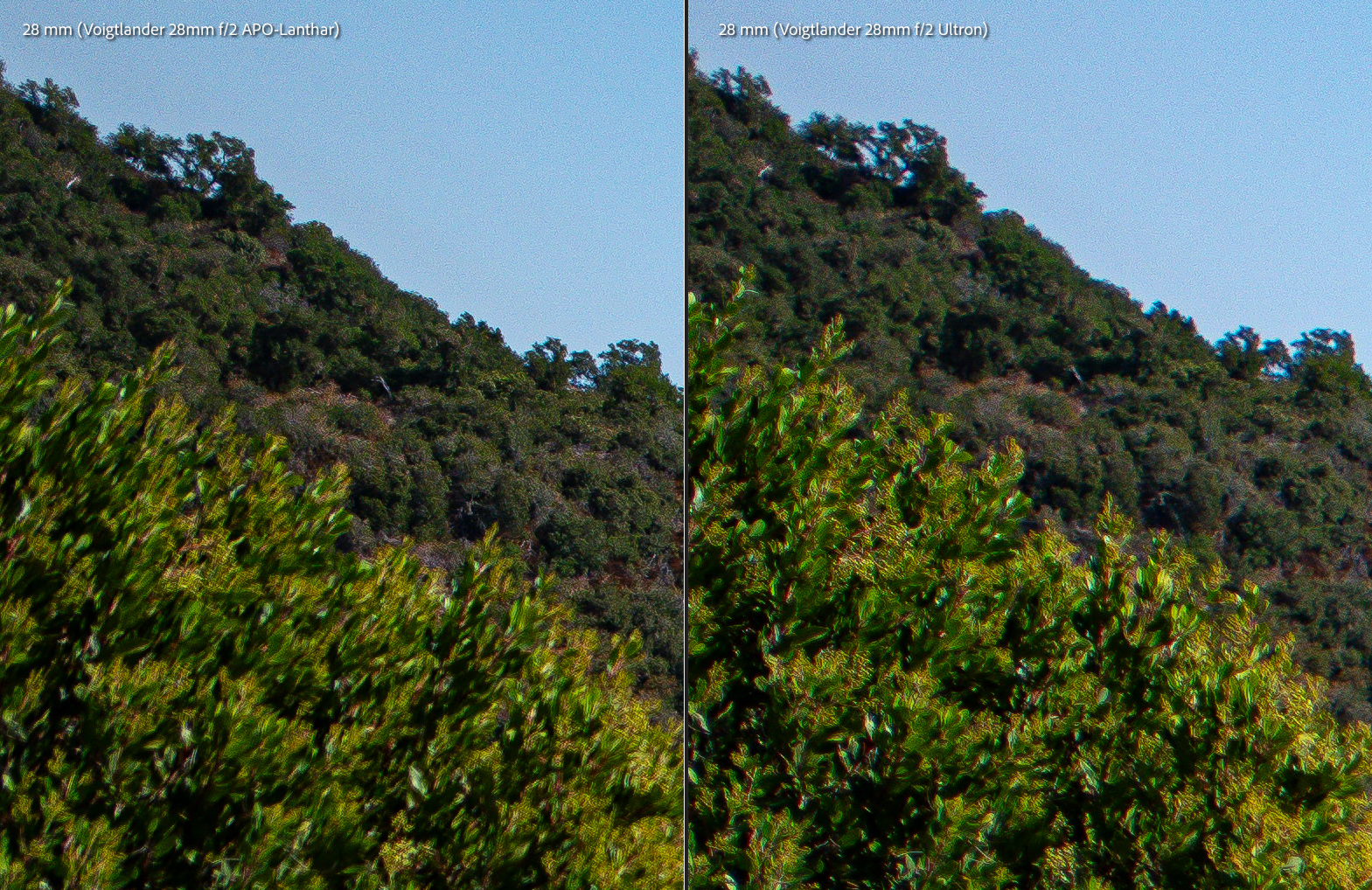
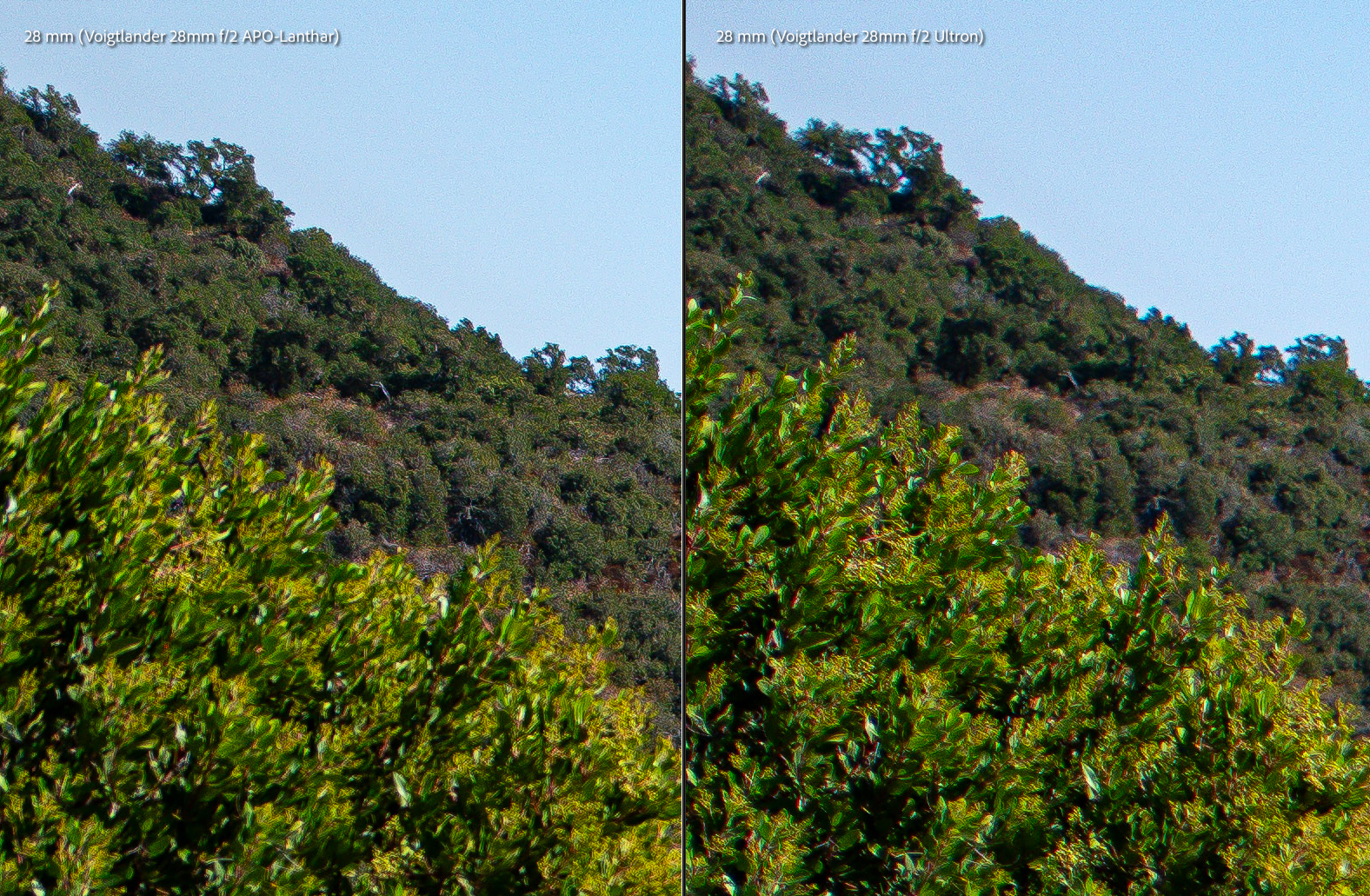
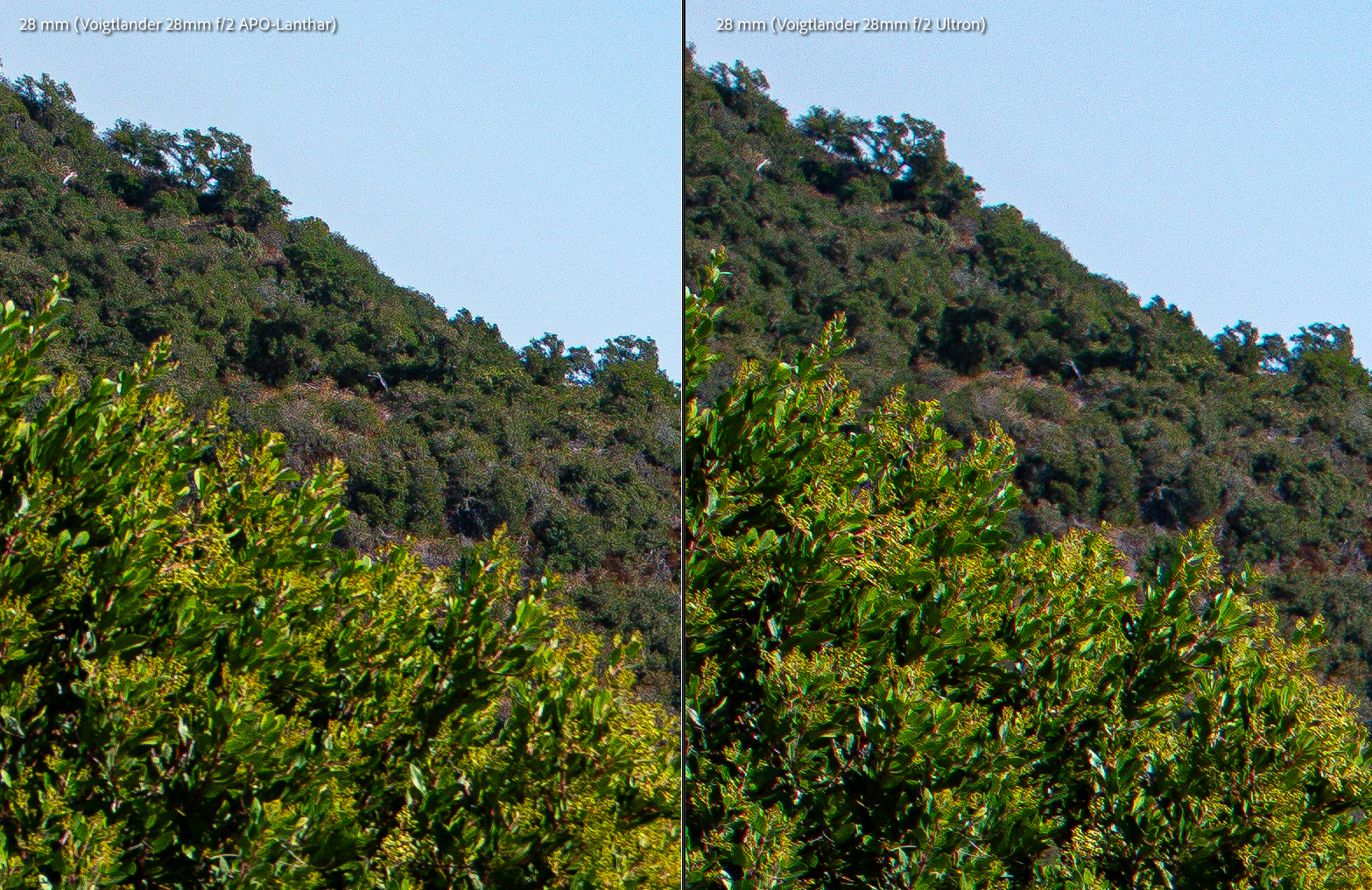
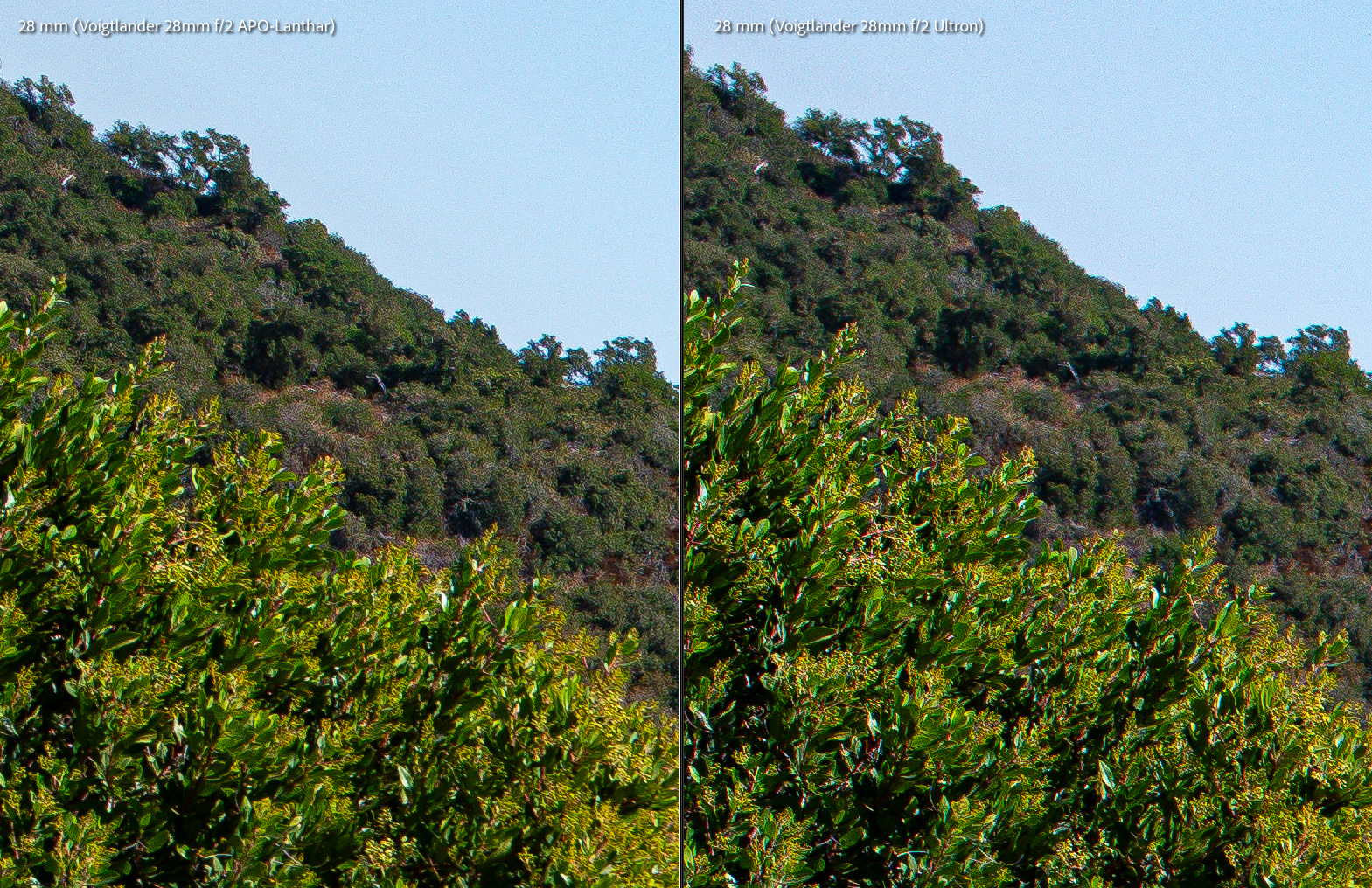
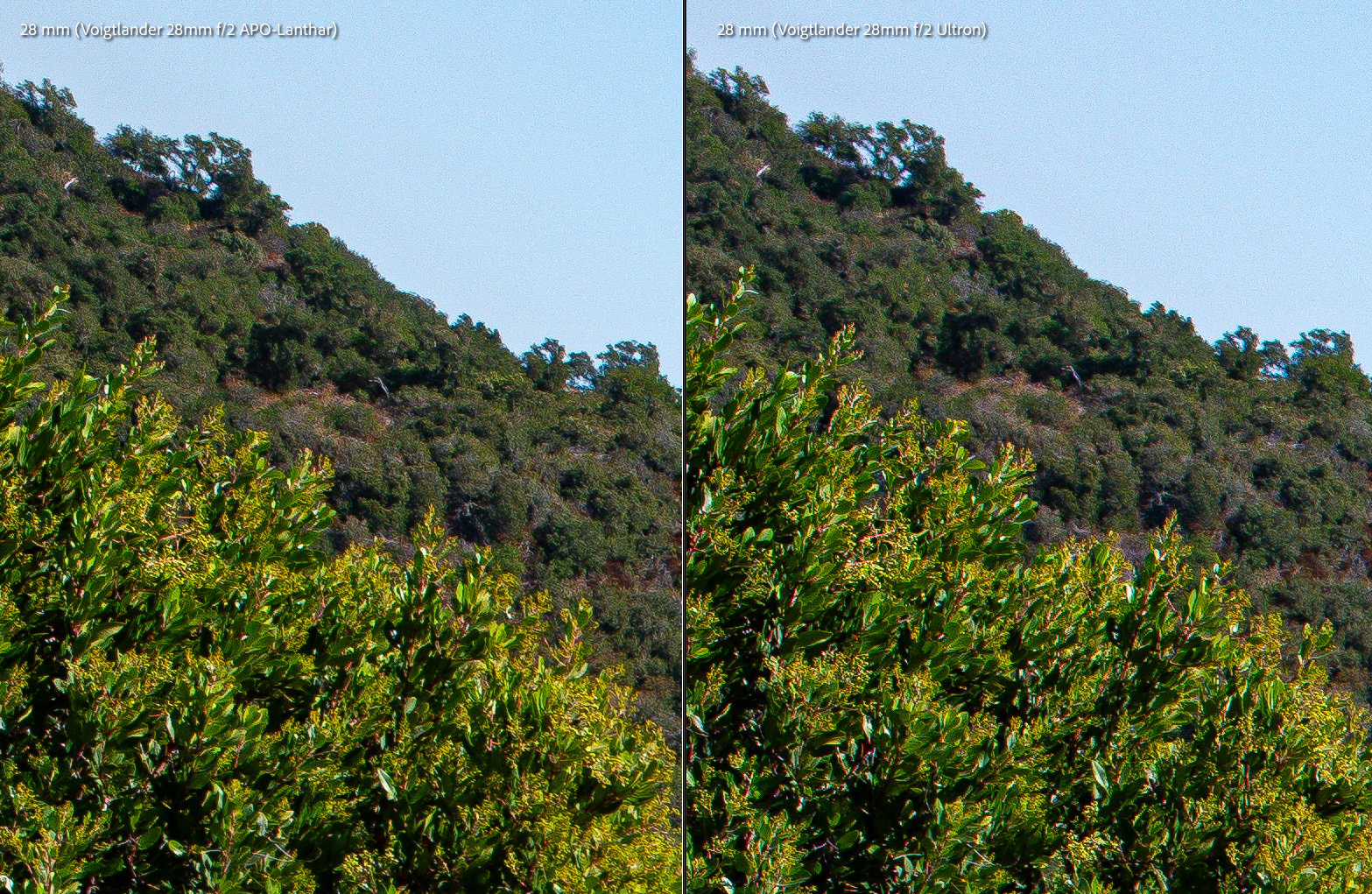
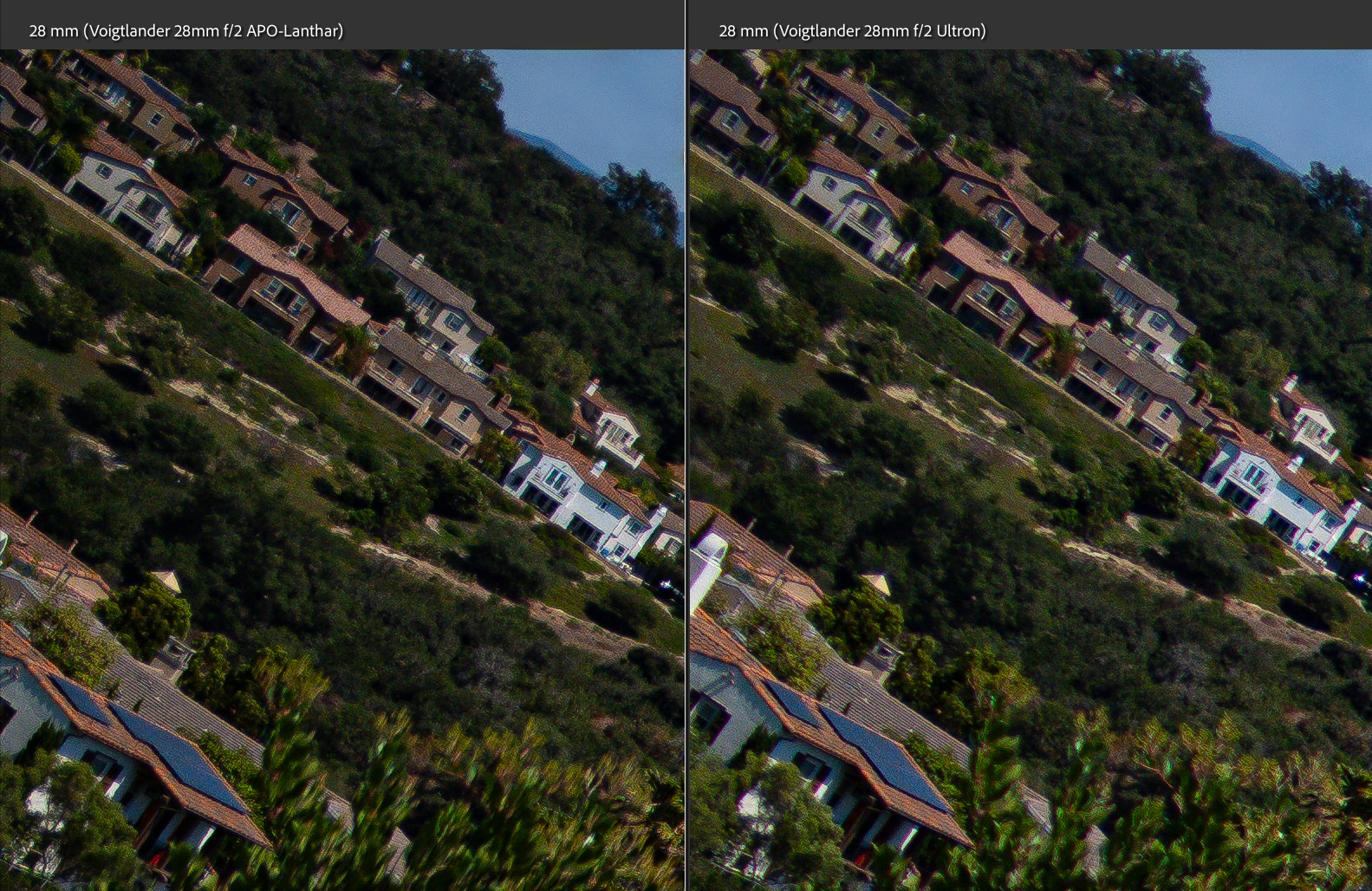
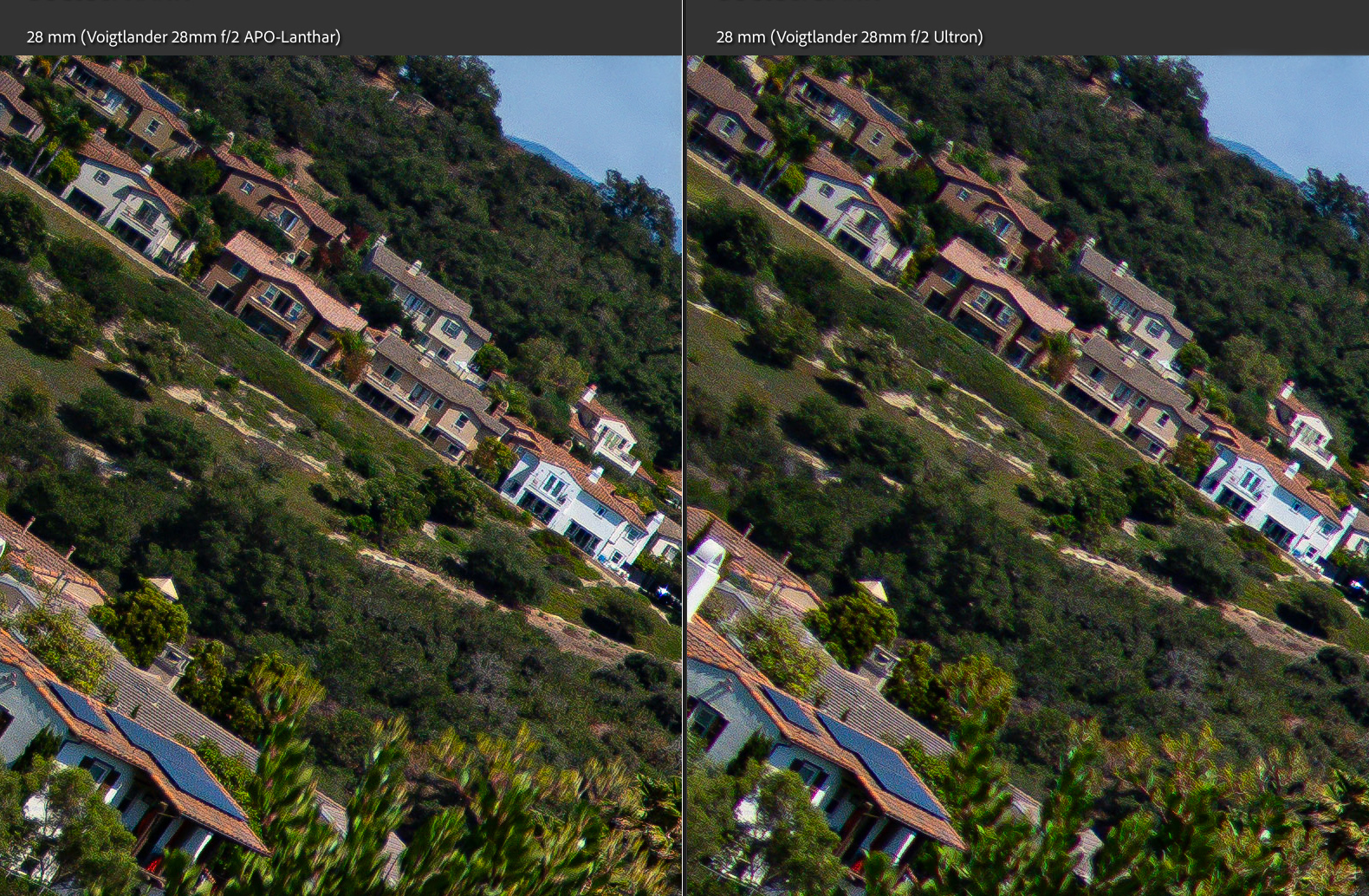
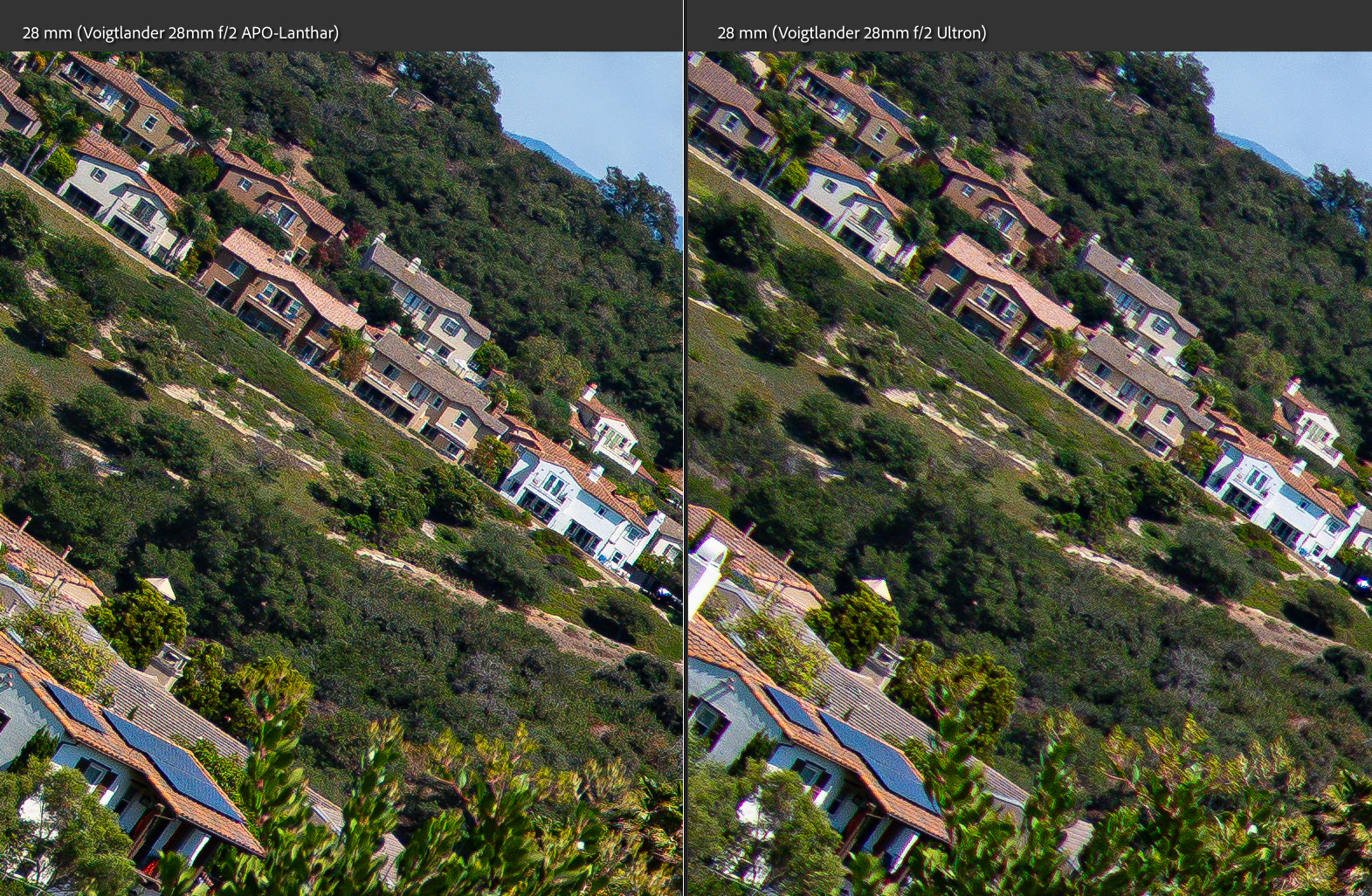
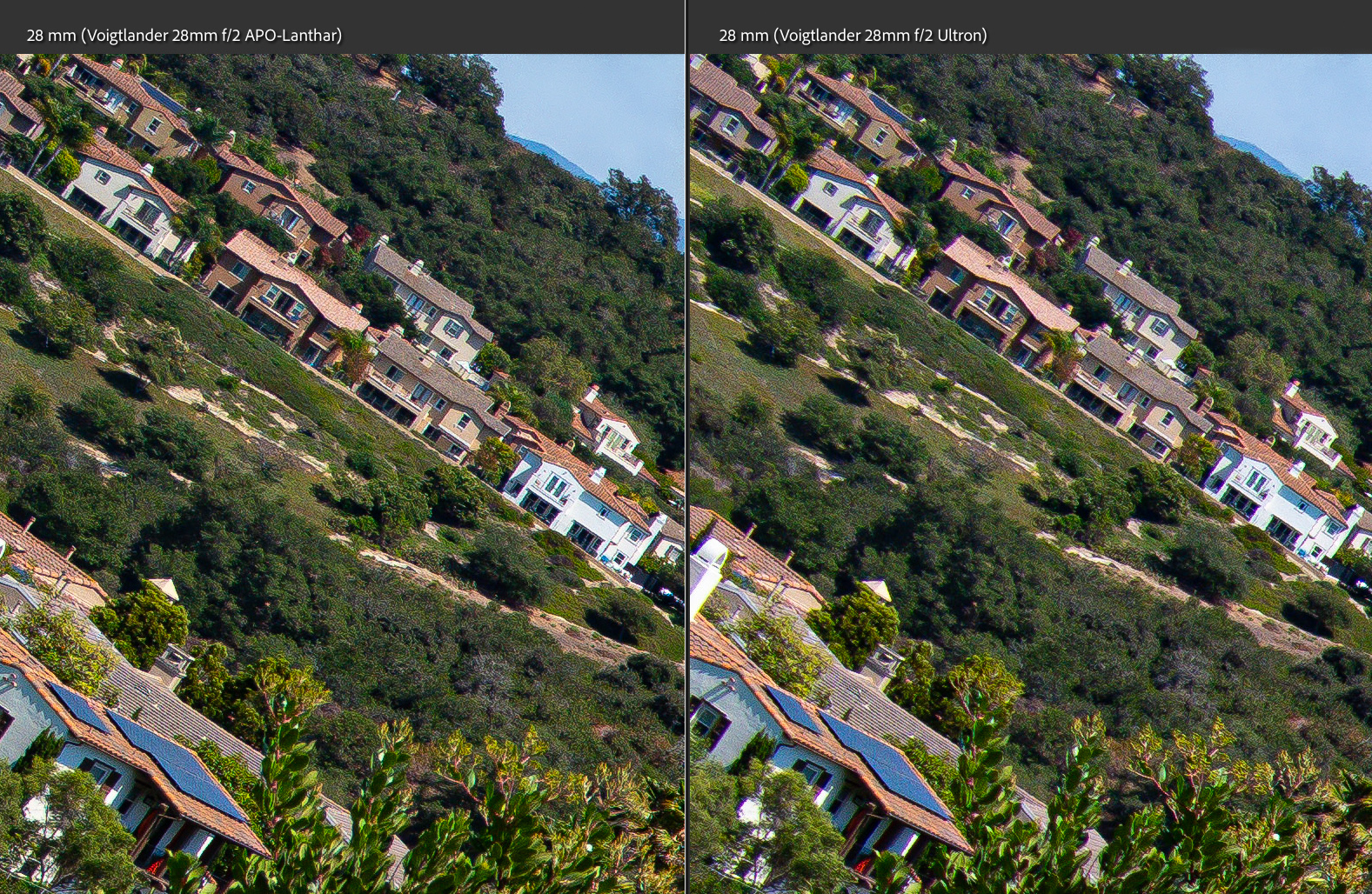
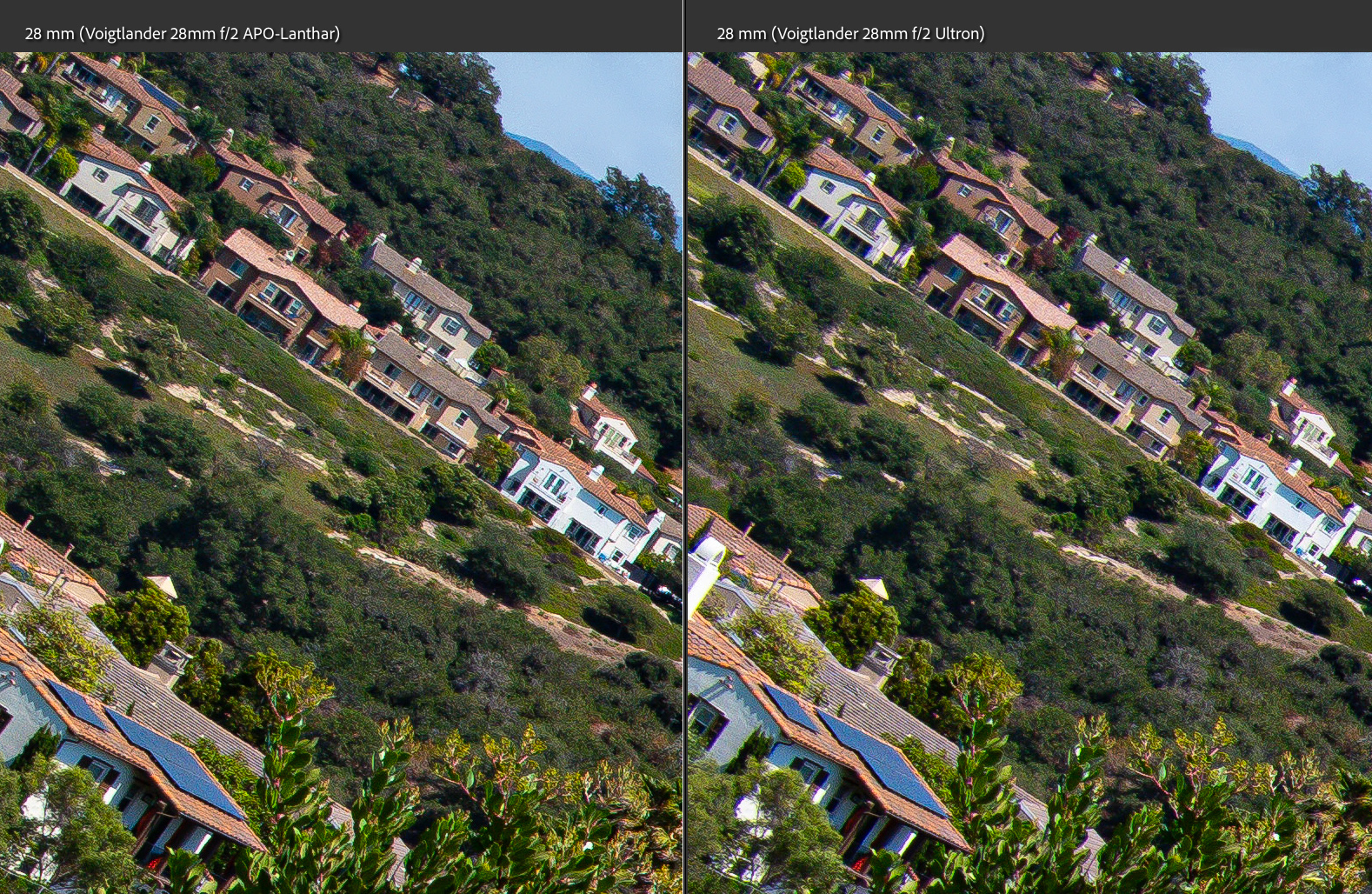
Infinity Resolution and Contrast compared to Voigtlander 28mm f/2 Ultron (60MP)
Among 28mm lenses for the M-mount, the Voigtlander 28mm f/2 Ultron has long been one of the top performers. It has even exceeded the Leica 28mm Summicron in resolution and contrast, especially at wider apertures. I originally expected the new Voigtlander 28mm f/2 APO-Lanthar to perform similarly to the Ultron, just with improved control over color aberrations. But the results speak for themselves.
As I've mentioned before, the higher the megapixel count, the more visible optical flaws become. Lenses that are carefully corrected tend to stand out on sensors like the M11's 60MP, and that’s definitely the case here. The Ultron holds its own across the frame, but it shows a slight weakness in the mid-field region, which could be due to field curvature. I've repeated the test multiple times and consistently saw the same results.
_____
Update: I received two additional copies of the Voigtlander 28mm f/2 Ultron, and one of them is clearly optimal. It’s perfectly centered and performs slightly better in the mid-field compared to the other two, making it the optimal sample for this test. I’ve updated the test crops to reflect this best-performing copy, which I selected after evaluating all three.
Even so, the APO version still has the advantage when it comes to resolving fine detail, especially off-axis in the mid and extreme corners. At f/5.6 and f/8, the differences are smaller, but when examining the images at the pixel level, the APO still holds the edge.
_____
it's worth noting that the APO’s field of view is slightly narrower than every other Voigtlander 28mm I’ve tested. When it comes to vignetting, both the Ultron and APO perform nearly identically.
The APO also has a flatter field curvature, which makes it a better choice for landscape photography. So is it worth picking the APO over the Ultron for stopped-down shooting? The improvement might be subtle, but it's consistent and always noticeable. For anyone chasing the best possible performance from a 28mm lens, this test makes the answer pretty clear.
Distance: Infinity
Focus: Center - Best of three shots at maximum magnification
White Balance: Daylight
Both lenses are perfectly centered, as verified with my decentering test.
Software used: Lightroom with FM Default Landscape Sharpening; all other settings are at default.
PS: Vignetting, Chromatic Aberration (CA), and distortion were not corrected either in post-processing or in-camera.
Center Resolution and Contrast Infinity Resolution and Contrast compared to Voigtlander 28mm f/2 Ultron (60MP)