fredmiranda.com
Login

Moderated by: Fred Miranda
  New fredmiranda.com Mobile Site
  New Feature: SMS Notification alert
  New Feature: Buy & Sell Watchlist
  

FM Forums | Sony Forum | Join Upload & Sell

1       2              4              6       7       end
  

Thypoch Simera 28mm f/1.4 ASPH. Type II Review


Fred Miranda
Offline
Admin
Upload & Sell: On
p.3 #1 · Thypoch Simera 28mm f/1.4 ASPH. Type II Review


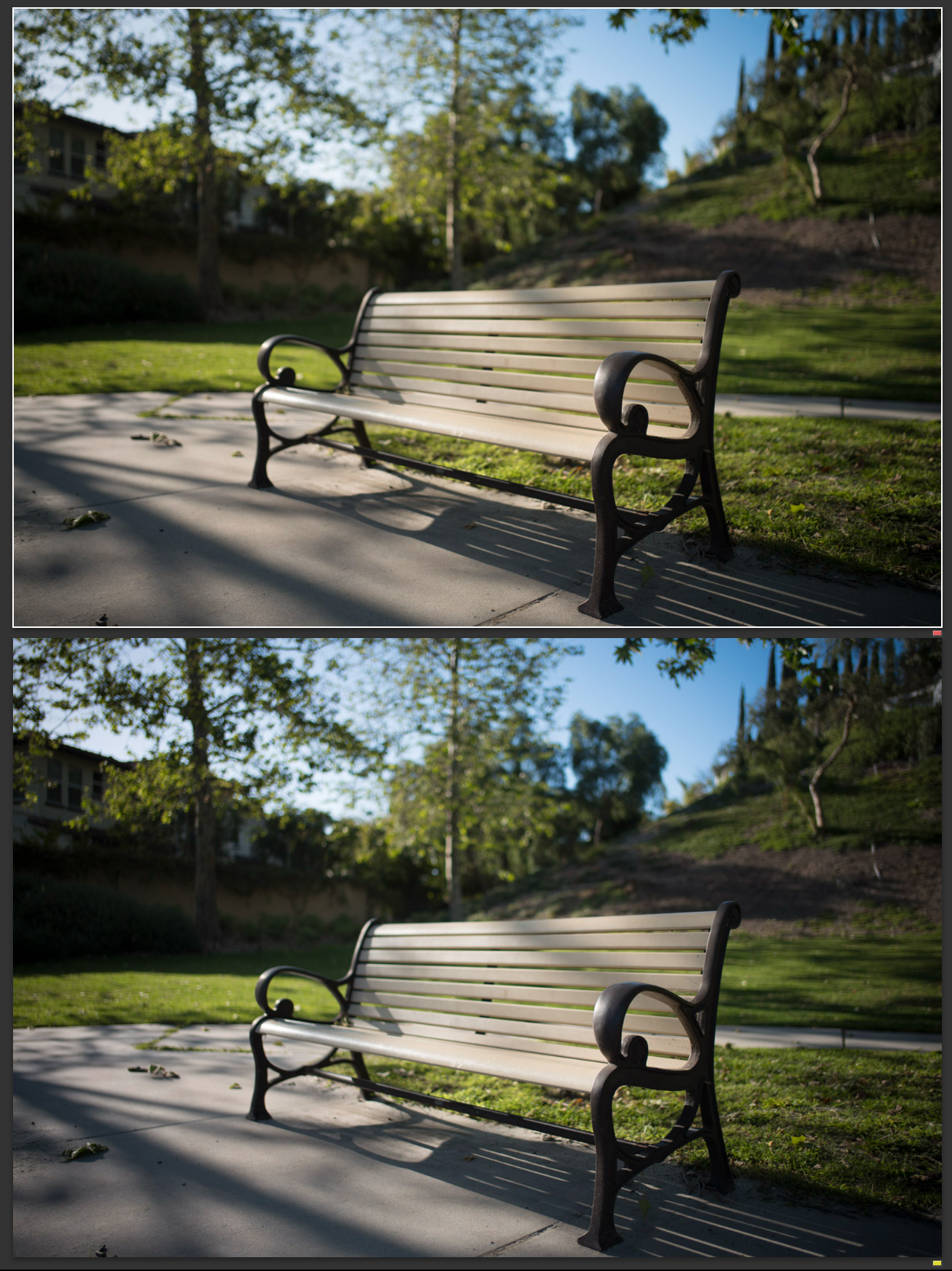
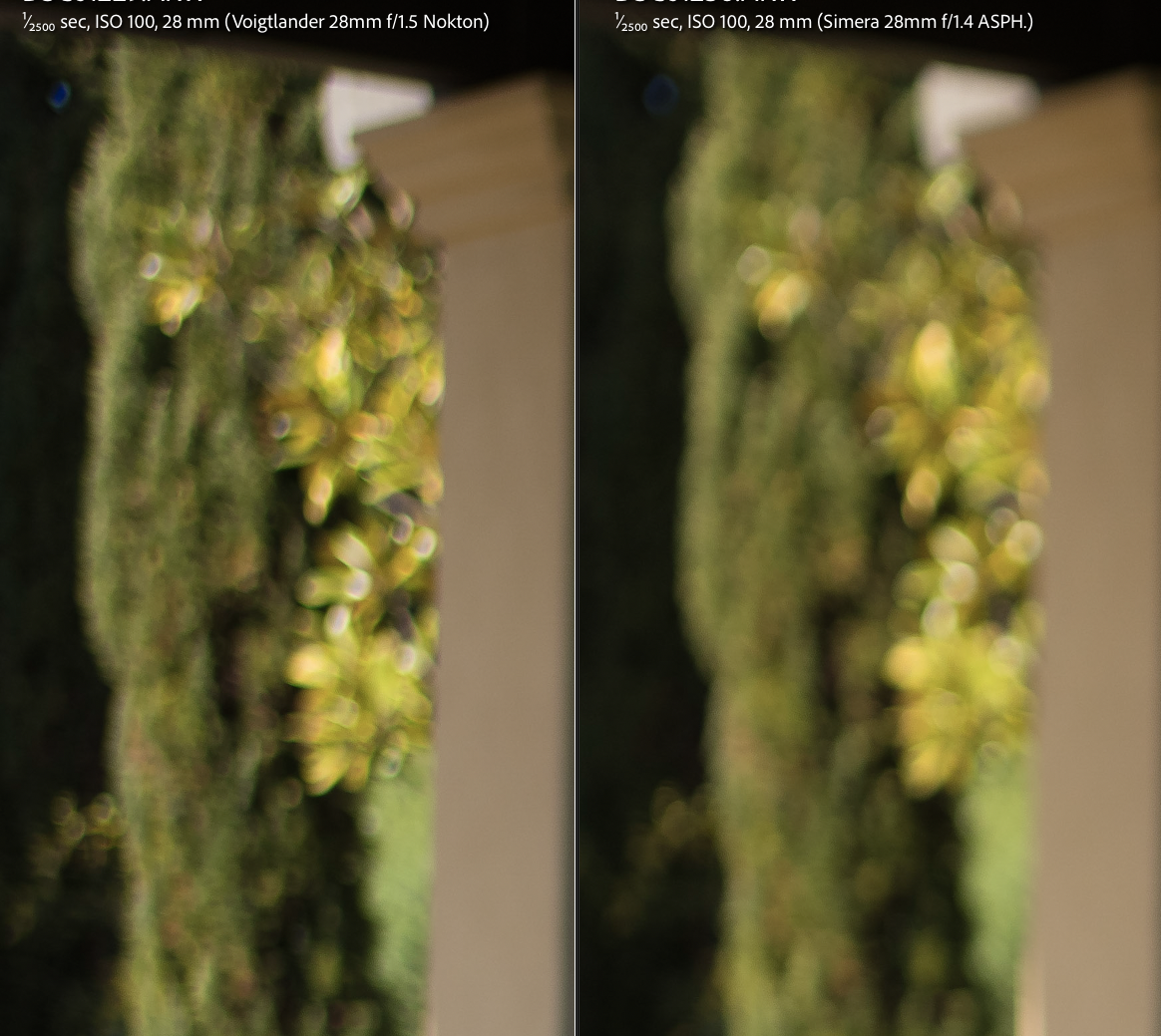
Sample 8:


TOP: Simera | BOTTOM: Voigtlander


Apr 03, 2025 at 04:03 PM
taildraggin
Offline
• • •
Upload & Sell: Off
p.3 #2 · Thypoch Simera 28mm f/1.4 ASPH. Type II Review


Fred,
Thanks for doing this such a lot of work!

I have the CV28z/1.5 and would probably prefer the shimera background blur. But, I like the size, Nikon chip and 'known' build of the CV. It fits with my other CV in handling and filter size, too. Those are strong enough for me to choose the CV. It would be a tougher choice for a Leica shooter.


Apr 03, 2025 at 05:07 PM
Tariq Gibran
Offline
• • • • • •
Upload & Sell: Off
p.3 #3 · Thypoch Simera 28mm f/1.4 ASPH. Type II Review


Really digging the softer look out of the Thypoch. To me, the oof rendering gives the illusion of a shallower dof as compared to the Voigt. Just put my order in!


Apr 03, 2025 at 05:46 PM
taildraggin
Offline
• • •
Upload & Sell: Off
p.3 #4 · Thypoch Simera 28mm f/1.4 ASPH. Type II Review


Wide open, the other CV Noktons are "dreamy-fast" lenses vs their eyeball slicing APOs. The Shimera seems to out Nokton the Nokton in dreaminess here.

It looks like CV chased the 28 Lux, accepting a harder-edged contrasty "documentary/reporter" look rather than a smoother, calmer one for a smaller package. 28 isn't a highly sought portrait length so it's a logical design decision. Especially with the larger 28APO in the offing, at least for Leica fans. You could argue that the Shimera will sit between the 2 CV with one product.

I would prefer the Shimera for isolating landscape features, like these garden samples, with the smaller CV for the scruffier street and particularly indoor events - clubs/bands, etc. Alack, considering the Nikon chip, build and handling of the CV 28z, I have only one to choose. (I like having the new additional speed of the 1.5 since it's pretty small, but all I really wanted was a small, chipped MF 28 at f/2 or f/2.8 for the Zf. No soup for you.)

But, not much difference in it between them. Leica folks have a sea of 28 choices.


Apr 04, 2025 at 06:17 AM
jeffersoncasey
Online
• • •
Upload & Sell: Off
p.3 #5 · Thypoch Simera 28mm f/1.4 ASPH. Type II Review


M9 and Thypoch 28 (infinity lock)

Just back from a trip with one lens one body, for me it's the best combo I've used.


Apr 04, 2025 at 06:48 AM
Don_Maciasso
Offline

Upload & Sell: Off
p.3 #6 · Thypoch Simera 28mm f/1.4 ASPH. Type II Review


Hello Fred,
Thank You for amazing work!!!
Are there going to be direct comparisons to lux 28mm?


Apr 04, 2025 at 11:07 AM
Fred Miranda
Offline
Admin
Upload & Sell: On
p.3 #7 · Thypoch Simera 28mm f/1.4 ASPH. Type II Review


Back to Quick Links

Optical Vignetting and Specular Highlights shape

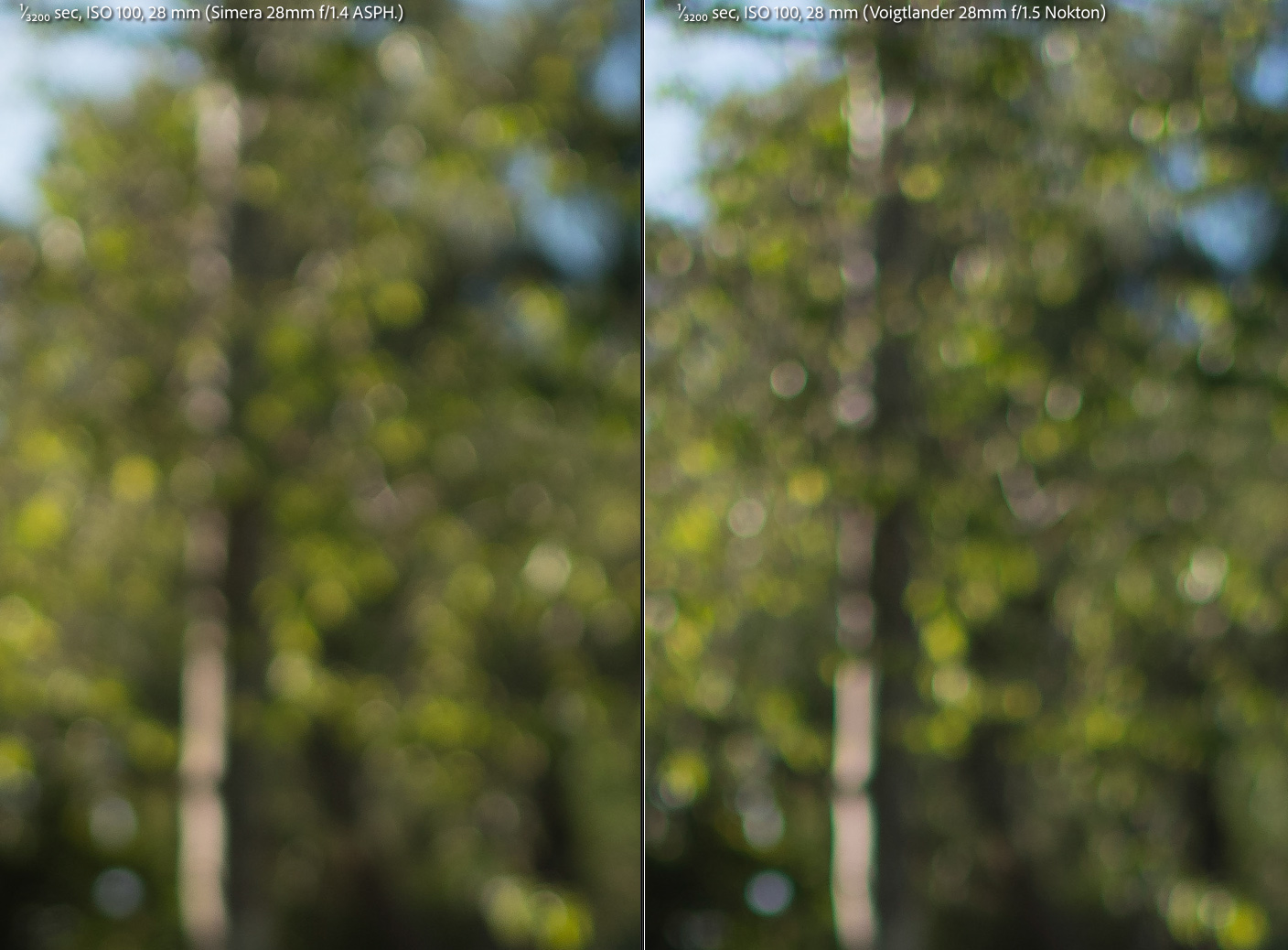
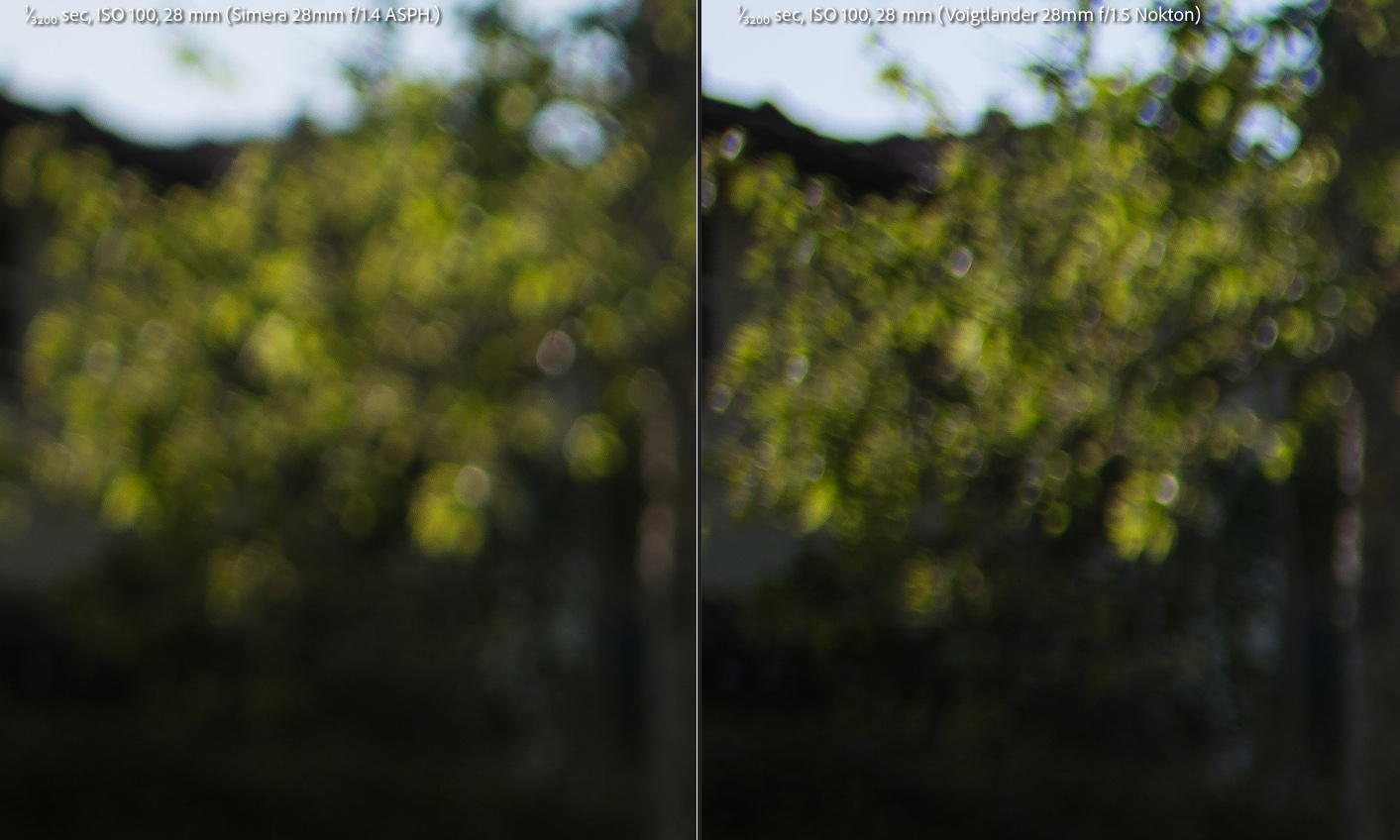
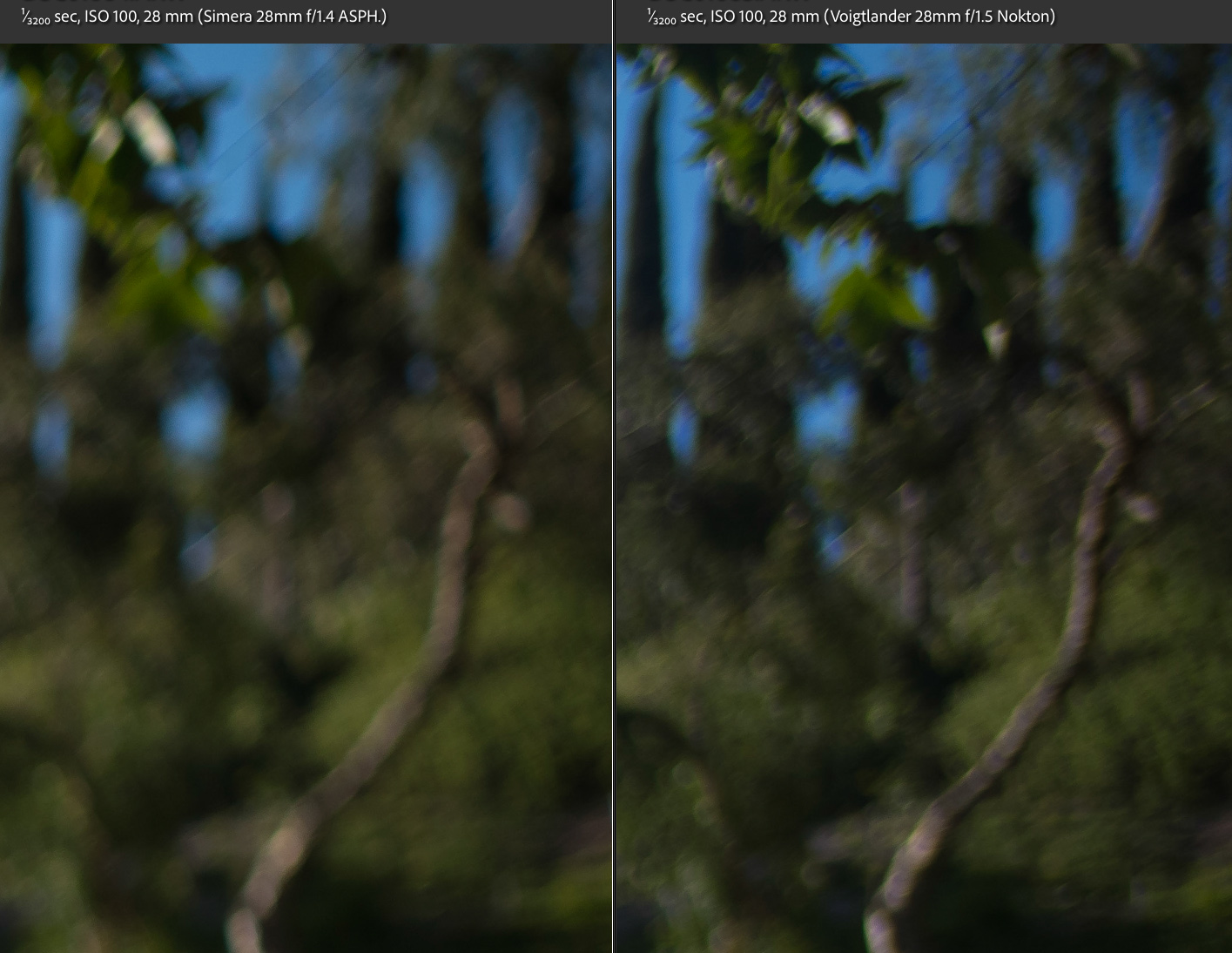
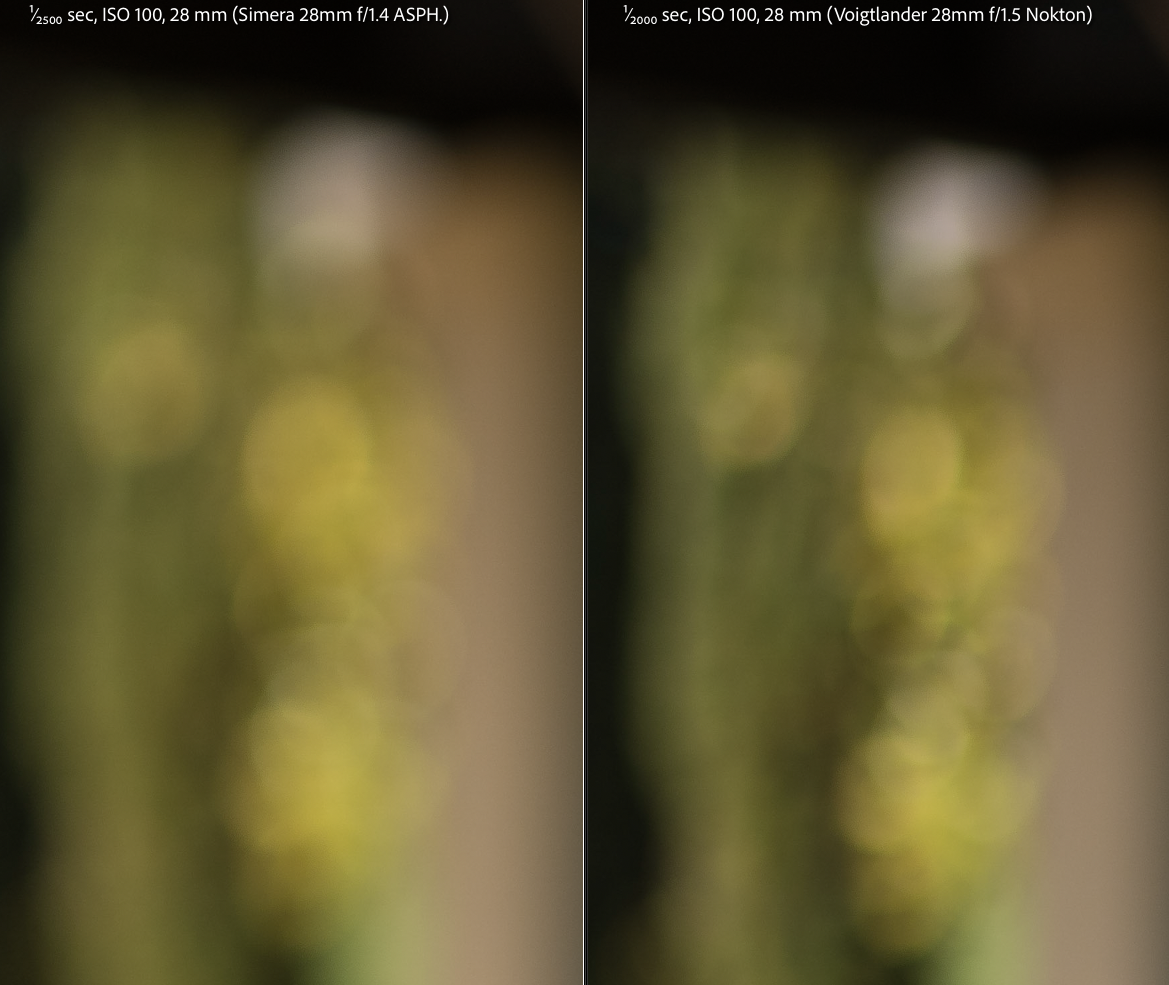
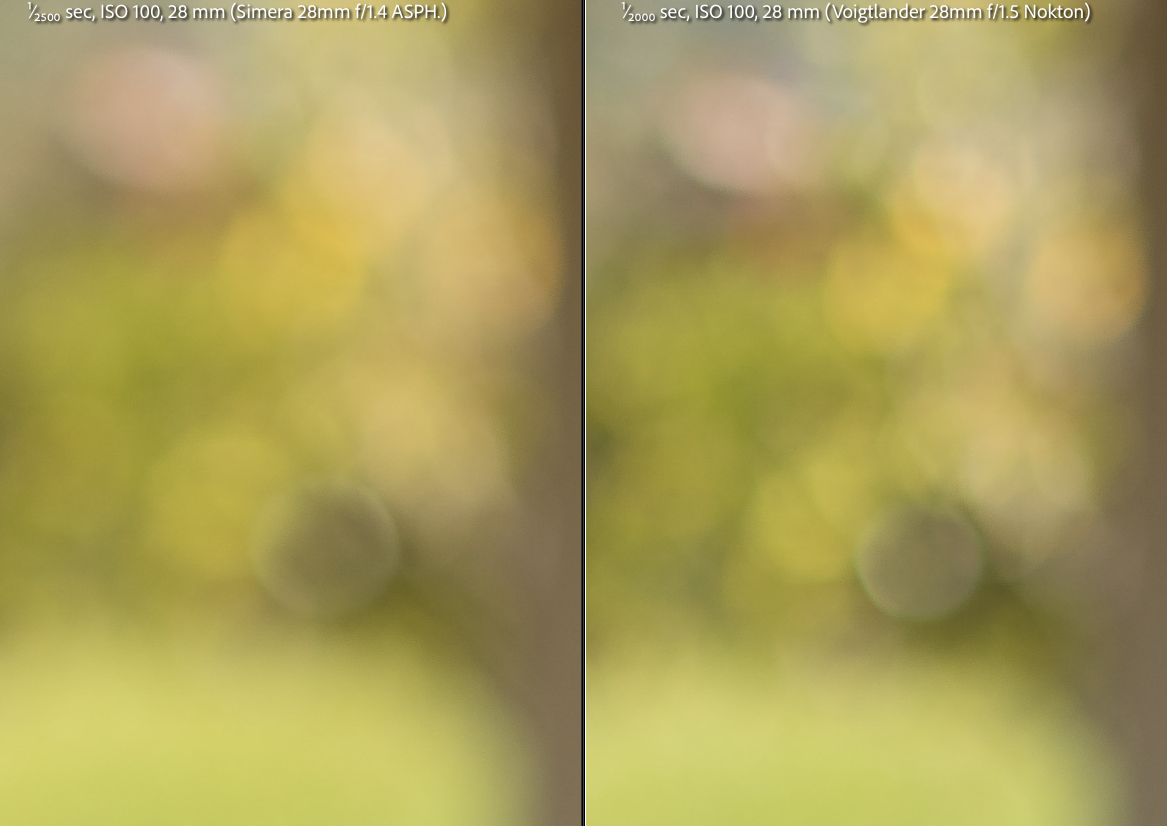
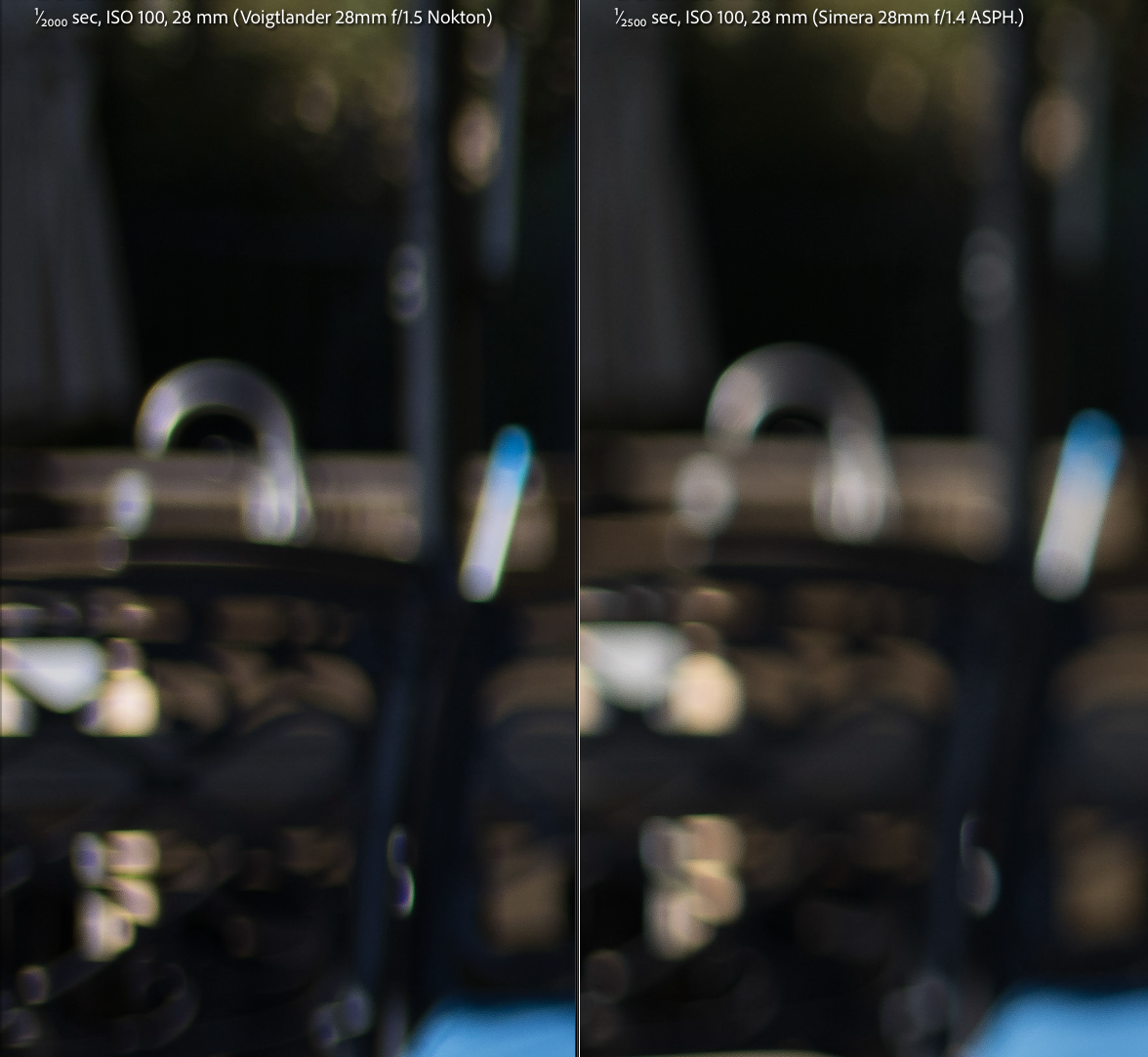
When it comes to optical vignetting and the shape of specular highlights, the Simera 28mm f/1.4 ASPH. produces highlights that look different compared to the Voigtlander 28mm f/1.5 Nokton. First, the Simera’s specular highlights appear noticeably larger, which can likely be attributed to the faster f/1.4 aperture. However, I did not notice a similar difference when comparing the Simera 75mm f/1.4 ASPH. to the slightly slower Voigtlander 75mm f/1.5 Nokton. This suggests that focal length and optical design may also play a role.

More importantly, the Simera shows much less outlining in the bokeh balls. This gives it a smoother and more refined rendering. There is also a higher level of background blur, even when the subject is focused at the same distance. That adds to the impression of smoothness in how the lens draws out-of-focus areas. In contrast, the Voigtlander’s rendering is more structured, which was already discussed earlier in the rendering section of this review. Technically, the Simera’s rendering is more polished, but many photographers appreciate the Voigtlander 28mm f/1.5 Nokton for its distinctive character, which closely resembles the look of the Leica 28mm f/1.4 Summilux ASPH.

The level of optical vignetting is typical for a 28mm lens but it is lower than what the Voigtlander produces. As a result, bokeh remains rounder off-axis in images taken with the Simera 28mm f/1.4.

The inner structure of the specular highlights is clean and free of distracting artifacts. I did not see any issues with the Voigtlander either. Both lenses use aspherical elements and still manage to avoid unwanted onion ring patterns or irregularities.

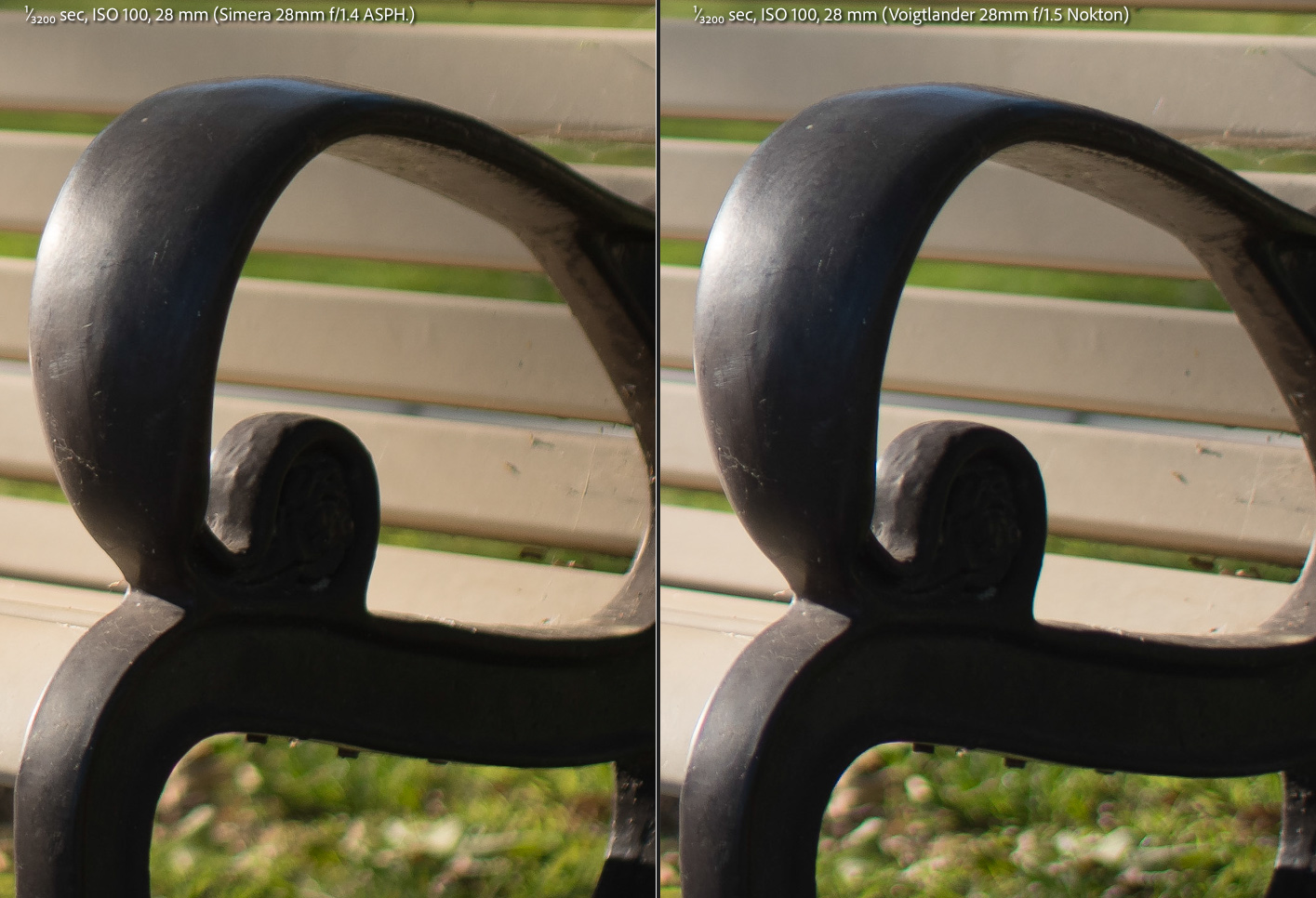
Here are some high-magnification crops that show how similar the optical vignetting and specular highlight shapes are in the corners between the Thypoch Simera 28mm f/1.4 ASPH. and the Voigtlander 28mm f/1.5 Nokton.


The Simera produces larger specular highlights when both lenses are shot wide open and the subject is focused at the same distance.


The Simera produces larger specular highlights when both lenses are shot wide open and the subject is focused at the same distance.


There is more background blur, especially toward the corners, due to the lens’s different field curvature and lower optical vignetting.


There is more background blur, especially toward the corners, due to the lens’s different field curvature and lower optical vignetting.


Apr 04, 2025 at 03:41 PM
Fred Miranda
Offline
Admin
Upload & Sell: On
p.3 #8 · Thypoch Simera 28mm f/1.4 ASPH. Type II Review


Back to Quick Links

Chromatic Aberration Control

Axial CA:

Most 28mm f/1.4 lenses tend to show noticeable axial and lateral chromatic aberration, and that’s certainly true for both the Leica 28mm f/1.4 Summilux and the Voigtlander 28mm f/1.5 Nokton. However, the Simera 75mm f/1.4 ASPH. is a clear exception. Its chromatic aberration is much better controlled, and that stands out as one of its strengths.

The Simera 28mm f/1.4 ASPH. does show some fringing in high-contrast areas, but you really have to push it to notice. In normal shooting situations, color fringing is rarely a problem. Even in the focus plane, purple fringing is minimal and only shows up under extreme contrast conditions.

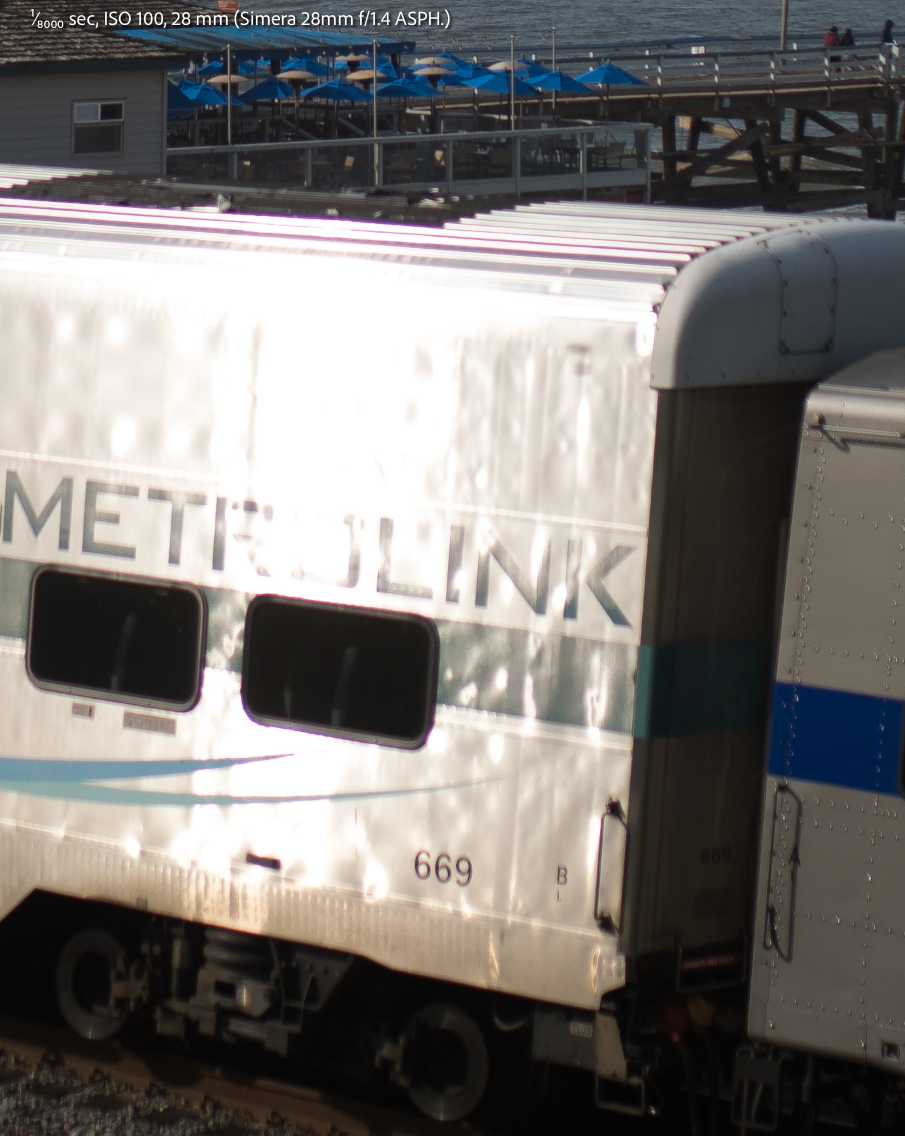
Below are a few 100% crops showing how axial chromatic aberration is handled:


Extreme contrast showing green fringing.


Only traces of green fringing on this crop.


Purple fringing can be seen in this extreme lighting condition.


Purple fringing can be seen in this extreme lighting condition.


Apr 04, 2025 at 03:46 PM
Fred Miranda
Offline
Admin
Upload & Sell: On
p.3 #9 · Thypoch Simera 28mm f/1.4 ASPH. Type II Review


Lateral CA:

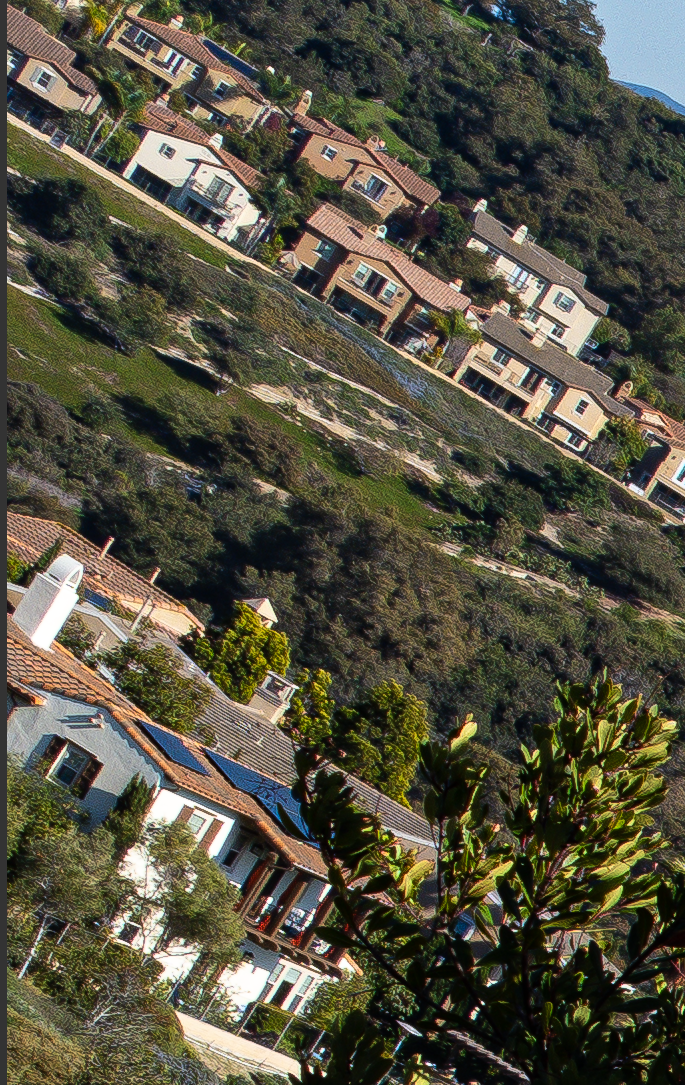
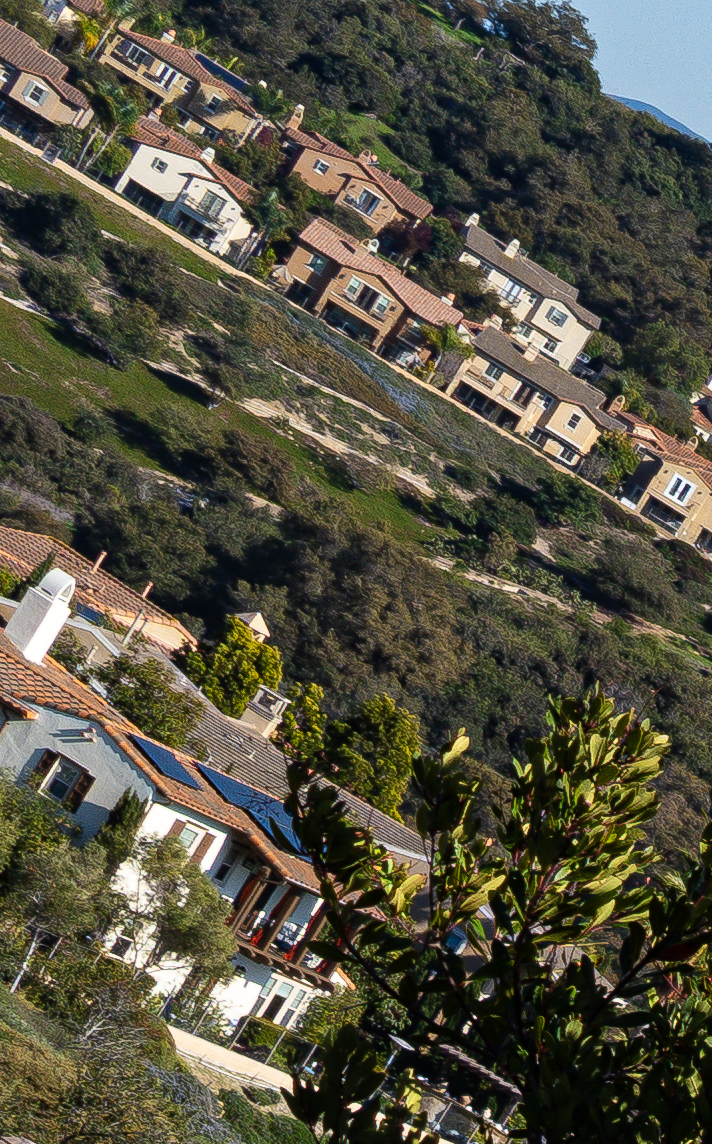
When it comes to lateral chromatic aberration, which typically shows up toward the corners at any aperture, the Simera 28mm f/1.4 ASPH. performs very well. It is not completely free of it, and some correction is still needed in Lightroom, but overall the performance is strong.

From what I have seen across all three Simera lenses I have reviewed so far (the 28mm, 50mm, and 75mm f/1.4 ASPH.), there is a consistent pattern. They deliver a modern rendering with smooth focus transitions and well-controlled chromatic aberration.

Here is a crop from the extreme corner of the frame. Lateral CA is either absent or minimal enough that it does not stand out.


Lateral CA - Uncorrected


Lateral CA - Corrected


Apr 04, 2025 at 03:54 PM
Fred Miranda
Offline
Admin
Upload & Sell: On
p.3 #10 · Thypoch Simera 28mm f/1.4 ASPH. Type II Review


Back to Quick Links

Final Thoughts

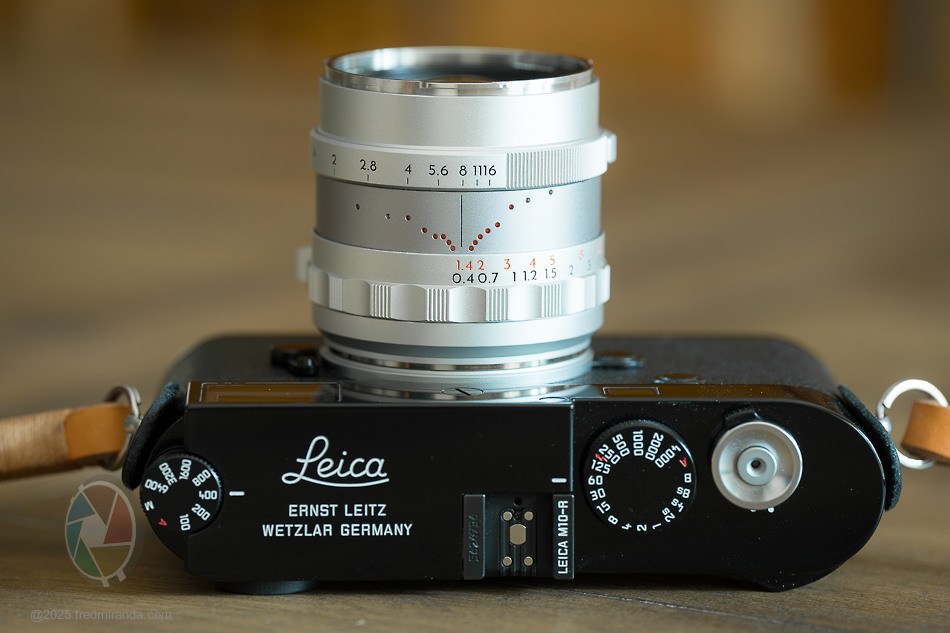
The updated Simera 28mm f/1.4 ASPH., now featuring a focus tab and removing the old infinity lock, brings a set of practical improvements that make it easier to use without altering its core optical formula. It is well-balanced for a fast 28mm lens. Although it is slightly larger than the Voigtlander 28mm f/1.5 Type II brass version, it is lighter thanks to its aluminum build and handles nicely on a Leica M body. It does intrude into the framelines a bit more than the Voigtlander. The lens also adds thoughtful features such as a unique mechanical depth-of-field indicator, a switchable declicked aperture, and internal focusing.

Optically, the Simera leans into a dual-personality character. At f/1.4, it does not deliver critical sharpness but instead offers a softer, smoother look that works well for portraits or low-light scenes. Stopping down to f/2.8 or smaller significantly improves sharpness and contrast, with f/4 emerging as the sweet spot across most of the frame. Compared to the Voigtlander 28mm f/1.5 Nokton, the Simera falls short wide open, particularly in the center and corners, but it closes the gap at smaller apertures. It also performs better when it comes to controlling axial and lateral chromatic aberration and produces slightly warmer color with a slightly wider field of view.

Its 14-blade aperture produces soft, round bokeh highlights when stopped down and creates well-defined sunstars starting at f/4. The aperture blade design clearly favors smooth, rounded bokeh over sharply defined sunstars, though I think it handles both impressively well.. That choice will appeal to photographers who prefer a more seamless and undistracting background. The declicked aperture and smooth mechanical operation also make this lens a solid choice for video work. Distortion is minimal, with only slight waviness that rarely needs correction, and field curvature is well-controlled at infinity focus.

Overall, the Simera 28mm f/1.4 ASPH. stands out for its thoughtful handling, modern features, and gentle rendering style. It is not aimed at those who are chasing edge-to-edge sharpness at f/1.4. It is better suited for photographers who value a lens that blends modern performance with a pleasant draw. In real-world use, especially when stopped down, it delivers excellent results and makes a strong alternative to other fast 28mm options. While the Voigtlander may come out ahead in terms of wide-open resolution and contrast, the Simera offers its own strengths in chromatic aberration control, handling, and versatility that many Leica M shooters will find appealing.


Pros:

• Now includes a focus tab and removes the infinity lock, improving handling.
• Floating design allows high performance even at MFD (0.4m)
• Balances size and weight well for a fast 28mm, especially considering it's f/1.4.
• The 14-blade aperture delivers soft, round highlights even stopped down with smooth background rendering.
• Option to Declick the Aperture is ideal for video users who want smooth exposure transitions.
• Strong performance against axial and lateral chromatic aberrations.
• Low distortion with a slight waviness that rarely needs correction.
• Internal Focusing adds to the lens's modern, refined feel.
• Unique DOF Indicator. While some might prefer a traditional setup, the mechanical depth-of-field scale is a clever addition that actually works well for zone focusing, especially on a 28mm lens.


Cons:

• Inconsistent spacing between aperture markings.

• Varying stop increments, transitioning from 1/3 to 1/2 to 1 full stop on small apertures.

• Not critically sharp at f/1.4 wide open, especially off-axis.
• Frameline Intrusion: Slightly larger size leads to more intrusion in the M body’s 28mm framelines than the Voigtlander.
• Corners aren't as sharp at wide apertures.


Apr 04, 2025 at 04:22 PM


Search in Used Dept. 

wastedimages
Offline
• •
Upload & Sell: Off
p.3 #11 · Thypoch Simera 28mm f/1.4 ASPH. Type II Review


Thanks for this @fredmiranda, it might be your most timely (for me) review ever. I know it is alot of work but it is appreciated as you have helped steer my choice, I was just waiting for this review to complete before deciding.


Apr 06, 2025 at 03:37 AM
Tariq Gibran
Offline
• • • • • •
Upload & Sell: Off
p.3 #12 · Thypoch Simera 28mm f/1.4 ASPH. Type II Review


Fred Miranda wrote:
It's the same optical formula you mentioned, with two main changes: the addition of a focus tab and the removal of the infinity lock. Therefore, only cosmetic changes.


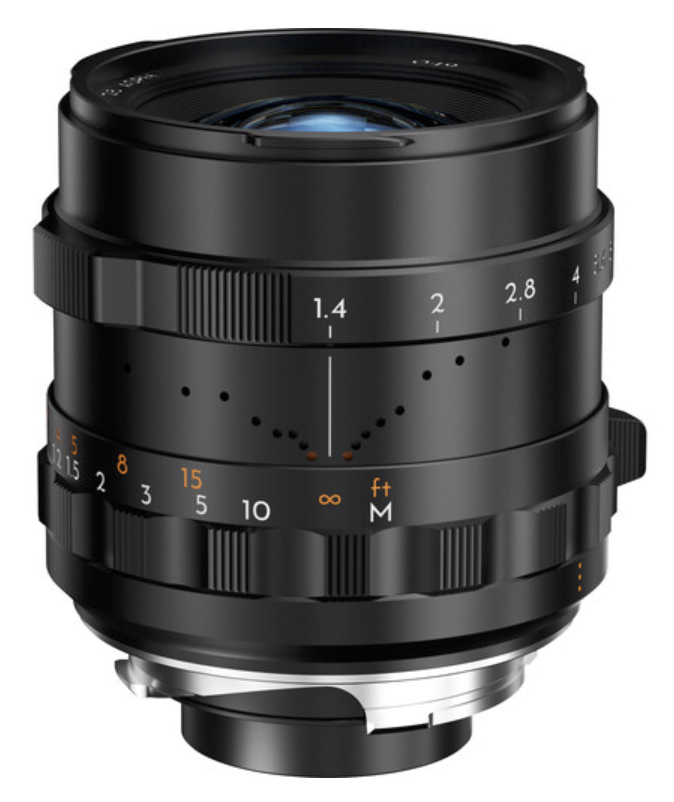
It appears that an additional cosmetic difference between the original version and the Type II is that on the black version, the original has a bright chrome nose while the updated Type II has a more discrete all black nose. Just noticed this in looking at the images of both black versions.

Edit - Just received my copy of a black version Type II and the nose is actually chrome, not black. B&H show it to be black on their website. Weird!


Thypoch 28 Type II black nose as shown on B&H


Apr 06, 2025 at 08:01 AM
Fred Miranda
Offline
Admin
Upload & Sell: On
p.3 #13 · Thypoch Simera 28mm f/1.4 ASPH. Type II Review


Back to Quick Links

Samples 4

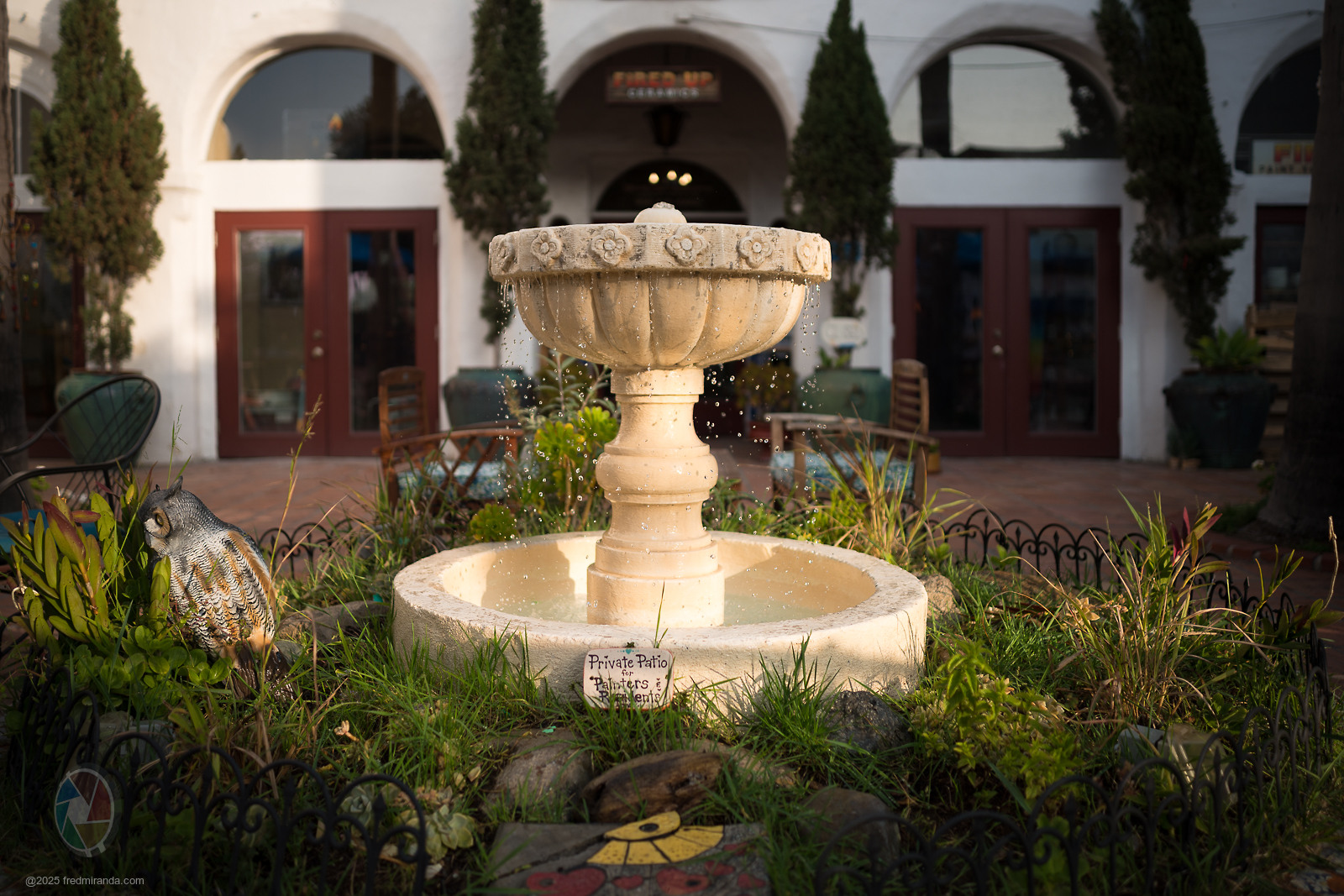
A selection of images shot wide open at f/1.4 at mostly close distances and MFD.

The images have minimal processing, with added sharpening and the Adobe Standard or Adobe Color profile applied.


  LEICA M11    Simera 28mm f/1.4 ASPH. lens    28mm    1/2000s    100 ISO    0.0 EV  


  LEICA M11    Simera 28mm f/1.4 ASPH. lens    28mm    1/1250s    100 ISO    0.0 EV  


  LEICA M11    Simera 28mm f/1.4 ASPH. lens    28mm    1/1600s    100 ISO    0.0 EV  


  LEICA M11    Simera 28mm f/1.4 ASPH. lens    28mm    1/640s    100 ISO    0.0 EV  


  LEICA M11    Simera 28mm f/1.4 ASPH. lens    28mm    1/320s    100 ISO    0.0 EV  


Apr 08, 2025 at 11:35 AM
Fred Miranda
Offline
Admin
Upload & Sell: On
p.3 #14 · Thypoch Simera 28mm f/1.4 ASPH. Type II Review


Tariq Gibran wrote:
It appears that an additional cosmetic difference between the original version and the Type II is that on the black version, the original has a bright chrome nose while the updated Type II has a more discrete all black nose. Just noticed this in looking at the images of both black versions.

Edit - Just received my copy of a black version Type II and the nose is actually chrome, not black. B&H show it to be black on their website. Weird!


That's definitely odd that B&H Photo doesn't show a chrome nose. Maybe Thypoch originally planned that design and later changed direction? I wasn't aware of this detail since I reviewed the silver version. Thypoch's website still shows the earlier model without the focus tab, so it seems the black version still has the chrome lens nose. Thanks for the heads-up!


Apr 08, 2025 at 11:44 AM
Tariq Gibran
Offline
• • • • • •
Upload & Sell: Off
p.3 #15 · Thypoch Simera 28mm f/1.4 ASPH. Type II Review


Fred Miranda wrote:
That's definitely odd that B&H Photo doesn't show a chrome nose. Maybe Thypoch originally planned that design and later changed direction? I wasn't aware of this detail since I reviewed the silver version. Thypoch's website still shows the earlier model without the focus tab, so it seems the black version still has the chrome lens nose. Thanks for the heads-up!


Yes, it will be interesting to see how this plays out. My guess would be either as you suggest and the B&H images are from a prototype/ mock-up OR Thypoch will slowly transition to an all black nose in which case we would have early chrome nose versions and later black nose versions. The fact that the last two M releases from Thypoch - the 50 and 75 - do not have chrome nosed black versions would somewhat give weight to eventually seeing the black nose on the 28 Type II.


Apr 08, 2025 at 11:59 AM
philip_pj
Offline
• • • • • •
Upload & Sell: On
p.3 #16 · Thypoch Simera 28mm f/1.4 ASPH. Type II Review


A short analysis of DZO/Thypoch's aperture setting layout, as seen in this 28/1.4. From f1.4 to f5.6 there are one third stop increment detents, nicely rather soft and quiet in my copy. Half stop detents separate f5.6 from f8. Full stop detents indicate f11 and f16.

From f1.4 to f5.6 the degree of rotation between detents is progressively decreased to minimise overshoot error at the more important wider settings, and to provide greater visual separation to the wider aperture numbers. The number of detents is thus reduced across the aperture range - for example, there are 15 detents from the f1.4 index to the f11 index, but with 1/3 stop detents there are 18 detents.

The progressively smaller number of between-stop detents with increased apertures indicates the greater importance of the wider apertures and this aspect is shown as a gradation, as a graduated effect.

The entire display is abbreviated as compared with regular practice, with two important effects: less rotation is needed to reach any mid-small aperture from the wider settings; and the full display can be seen with the index line on f2.

The stop indexes are short (1.5mm) white lines shown on the camera side of each stops text. The reference index is a long (10cm) and very visible white that the user aligns with the desired stop index. There are no extraneous markings or lettering in front of or behind the display to interfere with the visual verification of exactly where the aperture is set even in low light. Only the muted vintage dot DOF array.

This is the logic of the system, in a lens that lacks contacts to provide display information in the EVF. It works with remarkable effectiveness and efficiency, and provides both haptic and psychological cues and feedback. Little wonder DZO also use it in their cine lens ranges.


Apr 08, 2025 at 08:40 PM
philip_pj
Offline
• • • • • •
Upload & Sell: On
p.3 #17 · Thypoch Simera 28mm f/1.4 ASPH. Type II Review


The focus tab (presumably the same as used on other mounts) is mounted such that when at rest at its lowest point, the distance scale shows exactly two metres, and the entire distance scale can be seen, 50% of it on either side of the reference index mark. Rotating the focus ring in either direction pushes it to its two stops with the tab at around 45 degrees from its resting position. The tab has a generous finger indent and is easy to use.


Apr 08, 2025 at 09:18 PM
jbcameradesigns
Offline
• •
Upload & Sell: On
p.3 #18 · Thypoch Simera 28mm f/1.4 ASPH. Type II Review


I’m so impressed by the build quality and rendering of the Simera lenses. I picked up the new version II of the 28mm f/1.4 to shoot alongside the 50mm Simera. Here’s a couple test shots of my oldest daughter with my recently acquired M262 from the Buy & Sell board.


Apr 10, 2025 at 06:33 PM
Nick YR
Offline

Upload & Sell: Off
p.3 #19 · Thypoch Simera 28mm f/1.4 ASPH. Type II Review


Nice pics! So is the 28mm Simera really having warmer cast in the rendering vs the Nokton?


Apr 10, 2025 at 07:35 PM
Tariq Gibran
Offline
• • • • • •
Upload & Sell: Off
p.3 #20 · Thypoch Simera 28mm f/1.4 ASPH. Type II Review


Question for all that own this lens or have used it - either the version I or II...how loose (as in the amount of effort required to turn the focus ring) and smooth (non-binding) do you find the focusing with this lens? If you could compare it to either the Simera 50 1.4 or the Voigtlander 28 2.0 II, do you find it tighter or similar?

The copy I received of the Type II Simera 28 1.4 requires much more effort to turn the focus ring than either of the above two lenses for me. I was expecting the looseness/ silkiness of the Simera 50 1.4 focus ring but my copy of the Simera 28 1.4 is much tighter and requires too much effort to turn imo.


Apr 13, 2025 at 08:36 AM
1       2              4              6       7       end


FM Forums | Sony Forum | Join Upload & Sell

1       2              4              6       7       end


Welcome back
Log in to your account