Fred Miranda
Offline
Admin
Upload & Sell: On
|
 p.1 #1 · Thypoch Simera 28mm f/1.4 ASPH. Type II Review p.1 #1 · Thypoch Simera 28mm f/1.4 ASPH. Type II Review | |
Order the Thypoch Simera 28mm f/1.4 ASPH. lens:
Thypoch Store (Use promo code: FREDMIRANDA for a 5% discount at checkout)
B&H Photo
___
Review Quick Links:
- Initial Impressions
- Resolution and Contrast at Infinity distance (60MP)
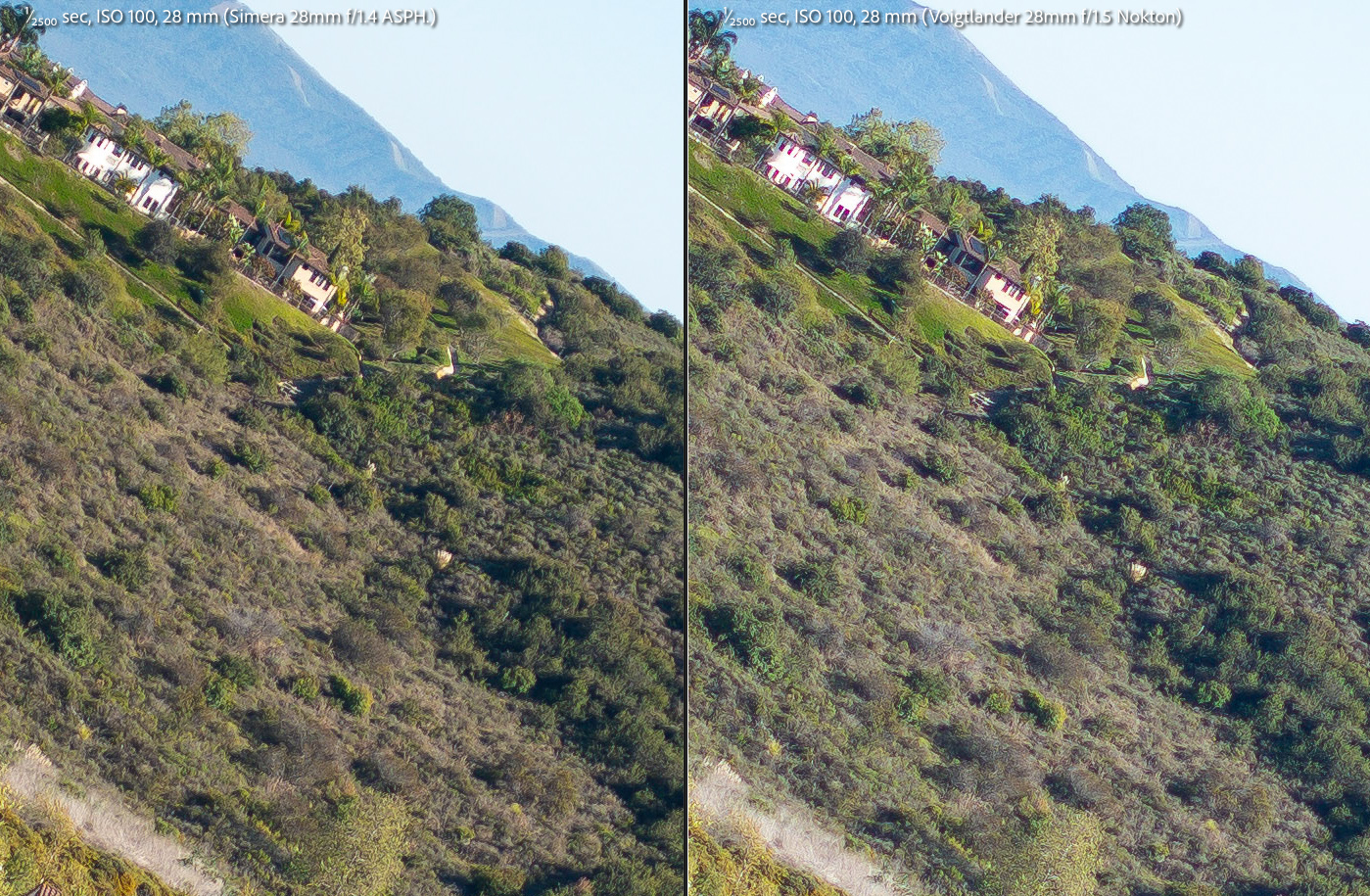
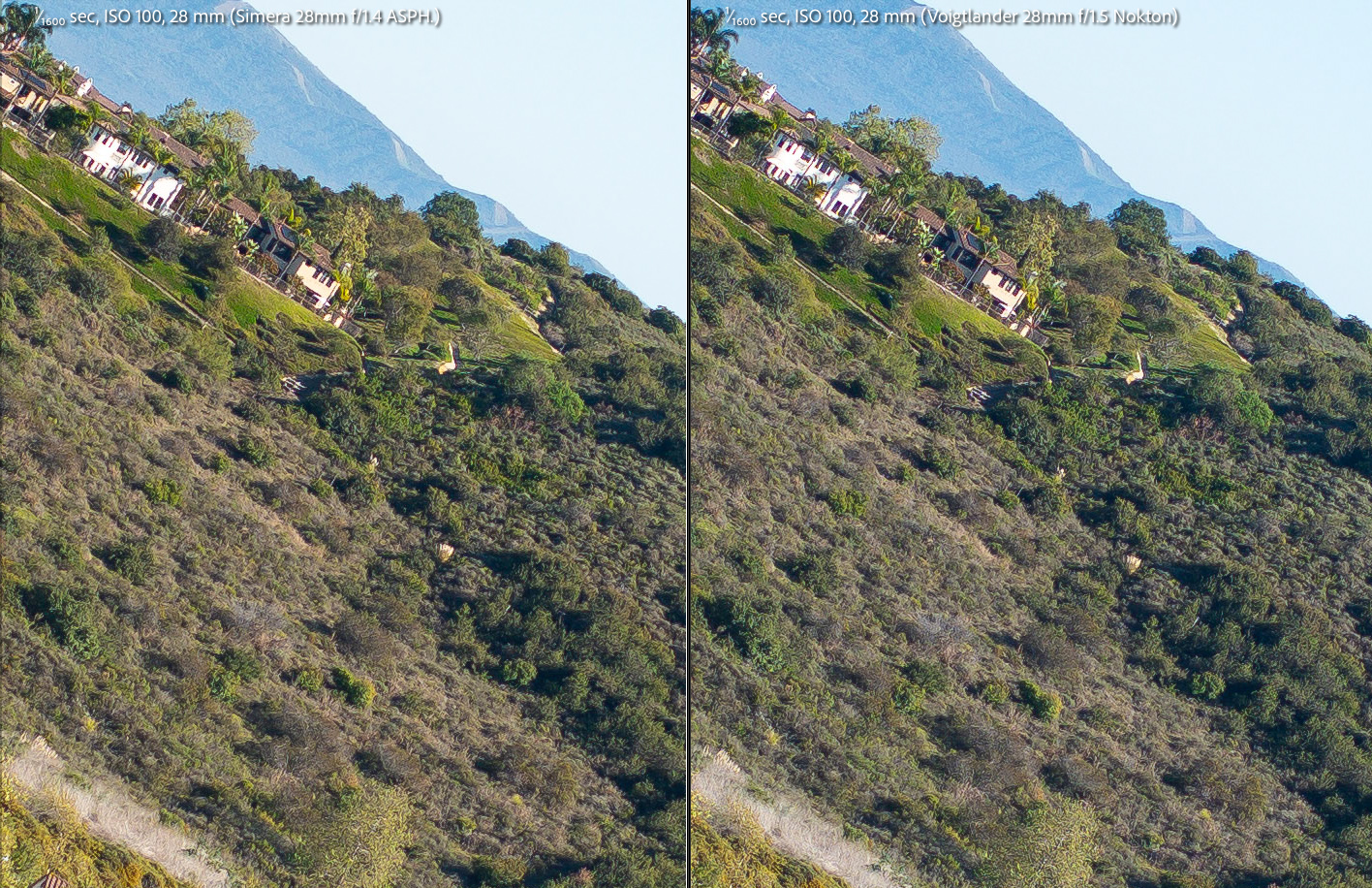
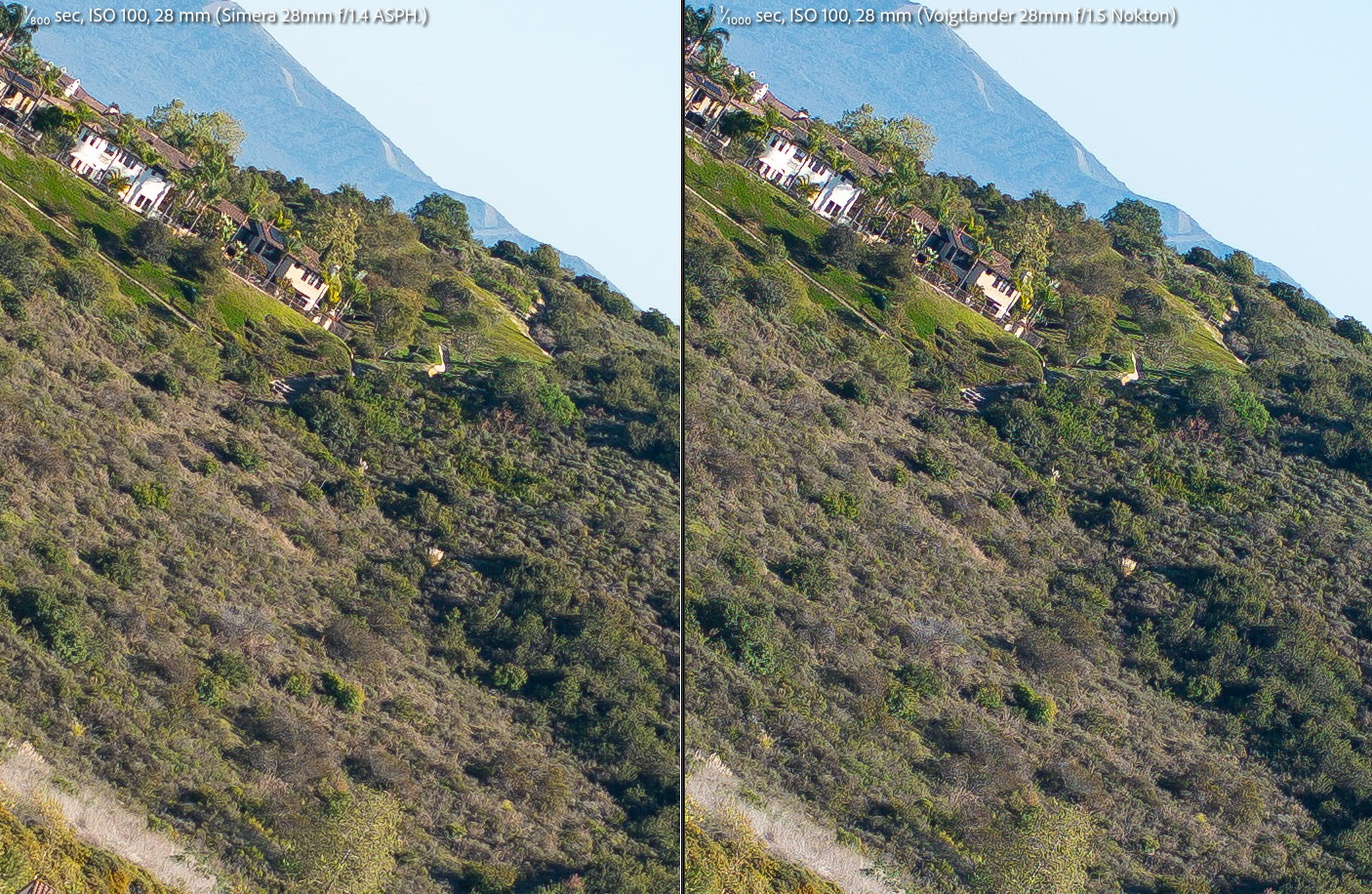
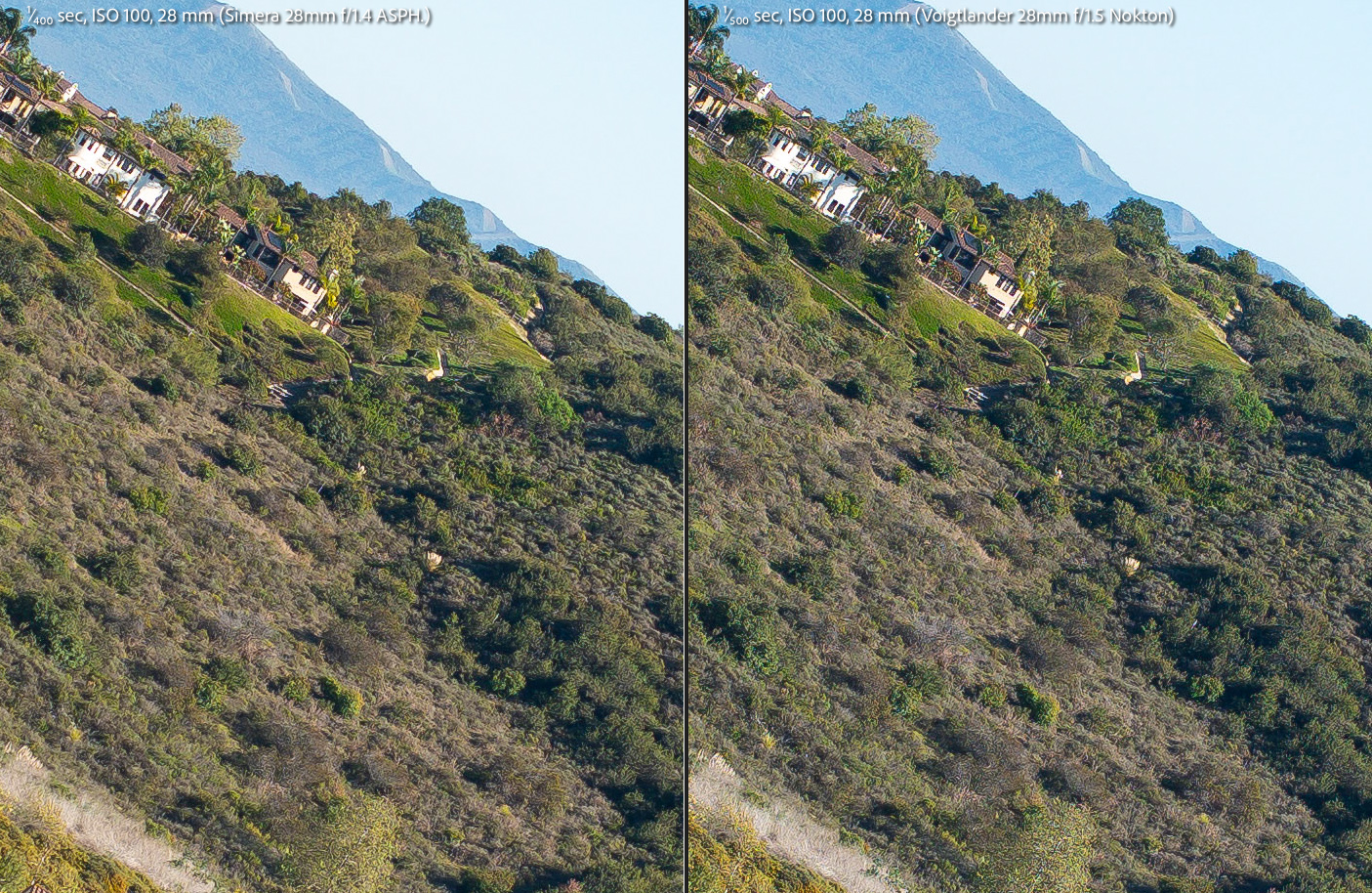
- Resolution and Contrast at Infinity distance: Simera 28mm f/1.4 vs Voigtlander 28mm f/1.5 Nokton (60MP)
- Sunstar Rendering
- Field Curvature
- Distortion
- Minimal Focus Distance performance
- Rendering compared to Voigtlander 28mm f/1.5 Nokton ASPH.
- Optical Vignetting and Specular Highlights shape
- Chromatic Aberration (CA)
- Final Thoughts
- Samples 1
- Samples 2
- Samples 3
- Samples 4
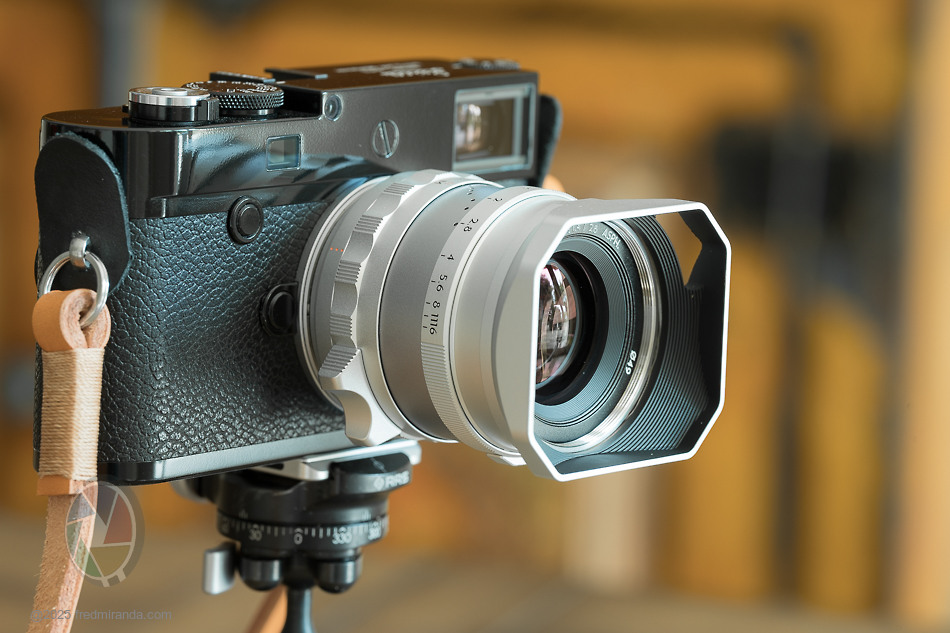
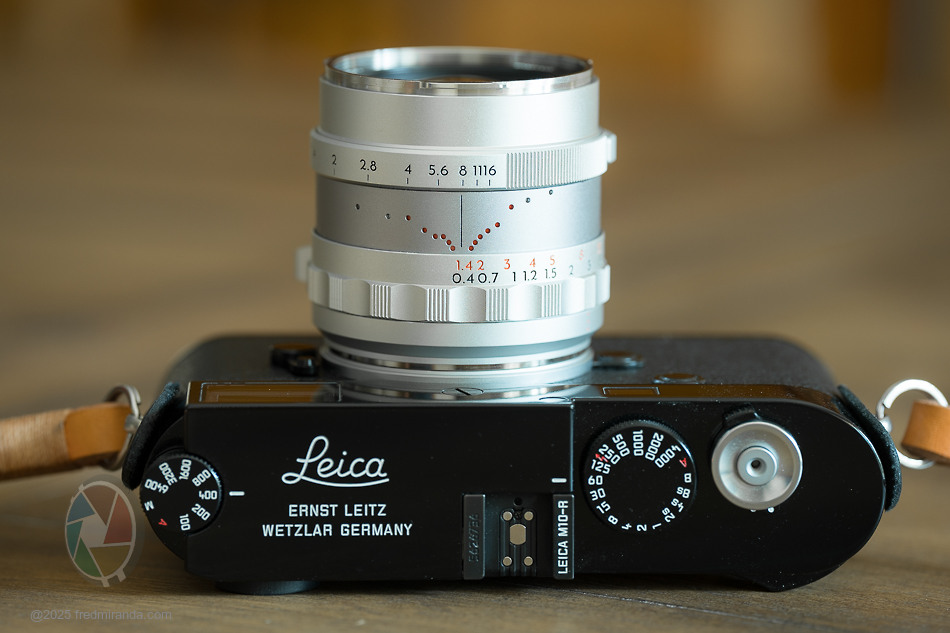
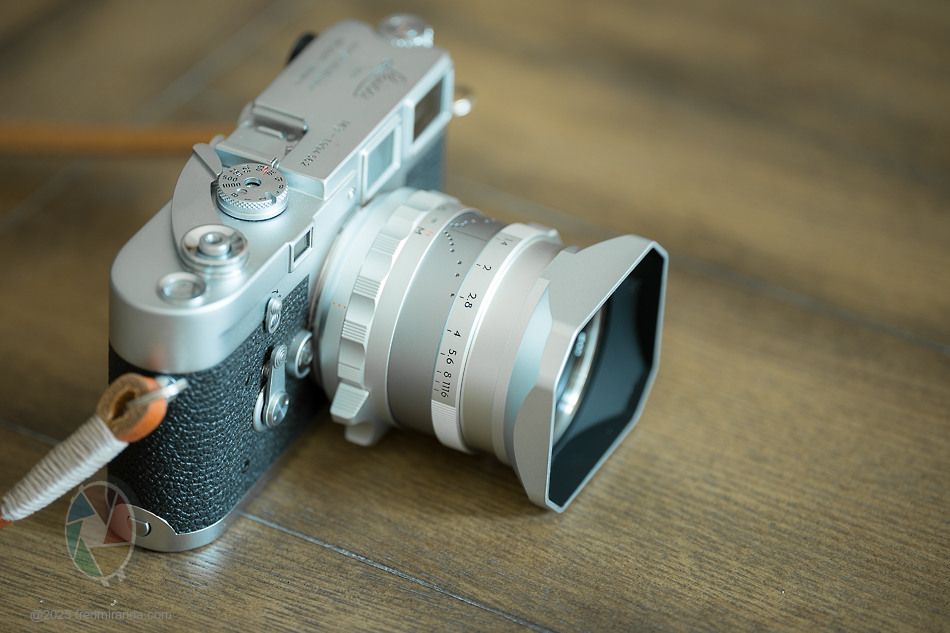
Leica M10-R paired with the Simera 28mm f/1.4 ASPH. lens with included hood
Back to Quick Links
Initial impressions of the Thypoch Simera 28mm f/1.4 ASPH. lens:
I'm reviewing the updated version of the Simera 28mm f/1.4 ASPH. (Type II), which now includes a much-requested focus tab and has removed the infinity 'lock' that was present in the original version of the lens. The packaging refers to it as the "Focus Tab Version."
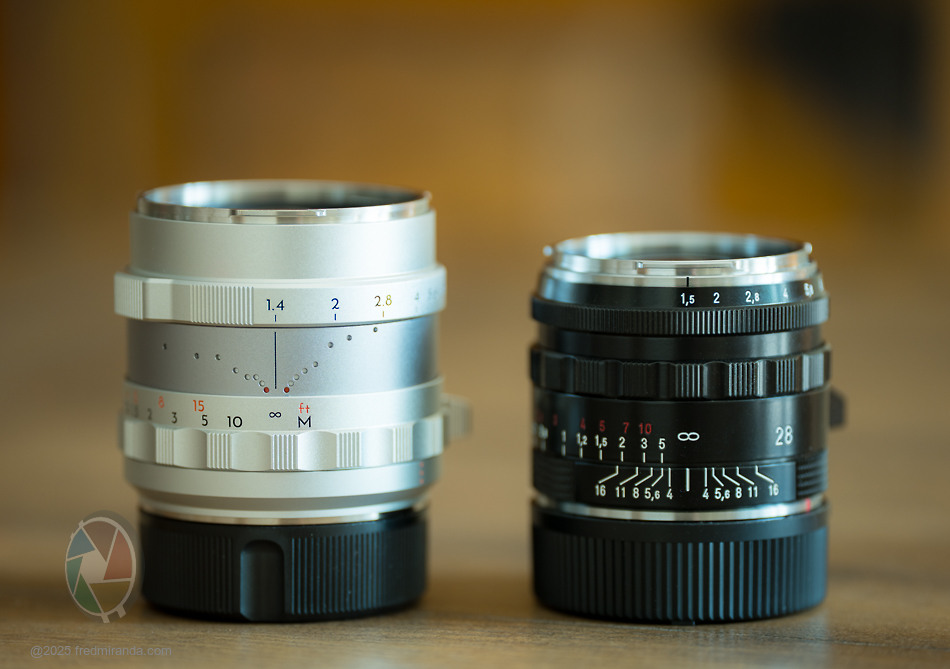
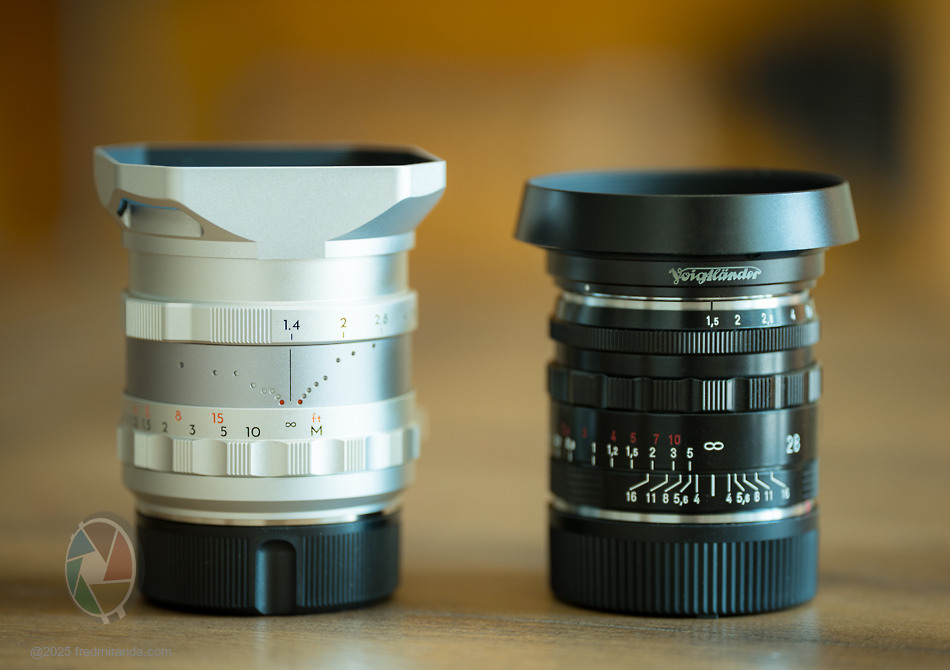
My first impression of the Simera 28mm f/1.4 ASPH. is its surprisingly lightweight design for a fast 28mm lens, coming in at 326 grams without the supplied metal hood. This matches the weight of the Voigtlander 28mm f/1.5 Nokton Type II, which I'll be discussing in this review. The key difference is that the Simera has an aluminum barrel, while the Voigtlander Type II features a brass barrel. Voigtlander also offers a lighter Type I version with an aluminum barrel, which I previously reviewed, weighing just 250 grams.
Although the Simera is noticeably larger than the Voigtlander, both lens versions compared in this review have a similar weight. As a result, the Simera, while slightly bigger, feels well-balanced when mounted on the Leica M body. However, it does encroach a bit more on the 28mm framelines at infinity compared to the Voigtlander. At the minimum focusing distance, the Simera covers a small portion of the lower right corner of the frame, which is typical for a fast 28mm f/1.4 lens. In comparison, the Voigtlander 28mm f/1.5 Nokton ASPH. also protrudes slightly into the frame but does so less due to its shorter and thinner barrel.
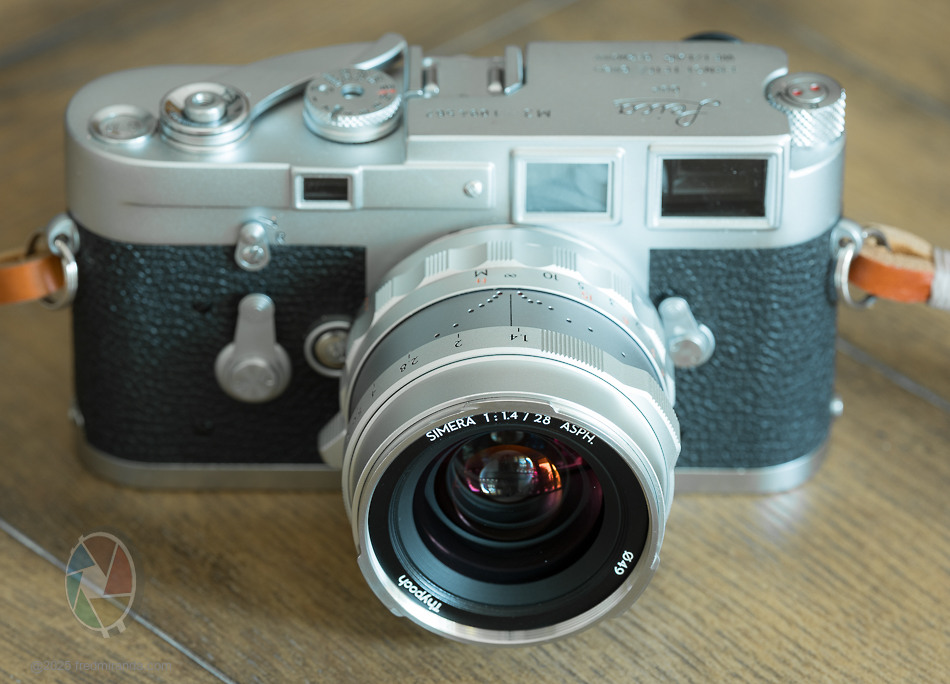
The Simera 28mm f/1.4 ASPH., available in Black and Silver finishes, shares a 49mm filter diameter with the 35mm and 50mm versions, but stands out with a unique minimum focusing distance of 0.40m for Live View focusing. It also features a floating element design and a switch to declick the aperture, making it a great choice for video shooters.
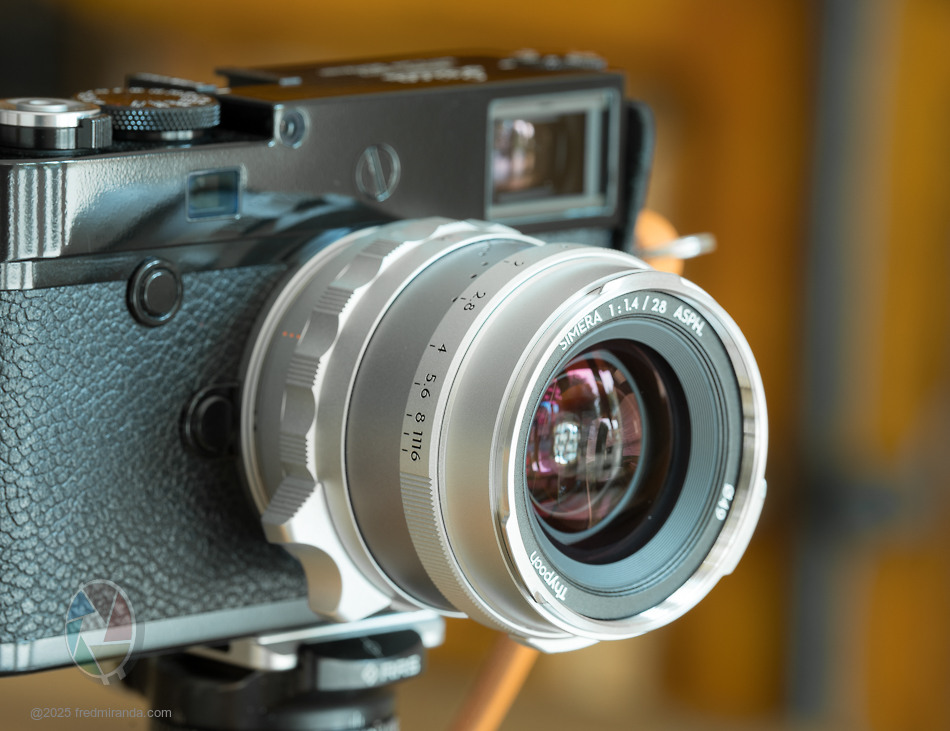
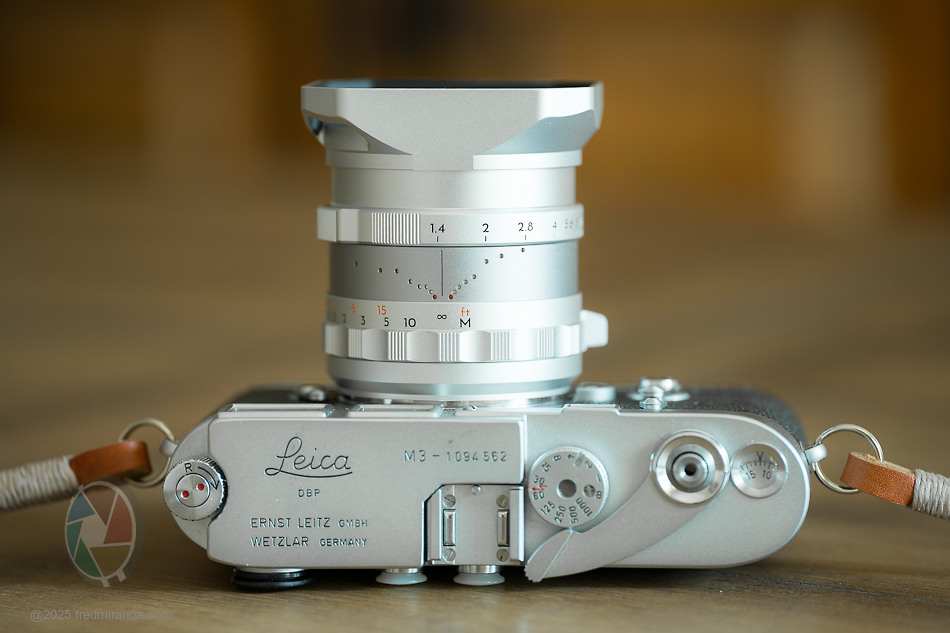
Leica M10-R paired with the Simera 28mm f/1.4 ASPH. lens without hood
The Simera 28mm f/1.4 ASPH. features 14 aperture blades, and as we'll see in my tests, it creates distinct 14-point sunstars starting at f/4. Its aperture shape remains much more circular when stopped down compared to the Voigtlander, which has 12 straight aperture blades. This means you can expect more rounded specular highlights when using the Simera at smaller apertures.
In this review, I'll be comparing the design, characteristics, and performance of the Simera 28mm f/1.4 ASPH. with the Voigtlander 28mm f/1.5 Nokton lens. The Simera 28mm f/1.4 presents strong competition not only to the Voigtlander but also to the Leica 28mm f/1.4 Summilux. Since the Voigtlander 28mm f/1.5 Nokton renders similarly to the Leica, as highlighted in my previous review, this comparison will offer insight into how the Simera measures up against the Leica.
Simera 28mm f/1.4 ASPH. versus Voigtlander 28mm f/1.5 Nokton without and with hood
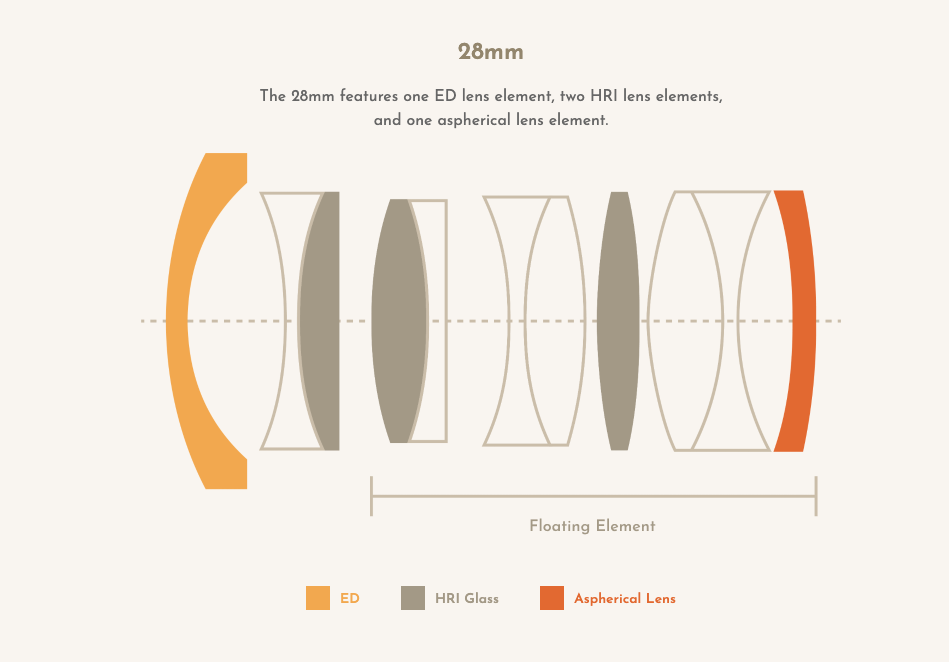
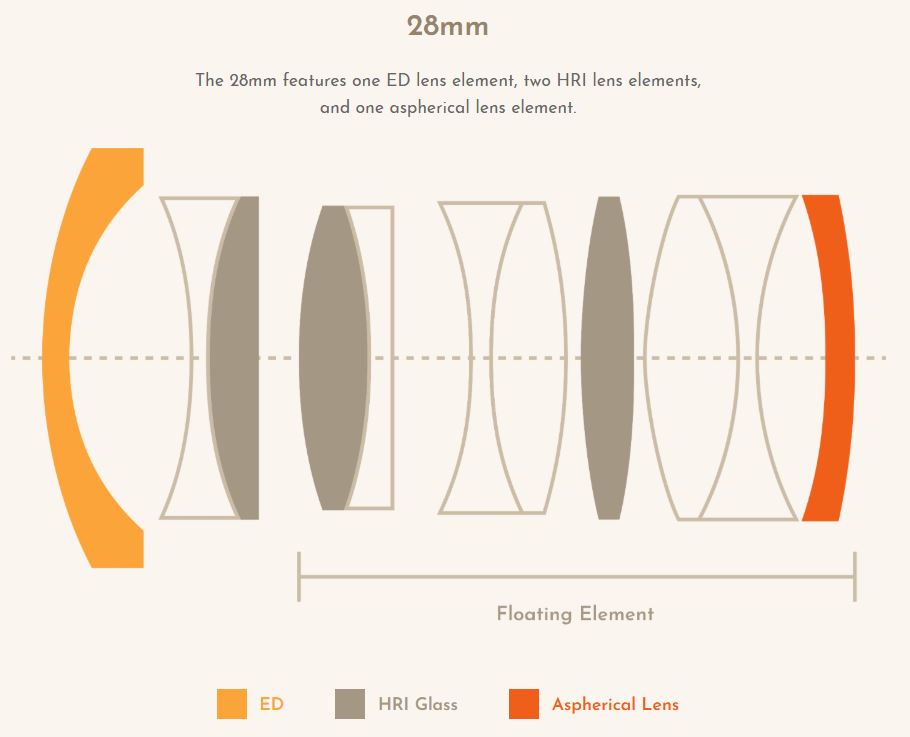
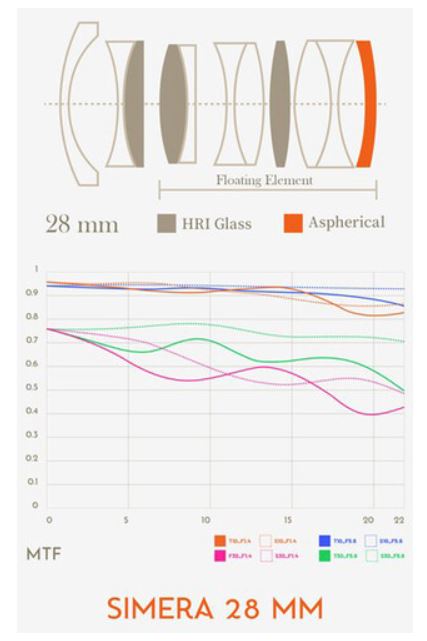
The Simera 28mm f/1.4 ASPH. lens is made up of 11 elements arranged in 7 groups, including one extra-low dispersion element, one aspherical element, and three high-refractive index glass elements.
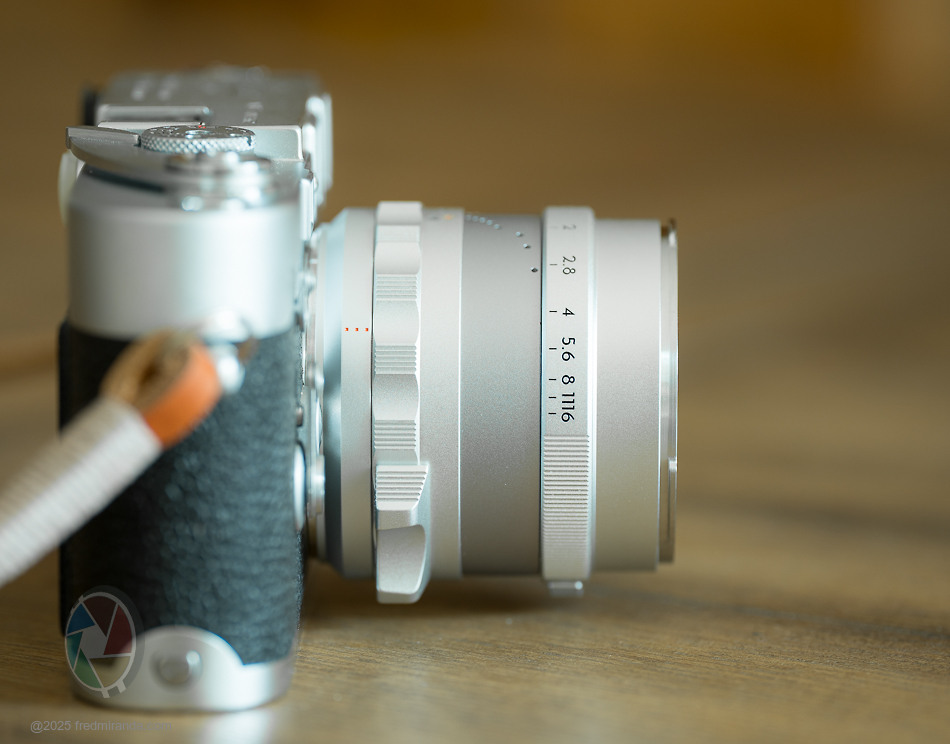
The focusing ring on the Simera lens rotates smoothly, offering just the right amount of resistance. A standout feature, similar to the Simera 50mm f/1.4 ASPH. that I reviewed previously, is that the Simera 28mm also uses internal focusing. This means the lens doesn't extend when you adjust the focusing ring, unlike the Voigtlander, where the barrel extends when focusing closer.
Simera 28mm f/1.4 ASPH. lens' barrel does not extend at 0.4m MFD
The aperture ring on the Simera 28mm is designed with 1/3 stop increments, similar to the Zeiss ZM lenses. The clicks are more distinct compared to the Simera 50mm f/1.4, with firmer feedback on the 28mm, preventing the ring from rotating too freely. As you adjust from larger to smaller apertures, the numbers on the barrel get progressively closer together, which I personally find less appealing than lenses with more consistent spacing between markings. Also the aperture increments are 1/3 stops up to f/5.6, then shift to 1/2 stops from f/5.6 to f/8, and finally switch to full stops from f/8 to f/16. While this variation might be due to the barrel design and its mechanical depth-of-field indicator, it's not ideal for those who prefer consistent spacing throughout the range.
The aperture numbers on the barrel get progressively closer together
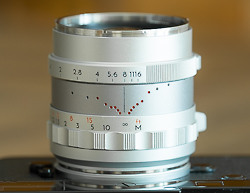
The depth-of-field indicator on the Simera lens is an innovative feature, with small open vents on the barrel that change color as you adjust the aperture. Depending on the lens color, these vents transition from silver or black to red, clearly indicating the area that will be in focus. This fully mechanical approach offers a refreshing alternative to traditional depth-of-field indicators used for zone focusing. It's particularly useful with the 28mm lens, as the depth of field is wider compared to the narrower fields of view found on longer lenses like the 50mm and 75mm, making this indicator more practical.
Innovative feature, with small open vents on the barrel that change color as you adjust the aperture
Another standout feature is the ability to easily de-click the aperture by simply flipping a switch on the aperture ring. This allows for smooth and silent adjustments, which is especially beneficial for videographers who require seamless transitions between aperture settings.
The focus throw on the Simera lens is relatively short, with a 90-degree rotation from 0.7 meters to infinity, and a slightly longer throw at its minimum focusing distance of 0.4 meters. This is typical of modern M-lenses and allows for quick, precise focusing at different distances. For comparison, the Voigtlander 28mm f/1.5 Nokton also has a 90-degree throw but features a slightly longer minimum focusing distance of 0.5 meters.
The Simera includes a tactile alert that signals when the rangefinder disengages, letting you know that Live View will be required for focusing beyond that point. This is a unique feature of the Simera, as the Voigtlander 28mm f/1.5 Nokton lacks this function. It's encouraging to see newer lenses incorporate such useful features. However, when focusing at close distances, be mindful that the focusing ring is quite sensitive, reacting to even the slightest movement.
Personally, I prefer lenses with a longer focus throw for greater precision, as even minor adjustments on both the Simera and Voigtlander can easily cause the subject to go out of focus. While this design allows for accurate focusing, it requires extra attention and careful adjustment to ensure proper alignment between the camera and rangefinder. Fortunately, my copy is well-centered and aligned with my Leica rangefinder cameras, making focusing accurate and performance optimal.
Thypoch Simera 28mm f/1.4 ASPH. Specifications:
- Focal Length 28mm
- Maximum Aperture f/1.4
- Minimum Aperture f/16
- Lens Mount Leica M
- Angle of View 75°
- Minimum Focus Distance 0.40m (0.7m rangefinder coupled)
- Maximum Magnification ratio: 1:12.8
- Optical Design 11 Elements in 7 Groups
- Special glass: 1 ED and 1 Aspherical element, 3 HRI
- Diaphragm Blades 14
- Filter Size 49 mm
- Dimensions (ø x L) φ59 x 55 mm
- Weight: 326g without hood (measured)
- Metal hood included (bayonette style)
- Finishes: Aluminum anodized Black, Silver
|