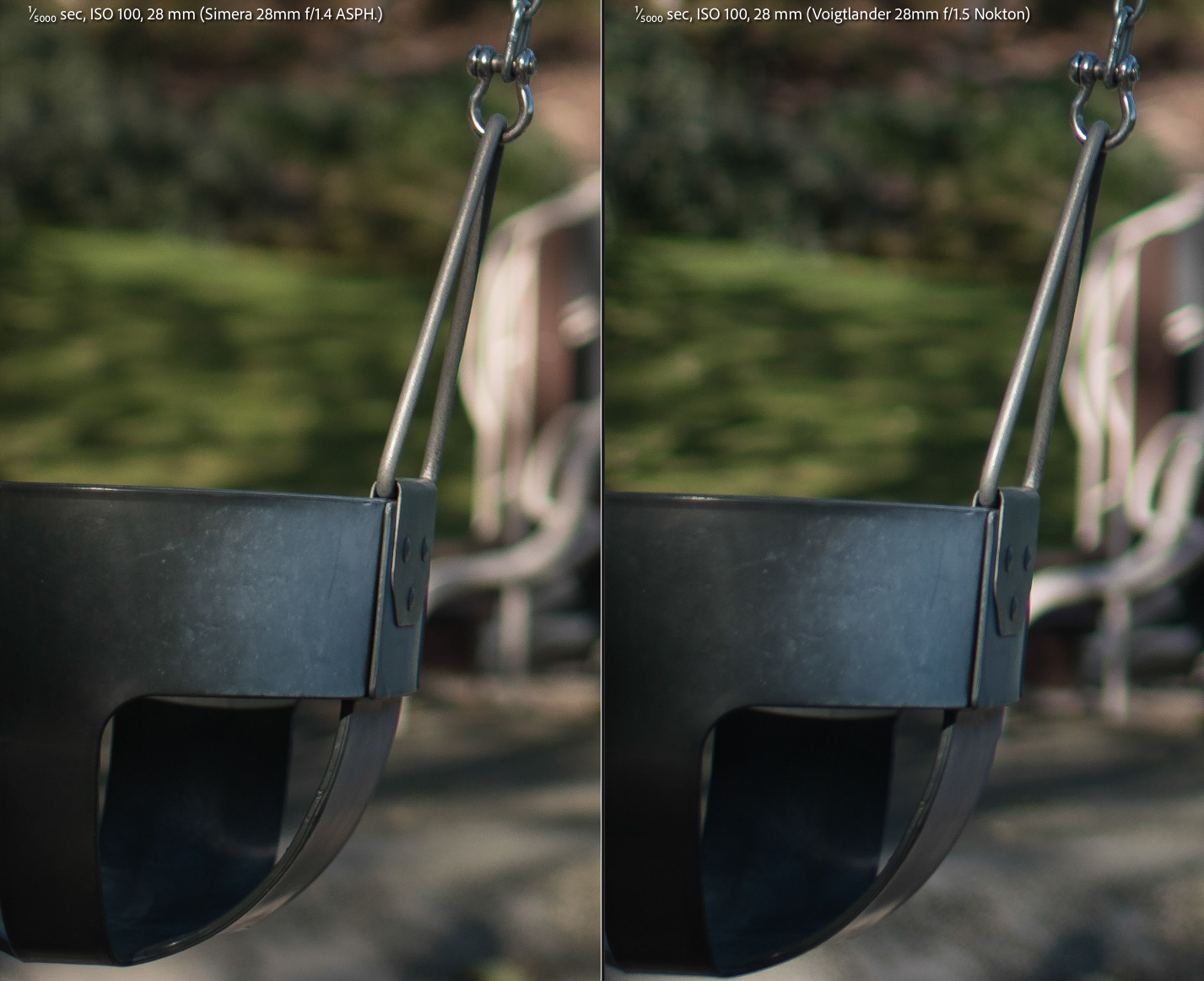
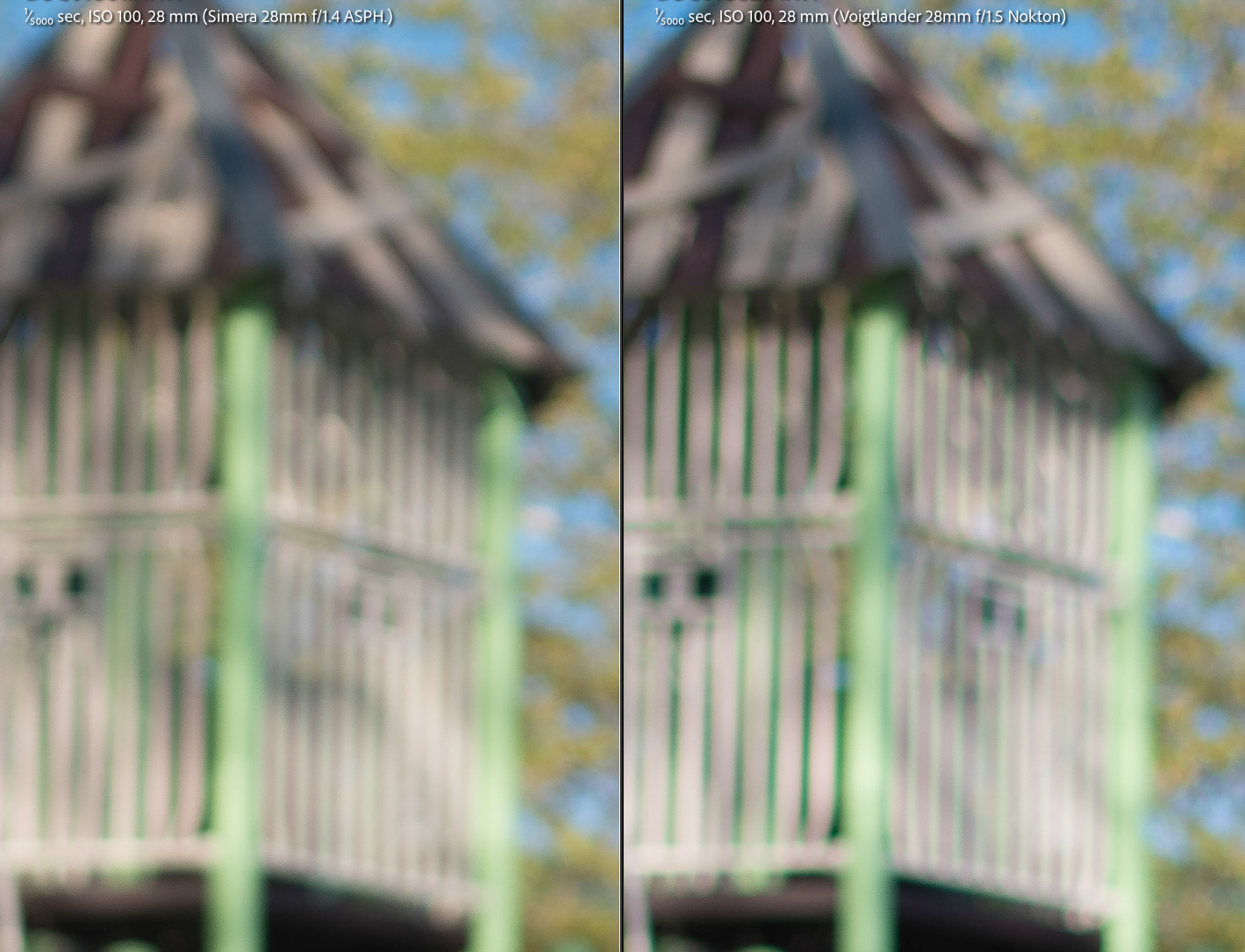
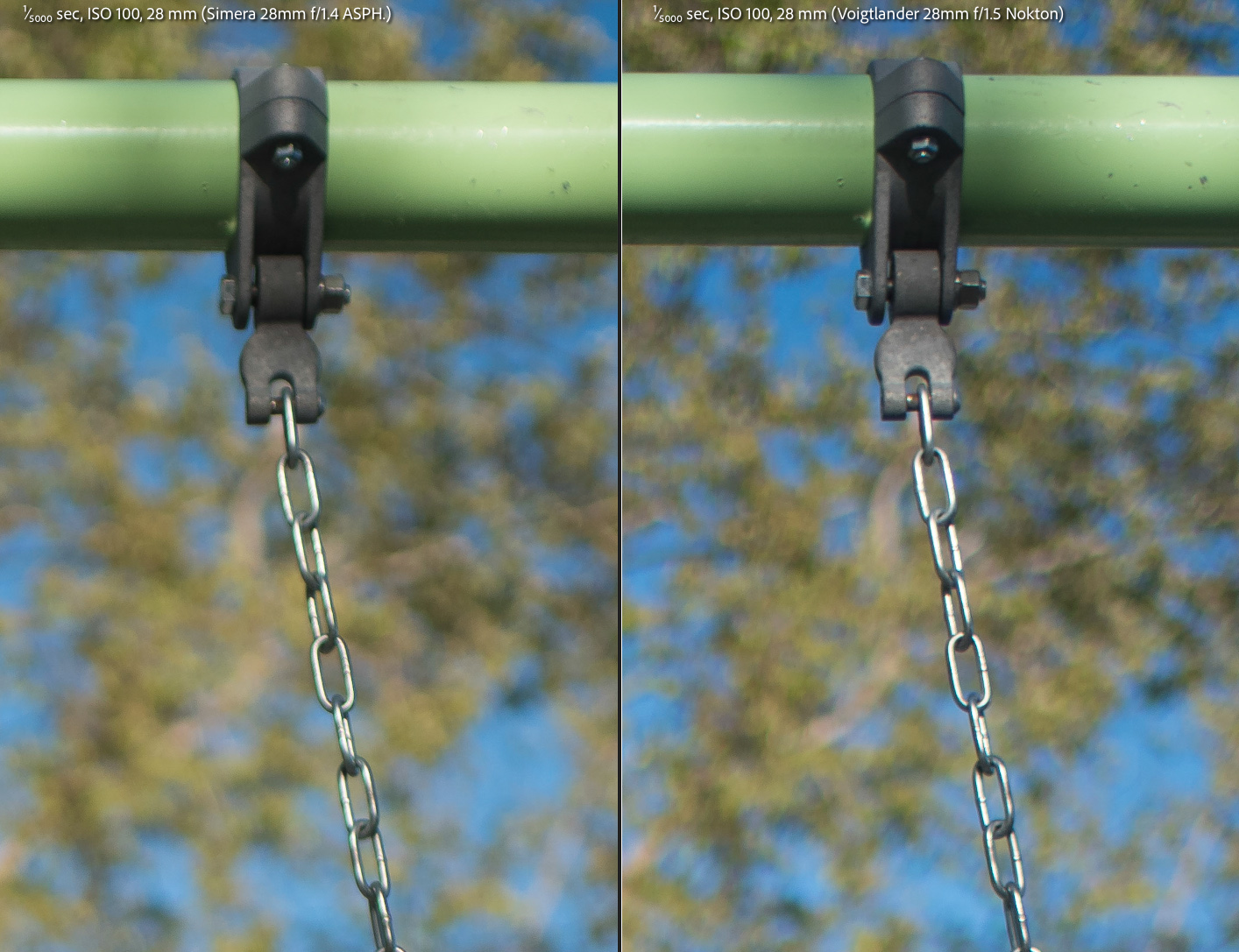
p.2 #1 · Thypoch Simera 28mm f/1.4 ASPH. Type II Review
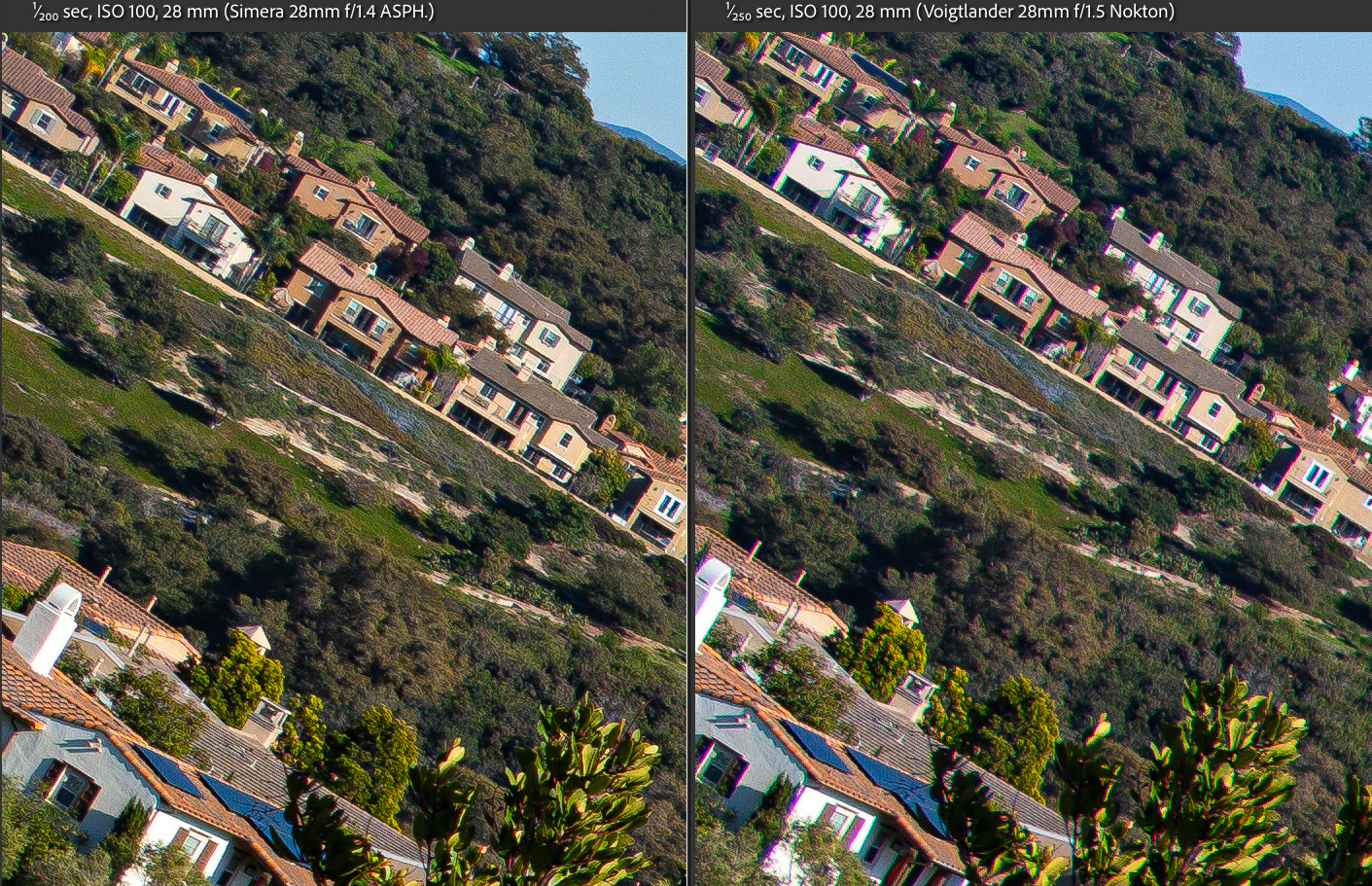
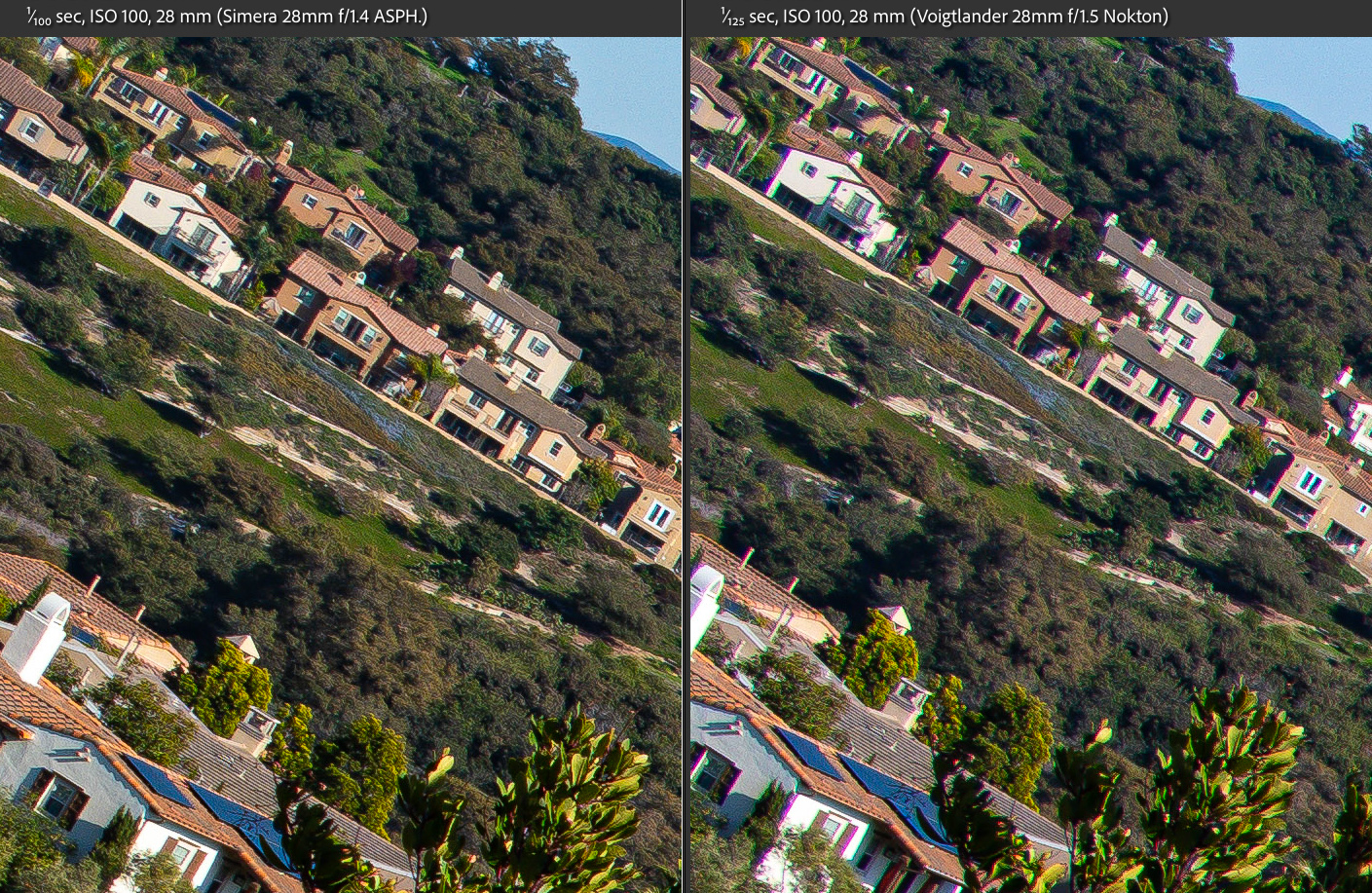
Extreme Corner Resolution and Contrast
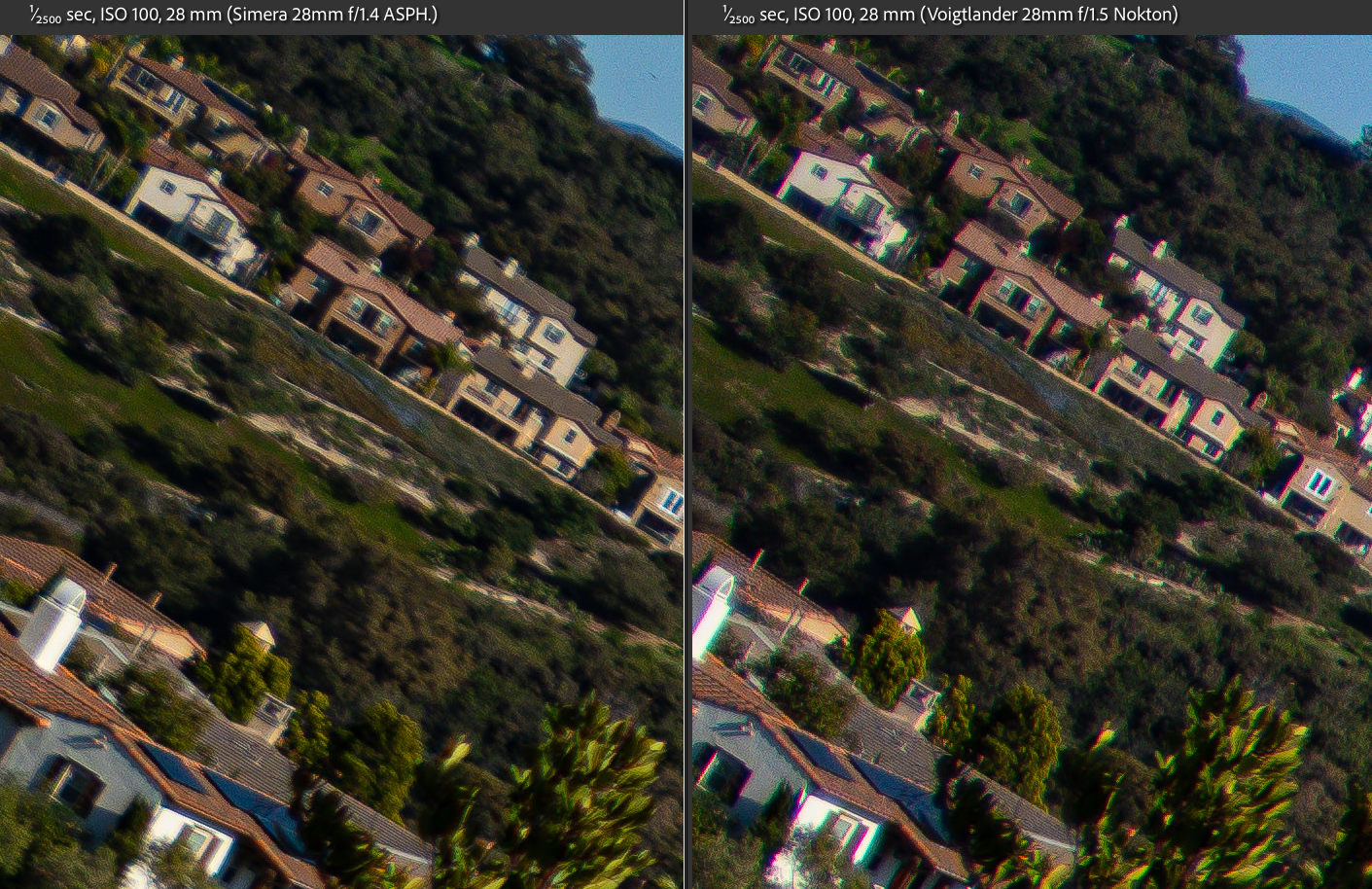
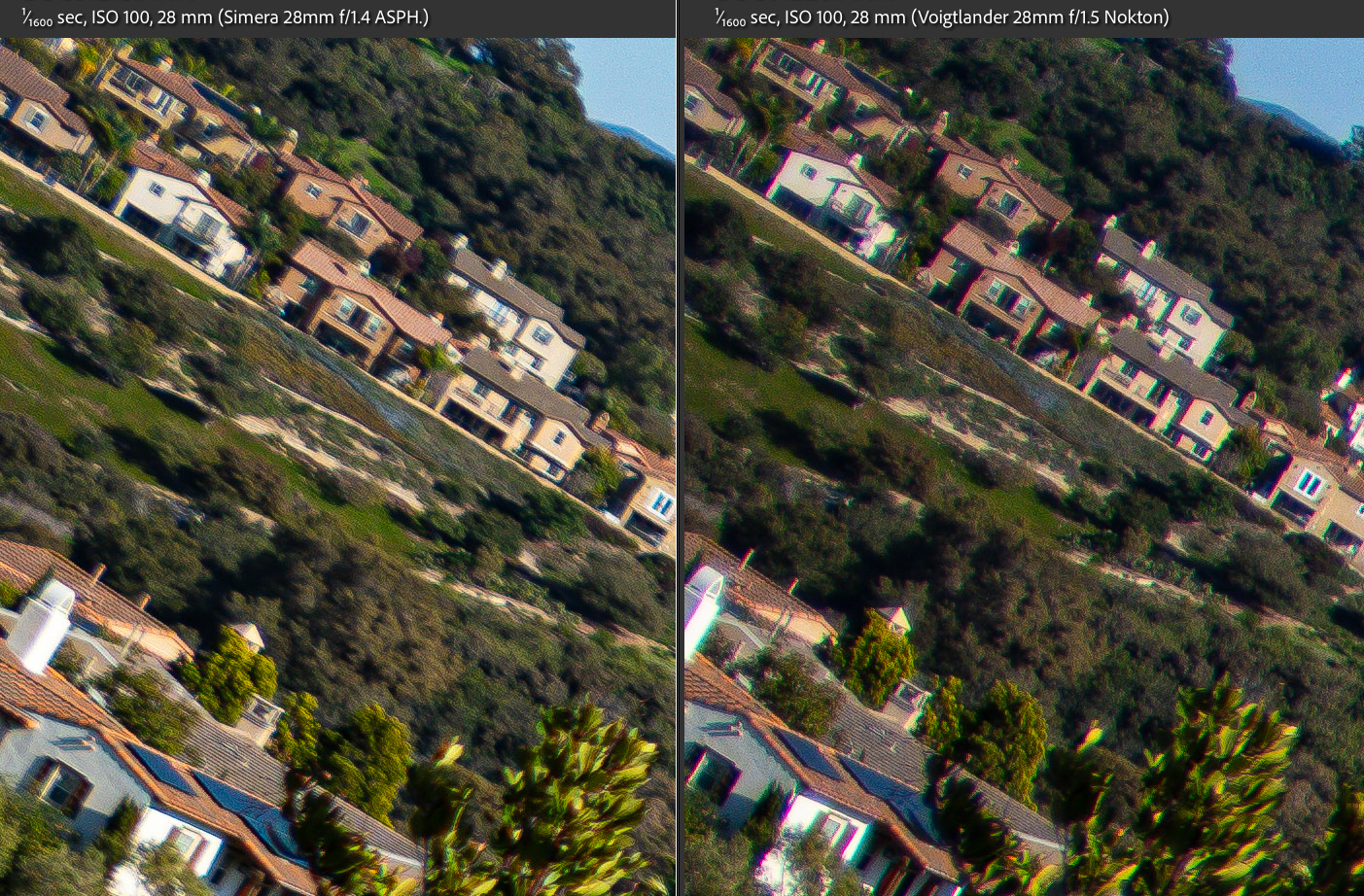
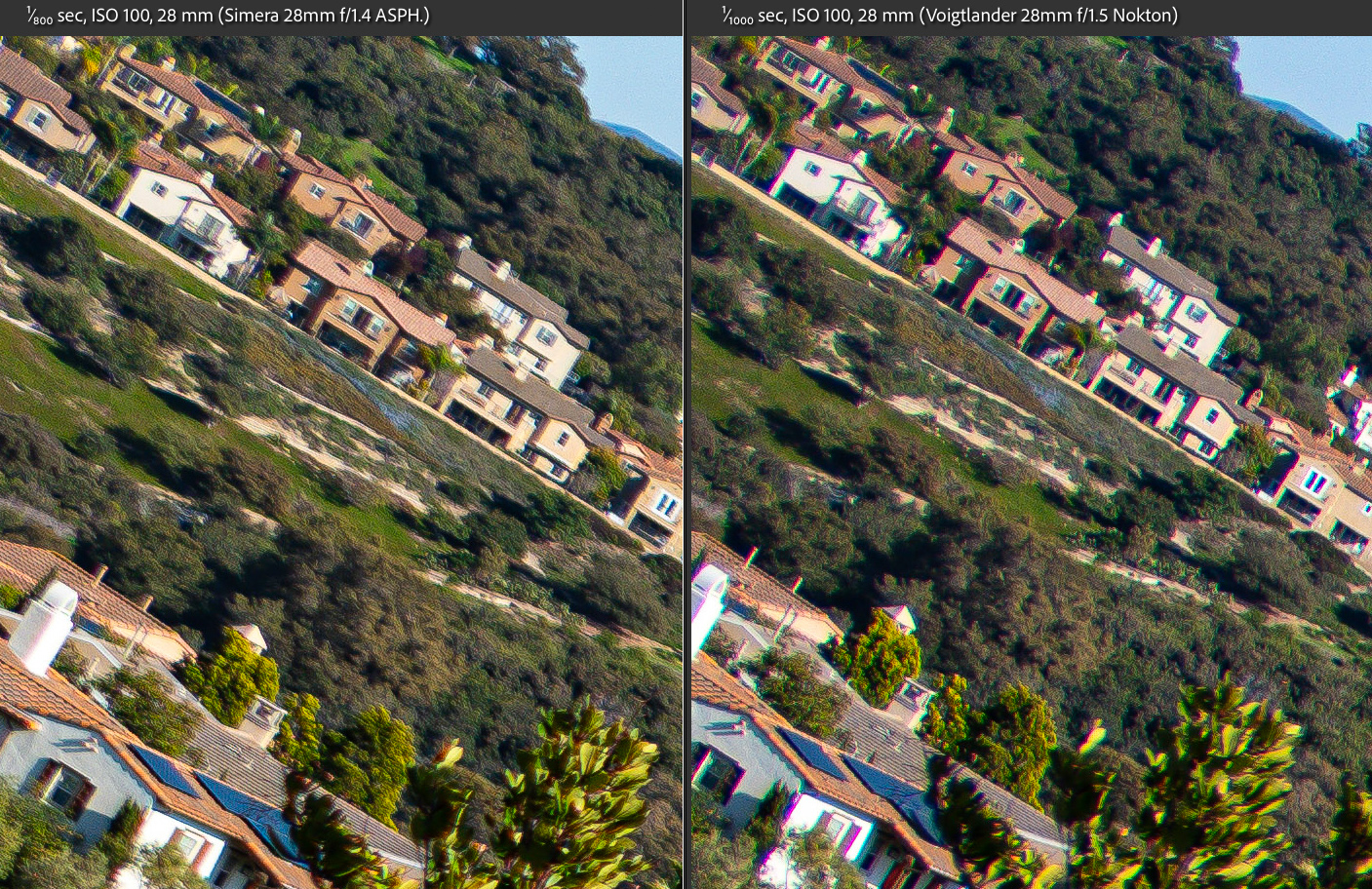
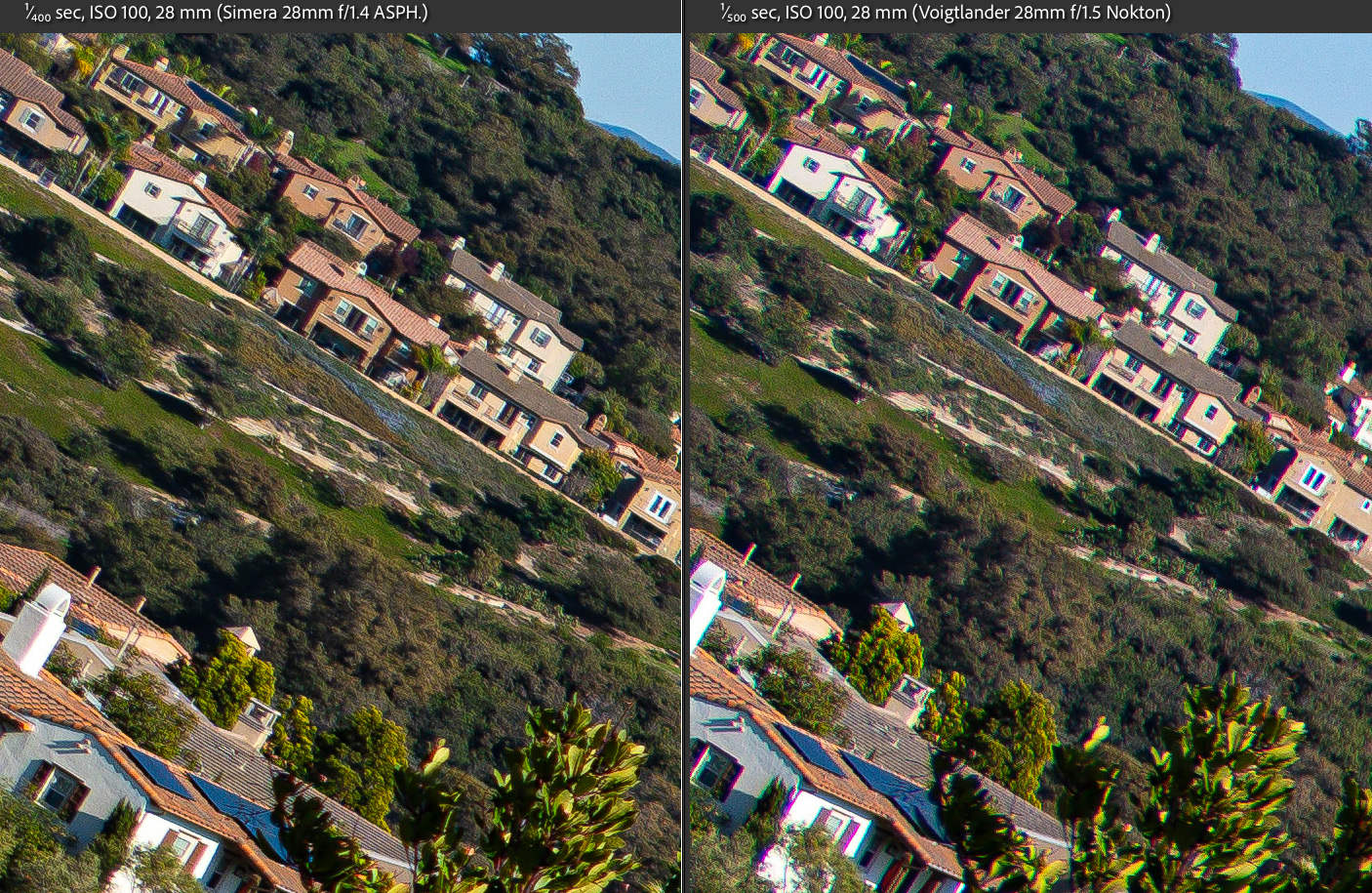
Resolution and Contrast at Infinity distance: Simera 28mm f/1.4 vs Voigtlander 28mm f/1.5 Nokton (60MP)
(open the browser window to view entire image without resizing)
p.2 #2 · Thypoch Simera 28mm f/1.4 ASPH. Type II Review
Wow! Thanks Fred. This comparison is extremely helpful.
It almost looks as though that either there is field curvature or mis-focus at play in both the mid-field and extreme edge image comparisons as the closer objects in a few of the Thypoch examples brighter than F 5.6 appear sharper than those of the Voigtlander. I'm guessing it's not focus accuracy as you mentioned performing these tests many times and used magnified Live View.
p.2 #3 · Thypoch Simera 28mm f/1.4 ASPH. Type II Review
Tariq Gibran wrote:
Wow! Thanks Fred. This comparison is extremely helpful.
It almost looks as though that either there is field curvature or mis-focus at play in both the mid-field and extreme edge image comparisons as the closer objects in a few of the Thypoch examples brighter than F 5.6 appear sharper than those of the Voigtlander. I'm guessing it's not focus accuracy as you mentioned performing these tests many times and used magnified Live View.
Definitely, I don't have the answer at the moment, but field curvature usually affects this test since both lenses were focused at the center. I'll run a field curvature test to give us a clearer picture.
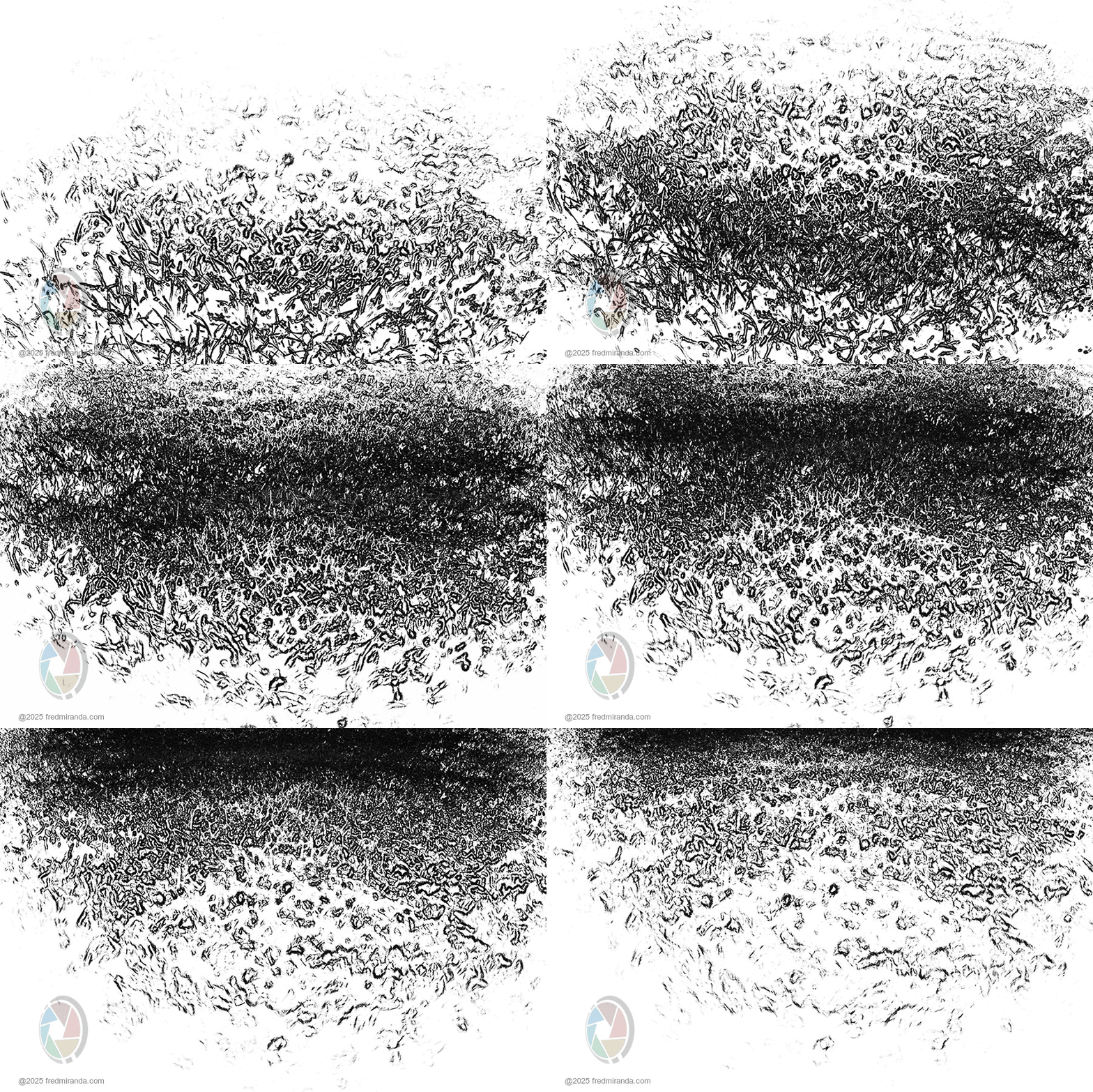
The field curvature of the Simera 28mm f/1.4 ASPH varies with distance. Up close, it curves slightly outward, but beyond 3 meters and towards infinity, it flattens out. I was expecting more noticeable curvature at infinity, but it's not there. In contrast, the Voigtlander 28/1.5 Nokton starts outward like the Simera but curves inward at infinity.
To demonstrate this, I took a series of shots from the minimum focus distance to near infinity. I've converted the images to black and white for clarity, with the sharp areas highlighted in black in this animation. Enjoy!
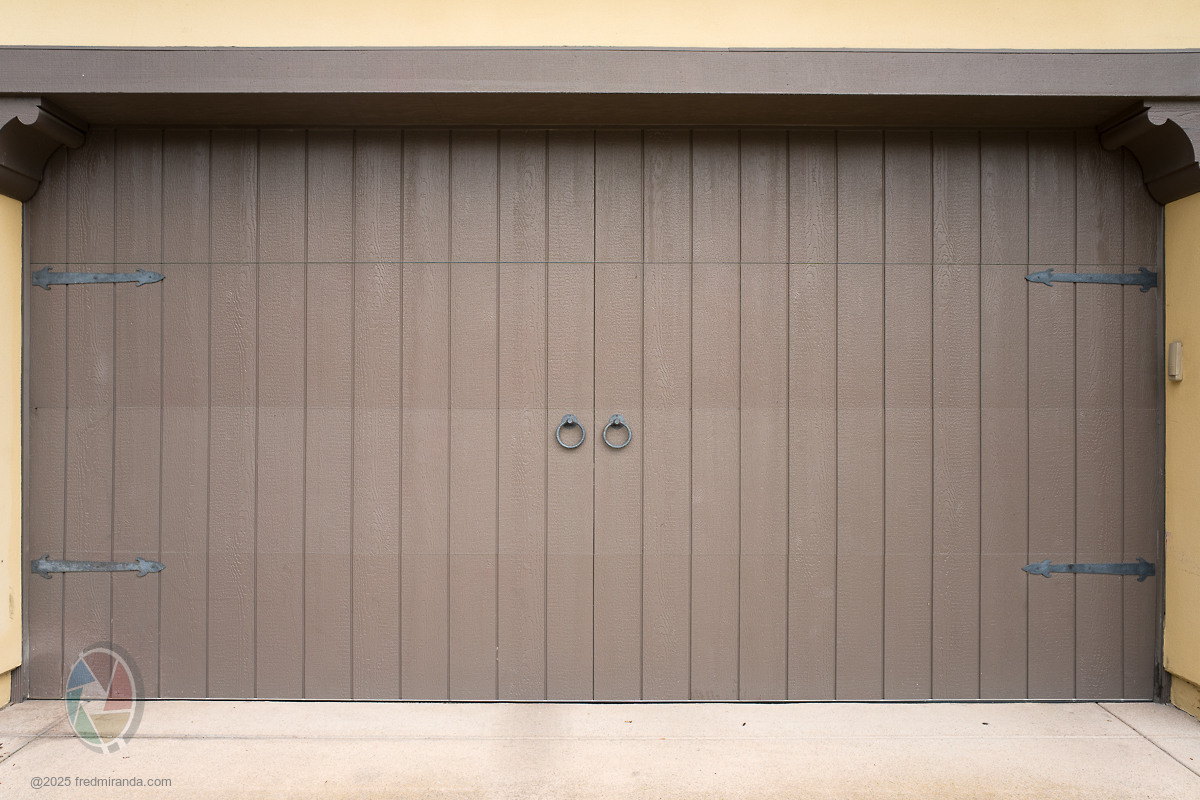
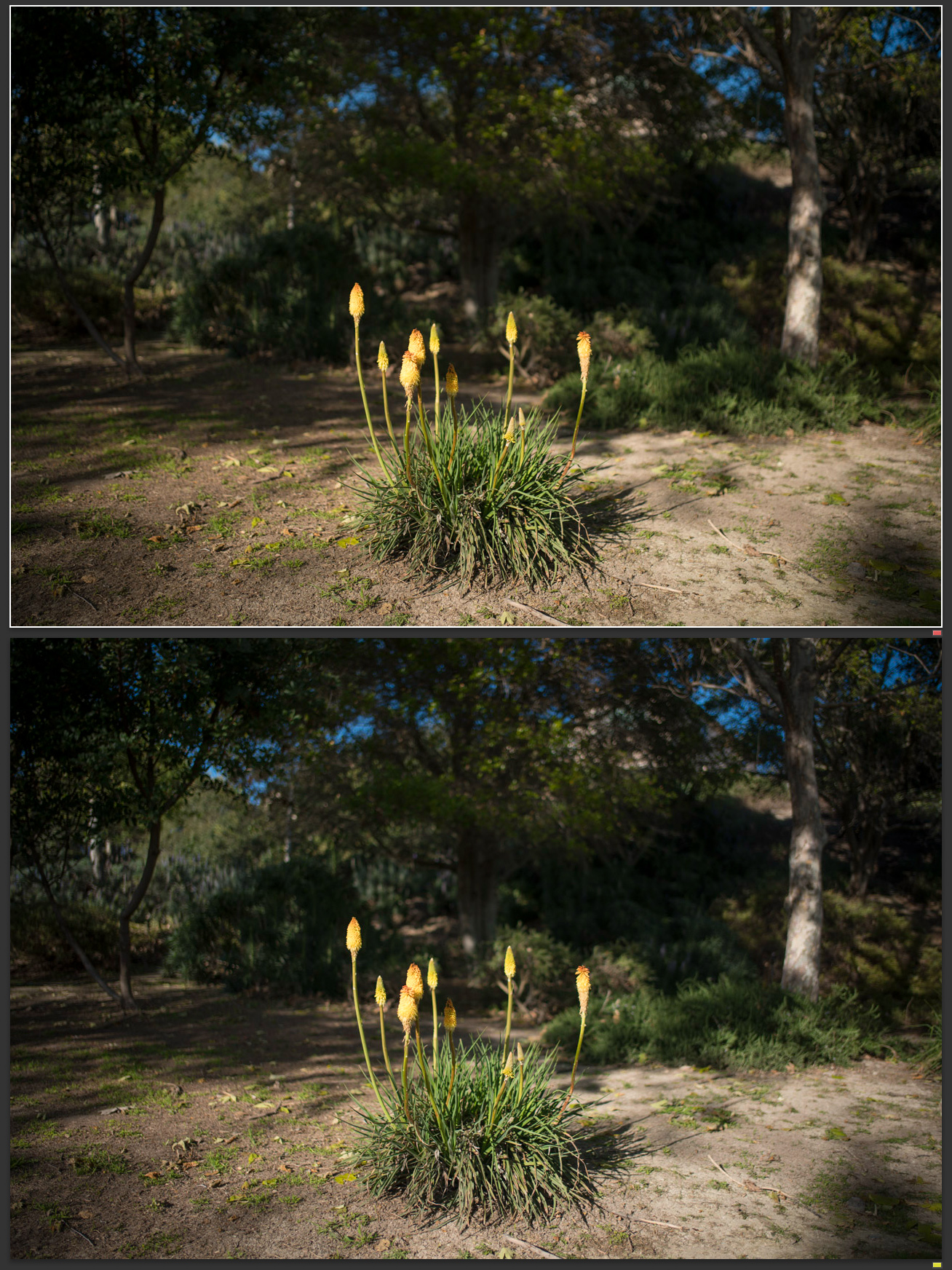
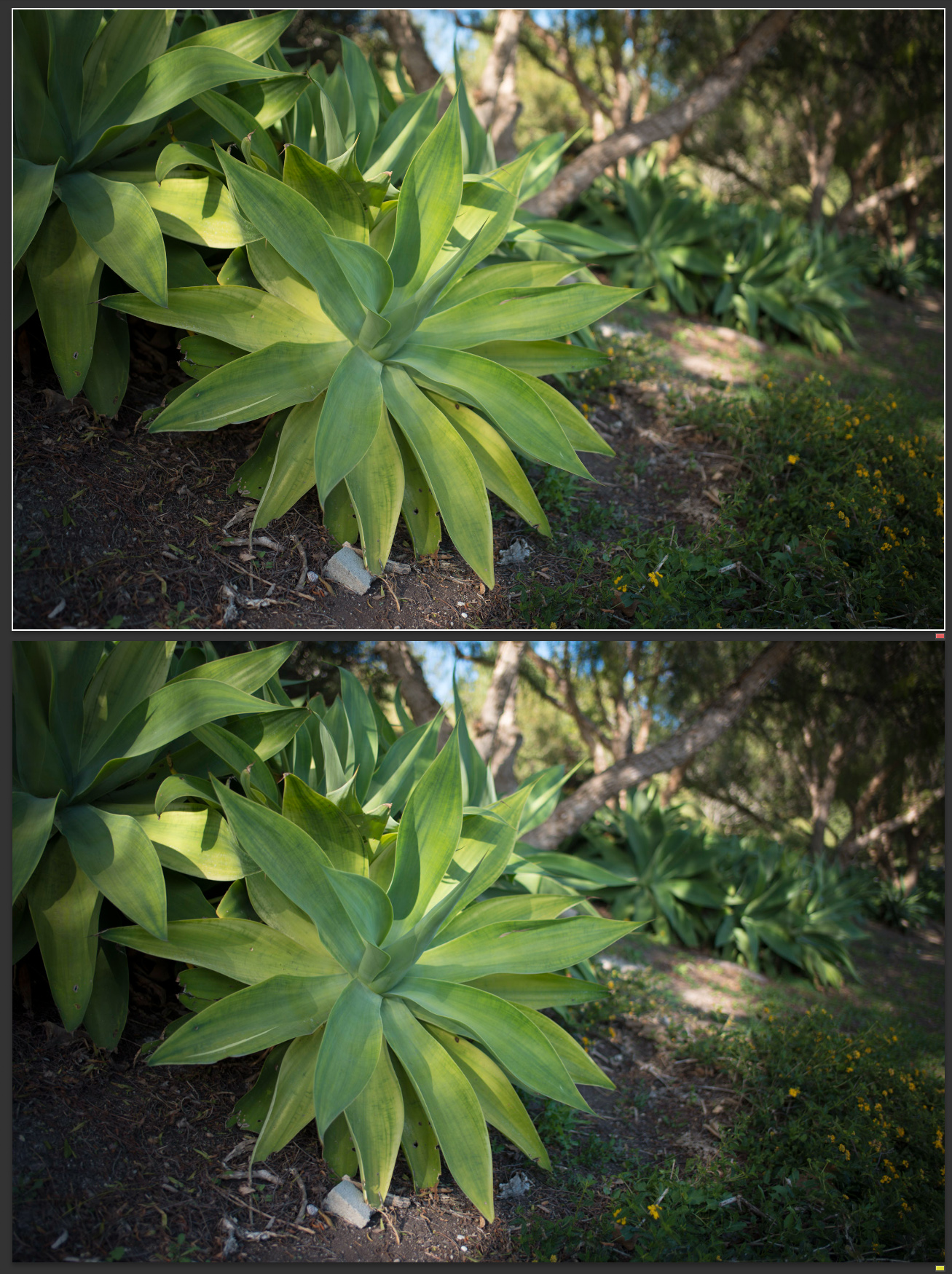
Similar to the Voigtlander 28mm f/1.5 Nokton, the distortion is minimal, but instead of barrel distortion, it’s slightly wavy, though virtually unnoticeable in real-world shots. In Lightroom, I wouldn’t need to apply any distortion correction.
This makes it an excellent choice for street and architecture photographers.
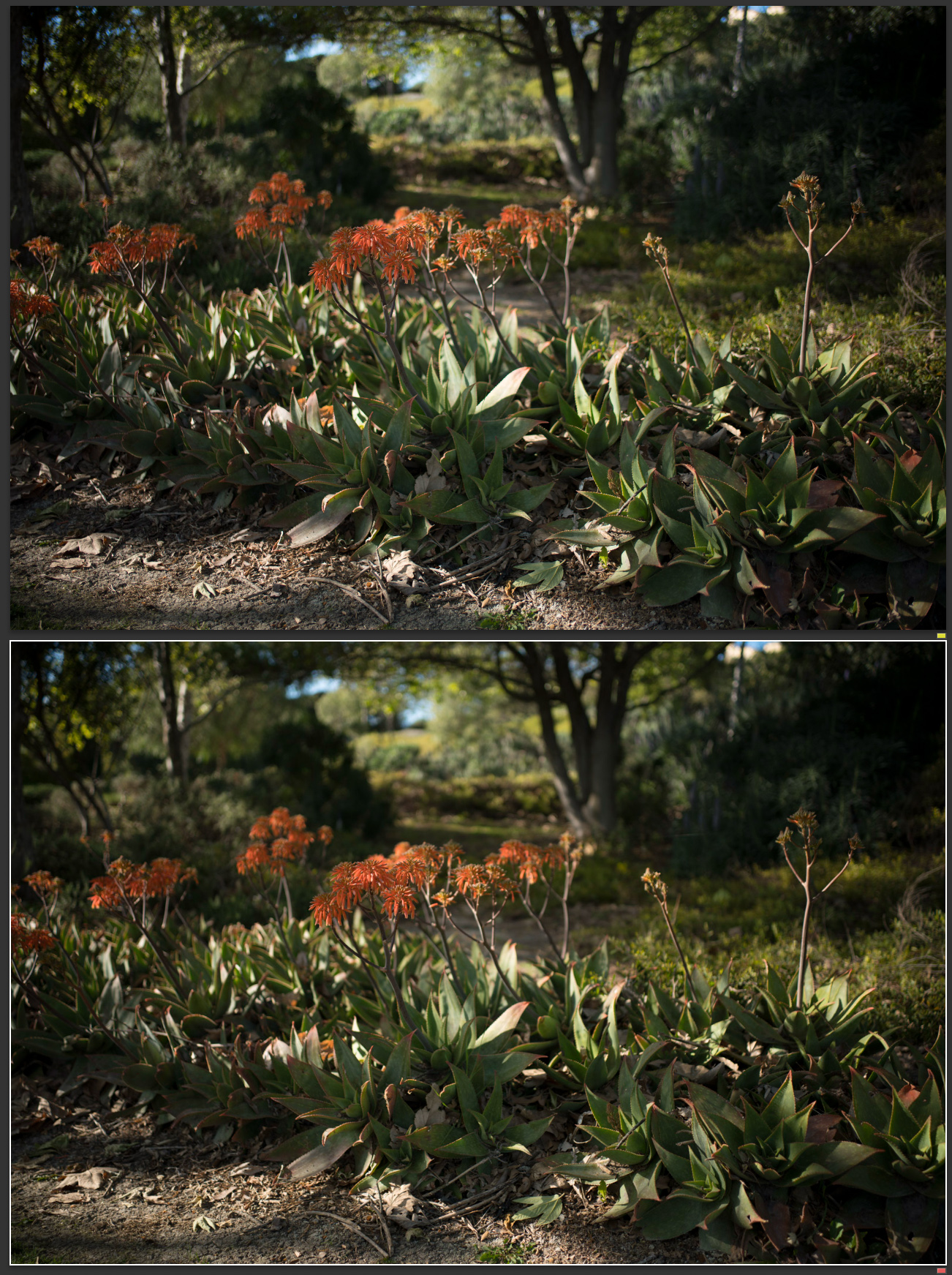
Here’s an image showing the minimal distortion straight out of the camera.
The Simera 28mm f/1.4 features a floating elements design, making it highly versatile. It can focus as close as 0.4m and retains excellent resolution even at its minimum focus distance.
While there's a slight improvement in resolution and contrast with each stop, the most noticeable change happens between f/1.4 and f/2. Wide open, I noticed a bit of spherical aberration.
Overall, the lens produces sharp, detailed images, though contrast could be higher.
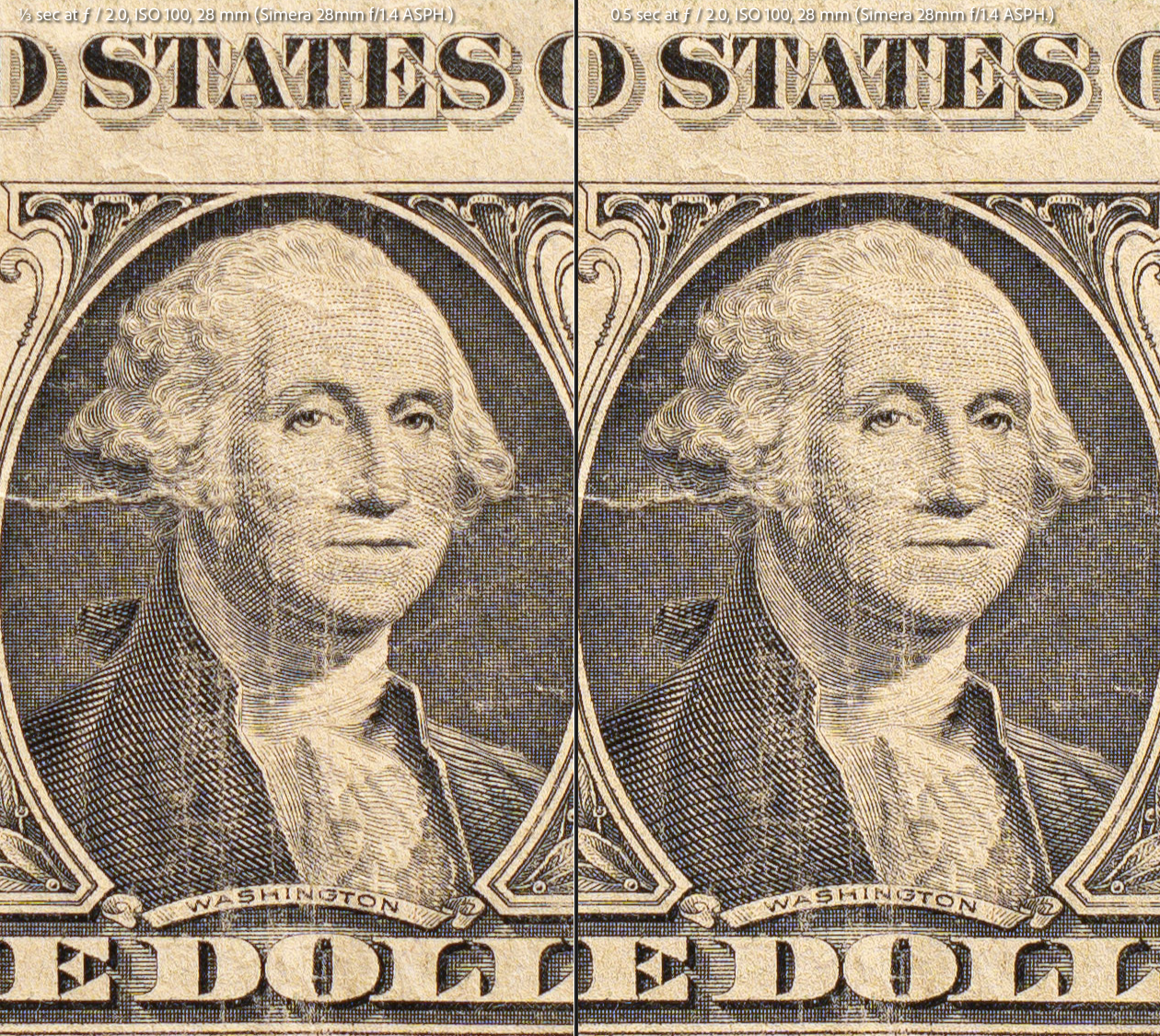
Here's a sequence from wide open to f/4, the aperture where the lens performs best. The lens was initially focused at f/1.4, and aperture changes to f/2, f/2.8, and f/4 were made without refocusing. I didn't observe any focus shift when refocusing at f/2.8 and f/4.
p.2 #9 · Thypoch Simera 28mm f/1.4 ASPH. Type II Review
Fred Miranda wrote: Distortion
Similar to the Voigtlander 28mm f/1.5 Nokton, the distortion is minimal, but instead of barrel distortion, it’s slightly wavy, though virtually unnoticeable in real-world shots. In Lightroom, I wouldn’t need to apply any distortion correction.
This makes it an excellent choice for street and architecture photographers.
Here’s an image showing the minimal distortion straight out of the camera.
I have a strong disdain for wavy distortion ... but, that's probably the "smallest wave" I've seen. I'd be willing to give it a go, and let it "prove to me" that it causes me problems. If it is that small ... and, if a lens profile correction is available ... yeah, I could get on board with that one.
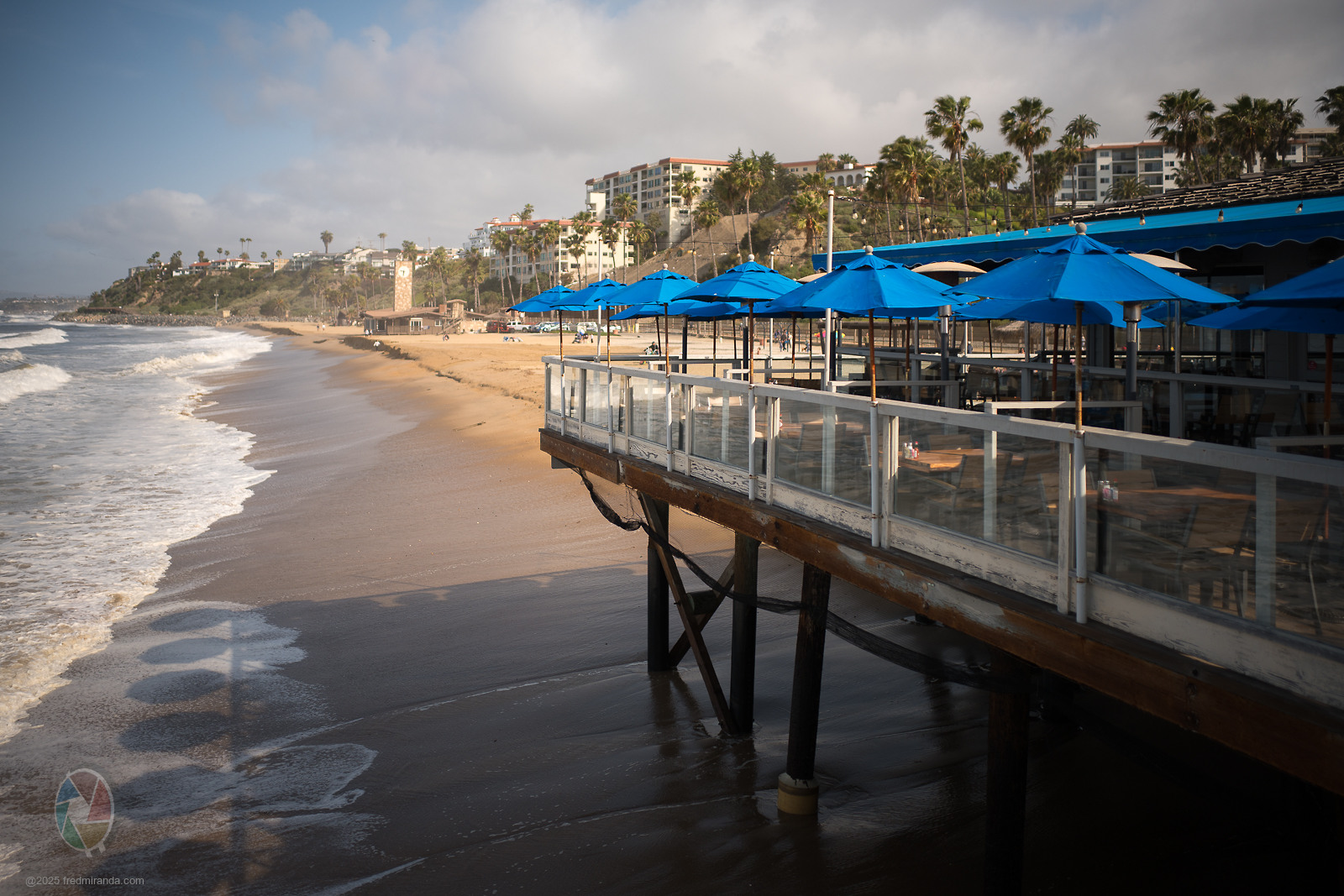
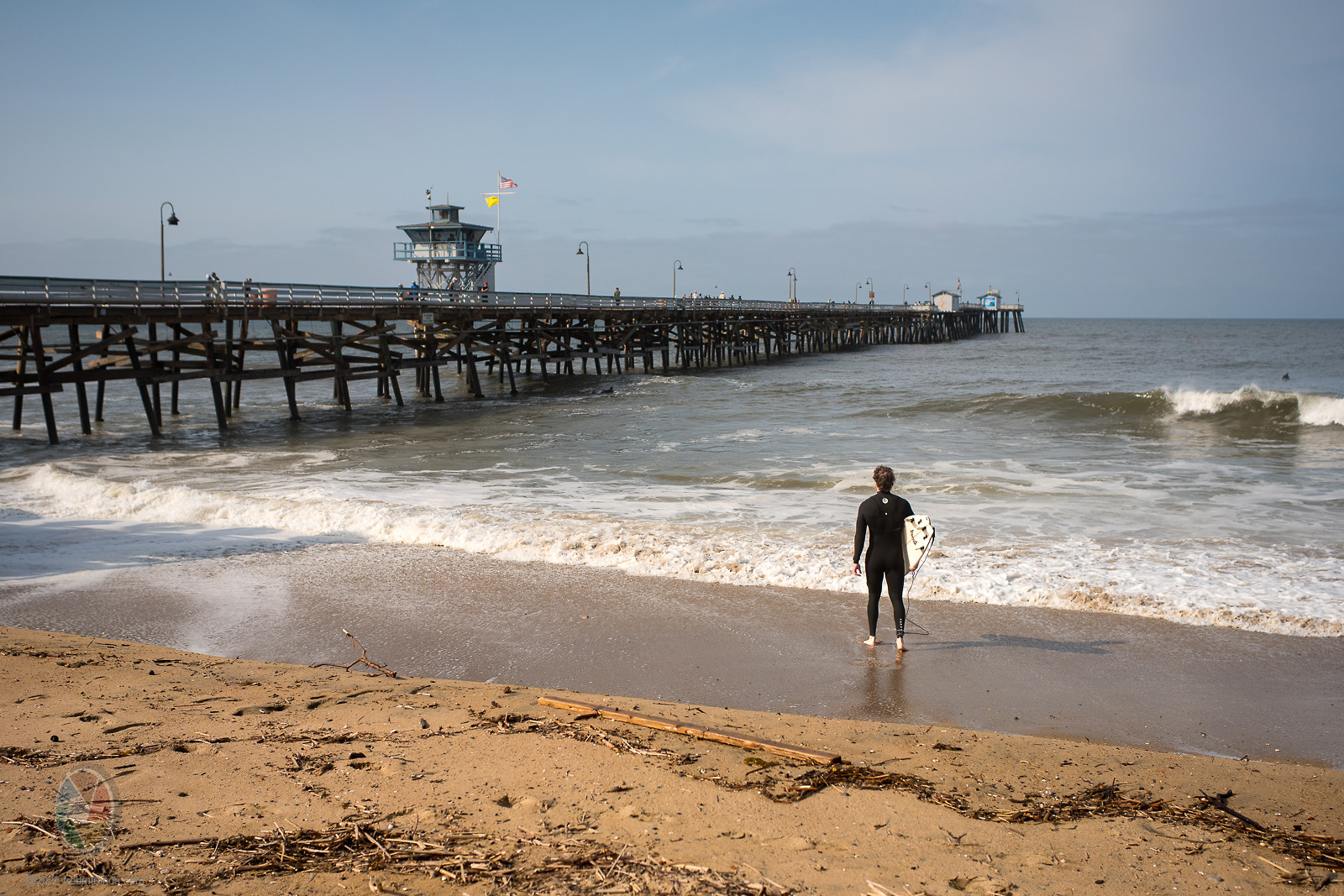
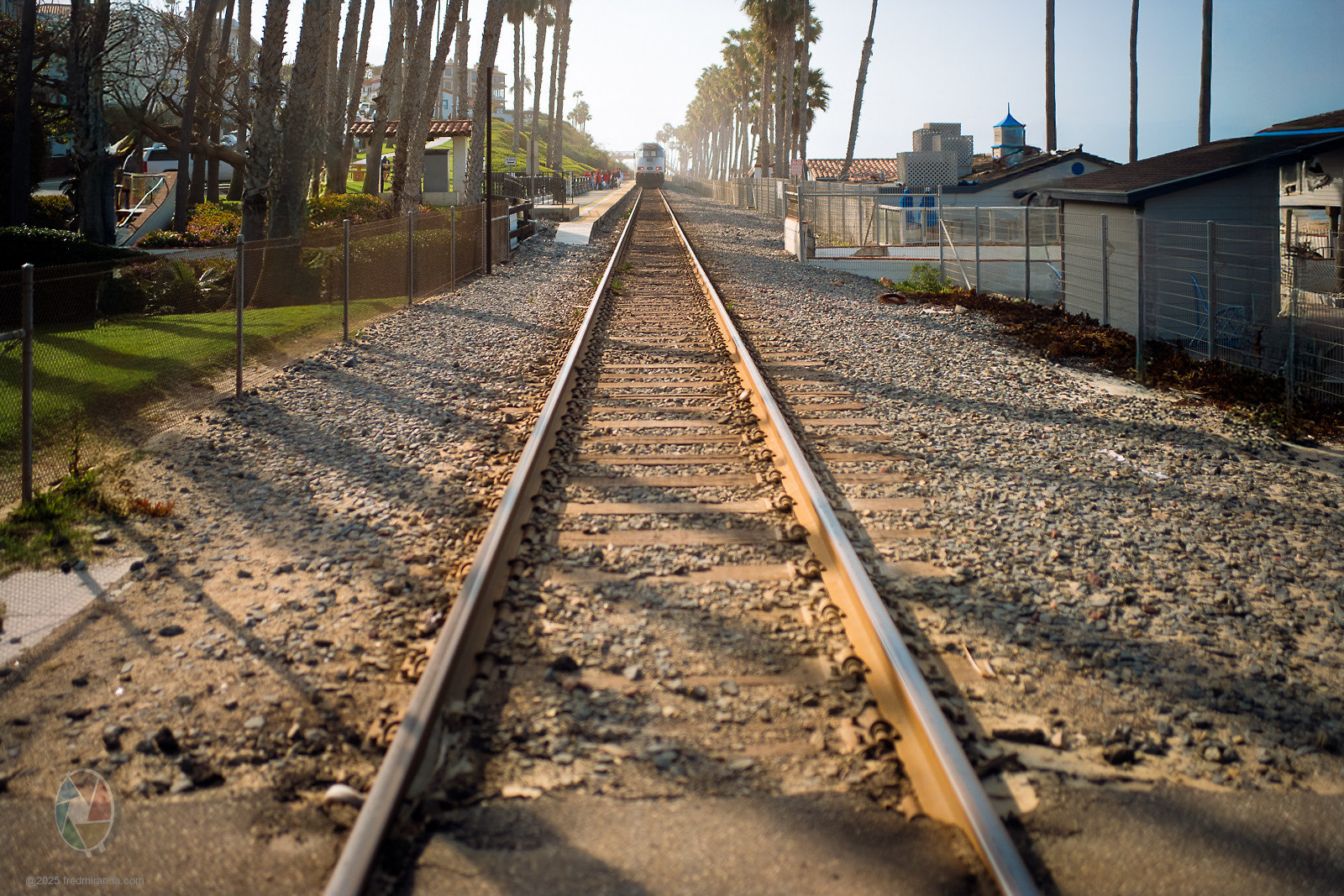
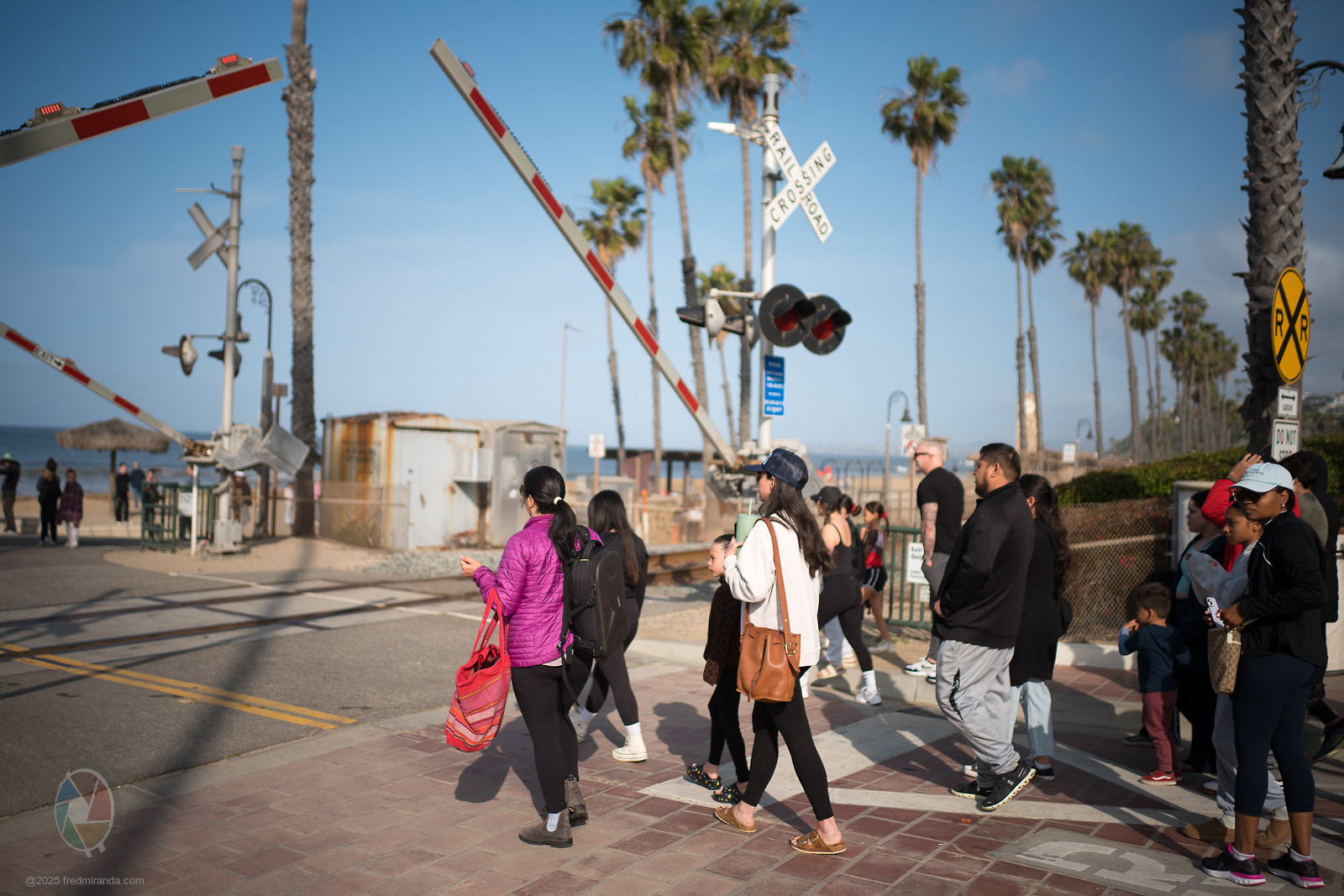
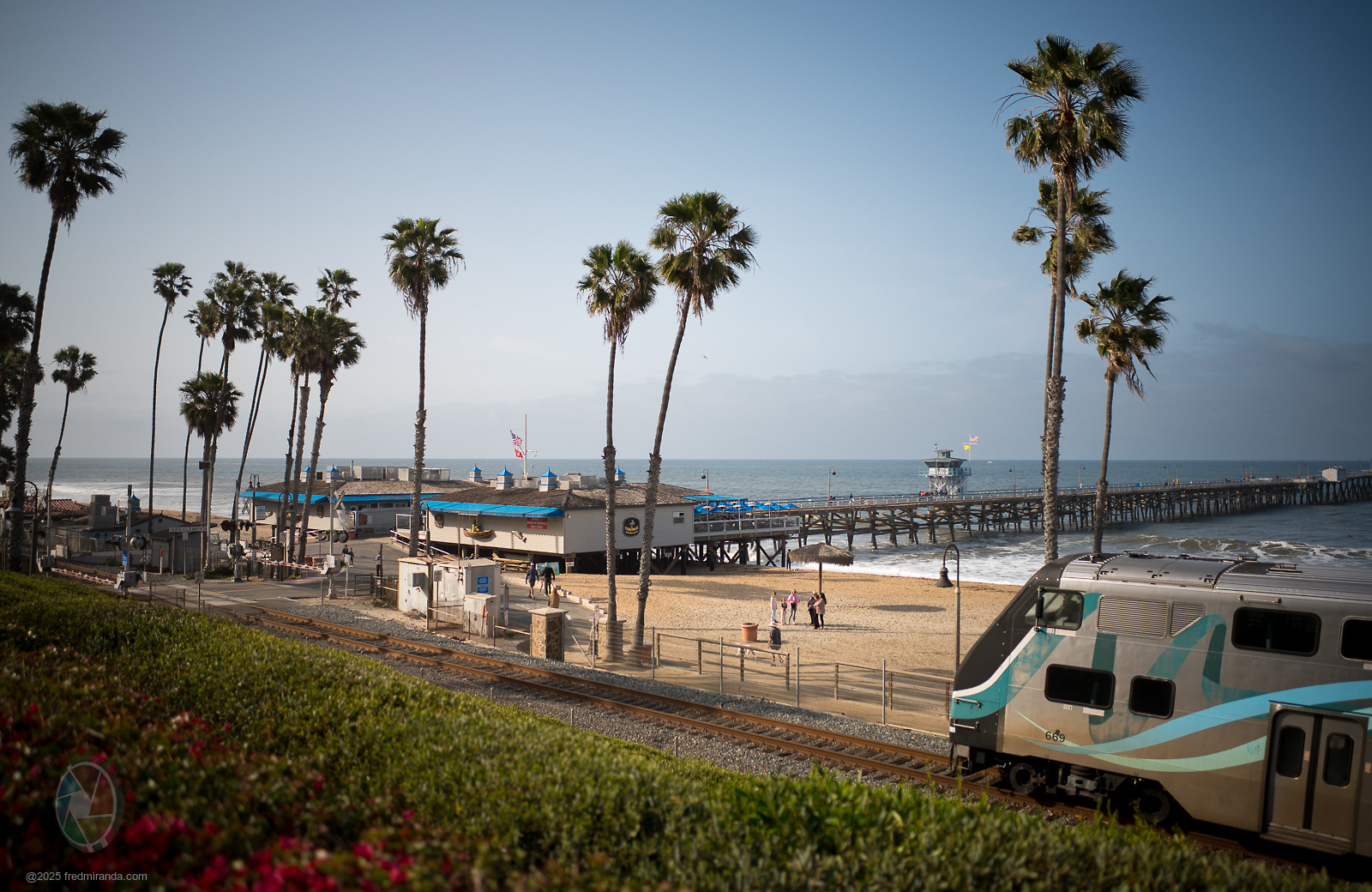
A selection of images shot wide open at f/1.4 at different distances. These samples were taken with the Simera 28mm f/1.4 ASPH without a focus tab, which has the same optical design as the version with the tab. (v2)
The images have minimal processing, with added sharpening and the Adobe Standard profile applied. One has been converted to monochrome.
LEICA M10-RSimera 28mm f/1.4 ASPH. lens28mm1/125s100 ISO0.0 EV
LEICA M10-RSimera 28mm f/1.4 ASPH. lens28mm1/60s125 ISO0.0 EV
LEICA M10-RSimera 28mm f/1.4 ASPH. lens28mm1/125s100 ISO0.0 EV
LEICA M10-RSimera 28mm f/1.4 ASPH. lens28mm1/100s100 ISO0.0 EV
LEICA M10-RSimera 28mm f/1.4 ASPH. lens28mm1/640s100 ISO-1.0 EV
LEICA M10-RSimera 28mm f/1.4 ASPH. lens28mm1/125s100 ISO0.0 EV
LEICA M10-RSimera 28mm f/1.4 ASPH. lens28mm1/250s100 ISO0.0 EV
LEICA M10-RSimera 28mm f/1.4 ASPH. lens28mm1/320s100 ISO0.0 EV
p.2 #13 · Thypoch Simera 28mm f/1.4 ASPH. Type II Review
fotografur wrote:
Nice shots Fred. Does this lens have contacts that would allow you to use focus peaking on a Sony?
I'm not aware of any M mount lens with contacts? Are you referring to the E mount version of this lens (not what Fred has)? If so, then no it doesn't have contacts like the Zeiss loxia do for example.
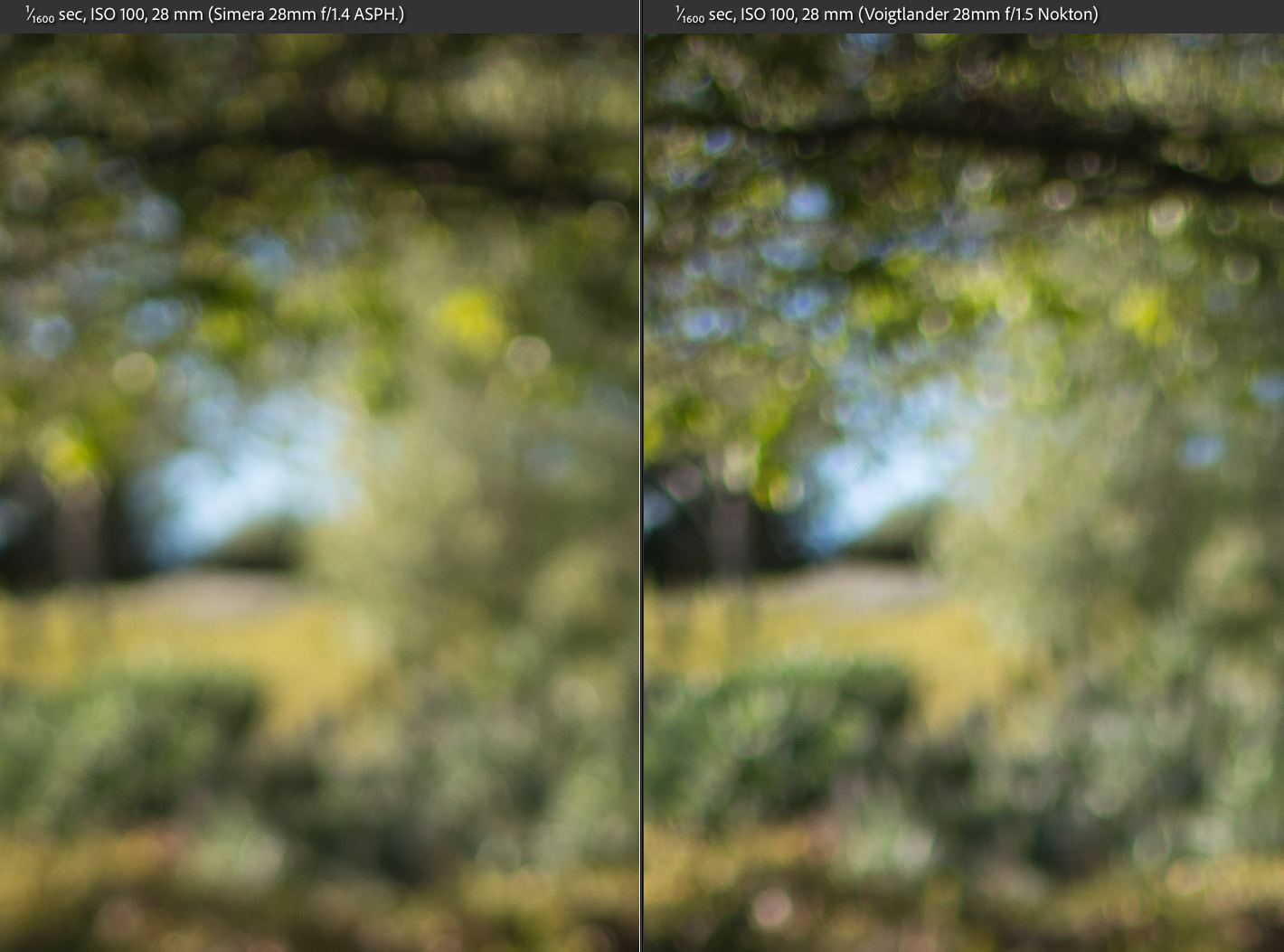
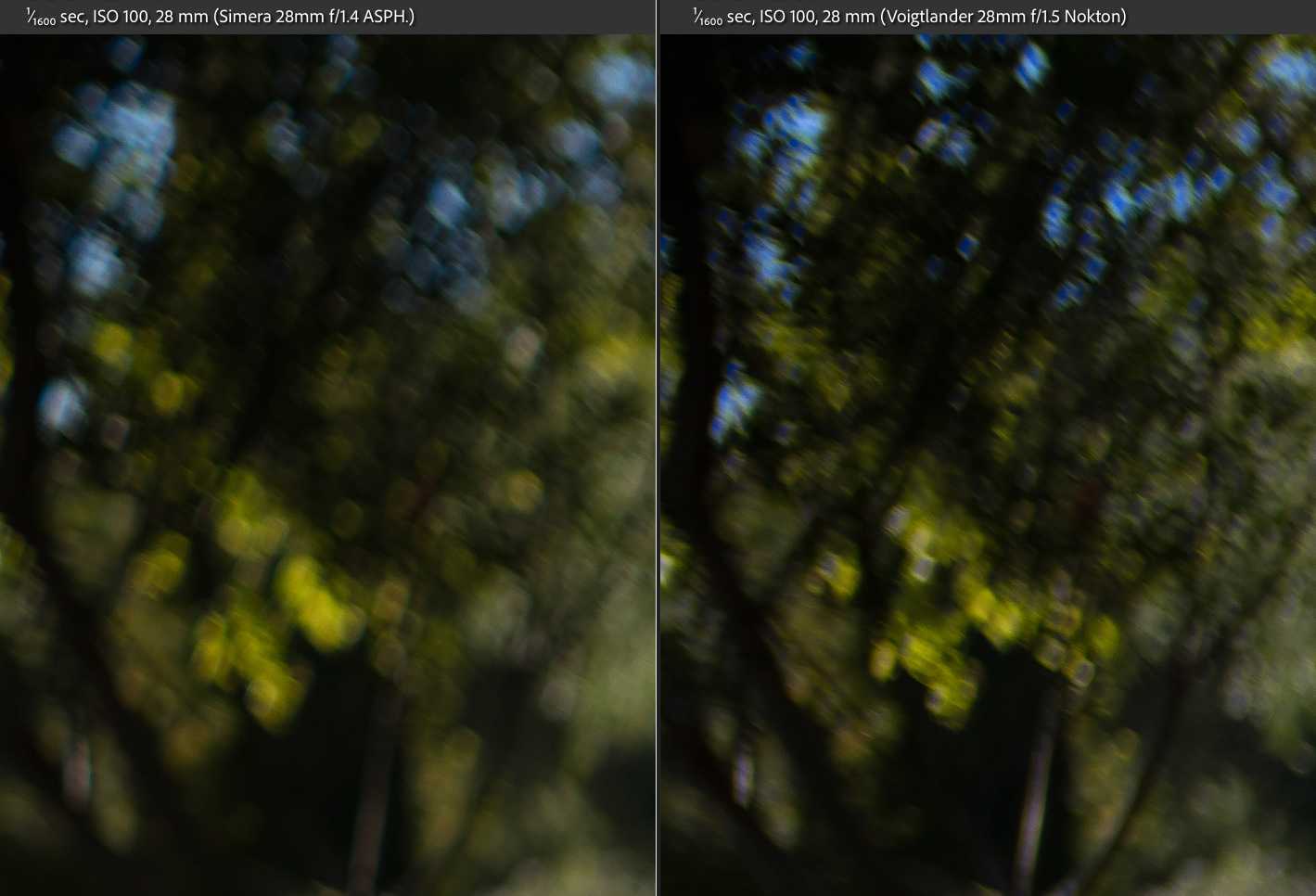
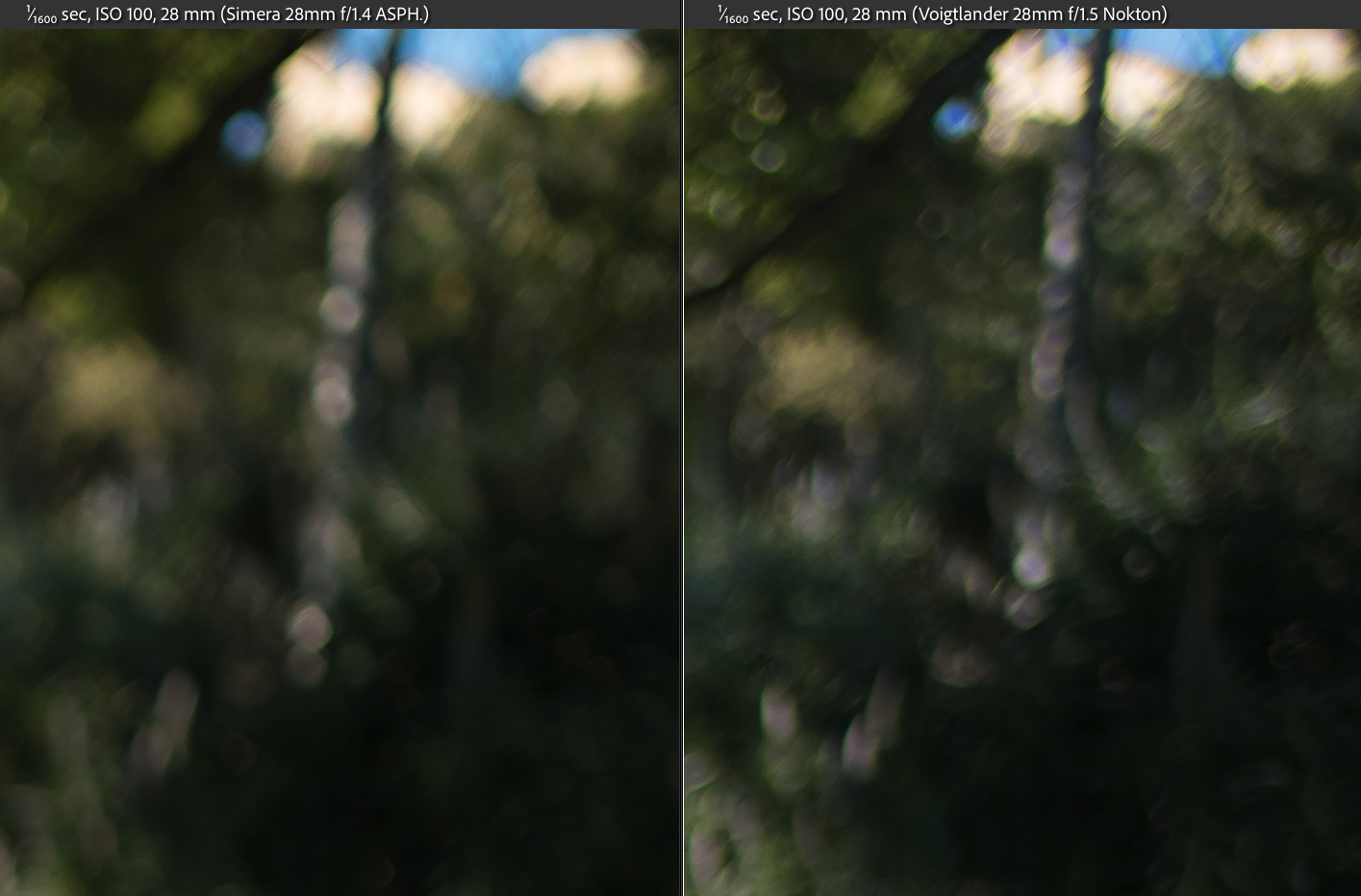
Rendering compared to Voigtlander 28mm f/1.5 Nokton
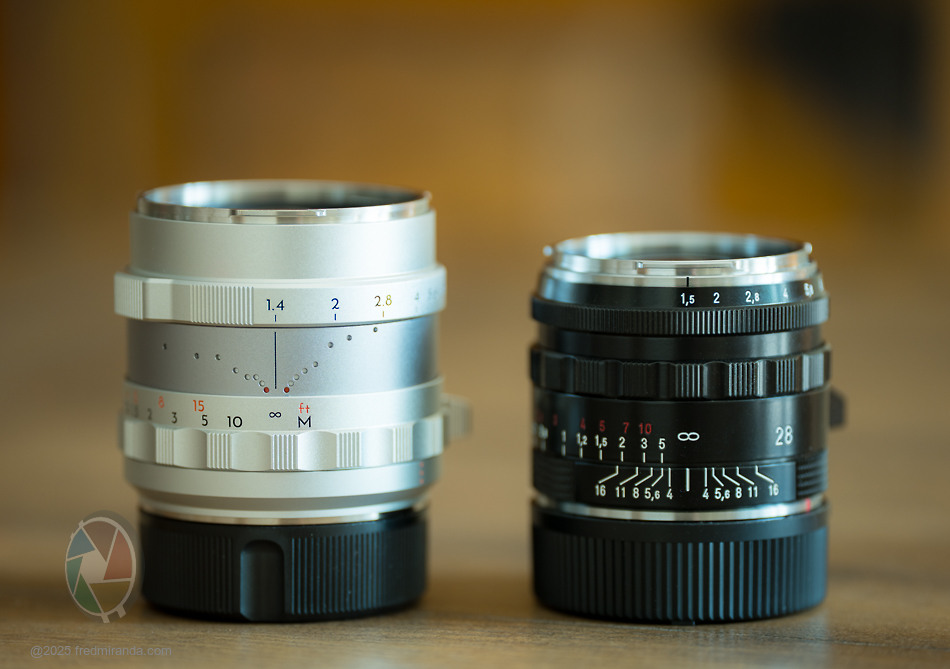
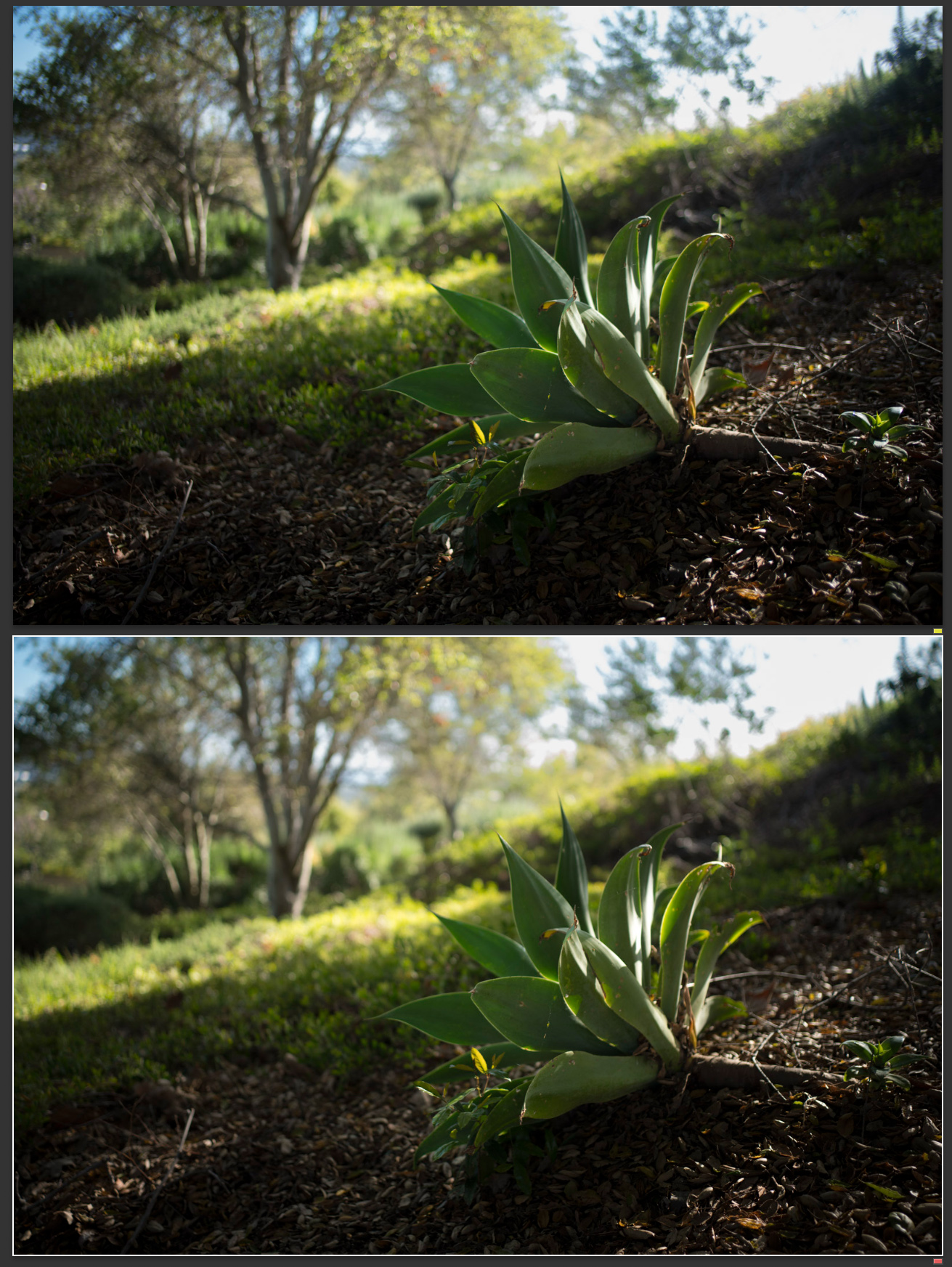
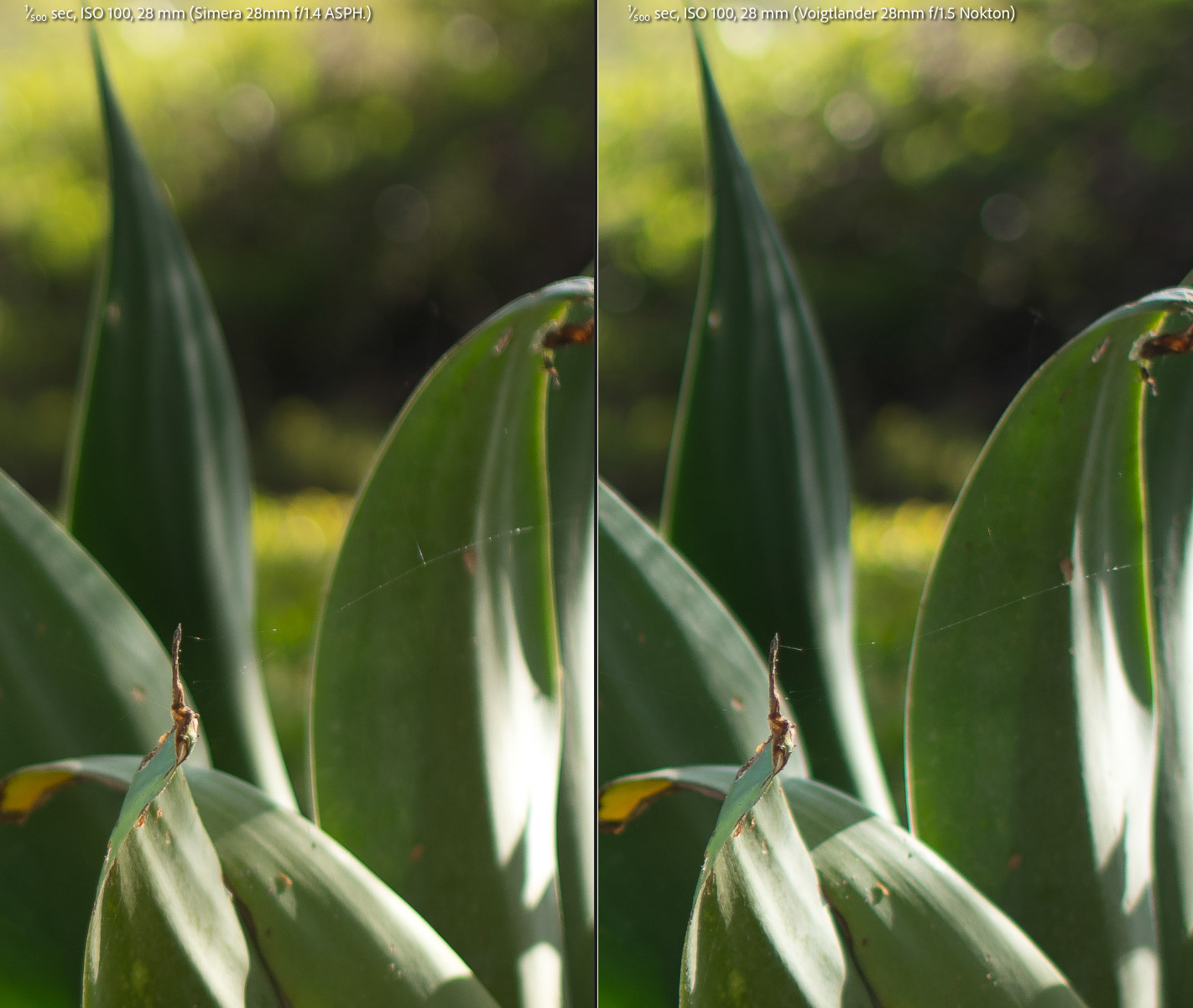
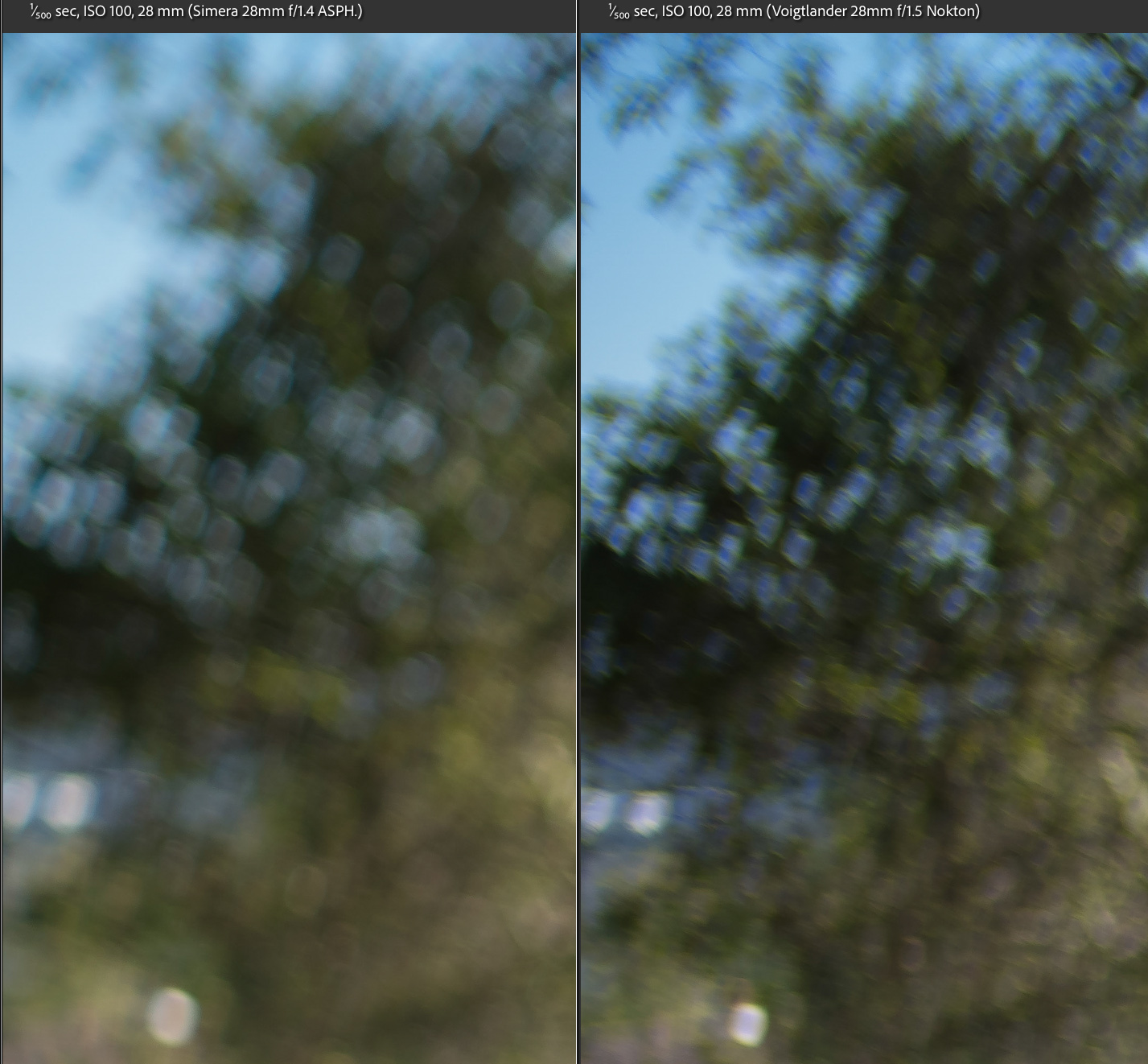
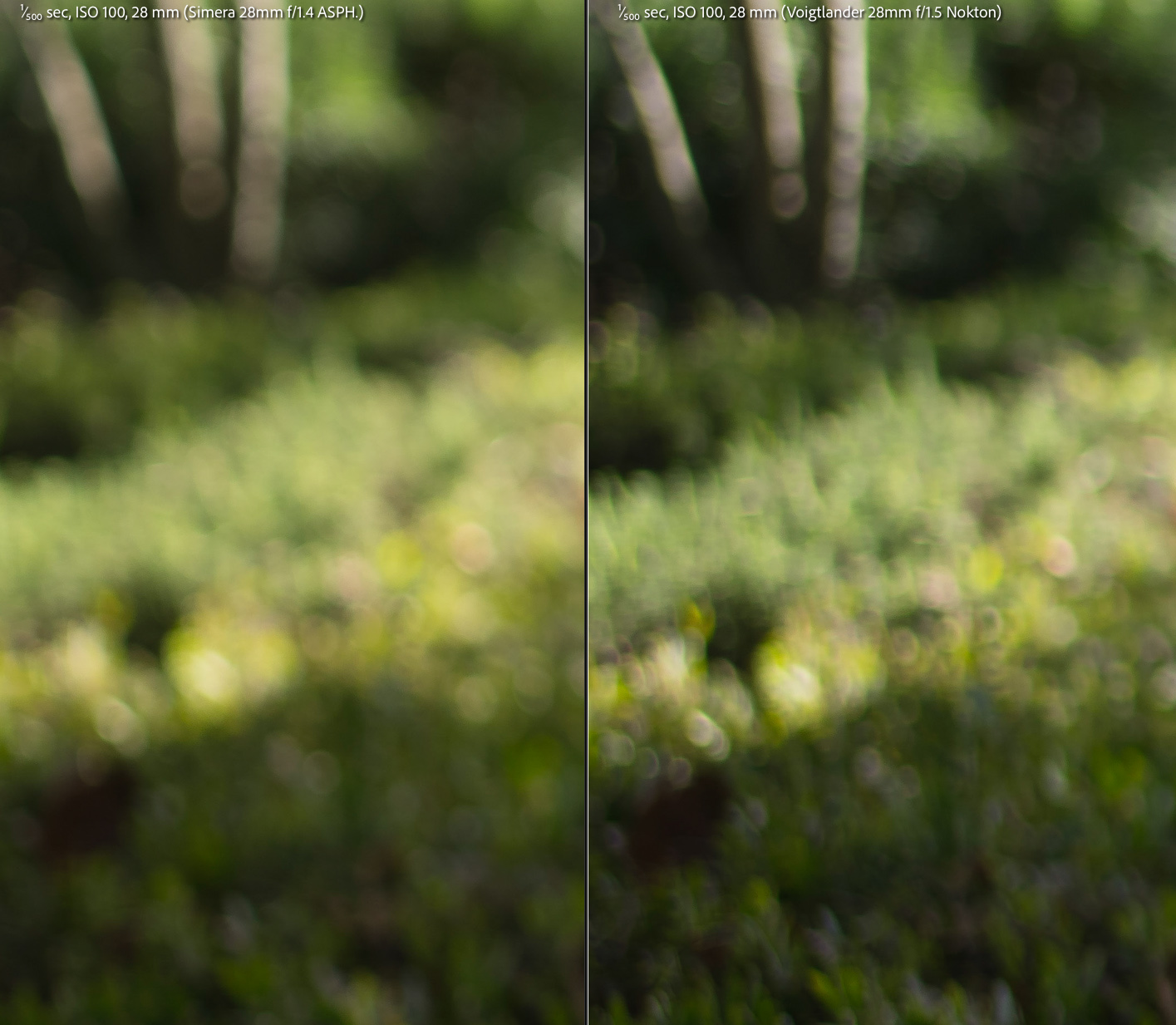
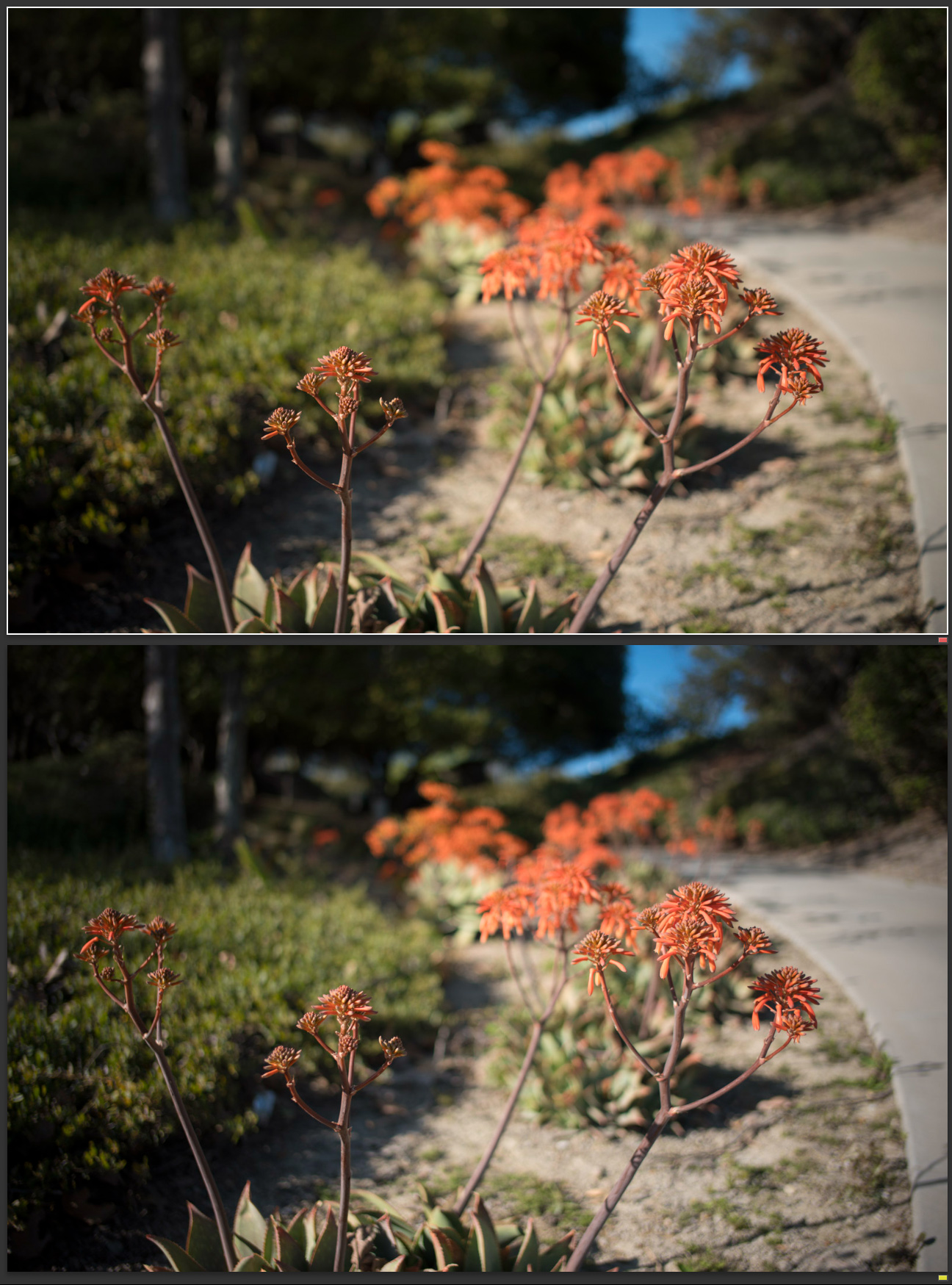
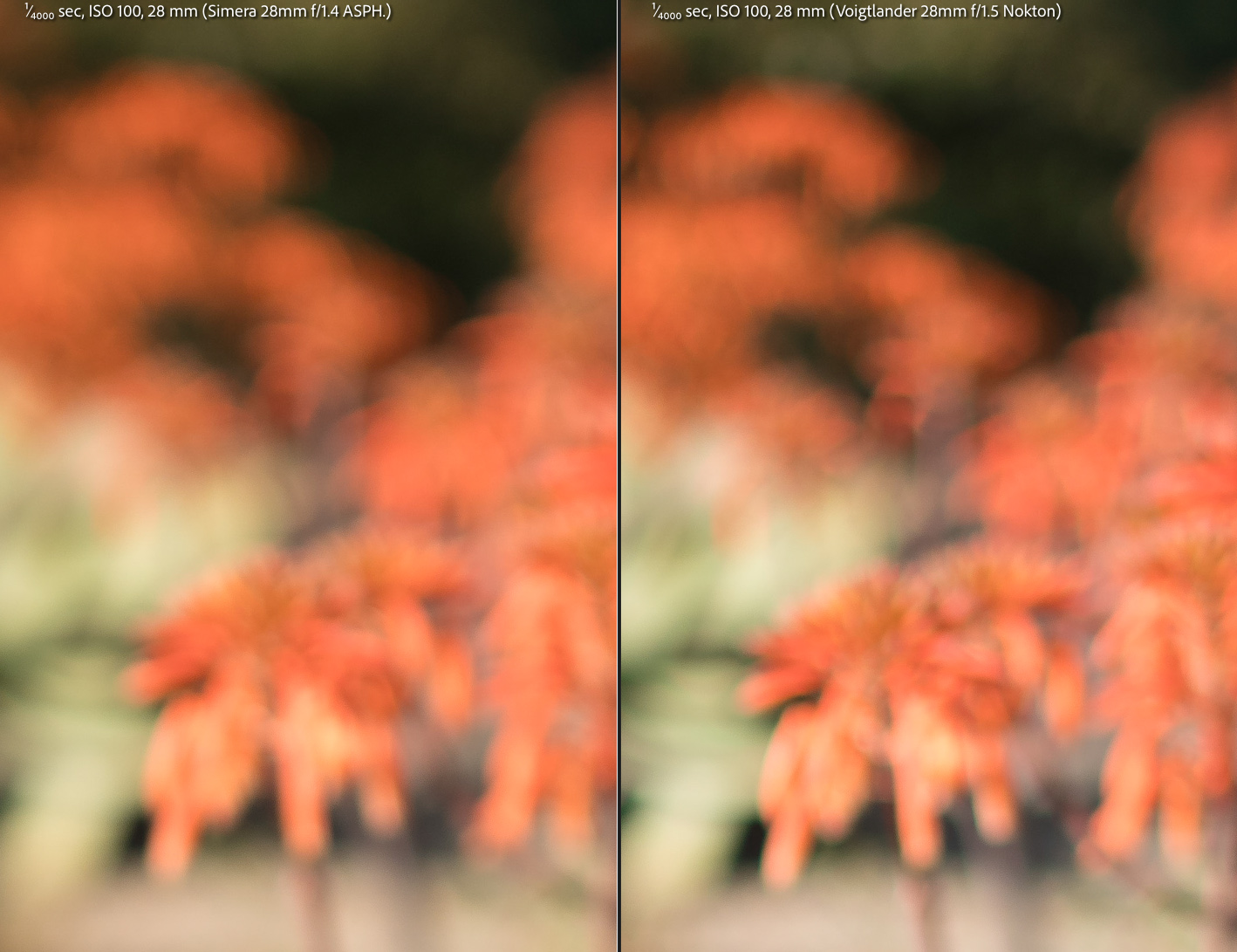
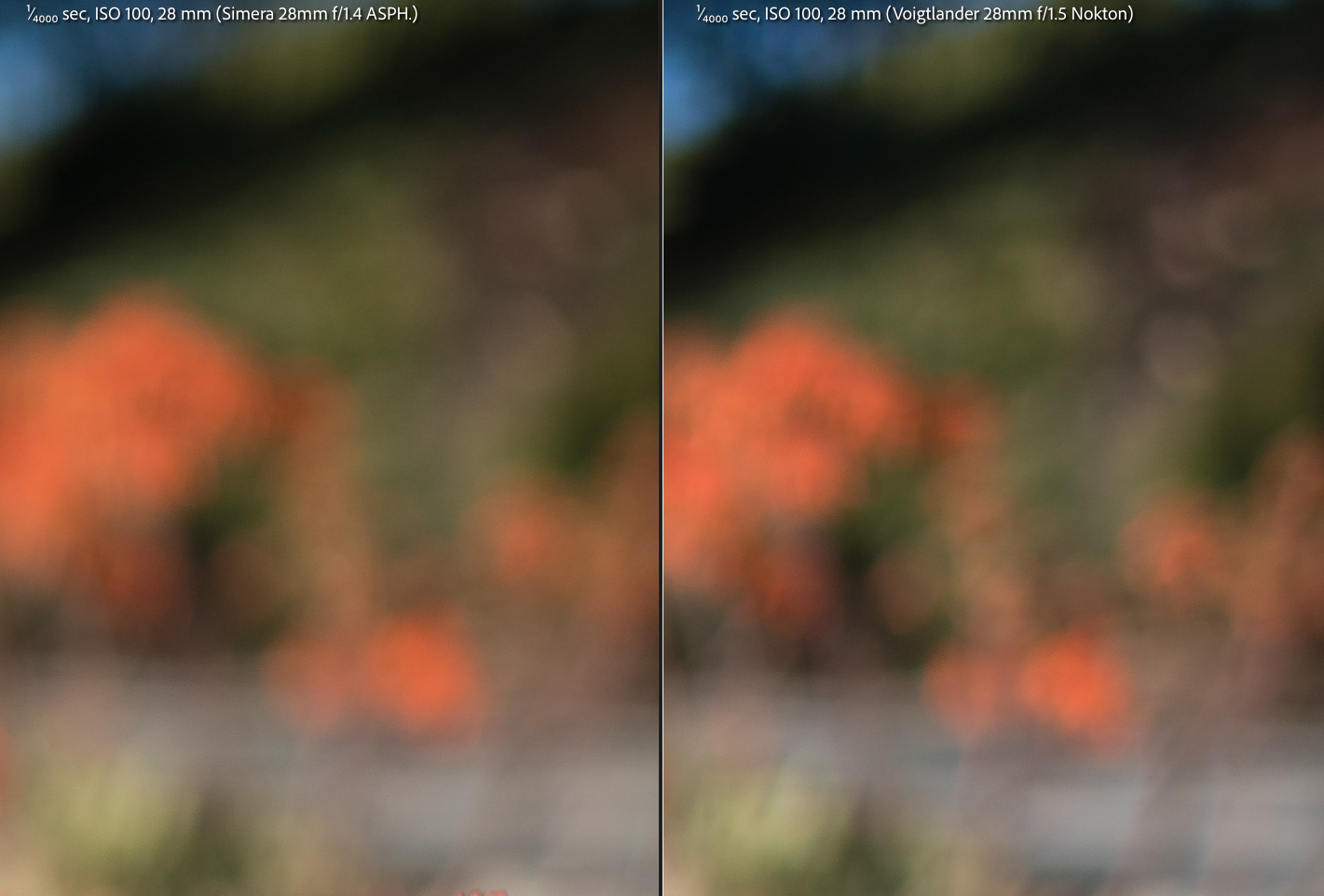
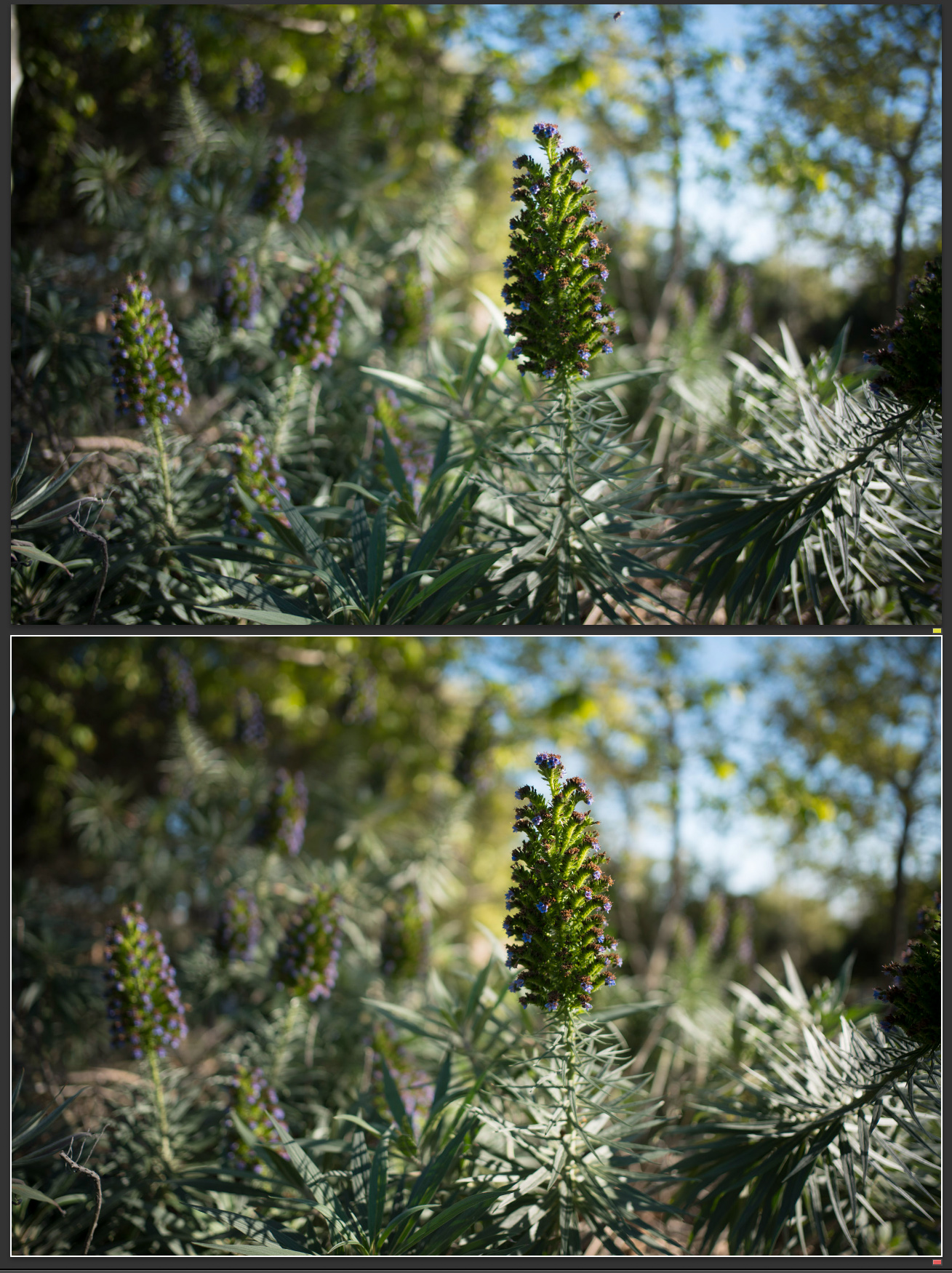
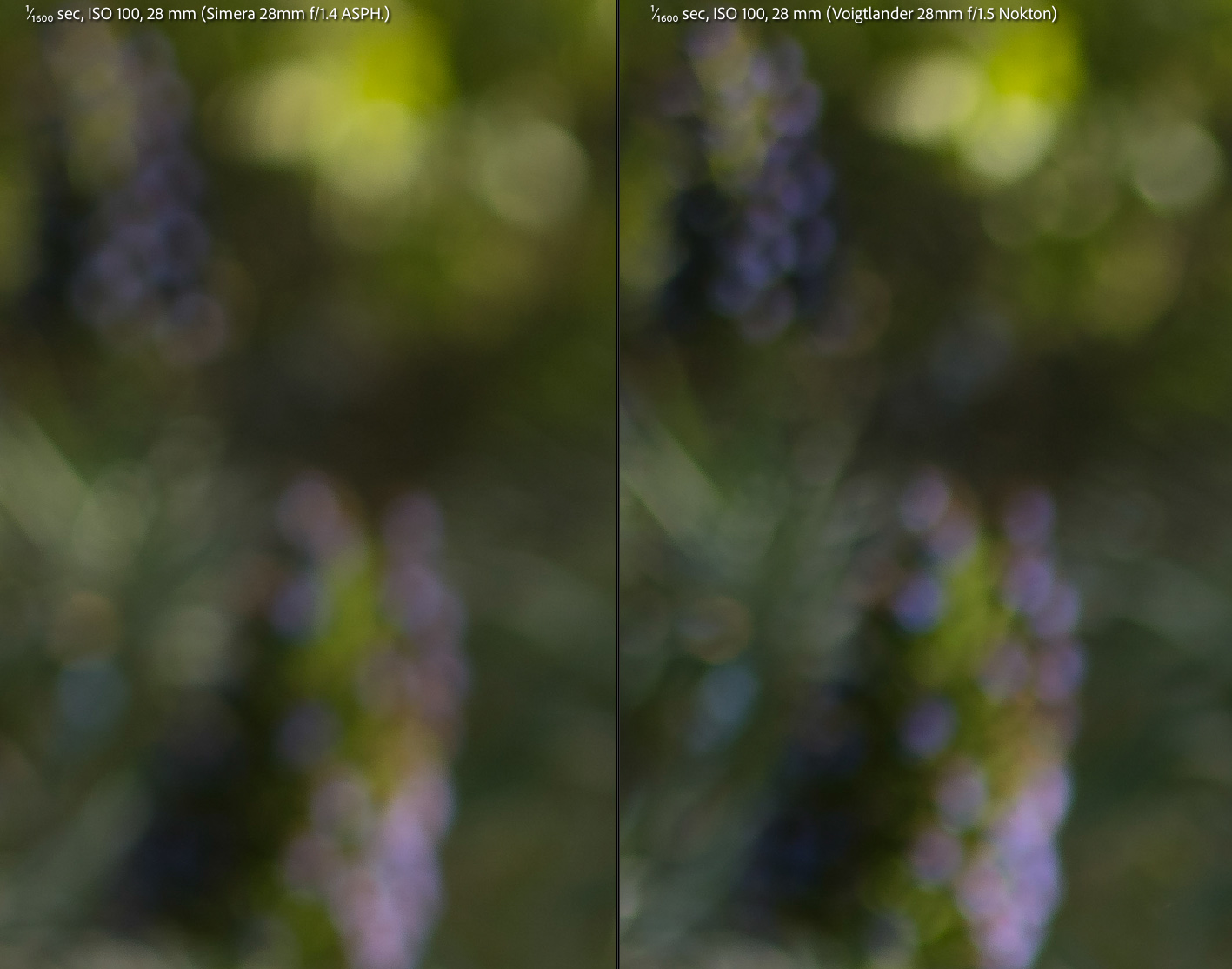
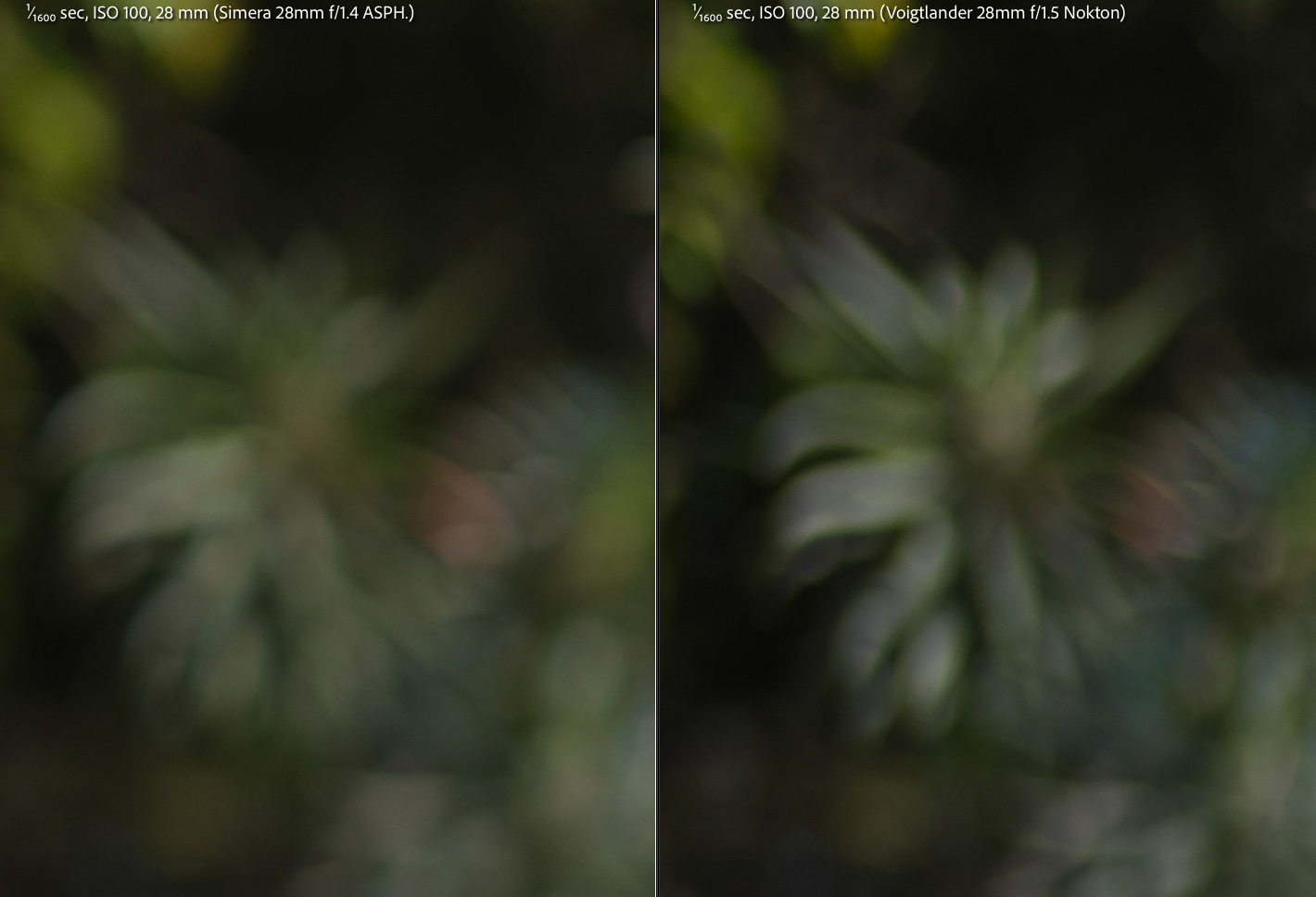
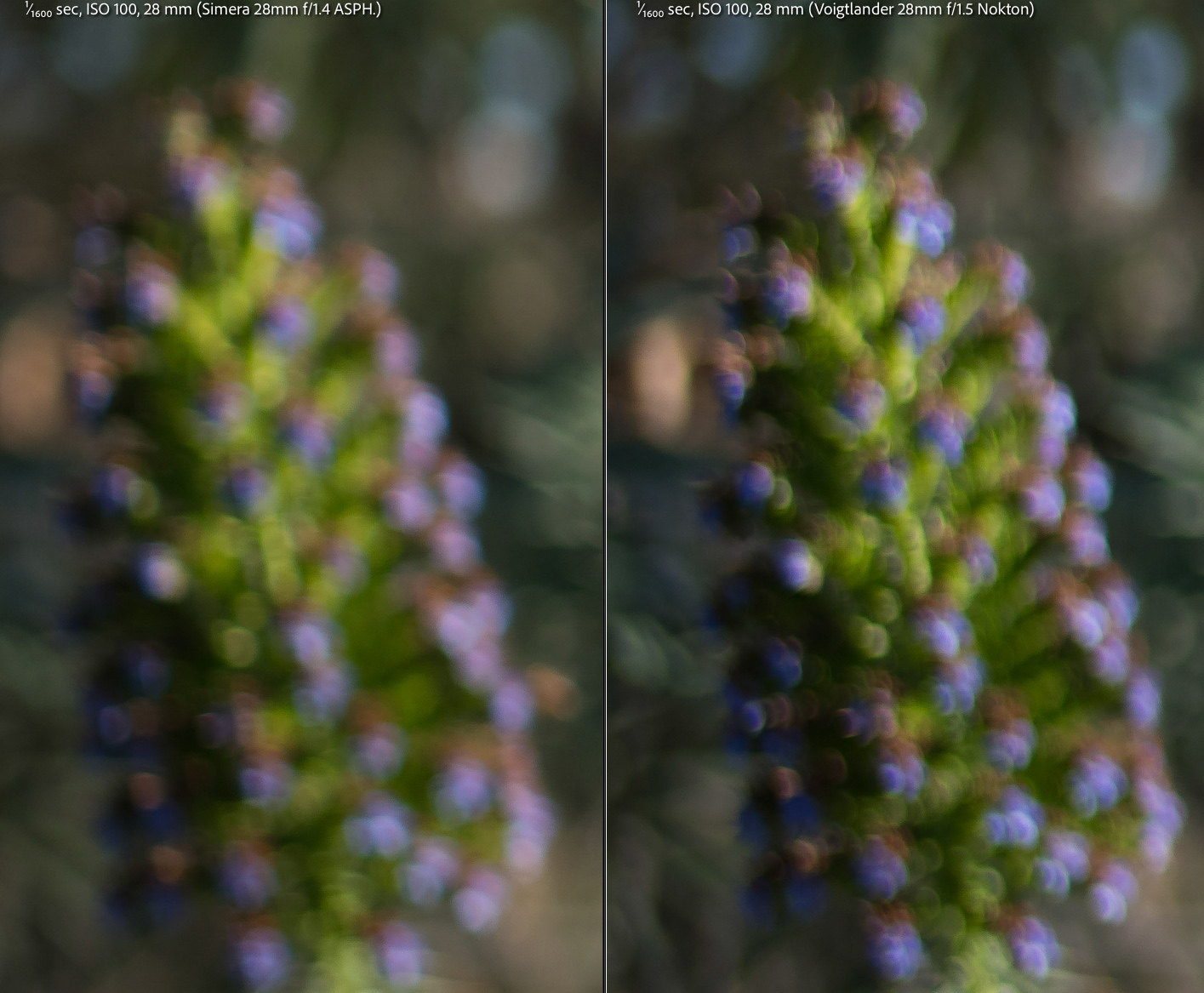
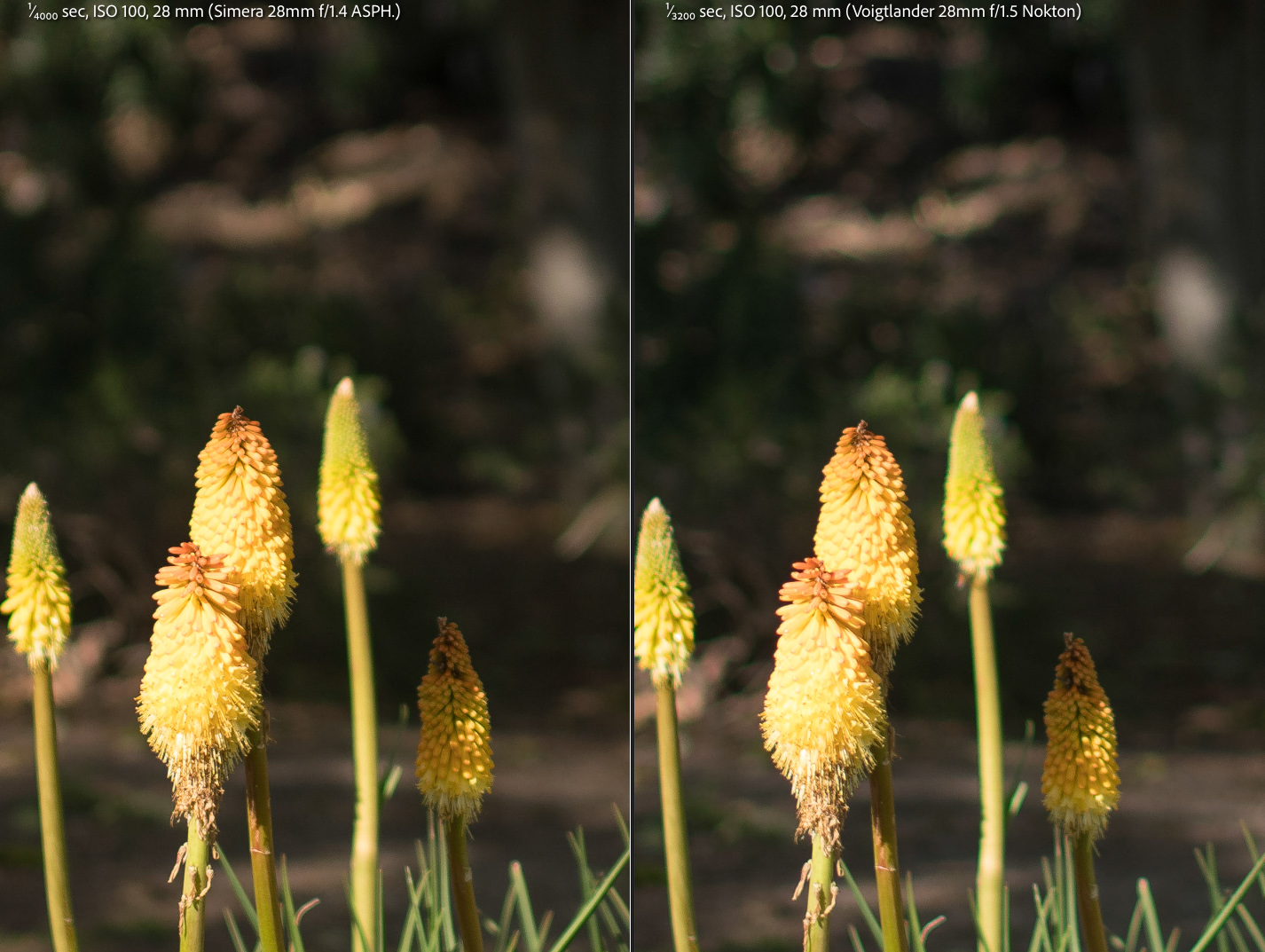
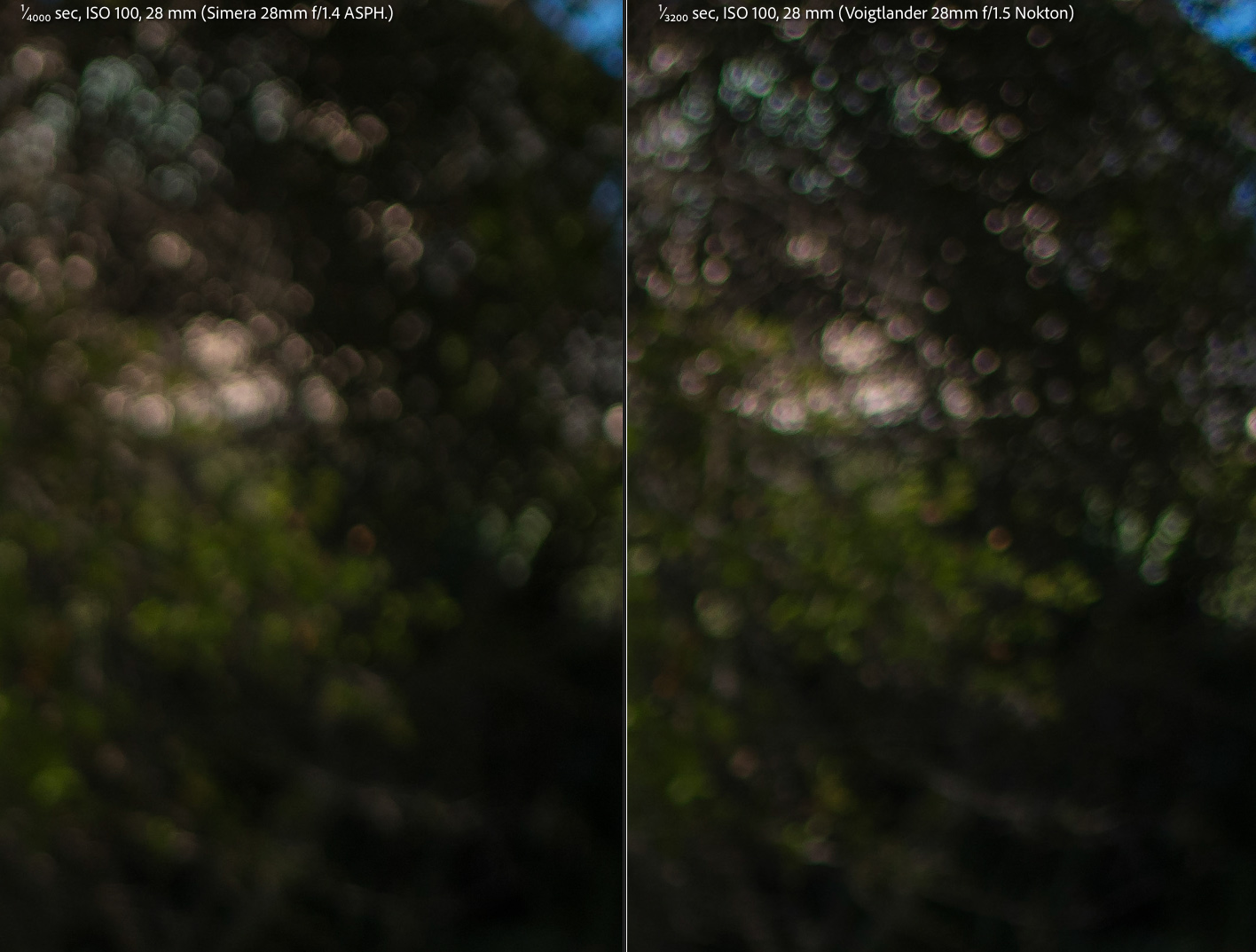
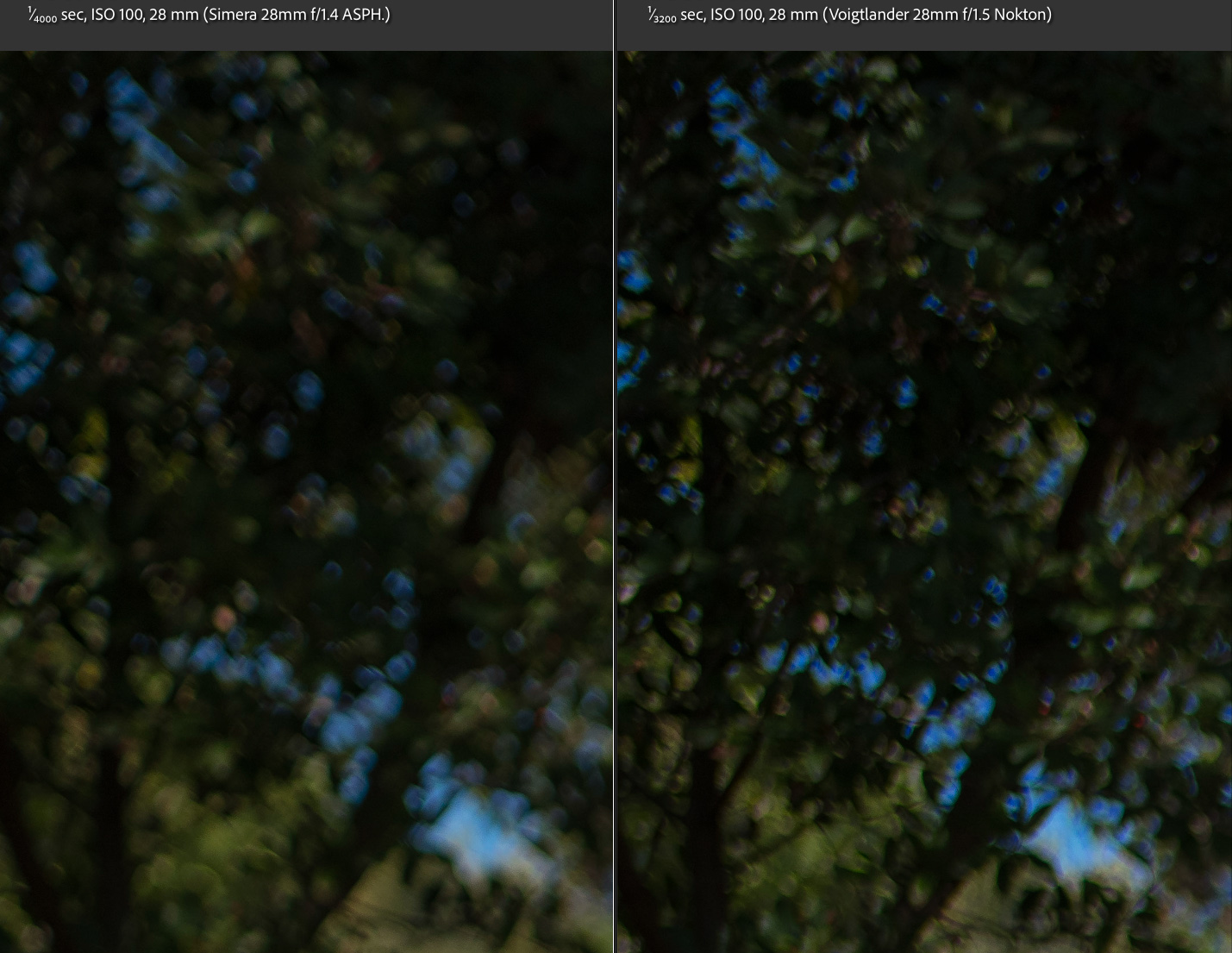
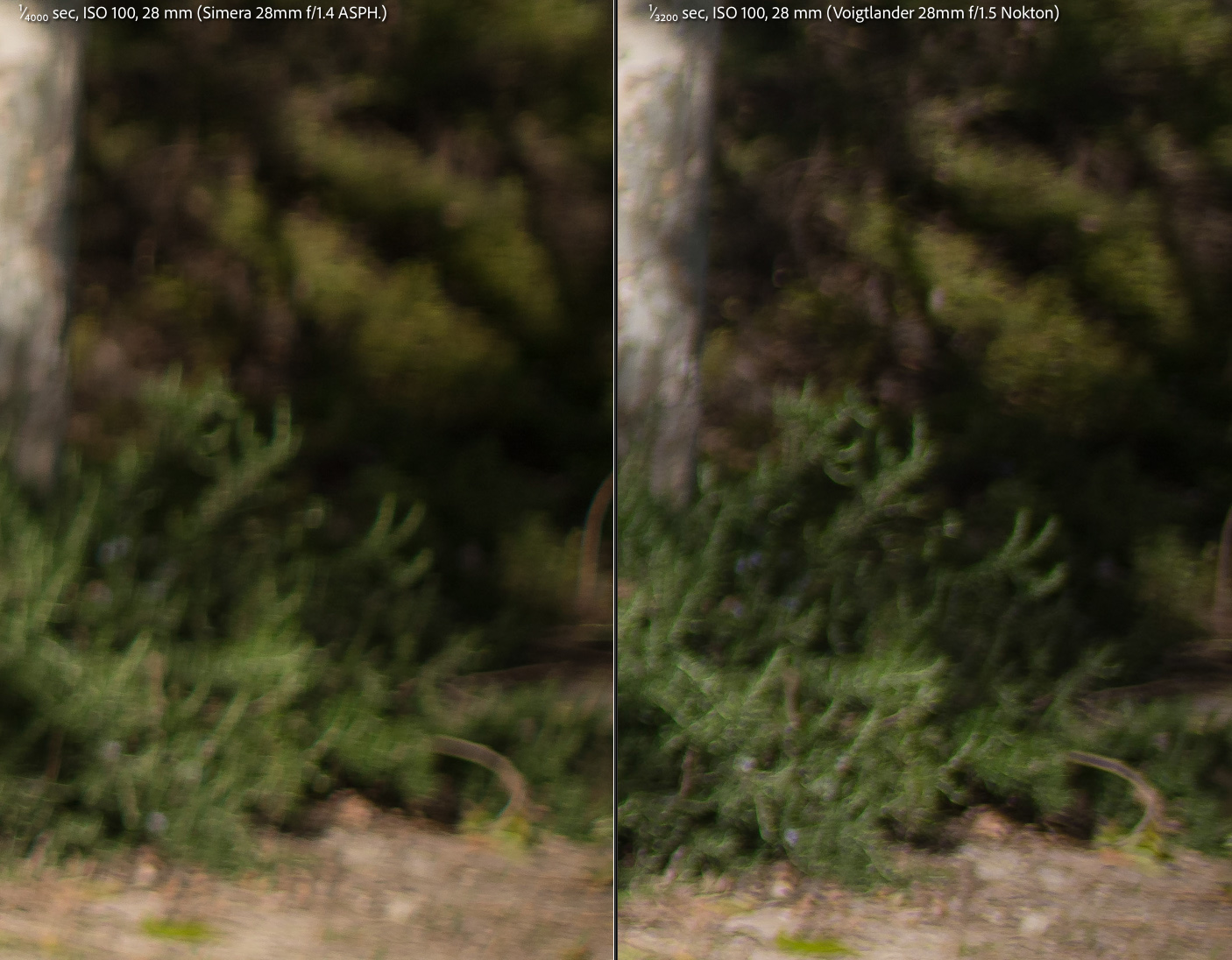
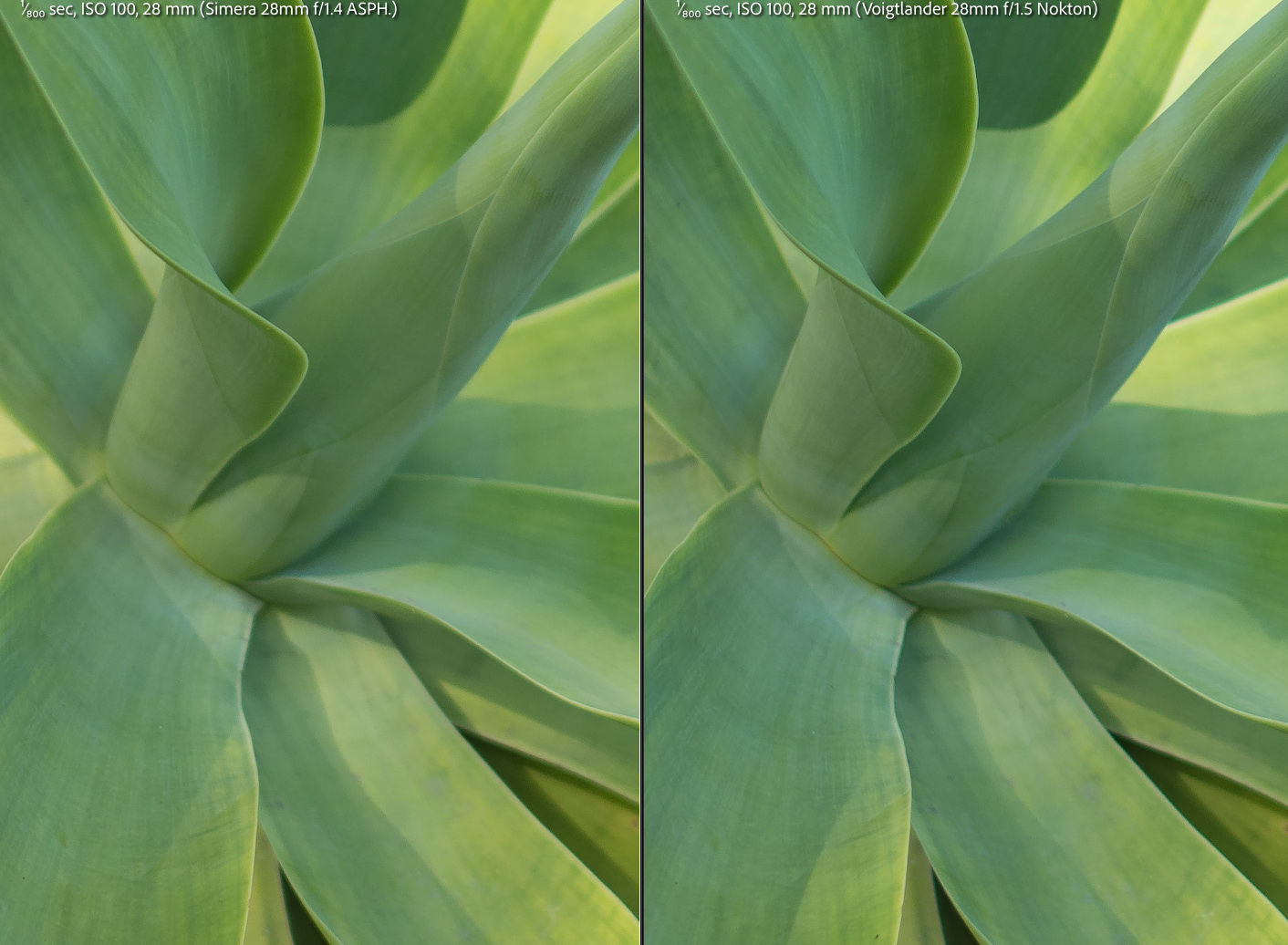
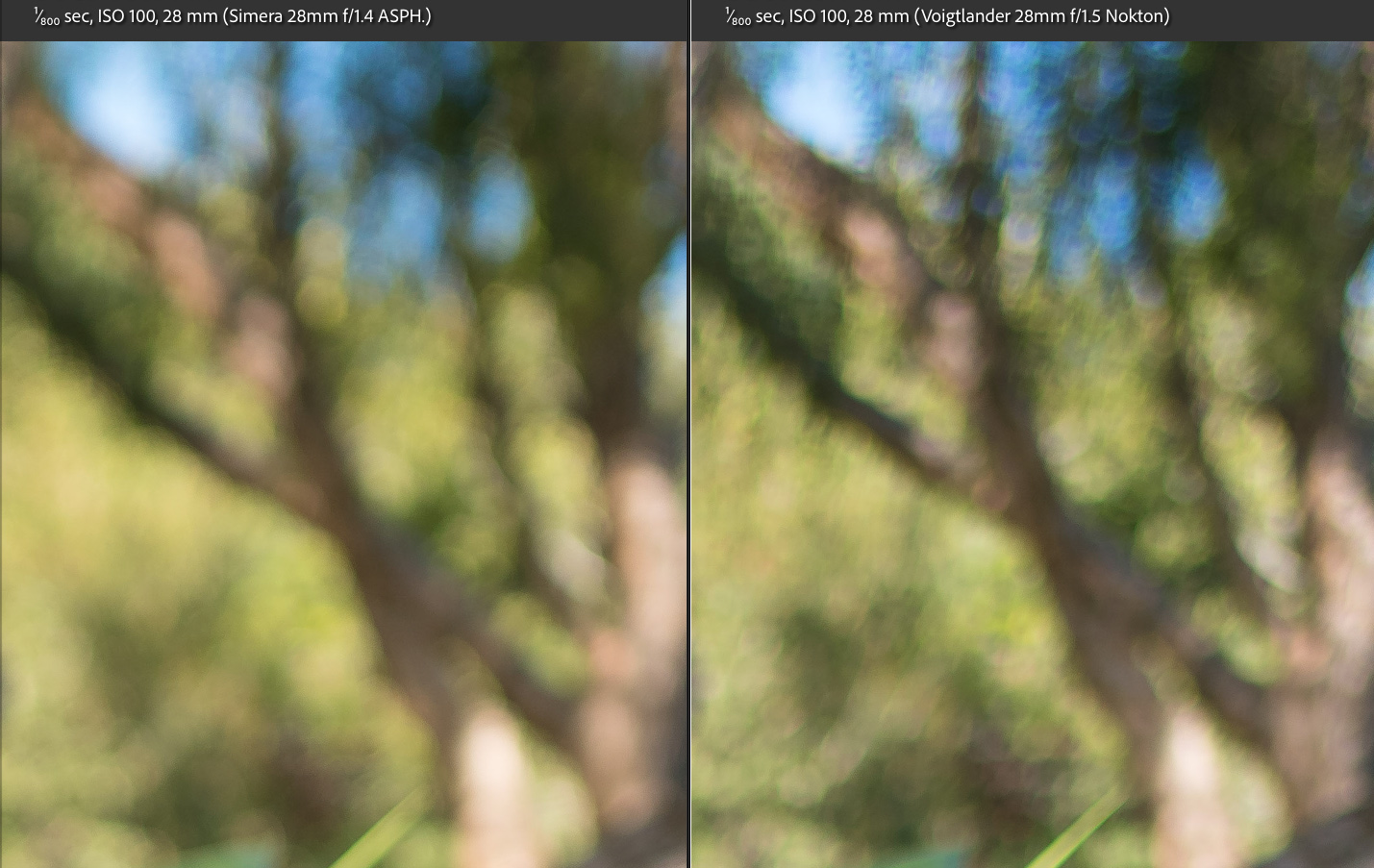
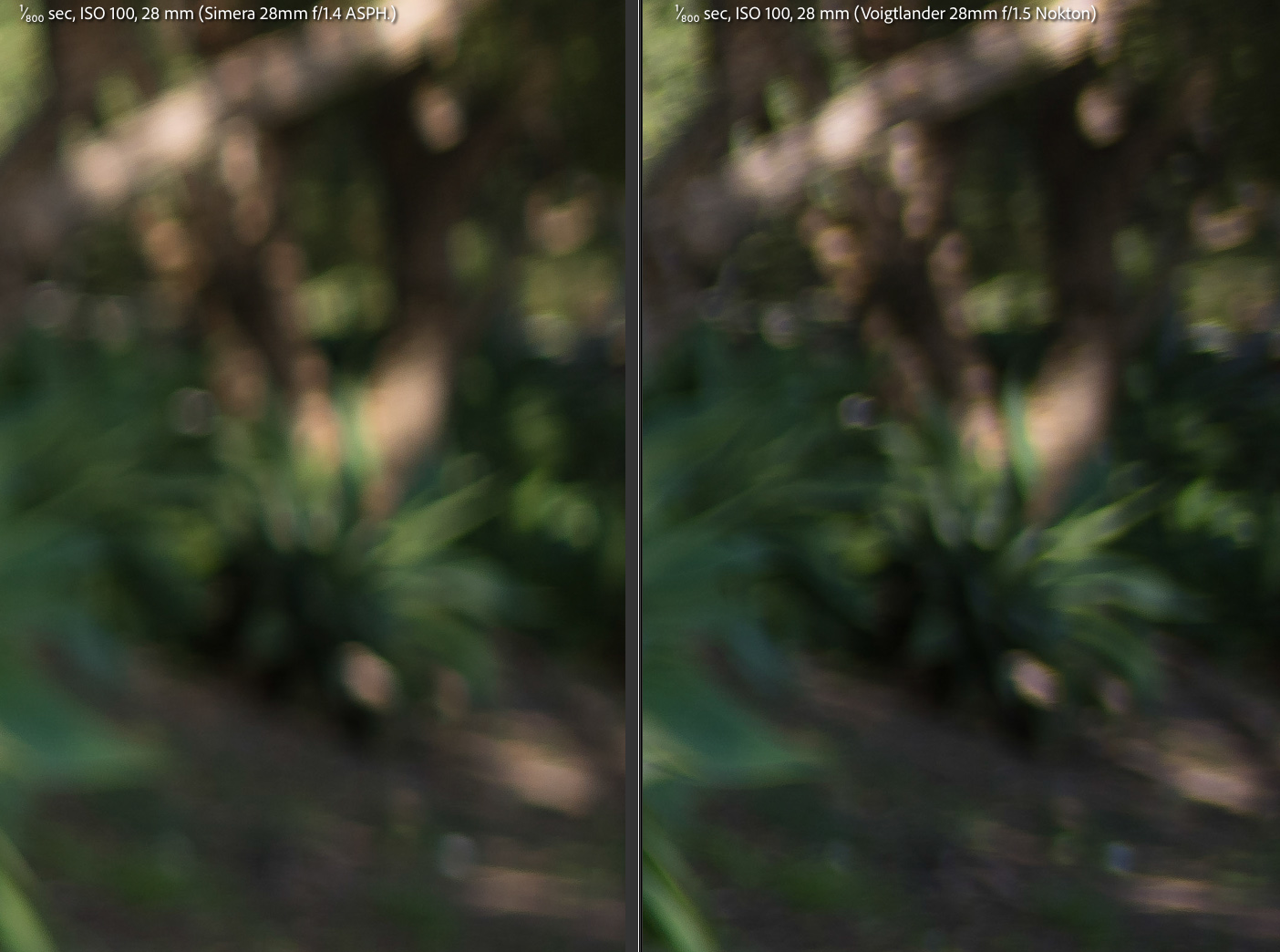
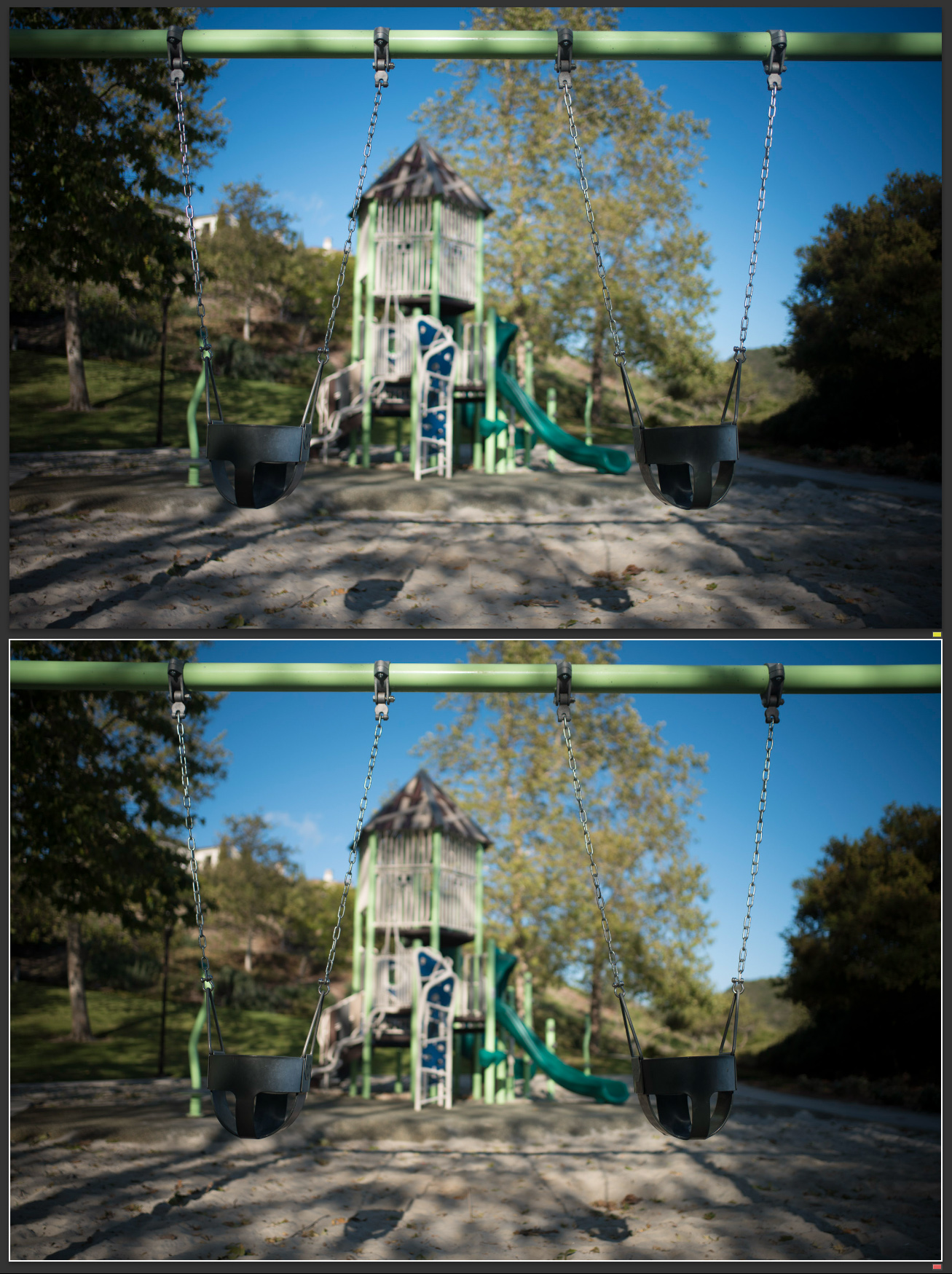
After spending a couple of weeks comparing the Simera 28mm f/1.4 ASPH. and the Voigtlander 28mm f/1.5 Nokton, I found that despite being similarly fast 28mm lenses, they have distinct rendering styles. Photographers looking for undistracting rendering will likely prefer the Simera. While only slightly faster at f/1.4 compared to f/1.5, it produces noticeably larger specular highlights, has a modern rendering with very smooth focus transitions, and is better corrected for chromatic aberrations.
On the other hand, the Voigtlander 28mm f/1.5 Nokton delivers higher contrast, greater resolution, and a more imperfect rendering full of character. When I reviewed the Nokton, I compared it to the Leica 28mm f/1.4 Summilux ASPH., and looking at the sample images and side-by-side comparisons, the two lenses share a nearly identical high-contrast rendering style.
Which is better? That depends on your shooting style and preferences. Some will be drawn to the Simera’s sharp, modern, and smooth rendering, while others will prefer the more structured or painterly look of the Voigtlander.
I hope these comparisons are useful for those considering both lenses.