This topic is in the 2024 archive. You can read it and like its posts here. It is read only.
Archive 2024ED elements , lens design and 3D pop
p.7 #1ED elements , lens design and 3D pop
zeitlos wrote:
Why do you know that?
Well... I can take a shot of exactly the same subject on any of my 40+ lenses and show you identical looking images demonstrating complete absence of 3D pop. Now, can you show me the same scene rendered on two different images, one with 3D pop and one without?
See... every other REAL image characteristic can be demonstrated via comparison: perspective compression, flare, sharpness, barrel and pincushion distortion, contrast, vignetting, etc. 3D pop happens to be the only characteristic that has never been shown in two images: one with and another without.
Besides, the way society operates goes like this: nothing is real unless proven otherwise. It's only the existence of god and 3D pop that keep challenging this rational way of thinking. In other words, 3D pop is an illusion, and proof should be on the shoulders of those who believe in it.
old-gregg wrote
That image of a van would have looked exactly the same if it was taken with any other 50mm lens at the same distance and aperture.Well... I can take a shot of exactly the same subject on any of my 40+ lenses and show you identical looking images demonstrating complete absence of 3D pop. Now, can you show me the same scene rendered on two different images, one with 3D pop and one without?
See... every other REAL image characteristic can be demonstrated via comparison: perspective compression, flare, sharpness, barrel and pincushion distortion, contrast, vignetting, etc. 3D pop happens to be the only characteristic that has never been shown in two images: one with and another without.
Besides, the way society operates goes like this: nothing is real unless proven otherwise. It's only the existence of god and 3D pop that keep challenging this rational way of thinking. In other words, 3D pop is an illusion, and proof should be on the shoulders of those who believe in it.
Nov 18, 2024 at 05:11 PM
p.7 #2ED elements , lens design and 3D pop
The thing I can say you got right above is that '3D is an illusion'. Yes, it is, our eyes are tricked into seeing dimensionality. Clearly 3D is attributed to many factors, but I believe the glass is one of them. Can you pull that one factor out and present it as a photo and say THERE IT IS? That is a hard ask. Photography is an art, as much or more than it is a science, and you want to measure it with tools of science. Some of us come from an art perspective, and see God, or fancy glass creating an image that jumps off the screen. Prove otherwise free of opinion.
Nov 19, 2024 at 10:16 AM
foto16
Offline
Activity
[X]
Details
p.7 #3ED elements , lens design and 3D pop
MARKFER wrote:
The thing I can say you got right above is that '3D is an illusion'. Yes, it is, our eyes are tricked into seeing dimensionality. Clearly 3D is attributed to many factors, but I believe the glass is one of them. Can you pull that one factor out and present it as a photo and say THERE IT IS? That is a hard ask. Photography is an art, as much or more than it is a science, and you want to measure it with tools of science. Some of us come from an art perspective, and see God, or fancy...Show more →
If, as you said "'3D is an illusion'. Yes, it is, our eyes are tricked into seeing dimensionality," it is still an effect visible in an image. If it is visible, what @old-gregg has asked to "show me the same scene rendered on two different images, one with 3D pop and one without" is very straightforward and entirely reasonable. If 3D pop is a visible effect, people with eyes should be able see the difference in a side-by-side comparison. It's not a hard task. It's common sense and really not about science vs. faith.
If what you are saying is that "God creates 3D pop" and it's only visible to a chosen few who have the faith, then you really should have arrived way earlier in this thread to save these lost souls from 7 pages of aimless wandering.
Nov 19, 2024 at 10:47 AM
p.7 #4ED elements , lens design and 3D pop
Photography creates flat images. Isn't it about being tricked? I am still not certain that people see things the same way. If I could look through your eyes or vice versa I think we would be shocked to consider how this can change the equation. Maybe my eyes are significantly farther apart. Maybe I see color differently. My point being that as much as you try to corner fact in photography, interpretation always wins. Side by side photos or not.
Nov 19, 2024 at 11:59 AM
p.7 #5ED elements , lens design and 3D pop
MARKFER wrote:
The thing I can say you got right above is that '3D is an illusion'. Yes, it is, our eyes are tricked into seeing dimensionality. Clearly 3D is attributed to many factors, but I believe the glass is one of them. Can you pull that one factor out and present it as a photo and say THERE IT IS? That is a hard ask. Photography is an art, as much or more than it is a science, and you want to measure it with tools of science. Some of us come from an art perspective, and see God, or fancy...Show more →
First of all, “3D” in a 2D image (which is what photographs are) is by definition an “illusion.”
Secondly, whether your notion of “3D” effect in a photograph comes from glass, composition, post-processing, or anything else, if it is there you should be able to compare two images that change only one of those inputs (say the glass) and see that thing. So, if someone does the experiment that I described earlier with a set camera position, set subject, same exposure, same lighting ban changing only the lens, you should be able to see it… and if presented with anonymized pairs of images from the test you should be able to consistently recognize those that use the lens that has “it” and those that do not.
You can actually prove or disprove this notion. It isn’t even all that hard.
Edited on Nov 20, 2024 at 01:56 PM · View previous versions
Nov 20, 2024 at 08:33 AM
p.7 #6ED elements , lens design and 3D pop
I think back to all those threads that purport to show excellent 3-D pop and me thinking that such an such a image is completely unexceptional, and shows no particular pop at all. You can see a lot of things in a photo, but others may well not agree with you. Much like rendering, another amorphously fairly useless term in my opinion.
Nov 20, 2024 at 09:18 AM
p.7 #7ED elements , lens design and 3D pop
https://www.flickr.com/photos/95630920@N02/54191892243/in/dateposted/
Zeiss Loxia 35mm. Shot at 2.8 or so. Cloudy, but the geometry lends itself to 3D. Agree pr Disagree.
Low number of lens elements.
Zeiss Loxia 35mm. Shot at 2.8 or so. Cloudy, but the geometry lends itself to 3D. Agree pr Disagree.
Low number of lens elements.
Dec 10, 2024 at 09:11 AM
p.7 #8ED elements , lens design and 3D pop
Not to suggest the L35 lacks depth (it's a Zeiss specialty), but this one cheats by forcing the eye to see the rock shelf as capable of having a dog on it. Had the photo been taken from the right side sans dog, it would be a better test.
The trouble with this issue is that both sides are correct: all lenses benefit by great light which gifts them 3D; and tough lighting separates the depth lenses from the flat lenses. Do you like that? I just coined two new descriptions - 'depth lenses' and 'flat lenses'.
It sure beats sharp lenses, and so does the depth effect beat the sharp lenses, which are only a little 'sharper' in any case. In fact, the kind of sharpness photographers demand these days - to the point where this is their main criterion for buying - works against image depth by attracting all the attention to the strong focal plane, leaving the rest as second class content.
It's been a technical success, a TKO victory of technology over aesthetic quality. Not much of a win, in my book.
Dec 10, 2024 at 04:13 PM
p.7 #9ED elements , lens design and 3D pop
I feel at this point, we have two major types of lenses.
Landscape lenses that prioritize edge to edge sharpness.
Portrait lenses that prioritize overall rendering.
Ideally, most of us wish we could get both in one lens, but the reality is you need different lenses if you want lenses optimized for each use case currently.
For example, I prefer the rendering of My Zeiss ZF 35mm f2, but for landscapes, my Voigtlander 35mm f2 APO is definitely the sharper lens.
Dec 10, 2024 at 04:29 PM
p.7 #10ED elements , lens design and 3D pop
'Photography creates flat images.'
Just like all movies projected onto a flat screen, and the painted artworks of Da Vinci, Rembrandt and Van Gogh. Do you go around art galleries telling them their artworks are all flat? Call up Paramount and complain the movies are just flat images moving across a flat screen? I didn't think so.
You see, (well, you may not see) a huge part of visual art involves the portrayal of image depth, achieved by various means. Fortunately the cine world see things with much greater clarity and understanding. From DZOFilm:
'The creamy bokeh and moderate high-contrast render the layers of light and shadow with intricate detail, with a striking contrast between highlights and shadows that accentuates the subject, adding dimensionality and spatial depth to the frame.'
https://thypoch.com/en/simera-c
Now you can see this effect of 'adding dimensionality and spatial depth' with one of their lenses - here is a striking comparison that illustrates excellent image depth from one lens and the virtual lack of it in another. Click here:
https://www.35mmc.com/19/02/2024/thypoch-simera-35mm-asph-review/
..and head one third down the page to the set of slider images; move the sliders back and forth and tell me which one looks more natural, that you could envision entering the scene on foot. (kudos to vincentbihler)
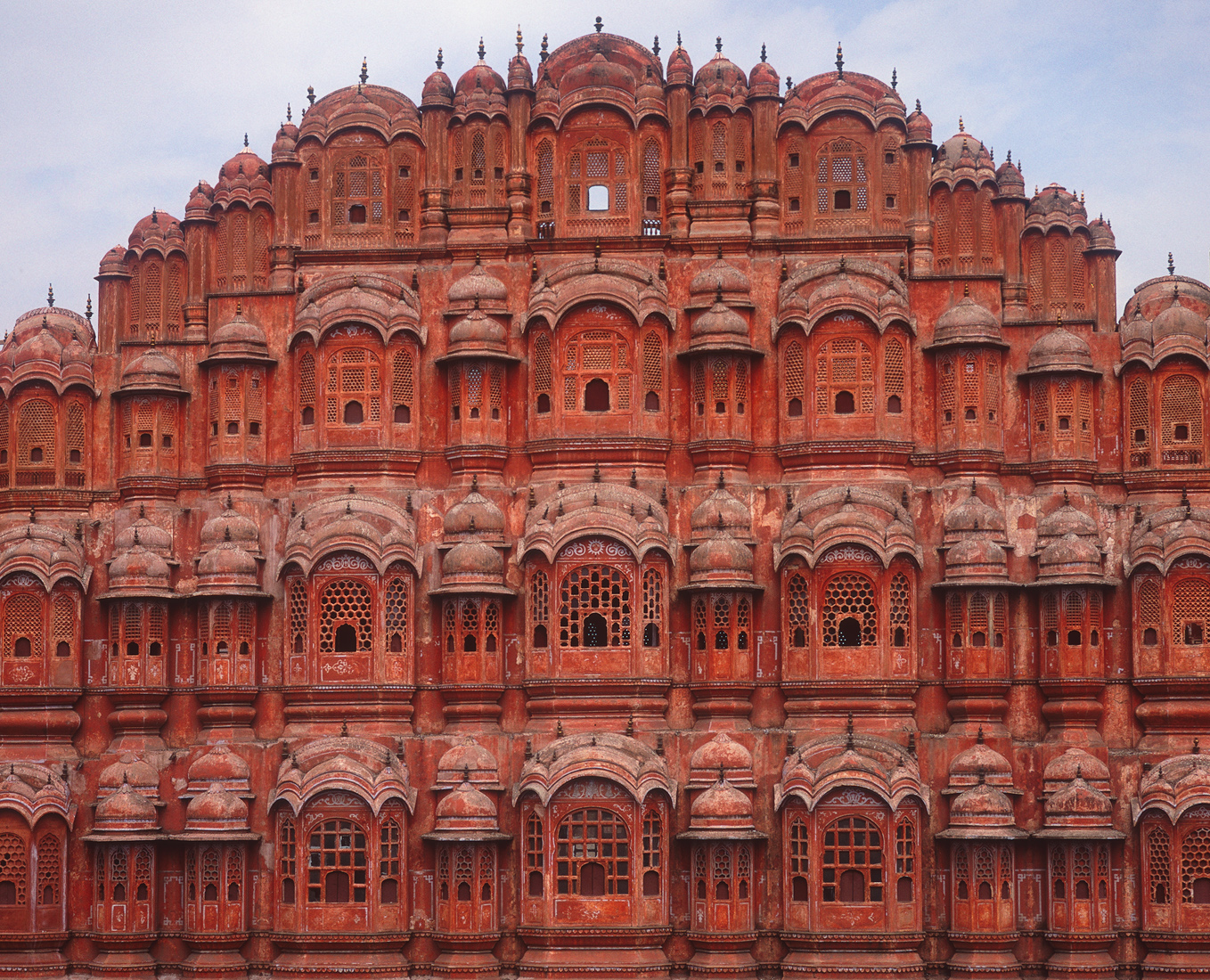
a flat (planar) image that illustrates image depth, how lucky - Fuji GA645 (seven elements in six groups)
Just like all movies projected onto a flat screen, and the painted artworks of Da Vinci, Rembrandt and Van Gogh. Do you go around art galleries telling them their artworks are all flat? Call up Paramount and complain the movies are just flat images moving across a flat screen? I didn't think so.
You see, (well, you may not see) a huge part of visual art involves the portrayal of image depth, achieved by various means. Fortunately the cine world see things with much greater clarity and understanding. From DZOFilm:
'The creamy bokeh and moderate high-contrast render the layers of light and shadow with intricate detail, with a striking contrast between highlights and shadows that accentuates the subject, adding dimensionality and spatial depth to the frame.'
https://thypoch.com/en/simera-c
Now you can see this effect of 'adding dimensionality and spatial depth' with one of their lenses - here is a striking comparison that illustrates excellent image depth from one lens and the virtual lack of it in another. Click here:
https://www.35mmc.com/19/02/2024/thypoch-simera-35mm-asph-review/
..and head one third down the page to the set of slider images; move the sliders back and forth and tell me which one looks more natural, that you could envision entering the scene on foot. (kudos to vincentbihler)
 |
||
 |
||
|
a flat (planar) image that illustrates image depth, how lucky - Fuji GA645 (seven elements in six groups)
Dec 10, 2024 at 05:32 PM
p.7 #11ED elements , lens design and 3D pop
Robin Smith wrote:
I think back to all those threads that purport to show excellent 3-D pop and me thinking that such an such a image is completely unexceptional, and shows no particular pop at all. You can see a lot of things in a photo, but others may well not agree with you. Much like rendering, another amorphously fairly useless term in my opinion.
I almost agreed with you, because I don't understand the term 3D pop either, except that almost all photos that are titled that way in forums have a transition from extreme sharpness to extreme blur that is too abrupt for my taste. But then I saw that you wrote that the images shown do not show any particular pop. But what is "particular pop" supposed to be? This term also means absolutely nothing to me. If you deny the photos any pop, you should really know what is meant by that, or at least what you yourself understand by it. I personally like it when a lens allows me to take photos that create an illusion of three-dimensionality, even in adverse lighting conditions, with a subject-subject distance-angle combination that suits my taste. Here is an example:
 DSC05742 by Werner Wurst, on Flickr
Jan 17, 2025 at 10:08 AM
p.7 #12ED elements , lens design and 3D pop
I tend to use the meaningless word of "dimensionality" for your sample shot. There is a feeling of depth/placement of objects within a space, etc.
Nifty Fifty wrote:
Robin Smith wrote
I think back to all those threads that purport to show excellent 3-D pop and me thinking that such an such a image is completely unexceptional, and shows no particular pop at all. You can see a lot of things in a photo, but others may well not agree with you. Much like rendering, another amorphously fairly useless term in my opinion.Jan 17, 2025 at 12:33 PM
p.7 #13ED elements , lens design and 3D pop
That is a great photo but is that 3D pop? I see a lot of depth with multiple layers. The subject doesn't jump out or pop to me. Again, it's an impressive photo but that appears to be good transition bokeh on those multiple layers.
Jan 17, 2025 at 01:23 PM
p.7 #14ED elements , lens design and 3D pop
MARKFER wrote:
That is a great photo but is that 3D pop? I see a lot of depth with multiple layers. The subject doesn't jump out or pop to me. Again, it's an impressive photo but that appears to be good transition bokeh on those multiple layers.
It's nice that you say that, because it reflects exactly my opinion and it is precisely this type of depth effect that appeals to me personally and which is always not only made up of the combination of focal length, aperture and distance to the subject, but also definitely includes the space between the subject and the background. However, in many photos where 3D pop is mentioned, the latter does not occur. Often the background is very soft, the subject very crisp and that's it. Of course the subject then pops out, but that is exactly what I personally don't like. With such a subject constellation without a real middle ground, I would prefer to stop down a bit so that not only sharpness and blurring, but also the depth of field comes into play. Seen in this way, the legendary 3D pop that many people strive for would be more of a setting error for me personally.
Jan 17, 2025 at 01:55 PM
p.7 #15ED elements , lens design and 3D pop
I agree. I have seen 3D pop that doesn't rely on bokeh, but more so another mythical phrase micro contrast. I see it in some Zeiss lenses. Clearly you need to fashion the light and subject matter to make it pop, no lens is magic.
Jan 17, 2025 at 01:59 PM
p.7 #16ED elements , lens design and 3D pop
It's easy enough to live on in a flat photographic world, to the point where potential alternatives don't even exist in the mind. Not everyone feels this way, particularly where it matters, where money enters the framework.
Gathering pace over a decade now, there are serious efforts aimed at understanding the formulas responsible for 'dimensionality' - no less a useful word than 'functionality' and note that words are descriptive thinking tools - across the moving picture industry.
In essence, dimensionality is the 'cinematic look', that immersion into the image that is just not there with so many new flat rendition lenses, hence the initiation of this thread. It asks why not? in design terms, others are asking why does it happen and how can we get more of it?
So the inquiry has moved much further on from looking at single images and yes/no argumentation on photo forums. Here in condensed form is how DZO (who are fans of older Leica M lenses) is marketing its new Simera-C range:
Far from the usual fluff, we see some precise terms and concepts here that feed back into specific lens design requirements:
'smooth bokeh and natural edge fall-off';
'natural edge fall-off';
'human-eye-like field curvature';
'flare is subtly managed';
'closer minimum focusing distance, allowing the capture of greater texture and detail';
'ultra-shallow depth of field adds dramatic depth and spatial separation';
'creamy bokeh and moderate high-contrast';
'striking contrast that accentuates the subject';
'adding dimensionality and spatial depth';
'in the context of high-resolution digital cameras with broader dynamic range';
'inheriting the (Leica) unique mood and texture'; 'created by optic imperfections mixing with softness'.
https://thypoch.com/en/simera-c
That's their formula, the one they also used for our stills versions of these same lenses. It's the way they approach the very real challenge of designing emotional immersion into their lenses. Like it or not, flat render lenses are being forced to share the table because they are too 'good' and fail to evoke emotional responses in audiences (and viewers of still images).
All kinds of filters and add-on optical units are now in wide use with the aim of taking digital perfection out of the picture, even using five figure lenses from Arri, Zeiss, Leica etc. It's almost embarrassing for them, but they are realists and will do what is necessary.
Jan 17, 2025 at 02:32 PM
p.7 #17ED elements , lens design and 3D pop
By the way, the 2025 Superman movie was shot with a Leica WATE Tri-Elmar 16-18-21mm:
https://ymcinema.com/2025/01/13/the-lens-behind-the-look-of-superman-2025-leica-tri-elmar/
Why might they have done that? Could it be that it looks way better than the ones shot on 'industry-leading' lenses? Even with its 3% plus distortion, large vignette and obvious midframe curvature..
'The choice to use the Leica Tri-Elmar—a fairly obscure photography lens—is a bold move. This wide-angle lens creates a look that is expansive yet intimate, capturing both the grandeur of Superman’s world and the subtleties of character-driven moments.'
'..the Leica Tri-Elmar delivers stunning results. The V-Raptor’s large-format sensor complements the wide-angle capabilities of the lens, producing images that are both immersive and sharp. This combination showcases the potential of combining traditional photography lenses with cutting-edge digital cinema technology. This is in contrast to the super shallow depth of field in super fast lenses. Soft distortion adds a touch of realism.'
If you want a WATE, now is obviously the time to buy. B&H are back ordered, their retail is $6600. I still remember, maybe ten years ago, seeing some images from the WATE by Charles K, a member here. The first thing that stood out was the great depth of its images.
Jan 17, 2025 at 03:07 PM
p.7 #18ED elements , lens design and 3D pop
Anyone seriously interested in this subject may want to watch this excellent video of the cine world's luminaries discussing the advent of 'large format' (135) and Super 35 (near to APS-C). A lot of it involves issues of depth of field, intimacy, close focus and other dimensionality factors:
The search engines brings up the 31:43 video from this text:
'DCS Exploration of Large Sensor Cinematography'
'This is the full version of the Digital Cinema Society's format agnostic exploration of Large Sensor Cinematography. We look at the benefits, aesthetic and technical differences, as well as the challenges of shooting larger format sensors as compared to S35. It features interviews with renowned Cinematographers and industry experts along with behind-the-scenes coverage and sample footage. Listed in order of appearance are:
Julio Macat, ASC -- Tobias Schliessler, ASC -- Director Nigel Dick -- Nancy Schreiber, ASC -- ARRI's Art Adams -- Megan Donnelly from Abel Cine -- Zeiss's Snehal Patel -- Matthew Duclos of Duclos Lenses -- Panavision's Aaron Kroger -- DIT Lewis Rothenberg -- Steve Yedlin, ASC -- Cinematographer Todd Bell.'
Jan 17, 2025 at 03:18 PM
p.7 #19ED elements , lens design and 3D pop
Nifty Fifty wrote:
I almost agreed with you, because I don't understand the term 3D pop either, except that almost all photos that are titled that way in forums have a transition from extreme sharpness to extreme blur that is too abrupt for my taste. But then I saw that you wrote that the images shown do not show any particular pop. But what is "particular pop" supposed to be? This term also means absolutely nothing to me. If you deny the photos any pop, you should really know what is meant by that, or at least what you yourself understand by...Show more →
Fine example! A lot has to do with the light, the foreground OOF areas and subject placement to the background.
That is why 100 people can take a 100 photos with the same lens and not get this feeling. That's just my opinion.
Robin Smith wrote
I think back to all those threads that purport to show excellent 3-D pop and me thinking that such an such a image is completely unexceptional, and shows no particular pop at all. You can see a lot of things in a photo, but others may well not agree with you. Much like rendering, another amorphously fairly useless term in my opinion.Fine example! A lot has to do with the light, the foreground OOF areas and subject placement to the background.
That is why 100 people can take a 100 photos with the same lens and not get this feeling. That's just my opinion.
Jan 17, 2025 at 04:50 PM
p.7 #20ED elements , lens design and 3D pop
Can you please explain :
'natural edge fall-off';
'human-eye-like field curvature';
I dont think I ever seen anyone show them in a lens review.
Personally,I can see the pop and dimentionality . I can see it with some of the lenses ,I can also see it in paintings,Disney movies and some smartphone photos. So Im pretty sure you can get it in post too . Just look at the textures of Cinderella's castle walls .
High contrast is one of the factors ,or maybe some other kind of contrast . But Im pretty sure there are other factors as well.
As for the image , I preffer a deep focus image in order to see the effect .
philip_pj wrote:
It's easy enough to live on in a flat photographic world, to the point where potential alternatives don't even exist in the mind. Not everyone feels this way, particularly where it matters, where money enters the framework.
Gathering pace over a decade now, there are serious efforts aimed at understanding the formulas responsible for 'dimensionality' - no less a useful word than 'functionality' and note that words are descriptive thinking tools - across the moving picture industry.
In essence, dimensionality is the 'cinematic look', that immersion into the image that is just not there with so many new flat rendition...Show more →
Jan 18, 2025 at 07:49 AM