Fred Miranda wrote: Minimal Focus Distance: Resolution and Contrast
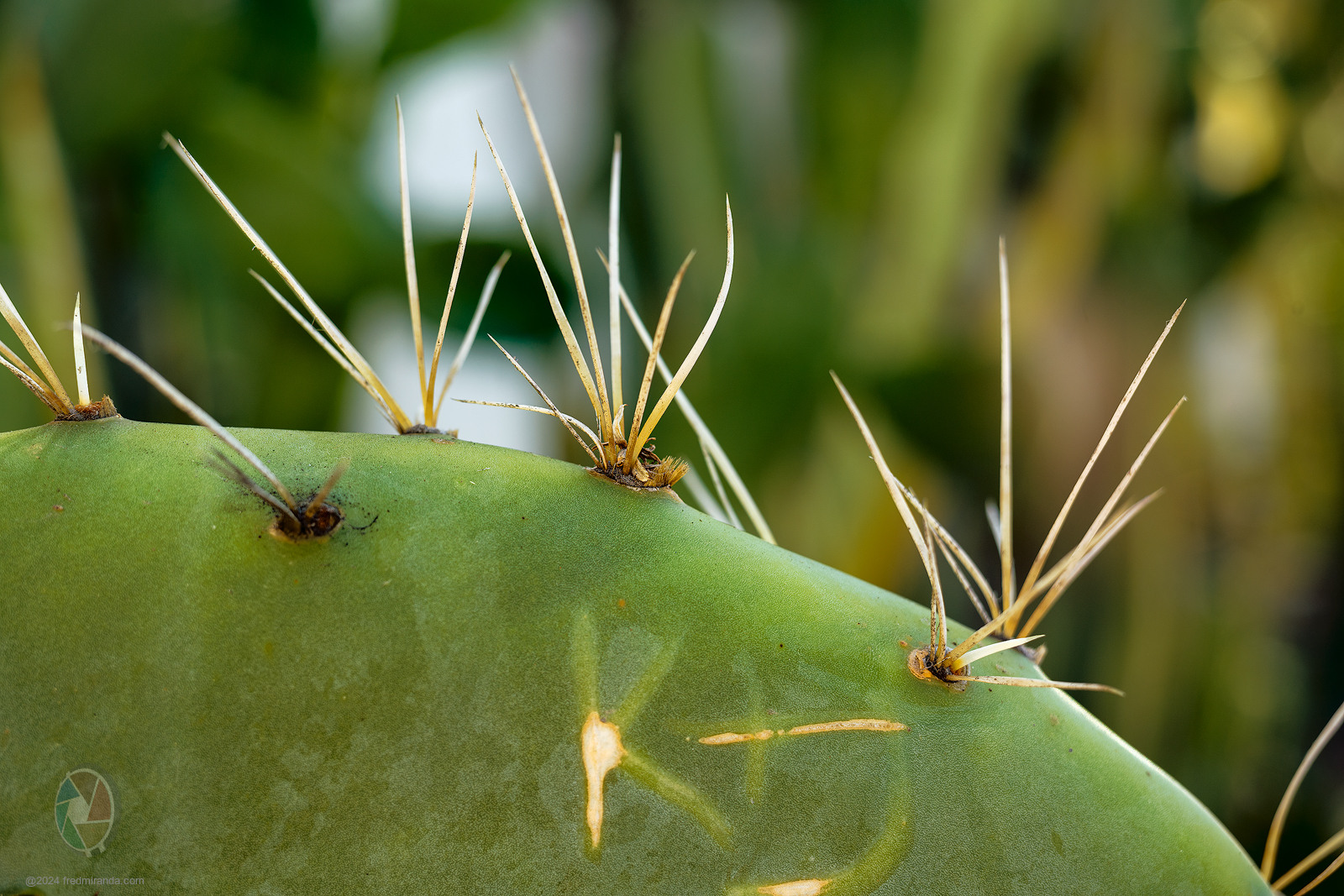
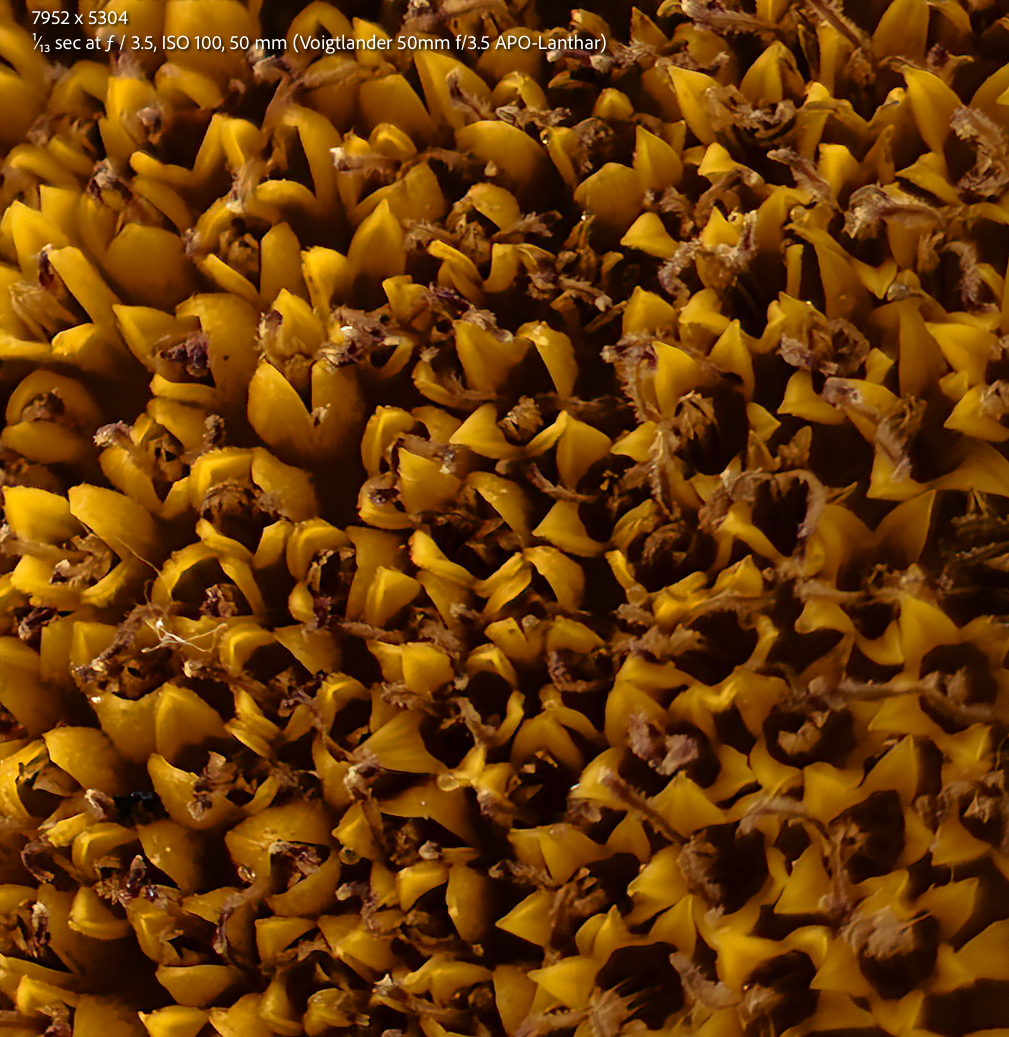
The Voigtlander 50mm f/3.5 APO-Lanthar offers impressive versatility, focusing as close as 0.35 meters and providing a 1:4.8 magnification (0.21x), which edges into macro territory. It’s notable how the lens maintains high image quality with excellent aberration control at both its minimum focus distance using Live View and 0.7 meters, the closest focusing distance for the Leica M rangefinder. This is achieved despite the absence of a floating element design or aspherical elements.
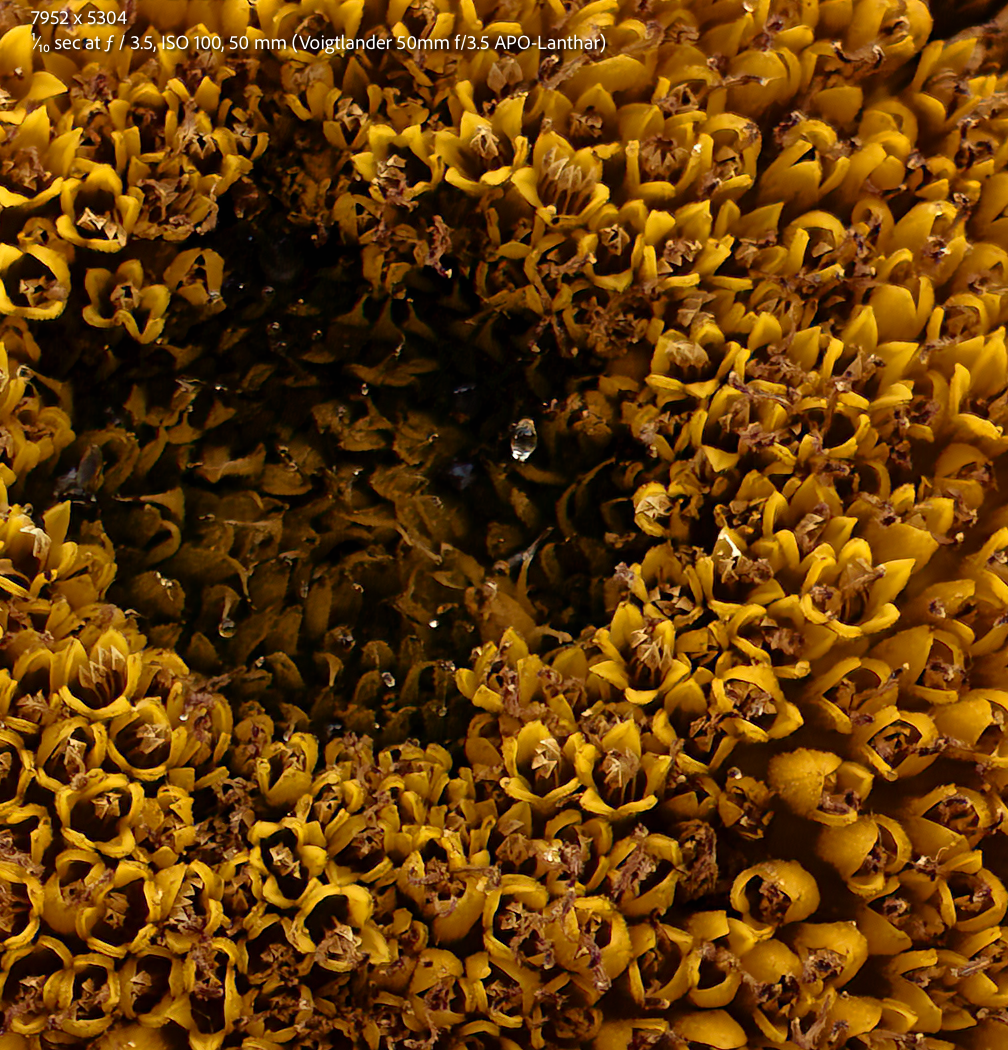
For this review, I tested the lens at its minimum focusing distance of 0.35 meters and at 0.7 meters at apertures f/3.5, f/4, and f/5.6. The sharpness remains consistent across the aperture range at both focusing distances, with only subtle improvements in resolution and contrast as the aperture stops down. These differences are difficult to detect, even when examining pixel-level crops.
Overall, the lens performs exceptionally well at close distances, producing sharp, detailed images with strong contrast. The following sequence shows its performance from wide open at f/3.5 to f/5.6. The lens was initially focused at f/3.5, and the subsequent aperture changes to f/4 and f/5.6 were made without refocusing, demonstrating minimal to no focus shift.
Prices quoted for Australian delivery are as follows with $US (based on current exchange rate of 0.66) in parentheses, an approximate guide. This is what I based my earlier estimate on. Due 'end of August'.
The macro reproduction ratio for the 50/3.5 APO is, by my calculations, 1:4.6 - due to the actual focal length being 51.3mm.
Leica's SL 50/2 APO is 1:4.8; and the Summicron-M APO 50/2 is 1:12, using actual focal lengths based on stated AOVs. The Voigtlander 50/2 APO (M) figure is 1:11.8, using the same method.
Usually, 50mm lenses with fewer elements and simpler designs offer great flare resistance, especially if they have modern multi-coated elements. However, this isn't always true for all symmetrical designs. For example, the Zeiss 50mm f/2 Planar and Leica 50mm f/2 Summicron aren't known for their flare resistance.
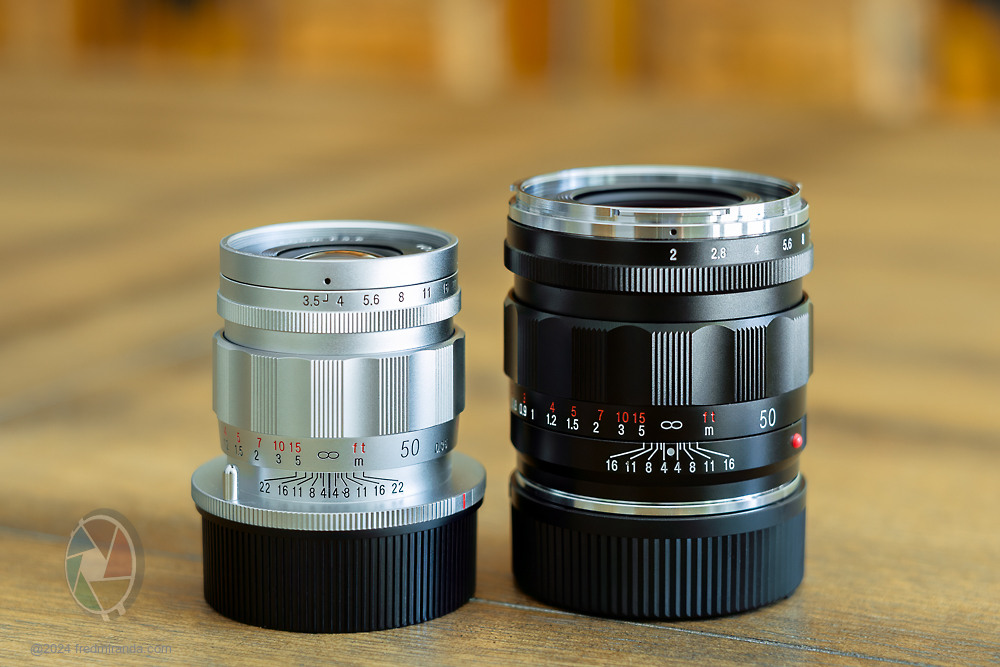
The Voigtlander 50mm f/3.5 APO-Lanthar has fewer elements than the Voigtlander 50mm f/2 APO-Lanthar and has an optical design reminiscent of the symmetrical "Planar." This made me wonder if it would perform as well as the f/2 version in terms of flare resistance. However, my tests show that both lenses have similar resistance to veiling and ghosting. This is great news for the 50mm f/3.5, as the f/2 version is known for its excellent flare resistance.
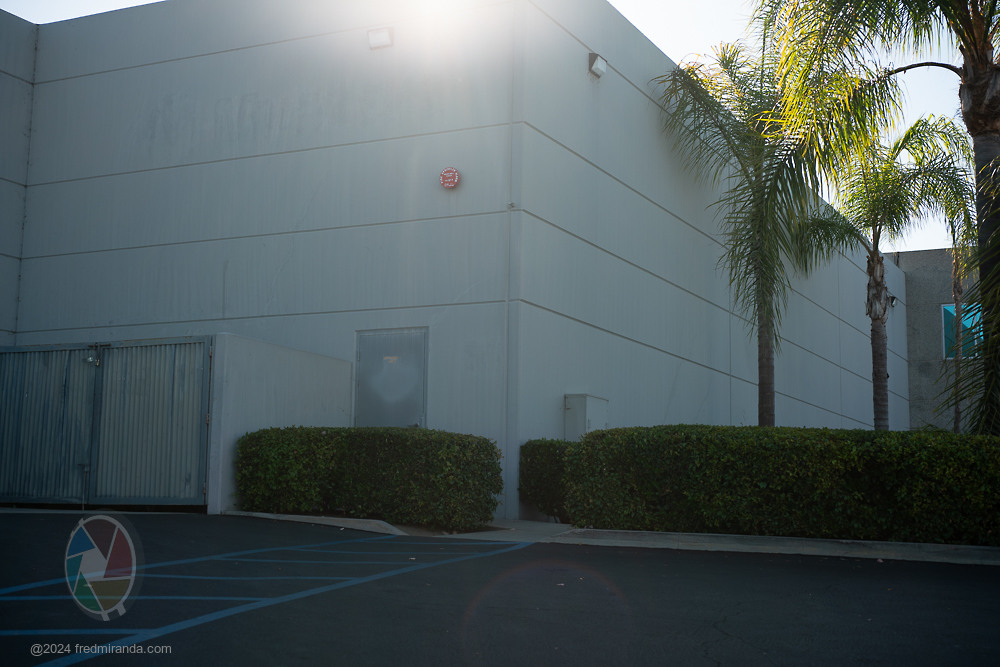
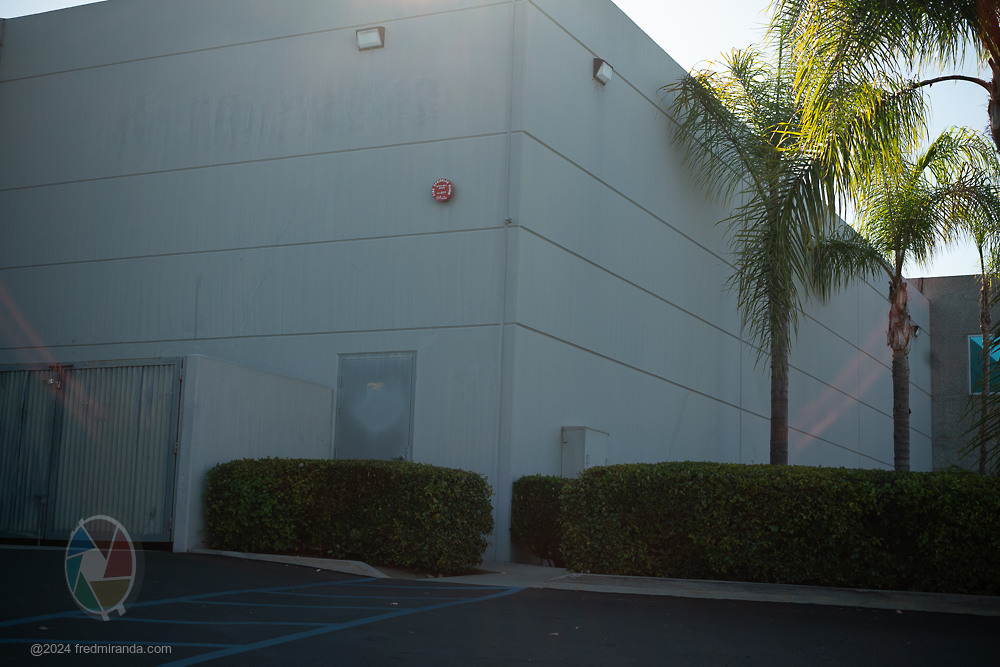
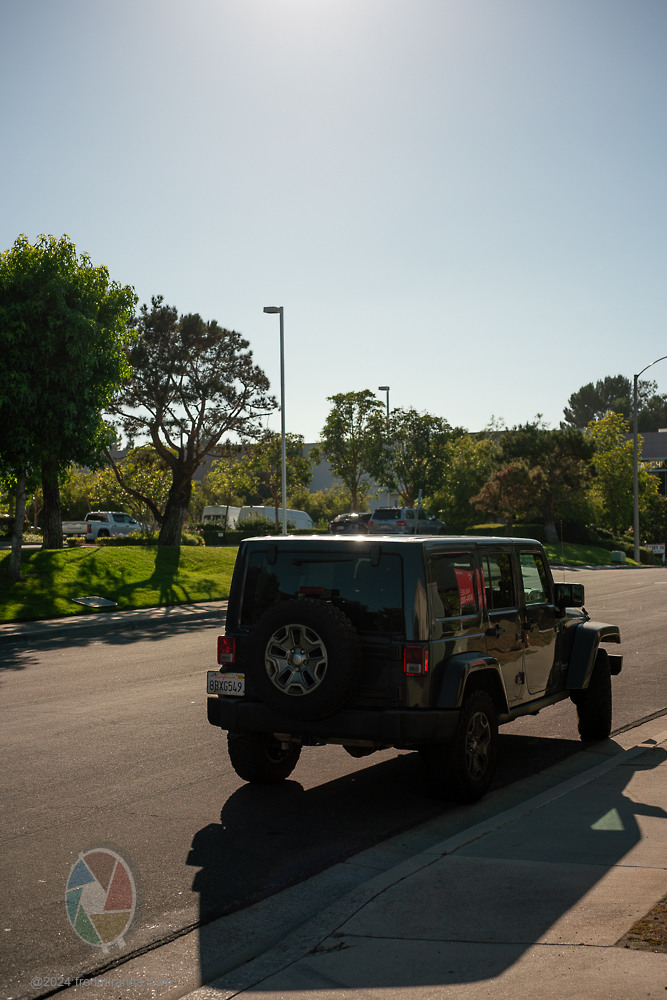
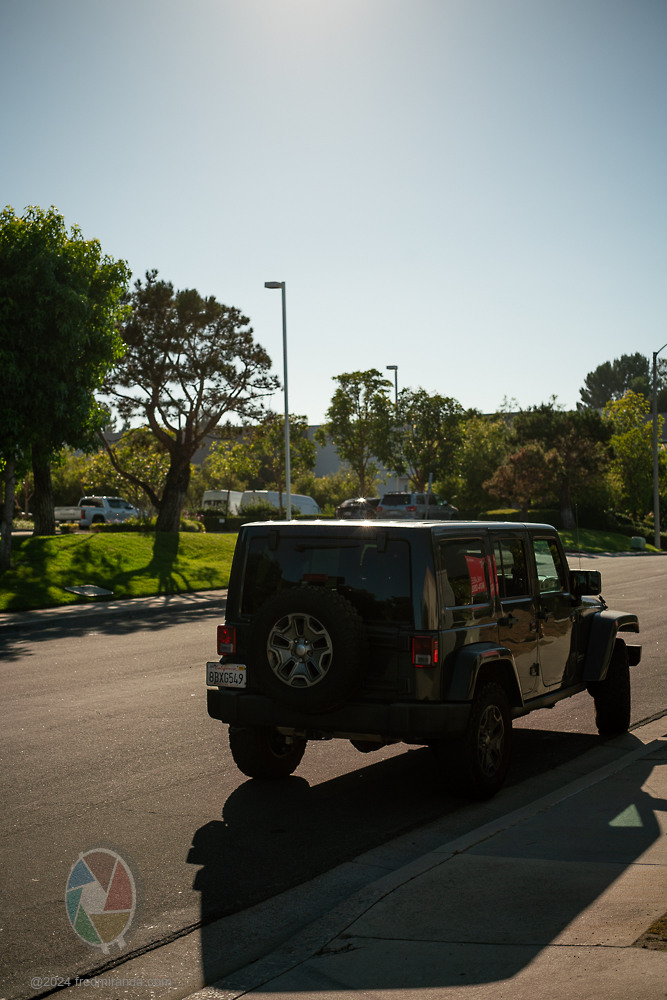
Cosina prioritizes flare resistance in their optical designs, along with excellent multi-coating. Given the small front element and simpler optical design of the Voigtlander 50mm f/3.5 APO-Lanthar, I expected it to perform well. After many days of testing against light at different times of the day, I can confidently say that this lens is indeed flare-resistant, especially compared to other 50mm M lenses. I found it challenging to produce significant veiling flare unless I pushed the lens to its limits (as shown in a sample below). For these tests, I didn't use the lens hood when comparing to the CV 50mm f/2 APO because I wanted to see if the hood was even necessary.
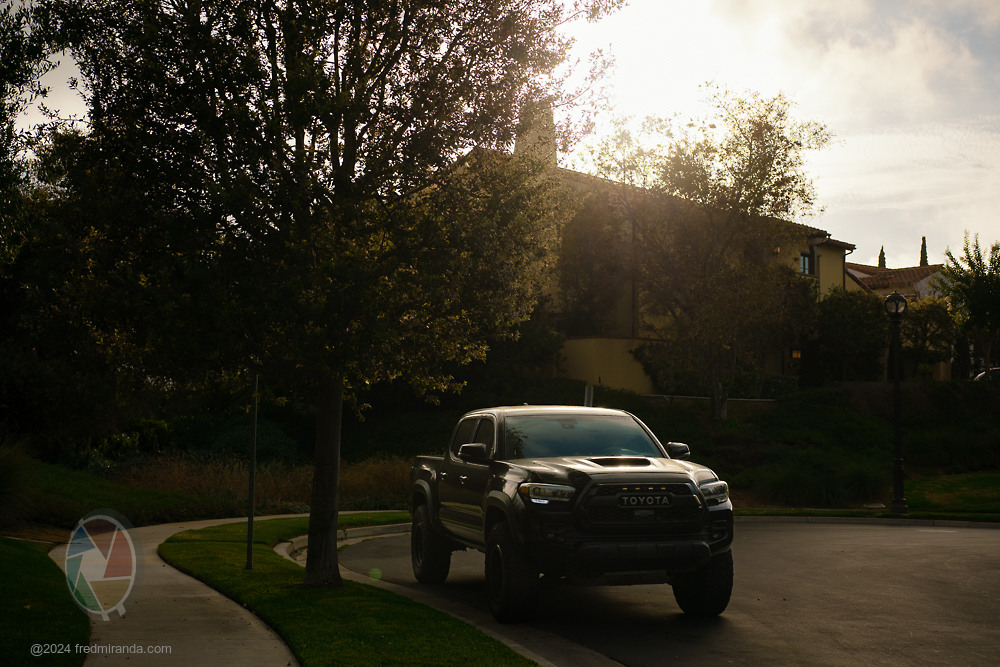
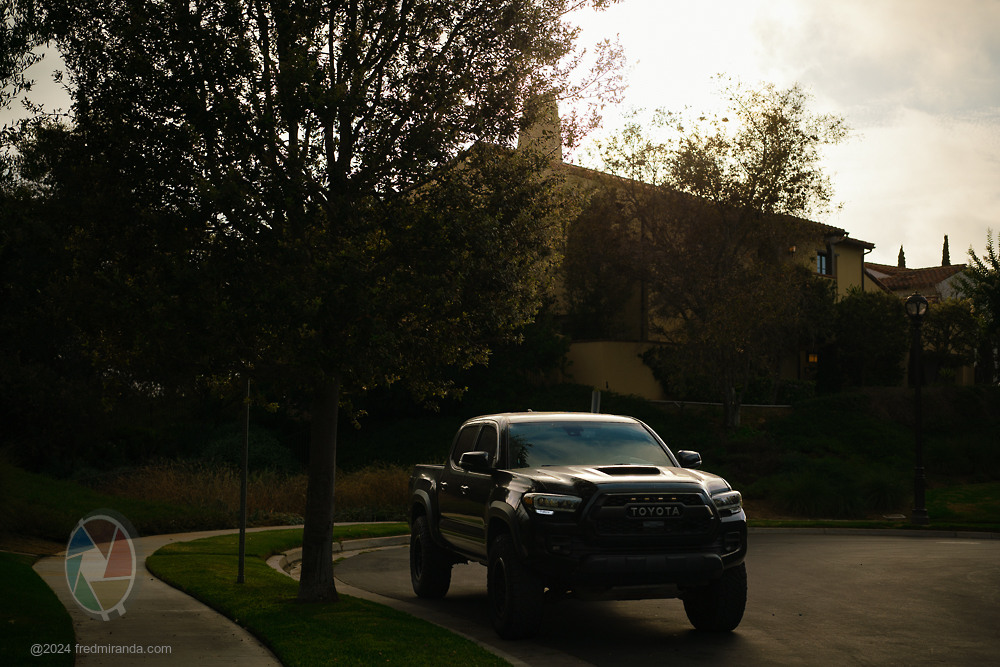
In the images below, we will analyze the flare resistance of the Voigtlander 50mm f/3.5 APO compared to the Voigtlander 50mm f/2 APO. I was unable to induce any ghosting with the f/3.5 lens, except in one instance where I noticed a ring flare, likely caused by the chrome ring of the lens. This issue probably won't happen with the black models or when the hood is attached, but I'll confirm it when I test the black versions.
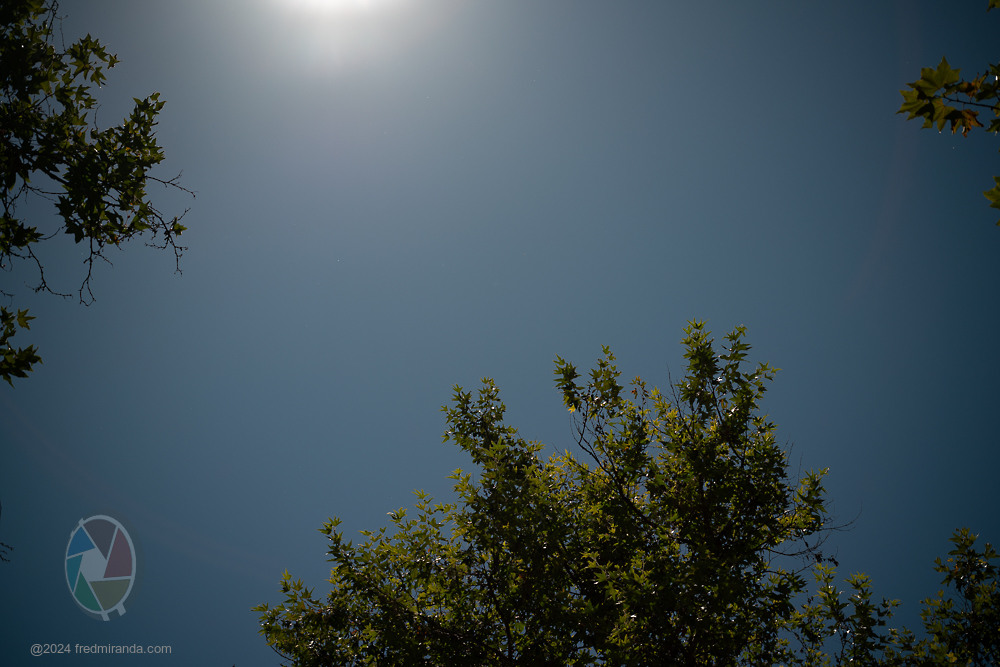
Sun positioned just above the frame. No signs of veiling or ghosting.
LEICA M10-RVoigtlander 50mm f/3.5 APO-Lanthar lens50mm1/4000s100 ISO-0.7 EV
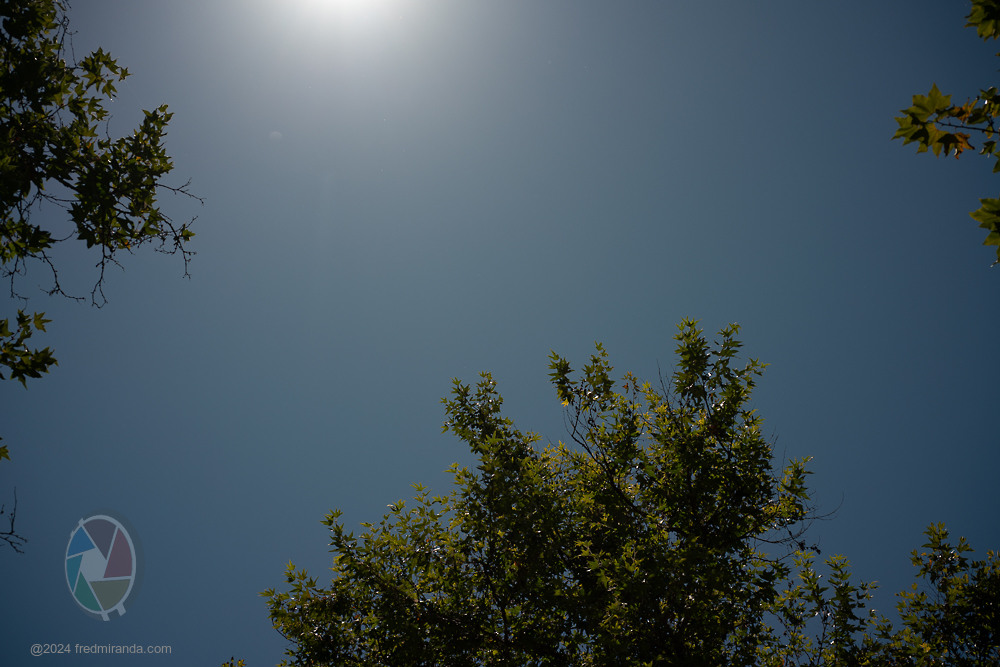
Sun positioned just above the frame. No signs of veiling or ghosting.
LEICA M10-RVoigtlander 50mm f/2 APO-Lanthar lens50mm1/4000s100 ISO-0.7 EV
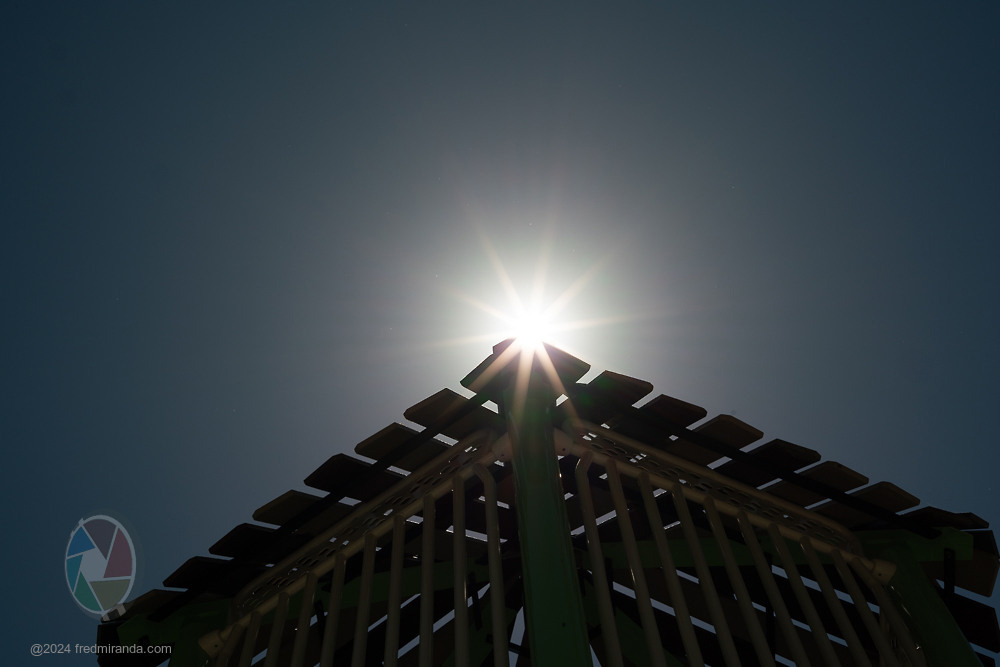
Around 2 PM. Some green ghosting on the front wood.
LEICA M10-RVoigtlander 50mm f/3.5 APO-Lanthar lens50mm1/1000s100 ISO-0.7 EV
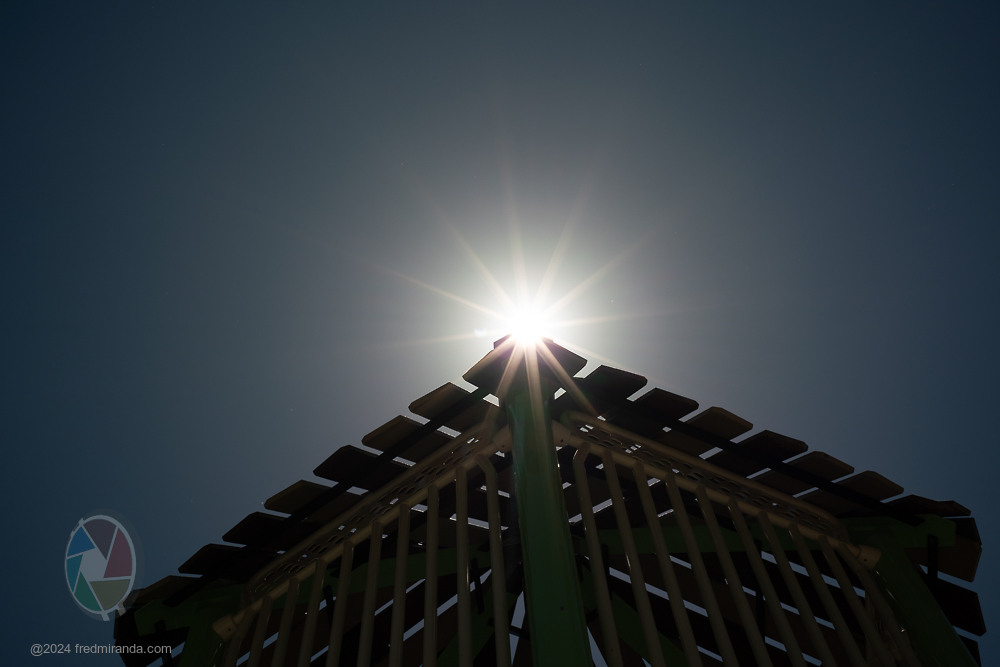
Some green ghosting on the front wood.
LEICA M10-RVoigtlander 50mm f/2 APO-Lanthar lens50mm1/1000s100 ISO-0.7 EV
Low sun at 6 PM. Very challenging backlighting with no ghosting, but slight veiling from the CV 50/2 APO.
LEICA M10-RVoigtlander 50mm f/2 APO-Lanthar lens50mmf/3.51/2000s100 ISO-1.3 EV
Same scene with slightly higher contrast and less veiling from the f/3.5 (both lenses set to f/4).
LEICA M10-RVoigtlander 50mm f/3.5 APO-Lanthar lens50mmf/3.51/1600s100 ISO-1.3 EV
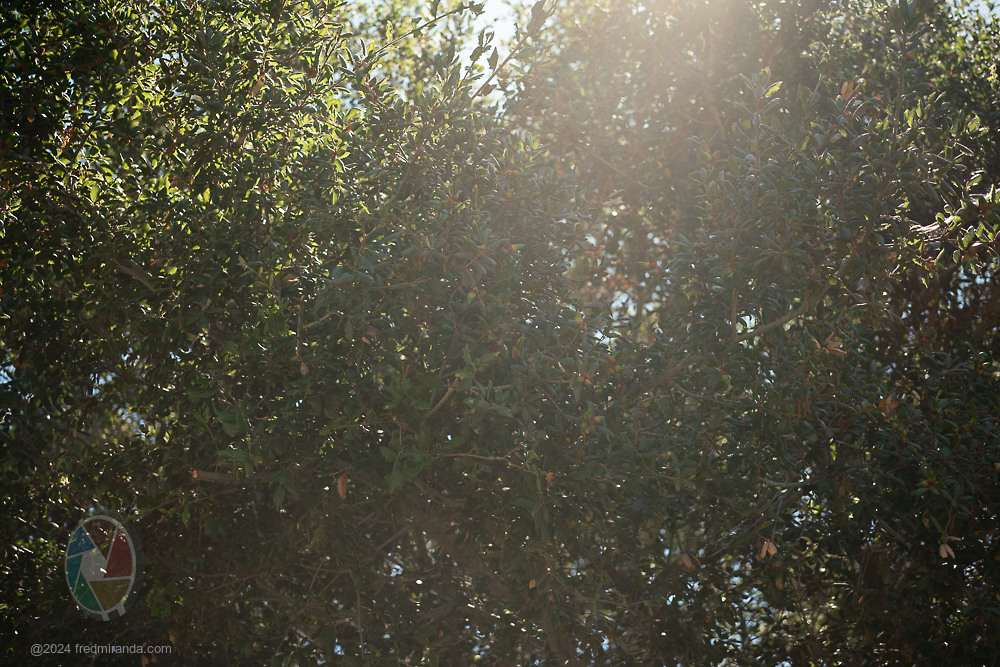
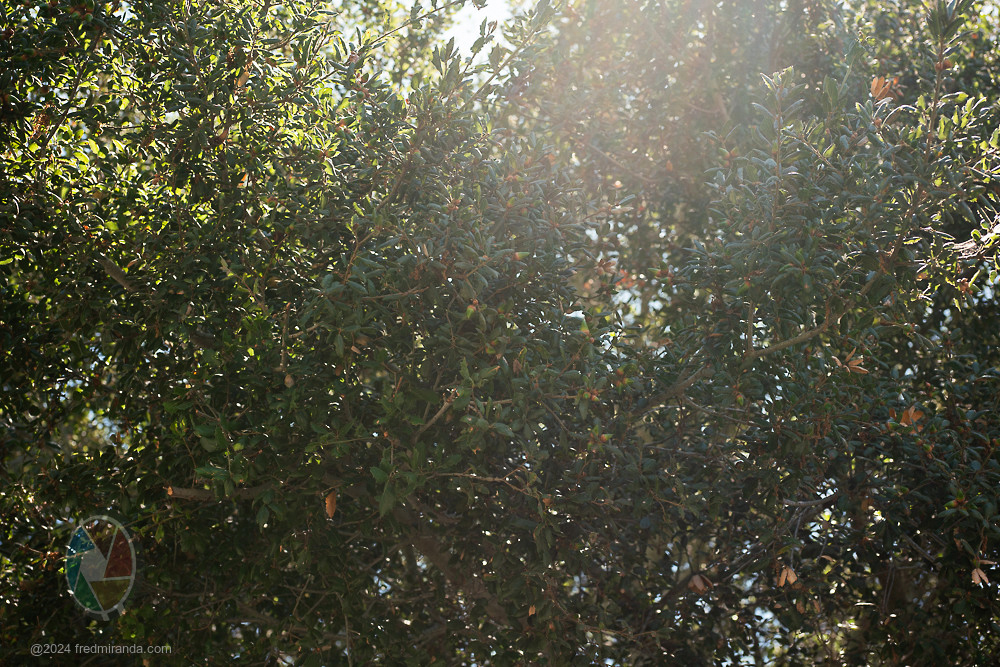
Veiling flare from the CV 50/2 APO is very rare but I manage to get a sample.
LEICA M10-RVoigtlander 50mm f/2 APO-Lanthar lens50mm1/400s100 ISO-0.7 EV
Similar results for the f/3.5.
Slightly more veiling and ghosting from the CV 50/2 APO.
LEICA M10-RVoigtlander 50mm f/2 APO-Lanthar lens50mm1/640s100 ISO-0.7 EV
Less flare overall, but there is some ring flare, likely caused by the chrome metal.
LEICA M10-RVoigtlander 50mm f/3.5 APO-Lanthar lens50mm1/640s100 ISO-0.7 EV
Excellent performance with the sun directly overhead. Around 4 PM.
LEICA M10-RVoigtlander 50mm f/2 APO-Lanthar lens50mm1/2500s100 ISO-0.7 EV
Excellent performance with the sun directly overhead. Around 4 PM.
LEICA M10-RVoigtlander 50mm f/3.5 APO-Lanthar lens50mm1/2500s100 ISO-0.7 EV
philip_pj wrote:
Prices quoted for Australian delivery are as follows with $US (based on current exchange rate of 0.66) in parentheses, an approximate guide. This is what I based my earlier estimate on. Due 'end of August'.
(in $A)
T2 black $1195 ($US790)
T2 silver $1245 ($US820)
T1 black $1245 ($US820)
T1 2tone $1295 ($US 855)
Where are you seeing that the 50/3.5 can be purchased from? Is it available from Japan now, and is there a way I can buy it from Japan and have it delivered to the United States?
philip_pj wrote:
Prices quoted for Australian delivery are as follows with $US (based on current exchange rate of 0.66) in parentheses, an approximate guide. This is what I based my earlier estimate on. Due 'end of August'.
(in $A)
T2 black $1195 ($US790)
T2 silver $1245 ($US820)
T1 black $1245 ($US820)
T1 2tone $1295 ($US 855)
Map Camera (in Japan) is showing Aug. 29 release date:
brick33308 wrote:
Where are you seeing that the 50/3.5 can be purchased from? Is it available from Japan now, and is there a way I can buy it from Japan and have it delivered to the United States?
Philip is likely quoting Australian retail prices that he got from a dealer there.
There are ways to buy from Japan for delivery to the US, but pretty much all the options will involve using a freight forwarding service because the vast majority of Japanese online shops don't ship internationally. Buyee through Map Camera used to be a good option but Map Camera stopped offering new stock from most brands through this service. If you plan to buy a lot of gear, it might be worth flying to Tokyo for a few days and shopping in person to take advantage of tax free shopping which will not be possible with online orders through a freight forwarder (because the retailer is shipping the product to the freight forwarder's domestic address, therefore 10% consumption tax applies). Whatever the case, you should carefully price shop because some things can be had for good savings from Japan, while other things are very similarly priced to here. For whatever reason, a lot of Voigtlander and Zeiss is, or has been, somewhat cheaper in Japan. But once you add freight forwarding costs, plus the hassles with returns or exchanges, if even possible, it might be worth spending a little more to buy domestically in exchange for better support if something is not right with your copy.
These lenses are not available anywhere as yet, so far as I know. People want to know the price level, so I gave the thread our firm prices from the CV distributor. Best to buy in your own country or jurisdiction, in fact Cosina polices this market separation pretty well from what I can see. Just wait a bit.
Above, the more distant parts from the flare source appear to settle down faster in the 50/3.5 images than in those from the 50/2 APO. The flare actually looks more like an integral and intended part of the image. These tests show that sound lenses open up avenues of shot-making that were otherwise off-limits, or required extensive work in post just to get back to square.
For the member asking about reasons to replace his APO-Summicron-M Asph, Diglloyd's 2020 page has a remarkable demonstration of how bad flare can be, even after the maker tried to fix it years earlier:
brick33308 wrote:
How does this lens compare optically in terms of image quality to the Voigtlander Heliar 50mm f/3.5?
I've owned the Voigtlander 50mm f/3.5 Heliar for a couple of years but haven't done a serious review on it. In my experience, here’s how the Voigtlander 50mm f/3.5 APO-Lanthar compares optically to the Voigtlander 50mm f/3.5 Heliar:
Minimum focus distance: The APO-Lanthar Type II focuses at 0.35m, significantly closer than the Heliar’s 0.7m. This closer focus distance makes the APO-Lanthar more versatile when using LiveView.
Rendering: The APO-Lanthar provides a smoother transition zone compared to the Heliar. While this is largely a matter of personal taste, the Heliar is known for its distinctive character, including more noticeable bokeh outlining and higher optical vignetting (swirling).
Resolution/Contrast: Both lenses perform well in resolution and contrast, but the APO-Lanthar has the edge in overall performance wide open.
Field Curvature: The APO-Lanthar has a flatter field curvature, whereas the Heliar shows a wavier curvature.
Flare Resistance: Both lenses handle flare effectively.
Distortion: The APO-Lanthar shows no distortion, while the Heliar also performs well in this regard.
Both the 50mm f/3.5 Heliar and the 50mm f/3.5 APO Type II have their aperture and focus controls on the same ring. However, the Heliar features a clickless aperture.
The Voigtlander 50mm f/3.5 Heliar has been discontinued, likely because Voigtlander now offers a superior 50mm f/3.5 lens. I may compare them side by side in the future, though I can’t guarantee it at this time.
Thanks Fred, much appreciated! Based on your comments and everything else I've been reading, I'm going to wait for the new lens. I feel like a kid going to bed the night before Christmas.
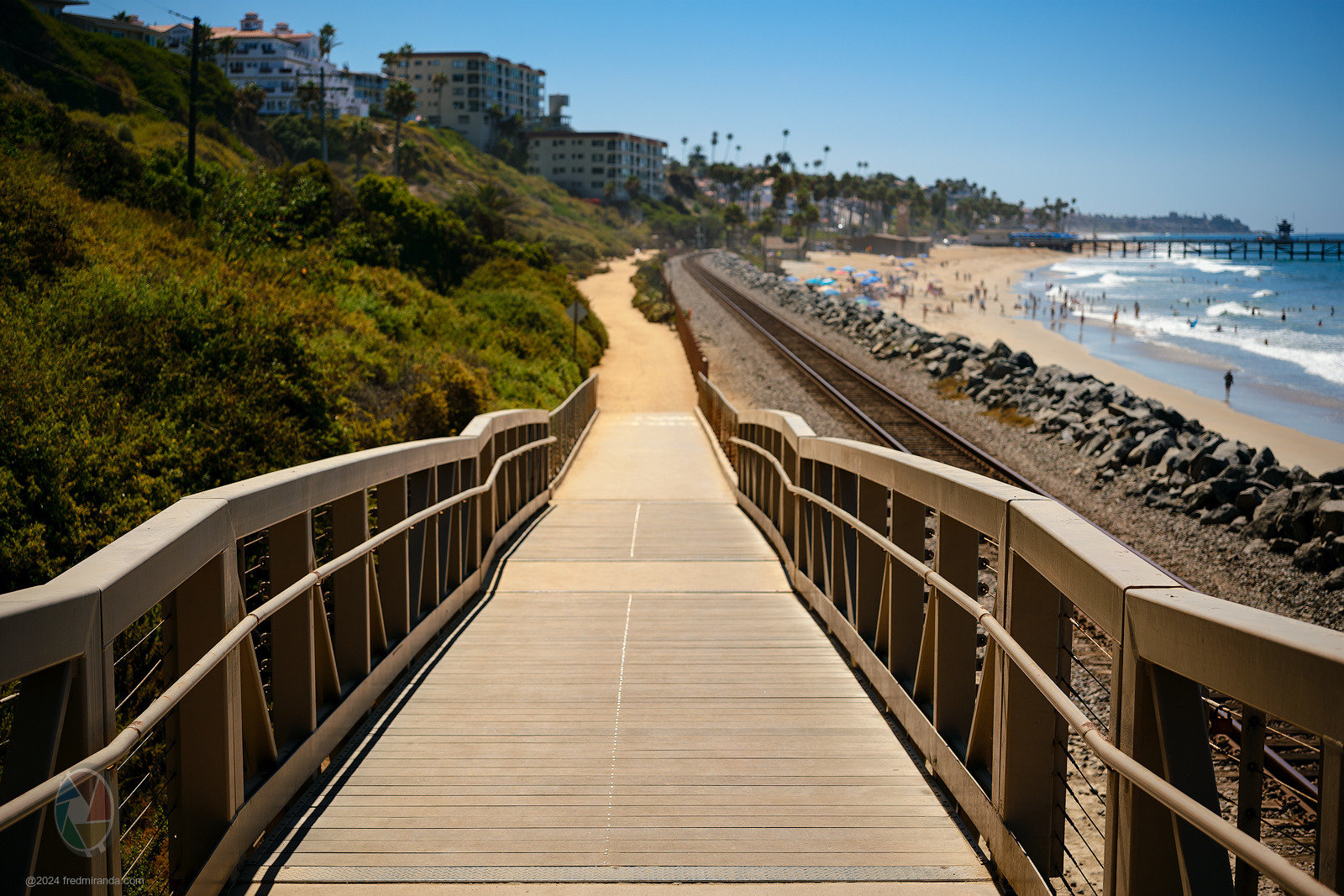
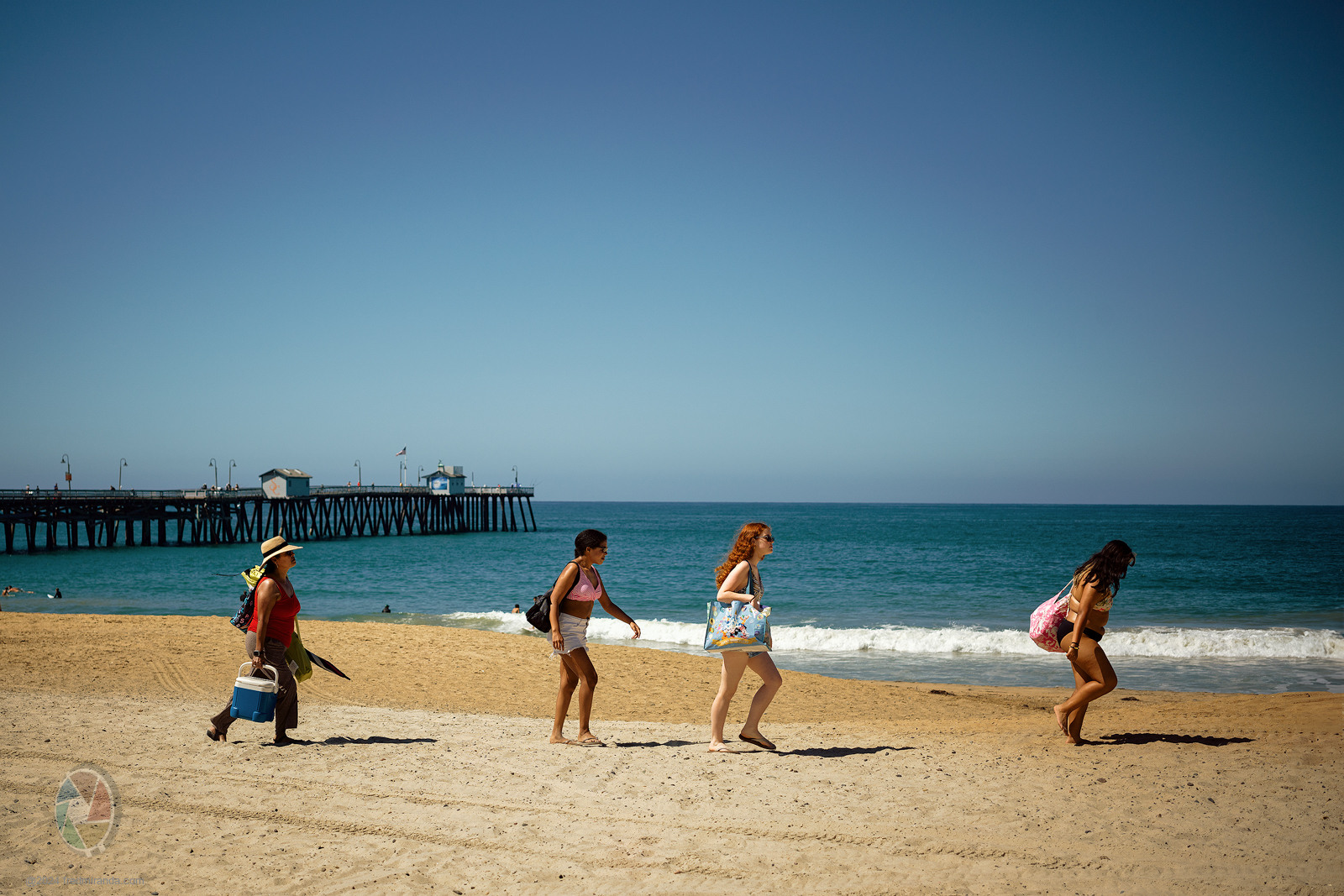
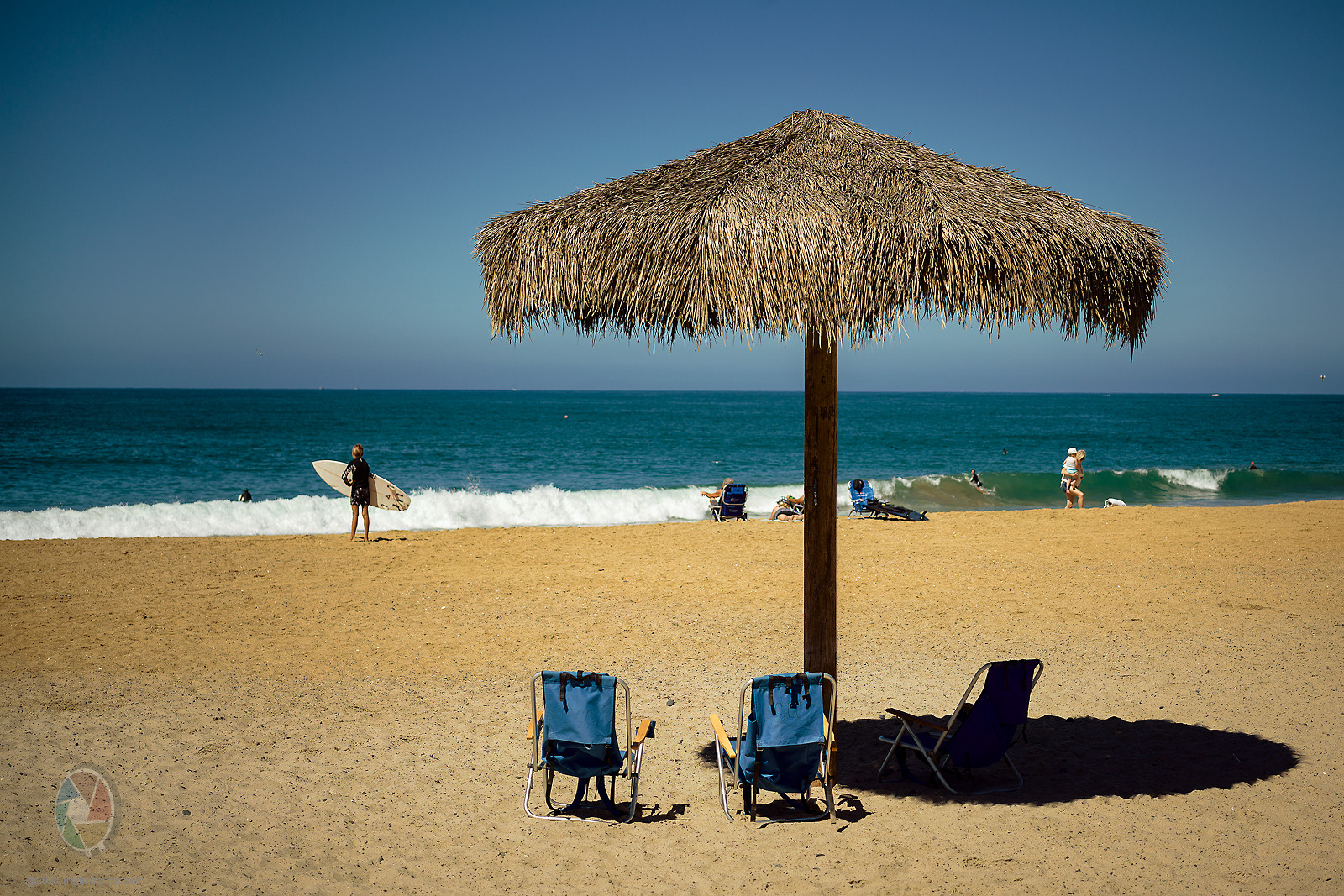
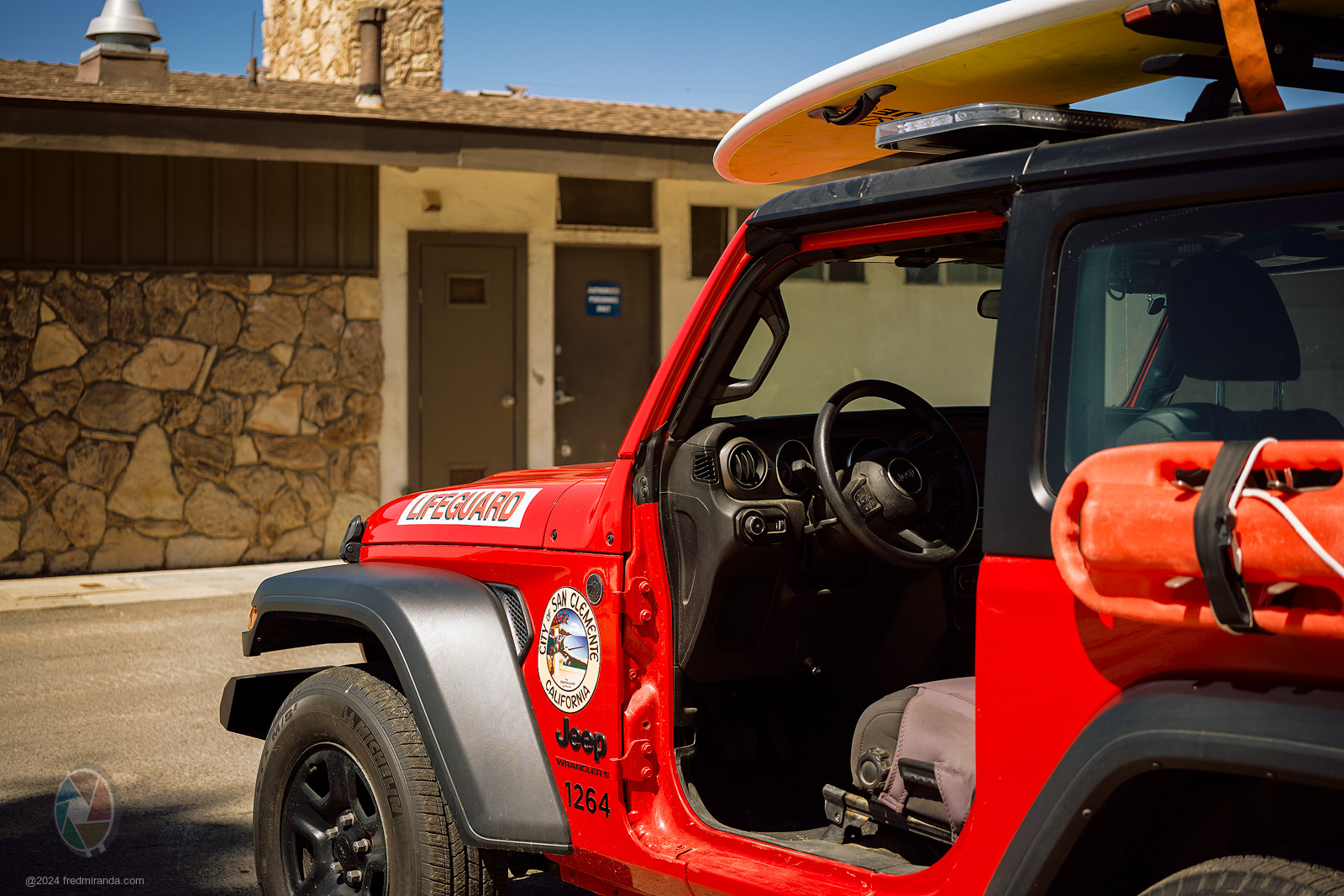
These images were captured at high noon to achieve vivid and high-contrast results, with a few slightly cropped. I used my Sony A7R II UT, relying solely on natural lighting for all shots.
As anticipated, there is noticeable vignetting when shooting wide open at f/3.5, which significantly reduces by f/5.6. Vignetting was left uncorrected to showcase the worst-case scenario.
ILCE-7RM2Voigtlander 50mm f/3.5 APO-Lanthar lens50mmf/3.51/2000s100 ISO0.0 EV
ILCE-7RM2Voigtlander 50mm f/3.5 APO-Lanthar lens50mmf/3.51/4000s100 ISO0.0 EV
ILCE-7RM2Voigtlander 50mm f/3.5 APO-Lanthar lens50mmf/3.51/4000s100 ISO0.0 EV
ILCE-7RM2Voigtlander 50mm f/3.5 APO-Lanthar lens50mmf/3.51/1000s100 ISO0.0 EV
ILCE-7RM2Voigtlander 50mm f/3.5 APO-Lanthar lens50mmf/3.51/3200s100 ISO0.0 EV
ILCE-7RM2Voigtlander 50mm f/3.5 APO-Lanthar lens50mmf/4.01/800s100 ISO0.0 EV
ILCE-7RM2Voigtlander 50mm f/3.5 APO-Lanthar lens50mmf/3.51/2500s100 ISO0.0 EV
ILCE-7RM2Voigtlander 50mm f/3.5 APO-Lanthar lens50mmf/4.51/125s100 ISO0.0 EV
The Voigtlander 50mm f/3.5 APO-Lanthar is available in two versions. Type I has a minimum focusing distance of 0.45m, while Type II can focus as close as 0.35m. This difference is quite significant, and to illustrate it, I've included a quick test showing how much closer 0.35m is compared to 0.45m.
While this may not be critical for everyone, especially those focusing with the rangefinder, both 0.35m and 0.45m provide a considerable improvement in distance and subject magnification compared to the standard 0.7m.
Image focused at 0.45m using my Sony A7R II UT
ILCE-7RM2Voigtlander 50mm f/3.5 APO-Lanthar lens50mmf/3.51/10s100 ISO-0.7 EV
100% crop from the focused area above
Image focused at 0.35m using my Sony A7R II UT
ILCE-7RM2Voigtlander 50mm f/3.5 APO-Lanthar lens50mmf/3.51/13s100 ISO-0.7 EV
the minimum focus distance of type II is especially what I want. My only complaint with the steel rim reissue and other lenses is the 1m min focus distance.
And the vignetting at f3.5 is fine with me, I'm one of the oddballs who actually likes vignetting.
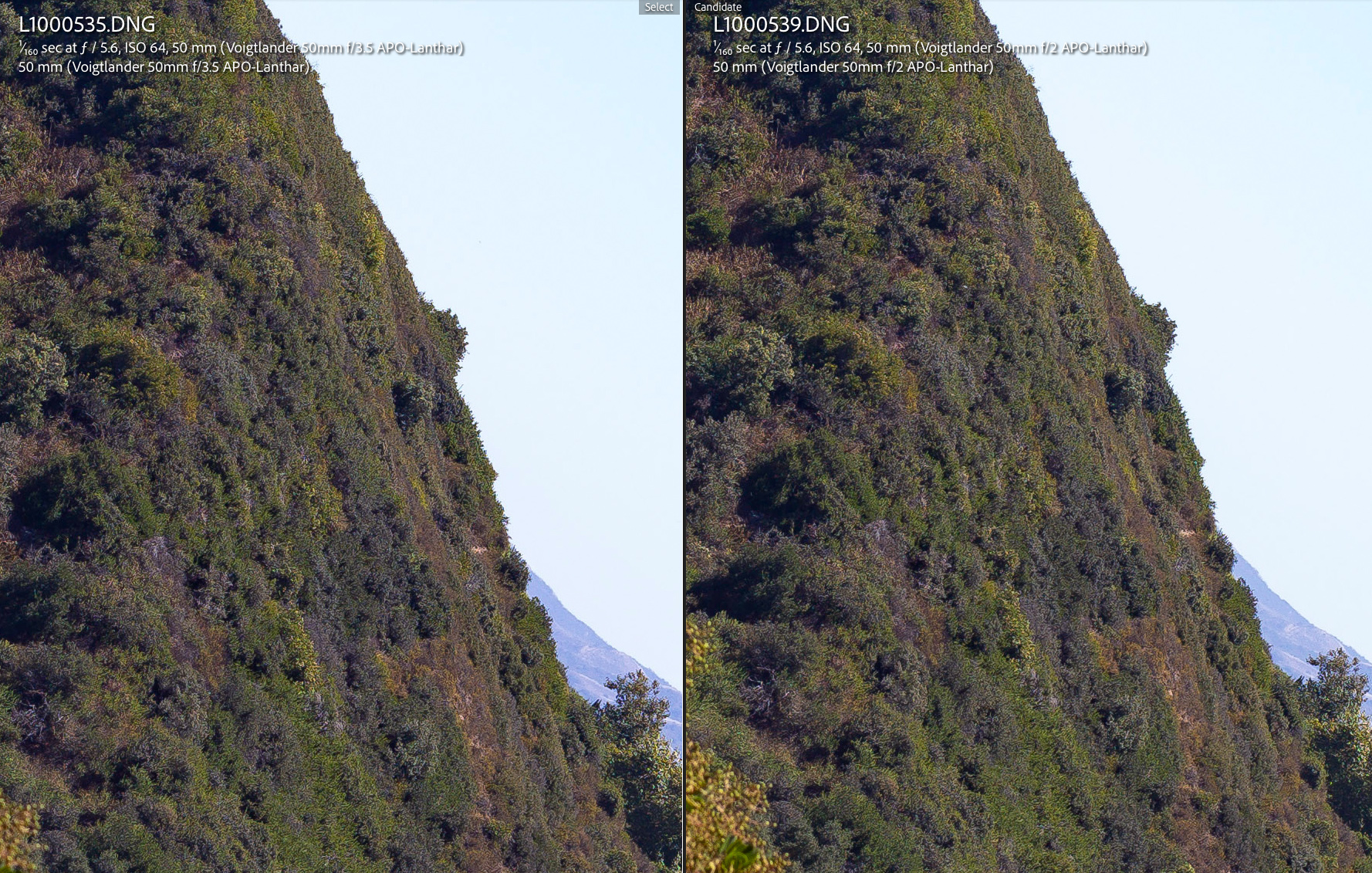
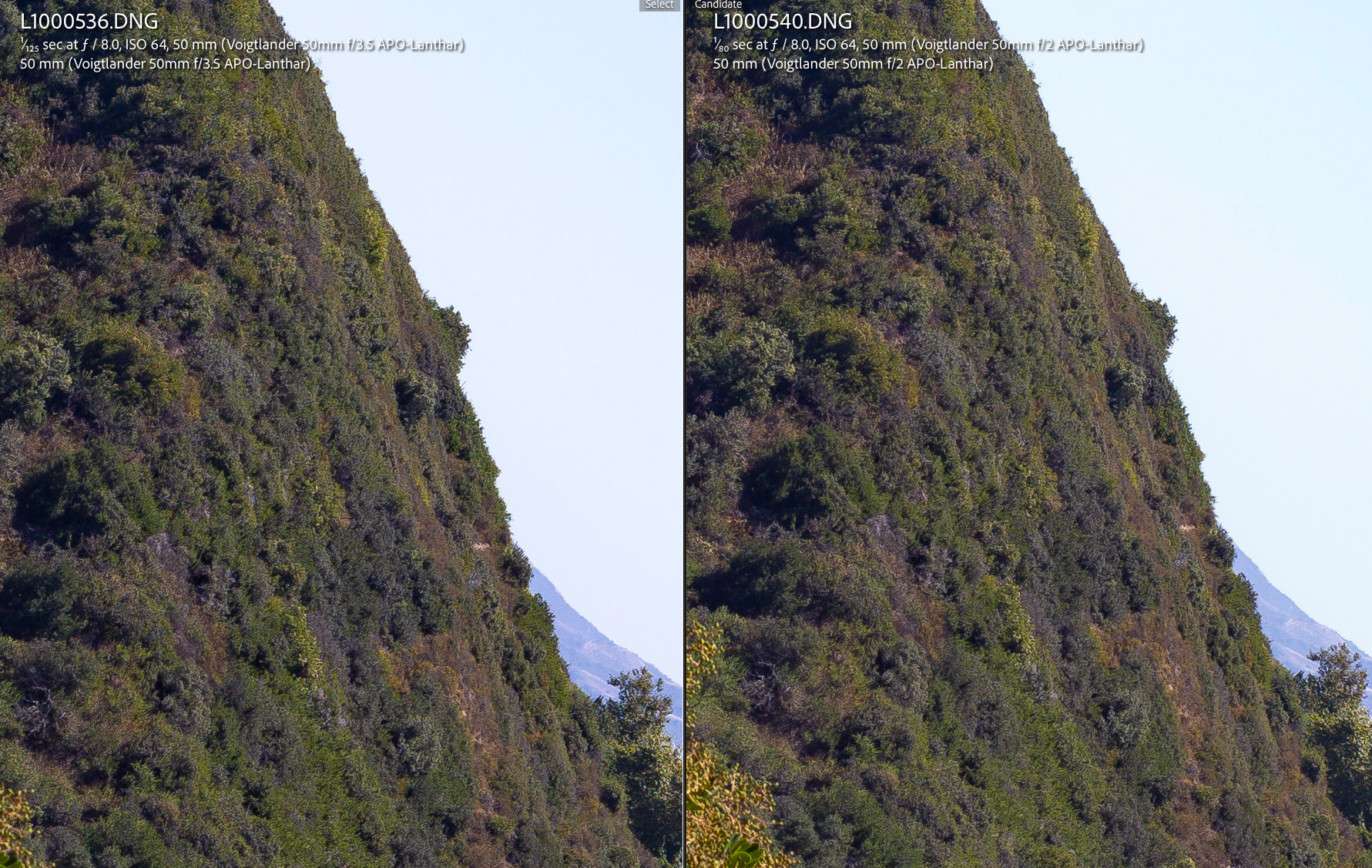
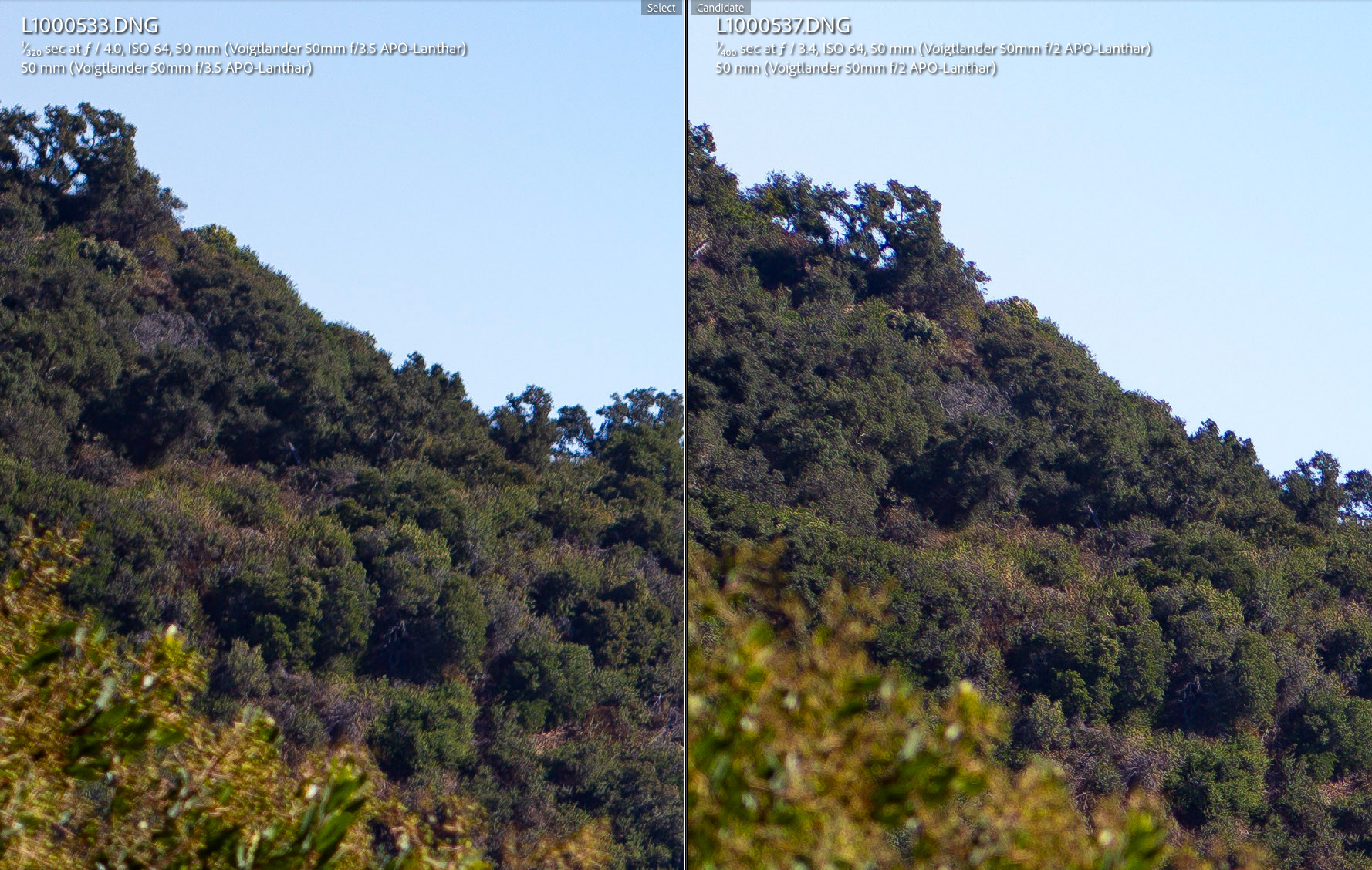
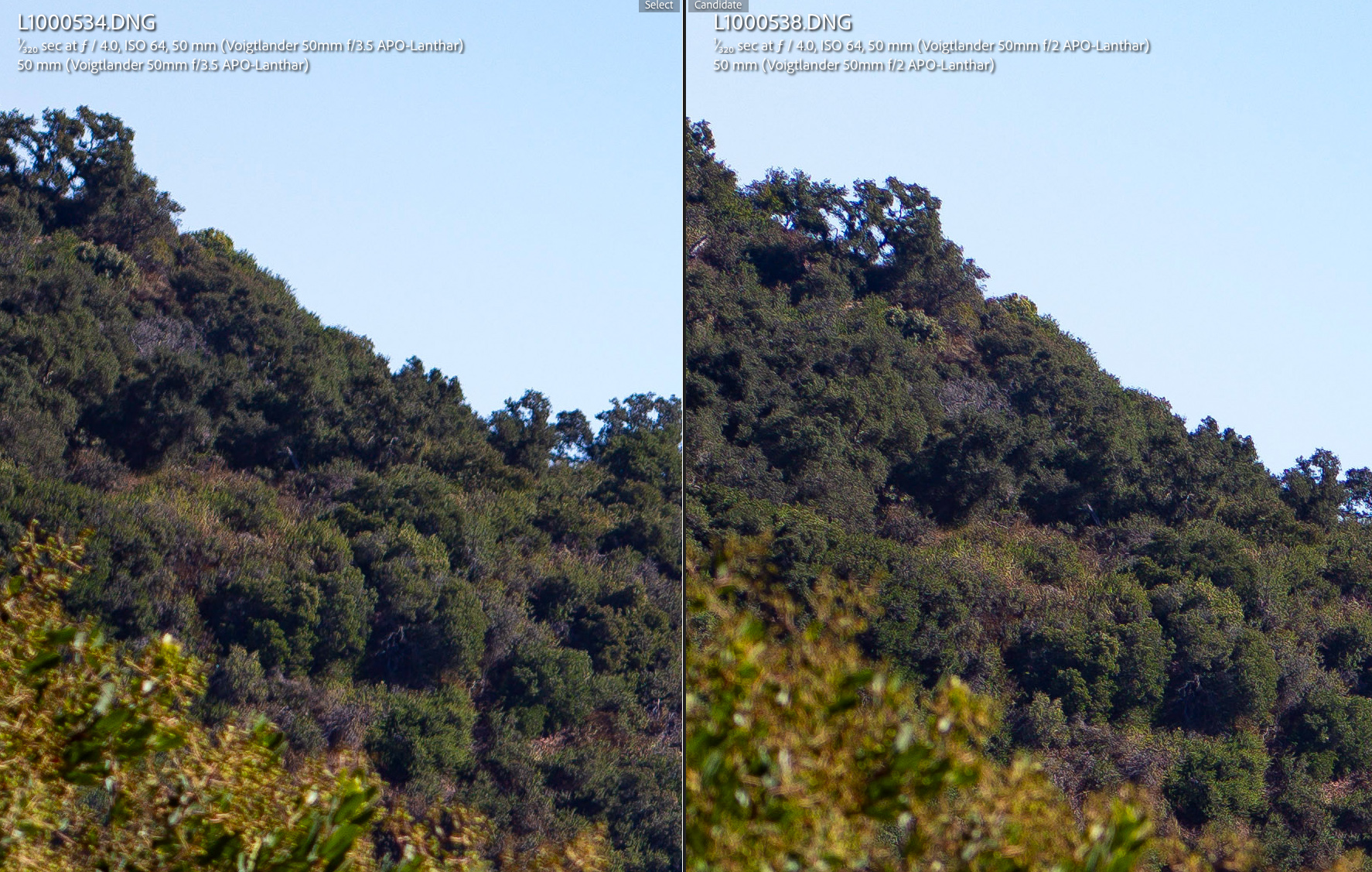
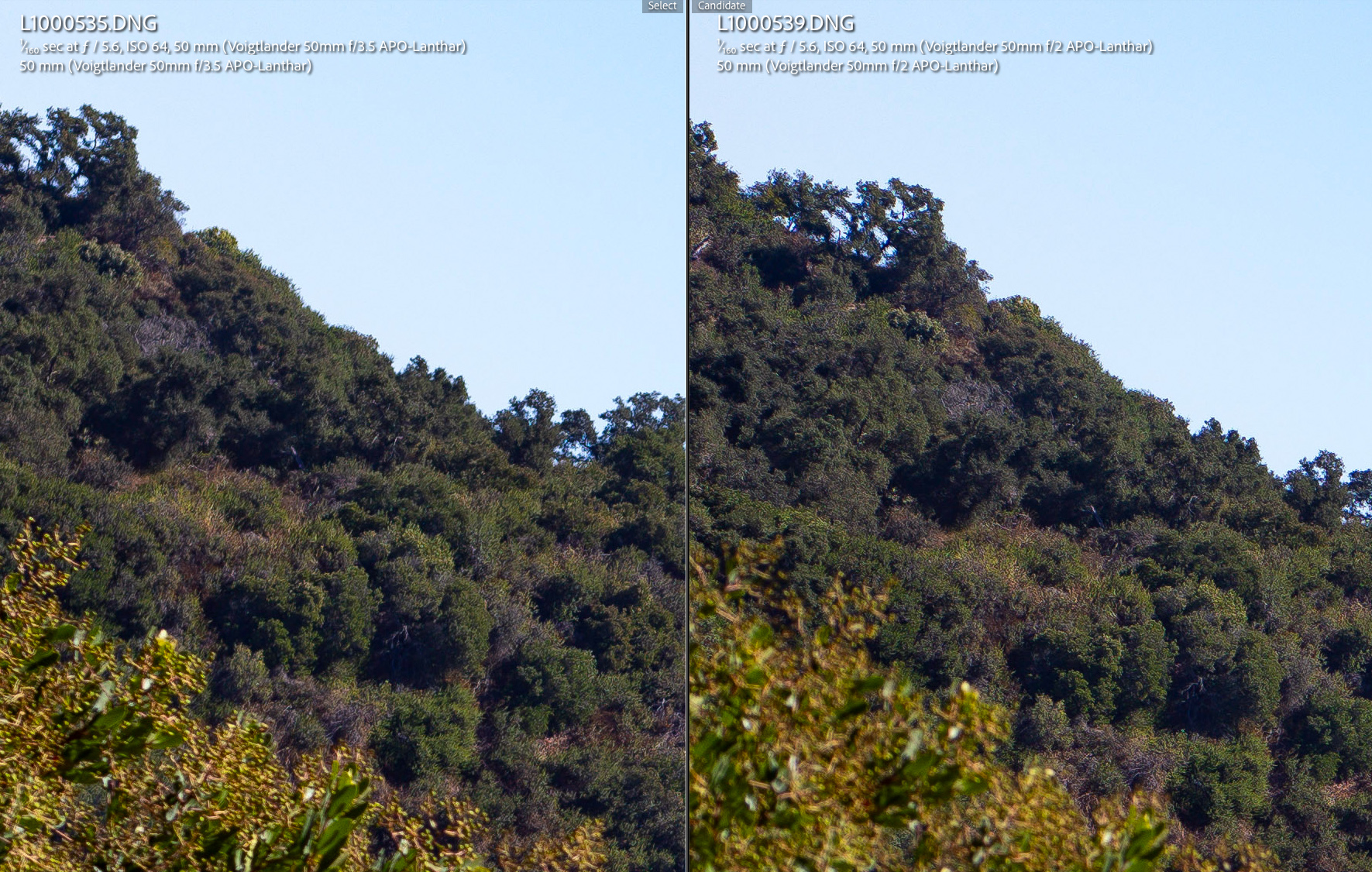
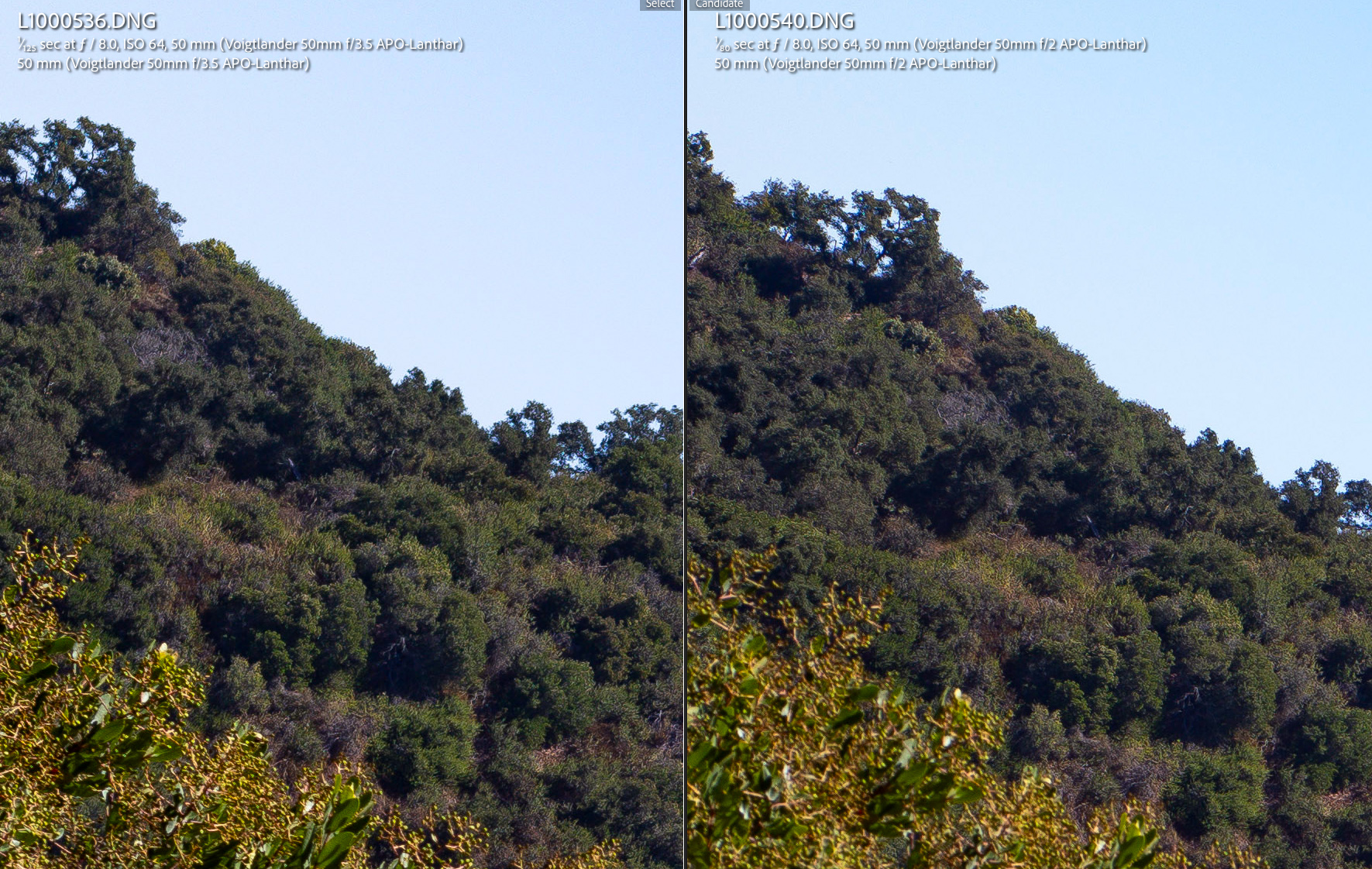
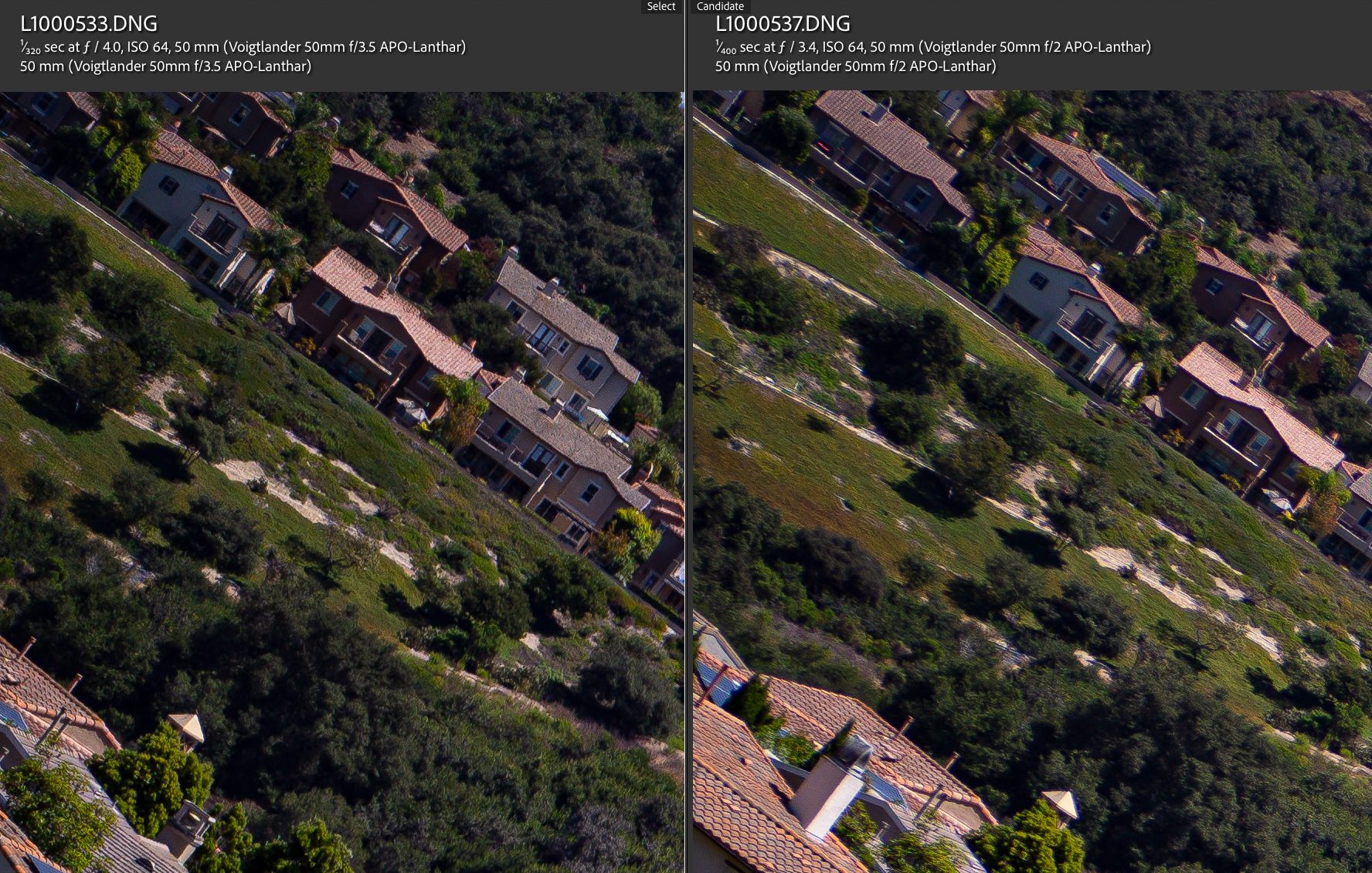
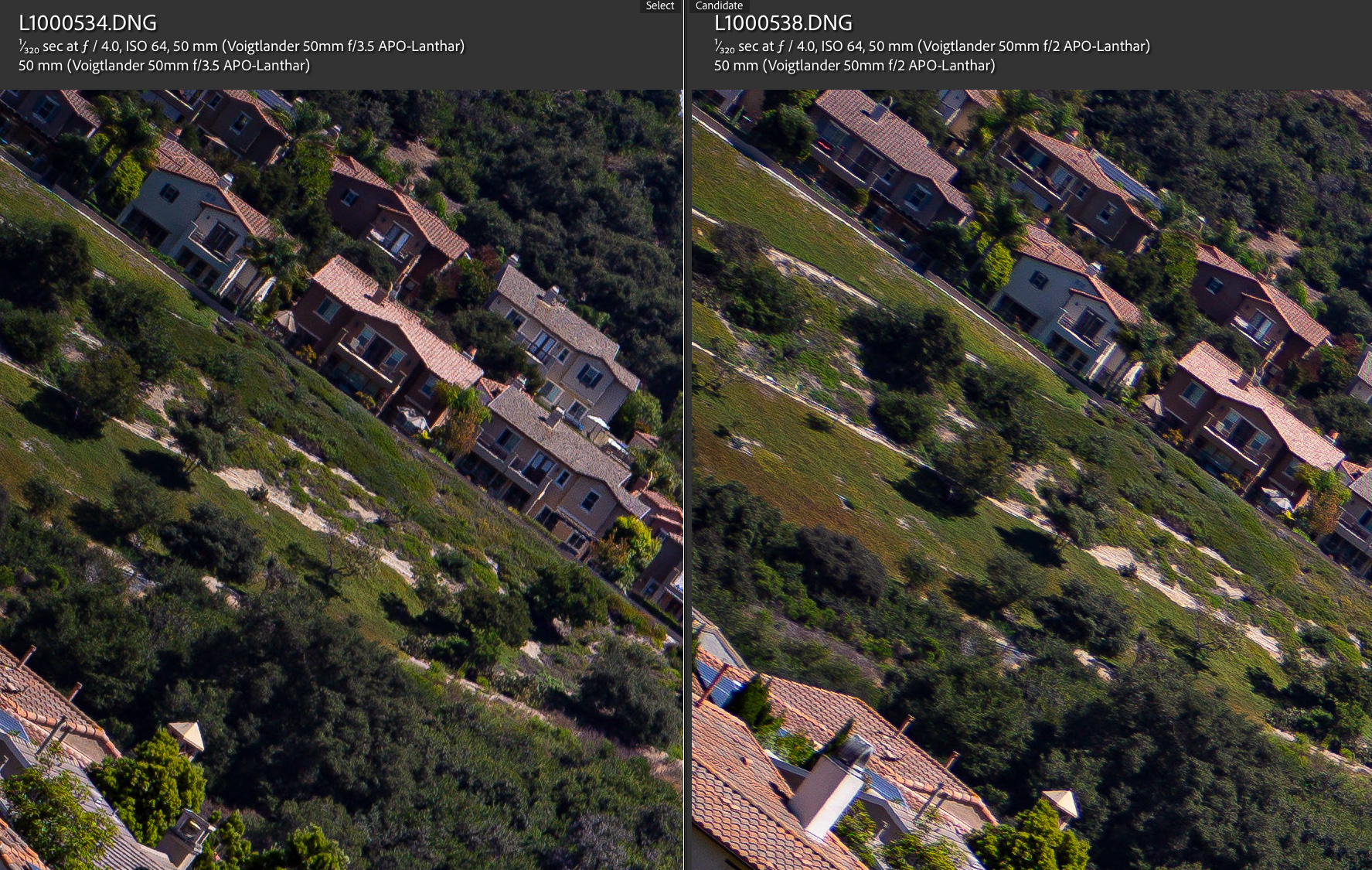
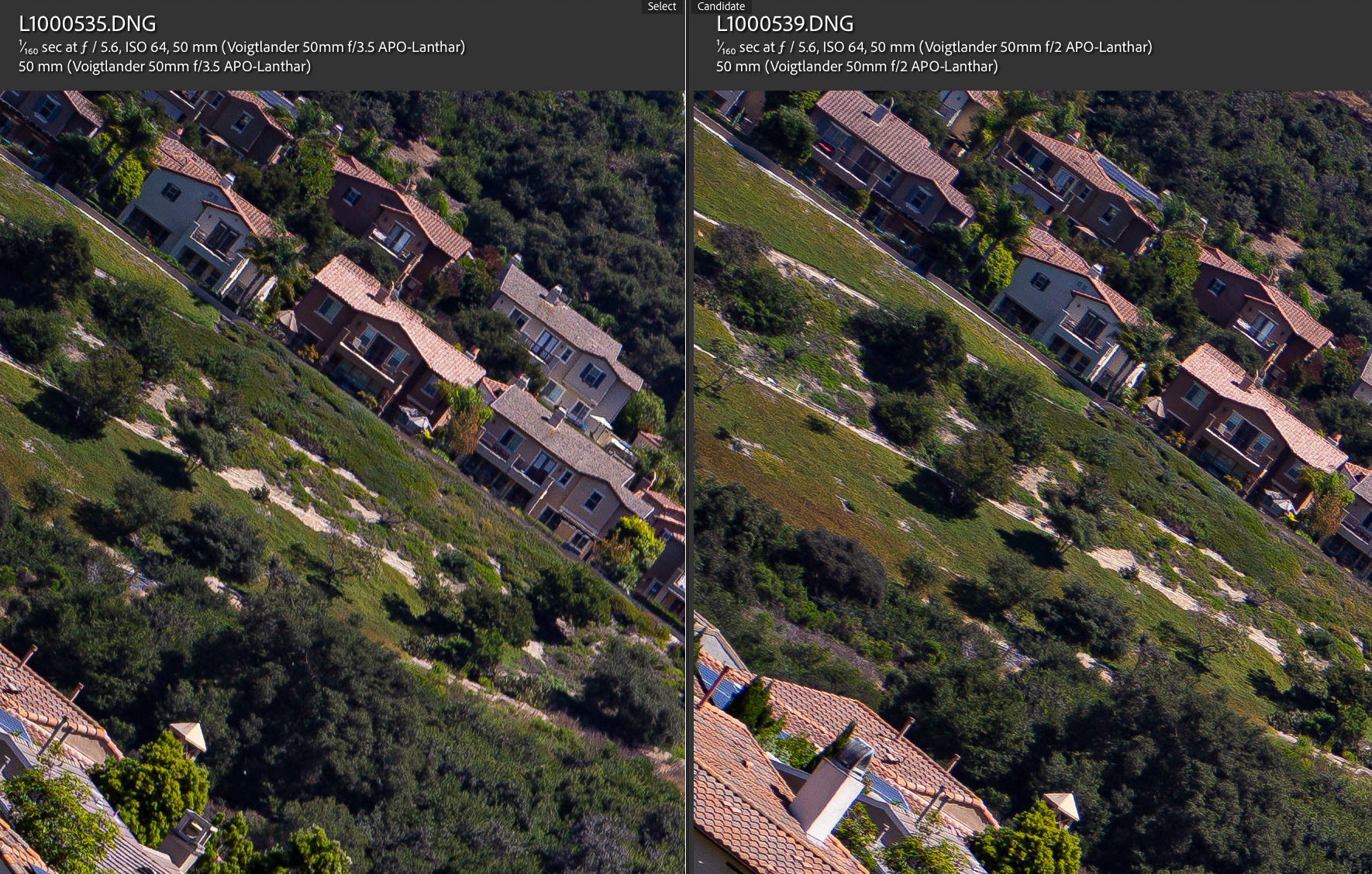
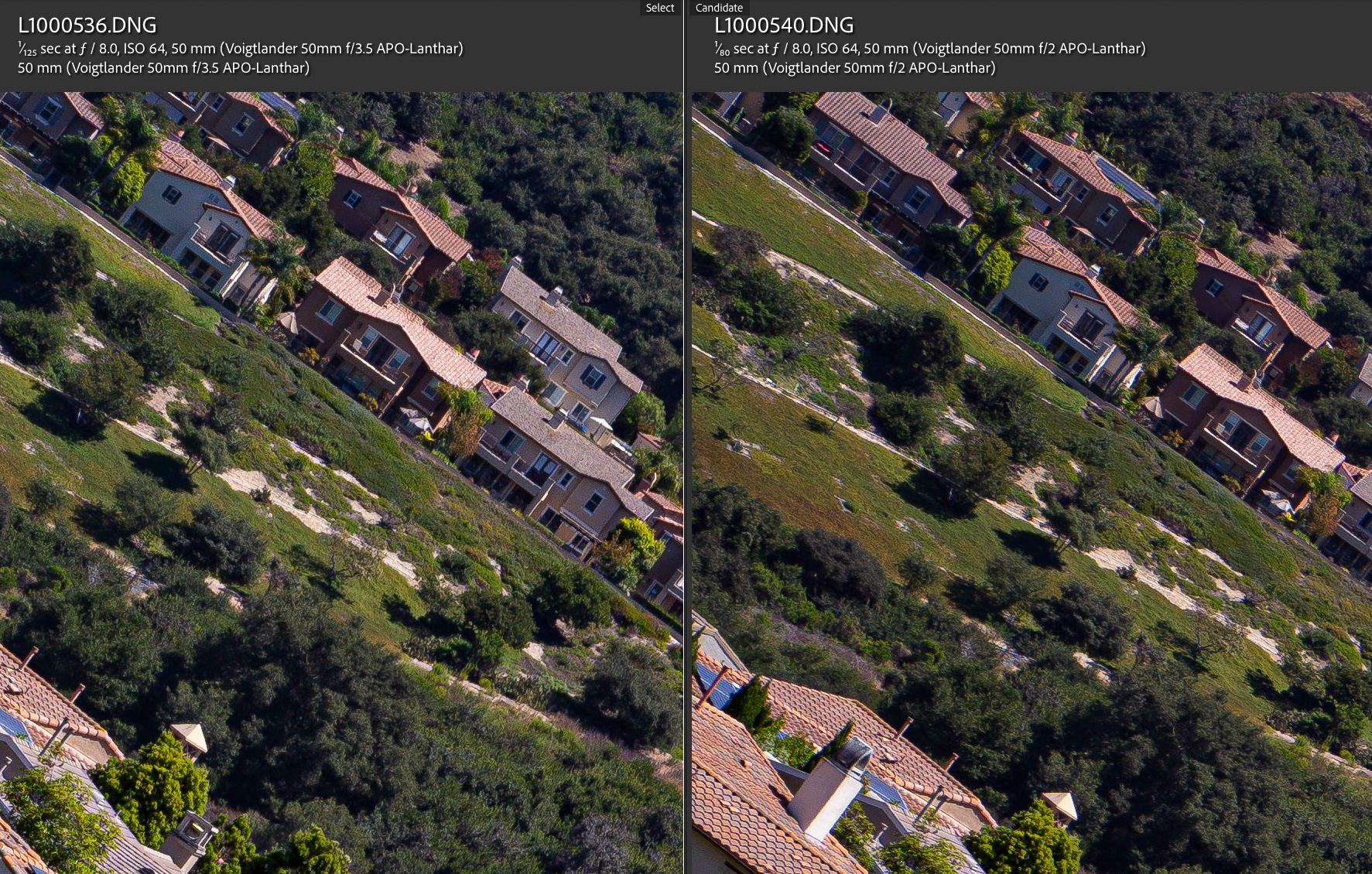
Infinity Resolution and Contrast compared to Voigtlander 50mm f/2 APO-Lanthar on Leica M11 (60MP)
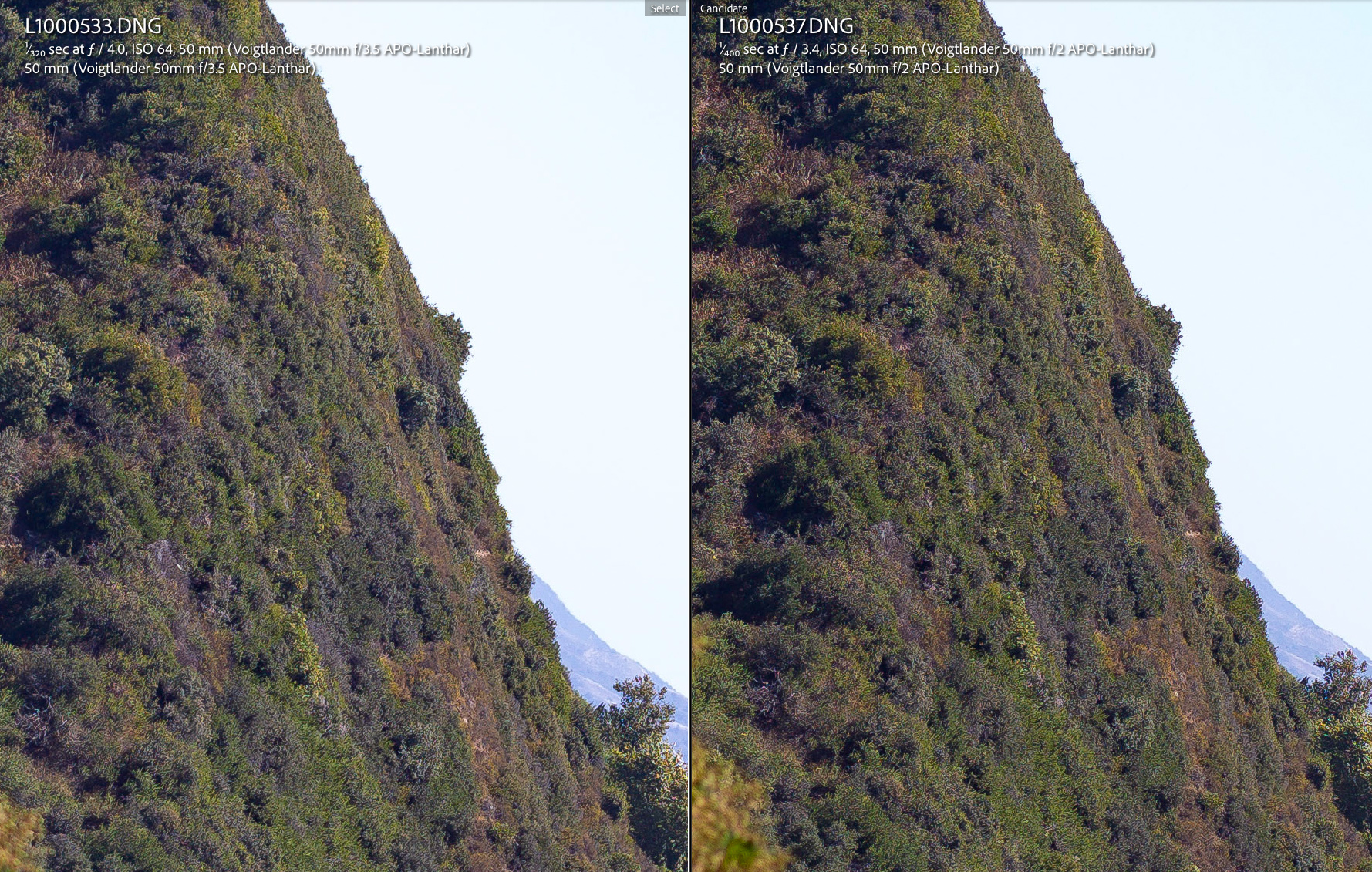
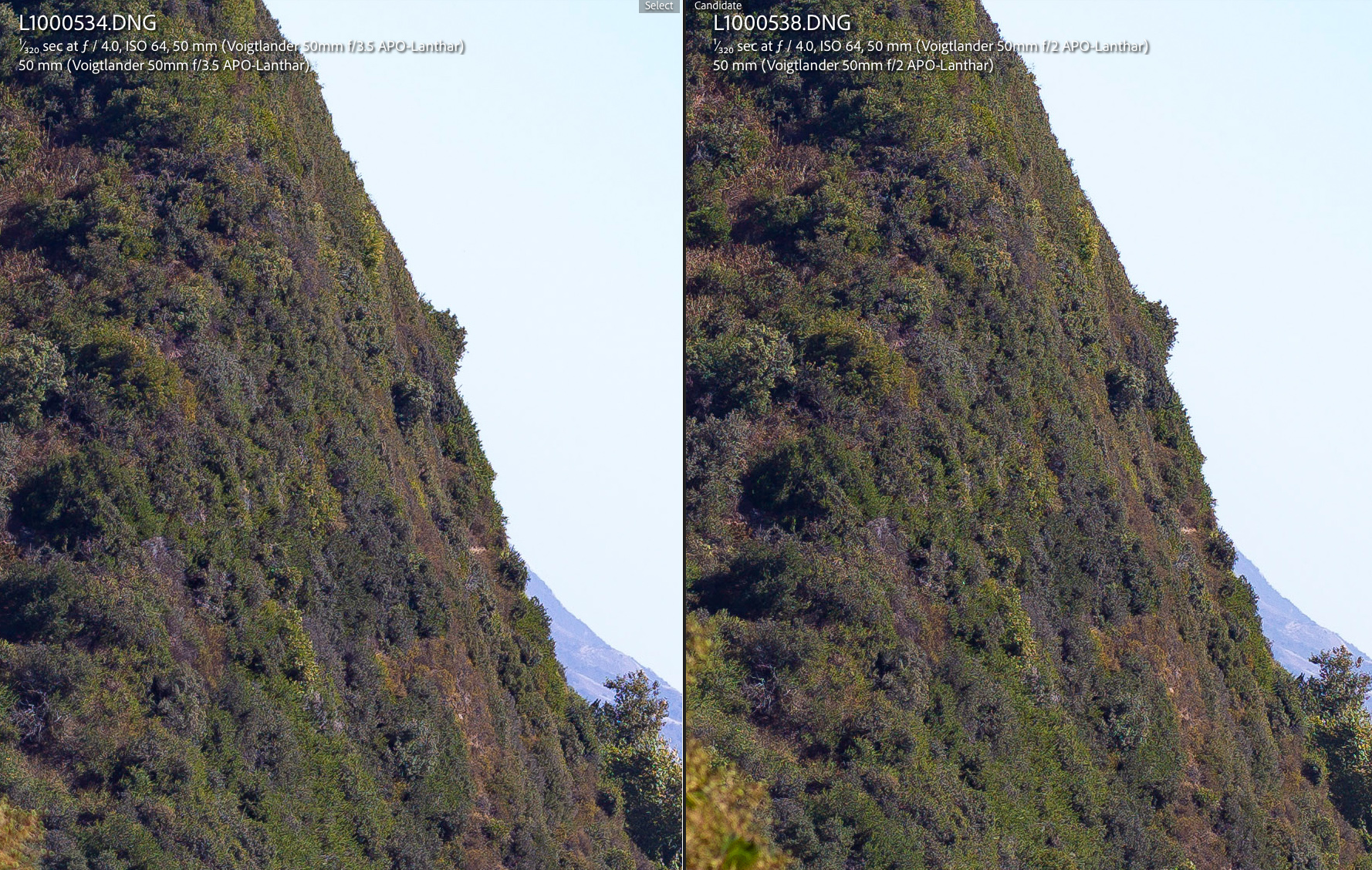
After comparing the resolution between the Voigtlander 50mm f/2 and the 50mm f/3.5 APO-Lanthar lenses at infinity distance on the 40MP Leica M10-R, some of you observed that the real-world performance of the CV 50/3.5 APO-Lanthar appears to surpass its simulated MTF graph, especially when compared to the CV 50/2 APO. There was speculation that a higher MP sensor might reveal a more noticeable advantage for the CV 50/2 APO, given its stronger MTF.
Today, I had the opportunity to test these lenses on a Leica M11. I focused both lenses exactly as I did when using the M10-R. I was reminded of how much I dislike the M11's color rendering with its noticeable magenta tint, but that's beside the point.
The results of this comparison were somewhat surprising to me, so I repeated the test several times, also comparing with the M10-R. The lenses were focused identically at their hard stops on both cameras, eliminating the possibility of focusing errors. My analysis shows that on the M11, the center area resolution remains very similar, with perhaps a slight improvement on the M11. However, in the mid-field, the M11 resolves high-frequency detail better, while in the corners, I give a slight edge to the Voigtlander 50mm f/3.5 APO-Lanthar, particularly at f/3.5 and f/4. At f/5.6, both lenses produce very similar results. Overall, the findings are mixed, but I suspect that sample variation between lens copies could reveal more differences than actually exist between these two APO-Lanthar lenses.
Distance: Infinity
Focus: Center - Best of three shots at maximum magnification
White Balance: Daylight
Both lenses are perfectly centered, as verified with my decentering test.
Software used: Lightroom with FM Default Landscape Sharpening; all other settings are at default.
PS: Vignetting, Chromatic Aberration (CA), and distortion were not corrected either in post-processing or in-camera.
Center Resolution and Contrast Infinity Resolution and Contrast compared to Voigtlander 50mm f/2 APO-Lanthar on Leica M11 (60MP)
Extreme Corner Resolution and Contrast Infinity Resolution and Contrast compared to Voigtlander 50mm f/2 APO-Lanthar on Leica M11 (60MP)
As previously mentioned, the Voigtlander 50mm f/3.5 APO-Lanthar has a slightly narrower angle of view compared to most Cosina 50mm lenses. The exact focal length is 51.2mm, as demonstrated in the following crops.
Vignette is best considered as an artistic tool in the image maker's armoury, particularly as it is so easy to modulate in post or by stopping down a little. It arouses strong objections in some who are disturbed by noise in, for example, blue skies.
But it's an effective tool for image finishing that 'closes off' the image that otherwise bleeds out to the edge, where often nothing is present. Vignette refocuses attention on the subject and content that occupies the middle 80% of the frame. It hearkens back to traditional photography.
Zeiss, like Cosina, attracted plenty of criticism over this pleasant shaping of the image. However, they never changed their preference for it, despite these premier lens makers obviously having the ability to do so.
'Note that this technical defect can be an artistic strength. Some of the world’s most highly regarded lenses exhibit a fair bit of vignetting : the Canon 85/1.2, the Leica Summilux-M 75/1.4, the Zeiss Distagon 1.4/35 ZM' https://www.dearsusan.net/mastering-lens-testing-vignetting/