p.5 #5 · POST your IMAGES SCANNED from slides or film.
Ross Martin wrote:
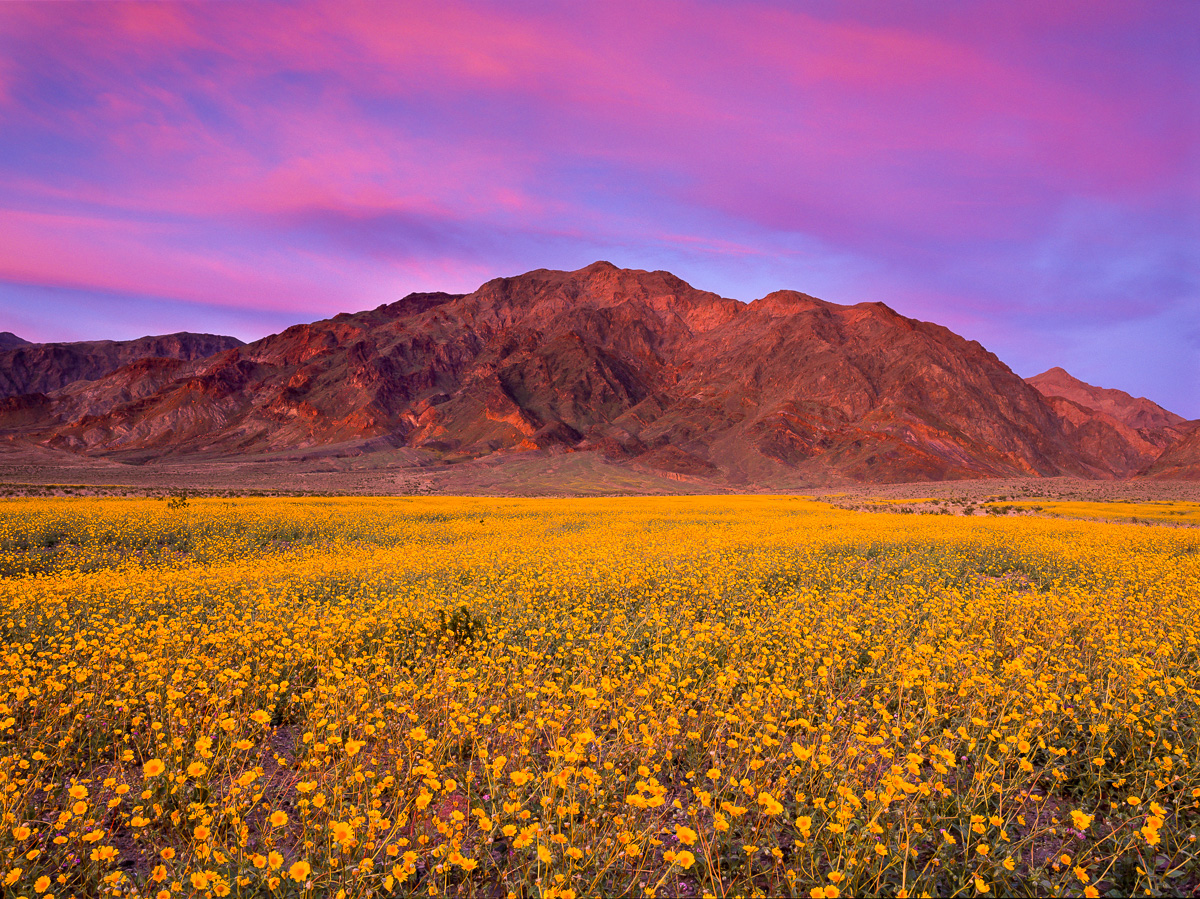
Original film 4x5 Velvia, drum scan by West Coast Imaging, fine tune developing in Lightroom.
Brookings, Oregon
For those who don't understand what photographers are talking about film's natural look, this is the picture to show the difference very clearly.
The changes in the sky above and the water below are so gradual and smooth that there are no sudden changes or banding as in digital due to contrast and sharpening interpolations by s/w.
Nice picture Ross!
How is your niece doing?
Best wishes for her quick recovery.
p.5 #6 · POST your IMAGES SCANNED from slides or film.
bs kite if I violated the intention of your post for posting a digital image here, please let me know and I will delete it immediately.
What I would like to do is to show the difference between film and digital look that many younger digital photographers does not understand what older film photographers are talking about.
Nikon D850 with 24-120 f/4G at 112mm f/6.3 1/30s ISO 800 +2 stops Handheld
No processing added
I choose this picture is because it is very close to Ross picture taken during the Golden Hours which include the scenery of the sky and sea.
If one looks at the sky in Ross picture one will noticed that the transition is extremely smooth, no areas were left out like those found on my digital picture with areas that look blank or white.
Than look at the grayish blue water ripples in Ross picture with very smooth transition or what we called a creamy look, compare to mine just above the lower left hand corner and about 1/4 the picture height above it where the grayish areas are. One will noticed that on the digital picture they either look like noise or grains.
Hopefully with this example I am able to clarify this for photographers who does not understand what people are talking about the film's smooth and creamy look.
p.5 #7 · POST your IMAGES SCANNED from slides or film.
hans98ko wrote:
What I would like to do is to show the difference between film and digital look that many younger digital photographers does not understand what older film photographers are talking about.
...
I choose this picture is because
In my opinion, the comparison is neither fair nor meaningful.
In general, it isn't fair to compare large format (4x5) pictures to small format (24x36) ones.
Then it isn't meaningful to compare different pictures taken in different locations with different lighting. Sunsets and sunrises can have much different lighting conditions even at the same location depending on the period of the year, the time of the day, the weather conditions etc.
Finally, ALL pictures posted here are "digital", even if they were scanned by using a professional drum scanner (to not consider downsizing and jpeg compression ...). In other words, ALL film pictures posted in the web are digital copies of a film (negative or slide). ALL pictures posted in this thread are low res & compressed digital images.
The only way to compare film to digital is to print the same image of same subject, acquired using same lighting and film/sensor format (e.g., 24x36), and same lens. Obviously, the image on film should be printed with no digitalization (otherwise we would compare different digitalization techniques, e.g., Coolscan 5000 ED or a drum scanner, vs Z6 or Z7).
p.5 #8 · POST your IMAGES SCANNED from slides or film.
Hi Riccardo,
I do hear you and understood what you are trying to say.
But it is almost impossible to have 2 photographers shooting at 2 different locations and at different time zones to do a fair comparison.
Even if I do own both a digital and film cameras with an identical lens pairs like a D850 with a F4s and a pair the 50mm f/1.2 Ai-S. It still wouldn't be a fair comparison.
But what I am trying to show here is the smooth and creamy look of film versus the sharp and contrasty look of digital which I think I was able to show here.
p.5 #9 · POST your IMAGES SCANNED from slides or film.
hans98ko wrote:
For those who don't understand what photographers are talking about film's natural look, this is the picture to show the difference very clearly.
The changes in the sky above and the water below are so gradual and smooth that there are no sudden changes or banding as in digital due to contrast and sharpening interpolations by s/w.
Nice picture Ross!
How is your niece doing?
Best wishes for her quick recovery.
Regards,
Hans Ko
Thanks Hans for the kind words! My niece is doing fantastic. Every 3 months she’ll have a new brain scan to check if the cancer has returned. Hoping for the best.