This topic is in the 2022 archive. You can read it and like its posts here. It is read only.
Archive 2022Learning Leica "M", a 30 day project
p.8 #1Learning Leica "M", a 30 day project
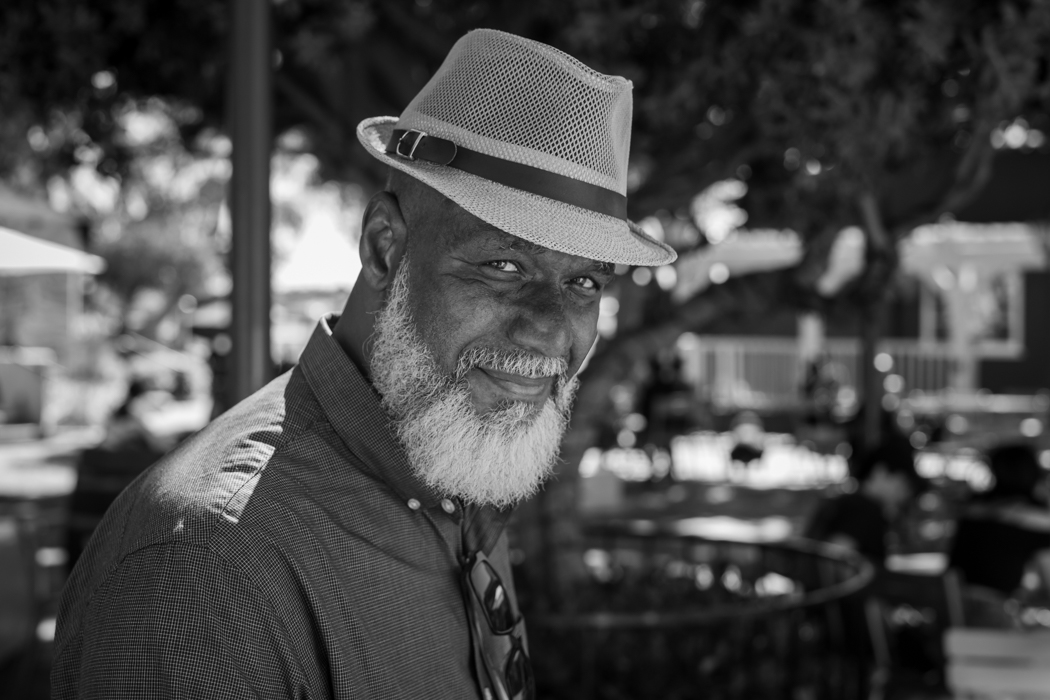
Day 11 Image:
flash wrote:
Almost time for a real technical challenge to push your (quickly) growing skills. This one is for advanced and experienced Leica shooters. Failure is expected.
Try a shot each day, completely pre-visualised. That is; SS, aperture ISO and focus all set before you lift the camera to your eye. No cheating. Guess everything. When you get really good you can also guess the focal length and framing.
Doesn't have to be your shot of the day but a really good way to develop pre visualisation skills. One of the most advanced Leica skills of all. Once you get it you'll start doing...Show more →
Gordon, Challenge accepted. Mostly....
I decided to get lunch today at sea Port Village. It is a tourist shopping mall down on the waterfront of San Diego Bay. Beautiful, warm day so I thought I could mix eating on the outdoor plaza area with photographic opportunity. The light was super harsh, contrast everywhere, and busy, unattractive backgrounds. So, I knew I would be shooting for a monotone image.
On one side of the plaza was a large white wall. It acted like a big reflector for a walkway that went right by it. On the other side of the walking area was a large tree casting an open shade shadow across the path. I decide that if I shot people as they walked through the shadow, and were lit by the reflecting wall, I would have decent lighting on them. The path wasn't that wide, and the size of the shade patch was small, so I had a good idea of what the distance between me and the subject would be as I leaned against the wall and they walked by. I visually estimated that my subject would be about 10 feet away. I wanted to try and get the busy background to blur as much as possible. So, instead of a safer f/8, I choose the smaller DOF from f/5.6 to test as a starting point. At 10 feet it looked like from the indicator on the lens that I would have about a 5 foot zone of acceptable sharpness.
So, without looking through the Range Finder I had myself positioned for the shot. The aperture set for f/5.6, the shutter speed set 1/250 sec, and the ISO floating on "A" to manage exposure. Then it was about waiting for someone with an interesting "look" to walk through my visualized image. In a few minutes the guy in today's image and his Wife walked through my 'Zone". AS Gordon had suggested I just brought the Range Finder up to my eye, quickly composed, and clicked off 4 shots as he traversed the shadow. By shot number 4 he had noticed that I was photographing him, looks over at me a gave a small smile. I was busted and stopped. I still get intimidated when shooting strangers like that. I am not sure how they will react. I was lucky this time.
I then went over to my lunch table in the shade to review the image. I was lucky, liked the image,, and my zone guesses seemed to have worked OK. This was the only person I shot at this spot. I will say that I was surprised by how tight the shot was at 50mm. Learning to estimate this will take some work as well. I am so used to "seeing" he whole view finder and not the crop lines. they just don't register yet when I am shooting. Still, I did get an decent image by pre-visualizing and setting up the camera and the shot. After this I took a walk along the commercial fishing boat basin and shot a few more images. Done for the day.
Here is the the image. Once again only a slight crop, and minimal Light Room editing. I am Looking forward to you comments and suggestions.
flash wrote:
Almost time for a real technical challenge to push your (quickly) growing skills. This one is for advanced and experienced Leica shooters. Failure is expected.
Try a shot each day, completely pre-visualised. That is; SS, aperture ISO and focus all set before you lift the camera to your eye. No cheating. Guess everything. When you get really good you can also guess the focal length and framing.
Doesn't have to be your shot of the day but a really good way to develop pre visualisation skills. One of the most advanced Leica skills of all. Once you get it you'll start doing...Show more →
Gordon, Challenge accepted. Mostly....
I decided to get lunch today at sea Port Village. It is a tourist shopping mall down on the waterfront of San Diego Bay. Beautiful, warm day so I thought I could mix eating on the outdoor plaza area with photographic opportunity. The light was super harsh, contrast everywhere, and busy, unattractive backgrounds. So, I knew I would be shooting for a monotone image.
On one side of the plaza was a large white wall. It acted like a big reflector for a walkway that went right by it. On the other side of the walking area was a large tree casting an open shade shadow across the path. I decide that if I shot people as they walked through the shadow, and were lit by the reflecting wall, I would have decent lighting on them. The path wasn't that wide, and the size of the shade patch was small, so I had a good idea of what the distance between me and the subject would be as I leaned against the wall and they walked by. I visually estimated that my subject would be about 10 feet away. I wanted to try and get the busy background to blur as much as possible. So, instead of a safer f/8, I choose the smaller DOF from f/5.6 to test as a starting point. At 10 feet it looked like from the indicator on the lens that I would have about a 5 foot zone of acceptable sharpness.
So, without looking through the Range Finder I had myself positioned for the shot. The aperture set for f/5.6, the shutter speed set 1/250 sec, and the ISO floating on "A" to manage exposure. Then it was about waiting for someone with an interesting "look" to walk through my visualized image. In a few minutes the guy in today's image and his Wife walked through my 'Zone". AS Gordon had suggested I just brought the Range Finder up to my eye, quickly composed, and clicked off 4 shots as he traversed the shadow. By shot number 4 he had noticed that I was photographing him, looks over at me a gave a small smile. I was busted and stopped. I still get intimidated when shooting strangers like that. I am not sure how they will react. I was lucky this time.
I then went over to my lunch table in the shade to review the image. I was lucky, liked the image,, and my zone guesses seemed to have worked OK. This was the only person I shot at this spot. I will say that I was surprised by how tight the shot was at 50mm. Learning to estimate this will take some work as well. I am so used to "seeing" he whole view finder and not the crop lines. they just don't register yet when I am shooting. Still, I did get an decent image by pre-visualizing and setting up the camera and the shot. After this I took a walk along the commercial fishing boat basin and shot a few more images. Done for the day.
Here is the the image. Once again only a slight crop, and minimal Light Room editing. I am Looking forward to you comments and suggestions.
Mar 01, 2022 at 12:52 AM
p.8 #2Learning Leica "M", a 30 day project
One more thing. The CV 50mm f/1.5 Nokton doesn't have a focus tab on it. I must use a very fine texture focus ring when focusing through the range finder. The lens is small and I have big hands. There are way too many times where I have ended up with my finger covering part of the image. It didn't effect today's image because I wasn't focusing when I shot it. It did get in the way a couple of other times today.
It doesn't happen with my 28mm which is both smaller and wider because I am using the tab on the focus ring. This ergonomic anomaly is bothering me. I have ordered an after market tab to put on the lens to see how that works. It should also help with estimating the acceptable sharpness zone by feel, making me more agile in my shooting.
I think it is strange that CV did put two small tabs on the aperture ring, and nothing on the focus ring. I wish they would make a line of lenses with matching ergonomics at various focal lengths. that just seems to make sense to me.
I do like the way the lens rendered the background in this image. Even the specular highlights out on the extreme edges had a good shape and reasonably smooth rendering. I still feel like I should have some Leica lenses, but I am very pleased with my CV lenses. I also like my gapping at 28mm, 50mm, 75mm, and don't feel a strong need for another FL. My 28mm is only a $350 older version of the lens, so I will likely be upgrading to the newer version (which gets great reviews), maybe get a Leica for that FL. I am not unhappy with this lens on my Leica M body. It was a pretty poor performer in the corners adapted on my Sony bodies. But, I won't be using it here anyway.
Is the Leica Summicron-M 28 f/2 ASPH going to give me any meaningful improvements over the newer CV 28mm f/2 Ultron II MC? Anyone shot both?
Mar 01, 2022 at 01:08 AM
p.8 #3Learning Leica "M", a 30 day project
1bwana1 wrote:
One more thing. The CV 50mm f/1.5 Nokton doesn't have a focus tab on it. I must use a very fine texture focus ring when focusing through the range finder. The lens is small and I have big hands. There are way too many times where I have ended up with my finger covering part of the image. It didn't effect today's image because I wasn't focusing when I shot it. It did get in the way a couple of other times today...
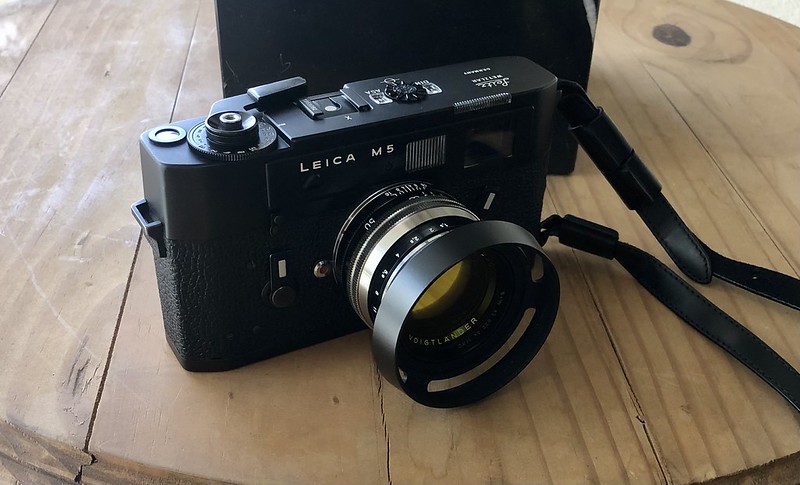
A lens hood would prevent that:
One more thing. The CV 50mm f/1.5 Nokton doesn't have a focus tab on it. I must use a very fine texture focus ring when focusing through the range finder. The lens is small and I have big hands. There are way too many times where I have ended up with my finger covering part of the image. It didn't effect today's image because I wasn't focusing when I shot it. It did get in the way a couple of other times today...
A lens hood would prevent that:
Mar 01, 2022 at 01:33 AM
p.8 #4Learning Leica "M", a 30 day project
Desmolicious wrote:
A lens hood would prevent that:
]
Nice camera. I would buy one if I did not already have one.
BTW, I'm prefer smaller hoods:
A lens hood would prevent that:
]
Nice camera. I would buy one if I did not already have one.
BTW, I'm prefer smaller hoods:
Mar 01, 2022 at 03:45 AM
p.8 #5Learning Leica "M", a 30 day project
Great image Steve! Also love the waitress portrait! Love seeing your progress and reading about your process. I agree, the lack of a focus tab is annoying.
Mar 01, 2022 at 05:35 AM

p.8 #6Learning Leica "M", a 30 day project
Steve then start taking everything a step beyond and getting to a point where you start seeing in the moment. Not having any preconceived ideas but responding to the elements when they all come into alignment and now having the skills to capture what you are seeing in that moment. Seeing reacting and capturing in fractions of seconds. Bresson referred to it as a developed instinct.
Speaking of Bresson, a few words from him on ths subject.
"To take photographs means to recognize -- simultaneously and within a fraction of a second -- both the fact itself and the rigorous organization of visually perceived forms that give it meaning. It is putting one's head, one's eye and one's heart on the same axis."
Henri Cartier-Bresson
"I prowled the streets all day, feeling very strung up and ready to pounce, determined to 'trap' life - to preserve life in the act of living. Above all, I craved to seize the whole essence, in the confines of one single photograph, of some situation that was in the process of unrolling itself before my eyes."
Henri Cartier-Bresson
"To me, photography is the simultaneous recognition, in a fraction of a second, of the significance of an event, as well as of a precise organisation of forms which give that event its proper expression. I believe that through the act of living, the discovery of oneself is made concurrently with the discovery of the world around us which can mould us, but which can also be affected by us. A balance must be established between these two worlds- the one inside us and the one outside us. As the result of a constant reciprocal process, both these worlds come to form a single one. And it is this world that we must communicate. But this takes care only of the content of the picture. For me, content cannot be separated from form. By form, I mean the rigorous organisation of the interplay of surfaces, lines and values. It is in this organisation alone that our conceptions and emotions become concrete and communicable. In photography, visual organisation can stem only from a developed instinct."
Henri Cartier-Bresson
BTW I wanted to add that Leica Ms are the perfect tool for this kind of photogrpahy.
Mar 01, 2022 at 08:07 AM
p.8 #7Learning Leica "M", a 30 day project
Desmolicious wrote:
A lens hood would prevent that:
---------------------------------------------
pmeheut wrote:
Nice camera. I would buy one if I did not already have one.
BTW, I'm prefer smaller hoods: https://live.staticflickr.com/65535/51885077513_eff9f64687_c.jpg
Thanks guys, I have ordered a hood for both my 28mm and my 50mm. I usually shoot with hoods most of the time. I bought both of these lenses used here from FM members. The 28mm came with a third party hood, but it caused heavy a vignette so I haven't been using it. The ones I ordered are thinner so hopefully won't cause this issue.
Mar 01, 2022 at 09:34 AM
p.8 #8Learning Leica "M", a 30 day project
airfrogusmc wrote:
Steve then start taking everything a step beyond and getting to a point where you start seeing in the moment. Not having any preconceived ideas but responding to the elements when they all come into alignment and now having the skills to capture what you are seeing in that moment. Seeing reacting and capturing in fractions of seconds. Bresson referred to it as a developed instinct.
Speaking of Bresson, a few words from him on ths subject.
"To take photographs means to recognize -- simultaneously and within a fraction of a second -- both the fact itself and the rigorous...Show more →
Inspiring words for sure. Thanks for posting
I am working on learning to be fast. The ability to catch unexpected opportunities is of course a primary goal. I don't think that using the Range Finder for focusing will ever be anywhere near as fast as AF. But I can get much faster than my current skill level allows.
I have ordered some aftermarket tabs for the two lenses that don't have one. I think they will help by letting me establish a known starting point close to the intended focus distance when using the Range Finder. When using zone focus it will be even faster because I can have the focused established even before the camera gets to my eye. then all I am worried about is composition to get the shot.
That is my theory anyway.......
Mar 01, 2022 at 09:53 AM
p.8 #9Learning Leica "M", a 30 day project
It takes a long time to get there. The journey is well worth it though.
I'll repost this link Steve. Scroll down to manual focus. As the author of the piece says "It may sound like a heresy for some, but rangefinder manual focusing is faster than AF and , importantly, more reliable in low light."
https://www.artphotoacademy.com/the-leica-look/
And there is no auto focus in the world faster than being pre focused. Thats why most of the great street photographers learn to do it. I left auto focus because it was just not fast enough. I was missing things that I no longer miss.
I would recommend to pick a F/L and leave it on your camera for a long time. A year maybe. In the beginning look down at the DoF scales and pre set them. Do it until you start getting better at judging distance, better at knowing where the lens focus is and you get totally comfortable and fairly good at doing it.
Developed instinct....
Edited on Mar 01, 2022 at 11:46 AM · View previous versions
Mar 01, 2022 at 10:20 AM
p.8 #10Learning Leica "M", a 30 day project
pmeheut wrote:
]Nice camera. I would buy one if I did not already have one.
BTW, I'm prefer smaller hoods: https://live.staticflickr.com/65535/51885077513_eff9f64687_c.jpg
I can't use that hood. It says 'digital' on it and I only use film. I use film specific hoods.
Desmolicious wrote
A lens hood would prevent that:]
BTW, I'm prefer smaller hoods: https://live.staticflickr.com/65535/51885077513_eff9f64687_c.jpg
I can't use that hood. It says 'digital' on it and I only use film. I use film specific hoods.
Mar 01, 2022 at 10:39 AM
p.8 #11Learning Leica "M", a 30 day project
Desmolicious wrote:
]Nice camera. I would buy one if I did not already have one.
BTW, I'm prefer smaller hoods: https://live.staticflickr.com/65535/51885077513_eff9f64687_c.jpgI can't use that hood. It says 'digital' on it and I only use film. I use film specific hoods.

pmeheut wrote
Desmolicious wrote
A lens hood would prevent that:]
BTW, I'm prefer smaller hoods: https://live.staticflickr.com/65535/51885077513_eff9f64687_c.jpg
Mar 01, 2022 at 11:43 AM
p.8 #12Learning Leica "M", a 30 day project
1bwana1 wrote:
I think it is strange that CV did put two small tabs on the aperture ring, and nothing on the focus ring. I wish they would make a line of lenses with matching ergonomics at various focal lengths. that just seems to make sense to me.
I'm a bit surprised you've already come to this conclusion only 11 days in. Fast learner!
Is the Leica Summicron-M 28 f/2 ASPH going to give me any meaningful improvements over the newer CV 28mm f/2 Ultron II MC? Anyone shot both?
There have been some discussions and comparison images in past threads. Bottom line seems to be the new VM is sharper across the frame from wide open, but it's generally very close. Some slight differences in rendering - to my eyes the VM's bokeh at some distances seems a touch swirly. IMO the biggest difference will be ergonomics, though at least this VM has a tabbed option very similar to Leica's tabs.
This thread might be helpful and also point to other discussions elsewhere.
1bwana1 wrote:
I am working on learning to be fast. The ability to catch unexpected opportunities is of course a primary goal. I don't think that using the Range Finder for focusing will ever be anywhere near as fast as AF. But I can get much faster than my current skill level allows.
I think you'll be surprised how fast RF focusing can be, because you're not always shooting wide open with a long lens. It's getting comfortable with the concept that the RF patch doesn't have to line up perfectly to get a sharply focused image. You can get the RF lined up quickly to 'good enough' in many instances. Or already get the lens focused approximately based on tab position before your eye is at the viewfinder. And in a situation like what you did above, if your subject will consistently appear at a certain distance range, you just have to set focus once and can concentrate on timing.
AF can be fast, accurate and consistent, especially with longer lenses and when wanting to track a moving subject with a wide aperture coming at you quickly. Certainly mirrorless has improved AF accuracy in some respects, but my experience with AF, particularly with wider lenses, has been that it's not foolproof. I find I usually intentionally overshoot with AF to be sure I got something correctly focused. Especially with wider lenses and the RF, I have extremely high confidence in achieving critical focus and feel much more confident in that technical aspect of image capture than when using an AF based system, especially in darker conditions and lower contrast lighting.
Good job above with pre-visualizing, recognizing light quality and direction, background variables and anticipating subject placement. There are definitely times you'll find environments where you will wait for something to appear to improve the composition. Other times you'll stumble on something, perhaps your eye already subconsciously anticipating something might happen, and have to react very quickly.
Mar 01, 2022 at 12:06 PM
p.8 #13Learning Leica "M", a 30 day project
Desmolicious wrote:
I can't use that hood. It says 'digital' on it and I only use film. I use film specific hoods.
Indeed and of course you are right to do so. Sometimes in cases like these, I use a black sharpie to mask the marking but that's cheating.
I can't use that hood. It says 'digital' on it and I only use film. I use film specific hoods.
Indeed and of course you are right to do so. Sometimes in cases like these, I use a black sharpie to mask the marking but that's cheating.
Mar 01, 2022 at 01:29 PM
p.8 #14Learning Leica "M", a 30 day project
pmeheut wrote:
Indeed and of course you are right to do so. Sometimes in cases like these, I use a black sharpie to mask the marking but that's cheating.
You can't fool film. It knows...
Desmolicious wrote
I can't use that hood. It says 'digital' on it and I only use film. I use film specific hoods.You can't fool film. It knows...
Mar 01, 2022 at 02:56 PM
p.8 #15Learning Leica "M", a 30 day project
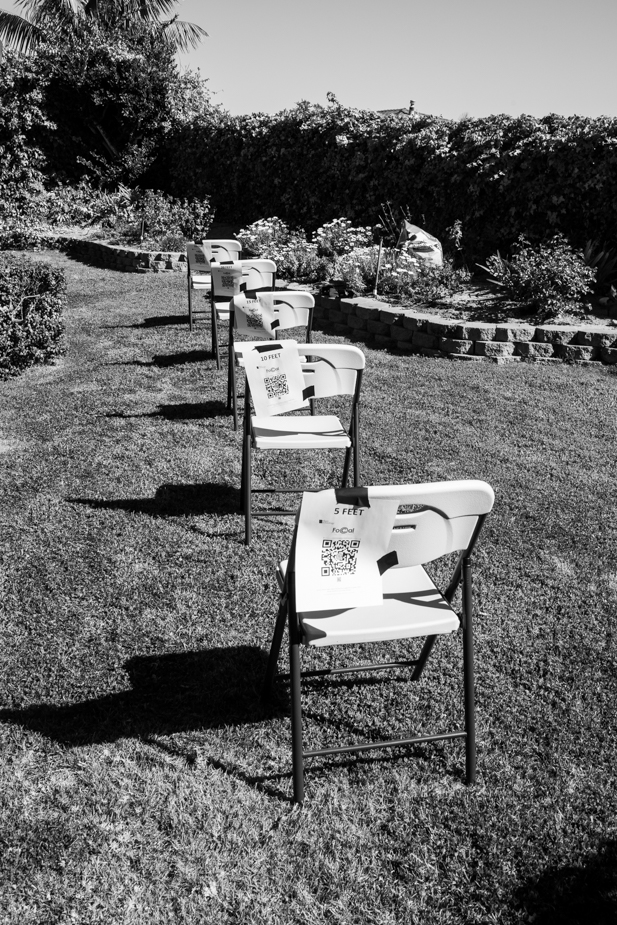
So what is this crazy guy up to now?
Training like I would learning a new car or a new track. Gaining speed and precision. These are a series of distance labeled focus targets I hacked together, and set up every 5 feet in my back yard. I can sit in a nice comfortable chair, choose a target, and use the tab on the lens to set focus as I bring the camera up to my eye. Hopefully, it will tune both my eye for distance, and my hand for focus , and I will get fast and accurate in 5 positions on each of my lenses.
Position 1: Full stop close.
Position 2: 1/2 way to center
Position 3: Center
Position 4: 1/2 way to long from center
Position 5: Full stop long.
Focus distance with a specific lens will not change with aperture, I should be able to nail focus on a target at any aperture. Of course DOF will and i should get a handle on that as well. I hope.
Old racing habits never leave you....
Training like I would learning a new car or a new track. Gaining speed and precision. These are a series of distance labeled focus targets I hacked together, and set up every 5 feet in my back yard. I can sit in a nice comfortable chair, choose a target, and use the tab on the lens to set focus as I bring the camera up to my eye. Hopefully, it will tune both my eye for distance, and my hand for focus , and I will get fast and accurate in 5 positions on each of my lenses.
Position 1: Full stop close.
Position 2: 1/2 way to center
Position 3: Center
Position 4: 1/2 way to long from center
Position 5: Full stop long.
Focus distance with a specific lens will not change with aperture, I should be able to nail focus on a target at any aperture. Of course DOF will and i should get a handle on that as well. I hope.
Old racing habits never leave you....
Mar 01, 2022 at 04:31 PM
p.8 #16Learning Leica "M", a 30 day project
1bwana1 wrote:
Day 11 Image:
Try a shot each day, completely pre-visualised. That is; SS, aperture ISO and focus all set before you lift the camera to your eye. No cheating. Guess everything. When you get really good you can also guess the focal length and framing.
Doesn't have to be your shot of the day but a really good way to develop pre visualisation skills. One of the most advanced Leica skills of all. Once you get it you'll start doing things like changing your shutter speed when you walk into and out of shadows or when you walk indoors you'll adjust the aperture by feel. Served me well as a wedding shooter who had to change settings on the fly following a bride walking out of a church.
Actually, it's probably unfair to ask you to try this after just a week with the camera. But I have anyway...
GordonGordon, Challenge accepted. Mostly....
I decided to get lunch today at sea Port Village. It is a tourist shopping mall down on the waterfront of San Diego Bay. Beautiful, warm day so I thought I could mix eating on the outdoor plaza area with photographic opportunity. The light was super harsh, contrast everywhere, and busy, unattractive backgrounds. So, I knew I would be shooting for a monotone image.
On one side of the plaza was a large white wall. It acted like a big reflector for a walkway that went right by it. On the other side of...Show more →
This image, where you are engaged with teh subject, is so much more compelling than zone focusing/ shooting from the hip stuff. I love it. The image reflects investment in the scene.
Day 11 Image:
flash wrote
Almost time for a real technical challenge to push your (quickly) growing skills. This one is for advanced and experienced Leica shooters. Failure is expected.Try a shot each day, completely pre-visualised. That is; SS, aperture ISO and focus all set before you lift the camera to your eye. No cheating. Guess everything. When you get really good you can also guess the focal length and framing.
Doesn't have to be your shot of the day but a really good way to develop pre visualisation skills. One of the most advanced Leica skills of all. Once you get it you'll start doing things like changing your shutter speed when you walk into and out of shadows or when you walk indoors you'll adjust the aperture by feel. Served me well as a wedding shooter who had to change settings on the fly following a bride walking out of a church.
Actually, it's probably unfair to ask you to try this after just a week with the camera. But I have anyway...
Gordon
I decided to get lunch today at sea Port Village. It is a tourist shopping mall down on the waterfront of San Diego Bay. Beautiful, warm day so I thought I could mix eating on the outdoor plaza area with photographic opportunity. The light was super harsh, contrast everywhere, and busy, unattractive backgrounds. So, I knew I would be shooting for a monotone image.
On one side of the plaza was a large white wall. It acted like a big reflector for a walkway that went right by it. On the other side of...Show more →
This image, where you are engaged with teh subject, is so much more compelling than zone focusing/ shooting from the hip stuff. I love it. The image reflects investment in the scene.
Mar 01, 2022 at 04:39 PM
p.8 #17Learning Leica "M", a 30 day project
AndrewNYC wrote:
This image, where you are engaged with teh subject, is so much more compelling than zone focusing/ shooting from the hip stuff. I love it. The image reflects investment in the scene.
No, I shot when he was walking by trying to be discreet. I suck at that. It his his natural reaction to being photographed. We did talk to after the shot and I bought him and his Wife an ice cream. Very nice people.
Mar 01, 2022 at 04:57 PM
p.8 #18Learning Leica "M", a 30 day project
AndrewNYC wrote:
Try a shot each day, completely pre-visualised. That is; SS, aperture ISO and focus all set before you lift the camera to your eye. No cheating. Guess everything. When you get really good you can also guess the focal length and framing.
Doesn't have to be your shot of the day but a really good way to develop pre visualisation skills. One of the most advanced Leica skills of all. Once you get it you'll start doing things like changing your shutter speed when you walk into and out of shadows or when you walk indoors you'll adjust the aperture by feel. Served me well as a wedding shooter who had to change settings on the fly following a bride walking out of a church.
Actually, it's probably unfair to ask you to try this after just a week with the camera. But I have anyway...
GordonGordon, Challenge accepted. Mostly....
I decided to get lunch today at sea Port Village. It is a tourist shopping mall down on the waterfront of San Diego Bay. Beautiful, warm day so I thought I could mix eating on the outdoor plaza area with photographic opportunity. The light was super harsh, contrast everywhere, and busy, unattractive backgrounds. So, I knew I would be shooting for a monotone image.
On one side of the plaza was a large white wall. It acted like a big reflector for a walkway that went right by it. On the other side of the walking area was a large tree casting an open shade shadow across the path. I decide that if I shot people as they walked through the shadow, and were lit by the reflecting wall, I would have decent lighting on them. The path wasn't that wide, and the size of the shade patch was small, so I had a good idea of what the distance between me and the subject would be as I leaned against the wall and they walked by. I visually estimated that my subject would be about 10 feet away. I wanted to try and get the busy background to blur as much as possible. So, instead of a safer f/8, I choose the smaller DOF from f/5.6 to test as a starting point. At 10 feet it looked like from the indicator on the lens that I would have about a 5 foot zone of acceptable sharpness.
So, without looking through the Range Finder I had myself positioned for the shot. The aperture set for f/5.6, the shutter speed set 1/250 sec, and the ISO floating on "A" to manage exposure. Then it was about waiting for someone with an interesting "look" to walk through my visualized image. In a few minutes the guy in today's image and his Wife walked through my 'Zone". AS Gordon had suggested I just brought the Range Finder up to my eye, quickly composed, and clicked off 4 shots as he traversed the shadow. By shot number 4 he had noticed that I was photographing him, looks over at me a gave a small smile. I was busted and stopped. I still get intimidated when shooting strangers like that. I am not sure how they will react. I was lucky this time.
I then went over to my lunch table in the shade to review the image. I was lucky, liked the image,, and my zone guesses seemed to have worked OK. This was the only person I shot at this spot. I will say that I was surprised by how tight the shot was at 50mm. Learning to estimate this will take some work as well. I am so used to "seeing" he whole view finder and not the crop lines. they just don't register yet when I am shooting. Still, I did get an decent image by pre-visualizing and setting up the camera and the shot. After this I took a walk along the commercial fishing boat basin and shot a few more images. Done for the day.
Here is the the image. Once again only a slight crop, and minimal Light Room editing. I am Looking forward to you comments and suggestions.This image, where you are engaged with teh subject, is so much more compelling than zone focusing/ shooting from the hip stuff. I love it. The image reflects investment in the scene.
I don't shoot from the hip and wasn't saying that anyone should. Both shooting in the moment and engaging have their place. I do both.
1bwana1 wrote
Day 11 Image:flash wrote
Almost time for a real technical challenge to push your (quickly) growing skills. This one is for advanced and experienced Leica shooters. Failure is expected.Try a shot each day, completely pre-visualised. That is; SS, aperture ISO and focus all set before you lift the camera to your eye. No cheating. Guess everything. When you get really good you can also guess the focal length and framing.
Doesn't have to be your shot of the day but a really good way to develop pre visualisation skills. One of the most advanced Leica skills of all. Once you get it you'll start doing things like changing your shutter speed when you walk into and out of shadows or when you walk indoors you'll adjust the aperture by feel. Served me well as a wedding shooter who had to change settings on the fly following a bride walking out of a church.
Actually, it's probably unfair to ask you to try this after just a week with the camera. But I have anyway...
Gordon
I decided to get lunch today at sea Port Village. It is a tourist shopping mall down on the waterfront of San Diego Bay. Beautiful, warm day so I thought I could mix eating on the outdoor plaza area with photographic opportunity. The light was super harsh, contrast everywhere, and busy, unattractive backgrounds. So, I knew I would be shooting for a monotone image.
On one side of the plaza was a large white wall. It acted like a big reflector for a walkway that went right by it. On the other side of the walking area was a large tree casting an open shade shadow across the path. I decide that if I shot people as they walked through the shadow, and were lit by the reflecting wall, I would have decent lighting on them. The path wasn't that wide, and the size of the shade patch was small, so I had a good idea of what the distance between me and the subject would be as I leaned against the wall and they walked by. I visually estimated that my subject would be about 10 feet away. I wanted to try and get the busy background to blur as much as possible. So, instead of a safer f/8, I choose the smaller DOF from f/5.6 to test as a starting point. At 10 feet it looked like from the indicator on the lens that I would have about a 5 foot zone of acceptable sharpness.
So, without looking through the Range Finder I had myself positioned for the shot. The aperture set for f/5.6, the shutter speed set 1/250 sec, and the ISO floating on "A" to manage exposure. Then it was about waiting for someone with an interesting "look" to walk through my visualized image. In a few minutes the guy in today's image and his Wife walked through my 'Zone". AS Gordon had suggested I just brought the Range Finder up to my eye, quickly composed, and clicked off 4 shots as he traversed the shadow. By shot number 4 he had noticed that I was photographing him, looks over at me a gave a small smile. I was busted and stopped. I still get intimidated when shooting strangers like that. I am not sure how they will react. I was lucky this time.
I then went over to my lunch table in the shade to review the image. I was lucky, liked the image,, and my zone guesses seemed to have worked OK. This was the only person I shot at this spot. I will say that I was surprised by how tight the shot was at 50mm. Learning to estimate this will take some work as well. I am so used to "seeing" he whole view finder and not the crop lines. they just don't register yet when I am shooting. Still, I did get an decent image by pre-visualizing and setting up the camera and the shot. After this I took a walk along the commercial fishing boat basin and shot a few more images. Done for the day.
Here is the the image. Once again only a slight crop, and minimal Light Room editing. I am Looking forward to you comments and suggestions.
I don't shoot from the hip and wasn't saying that anyone should. Both shooting in the moment and engaging have their place. I do both.
Mar 01, 2022 at 05:06 PM
p.8 #19Learning Leica "M", a 30 day project
Day 12 image:
I wanted to try something different. Todays image was shot at sunrise in the Village of La Jolla where I live. I have often thought of shooting the Spanish Revival style bell towers of Mary's By The Sea Catholic Church, but never got around to it. The weather looked to exactly what I wanted, so I am including it in this project.
I got up in time for sunrise on an absolutely clear morning. This has always been my vision for the shot. I didn't want an clouds competing with the towers for attention. I pretty much had the Village to myself except for a small band of homeless that gathered around to watch what I was doing. Friendly people who are having a tough time for a variety of reasons.
I wanted to use a longer focal length to compress the towers which are in reality set a distance from each other. So once again I selected the CV 75mm f/1.5 Nokton. Since I knew it would require a long exposure in the low light, I mounted it on my tripod with a gimbal head. I figured it was time to try out the M10-P long exposure modes. I also noticed a new feature was installed in the camera with the firmware update I did last week. It is an in camera perspective correction feature. I think I read that this is the first computational photography ever included on an M camera. I thought it would be worth trying out.
The setup:
All settings done manual for control of the exposure. Just as I would a have done with my other cameras in the same circumstances. The Leica lacks nothing for this kind of shooting, except the Bulb mode must be used at a shorted SS, and is limited to 4 minutes.
CV 75mm f/1.5 Nokton
On tripod
F/8
Infinity focus (I shot from across the wide main street in La Jolla)
0.5 sec shutter speed
ISO 200 (learned my lesson about that)
Auto White Balance
Two Second Timer Drive Mode so no vibration.
Persp3ctive Correction ON
Shot with Live View, not through the range finder.
I liked the light pre sunrise as this gave a nice soft glow, lowered the contrast between light and shadows, and provided some soft pastel color in the sky. I chose a square crop because I think it looks good with this shot, and would print nicely for a small wall or table top picture.
The M10-P really does a great job managing colors and tone in my opinion. I think the perspective control feature worked well enough. But it does crop the image. I would have no hesitancy to travel with this camera and use it for landscapes as well as a travel camera.
Enjoy!
-Steve-

I wanted to try something different. Todays image was shot at sunrise in the Village of La Jolla where I live. I have often thought of shooting the Spanish Revival style bell towers of Mary's By The Sea Catholic Church, but never got around to it. The weather looked to exactly what I wanted, so I am including it in this project.
I got up in time for sunrise on an absolutely clear morning. This has always been my vision for the shot. I didn't want an clouds competing with the towers for attention. I pretty much had the Village to myself except for a small band of homeless that gathered around to watch what I was doing. Friendly people who are having a tough time for a variety of reasons.
I wanted to use a longer focal length to compress the towers which are in reality set a distance from each other. So once again I selected the CV 75mm f/1.5 Nokton. Since I knew it would require a long exposure in the low light, I mounted it on my tripod with a gimbal head. I figured it was time to try out the M10-P long exposure modes. I also noticed a new feature was installed in the camera with the firmware update I did last week. It is an in camera perspective correction feature. I think I read that this is the first computational photography ever included on an M camera. I thought it would be worth trying out.
The setup:
All settings done manual for control of the exposure. Just as I would a have done with my other cameras in the same circumstances. The Leica lacks nothing for this kind of shooting, except the Bulb mode must be used at a shorted SS, and is limited to 4 minutes.
CV 75mm f/1.5 Nokton
On tripod
F/8
Infinity focus (I shot from across the wide main street in La Jolla)
0.5 sec shutter speed
ISO 200 (learned my lesson about that)
Auto White Balance
Two Second Timer Drive Mode so no vibration.
Persp3ctive Correction ON
Shot with Live View, not through the range finder.
I liked the light pre sunrise as this gave a nice soft glow, lowered the contrast between light and shadows, and provided some soft pastel color in the sky. I chose a square crop because I think it looks good with this shot, and would print nicely for a small wall or table top picture.
The M10-P really does a great job managing colors and tone in my opinion. I think the perspective control feature worked well enough. But it does crop the image. I would have no hesitancy to travel with this camera and use it for landscapes as well as a travel camera.
Enjoy!
-Steve-
Mar 01, 2022 at 08:18 PM
p.8 #20Learning Leica "M", a 30 day project
Beautiful! I think you were right to try for a morning without clouds, it really shows off the church.
I’ve also enjoyed following your photography because it helps me revisit La Jolla. Both of my grandparents retired there and I had many fond memories visiting them there. In fact I remember a good Thai restaurant across the street from this church 😉
1bwana1 wrote:
Day 12 image:
I wanted to try something different. Todays image was shot at sunrise in the Village of La Jolla where I live. I have often thought of shooting the Spanish Revival style bell towers of Mary's By The Sea Catholic Church, but never got around to it. The weather looked to exactly what I wanted, so I am including it in this project.
I got up in time for sunrise on an absolutely clear morning. This has always been my vision for the shot. I didn't want an clouds competing with the towers for attention. I pretty much had the...Show more →
Mar 01, 2022 at 09:42 PM