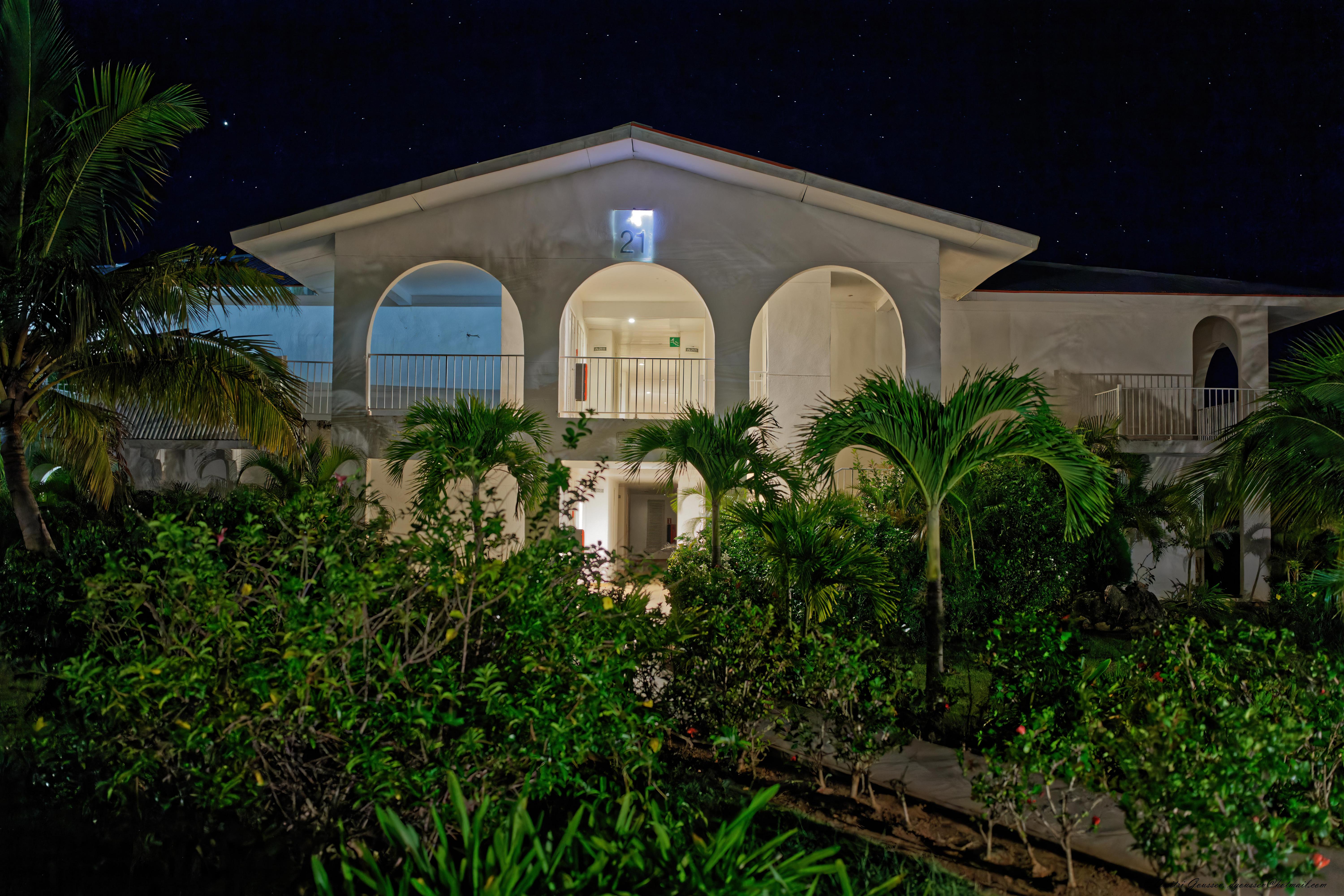
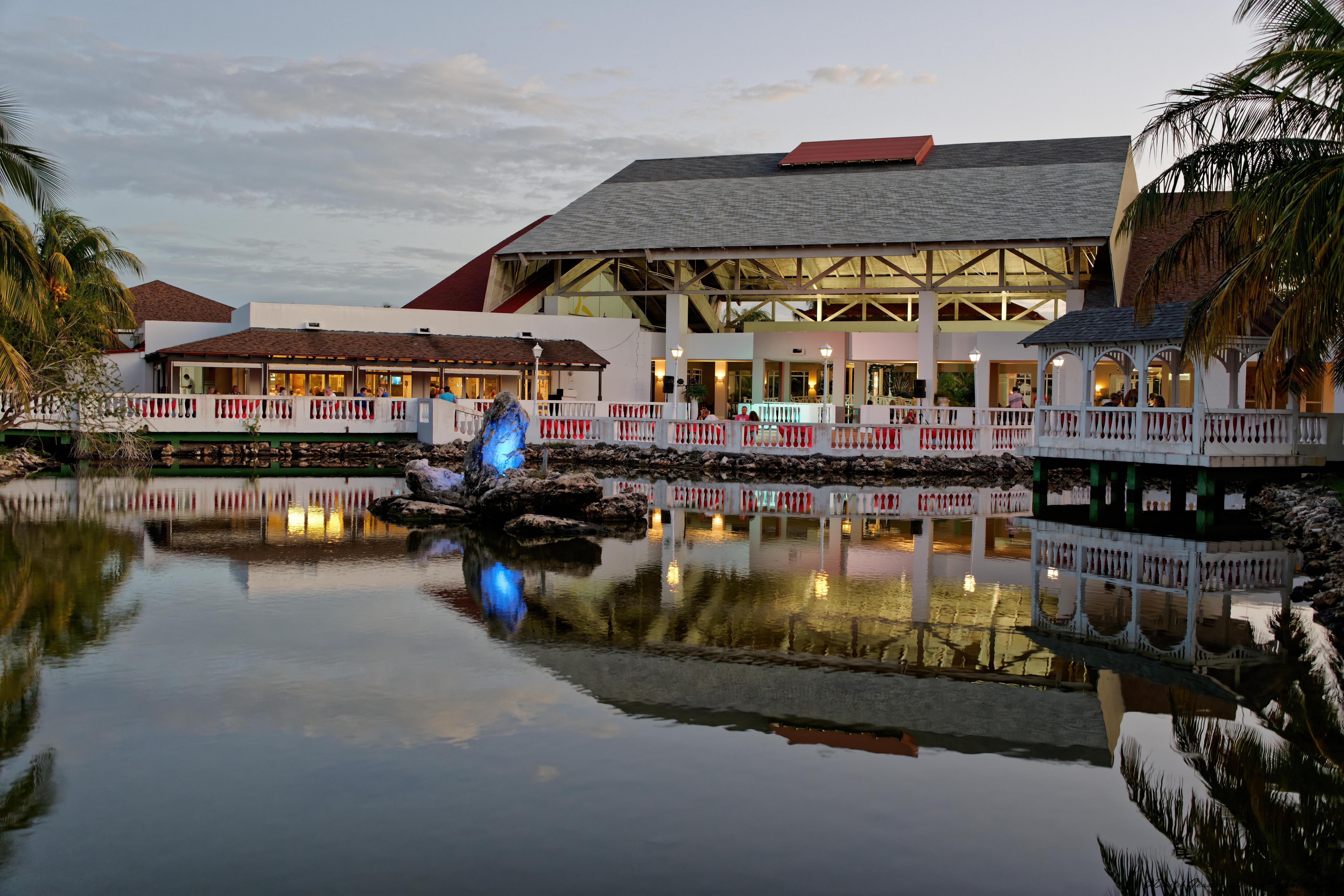
p.6 #2 · Tamron 35-150mm F/2-2.8 Di III VXD Image Thread
Sorry guys, no sugarcoating from me, regardless if it's a GM, DN or DI-III...
I think the Tamron reaches similar levels (EV) of vignetting as my other fast & relatively compact lenses, but the vignetting cuts a bit deeper into the image (might be only an impression at 35/2 though).
p.6 #3 · Tamron 35-150mm F/2-2.8 Di III VXD Image Thread
I've used this lens on a couple smaller jobs now. I am extremely happy with the purchase. Using this with a second body with a 24GM or 20 1.8 and it fits 99% of my needs.
Some situations shooting directly in the sun is the only flaw for me. But I can work around that.
A few images I thought I would share. Yes these are edited and processed to my style.
p.6 #4 · Tamron 35-150mm F/2-2.8 Di III VXD Image Thread
DFason wrote:
I've used this lens on a couple smaller jobs now. I am extremely happy with the purchase. Using this with a second body with a 24GM or 20 1.8 and it fits 99% of my needs.
Some situations shooting directly in the sun is the only flaw for me. But I can work around that.
A few images I thought I would share. Yes these are edited and processed to my style.
p.6 #5 · Tamron 35-150mm F/2-2.8 Di III VXD Image Thread
These images have been taken in artificial light, varying from poor to very poor to truly garish. The ISO values were in the range from 1600 to 12800. I could not completely avoid the subject motion blur. I hope this group of images are reasonably representative of the low-light performance of the lens under such conditions and with moving subjects.
p.6 #6 · Tamron 35-150mm F/2-2.8 Di III VXD Image Thread
ruthenium wrote:
These images have been taken in artificial light, varying from poor to very poor to truly garish. The ISO values were in the range from 1600 to 12800. I could not completely avoid the subject motion blur. I hope this group of images are reasonably representative of the low-light performance of the lens under such conditions and with moving subjects.
Any issues with focus tracking on moving subjects in low light?
p.6 #7 · Tamron 35-150mm F/2-2.8 Di III VXD Image Thread
kenwood wrote:
Any issues with focus tracking on moving subjects in low light?
I cannot think of a situation where the AF performance in general was an issue. For all subjects (birds, animals, people), the eye AF worked as expected, except image 6 above where the camera focused on the bigger eyes in the background (on the art) rather than on the smaller eyes of the dancers. I had to switch from wide to expanded spot to avoid the problem. In general, the AF with the Tamron does not seem to be any different than the AF of the native Sony lenses I have used (however, I don't know the fastest frames/per second number for the Tamron). In use, the AF is fast and silent. For a definitive statement, one would have to do a more careful study, but my experience with the lens was such that I don't remember thinking much about the AF - meaning it worked in the background as intended and did not hinder me in what I was doing.
p.6 #8 · Tamron 35-150mm F/2-2.8 Di III VXD Image Thread
This group of images are all views with some buildings and other human-made structures. The first two were taken in low light, and the shutter speed was relatively slow, especially in image 2. I should have mentioned this earlier: I brought a tripod with me on the trip, but I have not used it, and all my pictures posted in this thread are hand-held. The lack of in-lens stabilization did not seem to be a problem at all, in my experience.
p.6 #10 · Tamron 35-150mm F/2-2.8 Di III VXD Image Thread
This group of images were taken while hiking. They are mere quick handheld snapshots of the surroundings, no proper/professional landscapes. A PolarPro QuarzLine CPL filter was on the lens.
Some of the reviews noted poor performance of Tamron when shooting against the sun. Thus, the first image was deliberately taken against the sun - I was curious to see how bad the resulting picture would look like.
p.6 #11 · Tamron 35-150mm F/2-2.8 Di III VXD Image Thread
This group of images are technical, specifically addressing concerns about ghosting produced by the lens. These images answer the question on how much ghosting can be present, when provoked, and whether one can control ghosting to some extent.
1) Images 1 and 2 demonstrate how ghosting is provoked when a strong source of light is at or near the diagonal lines, e.g. in a corner. Note that ghosting can be produced by such strong light source even when the source is outside the frame. I personally don't see the observed amount of ghosting as troubling or disturbing.
2) Images 3, 4, and 5 demonstrate that ghosting can be controlled if the source of light can be partly screened.
To summarize my experience: ghosting happens rarely, perhaps even very rarely. When it happens, it appears in predictable rather special situations which one can try either to avoid completely or to mitigate by screening the source of light.
I should add that, in my experience, the lens does not produce veiling or flair when shooting in overall low-light, in the presence of singular bright artificial sources of light. These bright sources of light appear well-defined and reasonably contrasty, without a pronounced halo around them. I very much like this property, which simplifies post-processing.
p.6 #12 · Tamron 35-150mm F/2-2.8 Di III VXD Image Thread
ruthenium wrote:
This group of images are technical, specifically addressing concerns about ghosting produced by the lens. These images answer the question on how much ghosting can be present, when provoked, and whether one can control ghosting to some extent.
1) Images 1 and 2 demonstrate how ghosting is provoked when a strong source of light is at or near the diagonal lines, e.g. in a corner. Note that ghosting can be produced by such strong light source even when the source is outside the frame. I personally don't see the observed amount of ghosting as troubling or disturbing.
2) Images 3, 4, and 5 demonstrate that ghosting can be controlled if the source of light can be partly screened.
To summarize my experience: ghosting happens rarely, perhaps even very rarely. When it happens, it appears in predictable rather special situations which one can try either to avoid completely or to mitigate by screening the source of light.
I should add that, in my experience, the lens does not produce veiling or flair when shooting in overall low-light, in the presence of singular bright artificial sources of light. These bright sources of light appear well-defined and reasonably contrasty, without a pronounced halo around them. I very much like this property, which simplifies post-processing. ...Show more →
This was exactly my experience.
To have ghosting you have to carefully try to find it.
p.6 #13 · Tamron 35-150mm F/2-2.8 Di III VXD Image Thread
ruthenium wrote:
This group of images are technical, specifically addressing concerns about ghosting produced by the lens. These images answer the question on how much ghosting can be present, when provoked, and whether one can control ghosting to some extent.
It's not bad at all, and sunstars are quite good for a zoom lens at f/11 .
p.6 #15 · Tamron 35-150mm F/2-2.8 Di III VXD Image Thread
This looks like a special lens if you are willing to put up with the weight; can anyone remark on the lens at various focal lengths for fine detail at typical landscape apertures (f8-f16)
p.6 #16 · Tamron 35-150mm F/2-2.8 Di III VXD Image Thread
TravelinBriNY wrote:
This looks like a special lens if you are willing to put up with the weight; can anyone remark on the lens at various focal lengths for fine detail at typical landscape apertures (f8-f16)
I compared it to several lenses at f/8 and below at the following https://www.fredmiranda.com/forum/topic/1712652/38 (obviously not directly on point with +f/8 apertures)
With an RIV, diffraction is going to be an equalizer in terms of sharpness past f/8 and f/11.
Shooting with an RIV, it is sharp enough at f/5.6 that you begin to see the effects of diffraction at f/8, and indeed, f/5.6 on my copy is sharper than f/8 at every focal length I've tested. It comes swinging big out the gate wide-open, and although I haven't tested extensively between f/5.6 and f/8, my hunch would be that it reaches peak sharpness either at f/6.3 or f/7.1. At those apertures, it becomes almost as sharp as superb primes such as the 35GM or 85DGDN.
That all to say, for landscape apertures, it is more than capable of rendering superbly sharp images. There are reasons to consider not having this lens in one's bag, but sharpness is not one of them.
p.6 #18 · Tamron 35-150mm F/2-2.8 Di III VXD Image Thread
This lens looks almost too good to be true and the price is very reasonable.
Does anyone know what the maximum framerate it can get up to on the Sony A1 is? I assume it's 10 ~ 15 fps, but if anyone has been able to confirm, please do share!
p.6 #19 · Tamron 35-150mm F/2-2.8 Di III VXD Image Thread
i have pre-ordered this beautiful Lens.
Which uwa zoom Lens do you have to complement it ?
I hesitate between sigma 14-24 or Sony 16-35 GM because of the copy variation on the sony.