philip_pj wrote:
'We’d need side-by-side tests of E versus M.'
They've snookered us, it's one thing we can't validate if two different systems are used, or if we use one not on its native mount, because other factors are involved. You can only compare the combinations.
I simply said there were differences in many aspects. The differences make it reasonable to think that aspects of imaging will differ, including bokeh. Some will believe they are optically identical and will equate them in reviews and comments, which is incorrect. The APO series began with Sony, not Leica.
I at least am reluctant to buy the 'poor bokeh' from reports based on another lens/sensor/mount, when I see something quite different, and so do other VE users. This post resides in the Sony forum, so Sony users might benefit from knowing this....Show more →
This thread is cross-posted to Leica/Alt, which is easy to miss since the thread title at the top of every page only shows Sony.
I certainly don't think of my M version as having poor bokeh. I don't shoot wide open at mid-distance with busy, nearby backgrounds – torture tests like that are where the complaints come from. At close distance wide open, particularly at or near MFD, the bokeh is really nice, and that's where I use it. So for me, the bokeh is good for an f/2 lens this wide.
I think it's fair to compare the bokeh of the M version on the M10-R to the E version on the A1 or A7R4 – these are the most common use cases for each. We could also compare M and E versions on Sony since corner performance impact to M is irrelevant in a bokeh comparison. No test like that will ever be perfect, but it can still be meaningful.
His key results indicate a surprising softness in the lens's treatment of skin, and his subjects would provoke issues. He feels it is not as stellar as the 50/2 APO at f2, so he may have got a slightly less optimal one or focal distances were different in this assessment - the MTF indicates the exact opposite, though they are close. Rich colour and the very sound background blur also find favour here. And 'excellent portrait rendering'.
Anyone considering one should look at his (A1) video (7:10) linked from this page (#3): 'In video we get very nice results crispy images with beautiful color rendition and soft background blur and excellent contrast.' He shoots in open light.
highdesertmesa wrote:
This thread is cross-posted to Leica/Alt, which is easy to miss since the thread title at the top of every page only shows Sony.
I certainly don't think of my M version as having poor bokeh. I don't shoot wide open at mid-distance with busy, nearby backgrounds – torture tests like that are where the complaints come from. At close distance wide open, particularly at or near MFD, the bokeh is really nice, and that's where I use it. So for me, the bokeh is good for an f/2 lens this wide.
I think it's fair to compare the bokeh of the M version on the M10-R to the E version on the A1 or A7R4 – these are the most common use cases for each. We could also compare M and E versions on Sony since corner performance impact to M is irrelevant in a bokeh comparison. No test like that will ever be perfect, but it can still be meaningful....Show more →
I agree. Any small difference between the M and E versions would be negligible when taking account copy variation. When inspecting real images, small MTF variations usually go unnoticeable.
His key results indicate a surprising softness in the lens's treatment of skin, and his subjects would provoke issues. He feels it is not as stellar as the 50/2 APO at f2, so he may have got a slightly less optimal one or focal distances were different in this assessment - the MTF indicates the exact opposite, though they are close. Rich colour and the very sound background blur also find favour here. And 'excellent portrait rendering'.
Anyone considering one should look at his (A1) video (7:10) linked from this page (#3): 'In video we get very nice results crispy images with beautiful color rendition and soft background blur and excellent contrast.' He shoots in open light....Show more →
I'm not sure someone can do a wide to normal focal length comparison and be talking apples to apples. It's always apples to oranges, then you can come away with a gut feeling. Usually the gut feeling is 50mm is better because the higher magnification is fooling you into thinking the 50mm is capturing more detail.
Maybe he was moving camera position to keep the subject framed the same way, but then you're still comparing detail/sharpness at different focusing positions/distances, which affects performance.
I find when I shoot infinity, the 50 APO will look sharper because of course there is more detail to see in the image. The temptation is to zoom in past 100% on the 35 to try and see what you were seeing with the 50, and of course the comparison is off the rails at that point. But just looking at both at 100%, it's still misleading.
I and others have found a preference for the CV 50 APO over the 35, but I think that stems more from focal length preferences combined with the increased magnification of 50mm having a more pleasing effect on the wide open rendering at close to mid-distance.
Just a little update story on my search, in case anyone else is also still searching and frustrated, know you are not alone and this is not unusual:
I am still not able to find any good Voigtlander 35mm F2 A-L lenses. A third copy finally landed on our shores but it needed no thorough study to be dismissed immediately. My entire country has seen only three(!) E-mount units all told since they began shipping worldwide. The first two had subtle field curvature which I noticed but did not fully pay attention to until it was almost too late. I was not expecting the A-L lenses to vary in field curvature by this much, having never experienced it in multiple copies of the 50/2, its closest sibling, nor the 65/2 which the 50's design was based on.
This third copy is decentered enough that it's not even sharp on-axis. The bottom edge is significantly sharper than the center! And the top edge is just mush. It's a semicircle of blurriness of the top half of the frame, appearing like under-corrected spherical aberration on-axis and all sorts of messes off-axis. Pity, since this copy has no tilt or swing.
I think I'm cursed to never find great 35mm lenses, ever since desiring a great one since 2016, or more likely this focal length is just very challenging to make well. Fred went through 4 copies for E-mount before finding a good one. Another forum member who shared with me full resolution test frames from his copy, I've since been able to diagnose from them a more pernicious issue of asymmetric astigmatism, ignoring the subtle crookedness of that copy. No amount of DIY shimming to straighten the lens can fix that. That's 7 out of 8 bad copies. I saw one from Japan which also seems to be slightly curved, though perhaps less than mine, but is tilted. Lenstip's copy is horribly swung and could be somewhat decentered. So 9 out of 10 bad ones so far, sampling from across the globe.
I've been told Cosina's factory isn't interested in making very many of this species, since there is little demand for it (unlike the VM mount version, which has a lot of demand), plus they have announced so many other new lenses recently. Sony E-mount has something like over 30(?) different 35mm focal length lenses for that platform! That's nuts. My dealer is helping to put in a special notice to get more copies in a few months time, so I have to wait again. This lens is a vital component for the kind of astro pictures I would like to make. I believe a great copy would be on par with the formidable Leica SL 35 F2 APO (not the M mount), and will soundly beat the Otus 28mm. I gather the Sony GM 35 1.4 has mostly been a miss too, as well as the new Sigma 35 1.4 DG DN, most copies failing to meet their published spec. And both of those have far too much focus breathing. I'm not needing "nice rendering" nor AF for this purpose so a great copy would really be the ideal lens, given its diminutive size and weight, and beautiful mechanical manual focus feel.
I'll add a second part to my story about the CV 50/2 in the thread for it.
Hmm....that pernicious comment must be about mine. Trying to stick to ignorance is bliss.....
inksandpaper wrote:
Just a little update story on my search, in case anyone else is also still searching and frustrated, know you are not alone and this is not unusual:
I am still not able to find any good Voigtlander 35mm F2 A-L lenses. A third copy finally landed on our shores but it needed no thorough study to be dismissed immediately. My entire country has seen only three(!) E-mount units all told since they began shipping worldwide. The first two had subtle field curvature which I noticed but did not fully pay attention to until it was almost too late. I was not expecting the A-L lenses to vary in field curvature by this much, having never experienced it in multiple copies of the 50/2, its closest sibling, nor the 65/2 which the 50's design was based on.
This third copy is decentered enough that it's not even sharp on-axis. The bottom edge is significantly sharper than the center! And the top edge is just mush. It's a semicircle of blurriness of the top half of the frame, appearing like under-corrected spherical aberration on-axis and all sorts of messes off-axis. Pity, since this copy has no tilt or swing.
I think I'm cursed to never find great 35mm lenses, ever since desiring a great one since 2016, or more likely this focal length is just very challenging to make well. Fred went through 4 copies for E-mount before finding a good one. Another forum member who shared with me full resolution test frames from his copy, I've since been able to diagnose from them a more pernicious issue of asymmetric astigmatism, ignoring the subtle crookedness of that copy. No amount of DIY shimming to straighten the lens can fix that. That's 7 out of 8 bad copies. I saw one from Japan which also seems to be slightly curved, though perhaps less than mine, but is tilted. Lenstip's copy is horribly swung and could be somewhat decentered. So 9 out of 10 bad ones so far, sampling from across the globe.
I've been told Cosina's factory isn't interested in making very many of this species, since there is little demand for it (unlike the VM mount version, which has a lot of demand), plus they have announced so many other new lenses recently. Sony E-mount has something like over 30(?) different 35mm focal length lenses for that platform! That's nuts. My dealer is helping to put in a special notice to get more copies in a few months time, so I have to wait again. This lens is a vital component for the kind of astro pictures I would like to make. I believe a great copy would be on par with the formidable Leica SL 35 F2 APO (not the M mount), and will soundly beat the Otus 28mm. I gather the Sony GM 35 1.4 has mostly been a miss too, as well as the new Sigma 35 1.4 DG DN, most copies failing to meet their published spec. And both of those have far too much focus breathing. I'm not needing "nice rendering" nor AF for this purpose so a great copy would really be the ideal lens, given its diminutive size and weight, and beautiful mechanical manual focus feel.
I'll add a second part to my story about the CV 50/2 in the thread for it....Show more →
tsdevine wrote:
Hmm....that pernicious comment must be about mine. Trying to stick to ignorance is bliss.....
Oh Tim, I didn't name names for precisely that reason
I also wrote in the 50/2 thread: "I should point out that I'm purchasing this lens specifically for making large, wide-field images of the starry night sky, hence the extreme lengths I've gone to ensure these tiny points of light remain both tiny and round for a highly realistic and pleasing result. If you're photographing portraits, don't bother with being this demanding."
In many cases, subject matter dependent, I would not be able to tell any difference myself.
inksandpaper wrote:
Just a little update story on my search, in case anyone else is also still searching and frustrated, know you are not alone and this is not unusual:
I am still not able to find any good Voigtlander 35mm F2 A-L lenses. A third copy finally landed on our shores but it needed no thorough study to be dismissed immediately. My entire country has seen only three(!) E-mount units all told since they began shipping worldwide. The first two had subtle field curvature which I noticed but did not fully pay attention to until it was almost too late. I was not expecting the A-L lenses to vary in field curvature by this much, having never experienced it in multiple copies of the 50/2, its closest sibling, nor the 65/2 which the 50's design was based on.
This third copy is decentered enough that it's not even sharp on-axis. The bottom edge is significantly sharper than the center! And the top edge is just mush. It's a semicircle of blurriness of the top half of the frame, appearing like under-corrected spherical aberration on-axis and all sorts of messes off-axis. Pity, since this copy has no tilt or swing.
I think I'm cursed to never find great 35mm lenses, ever since desiring a great one since 2016, or more likely this focal length is just very challenging to make well. Fred went through 4 copies for E-mount before finding a good one. Another forum member who shared with me full resolution test frames from his copy, I've since been able to diagnose from them a more pernicious issue of asymmetric astigmatism, ignoring the subtle crookedness of that copy. No amount of DIY shimming to straighten the lens can fix that. That's 7 out of 8 bad copies. I saw one from Japan which also seems to be slightly curved, though perhaps less than mine, but is tilted. Lenstip's copy is horribly swung and could be somewhat decentered. So 9 out of 10 bad ones so far, sampling from across the globe.
I've been told Cosina's factory isn't interested in making very many of this species, since there is little demand for it (unlike the VM mount version, which has a lot of demand), plus they have announced so many other new lenses recently. Sony E-mount has something like over 30(?) different 35mm focal length lenses for that platform! That's nuts. My dealer is helping to put in a special notice to get more copies in a few months time, so I have to wait again. This lens is a vital component for the kind of astro pictures I would like to make. I believe a great copy would be on par with the formidable Leica SL 35 F2 APO (not the M mount), and will soundly beat the Otus 28mm. I gather the Sony GM 35 1.4 has mostly been a miss too, as well as the new Sigma 35 1.4 DG DN, most copies failing to meet their published spec. And both of those have far too much focus breathing. I'm not needing "nice rendering" nor AF for this purpose so a great copy would really be the ideal lens, given its diminutive size and weight, and beautiful mechanical manual focus feel.
Both my 35 and 50 APO M versions are perfect – like nothing I've ever seen. I have to wonder if the sensor microlens design of the M10 variants make the M versions easier to design and/or allow for more variance in manufacturing. I also wonder what tolerances the IBIS-equipped E-mount systems have for the sensor when returned to zero position and switched off.
highdesertmesa wrote:
Both my 35 and 50 APO M versions are perfect – like nothing I've ever seen. I have to wonder if the sensor microlens design of the M10 variants make the M versions easier to design and/or allow for more variance in manufacturing. I also wonder what tolerances the IBIS-equipped E-mount systems have for the sensor when returned to zero position and switched off.
I'm not bashing Cosina, just to be clear. They are among my favourite lens makers, I hold them in higher regard (and thus to higher personal standards) at the moment than Canon and Sony. Consider yourself blessed to have found perfect copies with ease. I don't know enough about lens design to know exactly how much so the VM mount lenses are easier to make, but it seems to be. Thick cover glass complicates things.
philip_pj wrote:
'The Voigtlander 35mm f/2 APO has straight aperture blades and 12-point strokes. it's capable of nice sunstars starting at f/10 and best at f/11, f/13 and f/14.
This lens is equipped with Cosina's new aperture diaphragm, capable of rendering "completely round specular highlights" at f/2, f/2.8, f/5.6 and f/16.'
So, it has straight aperture blades and 12 point stars which tells me it has 12 blades...
A new diaphragm that renders round specular highlights at f2 and f16 which is wide open and fully stopped down, this isn't anything new, they use L shaped blades for a round aperture opening when fully stopped down and an aperture mask for wide open if it's needed.
There are some funky shaped blades to create a rounder shape at some middle f stop that as a side effect it also makes the adjacent f stops less round.
But it also has a round opening at f2.8 & f5.6, adding another round optimization at a different f stop would make the blade shape a wavy mess IMO, so how do they do that with "straight aperture blades"
Which is why I asked if anyone has pics of the blade shape.
If you happen to be taking the lens apart, removing the aperture mechanism would be best, but I doubt anyone is willing to do that to a new lens with no issues...
So instead, if someone who has the 35/2 APO and is willing to take some pictures of the diaphragm at each f stop from the more interesting side of the diaphragm(usually the camera/mount side), or both if you feel super generous or are sucker for punishment, that would be wonderful.
I can try, as time permits, to photograph the aperture blades on mine. But it may take a few days. Is that what you’re looking for?
LightShow wrote:
Thanks for the reply, I didn't find the information I was looking for.
So, it has straight aperture blades and 12 point stars which tells me it has 12 blades...
A new diaphragm that renders round specular highlights at f2 and f16 which is wide open and fully stopped down, this isn't anything new, they use L shaped blades for a round aperture opening when fully stopped down and an aperture mask for wide open if it's needed.
There are some funky shaped blades to create a rounder shape at some middle f stop that as a side effect it also makes the adjacent f stops less round.
But it also has a round opening at f2.8 & f5.6, adding another round optimization at a different f stop would make the blade shape a wavy mess IMO, so how do they do that with "straight aperture blades"
Which is why I asked if anyone has pics of the blade shape.
If you happen to be taking the lens apart, removing the aperture mechanism would be best, but I doubt anyone is willing to do that to a new lens with no issues...
So instead, if someone who has the 35/2 APO and is willing to take some pictures of the diaphragm at each f stop from the more interesting side of the diaphragm(usually the camera/mount side), or both if you feel super generous or are sucker for punishment, that would be wonderful.
philip_pj wrote:
'The Voigtlander 35mm f/2 APO has straight aperture blades and 12-point strokes. it's capable of nice sunstars starting at f/10 and best at f/11, f/13 and f/14.
This lens is equipped with Cosina's new aperture diaphragm, capable of rendering "completely round specular highlights" at f/2, f/2.8, f/5.6 and f/16.'
LightShow wrote:
Thanks for the reply, I didn't find the information I was looking for.
So, it has straight aperture blades and 12 point stars which tells me it has 12 blades...
A new diaphragm that renders round specular highlights at f2 and f16 which is wide open and fully stopped down, this isn't anything new, they use L shaped blades for a round aperture opening when fully stopped down and an aperture mask for wide open if it's needed.
There are some funky shaped blades to create a rounder shape at some middle f stop that as a side effect it also makes the adjacent f stops less round.
But it also has a round opening at f2.8 & f5.6, adding another round optimization at a different f stop would make the blade shape a wavy mess IMO, so how do they do that with "straight aperture blades"
Which is why I asked if anyone has pics of the blade shape.
If you happen to be taking the lens apart, removing the aperture mechanism would be best, but I doubt anyone is willing to do that to a new lens with no issues...
So instead, if someone who has the 35/2 APO and is willing to take some pictures of the diaphragm at each f stop from the more interesting side of the diaphragm(usually the camera/mount side), or both if you feel super generous or are sucker for punishment, that would be wonderful.
Thanks in advance. ...Show more → tsdevine wrote:
I can try, as time permits, to photograph the aperture blades on mine. But it may take a few days. Is that what you’re looking for?
Yes, thanks.
So a bit of a primer on aperture blade design.
Blades come in a verity of shapes.
Images From google image search.
There are usually 2 tabs on a blade, 1 is in a fixed position, the other is moved via a ring with typically a slot for the other tab to fit in.
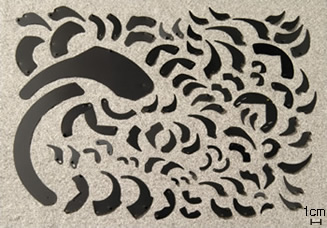
This is what most 3-9 blade aperture blades look like.
All of which look like this on one side.
And look like this on the other.
Older and high blade count apertures 8 through 20 or more blades look like this:
Look like this when taken apart, putting it back together is usually a big pain in the butt.
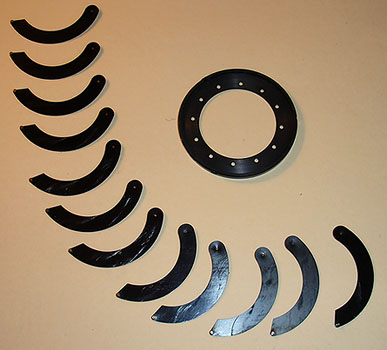
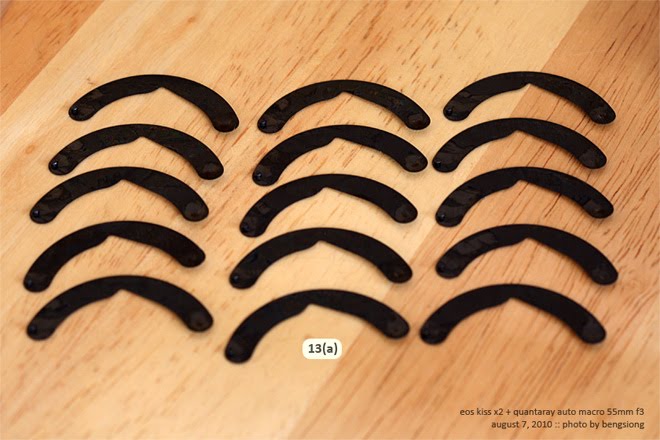
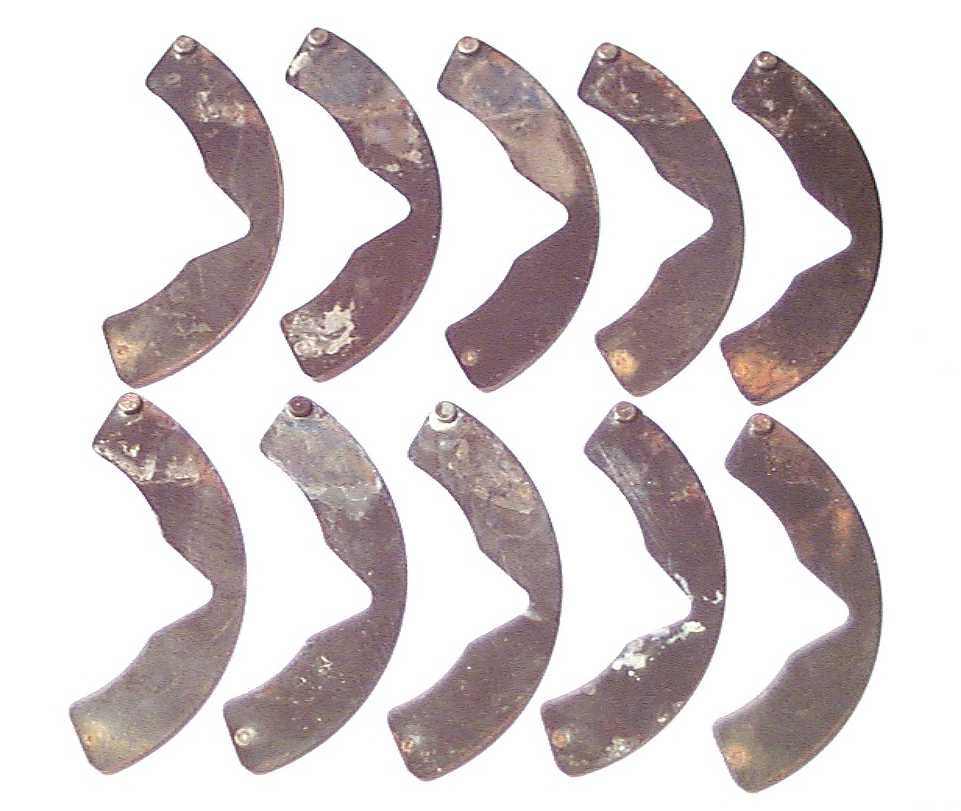
This is what the blades look like that have a round aperture when stopped fully down, the little notch is what gives it the round shape. I call these the L shape blade.
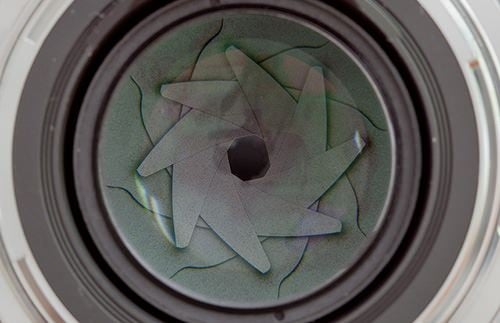
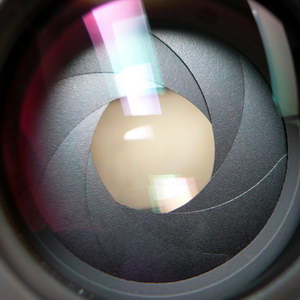
I just want a few pictures of the blades at different aperture settings if it's not too much trouble, so I can deduce what shape the blades are. Its the "round" optimization at f2.8 & f5.6 that have my curiosity peaked, especially if they have "straight" blades.
So a few pictures like this from both sides and at multiple f-stops.
From a recent hike I took with my daughter up to a saddle on the Continental Divide above Logan Pass, Glacier NP.
We've had a lot of smoke and haze this summer. We had some rain earlier this week, which cleared it up a bit, but it was blowing back in by sunset
The first is a view to the east - this is a 4 vertical shot stitched pano before sunset:
By way of summary, Fred wrote this: "For landscapes, the APO wins on flare resistance, lateral CA, lack of field curvature and off-axis resolution/contrast compared to the Loxia. Having said that, both lenses are capable of great results stopped down."


 Trying to stick to ignorance is bliss.....