tsdevine wrote:
Yes, I did my best, but light was changing and I had to try to find some consistency....but it wasn't always perfect. We had a snowstorm the following day, so it was either this or nothing.
Thanks for those Tim - very informative.
Firstly, it looks to me like your Sigma 65mm has a slight swing to it - from bottom left to rear right; this would explain the stubborness of the bottom right corner to sharpen whilst the bottom left corner is actually sharper than the Voigt at the same apertures!
Secondly, the Sigma has to be stopped down two stops more than the Voight to reach equivalent depth-of-field on the left edge - again, supporting the swing theory (the right edge only needs one stop)
Overall though, I'd agree with you that there's about a stop difference in DOF between the two.
The Sigma has the smoothest overall rendering in the background, although some of this is as a result of the extra defocus at equivalent apertures. I prefer the foreground rendering of the Voigt.
When both lenses are stopped down to f4-f5.6, the Voigt shows its class - sharper, higher microcontrast and greater clarity: definately the better landscape lens for deep depth-of-field scenes; the Sigma is better for shallow depth-of-field landscapes.
I'll have to check that, haven't noticed it in regular shooting so far.
Petegh wrote:
Thanks for those Tim - very informative.
Firstly, it looks to me like your Sigma 65mm has a slight swing to it - from bottom left to rear right; this would explain the stubborness of the bottom right corner to sharpen whilst the bottom left corner is actually sharper than the Voigt at the same apertures!
Secondly, the Sigma has to be stopped down two stops more than the Voight to reach equivalent depth-of-field on the left edge - again, supporting the swing theory (the right edge only needs one stop)
Overall though, I'd agree with you that there's about a stop difference in DOF between the two.
The Sigma has the smoothest overall rendering in the background, although some of this is as a result of the extra defocus at equivalent apertures. I prefer the foreground rendering of the Voigt.
When both lenses are stopped down to f4-f5.6, the Voigt shows its class - sharper, higher microcontrast and greater clarity: definately the better landscape lens for deep depth-of-field scenes; the Sigma is better for shallow depth-of-field landscapes....Show more →
To my eyes the Sigma is clearly more pleasant in any condition.
Tim, I take the opportunity to ask your opinion about a possible change from 7Riii to Riv.
I’ tempted for some features but in the mean time I’m reluctant as i’m worried to loose some file qualities. Mainly at high ISO.
Your opinion her, thanks.
I struggle with the same thoughts. At this point in the a7R IV life cycle, it would seem prudent to wait until the V comes out to buy the IV. Or buy the V. I know there is $500 off right now, but I'm trying to be more patient when it comes to bodies (I bought the a7R, II, and III.)
I am trying to keep the IV (or V) in mind when I'm buying lenses though. I want them to resolve well on the later bodies.
scalanc2 wrote:
To my eyes the Sigma is clearly more pleasant in any condition.
Tim, I take the opportunity to ask your opinion about a possible change from 7Riii to Riv.
I’ tempted for some features but in the mean time I’m reluctant as i’m worried to loose some file qualities. Mainly at high ISO.
Your opinion her, thanks.
I read on a review that fitting a filter on the front seals it, but I was skeptical about that. Is that true? I know it’s sealed at the mount side, but I figured the entire lens would need to be treated for it to be truly WR but I’m only making an uneducated guess/assumption.
jfvdenning wrote:
I have used my 65mm in heavy snow and it was drenched and no issues so far.
What I like about the Sigma 65/2 is that rendering is homogeneous. Meaning, stays smooth across the frame.
Compared to the CV 65/2, I see the Sigma having smoother rendering everywhere, especially towards the corners. Your test confirms this. Just compare the OOF rendering at the corners from both lenses
Just took delivery of the Sigma 35 f/2 and 65 f/2 and am happy to report that both are well centered after using Mr. Miranda's quick and easy centering test. These are some well crafted, high IQ lenses at an attractive size. I'm very satisfied with my move from the Sony 35GM to these two lenses at about the same overall price.
Can’t believe I did it but I did it - cancelled my GM preorder in favor of the 35/65 combo. I love the Loxias and Voigts, and these seem like they will fit right in.
tbpeur01 wrote:
Can’t believe I did it but I did it - cancelled my GM preorder in favor of the 35/65 combo. I love the Loxias and Voigts, and these seem like they will fit right in.
Bonus is that in the time I've had this lens, no decorative rings have managed to fall off lol
FJR1 wrote:
Just took delivery of the Sigma 35 f/2 and 65 f/2 and am happy to report that both are well centered after using Mr. Miranda's quick and easy centering test. These are some well crafted, high IQ lenses at an attractive size. I'm very satisfied with my move from the Sony 35GM to these two lenses at about the same overall price.
I was not so lucky. My Sigma 35/2 was well centered but the 24/3.5 and 65/2 were not. The good news is that their replacements were great. From my experience this is a very good track record for lens variance, especially when many FM members are reporting positive results as well.
parmiep wrote:
I read on a review that fitting a filter on the front seals it, but I was skeptical about that. Is that true? I know it’s sealed at the mount side, but I figured the entire lens would need to be treated for it to be truly WR but I’m only making an uneducated guess/assumption.
I don't think that's correct as it would still have many ingress points on the focus ring, aperture ring, AF/MF switch, etc. which would still not have sealing.
tsdevine wrote:
I’m curious as well. I’m thinking my Tamron will still hold that spot for me, for example my waterfall photography.
Tim, I am no longer curious to see how the Sigma 35 and Tamron 35 compare, in light of the just announced apo-Voigt; just thought I'd better let you know, as you are such a generous contributor I didn't want you to feel obliged to go out and shoot some comparisons. I expect the Voigt to be superior in almost every way.
No worries, the stuff I posted I had already shot. If I end up with all 3, I will probably post some comparison (whether really helpful or not.) There's usually someone who is interested.
I get so many insights from FM it's just an attempt to pay it back.
-Tim
Petegh wrote:
Tim, I am no longer curious to see how the Sigma 35 and Tamron 35 compare, in light of the just announced apo-Voigt; just thought I'd better let you know, as you are such a generous contributor I didn't want you to feel obliged to go out and shoot some comparisons. I expect the Voigt to be superior in almost every way.
smpetty wrote:
If only the Sigma 65 did 1:2 macro....
The Sigma 65/2 could do 1:2 macro with extension tubes and performance is quite good.
With only a 16mm tube, it already achieves 0.4x macro. The advantage is having AF for those handheld 'windy' shots compared to the CV 65/2.
The Sigma 35/2 DG DN does 1:2 Macro with a 10mm tube but performance won't be as good as there is RSA wide open.
Basically all 3 new Sigma DG DN lenses can do 1:2 macro:
Fred Miranda wrote:
The Sigma 65/2 could do 1:2 macro with extension tubes and performance is quite good.
With only a 16mm tube, it already achieves 0.4x macro. The advantage is having AF for those handheld 'windy' shots compared to the CV 65/2.
The Sigma 35/2 DG DN does 1:2 Macro with a 10mm tube but performance won't be as good as there is RSA wide open.
Basically all 3 new Sigma DG DN lenses can do 1:2 macro:
FJR1 wrote:
Thanks for the info on the extension tubes!
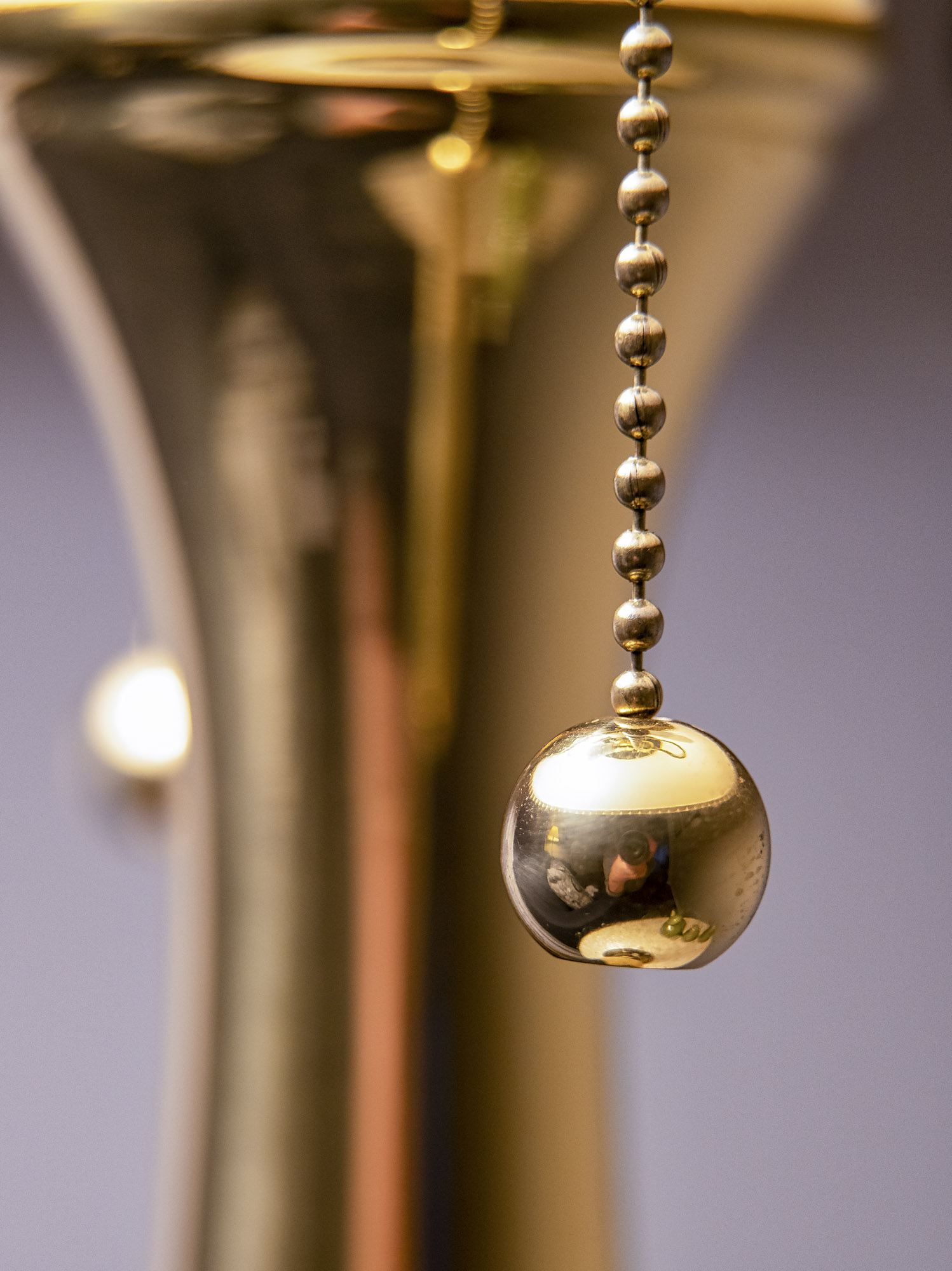
Sigma 65mm with 26mm extension tube/s and a lamp pull.
Yes, the Sigma 65/2 performs well at MFD even though it's not a floating element design. I don't detect much spherical aberration, so adding a 16mm tube (0.4x) or 26mm tube (0.55x) provides sharp results even wide open.
For macro work though, where we usually stop down, the Sigma 65/2 + tubes could be an option for half-size macro.
Achromatic close-up add-ons are also a possibly but they are more useful with longer telephoto lenses. With a 65mm lens, one would need a very strong achromat (5+) to get to 1:2 macro.
Fred Miranda wrote:
Yes, the Sigma 65/2 performs well at MFD even though it's not a floating element design. I don't detect much spherical aberration, so adding a 16mm tube (0.4x) or 26mm tube (0.55x) provides sharp results even wide open.
For macro work though, where we usually stop down, the Sigma 65/2 + tubes could be an option for half-size macro.
Achromatic close-up add-ons are also a possibly but they are more useful with longer telephoto lenses. With a 65mm lens, one would need a very strong achromat (5+) to get to 1:2 macro.
You say the Sigma 65/2 is not a floating element design. Does it extend when focusing?
What about the 35/2 and 24/3.5, do they extend when focusing?
Picked up the 65 to compliment the 35. Had this glitter backdrop and octabox set up for my daughters bday so figured I'd mess with extension tubes per the last couple posts.