This topic is in the 2020 archive. You can read it and like its posts here. It is read only.
Archive 2020Pre-order: Sigma 24mm f/3.5, 35mm f/2 and 65mm f/2 DG DN lenses
p.72 #1Pre-order: Sigma 24mm f/3.5, 35mm f/2 and 65mm f/2 DG DN lenses
tsdevine wrote:
Yes, I did my best, but light was changing and I had to try to find some consistency....but it wasn't always perfect. We had a snowstorm the following day, so it was either this or nothing.
Thanks for those Tim - very informative.
Firstly, it looks to me like your Sigma 65mm has a slight swing to it - from bottom left to rear right; this would explain the stubborness of the bottom right corner to sharpen whilst the bottom left corner is actually sharper than the Voigt at the same apertures!
Secondly, the Sigma has to be stopped down two stops more than the Voight to reach equivalent depth-of-field on the left edge - again, supporting the swing theory (the right edge only needs one stop)
Overall though, I'd agree with you that there's about a stop difference in DOF between the two.
The Sigma has the smoothest overall rendering in the background, although some of this is as a result of the extra defocus at equivalent apertures. I prefer the foreground rendering of the Voigt.
When both lenses are stopped down to f4-f5.6, the Voigt shows its class - sharper, higher microcontrast and greater clarity: definately the better landscape lens for deep depth-of-field scenes; the Sigma is better for shallow depth-of-field landscapes.
Yes, I did my best, but light was changing and I had to try to find some consistency....but it wasn't always perfect. We had a snowstorm the following day, so it was either this or nothing.
gbinoz wrote
The 65 Voigt is brighter with sharper defined shadows but it looks possible the lighting conditions have changed slightly between lenses?Thanks for those Tim - very informative.
Firstly, it looks to me like your Sigma 65mm has a slight swing to it - from bottom left to rear right; this would explain the stubborness of the bottom right corner to sharpen whilst the bottom left corner is actually sharper than the Voigt at the same apertures!
Secondly, the Sigma has to be stopped down two stops more than the Voight to reach equivalent depth-of-field on the left edge - again, supporting the swing theory (the right edge only needs one stop)
Overall though, I'd agree with you that there's about a stop difference in DOF between the two.
The Sigma has the smoothest overall rendering in the background, although some of this is as a result of the extra defocus at equivalent apertures. I prefer the foreground rendering of the Voigt.
When both lenses are stopped down to f4-f5.6, the Voigt shows its class - sharper, higher microcontrast and greater clarity: definately the better landscape lens for deep depth-of-field scenes; the Sigma is better for shallow depth-of-field landscapes.
Feb 10, 2021 at 06:34 AM
p.72 #2Pre-order: Sigma 24mm f/3.5, 35mm f/2 and 65mm f/2 DG DN lenses
I'll have to check that, haven't noticed it in regular shooting so far.
Petegh wrote:
tsdevine wrote
Yes, I did my best, but light was changing and I had to try to find some consistency....but it wasn't always perfect. We had a snowstorm the following day, so it was either this or nothing.gbinoz wrote
The 65 Voigt is brighter with sharper defined shadows but it looks possible the lighting conditions have changed slightly between lenses?Firstly, it looks to me like your Sigma 65mm has a slight swing to it - from bottom left to rear right; this would explain the stubborness of the bottom right corner to sharpen whilst the bottom left corner is actually sharper than the Voigt at the same apertures!
Secondly, the Sigma has to be stopped down two stops more than the Voight to reach equivalent depth-of-field on the left edge - again, supporting the swing theory (the right edge only needs one stop)
Overall though, I'd agree with you that there's about a stop difference...Show more →
Feb 10, 2021 at 06:38 AM
p.72 #3Pre-order: Sigma 24mm f/3.5, 35mm f/2 and 65mm f/2 DG DN lenses
To my eyes the Sigma is clearly more pleasant in any condition.
Tim, I take the opportunity to ask your opinion about a possible change from 7Riii to Riv.
I’ tempted for some features but in the mean time I’m reluctant as i’m worried to loose some file qualities. Mainly at high ISO.
Your opinion her, thanks.
Tim, I take the opportunity to ask your opinion about a possible change from 7Riii to Riv.
I’ tempted for some features but in the mean time I’m reluctant as i’m worried to loose some file qualities. Mainly at high ISO.
Your opinion her, thanks.
Feb 10, 2021 at 07:30 AM
p.72 #4Pre-order: Sigma 24mm f/3.5, 35mm f/2 and 65mm f/2 DG DN lenses
I struggle with the same thoughts. At this point in the a7R IV life cycle, it would seem prudent to wait until the V comes out to buy the IV. Or buy the V. I know there is $500 off right now, but I'm trying to be more patient when it comes to bodies (I bought the a7R, II, and III.)
I am trying to keep the IV (or V) in mind when I'm buying lenses though. I want them to resolve well on the later bodies.
scalanc2 wrote:
To my eyes the Sigma is clearly more pleasant in any condition.
Tim, I take the opportunity to ask your opinion about a possible change from 7Riii to Riv.
I’ tempted for some features but in the mean time I’m reluctant as i’m worried to loose some file qualities. Mainly at high ISO.
Your opinion her, thanks.
Feb 10, 2021 at 08:04 AM
p.72 #5Pre-order: Sigma 24mm f/3.5, 35mm f/2 and 65mm f/2 DG DN lenses
I read on a review that fitting a filter on the front seals it, but I was skeptical about that. Is that true? I know it’s sealed at the mount side, but I figured the entire lens would need to be treated for it to be truly WR but I’m only making an uneducated guess/assumption.
jfvdenning wrote:
I have used my 65mm in heavy snow and it was drenched and no issues so far.
I think most would agree the I-series is pretty excellent, quality at the size being the biggest draw to the whole group. Just wish they would seal the damn things haha. Ah well.
jfvdenning wrote:
I have used my 65mm in heavy snow and it was drenched and no issues so far.
JVan_02 wrote
imagesfromobjects wrote
This is exactly why I'm ecstatic that they made the 24mm an f/3.5 instead of f/2 or f/2.8, which would have definitely made it bigger and heavier. It was a bold decision on their part, knowing how obsessed everyone seems to be with MAX BOKEHHH these days. Fortunately, the OOF and transition zones are very smooth wide open- for a wide angle, and the quasi-macro close focusing ability still yields plenty of background blur if one needs.Feb 10, 2021 at 11:53 AM
p.72 #6Pre-order: Sigma 24mm f/3.5, 35mm f/2 and 65mm f/2 DG DN lenses
tsdevine wrote:
Finishing the set....
Sony a7R III + Sigma 65mm DG DN @ f/2.8
https://www.devine.photography/img/s/v-10/p4125848682-6.jpg
Full Size
Sony a7R III + Voigtlander 65mm APO-Lanthar Macro @ f/2.8
https://www.devine.photography/img/s/v-10/p4125848481-6.jpg
Full Size
Not sure it makes sense to stop the lens down to try to make the depth of field more equal. It seems to be apples to oranges to me.
For landscape sharpness, I think the CV wins. But for bokeh and rendering, I like the Sigma.
I'm having a hard time believing those were both shot at the same aperture: the Voigt looks like it has an extra stop of depth-of-field! I spose there might have been a slight change in light between shots, so you can't really use the shutter speed as a guide to the lenses' real T-stop; that said, did they have the same shutter speed Tim?
The Sigma has the smoother bokeh, but how much of that is due to the extra defocus? It might be worth stopping down the Sigma a bit Tim until we get equivalent depth of field - would make the comparison more apples-to-apples.
Overall though, to be able to trade blows with a reference lens like the Voit 65, the Sigma 65 does very, very well here.
At the very least, this comparison is a stark reminder of how real-world depth-of-field can vary between lenses: perhaps great rendering requires some sacrifice in depth-of-field?All that matters is real-world depth-of-field. The actual aperture (measured an N=f/d), depth of field tables etc are all meaningless, calculated, arbritary figures. The difference in the degree of defocus between these two lenses is so great at the 'same' aperture, that you really can only compare them at or near to the image plane.
Having to shoot the Sigma one stop down to get the same depth-of-field is all well and good, except if it pushes me into dffraction territory.
I guess my personal preference would be the forground of the Voigt, with the background of the Siggy: there's an interesting focus stack challenge for you Tim!
What I like about the Sigma 65/2 is that rendering is homogeneous. Meaning, stays smooth across the frame.
Compared to the CV 65/2, I see the Sigma having smoother rendering everywhere, especially towards the corners. Your test confirms this. Just compare the OOF rendering at the corners from both lenses
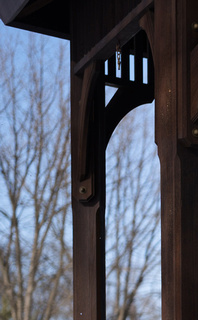
Voigtlander corner OOF rendering
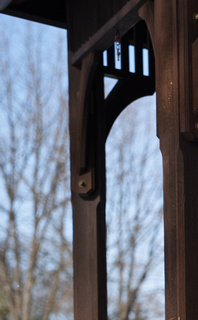
Sigma corner. OOF rendering
Finishing the set....
Sony a7R III + Sigma 65mm DG DN @ f/2.8
https://www.devine.photography/img/s/v-10/p4125848682-6.jpg
Full Size
Sony a7R III + Voigtlander 65mm APO-Lanthar Macro @ f/2.8
https://www.devine.photography/img/s/v-10/p4125848481-6.jpg
Full Size
tsdevine wrote
If more depth of field at a given aperture is the priority, then get the CV. I botched the aperture on some of the shots, but if I get a chance I can post some of them. Then you can compare the lenses at different apertures.Petegh wrote
tsdevine wrote
The light was changeable, but it's snowing today and I had to work with what I was given. I tried to shoot in the windows where the lighting was stable. The EXIF is intact, you can verify the aperture. Shutter speed worked out to be the same between each lens (different though in the different framings.) The CV vignettes more.Not sure it makes sense to stop the lens down to try to make the depth of field more equal. It seems to be apples to oranges to me.
For landscape sharpness, I think the CV wins. But for bokeh and rendering, I like the Sigma.
Petegh wrote
tsdevine wrote
Yes, you can definitely see he expanded depth of field. Notice that on the 50 APO too.The Sigma has the smoother bokeh, but how much of that is due to the extra defocus? It might be worth stopping down the Sigma a bit Tim until we get equivalent depth of field - would make the comparison more apples-to-apples.
Overall though, to be able to trade blows with a reference lens like the Voit 65, the Sigma 65 does very, very well here.
At the very least, this comparison is a stark reminder of how real-world depth-of-field can vary between lenses: perhaps great rendering requires some sacrifice in depth-of-field?
Having to shoot the Sigma one stop down to get the same depth-of-field is all well and good, except if it pushes me into dffraction territory.
I guess my personal preference would be the forground of the Voigt, with the background of the Siggy: there's an interesting focus stack challenge for you Tim!
What I like about the Sigma 65/2 is that rendering is homogeneous. Meaning, stays smooth across the frame.
Compared to the CV 65/2, I see the Sigma having smoother rendering everywhere, especially towards the corners. Your test confirms this. Just compare the OOF rendering at the corners from both lenses
Voigtlander corner OOF rendering
Sigma corner. OOF rendering
Feb 10, 2021 at 12:08 PM

p.72 #7Pre-order: Sigma 24mm f/3.5, 35mm f/2 and 65mm f/2 DG DN lenses
Just took delivery of the Sigma 35 f/2 and 65 f/2 and am happy to report that both are well centered after using Mr. Miranda's quick and easy centering test. These are some well crafted, high IQ lenses at an attractive size. I'm very satisfied with my move from the Sony 35GM to these two lenses at about the same overall price.
[FM Centering Test
[FM Centering Test
Feb 10, 2021 at 03:14 PM
p.72 #8Pre-order: Sigma 24mm f/3.5, 35mm f/2 and 65mm f/2 DG DN lenses
Can’t believe I did it but I did it - cancelled my GM preorder in favor of the 35/65 combo. I love the Loxias and Voigts, and these seem like they will fit right in.
Feb 10, 2021 at 04:13 PM
p.72 #9Pre-order: Sigma 24mm f/3.5, 35mm f/2 and 65mm f/2 DG DN lenses
tbpeur01 wrote:
Can’t believe I did it but I did it - cancelled my GM preorder in favor of the 35/65 combo. I love the Loxias and Voigts, and these seem like they will fit right in.
Bonus is that in the time I've had this lens, no decorative rings have managed to fall off lol
Feb 10, 2021 at 06:35 PM
p.72 #10Pre-order: Sigma 24mm f/3.5, 35mm f/2 and 65mm f/2 DG DN lenses
FJR1 wrote:
Just took delivery of the Sigma 35 f/2 and 65 f/2 and am happy to report that both are well centered after using Mr. Miranda's quick and easy centering test. These are some well crafted, high IQ lenses at an attractive size. I'm very satisfied with my move from the Sony 35GM to these two lenses at about the same overall price.
[FM Centering Test
I was not so lucky. My Sigma 35/2 was well centered but the 24/3.5 and 65/2 were not. The good news is that their replacements were great. From my experience this is a very good track record for lens variance, especially when many FM members are reporting positive results as well.
Feb 10, 2021 at 11:18 PM
p.72 #11Pre-order: Sigma 24mm f/3.5, 35mm f/2 and 65mm f/2 DG DN lenses
parmiep wrote:
I read on a review that fitting a filter on the front seals it, but I was skeptical about that. Is that true? I know it’s sealed at the mount side, but I figured the entire lens would need to be treated for it to be truly WR but I’m only making an uneducated guess/assumption.
jfvdenning wrote
I have used my 65mm in heavy snow and it was drenched and no issues so far.JVan_02 wrote
imagesfromobjects wrote
This is exactly why I'm ecstatic that they made the 24mm an f/3.5 instead of f/2 or f/2.8, which would have definitely made it bigger and heavier. It was a bold decision on their part, knowing how obsessed everyone seems to be with MAX BOKEHHH these days. Fortunately, the OOF and transition zones are very smooth wide open- for a wide angle, and the quasi-macro close focusing ability still yields plenty of background blur if one needs.I don't think that's correct as it would still have many ingress points on the focus ring, aperture ring, AF/MF switch, etc. which would still not have sealing.
Feb 11, 2021 at 01:02 AM
p.72 #12Pre-order: Sigma 24mm f/3.5, 35mm f/2 and 65mm f/2 DG DN lenses
tsdevine wrote:
I’m curious as well. I’m thinking my Tamron will still hold that spot for me, for example my waterfall photography.
It would be interesting to know how it compares to the Tamron 35/2.8 for landscapes. The latter is a top lens.
Tim, I am no longer curious to see how the Sigma 35 and Tamron 35 compare, in light of the just announced apo-Voigt; just thought I'd better let you know, as you are such a generous contributor I didn't want you to feel obliged to go out and shoot some comparisons. I expect the Voigt to be superior in almost every way.
I’m curious as well. I’m thinking my Tamron will still hold that spot for me, for example my waterfall photography.
Fred Miranda wrote
tsdevine wrote
I pulled the trigger, I figured I would have ample time to cancel. At least that's what I told myself....bowens wrote
Had one also in my cart for $539. $100 off but didn’t pull the trigger. It’s already gone. For now will stick with my RX1RII as my 35 mm f2. It will be interesting to see the comparison between the two.Tim, I am no longer curious to see how the Sigma 35 and Tamron 35 compare, in light of the just announced apo-Voigt; just thought I'd better let you know, as you are such a generous contributor I didn't want you to feel obliged to go out and shoot some comparisons. I expect the Voigt to be superior in almost every way.
Feb 11, 2021 at 05:26 AM
p.72 #13Pre-order: Sigma 24mm f/3.5, 35mm f/2 and 65mm f/2 DG DN lenses
No worries, the stuff I posted I had already shot. If I end up with all 3, I will probably post some comparison (whether really helpful or not.) There's usually someone who is interested.
I get so many insights from FM it's just an attempt to pay it back.
-Tim
Petegh wrote:
tsdevine wrote
I’m curious as well. I’m thinking my Tamron will still hold that spot for me, for example my waterfall photography.Fred Miranda wrote
tsdevine wrote
I pulled the trigger, I figured I would have ample time to cancel. At least that's what I told myself....bowens wrote
Had one also in my cart for $539. $100 off but didn’t pull the trigger. It’s already gone. For now will stick with my RX1RII as my 35 mm f2. It will be interesting to see the comparison between the two.Feb 11, 2021 at 05:48 AM
p.72 #14Pre-order: Sigma 24mm f/3.5, 35mm f/2 and 65mm f/2 DG DN lenses
smpetty wrote:
If only the Sigma 65 did 1:2 macro....
The Sigma 65/2 could do 1:2 macro with extension tubes and performance is quite good.
With only a 16mm tube, it already achieves 0.4x macro. The advantage is having AF for those handheld 'windy' shots compared to the CV 65/2.
The Sigma 35/2 DG DN does 1:2 Macro with a 10mm tube but performance won't be as good as there is RSA wide open.
Basically all 3 new Sigma DG DN lenses can do 1:2 macro:
1) 24/3.5 (natively)
2) 35/2 (10mm tube)
3) 65/2 (26mm tube)
Chuck Coyne wrote
I think the 65mm's both are fantastic. I give a slight to the Sigma for overall rendering vs the CV but I wouldn't disappointed in either resulting shot. I guess it may come down to preference in a fully manual focus lens vs an AF lens that has exceptional manual focus capabilities for an AF lens.The Sigma 65/2 could do 1:2 macro with extension tubes and performance is quite good.
With only a 16mm tube, it already achieves 0.4x macro. The advantage is having AF for those handheld 'windy' shots compared to the CV 65/2.
The Sigma 35/2 DG DN does 1:2 Macro with a 10mm tube but performance won't be as good as there is RSA wide open.
Basically all 3 new Sigma DG DN lenses can do 1:2 macro:
1) 24/3.5 (natively)
2) 35/2 (10mm tube)
3) 65/2 (26mm tube)
Feb 12, 2021 at 06:02 PM
p.72 #15Pre-order: Sigma 24mm f/3.5, 35mm f/2 and 65mm f/2 DG DN lenses
Fred Miranda wrote:
If only the Sigma 65 did 1:2 macro....The Sigma 65/2 could do 1:2 macro with extension tubes and performance is quite good.
With only a 16mm tube, it already achieves 0.4x macro. The advantage is having AF for those handheld 'windy' shots compared to the CV 65/2.
The Sigma 35/2 DG DN does 1:2 Macro with a 10mm tube but performance won't be as good as there is RSA wide open.
Basically all 3 new Sigma DG DN lenses can do 1:2 macro:
1) 24/3.5 (natively)
2) 35/2 (10mm tube)
3) 65/2 (26mm tube)
Thanks for the info on the extension tubes!
Sigma 65mm with 26mm extension tube/s and a lamp pull.
smpetty wrote
Chuck Coyne wrote
I think the 65mm's both are fantastic. I give a slight to the Sigma for overall rendering vs the CV but I wouldn't disappointed in either resulting shot. I guess it may come down to preference in a fully manual focus lens vs an AF lens that has exceptional manual focus capabilities for an AF lens.With only a 16mm tube, it already achieves 0.4x macro. The advantage is having AF for those handheld 'windy' shots compared to the CV 65/2.
The Sigma 35/2 DG DN does 1:2 Macro with a 10mm tube but performance won't be as good as there is RSA wide open.
Basically all 3 new Sigma DG DN lenses can do 1:2 macro:
1) 24/3.5 (natively)
2) 35/2 (10mm tube)
3) 65/2 (26mm tube)
Thanks for the info on the extension tubes!
Sigma 65mm with 26mm extension tube/s and a lamp pull.
 |
||
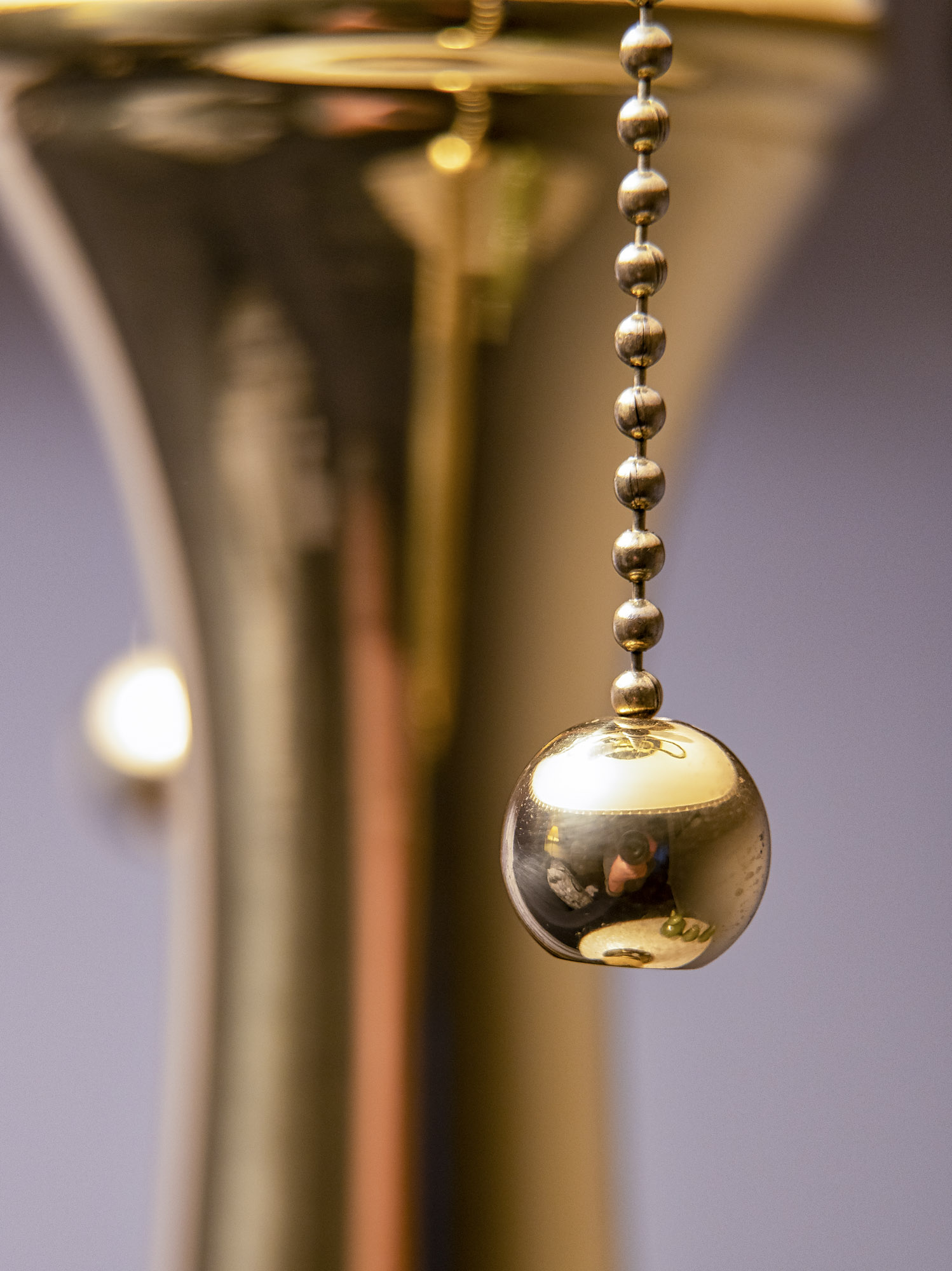 |
||
 |
Feb 13, 2021 at 07:07 AM
p.72 #16Pre-order: Sigma 24mm f/3.5, 35mm f/2 and 65mm f/2 DG DN lenses
FJR1 wrote:
If only the Sigma 65 did 1:2 macro....The Sigma 65/2 could do 1:2 macro with extension tubes and performance is quite good.
With only a 16mm tube, it already achieves 0.4x macro. The advantage is having AF for those handheld 'windy' shots compared to the CV 65/2.
The Sigma 35/2 DG DN does 1:2 Macro with a 10mm tube but performance won't be as good as there is RSA wide open.
Basically all 3 new Sigma DG DN lenses can do 1:2 macro:
1) 24/3.5 (natively)
2) 35/2 (10mm tube)
3) 65/2 (26mm tube)Thanks for the info on the extension tubes!
Sigma 65mm with 26mm extension tube/s and a lamp pull.
Yes, the Sigma 65/2 performs well at MFD even though it's not a floating element design. I don't detect much spherical aberration, so adding a 16mm tube (0.4x) or 26mm tube (0.55x) provides sharp results even wide open.
For macro work though, where we usually stop down, the Sigma 65/2 + tubes could be an option for half-size macro.
Achromatic close-up add-ons are also a possibly but they are more useful with longer telephoto lenses. With a 65mm lens, one would need a very strong achromat (5+) to get to 1:2 macro.
Fred Miranda wrote
smpetty wrote
Chuck Coyne wrote
I think the 65mm's both are fantastic. I give a slight to the Sigma for overall rendering vs the CV but I wouldn't disappointed in either resulting shot. I guess it may come down to preference in a fully manual focus lens vs an AF lens that has exceptional manual focus capabilities for an AF lens.With only a 16mm tube, it already achieves 0.4x macro. The advantage is having AF for those handheld 'windy' shots compared to the CV 65/2.
The Sigma 35/2 DG DN does 1:2 Macro with a 10mm tube but performance won't be as good as there is RSA wide open.
Basically all 3 new Sigma DG DN lenses can do 1:2 macro:
1) 24/3.5 (natively)
2) 35/2 (10mm tube)
3) 65/2 (26mm tube)
Sigma 65mm with 26mm extension tube/s and a lamp pull.
Yes, the Sigma 65/2 performs well at MFD even though it's not a floating element design. I don't detect much spherical aberration, so adding a 16mm tube (0.4x) or 26mm tube (0.55x) provides sharp results even wide open.
For macro work though, where we usually stop down, the Sigma 65/2 + tubes could be an option for half-size macro.
Achromatic close-up add-ons are also a possibly but they are more useful with longer telephoto lenses. With a 65mm lens, one would need a very strong achromat (5+) to get to 1:2 macro.
Feb 13, 2021 at 12:46 PM
p.72 #17Pre-order: Sigma 24mm f/3.5, 35mm f/2 and 65mm f/2 DG DN lenses
Fred Miranda wrote:
If only the Sigma 65 did 1:2 macro....The Sigma 65/2 could do 1:2 macro with extension tubes and performance is quite good.
With only a 16mm tube, it already achieves 0.4x macro. The advantage is having AF for those handheld 'windy' shots compared to the CV 65/2.
The Sigma 35/2 DG DN does 1:2 Macro with a 10mm tube but performance won't be as good as there is RSA wide open.
Basically all 3 new Sigma DG DN lenses can do 1:2 macro:
1) 24/3.5 (natively)
2) 35/2 (10mm tube)
3) 65/2 (26mm tube)Thanks for the info on the extension tubes!
Sigma 65mm with 26mm extension tube/s and a lamp pull.Yes, the Sigma 65/2 performs well at MFD even though it's not a floating element design. I don't detect much spherical aberration, so adding a 16mm tube (0.4x) or 26mm tube (0.55x) provides sharp results even wide open.
For macro work though, where we usually stop down, the Sigma 65/2 + tubes could be an option for half-size macro.
Achromatic close-up add-ons are also a possibly but they are more useful with longer telephoto lenses. With a 65mm lens, one would need a very strong achromat (5+) to get to 1:2 macro.
You say the Sigma 65/2 is not a floating element design. Does it extend when focusing?
What about the 35/2 and 24/3.5, do they extend when focusing?
FJR1 wrote
Fred Miranda wrote
smpetty wrote
Chuck Coyne wrote
I think the 65mm's both are fantastic. I give a slight to the Sigma for overall rendering vs the CV but I wouldn't disappointed in either resulting shot. I guess it may come down to preference in a fully manual focus lens vs an AF lens that has exceptional manual focus capabilities for an AF lens.With only a 16mm tube, it already achieves 0.4x macro. The advantage is having AF for those handheld 'windy' shots compared to the CV 65/2.
The Sigma 35/2 DG DN does 1:2 Macro with a 10mm tube but performance won't be as good as there is RSA wide open.
Basically all 3 new Sigma DG DN lenses can do 1:2 macro:
1) 24/3.5 (natively)
2) 35/2 (10mm tube)
3) 65/2 (26mm tube)
Sigma 65mm with 26mm extension tube/s and a lamp pull.
For macro work though, where we usually stop down, the Sigma 65/2 + tubes could be an option for half-size macro.
Achromatic close-up add-ons are also a possibly but they are more useful with longer telephoto lenses. With a 65mm lens, one would need a very strong achromat (5+) to get to 1:2 macro.
You say the Sigma 65/2 is not a floating element design. Does it extend when focusing?
What about the 35/2 and 24/3.5, do they extend when focusing?
Feb 13, 2021 at 01:12 PM
p.72 #18Pre-order: Sigma 24mm f/3.5, 35mm f/2 and 65mm f/2 DG DN lenses
Picked up the 65 to compliment the 35. Had this glitter backdrop and octabox set up for my daughters bday so figured I'd mess with extension tubes per the last couple posts.
 Say Cheese! by Carlo Alcala, on Flickr
Feb 13, 2021 at 02:18 PM
p.72 #19Pre-order: Sigma 24mm f/3.5, 35mm f/2 and 65mm f/2 DG DN lenses
I can only confirm that the 24 doesn't extend. Likely the 35 is the same.
bjornthun wrote:
If only the Sigma 65 did 1:2 macro....The Sigma 65/2 could do 1:2 macro with extension tubes and performance is quite good.
With only a 16mm tube, it already achieves 0.4x macro. The advantage is having AF for those handheld 'windy' shots compared to the CV 65/2.
The Sigma 35/2 DG DN does 1:2 Macro with a 10mm tube but performance won't be as good as there is RSA wide open.
Basically all 3 new Sigma DG DN lenses can do 1:2 macro:
1) 24/3.5 (natively)
2) 35/2 (10mm tube)
3) 65/2 (26mm tube)Thanks for the info on the extension tubes!
Sigma 65mm with 26mm extension tube/s and a lamp pull.Yes, the Sigma 65/2 performs well at MFD even though it's not a floating element design. I don't detect much spherical aberration, so adding a 16mm tube (0.4x) or 26mm tube (0.55x) provides sharp results even wide open.
For macro work though, where we usually stop down so this lens + tubes are a great combination.
Achromatic close-up add-ons are also a possibly but they are more useful with longer telephoto lenses. With a 65mm lens, one would need a very strong achromat (5+) to get to 1:2 macro.You say the Sigma 65/2 is not a floating element design. Does it extend when focusing?
What about the 35/2 and 24/3.5, do they extend when focusing?
bjornthun wrote:
Fred Miranda wrote
FJR1 wrote
Fred Miranda wrote
smpetty wrote
Chuck Coyne wrote
I think the 65mm's both are fantastic. I give a slight to the Sigma for overall rendering vs the CV but I wouldn't disappointed in either resulting shot. I guess it may come down to preference in a fully manual focus lens vs an AF lens that has exceptional manual focus capabilities for an AF lens.With only a 16mm tube, it already achieves 0.4x macro. The advantage is having AF for those handheld 'windy' shots compared to the CV 65/2.
The Sigma 35/2 DG DN does 1:2 Macro with a 10mm tube but performance won't be as good as there is RSA wide open.
Basically all 3 new Sigma DG DN lenses can do 1:2 macro:
1) 24/3.5 (natively)
2) 35/2 (10mm tube)
3) 65/2 (26mm tube)
Sigma 65mm with 26mm extension tube/s and a lamp pull.
For macro work though, where we usually stop down so this lens + tubes are a great combination.
Achromatic close-up add-ons are also a possibly but they are more useful with longer telephoto lenses. With a 65mm lens, one would need a very strong achromat (5+) to get to 1:2 macro.
What about the 35/2 and 24/3.5, do they extend when focusing?
Feb 13, 2021 at 03:09 PM
p.72 #20Pre-order: Sigma 24mm f/3.5, 35mm f/2 and 65mm f/2 DG DN lenses
All 4 I-series lenses are internally focusing / none of them extend while focusing.
stjepan wrote:
I can only confirm that the 24 doesn't extend. Likely the 35 is the same.
The Sigma 65/2 could do 1:2 macro with extension tubes and performance is quite good.
With only a 16mm tube, it already achieves 0.4x macro. The advantage is having AF for those handheld 'windy' shots compared to the CV 65/2.
The Sigma 35/2 DG DN does 1:2 Macro with a 10mm tube but performance won't be as good as there is RSA wide open.
Basically all 3 new Sigma DG DN lenses can do 1:2 macro:
1) 24/3.5 (natively)
2) 35/2 (10mm tube)
3) 65/2 (26mm tube)Thanks for the info on the extension tubes!
Sigma 65mm with 26mm extension tube/s and a lamp pull.Yes, the Sigma 65/2 performs well at MFD even though it's not a floating element design. I don't detect much spherical aberration, so adding a 16mm tube (0.4x) or 26mm tube (0.55x) provides sharp results even wide open.
For macro work though, where we usually stop down so this lens + tubes are a great combination.
Achromatic close-up add-ons are also a possibly but they are more useful with longer telephoto lenses. With a 65mm lens, one would need a very strong achromat (5+) to get to 1:2 macro.You say the Sigma 65/2 is not a floating element design. Does it extend when focusing?
What about the 35/2 and 24/3.5, do they extend when focusing?
stjepan wrote:
I can only confirm that the 24 doesn't extend. Likely the 35 is the same.
bjornthun wrote
Fred Miranda wrote
FJR1 wrote
Fred Miranda wrote
smpetty wrote
If only the Sigma 65 did 1:2 macro....With only a 16mm tube, it already achieves 0.4x macro. The advantage is having AF for those handheld 'windy' shots compared to the CV 65/2.
The Sigma 35/2 DG DN does 1:2 Macro with a 10mm tube but performance won't be as good as there is RSA wide open.
Basically all 3 new Sigma DG DN lenses can do 1:2 macro:
1) 24/3.5 (natively)
2) 35/2 (10mm tube)
3) 65/2 (26mm tube)
Sigma 65mm with 26mm extension tube/s and a lamp pull.
For macro work though, where we usually stop down so this lens + tubes are a great combination.
Achromatic close-up add-ons are also a possibly but they are more useful with longer telephoto lenses. With a 65mm lens, one would need a very strong achromat (5+) to get to 1:2 macro.
What about the 35/2 and 24/3.5, do they extend when focusing?
Feb 13, 2021 at 05:15 PM