This topic is in the 2017 archive. You can read it and like its posts here. It is read only.
Archive 2017FM members A7R III first impressions
p.28 #1FM members A7R III first impressions
The touchpad function is fantastic. In AF and in MF. Much faster than moving focus point with joystick. I use it for stills and video. Can't imagine working without it. Actually PreAF with touchpad works well too.
Jan 16, 2018 at 04:04 AM
p.28 #2FM members A7R III first impressions
I beg to differ, since I won't have to take my eyes off the EVF when fiddling with my thumb. All the basic settings are on EVF's display so it's very very simple and easy to do. Yes the back and front dials are not marked but it's very easy to remember (back dial SS, front dial Aperture) Since I have small fingers, I almost never encountered the dials to be accidentally turned 
pdmphoto wrote:
So, the first thing I need to do is get the camera set up so that I can manually place the focus point and get away from the automation.
The next thing I need to do is set a custom button to control the ISO. While auto-ISO may seem convenient, again, I want to be able to control all settings where I want them - shutter speed, aperture and ISO.
I got spoiled by my Fuji X-T2s which have all these settings on dials I can easily switch around without having to dig into the menu.
It's going to take some practice to tame this Sony. I'm sure those of you who have been handling it for awhile or *get* the camera's automation settings more intuitively, it's no big deal. But I shoot moving subjects in layers of composition and I can shoot faster and more accurately when it's me making the decisions and not the camera.
The depth of the sensor is beautiful and the rendition of files at ridiculously high ISOs means images previously impossible are now not only possible but beautifully so.
Today, I will be diving into the settings to get the camera set up so I can completely control it quickly.
I think that eye detection auto focus follow focus stuff has a place, perhaps for active portraits where the subject is not obscured, being shot through other objects.
Oh, and the back button focus button is far too close to the video button. I accidentally shot a few videos before I figured that out.All of what you’d like to do is easily accomplished with a bit of customization. For example, You can assign the ISO control to the back wheel, disable the movie record button except in movie mode, turn off face detection, etc. If you are shooting people, you should maybe give face detection and Eye-AF a bit more time before you disable it completely or at least setup one of the custom modes on the dial to experiment with it. It is a game changer for photographing people.I appreciate the encouragement and I am definitely going to take your advice. It was a trial run this first outing.
I am accustomed to the main controls being outside the menu where I can very quickly adjust them.
Perhaps I should say, I'm just used to the controls being where I have gotten accustomed to them being.
I can quickly spin dials as with this Fuji and make adjustments.
With the Sony, I have to rethink the where are the shutter speed, aperture and ISO. It's slower. The shutter speed and aperture aren't difficult to find but they are difficult to see - you have to look at the viewfinder. Auto-ISO works if I adjust shutter speed or aperture - but I'd still rather just control it myself quickly.
I did give face detection a try and the camera got confused because my scenarios changed rapidly. It got confused between a face and a headstock on a guitar, for instance. There may be some differences when using back-button focus.
I will have to get the Sony custom function buttons set and then force myself to learn how to use them. I'm concerned that ISO is going to be a two step process that is slower. But, I'm whining. There's a way to do this, I just have to force myself to do it.
The results with the new Sony are terrific when the beast is tamed. Yes, the eye-af thing will possibly be workable where the subject is out in the open and not obscured by objects. I shoot through objects a lot, though and I need to be able to put the focus point where I want it without the camera getting confused and choosing something else.
But the Fuji is a much easier transition from DSLR because the controls are more similar.I feel that the R3 is a lot more intuitive. I only need to use my thumb to change basic settings like shutter speed (using back dial), ISO (using scroll wheel) and aperture (either on lens or using front dial with my forefinger). Whereas with a Fuji, I have to use BOTH my thumb and forefinger to twist the dials on top of the camera. To me, this slows down the shooting process a bit.I like the look up the Fuji controls. The problem with Sony's wheels and dials is that none of them are marked and they are too easily turned. There's no way to tell the actual setting without looking in the camera, and doing that requires changing you screen mode first, so it will show the camera setting. Of couse you can turn the dial to see, but that is changing as setting just to see what it is set at. I've been shooting Sony for almost 5 years and find theie dial and wheel concept to be terrible.
pdmphoto wrote:
normie610 wrote
pasblues wrote
virtualrain wrote
pasblues wrote
Okay, I took the A7R3 out for a hard test drive last night and the first thing I found was that I absolutely cannot use the face detection system. It doesn't work for what I want to do. I shoot through things and want that focus point exactly where I point it, not where the camera thinks it's supposed to be.So, the first thing I need to do is get the camera set up so that I can manually place the focus point and get away from the automation.
The next thing I need to do is set a custom button to control the ISO. While auto-ISO may seem convenient, again, I want to be able to control all settings where I want them - shutter speed, aperture and ISO.
I got spoiled by my Fuji X-T2s which have all these settings on dials I can easily switch around without having to dig into the menu.
It's going to take some practice to tame this Sony. I'm sure those of you who have been handling it for awhile or *get* the camera's automation settings more intuitively, it's no big deal. But I shoot moving subjects in layers of composition and I can shoot faster and more accurately when it's me making the decisions and not the camera.
The depth of the sensor is beautiful and the rendition of files at ridiculously high ISOs means images previously impossible are now not only possible but beautifully so.
Today, I will be diving into the settings to get the camera set up so I can completely control it quickly.
I think that eye detection auto focus follow focus stuff has a place, perhaps for active portraits where the subject is not obscured, being shot through other objects.
Oh, and the back button focus button is far too close to the video button. I accidentally shot a few videos before I figured that out.
I am accustomed to the main controls being outside the menu where I can very quickly adjust them.
Perhaps I should say, I'm just used to the controls being where I have gotten accustomed to them being.
I can quickly spin dials as with this Fuji and make adjustments.
With the Sony, I have to rethink the where are the shutter speed, aperture and ISO. It's slower. The shutter speed and aperture aren't difficult to find but they are difficult to see - you have to look at the viewfinder. Auto-ISO works if I adjust shutter speed or aperture - but I'd still rather just control it myself quickly.
I did give face detection a try and the camera got confused because my scenarios changed rapidly. It got confused between a face and a headstock on a guitar, for instance. There may be some differences when using back-button focus.
I will have to get the Sony custom function buttons set and then force myself to learn how to use them. I'm concerned that ISO is going to be a two step process that is slower. But, I'm whining. There's a way to do this, I just have to force myself to do it.
The results with the new Sony are terrific when the beast is tamed. Yes, the eye-af thing will possibly be workable where the subject is out in the open and not obscured by objects. I shoot through objects a lot, though and I need to be able to put the focus point where I want it without the camera getting confused and choosing something else.
But the Fuji is a much easier transition from DSLR because the controls are more similar.
Jan 16, 2018 at 05:58 AM
p.28 #3FM members A7R III first impressions
I shot a Fuji X-Pro 2 and X-T2 for about a year, back to Sony now.
Both control paradigms have their benefits and downsides. In any case, I get used to them in a few weeks and then I'm good with either. When I get a new camera, I tend to shoot with it exclusively for a few weeks, put a few hundred or thousand shots on it, and I am good to go with it (assuming it works for me). I don't make judgements before that.
Fuji is great in that you see your camera state at a glance and make adjustments prior to even turning on the camera - if you know what you need or expect to need for a shooting situation, you can easily dial that in.
Sony is great for scenarios when you want to quickly change to a new, known state. I do a bunch of switching between video and stills, and Sony (more so Panasonic) are great in that I can have very different settings appropriate for video or stills at the push of a button or twist of a dial. My A7RIII arrives today, I'm excited to try out the new customization options (different button set ups for stills and video, more parameters controlled by memory banks).
Fuji was a pain in the but for hybrid use, when constantly switching back and forth between video and stills.
Fuji's hard coded analog controls are nice, but so are Sony's abstracted control dials.
Both control paradigms have their benefits and downsides. In any case, I get used to them in a few weeks and then I'm good with either. When I get a new camera, I tend to shoot with it exclusively for a few weeks, put a few hundred or thousand shots on it, and I am good to go with it (assuming it works for me). I don't make judgements before that.
Fuji is great in that you see your camera state at a glance and make adjustments prior to even turning on the camera - if you know what you need or expect to need for a shooting situation, you can easily dial that in.
Sony is great for scenarios when you want to quickly change to a new, known state. I do a bunch of switching between video and stills, and Sony (more so Panasonic) are great in that I can have very different settings appropriate for video or stills at the push of a button or twist of a dial. My A7RIII arrives today, I'm excited to try out the new customization options (different button set ups for stills and video, more parameters controlled by memory banks).
Fuji was a pain in the but for hybrid use, when constantly switching back and forth between video and stills.
Fuji's hard coded analog controls are nice, but so are Sony's abstracted control dials.
Jan 16, 2018 at 07:25 AM
p.28 #4FM members A7R III first impressions
Question for anyone shooting the A7Riii and 85 GM. How much better is the AF than the mark ii with the lens?
Jan 16, 2018 at 02:51 PM
p.28 #5FM members A7R III first impressions
The thing that I was rather astounded by was the result with the A7RIII. I'm sorry I don't have fancy words for it - but, basically, the images are crispy and filled with fine detail. Shockingly so.
And I was shooting rather handicapped since I didn't really have the custom controls set up the way I wanted yet.
On the second photo, notice how the focus on his face wasn't quite nailed as the camera was searching for a face on the banjo instead of the focus point where I wanted it. This is what I mean by shooting through objects. I need to make that decision myself or get the camera to overcome searching for the face when I'm shooting through obstacles. Normally, I would choose a focus point and nail that point - but letting the camera choose to detect a face was not successful in this particular situation.
Also, notice that the ISO shifted from 4000 to 10000. I wish I could have had a static ISO of my own choosing - in fact, complete settings of my own choosing. This is a problem I will resolve by getting the camera set up properly for the way I want to shoot.
Since I have to downsize the images so much to post them here, they might not appear with the same crispness and resolution as they appear on my own computer screen.

John McEuen Knux A7RIII 55mm f1.8 ZA 1/400 sec f1.8 ISO 4000
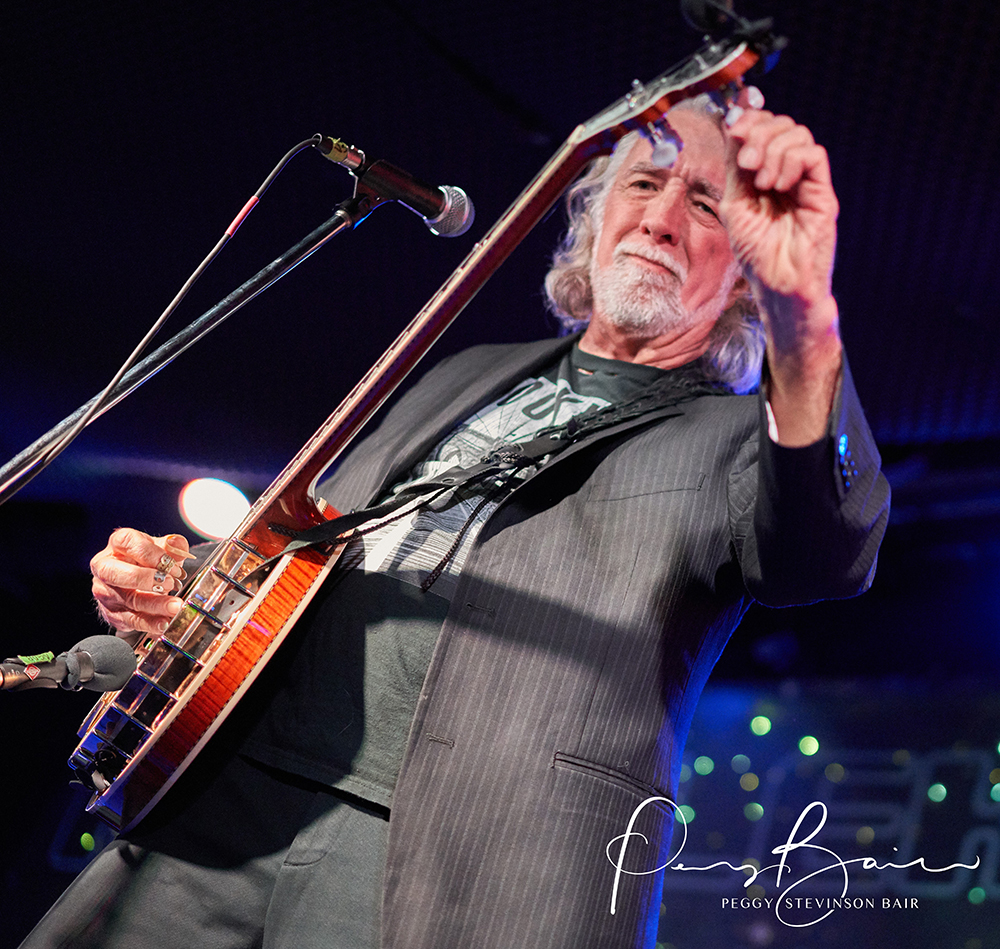
John McEuen Knux A7RIII 55mm f1.8 ZA 1/400 sec f1.8 ISO 10000
And I was shooting rather handicapped since I didn't really have the custom controls set up the way I wanted yet.
On the second photo, notice how the focus on his face wasn't quite nailed as the camera was searching for a face on the banjo instead of the focus point where I wanted it. This is what I mean by shooting through objects. I need to make that decision myself or get the camera to overcome searching for the face when I'm shooting through obstacles. Normally, I would choose a focus point and nail that point - but letting the camera choose to detect a face was not successful in this particular situation.
Also, notice that the ISO shifted from 4000 to 10000. I wish I could have had a static ISO of my own choosing - in fact, complete settings of my own choosing. This is a problem I will resolve by getting the camera set up properly for the way I want to shoot.
Since I have to downsize the images so much to post them here, they might not appear with the same crispness and resolution as they appear on my own computer screen.
© pasblues 2017
John McEuen Knux A7RIII 55mm f1.8 ZA 1/400 sec f1.8 ISO 4000
John McEuen Knux A7RIII 55mm f1.8 ZA 1/400 sec f1.8 ISO 10000
Jan 16, 2018 at 08:42 PM
p.28 #6FM members A7R III first impressions
pasblues wrote:
Since I have to downsize the images so much to post them here, they might not appear with the same crispness and resolution as they appear on my own computer screen.
I can still see fine detail on the resized image. The A7R3 + 55/1.8 is indeed a well balanced high IQ combo. Great images.
Since I have to downsize the images so much to post them here, they might not appear with the same crispness and resolution as they appear on my own computer screen.
I can still see fine detail on the resized image. The A7R3 + 55/1.8 is indeed a well balanced high IQ combo. Great images.
Jan 19, 2018 at 04:58 PM
p.28 #7FM members A7R III first impressions
Fred Miranda wrote:
I can still see fine detail on the resized image. The A7R3 + 55/1.8 is indeed a well balanced high IQ combo. Great images.
This shoot was the first time I really gave the 55 ZA a chance and the lens really surprised me - it responded well to the A7R3.
pasblues wrote
Since I have to downsize the images so much to post them here, they might not appear with the same crispness and resolution as they appear on my own computer screen.This shoot was the first time I really gave the 55 ZA a chance and the lens really surprised me - it responded well to the A7R3.
Jan 19, 2018 at 05:06 PM
p.28 #8FM members A7R III first impressions
Wanny wrote:
Question for anyone shooting the A7Riii and 85 GM. How much better is the AF than the mark ii with the lens?
It does feel a tad faster, but I’m not sure by how much. Accuracy is also improved a bit.
Question for anyone shooting the A7Riii and 85 GM. How much better is the AF than the mark ii with the lens?
It does feel a tad faster, but I’m not sure by how much. Accuracy is also improved a bit.
Jan 20, 2018 at 01:33 AM
p.28 #9FM members A7R III first impressions
Just tried on the EasyCover for the A9 that is stated as being compatible with the A7RIII, but it did not go well.
It's too loose along the bottom of the LCD and there is nothing to hold the lower left edge from flopping around.
All they had to do was put one thin strip of rubber from the top to the bottom along the left edge of the LCD and it would have been just fine. Disappointed and it's being returned (via Amazon).
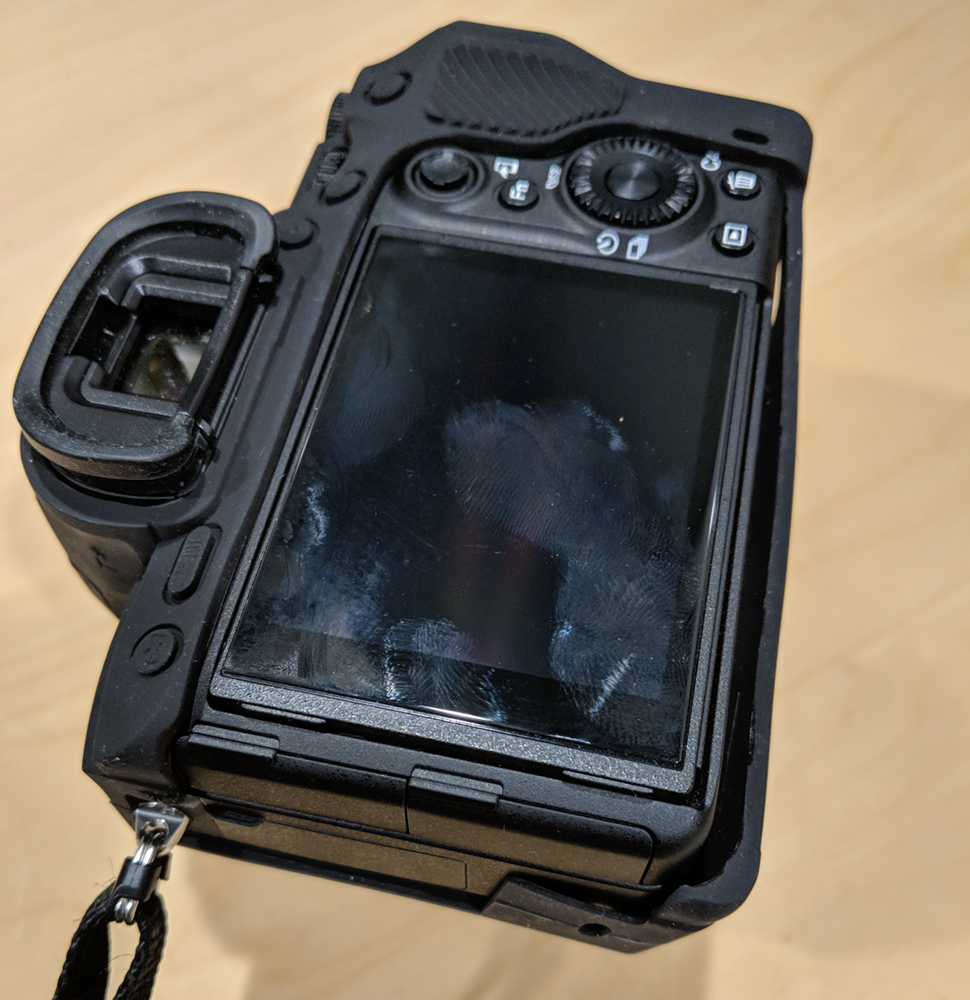
A Bit Too Loose Around The Bottom & Left Edge
It's too loose along the bottom of the LCD and there is nothing to hold the lower left edge from flopping around.
All they had to do was put one thin strip of rubber from the top to the bottom along the left edge of the LCD and it would have been just fine. Disappointed and it's being returned (via Amazon).
A Bit Too Loose Around The Bottom & Left Edge
Jan 20, 2018 at 10:45 PM
p.28 #10FM members A7R III first impressions
mine is actually flush. the only problem is that this version has a cut out for the joystick so the plastic is level with the joystick making it hard to move around
jhinkey wrote:
Just tried on the EasyCover for the A9 that is stated as being compatible with the A7RIII, but it did not go well.
It's too loose along the bottom of the LCD and there is nothing to hold the lower left edge from flopping around.
All they had to do was put one thin strip of rubber from the top to the bottom along the left edge of the LCD and it would have been just fine. Disappointed and it's being returned (via Amazon).
jhinkey wrote:
Just tried on the EasyCover for the A9 that is stated as being compatible with the A7RIII, but it did not go well.
It's too loose along the bottom of the LCD and there is nothing to hold the lower left edge from flopping around.
All they had to do was put one thin strip of rubber from the top to the bottom along the left edge of the LCD and it would have been just fine. Disappointed and it's being returned (via Amazon).
Jan 22, 2018 at 04:29 AM
p.28 #11FM members A7R III first impressions
FYI, here's a noise comparison I just did of the A7rIII's electronic shutter for the various shooting modes.
Image: A7rIII Electronic Shutter Noise Comparison
Image: A7rIII Electronic Shutter Noise Comparison
Jan 26, 2018 at 11:49 AM
p.28 #12FM members A7R III first impressions
snapsy wrote:
FYI, here's a noise comparison I just did of the A7rIII's electronic shutter for the various shooting modes.
Image: A7rIII Electronic Shutter Noise Comparison
Whoa that's a huge difference. So shoot uncompressed when using e-shutter??
Jan 26, 2018 at 12:05 PM
p.28 #13FM members A7R III first impressions
joosay wrote:
Image: A7rIII Electronic Shutter Noise ComparisonWhoa that's a huge difference. So shoot uncompressed when using e-shutter??
Keep in mind these are the very deepest of shadows near clipping, with a +7EV push, so they're not typical of the post-processing most would use. As for the result, I think the Single-Shot Compressed and Single-Shot Uncompressd are close enough that one could choose whichever format they happen to prefer (for other reasons, like file size or avoiding Sony's compression artifacts in high-contrast regions).
Also keep in mind that the Single-Shot compressed and uncompressed use the slower 1/15 sensor readout, whereas the Continuous (Compressed) uses the faster 1/30 readout, which can affect the amount of rolling shutter artifacts in the image.
snapsy wrote
FYI, here's a noise comparison I just did of the A7rIII's electronic shutter for the various shooting modes.Image: A7rIII Electronic Shutter Noise Comparison
Keep in mind these are the very deepest of shadows near clipping, with a +7EV push, so they're not typical of the post-processing most would use. As for the result, I think the Single-Shot Compressed and Single-Shot Uncompressd are close enough that one could choose whichever format they happen to prefer (for other reasons, like file size or avoiding Sony's compression artifacts in high-contrast regions).
Also keep in mind that the Single-Shot compressed and uncompressed use the slower 1/15 sensor readout, whereas the Continuous (Compressed) uses the faster 1/30 readout, which can affect the amount of rolling shutter artifacts in the image.
Jan 26, 2018 at 12:14 PM
p.28 #14FM members A7R III first impressions
snapsy wrote:
joosay wrote
snapsy wrote
FYI, here's a noise comparison I just did of the A7rIII's electronic shutter for the various shooting modes.Image: A7rIII Electronic Shutter Noise Comparison
Also keep in mind that the Single-Shot compressed and uncompressed use the slower 1/15 sensor readout, whereas the Continuous (Compressed) uses the faster 1/30 readout, which can affect the amount of rolling shutter artifacts in...Show more →
Sorry, I got confused when you wrote "Continuous."
Are you comparing AF-S to AF-C, or single frame drive mode (must release shutter button to take another shot) to multiple frame drive mode (hold down shutter button to keep shooting)?
Thx
Jan 26, 2018 at 01:55 PM
p.28 #15FM members A7R III first impressions
Parariss wrote:
Image: A7rIII Electronic Shutter Noise ComparisonWhoa that's a huge difference. So shoot uncompressed when using e-shutter??Keep in mind these are the very deepest of shadows near clipping, with a +7EV push, so they're not typical of the post-processing most would use. As for the result, I think the Single-Shot Compressed and Single-Shot Uncompressd are close enough that one could choose whichever format they happen to prefer (for other reasons, like file size or avoiding Sony's compression artifacts in high-contrast regions).
Also keep in mind that the Single-Shot compressed and uncompressed use the slower 1/15 sensor readout, whereas the Continuous (Compressed) uses the faster 1/30 readout, which can affect the amount of rolling shutter artifacts in the image.Sorry, I got confused when you wrote "Continuous."
Are you comparing AF-S to AF-C, or single frame drive mode (must release shutter button to take another shot) to multiple frame drive mode (hold down shutter button to keep shooting)?
Thx
Sorry, Multi-Shot, as in "continuous shooting".
snapsy wrote
joosay wrote
snapsy wrote
FYI, here's a noise comparison I just did of the A7rIII's electronic shutter for the various shooting modes.Image: A7rIII Electronic Shutter Noise Comparison
Also keep in mind that the Single-Shot compressed and uncompressed use the slower 1/15 sensor readout, whereas the Continuous (Compressed) uses the faster 1/30 readout, which can affect the amount of rolling shutter artifacts in the image.
Are you comparing AF-S to AF-C, or single frame drive mode (must release shutter button to take another shot) to multiple frame drive mode (hold down shutter button to keep shooting)?
Thx
Sorry, Multi-Shot, as in "continuous shooting".
Jan 26, 2018 at 02:01 PM
p.28 #16FM members A7R III first impressions
snapsy wrote:
Parariss wrote
snapsy wrote
joosay wrote
snapsy wrote
FYI, here's a noise comparison I just did of the A7rIII's electronic shutter for the various shooting modes.Image: A7rIII Electronic Shutter Noise Comparison
Also keep in mind that the Single-Shot compressed and uncompressed use the slower 1/15 sensor readout, whereas the Continuous (Compressed) uses the faster 1/30 readout, which can affect the amount of rolling shutter artifacts in the image.
Are you comparing AF-S to AF-C, or single frame drive mode (must release shutter button to take another shot) to multiple frame drive mode (hold down shutter button to keep shooting)?
Thx
Thanks for the clarification and the demonstration test. And, wow, I had no idea there was that much difference across drive modes. Yes, +7EV is abnormal, but the difference shown is large enough to become material at far less than +7EV. I guess it's the part of the hidden cost of having 42 megapixels. I don't mind paying it, but I do want to know where the issues are. Thanks again.
Jan 26, 2018 at 03:26 PM
p.28 #17FM members A7R III first impressions
Going to post detailed first impressions later - I've shot 3000 raw images with it over a trip to mexico city and houston, and I'm just reviewing the images now. However -
BIG PROBLEM - Lightroom (updated to the latest version 7.1) is having a heck of a time dealing with the raw 42mg files. As in, it's crashed my computer 6 times in a row.
This has never happened once shooting all four generations of Canon 5D or any other Canon. Has anyone else had this problem that could help with with settings or advice? 17mp reduced sensor size images seem to work fine, it's just the 42mp ones that are the problem. I have the originals on a separate 20 TB external drive, and the previews and main application on the internal 500gb SD drive, imac 5k, 32gb ram.
Thanks!
BIG PROBLEM - Lightroom (updated to the latest version 7.1) is having a heck of a time dealing with the raw 42mg files. As in, it's crashed my computer 6 times in a row.
This has never happened once shooting all four generations of Canon 5D or any other Canon. Has anyone else had this problem that could help with with settings or advice? 17mp reduced sensor size images seem to work fine, it's just the 42mp ones that are the problem. I have the originals on a separate 20 TB external drive, and the previews and main application on the internal 500gb SD drive, imac 5k, 32gb ram.
Thanks!
Jan 26, 2018 at 04:50 PM
p.28 #18FM members A7R III first impressions
avuroski wrote:
Going to post detailed first impressions later - I've shot 3000 raw images with it over a trip to mexico city and houston, and I'm just reviewing the images now. However -
BIG PROBLEM - Lightroom (updated to the latest version 7.1) is having a heck of a time dealing with the raw 42mg files. As in, it's crashed my computer 6 times in a row.
This has never happened once shooting all four generations of Canon 5D or any other Canon. Has anyone else had this problem that could help with with settings or advice? 17mp reduced sensor size images...Show more →
Try Smart Previews: https://www.fredmiranda.com/forum/topic/1263338
Going to post detailed first impressions later - I've shot 3000 raw images with it over a trip to mexico city and houston, and I'm just reviewing the images now. However -
BIG PROBLEM - Lightroom (updated to the latest version 7.1) is having a heck of a time dealing with the raw 42mg files. As in, it's crashed my computer 6 times in a row.
This has never happened once shooting all four generations of Canon 5D or any other Canon. Has anyone else had this problem that could help with with settings or advice? 17mp reduced sensor size images...Show more →
Try Smart Previews: https://www.fredmiranda.com/forum/topic/1263338
Jan 26, 2018 at 04:57 PM
p.28 #19FM members A7R III first impressions
Here's a more complete Electronic Shutter noise comparison, this time with a full EV comparison. I progressively underexposed in 1EV increments - in post each image was pushed by the equivalent number of stops it was underexposed. For example if I underexposed by 4EV then I pushed the image by 4EV. This means all the resulting images have the same effective brightness (post-push).
Image: A7rIII Electronic Shutter Noise Comparison (Full EV)
Image: A7rIII Electronic Shutter Noise Comparison (Full EV)
Jan 26, 2018 at 10:02 PM
p.28 #20FM members A7R III first impressions
Hi,
I tried highlight metering and +2 method today. I am getting blinkies all over? Is this normal and i can pull them back later?
I tried highlight metering and +2 method today. I am getting blinkies all over? Is this normal and i can pull them back later?
Jan 27, 2018 at 01:23 AM