DougDolde wrote:
I plan to buy the Fringe Contax 645 to GF adapter then a few Contax 645 lenses like the 120mm, 140mm, maybe others. The adapter isn't cheap but the lenses are and they are very good for the most part.
When I had a Contax 645 I found the 45-90mm to be sharper at 45mm than the prime
I have been using Fringe Contax 645 to GF adapter and Contax 35/45/120/140 lenses for a while and they all work very well. Specifically, I really like the optical performance of the 35/3.5 and 120/4 among all the Contax 645 lenses.
ocean2059 wrote:
I have been using Fringe Contax 645 to GF adapter and Contax 35/45/120/140 lenses for a while and they all work very well. Specifically, I really like the optical performance of the 35/3.5 and 120/4 among all the Contax 645 lenses.
I have had and used the 35 f/3.5, 45 f/2.8, 55 f/3.5, 80 f/2, and 120 f/4 macro. I concur that the 35 f/3.5 and especially the 120 f/4 Macro are really nice. I also quite liked the 55 f/3.5, which I think is often overlooked. I never really took the 45 f/2.8, but the 80 f/2 although expensive is a quite nice portrait lens as well.
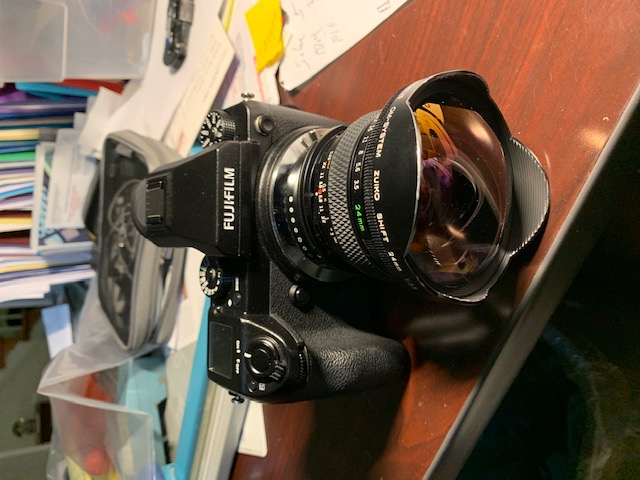
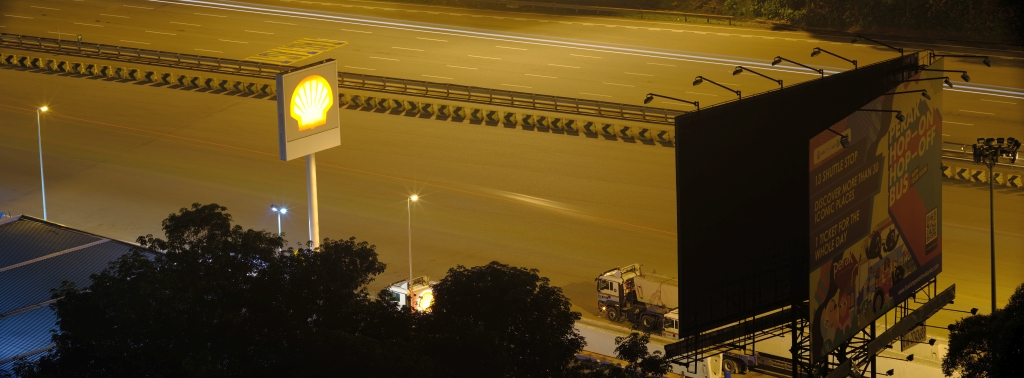
Just got my GFX 50s and the first lens I put on it was my 24mm f:3.5 shift Olympus Zuiko with a Leitax adapted Nikon F mount mounted via fotodiox to the Fuji. Remains to be seen how much shifting I can get without vignetting and how the images hold up on the larger sensor.
JohnC wrote:
Just got my GFX 50s and the first lens I put on it was my 24mm f:3.5 shift Olympus Zuiko with a Leitax adapted Nikon F mount mounted via fotodiox to the Fuji. Remains to be seen how much shifting I can get without vignetting and how the images hold up on the larger sensor.
I'm very curious to hear the results of this experiment John. Please be sure to update the thread!
I'll make a prediction: At medium to long distances, where the image circle is smaller, you won't get more than 5mm of useful shift. You might get a bit more if you're very close.
I had this lens years ago (briefly) on my Sony A7R. My copy was terrible. However, I think it was damaged because there was a suspiciously large ding on the fixed lens hood.
But that smearing in the corner is pretty unacceptable for many applications. Might work great for portraits, but I wouldn't be using that for any straightforward landscape shooting... and if that is already cropped, then it must be pretty bad even further out.
rdeloe wrote:
I'm very curious to hear the results of this experiment John. Please be sure to update the thread!
I'll make a prediction: At medium to long distances, where the image circle is smaller, you won't get more than 5mm of useful shift. You might get a bit more if you're very close.
I had this lens years ago (briefly) on my Sony A7R. My copy was terrible. However, I think it was damaged because there was a suspiciously large ding on the fixed lens hood.
I had one back when I was shooting a bunch of architectural subjects and it was quite good (on a much lower MP Canon 5DmkII). I suspect that you are right about the limited movements, though. I also suspect that it will need to be stopped down substantially to avoid field curvature in the corners all the time. As I recall, it needed that on a 35mm sensor anyway.
I tried my Canon 300mm f2.8 IS I with the TechArt adapter but focussing doesn't lock. Have no issue when using 85L II. I was hoping to get close to 200mm f2 with the 300mm.
Partly that is the lens, and partly it is that I undersharpen for most people's taste. Grab the image, open it in FastStone viewer, and sharpen it by 8 .. 12 on their Sharpen dialog (Ctrl-U).
Bummer, I was interested in this combo too, as I have the TechArt adapter.
Wonder how the Steelring adapter would work?
Does it work in 35mm mode?
bobby350z wrote:
I tried my Canon 300mm f2.8 IS I with the TechArt adapter but focussing doesn't lock. Have no issue when using 85L II. I was hoping to get close to 200mm f2 with the 300mm.