bobby350z wrote:
I tried my Canon 300mm f2.8 IS I with the TechArt adapter but focussing doesn't lock. Have no issue when using 85L II. I was hoping to get close to 200mm f2 with the 300mm.
If you can live with manual focus the Canon nFD 300 f/2.8L works great on the Fuji GFX cameras and is an absolute steal for the quality it provides.
I read through the entire thread, so I'm sorry if I missed this info in there somewhere, but I was curious as to whether or not people had experience (or sample images) with the Nikon AIS 50mm 1.2, 50mm G 1.8, 85mm AFD 1.8, 16-35 G F4, or 70-200 VRii Nikon lenses or the Hasselblad V mount 50mm F4 Distagon, 80mm 2.8 Planar, or 150mm F4 Sonnar lenses adapted to the GFX 50R. I was also wondering if anyone had opinions as to whether on whether the Fotodiox or Metabones adapters (non speed boosting) worked better. I just bought a 50R with the 50mm lens and love it, and I also have all this Nikon and Hasselblad glass that seems like it would be fun to try, but would hate to spend the money on the adapters only to find out that the lens performance wasn't great. I would assume that the Hasselblad glass would be fine. I know it would cover the sensor size and I'm assuming that the optical quality would be decent at least, but with the Nikons I have some concerns. Im pretty sure that glass would perform ok, but I cannot find image circle information for the lenses anywhere and have no idea how much they would vignette. I assume the 50mm lenses would be mostly ok and that the 16-35 would vignette heavily, but have no idea about the 85 or the 70-200. Any thoughts or experience would be helpful.
rraymer wrote:
I assume the 50mm lenses would be mostly ok and that the 16-35 would vignette heavily, but have no idea about the 85 or the 70-200. Any thoughts or experience would be helpful.
I haven't used those particular lenses, but I think it would be the other way around. I've seen examples from the 50/1.2 and it vignettes heavily. I had the 55/1.2 which is a bit less bad and somewhat usable if you accept a backwards curved field (almost any fast lens does this beyond the recommended image circle) and a ton of vignetting, albeit not hard vignetting.
Many zoom lenses give a large image circle somewhere in the range, but it's hard to tell where without trying. You'll also need some sort of smart adapter to be able to focus the G lenses, as well as to alter the aperture.
Sorry about the cross-posted images, but here's a couple of quick shots with Mamiya 645 lenses. I'm liking the lenses but the Fotodiox adapter less so...the locking pin only engages on my 200mm so all other lenses mount but are rather precarious to use. The adapter is likely going back to B&H, but I am contemplating keeping it solely to use with the 200mm since it seems I'm going to wait weeks for any other adapter to arrive.
rraymer wrote:
I would assume that the Hasselblad glass would be fine. Any thoughts or experience would be helpful.
I adapt my V glass, currently using a kipon shift adapter. Pleased with the performance on my 50s from my 60/3.5, 100/3.5, 120/4, and 180/4. I haven't been able to get out enough with it, so can't say re my 40/4. To me it's a joy to be able to put the older glass to use. And the shift is a plus, of course.
Received the Metabones Nikon G to GFX adapter today and immediately put my Nikon AI-S 50mm 1.2 on it. Here are my impressions: As expected, the image circle does not cover the full sensor and leads to a decent bit of vignetting at 4:3, 4:5, and 3:2 aspect rations. I do not find it objectionable for MOST of my purposes and it could likely be handled somewhat in post. When shooting at 1:1 and 24:65 aspect ratios the noticeable vignetting is minimal. Since I plan on using the lens primarily for portraiture and pano portraits and street photography this has no negative effect on my work and often adds a bit to the images when framed properly. Optical performance is top notch. Im not a pixel peeper usually, and have not compared it to the 50mm GFX lens I own, but looking just at straight out of the camera jpegs the lens seems to perform very well even on the 50MP sensor. Much like with film and FF sensors the image is a bit soft at 1.2, better at 1.4, good at 1.8, and tack sharp by 2. If you want a clinically sharp lens from corner to corner with no falloff this is not the lens for you, however what I love about this lens (and other vintage lenses I own) is the character. What it lacks in "perfection" it has in spades in character. The color rendering and contrast are amazing, the bokeh is pleasing, and the way the lens handles transition from light to dark is incredible. All in all, this lens looks every bit as great as I was hoping it would on my 50R. Of course, this is all just my opinion, but here is a SOOC jpeg for anyone interested. [GFX 50R, Nikon AI-S 50mm 1.2, 1/1000s, f 1.2, ISO100, shot handheld outside on an uncovered back deck, overcast skies]
I also did quick tests of my Nikon AFG 16-35, 50 AFG 1.8, 85 AFD 1.8, and 70-200 VRii as well as Hasselblad 80mm 2.8, 50mm f4 Distagon, and 150mm f4 Sonnar (mounted to a Fotodiox Hasselblad V to Nikon F adapter that was then mounted to the Metabones Nikon G to GFX adapter), but I will be doing more testing of each of those and writing up the results at a later time.
I tested all the other lenses in the above post this morning and the results are about what I expected. All the Nikon glass exhibits some degree of vignetting. The 50, 85, and 70-200 all seem quite usable throughout their ranges despite the vignetting. Shooting at 4:3, 4:5, 3:2, or 7:6 may be tolerable depending on subject matter, and most vignetting can likely be taken care of in post. 1:1 and 24:65 will have minimal vignetting. The 16-35 is really only usable from 16-20 mm in 24:65. At 24mm you can probably use it at 1:1 as well with some vignetting. 28-35mm it performs like the other lenses in terms of vignetting. As for sharpness, the results are similar to what they would be in a FF sensor. The 50mm and 70-200 are excellent performers, even wide open. The 85 is a bit soft across all apertures, more so wide open and getting better by 5.6, but still very usable for its intended purpose as a portrait lens. The 16-35 is also a bit soft across all apertures, but to about the same degree as it is on a FF sensor, as it is not known for bing a terribly sharp lens to begin with (at least not my copy).
Hasselblad lenses were also excellent performers. Like the Nikon glass they are not as clinically sharp as the GFX lenses, and given their age I would not expect them to be, but they all performed very well. The only issue is that to stop them down I had to physically use the depth of field preview on each lens. This is because I did the tests with a fotodiox Hasselblad V to Nikon F adapter which was then mounted to the Nikon F to GFC adapter. Using an adapter specifically designed as a V to GFX adapter will likely take care of this issue, but I have not had the chance to get one yet.
FWIW my results are based on straight out of the camera jpegs using the full 4:3 aspect ratio and Eterna Film simulation. I have not had a chance to pixel peep the raw files yet for sharpness or try to correct vignetting on the raw files.
Hopefully this will help anyone who may be thinking about adapting these lenses.
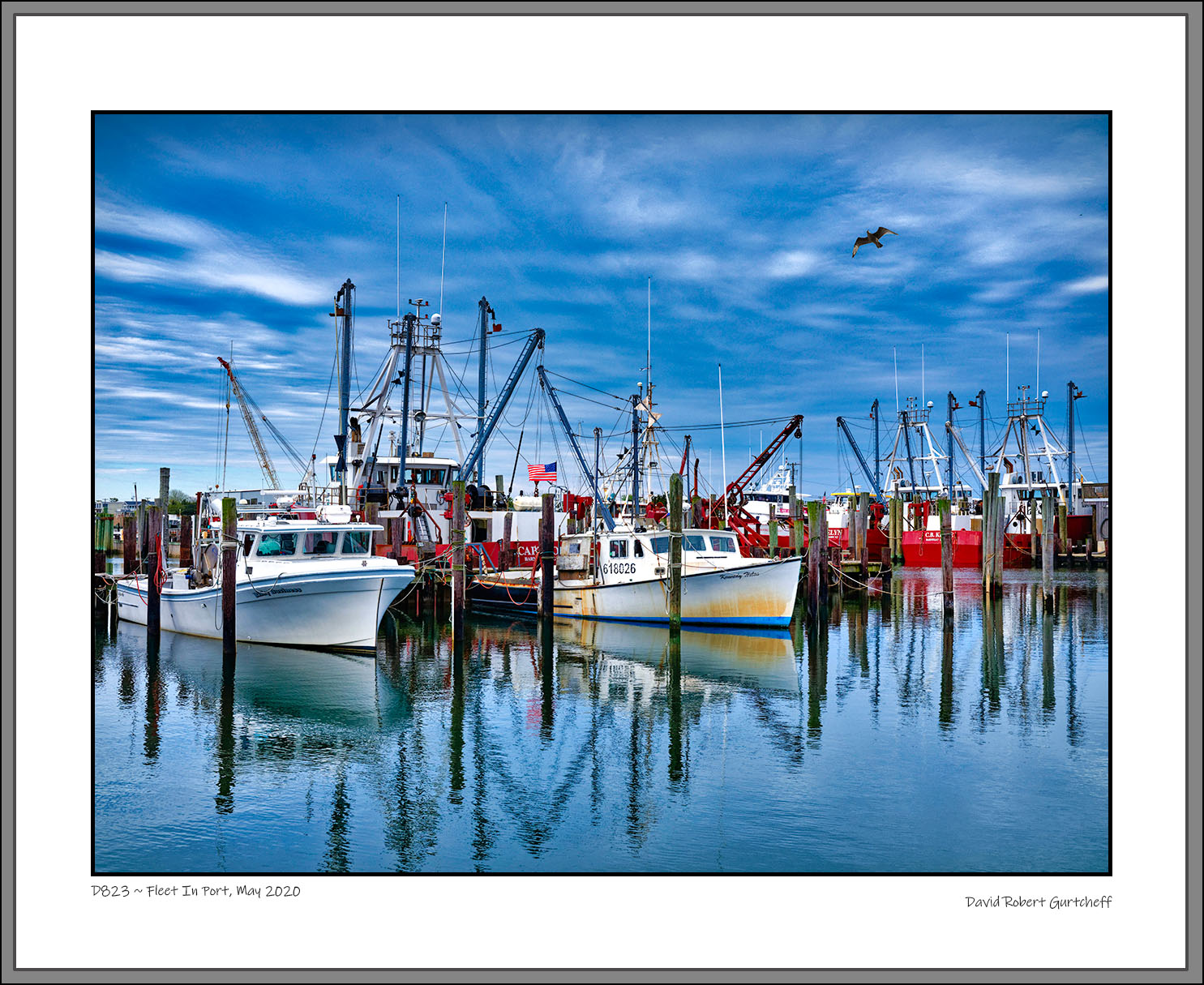
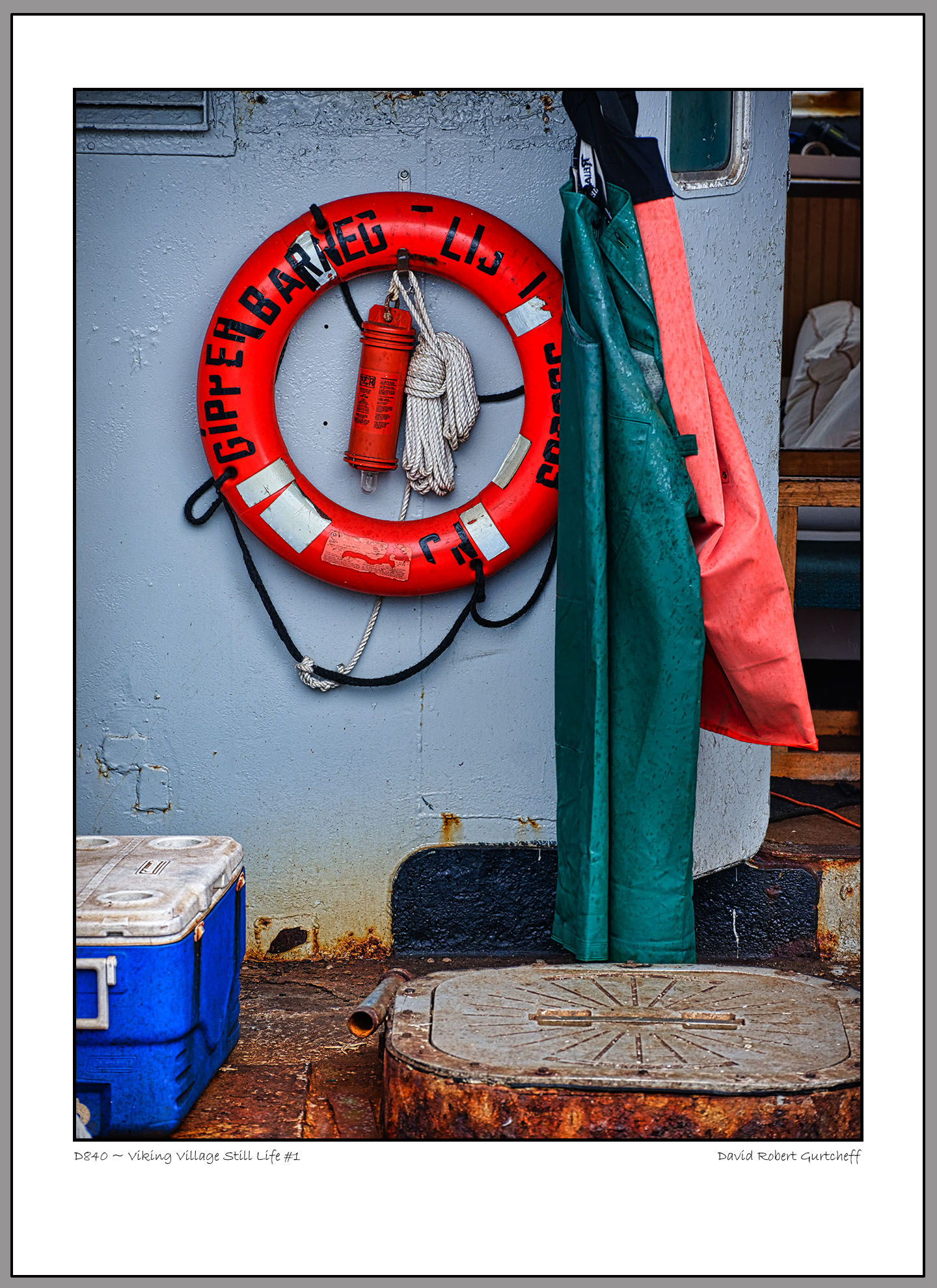
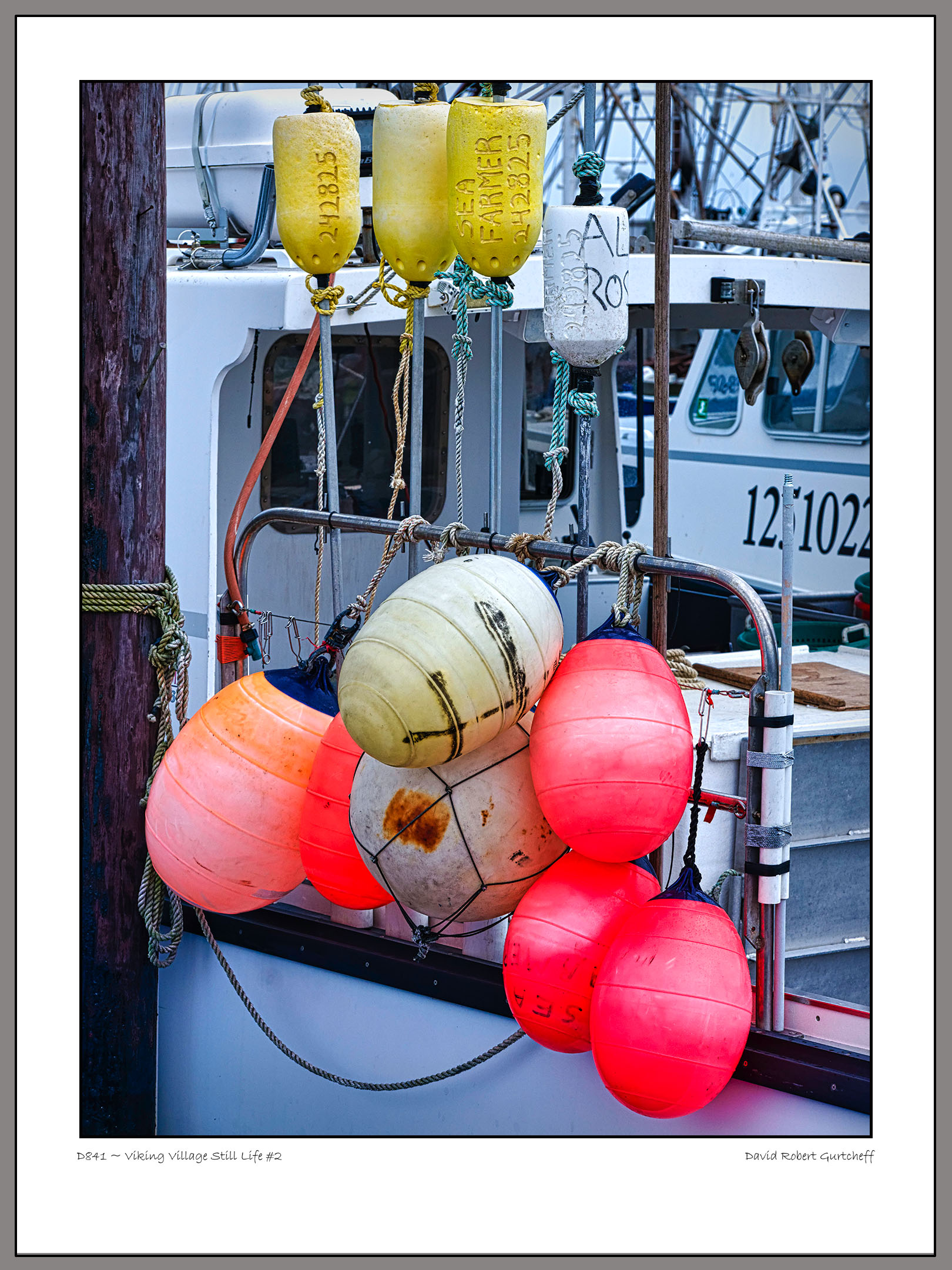
Viking Village is a favorite spot. First image taken with a wideish normal lens and is the typical view. Next two images taken with a telephoto lens to isolate and zero in on smallish details making a found still life.
GFX 50R. First image 32-64mm lens. Second and third 100-200mm lens. The Fuji 100-200mm lens is unbelievably sharp. Blowing up on screen to actual pixels is amazing. Can easily read small print on the life preserver sticker. Thanks for looking
Dave in NJ
rraymer wrote:
I read through the entire thread, so I'm sorry if I missed this info in there somewhere, but I was curious as to whether or not people had experience (or sample images) with the Nikon AIS 50mm 1.2, 50mm G 1.8, 85mm AFD 1.8, 16-35 G F4, or 70-200 VRii Nikon lenses or the Hasselblad V mount 50mm F4 Distagon, 80mm 2.8 Planar, or 150mm F4 Sonnar lenses adapted to the GFX 50R. I was also wondering if anyone had opinions as to whether on whether the Fotodiox or Metabones adapters (non speed boosting) worked better. I just bought a 50R with the 50mm lens and love it, and I also have all this Nikon and Hasselblad glass that seems like it would be fun to try, but would hate to spend the money on the adapters only to find out that the lens performance wasn't great. I would assume that the Hasselblad glass would be fine. I know it would cover the sensor size and I'm assuming that the optical quality would be decent at least, but with the Nikons I have some concerns. Im pretty sure that glass would perform ok, but I cannot find image circle information for the lenses anywhere and have no idea how much they would vignette. I assume the 50mm lenses would be mostly ok and that the 16-35 would vignette heavily, but have no idea about the 85 or the 70-200. Any thoughts or experience would be helpful....Show more →
I don't think you can go wrong with a Hassy adapter if you've already got the lenses. I haven't done more than played with the GFX 50, but I used the CF 40/4, 50/4, 80/2.8, and FE 150/2.8 on my Pentax 645D and Z extensively and was never less than pleased with the results.
MY SINCERE APPOLOGIES....I posted in the wrong forum. Dang it...83 years old and sometimes I think I am really losing it.
Dave in NJ
Viking Village is a favorite spot. First image taken with a wideish normal lens and is the typical view. Next two images taken with a telephoto lens to isolate and zero in on smallish details making a found still life.
GFX 50R. First image 32-64mm lens. Second and third 100-200mm lens. The Fuji 100-200mm lens is unbelievably sharp. Blowing up on screen to actual pixels is amazing. Can easily read small print on the life preserver sticker. Thanks for looking
Dave in NJ
dgurtch wrote:
MY SINCERE APPOLOGIES....I posted in the wrong forum. Dang it...83 years old and sometimes I think I am really losing it.
Dave in NJ
Viking Village is a favorite spot. First image taken with a wideish normal lens and is the typical view. Next two images taken with a telephoto lens to isolate and zero in on smallish details making a found still life.
GFX 50R. First image 32-64mm lens. Second and third 100-200mm lens. The Fuji 100-200mm lens is unbelievably sharp. Blowing up on screen to actual pixels is amazing. Can easily read small print on the life preserver sticker. Thanks for looking
Dave in NJ ...Show more →
The last posting of this thread when I press "see the whole thread" on the first page is:
airfang wrote:
any updates on the MF lenses?
To that I answered:
Well, since I dont own a GFX yet, I cannot test myself. But in another forum multiple posters mentioned that the Voigtländer Nokton 58mm f1.4 SLii covers the GFX sensor very well ... I remember that because I own that lens.
But now I can no longer see that posting ... this "long threads get archived" feature is highly confusing.
Sauseschritt wrote:
But in another forum multiple posters mentioned that the Voigtländer Nokton 58mm f1.4 SLii covers the GFX sensor very well ...
Compared to most ~50 mm lenses, yes. Compared to anything made for 33x44 or larger, no. It vignettes a lot and personally I find it useless for anything larger than 33x33 because of backwards curvature of field, which happens with 99% of all adapted lenses for 24x36 with shorter focal length than ~100 mm.
I've said it before and will say it again: DON'T be fooled by example photos shot at or close to MFD. That will mask any curvature of field and enlarge the image circle. If you only shoot at close range, many lenses are fine. But as soon as you focus a bit further away, it will look like crap. The Voigtländer 58 gives a reasonably flat field at f/5.6, but then what's the point?
^^ What is backwards curvature? Man, I just take the shots. Here is my 85L on the GFX50s. It is < 100mm and I don't see no crap. Maybe my eyes getting bad. Click on the link for full-res.
Edited:- I see, I need to shoot from far. Why would I do that for portraits? Even full body I don't see any issues.
Here is at f1.4, which is what, almost f1.0? I should have been more careful with eye focus for this shot as I missed it. Wish Fuji eye AF was like the Sony's. Model_3728 by Vishi A, on Flickr
bobby350z wrote:
^^ What is backwards curvature? Man, I just take the shots. Here is my 85L on the GFX50s. It is < 100mm and I don't see no crap. Maybe my eyes getting bad. Click on the link for full-res.
Edited:- I see, I need to shoot from far. Why would I do that for portraits? Even full body I don't see any issues.
1): Backwards curvature of field is exactly what it says. It's probably caused both by the lens and the thick filter stack of the GFX sensor (like when shooting M lenses on a Sony).
2): Your lens is not the Voigtländer 58/1.4.
3): The background in the first shot is totally void of anything that can show the behaviour of a lens. The second one is pretty close.
4): Not every photographer shoot portraits.
Now try your 85 L at 5 meters distance, wide open, and you will see what I mean.
Personally I don't even see the point with extremely fast lenses if you're gonna shoot them at close range anyway. If you want to eliminate every trace of the background, why not just shoot everything in a studio?
Makten wrote:
1): Backwards curvature of field is exactly what it says. It's probably caused both by the lens and the thick filter stack of the GFX sensor (like when shooting M lenses on a Sony).
2): Your lens is not the Voigtländer 58/1.4.
3): The background in the first shot is totally void of anything that can show the behaviour of a lens. The second one is pretty close.
4): Not every photographer shoot portraits.
Now try your 85 L at 5 meters distance, wide open, and you will see what I mean.
Personally I don't even see the point with extremely fast lenses if you're gonna shoot them at close range anyway. If you want to eliminate every trace of the background, why not just shoot everything in a studio? ...Show more →
Bobby350z is just looking for any excuse to post photos of this girl yet again. This is at least twice in as many days. You could question a lot of things here, like why would one choose the notoriously soft 85L to shoot at anything but f/1.2 from a distance? Why would one pay a premium for the GFX platform, cripple it with a half-functional Canon lens, and then offer Flickr-sharpened web-resolution images (that are still soft) as proof of how great this all works? And why would you do this over and over and over again in numerous threads, spreading misinformation like cancer to credulous lurkers who are liable to blow significant funds on this crap? So many questions!



 Click on the link for full-res.
