A general thread comment: There is a lot of useful and interesting information in this thread. However…
While I understand how much fun it is for folks to post humongous images, not everyone is viewing on 27” monitors. (I sometimes do when I’m at my photography workstation, but that’s not where I do must online viewing.)
A few suggestions:
1. If the point is to show the image quality at 100% magnification, consider sharing some modest-sized crops that show this and, if necessary, linking to full images for those who also might be interested.
2. If the object is to share photographs as photographs (as opposed to test subjects), downsize them so that they are fully visible on at least a typical laptop screen if not a bit smaller. Again, a link to a huge online version that interested viewers could optionally click works.
Otherwise it is kind of like selling bananas only in lots of 300 units. I may want a banana, but I don’t want it badly enough to buy 300 of them and watch 295 go bad before I can eat them. If you want me to buy your bananas, offer them in a quantity I will buy.
Most of us aren’t going to manually scroll over on each of these gigantic files. Basically, we’re not going to look at them. Provide the images in a form that the typical viewer can access and offer the gigantic sizes as an option via a link or a click.
Thanks.
Here’s an example what I see on screen here in this thread in quite a few cases…
How much do you have to crop to totally get rid of the black corners? I see they're slightly visible in one of the shots. @Steve Spencer on page 1 says it cannot go above 24*36mm frames.
mike reid wrote:
I know these suck but I really do like the 28 Otus on GFX
Lucky you! It is a very impressive result! No doubt they were very very happy
A pity that Zeiss is not any longer active in consumer photography.
To bring the Otus to mirrorless format would have been a fantastic thing
mike reid wrote:
Thanks everyone for the kind words Zeiss gave me that lens in exchange for imagery for their advertising.
I know the topic of adapters was discussed a couple years back, however I am curious specifically about the TechArt as they have revised theirs and made it FW upgradable. I ask mainly because the TechArt EF to GFX adapter is half the cost of the Fringer. I am wanting to get one, not sure how much I'll really use it, but still leaning towards the Fringer because it's verified to work seamlessly for both AF and AE. However before spending the extra coin I was wondering if there were any user-updates on the latest TecArt version? Thanks in advance for any info!
Steve, your comparison is fantastic and most interesting. Hasselblad and loxia are good lenses. Watching your comparisons, it looks like the advantage of GFX should be very minimal with the lenses stopped down. Probably the comparison between more modern bodies, say GFX 100s and A7RV would be similar. Thank you very much for sharing your experience!
Steve Spencer wrote:
My overall take is that in sharpness they are very close. The Loxia is perhaps a hair sharper/better contrast in the centre and the Hassy is a tiny bit better in the corner, but really there is not much to sharpness differences. The color and dynamic range, however, is more noticeable and it is better with the Fuji sensor especially in highlight recovery. The Sony shot could have had a bit less exposure, and they were taken a few minutes earlier and thus the light had a bit more dynamic range, so this test is less than definitive, but it is consistent with my experience that the Fuji does have a bit more dynamic range.
The big differences between the two setups, however, is the size and the price. The Hassy/Fuji is much more expensive and much bigger. Since I have both I will probably use the Hassy/Fuji when I don't have to carry stuff far, but if I was only getting one system the Sony is definitely a much better value and I don't think you will notice the Fuji advantages all that often for landscapes. For me the Fuji is justified by other types of shooting....Show more →
markhout wrote:
Interesting stuff. I have both the El-Nikkor N 50mm 2.8 and the 80mm 5.6. They both have M39 thread. No focus mechanism, so using these lenses on a GFX requires a helicoid adapter.
Thanks for that Aliexpress link. Browsing on Aliexpress it looks like there are various sizes helicoid adapters, to allow for infinity focus at various focal lengths. I will order the adapter for 80mm, assuming that the 50mm will focus beyond infinity on that adapter but that's ok for now.
So....
That Aliexpress Chinese noname '80mm' M39-GFX helicoid adapter doesn't focus to infinity.
And the 50mm enlarging lens doesn't entirely cover the GFX sensor.
BUT - the 80mm is VERY sharp... Wide open at 5.6 is sharper across the frame than stopped down to 8 or 11.
50S2, El-Nikkor 80mm 5.6 enlarging lens with helicoid adapter
wide open, 1/200 handheld. doesn't vignette because this is a medium format enlarging lens.
(click on the image if it doesn't fit your screen)
That Aliexpress Chinese noname '80mm' M39-GFX helicoid adapter doesn't focus to infinity.
And the 50mm enlarging lens doesn't entirely cover the GFX sensor.
BUT - the 80mm is VERY sharp... Wide open at 5.6 is sharper across the frame than stopped down to 8 or 11.
The flange back distance for the Nikkor EL 80mm f5.6 lens is 70mm, depending on your version.
So 26.7mm (gfx mount) + adapters should be less. You can get there with a M42 to gfx adapter (45.5mm back distance) and a 17-31mm focusing M42 helicoid and m42 to m39 adapter.
Fordsabroad wrote:
I have just bought a GFX 100s body. Has anyone used a Canon ef 24-105 lens with this body? I have the Fringer adaptor.
Not much info out there regarding this lens and that camera. The online database says no to that lens, and even though that database is not always right, I'm going to guess and say that you will be disappointed in that lens, as more than likely, it will vignette pretty harshly and even if it doesn't, it'll only be usable in a very narrow range of the available focal lengths. That is the case with the other Canon wide to normal zooms and even with their 70-200's as well. That being said, there are a ton of those lenses out there in the world and you should be able to find someone in your area that has one you can try.
The Fuji GF 32-64, which is equivalent to about a 25-50 zoom, is a superior lens in every way. You will not find a better lens than that but, of course, it's missing the long end, so you'd have to add the 45-100, also a great lens. But then, when you move to medium format, you don't necessarily use the exact same equivalent focal lengths as you did with full frame 35mm, but that's something you need to come to realize with trial and error.
A lot depends on what your personal goals are for camera and lens, what you're shooting and how you're shooting it. What other lenses do you have, either native Fuji GF lenses or anything that can be adapted?


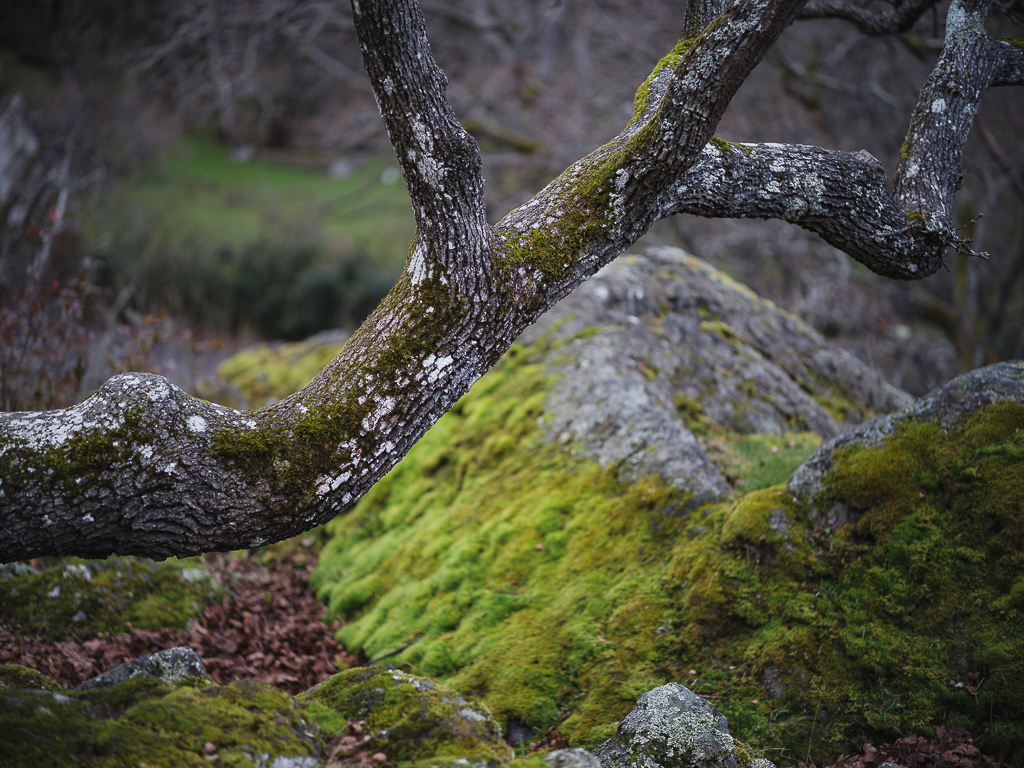


 Zeiss gave me that lens in exchange for imagery for their advertising.


