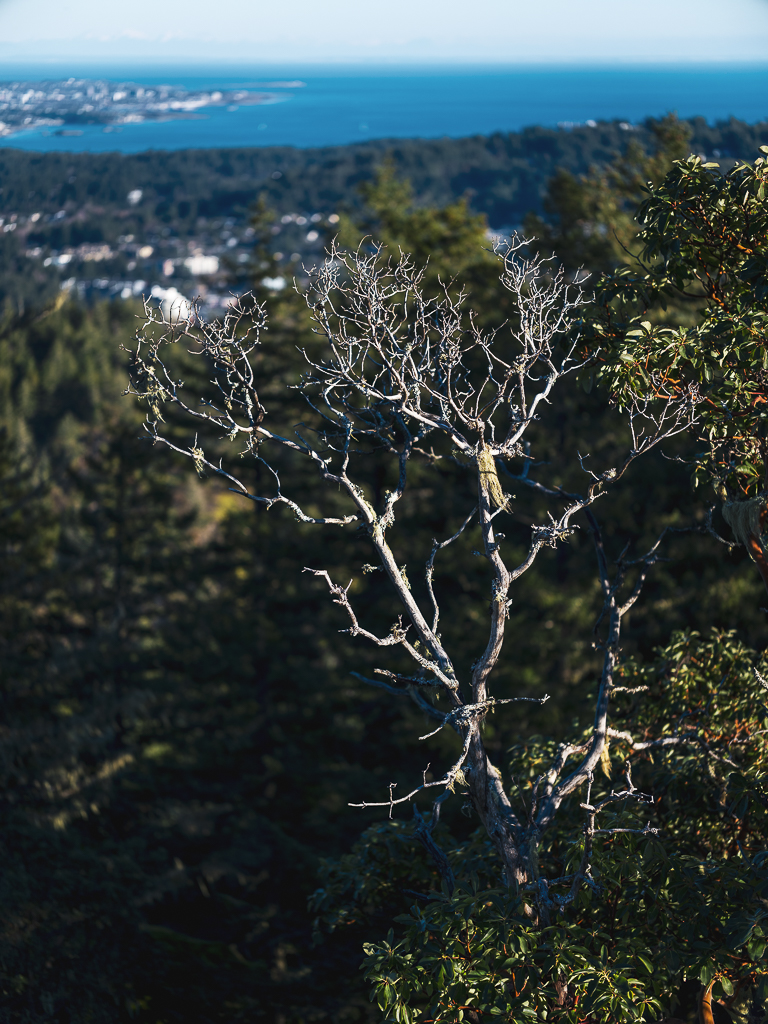
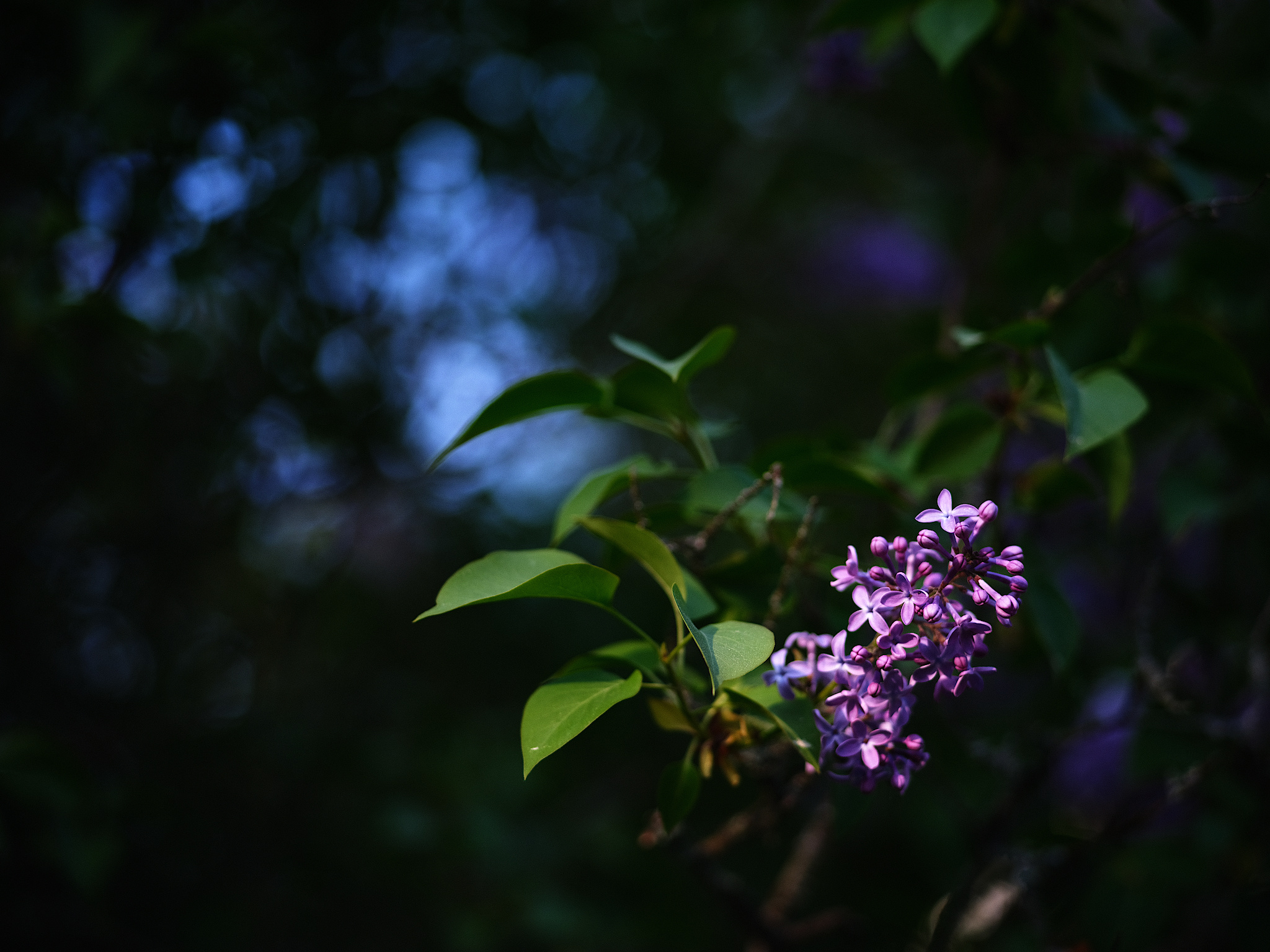
Peter thank you for your response. Much as I expected really. I am kicking myself because I very recently sold a GFX 50s and lenses to MPB and instantly regretted it. Not that I couldn't get acceptable results with my R5 but I realised how much I enjoyed using the GFX and for me the enjoyment is as important as the end result.
I am just going to put it down to experience and buy a couple of GF lenses. It seems a little pointless to not get the best quality I can from this system.
tommmi wrote:
I tried to search but has anyone tried adapting Canon EF 135mm f/2.0 L lens to GFX? Does it cover the whole sensor? Vignetting isn't problem for me.
If so, what is recommended EF-GFX adapter? Probably with AF..?
Tommmi - From what I remember the 135mm f/2 worked pretty well at closer distances but had a pretty hard vignette at infinity. The AF works fine with the Fringer EF to GF adapter. I swapped out the Canon for the Sigma 135 ART which is better in every regard except size and weight.
tommmi wrote:
I tried to search but has anyone tried adapting Canon EF 135mm f/2.0 L lens to GFX? Does it cover the whole sensor? Vignetting isn't problem for me.
If so, what is recommended EF-GFX adapter? Probably with AF..?
Peter Figen wrote:
Tommmi - From what I remember the 135mm f/2 worked pretty well at closer distances but had a pretty hard vignette at infinity. The AF works fine with the Fringer EF to GF adapter. I swapped out the Canon for the Sigma 135 ART which is better in every regard except size and weight.
Thanks. I already have GF 110 for ultra-fine quality and sharpness. The thing is, 135L is also sharp but it also has kind of unique rendering which I find pleasing. I had it several years ago on my Canon DSLR and I just like the character in the photos from that era.
Mamiya 300/5.6 (for 645) seems like a nice lens. A bit of purple fringing in harsh light wide open, but pretty sharp and with nice bokeh. Not overly large or heavy, even if I can't see myself using it often. Borrowed from a friend during a photo walk...
Probably f/8:
GFX50S II300 mm f/-- lens300mmf/1.01/105s100 ISO-2.0 EV
The tiny Olympus OM 100/2.8 is somewhat usable on GFX. Illumination of the sensor is mostly fine, but there is a fair amount of backwards curvature of field, and smearing of the corners even stopped down. However, considering the minimal size I can see some use for it, especially for semi-close shots wide open.
First one was at f/4 and the second is wide open. Edit: Both are JPG SOOC with Provia and everything set to "zero", which might say something about general contrast and colors.
GFX50S II-- mm f/-- lens100mmf/1.01/100s100 ISO+1.3 EV
GFX50S II-- mm f/-- lens100mmf/1.01/900s200 ISO-1.0 EV
Makten wrote:
The tiny Olympus OM 100/2.8 is somewhat usable on GFX. Illumination of the sensor is mostly fine, but there is a fair amount of backwards curvature of field, and smearing of the corners even stopped down. However, considering the minimal size I can see some use for it, especially for semi-close shots wide open.
First one was at f/4 and the second is wide open. Edit: Both are JPG SOOC with Provia and everything set to "zero", which might say something about general contrast and colors.
thrice wrote:
Looks like it needs a pcx filter at the front 😁
Yes! I have also thought about getting one to fix the more or less useless Zeiss 50/1.4, but I have no idea of how to calculate the correct strength of the needed lens. :-/
Makten wrote:
The tiny Olympus OM 100/2.8 is somewhat usable on GFX. Illumination of the sensor is mostly fine, but there is a fair amount of backwards curvature of field, and smearing of the corners even stopped down. However, considering the minimal size I can see some use for it, especially for semi-close shots wide open.
First one was at f/4 and the second is wide open. Edit: Both are JPG SOOC with Provia and everything set to "zero", which might say something about general contrast and colors.
I'm surprised the Olympus OM 100/2.8 is showing that behaviour. I had to change the spacing between the cells on on several lenses to get them to perform properly on GFX (due to that thick cover glass). But all the affected ones were shorter than 80mm and had rear elements that extended past the mounting flange. Among the Mamiya N lenses, the 43mm and 65mm needed adjustment, but the 80mm didn't; notably the rear cell of the 80mm does not extend beyond the flange, but the 65mm and 43mm do. Ditto my Mamiya G 50mm, which also improved considerably by closing up the cell spacing.
I would say the largest radius possible! I used the 5m with the 35/1.4ZM, it would probably be a good starting point.
I really should have made more, I had a bunch of 49mm ones.
Makten wrote:
Yes! I have also thought about getting one to fix the more or less useless Zeiss 50/1.4, but I have no idea of how to calculate the correct strength of the needed lens. :-/
rdeloe wrote:
I'm surprised the Olympus OM 100/2.8 is showing that behaviour. I had to change the spacing between the cells on on several lenses to get them to perform properly on GFX (due to that thick cover glass). But all the affected ones were shorter than 80mm and had rear elements that extended past the mounting flange. Among the Mamiya N lenses, the 43mm and 65mm needed adjustment, but the 80mm didn't; notably the rear cell of the 80mm does not extend beyond the flange, but the 65mm and 43mm do. Ditto my Mamiya G 50mm, which also improved considerably by closing up the cell spacing. ...Show more →
Well, it's an absolutely tiny lens, not much larger than your average 50/1.8 from the seventies. I suppose the exit pupil is pretty far back or something. There seem to be very few lens elements in the design too, so maybe not comparable to similar lenses.
Interesting idea with moving the groups in a lens. With "rear cell", do you mean everything behind the aperture?
Hello colleagues
I did go through many pages here, not all.
Is that possible that some of you that tested many adapted lenses on GFX can put some "table" with the best critical focus lenses that also work well as digital.
For example Pentax 67 and 645 lenses, Mamiya 67 and 645 lenses and Hasselblad lenses all of which is possible to adapt and other brands mentioning the adapter to use.
The main goal is to create short list of 10-20 of very good lenses for people that will come anytime later to this post and will see the summarized list of the best possible lenses to adapt for fuji gfx system. It can consist of
1. Lens name model
2.Lens overall score- Sharpness/CA/color rendering and shift capability - overall score, not less than 8, in 8-10 range (under that score the lens is not worth mentioning).
3.adapter type/plate/model
and because all these lenses are adapted ones, their price on used market had to be no more than ~1000$ range (otherwise it's better add some $ to go native fuji lenses)
It has to come from someone that really tested many and can compile such a list of strong lenses.
Makten wrote:
Well, it's an absolutely tiny lens, not much larger than your average 50/1.8 from the seventies. I suppose the exit pupil is pretty far back or something. There seem to be very few lens elements in the design too, so maybe not comparable to similar lenses.
Interesting idea with moving the groups in a lens. With "rear cell", do you mean everything behind the aperture?
I used to have that lens and liked it a lot. I shot it on APS-C as part of a tilt-shift kit.
I didn't mean to give you false hope that the cell spacing is adjustable in that OM 100/2.8 lens. This procedure is easiest with lenses mounted in shutters, like large format lenses. I use the Schneider-Kreuznach APO-Digitar 35mm f/5.6 L-88 (predecessor of the XL-110) and a Schneider-Kreuznach APO-Symmar 100/5.6. The 35mm was unusable without closing up the cell spacing. I moved the cells from the APO-Symmar into a different housing and had to fine tune the spacing (but I'm not sure if the cells ended up closer in that case).
The other lenses that I've done are Mamiya N 43mm f/4.5 L, Mamiya N 65mm f/4 L, and Mamiya G 50mm f/4. The 43mm had a thick shim behind the rear cell that I replaced with a thin one, and the 65mm and 50mm had shims under the front cell.
I don't think this is going to work with lenses that have floating elements.
Importantly, doing this is far from ideal because now the lenses won't work properly on any other system. For example, if I switched to a Hasselblad CFV 100C back, I'd have to re-shim them all back to where they were originally.
Allthink wrote:
For example Pentax 67 and 645 lenses, Mamiya 67 and 645 lenses and Hasselblad lenses all of which is possible to adapt and other brands mentioning the adapter to use.
Yes that would be nice. I am happy with the Mamiya 645 45mm 2.8, but I'm sure that the GFX 45mm is better in every aspect. I also have the Hassy Sonnar 150mm 4.0 CF, which is great at distances up to 10m, but I am not convinced of its infinity capabilities. And in contrast to an earlier post I simply don't have a purpose for the Mamiya 300mm - for long telephoto images, adapted lenses are not as sharp and contrasty as fullframe telephotos.
Perhaps best to add to the list here that I mentioned in an earlier post as a start, even though this list collects reports of coverage, not other qualities.
Allthink wrote:
Hello colleagues
I did go through many pages here, not all.
Is that possible that some of you that tested many adapted lenses on GFX can put some "table" with the best critical focus lenses that also work well as digital.
For example Pentax 67 and 645 lenses, Mamiya 67 and 645 lenses and Hasselblad lenses all of which is possible to adapt and other brands mentioning the adapter to use.
The main goal is to create short list of 10-20 of very good lenses for people that will come anytime later to this post and will see the summarized list of the best possible lenses to adapt for fuji gfx system. It can consist of
1. Lens name model
2.Lens overall score- Sharpness/CA/color rendering and shift capability - overall score, not less than 8, in 8-10 range (under that score the lens is not worth mentioning).
3.adapter type/plate/model
and because all these lenses are adapted ones, their price on used market had to be no more than ~1000$ range (otherwise it's better add some $ to go native fuji lenses)
It has to come from someone that really tested many and can compile such a list of strong lenses....Show more →
It's a good thought. However, a comprehensive and reliable list is not possible.
I've purchased and tried many, many lenses on various system, including GFX. Along the way I've learned that you should not rely heavily on other peoples' opinions about a lens. People have different standards, expectations and needs. Then there's the problem that many of the lenses people are adapting are old and have knocked around a fair bit. Finally, and most importantly, adaptation errors account for a lot of the issues people blame on lenses.
And now to contradict myself... if you need an inexpensive three-lens kit, get the Pentax-A 645 35mm f/3.5, 75mm f/2.8 and 150mm f/3.5. Use a good adapter, and to get the most value out of the lenses, use a tilt-shift adapter (Kipon is the best option, but also the most expensive).