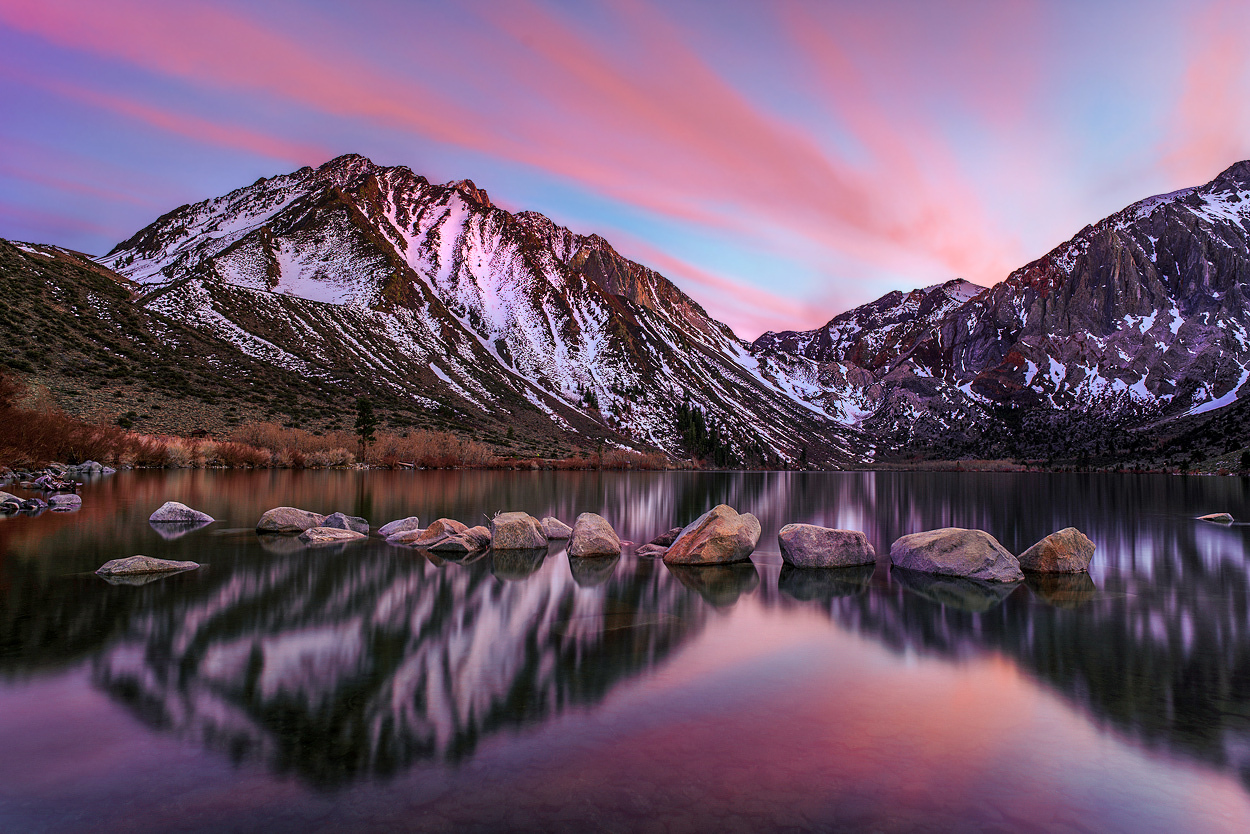
I read the whole thread but i'm still a little confused on how to pick the right number of stops via the app vs starting at a higher exposure time (eg 2 sec vs 1/500 sec)
is it just experience? trial and error? or are there guideposts that make the learning curve less steep?
Fred Miranda wrote:
BTW: The effective exposure to the image above was 3s + 96 images using the SR app.
Total exposure time: 3 x 96 / 60 = 4.8 minutes.
Fred Miranda wrote:
BTW: The effective exposure to the image above was 3s + 96 images using the SR app.
Total exposure time: 3 x 96 / 60 = 4.8 minutes.
Damn! That would add up to a lot of time with a nominal 30 sec exposure in fleeting twilight! Not really practical for most of my urban captures.
Even so, good to see processing is on the right track for these effects.
As I predicted a year or two ago, this is heading toward high frame rate video burst/bracketing, then in-camera and PP data manipulation of the frames.
Should be an interesting couple of years coming up!
Wow another stunning shot Fred! I need to read this entire thread to learn about this app. It won't replace my ND filter kit but it sure would help when shooting with my Lox 21.
Anyone tried pointing the smooth reflection app at the sky and see if it can be used for astrophotography to stack multiple images without using photoshop?
You mean for star trail right? Cos if its for milky way it won't work. I don't see why star trailing won't work, but you have less flexibility in how your trails look since it's just one single image.
For those that regularly use the smooth reflection app, has it completely replaced your ND filter(s), or do you use it in conjunction with an ND filter?
I use it with both my 3-stop and 6-stop (it lessens the amount of photos the APP takes). Although I still use my 10-stop sometimes. That said, I already had my Lee Seven5 filter kit.
Why don't you try it? You can always add a 3 or 6 ND filter(s) later.