martintyler wrote:
I tested indoors, in the UK, so probably about 20C, and I saw no difference after the upgrade (ISO 100, 30s)
I doubt you will notice a difference at ISO 100.. It's higher ISOs that are the subject matter here where chroma noise was not good at ISO 3200, for example. LENR would fix it but most don't want to shoot with it on since it takes some processing time on the back end of the shot and tends to eats stars.
PVCdroid wrote:
It's higher ISOs that are the subject matter here
I disagree. Myself and plenty of others have posted ISO 100 shots with plenty of hot pixels (much much worse than my D800). I would love to see a raw at ISO 100 30s with lens cap from someone that doesn't show what I see on my a7rII
This test makes no sense to me. Your putting a lens cap in total darkness and assuming the exposure is correct. How do know that you could be 15 stops underexposed you don't know. All your recording is sensor heat given the exposure time your giving it. We have no idea what the true exposure is. Is this not based on recording light at a certain ISO and exposure time. I can't see how this is relevant . If I go shoot something it's based on getting the correct exposure to record light. This test is not that. It's not recording light at all. What am I missing here. All your doing is recording heat build up on sensor . I'm out of pocket for awhile but I fail to see this makes any sense. Beyond me
I hear you, Guy. It is at least pushing the envelope to beyond reasonable limits. The ironic thing is, before the +3 exposure slider, the images, even that of exposed at 30s, f/22 and ISO3200 and with chroma noise reduction setting at 0, looked fine. The test is definitely not something we would do under real life shooting conditions - that's for sure .
I just tried this, still on 1.00 here. Incidentally, I think 1.10 looks terrible in Fred's sample shots, much worse than 1.00.
So I did:
LENR was set to "off"
Edit: I also had High ISO NR off, don't know if that makes any difference at ISO 3200?
Steadyshot "off"
f/8, ISO 3200, 30 secs, lens cap on
21C ambient temperature
ACR sharpening off and all noise reduction off, exposure +3EV
Auto WB in the camera and ACR set to "as shot" (this has a really big impact if you change it)
Viewed at 100%
I'd say it gave a broadly similar result to Fred's. It only takes fairly small adjustments to the noise and sharpness sliders to make a pretty big difference.
xpfloyd wrote:
Its probably about 20C where im testing (indoors/UK/Night)
Thanks for the RAW file.
I checked it and the difference is very big. It should not be since we are shooting with the same camera settings and firmware version. Your settings are identical to mine except you used the FE 28/2 and I used the FE 35/2.8 lens. The lens aperture should not make any difference since no light is hitting the sensor and we are shooting at the same exposure. I just tested it again with the camera cap on (instead of the lens) and got the exact same results.
The only possible explanation to this discrepancy is HEAT. Outside temperature and camera temperature differences.
It's relevant in all long exposure shots when it comes to heat. Very hard to test for it with humidity, heat index and all that. But that's every sensor. I'm sorry I don't believe in this kind of testing, it really has very little to do with recording light levels and real world effects that happen at diffrent ISO and time. Than pushing the exposure up from black makes even less sense to me. But I'll stay out of it and let folks try to figure it out but your going to see no change on the firmware update. This is simply about sensor heat and not really about recording light. Unless I'm missing something completely out of the box. Have a good night folks
Okay went out on back patio shot a bunch of 30 second shots diffrent ISO and than I tried NR on. Everything above ISO 640 I'm seeing on the LCD whites dots . I don't remember white. I do remember blue and red . I'll look at files on computer but is anyone seeing white. Very strange. They look like hot pixels. I'm wondering if we should remap our cameras after the update.
GMPhotography wrote:
This test makes no sense to me. Your putting a lens cap in total darkness and assuming the exposure is correct. How do know that you could be 15 stops underexposed you don't know. All your recording is sensor heat given the exposure time your giving it. We have no idea what the true exposure is. Is this not based on recording light at a certain ISO and exposure time. I can't see how this is relevant . If I go shoot something it's based on getting the correct exposure to record light. This test is not that. It's not recording light at all. What am I missing here. All your doing is recording heat build up on sensor . I'm out of pocket for awhile but I fail to see this makes any sense. Beyond me ...Show more →
We must be very straight on what the test does tell and what it does not tell.
It does NOT tell how bad the noise will be.
It does NOT tell anything about why cameras are different.
It does NOT tell how the Chroma noise reduction promised by the firmware will look in final images.
It does tell ONE thing, and that is what how the firmware does the chroma noise reduction. It tells that it is done by processing of the captured image and not by doing anything that prevents thermal noise from building up.
What is worse, is that after the firmware upgrade, the possibility to capture an unprocessed long exposure is lost. AFAIK, you cannot downgrade firmware, so that possibility is permanently lost for those who have performed the upgrade.
GMPhotography wrote:
It's relevant in all long exposure shots when it comes to heat. Very hard to test for it with humidity, heat index and all that. But that's every sensor. I'm sorry I don't believe in this kind of testing, it really has very little to do with recording light levels and real world effects that happen at diffrent ISO and time. Than pushing the exposure up from black makes even less sense to me. But I'll stay out of it and let folks try to figure it out but your going to see no change on the firmware update. This is simply about sensor heat and not really about recording light. Unless I'm missing something completely out of the box. Have a good night folks ...Show more →
Thermal long exposure noise is additive to recorded light. That's how it is safe testing without light. The noise added is the same regardless of how much light is recorded. The appearance of the noise in the image will of course be different.
The fact that the shadows were lifted 3 stops to see the noise does however not mean that the noise would be invisible in photos. If this noise was added to something a little brighter than black, it would be very noticeable even without shadow lifting. That can be shown by adjusting the black point instead of the exposure, when processing these black frames.
Now I will tell you what kind of testing I don't believe in. That is taking some random pictures in different conditions, at different times and temperatures, and claiming to see a difference and attributing it to the firmware upgrade. Few things could possibly be more misleading.
Firstly, on the test, the reason for doing these 'lens cap' tests is because it is controlled. I have done tests shooting real scenes and you can still see the noise we are talking about here, but it is not a way to do a controlled test.
Secondly, ISO 100 vs 3200 tests. I think the ISO 3200 tests are clouding things here. As the ISO noise is overpowering the hot pixels, which is why most of my tests have been at ISO 100. This is where the a7rII differs from my D800 (I don't have a D810 to test against) - at ISO 3200 they both look bad. Remember, ISO 3200, pushed +3ev in LR is basically ISO 256000, so you would expect a lot of noise!
At ISO 100 however, I do not expect a whole bunch of hot pixels, or much noise, even when pushed +3ev in LR (like ISO 800)
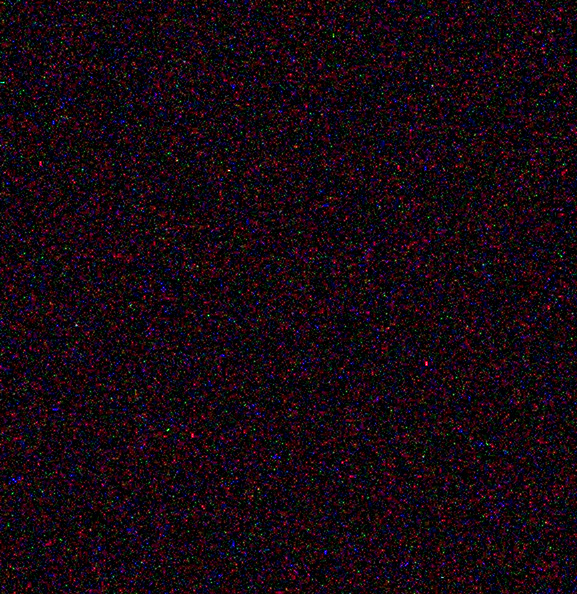
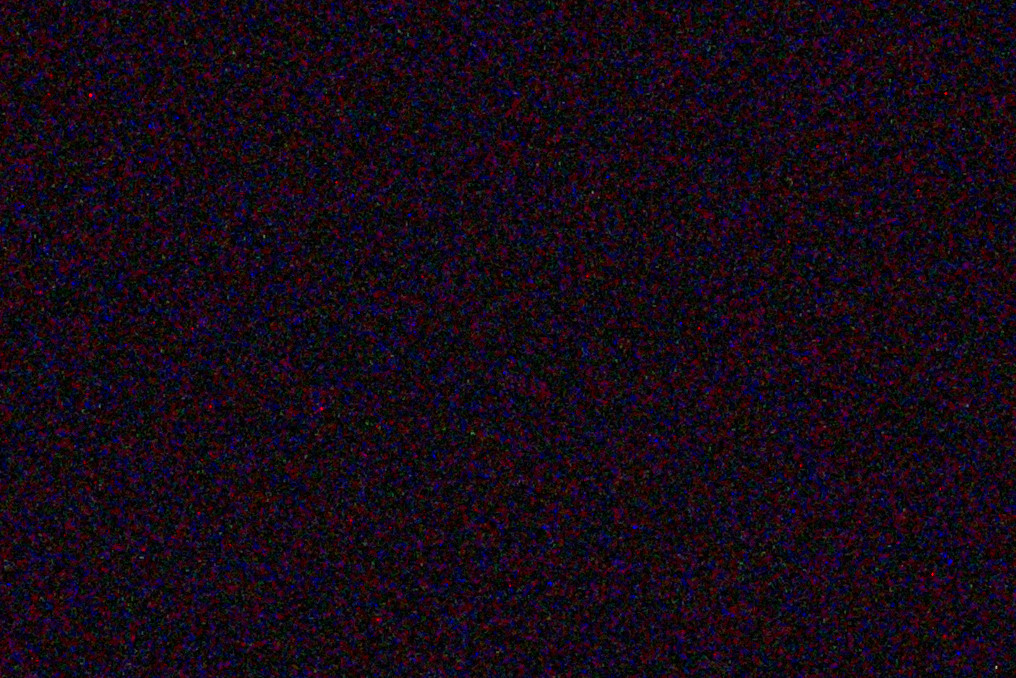
You can see that at ISO 100, the sony has lots of hot pixels and the nikon does not. At ISO 3200 they both have lots of noise, it is not quite the same noise, you can probably see some of the hot pixels showing through the general noise in the sony.
Notice that the a7rii with LENR ON starts to look more like the D800, in other words the ISO noise is there, but the hot pixels are mostly gone due to the LENR.
This is why I think looking more at ISO 100 tests is more important - that's what shows what I think the problem is, the thing that is different to a D800 (and I assume other cameras) - the hot pixels, not the general high ISO gain noise.
Bulb mode is interesting. It looks better, in terms of hot pixels at least. However, there is this 12 bit thing when in bulb mode, which may have other downsides, but the hot pixels are mostly gone in my quick test here.
30s exposure vs a 31s bulb exposure. First is increasing exposure +3ev in LR.
martintyler wrote:
Bulb mode is interesting. It looks better, in terms of hot pixels at least. However, there is this 12 bit thing when in bulb mode, which may have other downsides, but the hot pixels are mostly gone in my quick test here.
Are these with the new firmware? Can we find out if there is a difference in Bulb mode between the two firmware versions, and if this difference is different from M mode?
It is of course possible to time 1 sec and 30 sec in Bulb mode, so it would be possible for someone who has not upgraded yet to perform a test similar to what Fred did, with the only difference being Bulb mode.
Even though we are shooting dark frame lens cap images, does lens and changes in focal length affect the image output? I wouldn't think so, but I'm getting some different results with the same settings but different lenses. Hopefully someone smarter than I can help me out here. (on FW 1.10)
yunjo wrote:
Even though we are shooting dark frame lens cap images, does lens and changes in focal length affect the image output? I wouldn't think so, but I'm getting some different results with the same settings but different lenses. Hopefully someone smarter than I can help me out here. (on FW 1.10)
Lens caps are not 100% light sealed, there could be light leakage around the edges, and it would appear differently with different lenses and apertures.


 .

 In New Orleans this time of year I can't get it below about 23 C inside my apartment. I'm moving.