k-h.a.w wrote:
Very colorful Jim. Thanks.
What values did you use for contrast and saturation? TIA.
K-H.
Well, that's a little complicated, K.H.! I don't use what I consider "a lot" of enhancement, more strategic tweaks. Still it adds up when using various LR sliders. Here is what I used in the general range of "contrast and saturation":
I also use +/- on dodge and burn on the Graduated Filter and Adjustment Brush for broad or specific areas of light and dark.
Other than raising shadows (I intentionally shoot underexposed to preserve highlights, as per Fred) and add general contrast and saturation with Dehaze, the rest are minor touches. The main thing is getting the correct light and time of day. I use most of these settings to one degree or another in almost all my daylight photos.
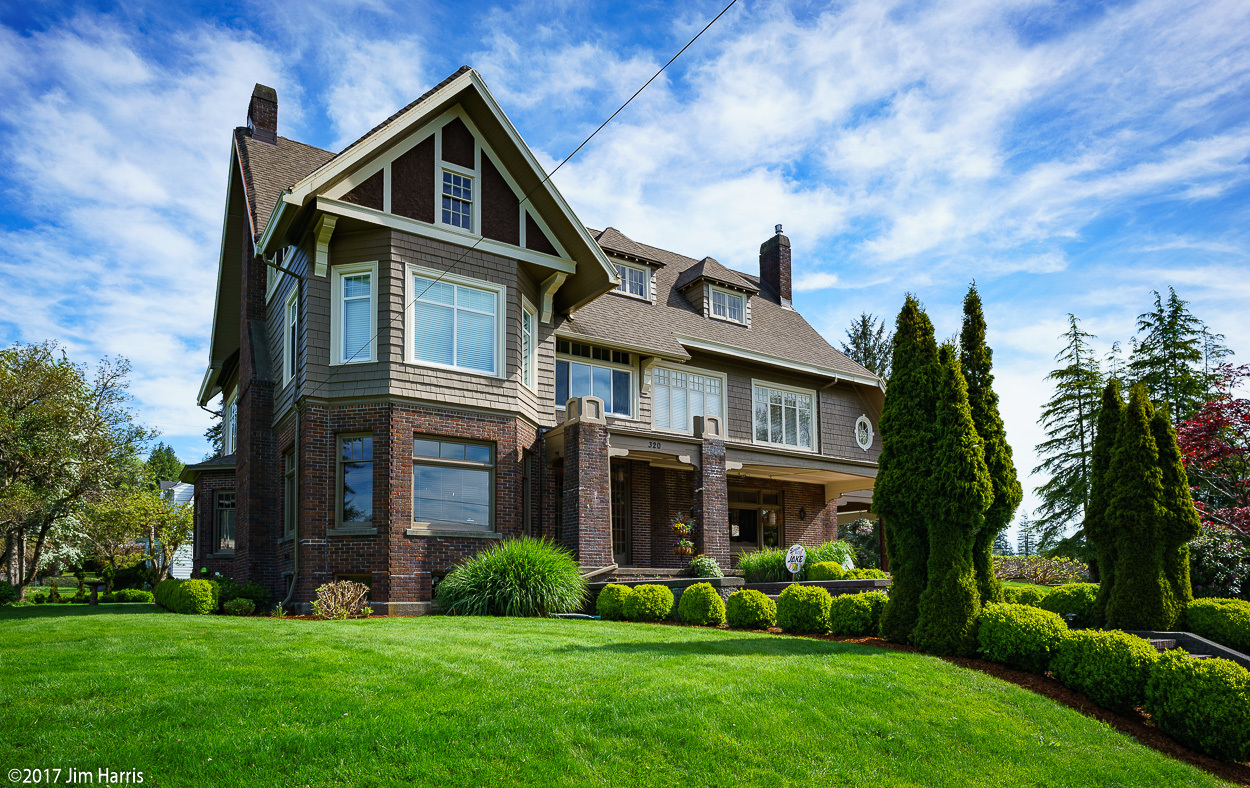
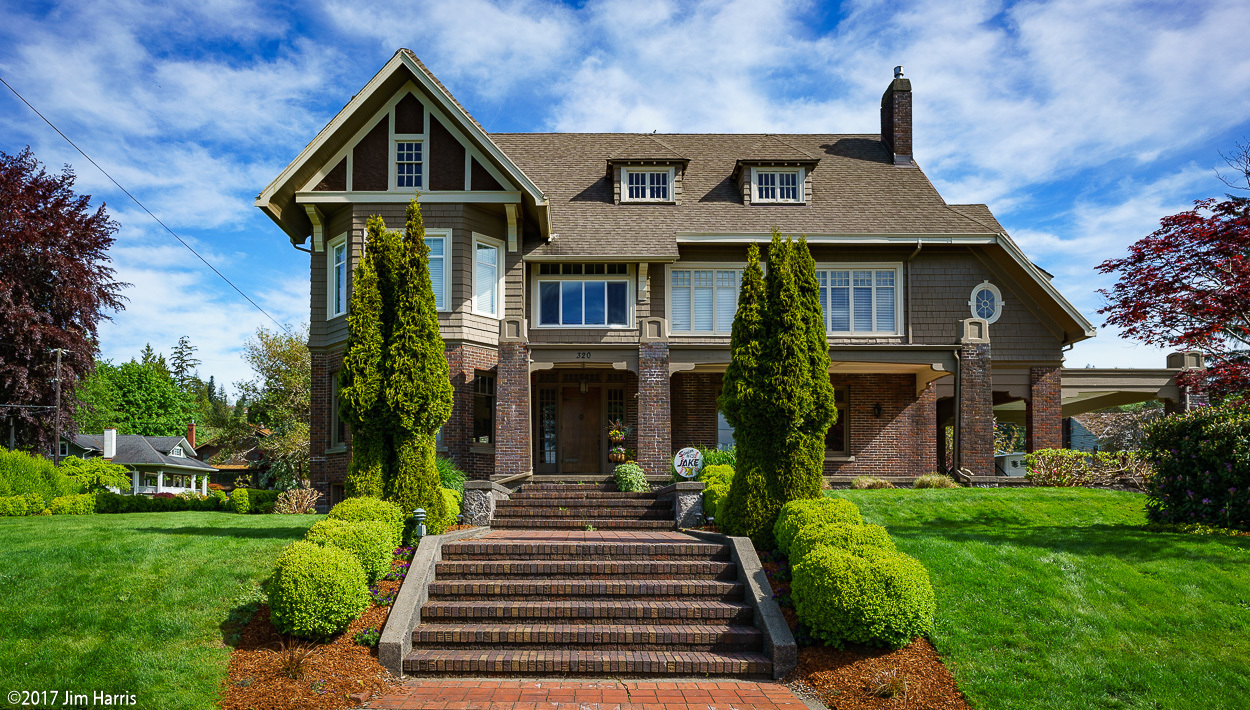
I must emphasize how utterly vibrant the landscape is when the sun comes out! The town of Aberdeen, WA, averages over 80" of rain per year, and this year might have set a record with over 90". That's temperate rainforest -- so everything is ultra-green with the new growth of spring, also affecting other colors like the reds of the Chinese cherry trees, etc. It doesn't take a lot of saturation or contrast in the photos! I shot here in earlier morning hours, around 7:00 AM on a Saturday, before everyone was out and about, so got the more intense glancing light on the buildings and taller vegetation. (You'll notice the "neutral" areas of pavement and earth colors are not overly enhanced.)
Hope this helps!
(I re-edited the photo after I saw it published here, increasing the color temp from 4500 to 4700.)
Here are a couple other views from the Loxia 21 (straightened and cropped, of course! ).
Gunzorro wrote:
Well, that's a little complicated, K.H.! I don't use what I consider "a lot" of enhancement, more strategic tweaks. Still it adds up when using various LR sliders. Here is what I used in the general range of "contrast and saturation":
I also use +/- on dodge and burn on the Graduated Filter and Adjustment Brush for broad or specific areas of light and dark.
Other than raising shadows (I intentionally shoot underexposed to preserve highlights, as per Fred) and add general contrast and saturation with Dehaze, the rest are minor touches. The main thing is getting the correct light and time of day. I use most of these settings to one degree or another in almost all my daylight photos.
I must emphasize how utterly vibrant the landscape is when the sun comes out! The town of Aberdeen, WA, averages over 80" of rain per year, and this year might have set a record with over 90". That's temperate rainforest -- so everything is ultra-green with the new growth of spring, also affecting other colors like the reds of the Chinese cherry trees, etc. It doesn't take a lot of saturation or contrast in the photos! I shot here in earlier morning hours, around 7:00 AM on a Saturday, before everyone was out and about, so got the more intense glancing light on the buildings and taller vegetation. (You'll notice the "neutral" areas of pavement and earth colors are not overly enhanced.)
Hope this helps!
(I re-edited the photo after I saw it published here, increasing the color temp from 4500 to 4700.)
Here are a couple other views from the Loxia 21 (straightened and cropped, of course! ).
Mathieu18 wrote:
Setting Effect Off, Peaking Medium. Pick the brightest start you can find, go to max magnification and slowly go back and forth until you get peaking where you want it.
ManuelLaMantia wrote:
Also for my brief experience, you have to find the brightest star in the sky and manually adjust focus on it with the viewfinder magnification set to maximu (x14.4 on A7r)... I used this basic technique without the help of peaking and worked very well
Thanks to both of you! I had setting effect on. Assumed that with a 30 second exposure the viewfinder would already be maxed out. My mistake. Am I correct in thinking that the focus of the lens resets when you switch the camera off? I was scared to switch it off the entire time just in case.
I dont think focus really "resets" but I'd want to verify it anyway if you shut the camera off. Nothing else I think it could drift a bit without power. If you have it in Manual Focus mode I think it should stay put. Regardless, with Setting Effect Off you'll get the full gain and it'll be a lot easier to find a star to use for focus magnification.
Beni wrote:
Thanks to both of you! I had setting effect on. Assumed that with a 30 second exposure the viewfinder would already be maxed out. My mistake. Am I correct in thinking that the focus of the lens resets when you switch the camera off? I was scared to switch it off the entire time just in case.
Strange lens Phillip. Some like the rodent and a couple from your last set reminded me of a lot of legacy teles: not great. But the Lynx eyes and the bird here look fantastic. Are my eyes just playing tricks on me?
Mathieu18 wrote:
Strange lens Phillip. Some like the rodent and a couple from your last set reminded me of a lot of legacy teles: not great. But the Lynx eyes and the bird here look fantastic. Are my eyes just playing tricks on me?
Well in one aspect it differs a lot from the vast majority of legacy teles: CA correction is great. These shots are not too critical but I took a few other ones with branches and white birds infront of the sky: zero noticeable CA. Sharpness is very good at least in tve central area as well. Where the age becomes noticeable is contrast which is a bit low and I have pushed it more than I usually do.
The mormot shot in this series is not very sharp because I had no support and should have chosen a faster shutter speed.


 I don't use what I consider "a lot" of enhancement, more strategic tweaks. Still it adds up when using various LR sliders. Here is what I used in the general range of "contrast and saturation":
 ).
).



 !
!