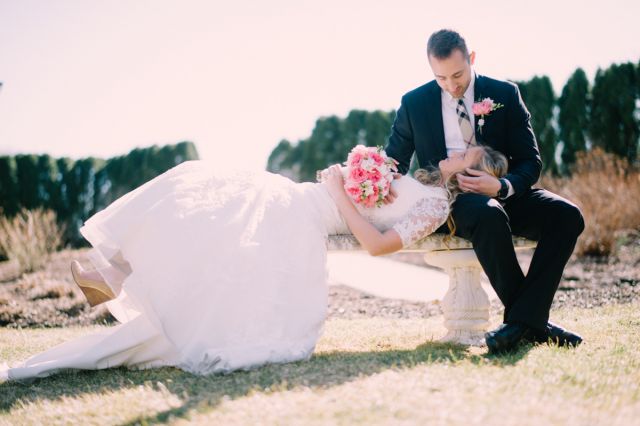
Joining the club for eleven days while i try and get a feeling for this lens during my rental to see if all the niceness i am seeing is worth taking the plunge for me. I shot the heck out of it today and plan on continuing to do so over my rental period.
The jury is still out for me but i am going to wait till the end and even then i think i am going to want to try out the 85 1.4 before really making up my mind.
sidefunk wrote:
Joining the club for eleven days while i try and get a feeling for this lens during my rental to see if all the niceness i am seeing is worth taking the plunge for me. I shot the heck out of it today and plan on continuing to do so over my rental period.
The jury is still out for me but i am going to wait till the end and even then i think i am going to want to try out the 85 1.4 before really making up my mind.
Some shots from today.
I like the colors in 1&2. If your first time with the lens I think you're putting out some nice stuff already.
I am thrilled to buy this lens for my wedding/portrait photography on a Df. In order to shorten the frequently mentioned "learning curve" I did some digging about field curvature. The 58mm f1.4 has strong curvature, meaning that the focus plane is not "planar", but rather a 3-dimensionally shaped surface. Anything on the surface will be sharp, anything in front or behind the surface will be blurred. This explains why the lens failes on sharpness tests on flat 2D test charts, whereas in "real world 3D portraiture it really shines.
I figure that "knowing the exact shape of the sharpness curvature" will help to correctly compose images right away onto the sweet spots.
http://slrgear.com/reviews/showproduct.php/product/1660/cat/12
has done a great job illustrating the shape of field curvature of the 58mm f1.4 at different apertures, plus many other lenses... Interestingly, the Leica Summilux 1.4 ASP has a similar curvature, wheras a Zeiss OTUS has a totally flat surface (making it perform sharp on flat 2D-Testcharts, but failing on "real world portrait/wedding/street objects).
So according to the chart, the lens would have 2 configurations with sweet spots:
1. One Main sweet spot in true center of viewfinder/sensor. Use center focus point. Preferred for a 3D-shaped object, like head, pet, street object. The focus surface will "wrap around" the 3D-contour of the object, thus leading to wider DOF around the object whilst strongly blurring anything not on the surface.
Important: Object has to be in true image center, using center focus point. Do not re-compose / shift camera afterwards, as your object will move out of the len's sweet spot. Rather step back for wider angle and crop in post if you need ultimate sharpness off-center / using rule-of-thirds...
2. Two secondary sweet spots (almost 2 vertical lines in landscape orientation), approx. following the "rule of thirds". Good for 2-Person portrait in landscape orientation or classic shoulder-portrait in portrait orientation. Use left or right outer focus point to focus. This will bring the 2 outer "peaks of the surface" into focus, whilst the center image center will be unsharp. Again: Do not recompose.
One disadvantage of the secondary sweet spots: the curvature of the sharpness surface is convex. Its not following the 3D shape of any object located within the spot, but is rather curved away from it. So it will be sharp on a very small sweet spot, but then quickly fades into blurred area.
I hope this will help many readers to get best results for images with "Character".
I'm sure Elijah will agree with me on this since me and him are (were) extremely heavy users of this lens; there is no technical guide of how to use this lens and trying to create one would be pointless. You pretty much know looking through the viewfinder when this lens is going to sing and when it's not. This field curvature gibberish is NOT what makes this lens soft, it is the aberrations. This lens will rip your heart out and shit on it in bad light; what may be good light to you is bad to the lens. The best way to sum it up is it's an "emotional" lens. You will not master it in a couple weeks, it will take a few months to really start hammering away with it.
I've put mine on the shelf for a while now because shooting with it was literally changing my shooting style and I began struggling with anything NOT the 58 because I was so used to dealing with its quirks.
Jason_Brook wrote:
...there is no technical guide of how to use this lens and trying to create one would be pointless. You pretty much know looking through the viewfinder when this lens is going to sing and when it's not. This field curvature gibberish is NOT what makes this lens soft
+1!
Field curvature? Yikes, I should've stopped this lens down to F/4 for this formal shot then