Henningsvær , home of Norways coolest fotball pitch. Hiding in the salt-infested gloom... Sunset light... by micke vmix, on Flickr
D850 + 58/1.4G at F9
I sold my 58 f/1.4G a couple of years ago, a decision that I now regret. Thank you for sharing these amazing pictures, this lens is clearly underrated and understood. I see myself buying back the 58 f/1.4G very soon.
Fantastic as usual! Do you still use your CV 40mm 1.2 or are you leaning more to the 58 and Zeiss lenses these days? Just curious......I enjoy the 58mm but the 40mm 1.2 will continue to intrigue me.
Fantastic as usual! Do you still use your CV 40mm 1.2 or are you leaning more to the 58 and Zeiss lenses these days? Just curious......I enjoy the 58mm but the 40mm 1.2 will continue to intrigue me.
Thanks!!
I use them booth. The 58 and 50/1.4 Planar usually lives on the D500 99% of the time. The 40/1.2 has to share it's quality time on the Z8 with all the others but it was on earlier today actually.
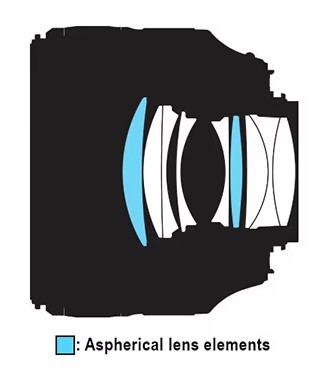
A little about this 58/1.4 may be of interest to some. Released in 2013, It's a 9/6 (elements/groups) with two asph elements as its sole 'special glass'. It's rather old-fashioned apart from the asph, no FLE nor internal focusing. Focus breathing is moderate, as the focal length is already designed for portraits.
Nikon aimed for a strong center with a fading midfield (talking wide open here) and good corners. The asph elements are double-sided which tells us they carry the major burden of correction, without interfering with depth perception. And no ED glass! Sony/Zeiss do something similar in the RX1 Sonnar and FE 55mm. As does Cosina in the Voigtlander 40/1.2. No ED/APD. Single digit element counts. Is it a coincidence all these are beloved optics? I doubt it.
The 9/6 design is another old-fashioned inclusion but AI stubbornly sticks to its story that the lens has no cemented rear triplet, which the block chart clearly suggests. The rearmost asph element is not a 'rear cap' but is embedded inside the design, just in front of the huge glass piece that appears to be a triplet. This form of element is used in some very special lenses, like the C-Sonnar and Leica's recent 35/2 M-APO. Costly and difficult to manufacture and QA.
Today at B&H, the 58/1.4 sells for 250% the price of the S 50/1.4. Of course it's true we need many more traditional lenses of this type, low element count lenses with doublets (and very rarely, triplets) that emphasise artistic depictions of reality instead of out-and-out MTF. Modern lenses lean heavily on coatings in their dominant air-spaced elements to deal with the increased number of glass-air surfaces.
But times appear to have passed these favorites by, in the main. I feel it is difficult to take bad images with this one if you use it for its intended genres, in particular people photography, street, bokeh-dominant images. cheers.