p.1 #1 · Hasselblad C 250 f/5.6 Superachromat on Fuji GFX
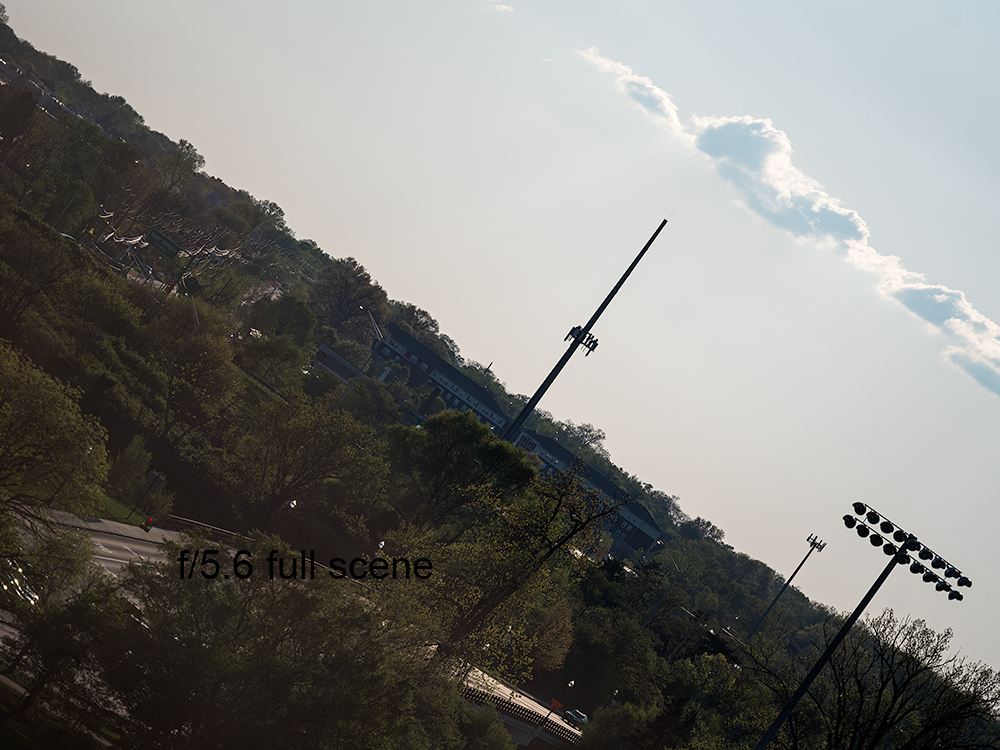
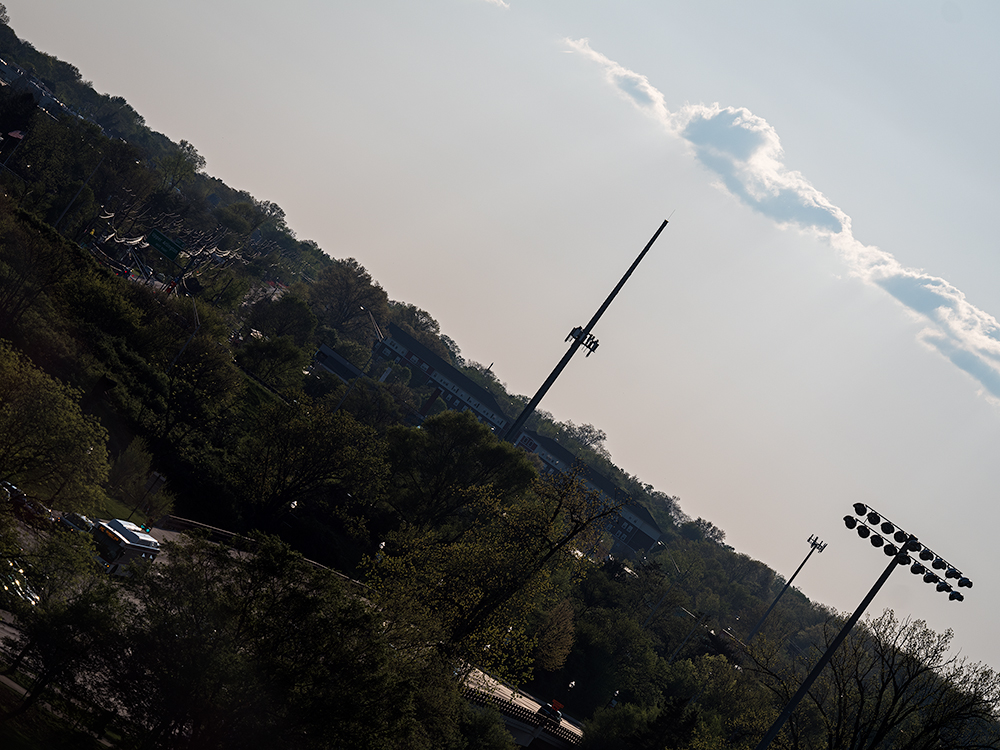
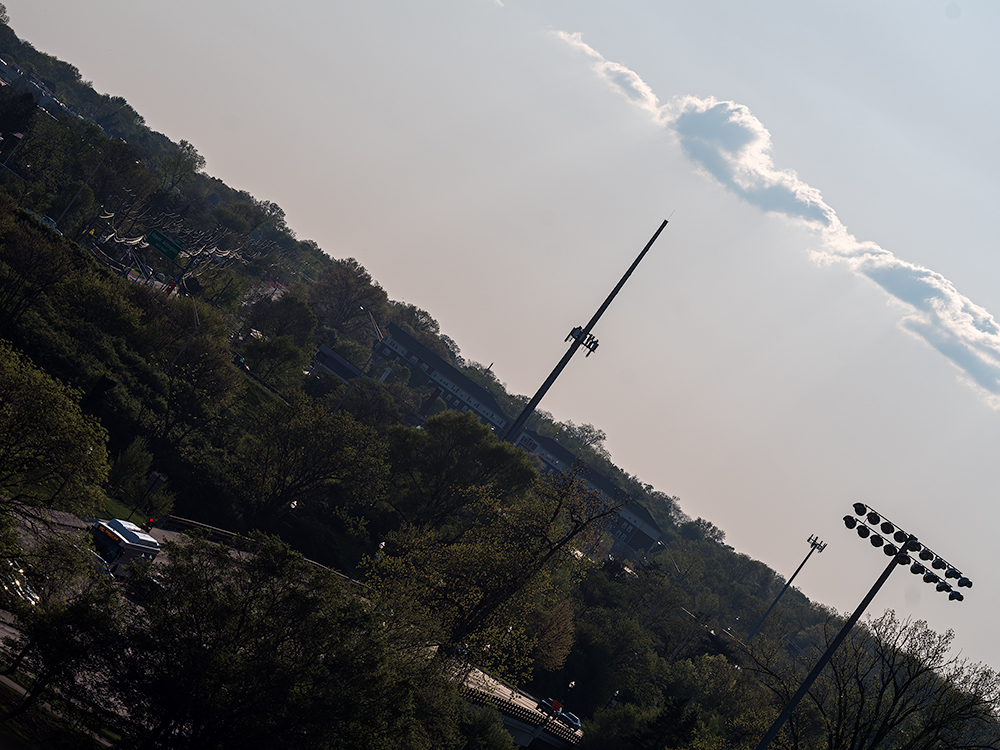
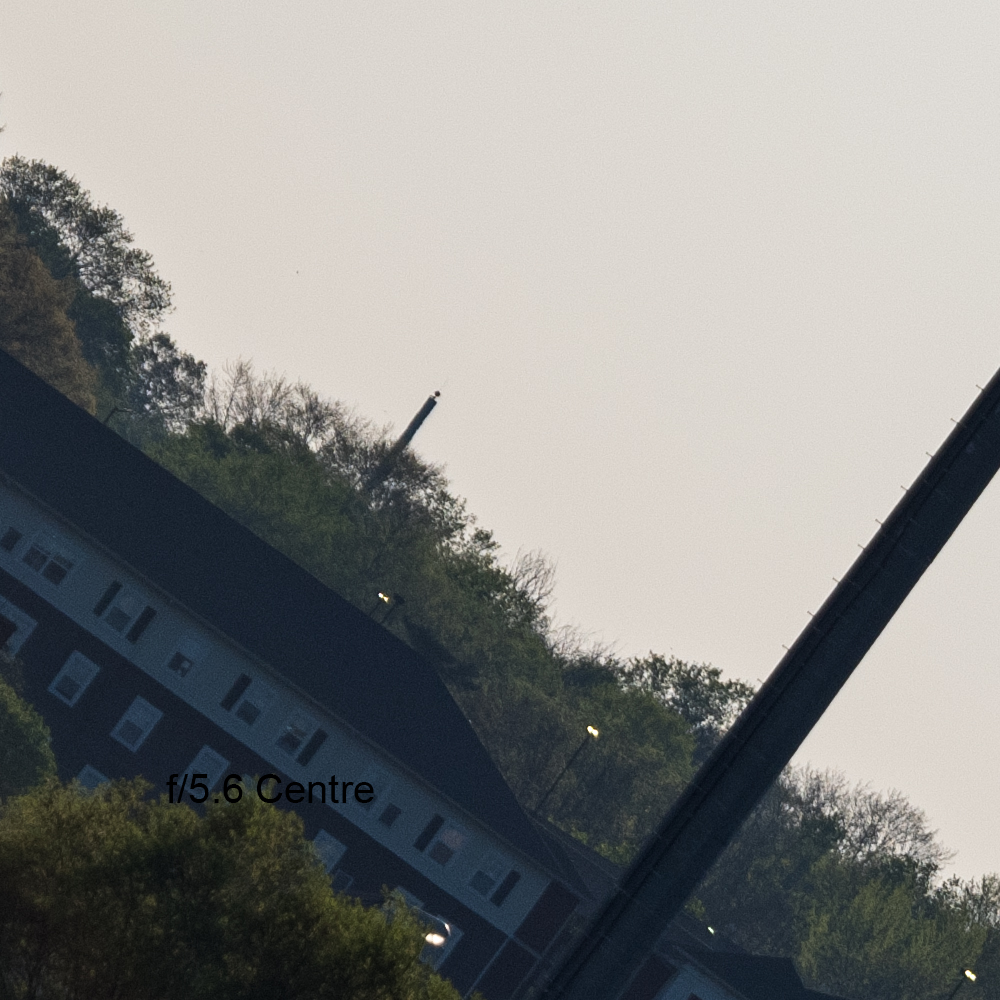
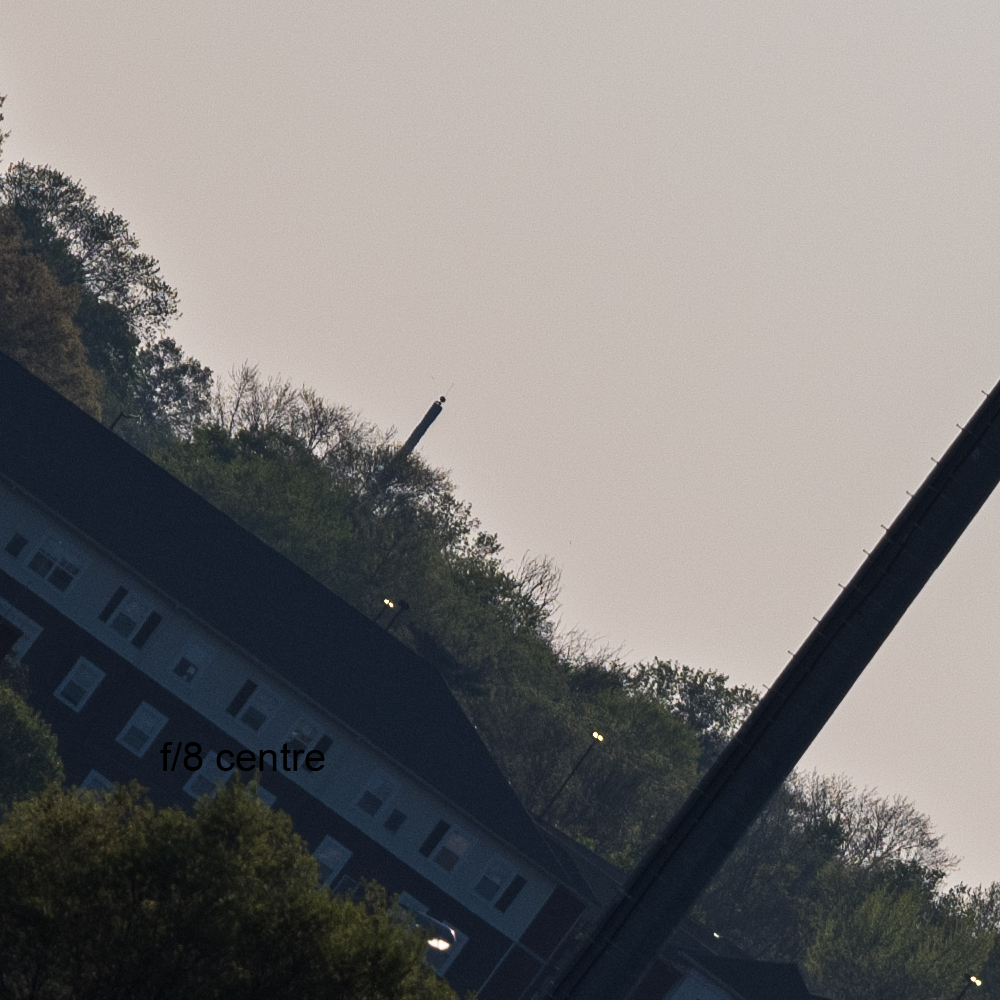
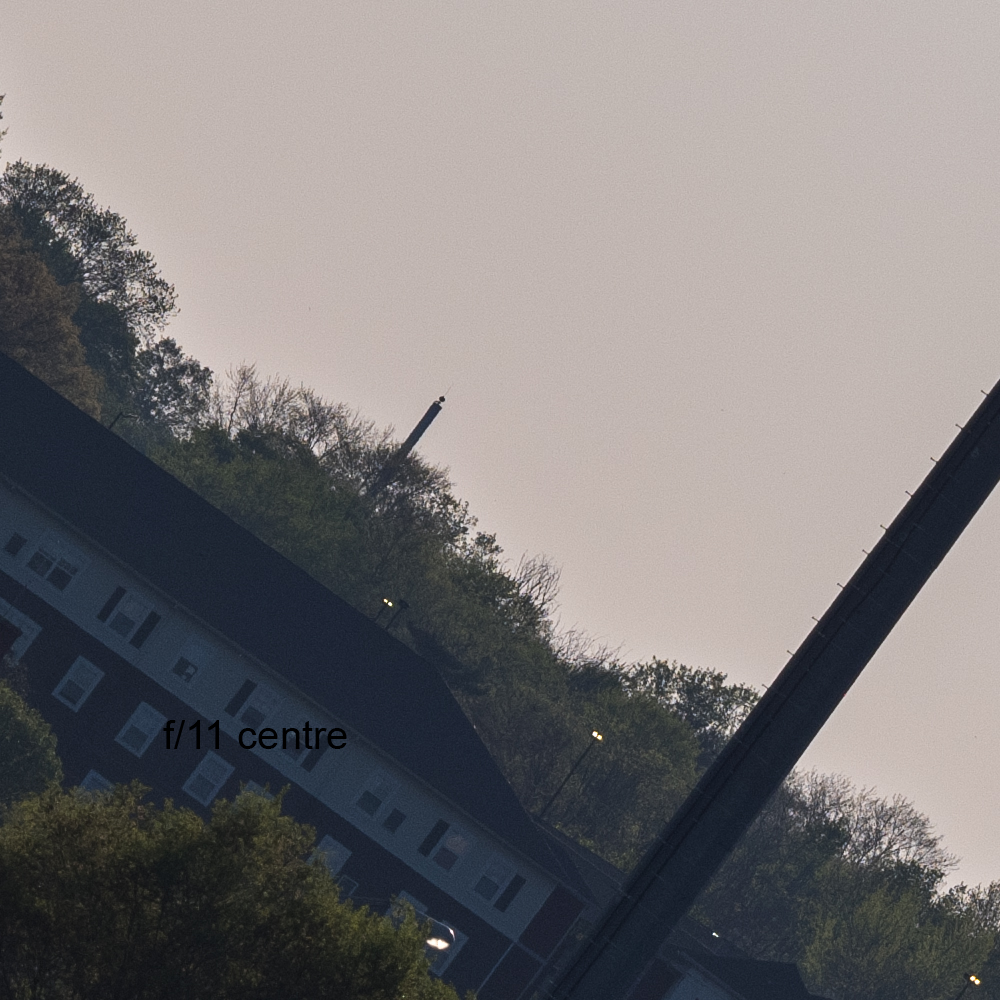
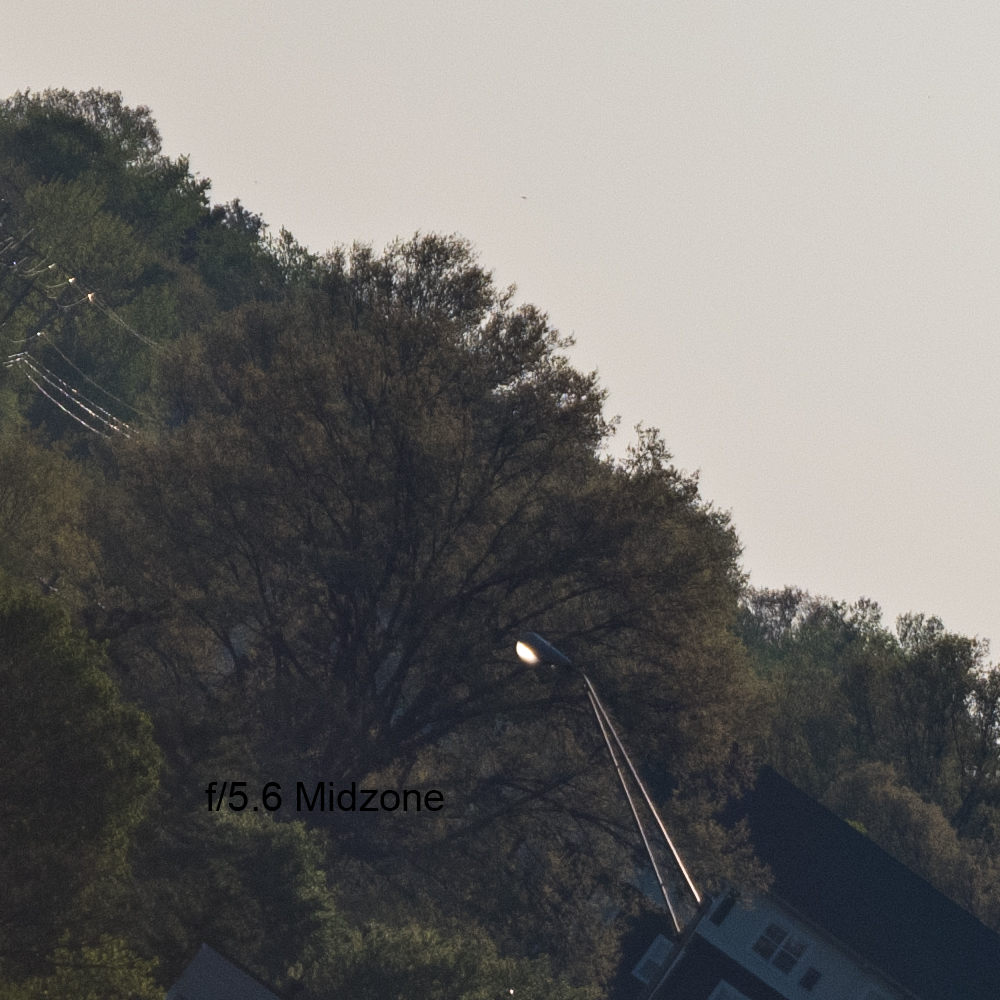
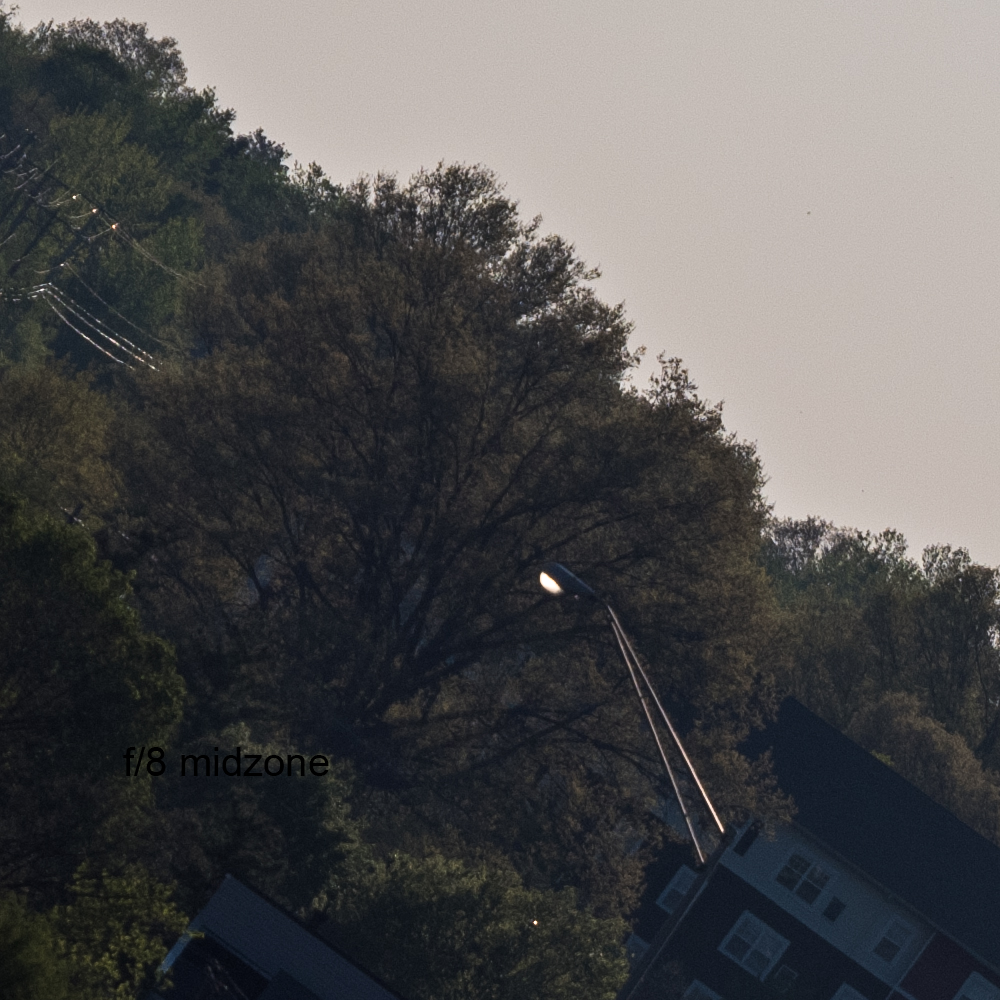
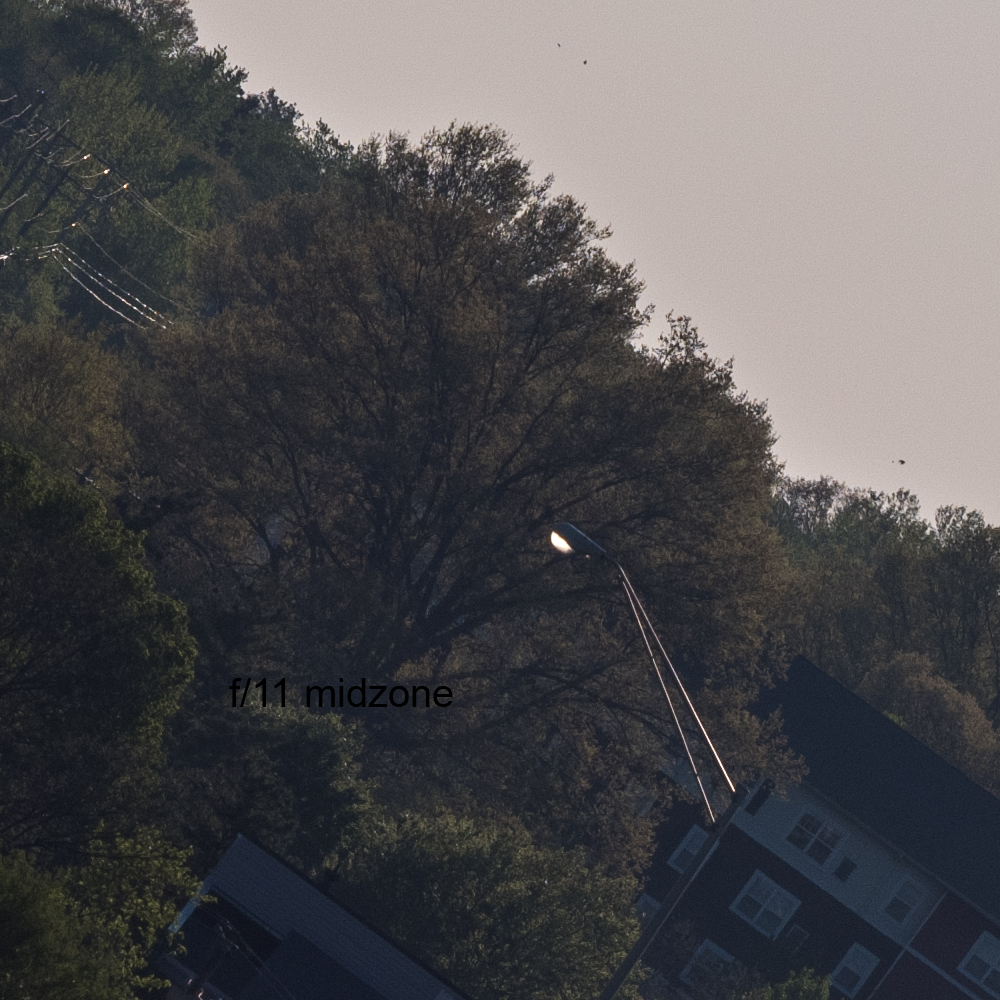
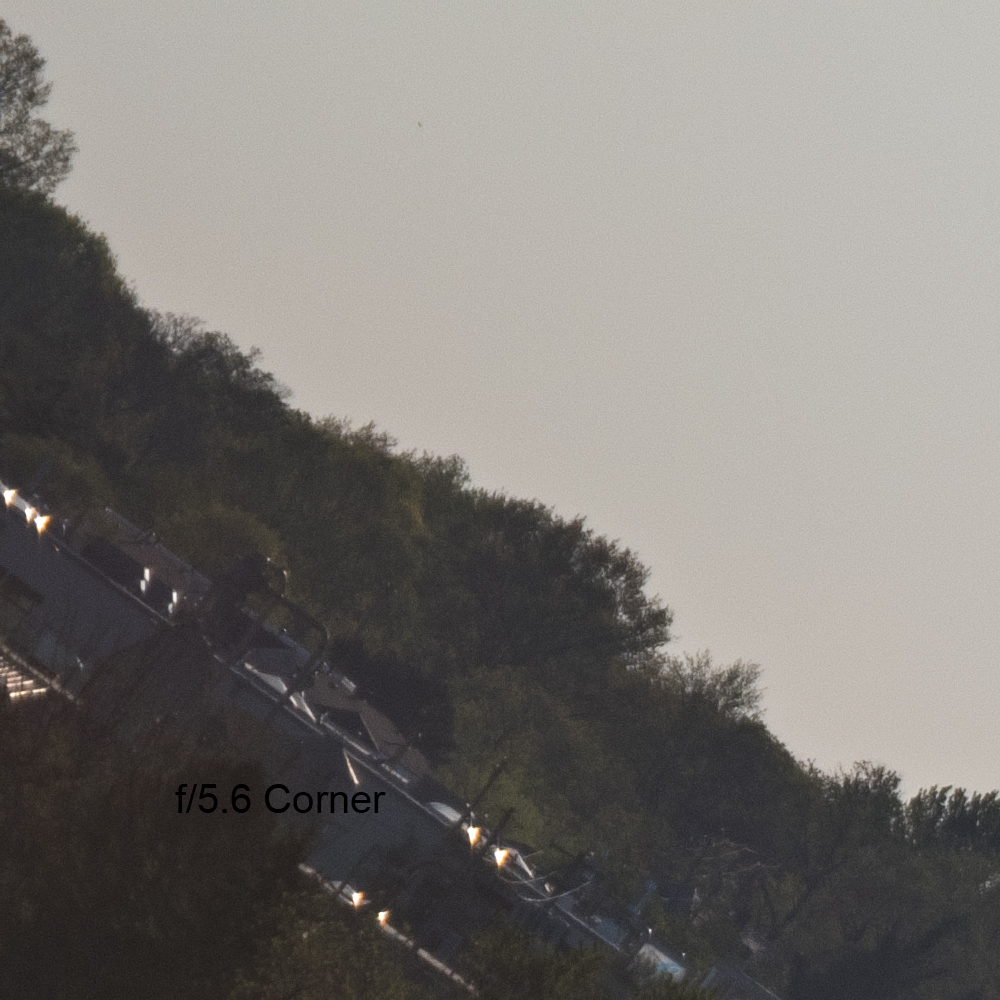
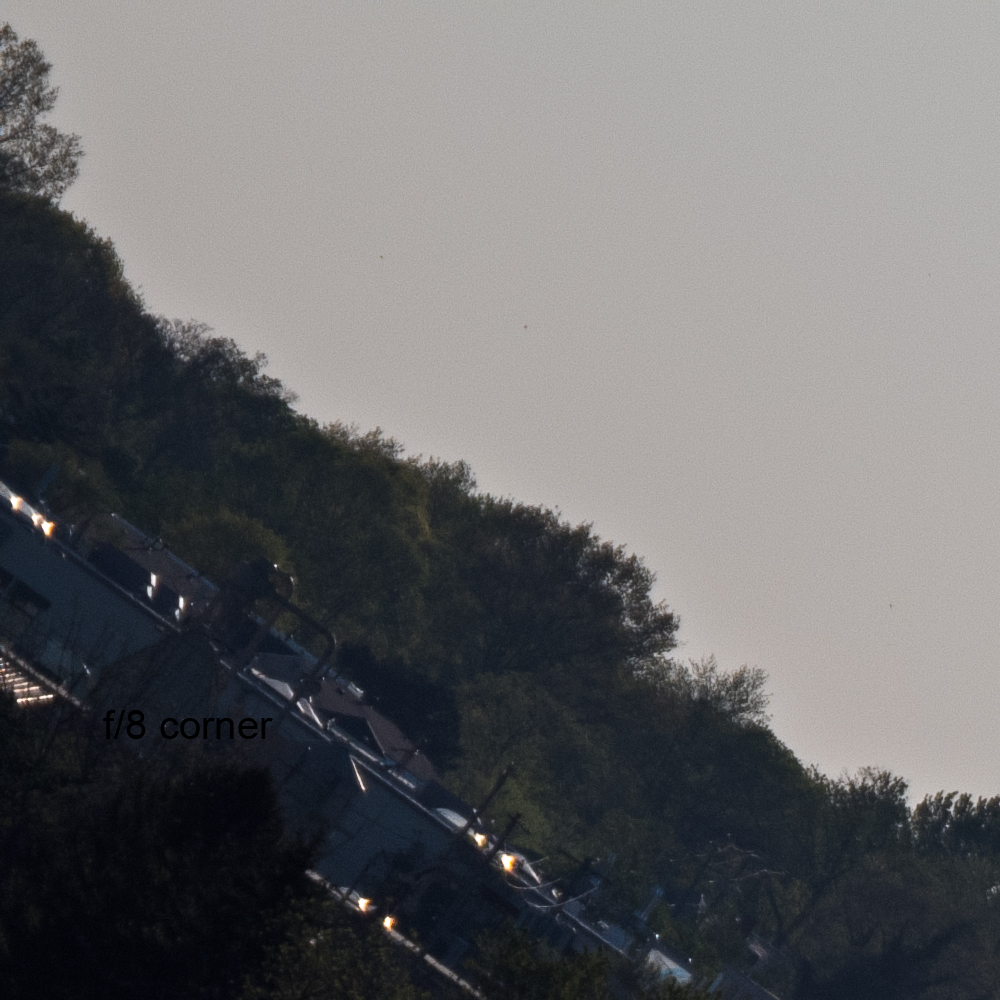
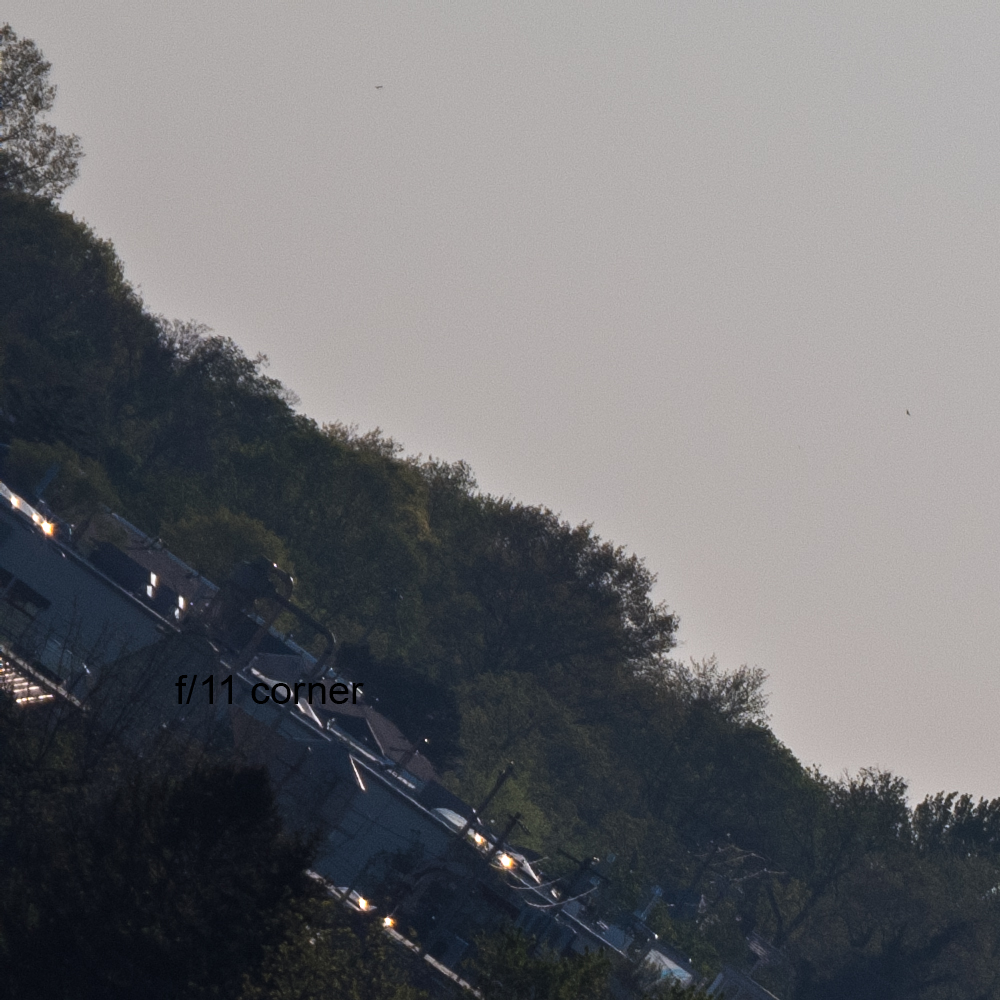
I recently got the Hassy 250 Superachromat for my Fuji GFX and here are some infinity tests with it at f/5.6, f/8, and f/11. The extreme corner gets a little sharper going from f/5.6 to f/8, but otherwise all apertures and across the whole frame the lens is very sharp. I find it to be noticeably sharper and to have better CA correction than the Leica R 180 f/3.4 APO I used to own (the Hassy 250 SA is a FF 35mm equivalent of about 180 f/4). I wish I could test these lenses side by side, buy my Leica R 180 f/3.4 APO was stolen. In any event here are my test shots. I just corrected them for exposure and they have default sharpening in lightroom. First, is the entire scene, followed by centre, mid zone, and corner.
p.1 #7 · Hasselblad C 250 f/5.6 Superachromat on Fuji GFX
Its not exactly an evaluation of the corner sharpness as such since the image circle of 44x33mm sensors is 55mm, while the original 56x56mm sensor has an image circle of 79.2mm.
Steve Spencer wrote:
(the Hassy 250 SA is a FF 35mm equivalent of about 180 f/4).
I dont get the point here. Did you use the Leica 180/3.4 on a full frame sensor ? Otherwise it wouldnt compare.
Steve Spencer wrote:
I guess the bubble level on my tripod must be off
p.1 #8 · Hasselblad C 250 f/5.6 Superachromat on Fuji GFX
Sauseschritt wrote:
Its not exactly an evaluation of the corner sharpness as such since the image circle of 44x33mm sensors is 55mm, while the original 56x56mm sensor has an image circle of 79.2mm.
I dont get the point here. Did you use the Leica 180/3.4 on a full frame sensor ? Otherwise it wouldnt compare.
Ever so slightly.
Well, it is the corner performance on the GFX. I didn't say I was looking at the corner performance of the lenses image circle, just the corner performance on the GFX. And yes, part of the reason the corner performance is quite good here is no doubt because the lens has a much larger than needed image circle.
With regard to the Leica R 180 f/3.4 APO, I did use it primarily on a FF 35mm sensor, and that was what I was referring to. Even though that wasn't what I was talking about, I did test that lens on the GFX and it does have a big enough image circle to cover the 44X33 sensor but then it has a different look and you really notice its very long minimum focus distance.
With regard to the slanted horizon, I borrowed that technique from Fred as a way to make sure you get something in the corners to examine performance there.
There's a lot of interesting and useful information in it for some people. For example, it includes the image diagonal sizes for several formats ranging from 1.6x crop up to 4 x 5 large format. As you point out, this explains why corner performance on miniMF when using lenses designed for film MF formats is likely to be pretty good — just as corner performance on APS-C may be quite good when using lenses designed for full frame coverage.
I put it together for another reason. This is a bit tricky to explain in writing, but here goes. We are all familiar with the concept of "crop factor" as a way of understanding relative "size" differences among format. In virtually all cases the familiar crop-factor numbers are offered as a way of comparing full-frame format to smaller formats. This approach incorporates a bias (or perhaps a "basis?") in an assumption that full-frame is the norm. That is very useful for photographers familiar with traditional 35mm film formats who are, for example, trying to figure out what focal lengths will provide the same angle-of-view coverage when using one of the smaller cropped sensor formats.
But what if you are trying to understand "crop factor" size differences where full-frame is not one of the cases being compared? For example:
- You are contemplating the value of a system incorporating an APS-C sensor camera and a miniMF camera, and you want to understand the relationship.
- You are familiar with medium format film 645 camera systems and you want to compare to miniMF digital systems.
- You want to understand the relative size of the differences between various pairs of options — for example, what is the magnitude of the difference between MF 645 film and 35mm film versus the magnitude of the difference between, say, miniMF and full frame?
The concept in the chart is to regard and one of three target formats as having a 1.00 (or baseline) crop factor — in this case the columns assign that to full-frame, miniMI, or 645 film. From there you can now better understand the relative size of other formats by comparison to your given starting point.
For example, we are familiar with the concept that Canon APS-C cameras have an approximate 1.6x crop factor and that Nikon and Fujifilm APS-C cameras have an approximate 1.5x crop factor by comparison to full frame. By looking at the right column of the chart, where we use MF 645 film as the baseline, we see that its relationship to 35mm film and full-frame is approximately the same size.
There are a lot of other interesting things to learn from this chart, I think. ...Show more →
I used to think about format differences in terms of diagonal measures. I no longer do so. If you're going to make an image with a particular aspect ratio, then the diagonal measure of the sensor is not germane. So now when I present comparisons of 3:2 and 4:3 formats, I do it in two sections: for 4:3 and squarer output, and for 3:2 and skinnier. I ignore the aspect ratios between those two, for simplicity.
The caption for 4:5 isn't quite right, since it's already squarer than 4:3.
Also keep in mind that when comparing crop factors the changes in depth of field are not linear, which means the change from say 1.20 to 1.30 is noticeably bigger than the change from say 1.50 to 1.60. We of course know that when we think about teleconverter. A 1.4X teleconverter increases depth of field by one stop, whereas a 2X teleconverter increases depth of field by 2 stops. In exactly the same way a 1.41 crop factor increases depth of field one stop, whereas a 2.0 crop factor increases depth of 2 stops. So, in terms of depth of field changes the. .41 difference between 1 and 1.4 creates the same increase in depth of field as the .59 difference between 1.41 and 2.0. And the .29 difference between a .71 and a 1.0 crop factor is the same size as the two above difference as it decreases depth of field one stop. So in these examples .29, .41, and .59 all are the same size in terms of how they affect depth of field. They all are one stop different from the next succeeding crop factor.
p.1 #14 · Hasselblad C 250 f/5.6 Superachromat on Fuji GFX
gdanmitchell wrote:
One of the reasons that I used what I'll call a "movable normal" in my chart is that it should rectify this concern.
For example, note that the three right columns treat different formats as being the baseline — 1.00 crop is full frame, miniMF, or 645 film MF depending on which column you select. A given crop factor value there represents a relationship to this baseline in a way that should be consistent.
For example, we can say that the relationship between 645 MF and full frame is virtually the same as the relationship between full frame and 1.6x crop. See the "normed to normed FF" and "normed to 645" columns and compare, noting that the crop factor relationships are of the same magnitude.
Here is an updated version of the chart with some relationships highlighted in color.
"Normed to FF" sets full frame to crop factor of 1.00
"Normed to miniMF" sets miniMF to crop factor of 1.00
"Normed to 645" sets 645 film FM to crop factor of 1.00
Note also that I have added two additional cases in order to deal with the various possible ways of handling the aspect ratio differences between miniMF and full-frame. I have added a row representing full frame cropped to 24mm x 32mm (4:3 aspect ratio on full frame) and miniMF cropped to 29mm x 44mm (miniMF cropped to 3:2).
Some interesting take-aways:
1. 645 MF film is to full frame (and 35mm film) as full frame is to 1.6x APS-C crop.
2. 645MF film is to miniMF as miniMF is to uncropped full frame.
3. miniMF lies about halfway between full frame and 645 MF film.
I think your chart actually exacerbates the problem in interpretation. The difference between 1 and 1.38 is very nearly a stop difference (1 and 1.41 would be exactly a stop) in your middle column and if you don't notice the non-linearity 1.38 seems very different from 1.62, but when you take the non-linearity into account it isn't nearly as big of a difference as the numbers (and our tendency to think in linear terms) suggest. The difference between 1 and 1.62 is just less than 1 and a third stop. So really when we are comparing the difference between a 44 X 33 sensor and a FF 35mm sensor cropped to 4 X 3 we are talking about a stop difference and when we are taking about the difference between FF 35mm and 1.6X APS-C or medium format film and FF 35mm film we are talking about a stop and a third difference. That third of a stop bigger shift is not nothing but it not nearly as big as 1 to 1.38 vs. 1 to 1.62 suggests unless you explicitly take into account the non-linearity.
p.1 #16 · Hasselblad C 250 f/5.6 Superachromat on Fuji GFX
gdanmitchell wrote:
^^^
I'm not following you. The relationhips reflect the non-linearity you write about when normalized to a new standard 1.00 crop factor in each case.
I think your point was (to simplify a bit) that a .6 crop factor difference in one direction is not the same as a .6 crop factor difference in the other direction when the starting point is the same. (E.g. the relationship between a 1.6 crop factor and a .4 crop factor isn't "equal.") That makes sense.
But when you reference the starting point as 1.00 crop (for example always resetting the larger of the compared formats to a crop factor of 1.00) and calculate the second case from there, you are looking at a percentage description, which is non-linear.
Right?
Or are you agreeing that the crop factors descriptions are accurate but that calculating depth-of-field must be done using something other than crop factor?
If two things have a 1:1.6 relationship and two other things have a 1: 1.6 relationship, how is non-linearity going to change the result? Serious question.
I'm also perplexed as to why you keep bringing teleconverter magnification factors into this. They do a rather different thing than what we are looking at when we speak of crop factors. (They take an image circle of a given size and essentially expand it by 1.4x or by 2x. That process does produce the 1 and 2 stop light loss that you keep coming back to, but that is for a different reason.)
Finally, what would your spreadsheet/chart look like, and what calculations would you build into it? (Mine simply uses the standard method of calculating diagonals from width and height measurements, uses that to calculate relative crop factors, then sets the 1.00 crop value wherever you want to set it among the various formats.)
What you suggested was my point is not my point. So, when you asked, "Right?" The answer is no. My point is that 1: 1.62 is actually quite similar to 1: 1.38 when considering depth of field. Said simply moving from a camera referenced as having a crop factor of 1.0 to a camera with 1.62 crop factor compared to that camera will result in an increase of about 1 and 1/3 stops of depth of field when using the same aperture. That isn't all that different from moving from a camera referenced as having a crop factor of 1.0 to a camera with a 1.38 crop factor compared to that camera which will result in an increase of about 1 stop of depth of field when using the same aperture. Because of the non-linearity of the crop factors, however, and given that we are used to linear relationship it seems and looks like a 1 : 1.62 crop factor difference is a lot bigger than 1: 1.38 when actually the difference is quite small.
Now let's make this concrete rather than abstract. The difference between shooting a camera like the Fuji GFX and shooting a FF 35mm camera is that the FF 35mm camera will have about 1 stop more depth of field at the same aperture if the shots with the FF 35mm camera are cropped to 4 X 3 or squarer. This difference between those two cameras in my experience is actually quite similar to the difference between using a FF 35mm camera and an APS-C 1.6X crop camera. The FF 35mm to APS-C increased depth of field more but only about a third of a stop more and not surprisingly the experience of switching between the Fuji GFX and FF 35mm is quite similar in my experience as the experience of switching from FF 35mm to APS-C.
Now what I find misleading about your chart is that 1: 1.62 would seem to be a lot bigger than 1: 1.38 and it would be if the relationships were linear, but in actuality 1: 1.62 isn't much bigger than 1: 1.38 when the non-linearity is taken into account. So, without taking the non-linearity into account your chart makes a difference that in practice is small seem like it is much larger.
I am also perplexed why you say I keep bringing up teleconverters, when I in fact only raised that issue once. It can't really be said that I keep doing something when I only do it once. But as you raise the question, I know teleconverter are quite different from crop factors, but I brought them up the one time because teleconverter magnification is on exactly the same non-linear scale (even though it is a different phenomenon) as crop factor. The point is that they are on the same scale and just as we know that a 1.4X teleconverter increases depth of field 1 stop and a 2X teleconverter increase depth of field two stop, we can know that a 1.4 crop factor increases depth of field 1 stop and a 2.0 crop factor increases depth of field two stops. This helps us understand just how similar a 1.38 crop factor and a 1.62 crop factor are in actuality.
Finally with regard to charts, I wouldn't make a chart. All the comparisons you report in the chart and many many more can easily be accessed at the website I linked to above. I can't see the reason for a chart when I can just look that stuff up quickly and easily on the website.
p.1 #18 · Hasselblad C 250 f/5.6 Superachromat on Fuji GFX
gdanmitchell wrote:
There's nothing "misleading about my chart."
You have invented an assumption that isn't stated in the chart (that I believe some crop factor relationship has a bigger effect that I should assume it to have), ascribed it to me, and are now arguing with the assumption that you invented.
- - -
What my chart demonstrates is pretty straightforward — for example, the difference between full frame and 1.6x cropped sensor systems should be approximately equal to the difference between 645 MF film and full frame systems, which both calculate to approximately the same 1.62x crop factor.
Are we in agreement so far on that statement? (Please, without any additional extrapolations that you are tempted to make.)
- - -
The chart also demonstrates that the crop factor relationship between miniMF and full frame is smaller than either of the two aforementioned comparisons, whether we compare diagonals of the full 3:2 and 4:3 aspect ratio native formats or crop the full frame example to 4:3.
Are we in agreement with that basic fact, again without bringing in additional elements that I did not introduce? (Note that my chart says nothing about how to interpret those data, so let's not "go there" insofar as assessing the accuracy of what is actually in the chart.
- - -
Your concern seems to be that you imagine that I hold a point of view not contained in the charts, namely that I have somewhere claim or imply (not sure where) that the effect of the crop factor relationship between miniMF and full frame is too small.
Is that what you are assuming?
If so...
Where do my data say anything at all about this concern? (They don't — they just represent raw crop factor information.)
It seems that you have not identified anything intrinsically inaccurate or misleading about the accurate data in my chart.
It seems that you have concocted a position that I have not stated here and which is not contained in the chart, and based on that extrapolation suggest that there is something inaccurate of misleading about these data. I'm even detecting a subtle implication that I'm either ignorant about these things or intentionally trying to mislead people.
To me, your argument seems roughly equivalent to critiquing a chart showing the relative maximum speeds of two cars (objective facts) by suggesting that the person who created the chart is trying to trick people into thinking that the effect of the different speeds is bigger (or smaller) that in actually is. That would not be a critique of the speed data presented. That is an accusation that someone else might not know how to accurately make use of the data or that there is some underlying nefarious motive in presenting these facts.
Finally, if you went to the website you mentioned and used it to calculate the data in my chart, how would the resulting chart data differ from what I have presented?
This is important. I don't take kindly repeated suggestions that I am being misleading or unethical, especially absent any evidence of where the information that I have presented is factually incorrect — but instead what starts to look like an ad hominem on my ethics or intelligence.
This thread isn't about your chart. My view is that your chart is potentially misleading and not very useful, and I have made my reasoning about that clear. I have not said that you or your chart was unethical or that you are intentionally trying to mislead people. I am done talking about your chart. Your introduction of it in this thread and your defense of it has totally gotten the thread off track. If you want to discuss your chart please start a separate thread and I will dutifully ignore it.
p.1 #19 · Hasselblad C 250 f/5.6 Superachromat on Fuji GFX
When I see people needing silly charts like these in order to take photographs, I just shake my head and think they need to take up a different hobby....