Jack Flesher wrote:
>>But we're getting into theory here and definitely not what the OP intended. <<
I'm not so sure... The harsh reality is while lens character has some input, it's lighting and processing that are far more important; and to the point I'd say almost any lens of reasonable quality can render 3-D pop with proper lighting, composition and processing...
My .02 anyway.
PS: Do we know if the OP is even still interested?
I cannot help wondering how a "lens input" can be seen without processing raw files?
Even in the case of minimalistic processing, when a raw file is demosaiced without further corrections, there is a curve applied on the raw data.
This curve can be different in different color profiles, and there are options and choices.
Does this part of processing count as a "correction"?
So much of the discussion on the previous pages involved considerations of "contrast" and "micro contrast."
Shall we agree that the "contrast" part is significantly due to the curve applied on the demosaiced data?
How about the Levels - this tool can have a major impact on image contrast. Is this allowed when evaluating a "lens input"?
Fundamentally, I see a technical problem of defining standard conditions and settings for comparing the "lens input" of different lenses. I confidently expect that independent processing of a raw file (with as minimal processing as possible) in Lightroom, Capture One, and DxO Photolab (or in-camera) shall give different results, with different contrast and micro contrast.
My point is that both the contrast and micro contrast in a processed image are overwhelmingly the products of processing.
The contribution of a lens is the DoF together with aberrations. The field of focus can be significantly distorted from being flat, in simple and complex (e.g., an inverted W-shape) ways. The DoF and aberrations and distortions can impact an image.
However, I doubt that "contrast" and "micro contrast," attributed to a lens, are that important, simply because these can be dramatically manipulated in post.
In general, when a 3D "pop" is reported in an image, I am inclined to think of that as 99% due to composition and processing, unless a specialty lens has been used that is known to contribute major aberrations. While exploring such lenses can be fun, I am in favour of advocating the development of compositional and raw processing skills as the more meaningful and productive mainstream way of achieving success in photography, than investing in a collection of lenses that have some "rendering."
Makten wrote:
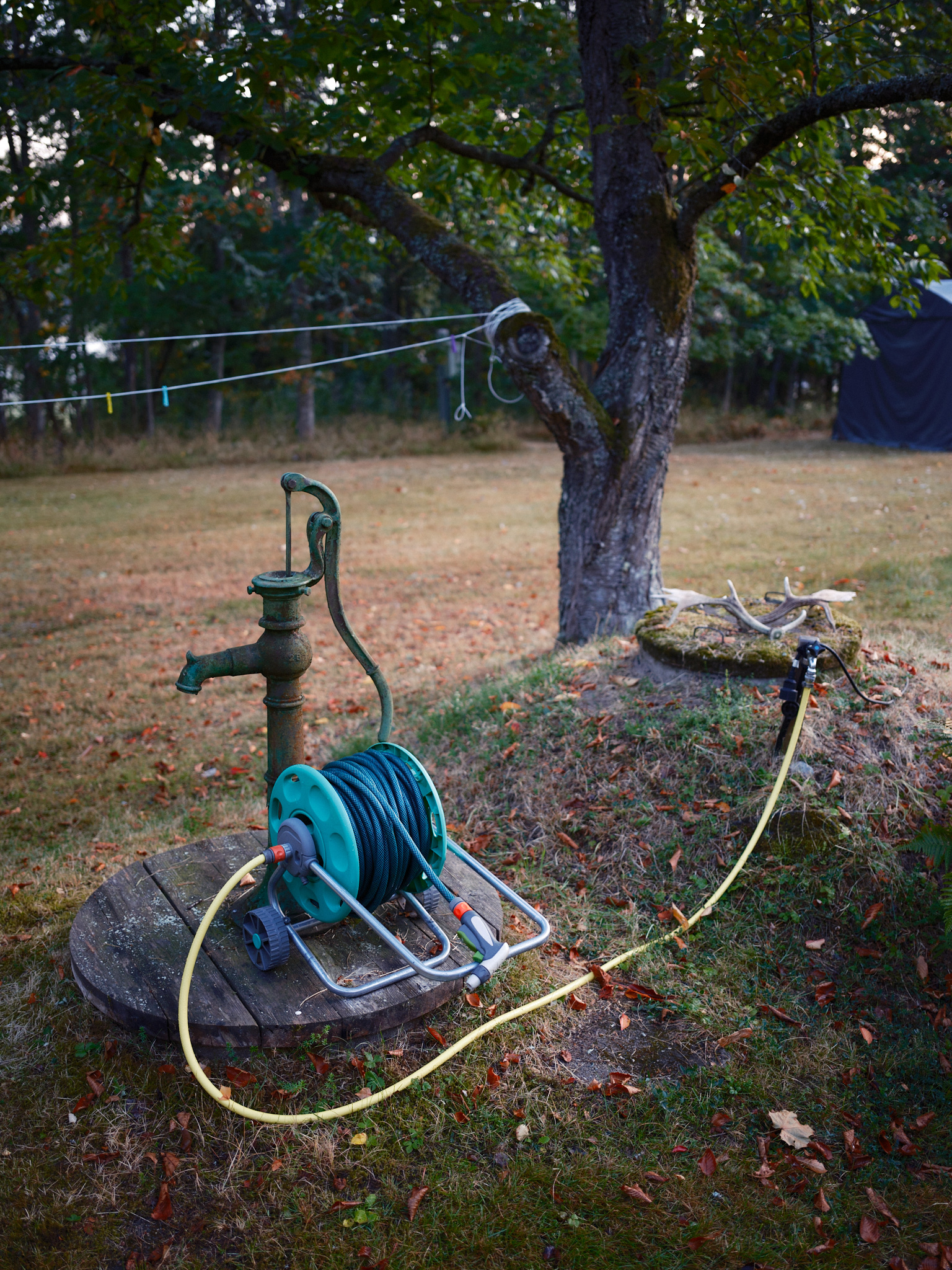
Very flat light, very unexciting subject, no composition to write home about. Still pretty "3D" to me.
I agree.
It would be interesting to see this scene photographed with the lens closed to f/4, side-by-side with the f/2.8 image.
I am wondering whether closing the lens to f/4 might have enhanced the effect (or not).
ruthenium wrote:
I cannot help wondering how a "lens input" can be seen without processing raw files?
Even in the case of minimalistic processing, when a raw file is demosaiced without further corrections, there is a curve applied on the raw data.
This curve can be different in different color profiles, and there are options and choices.
Does this part of processing count as a "correction"?
So much of the discussion on the previous pages involved considerations of "contrast" and "micro contrast."
Shall we agree that the "contrast" part is significantly due to the curve applied on the demosaiced data?
How about the Levels - this tool can have a major impact on image contrast. Is this allowed when evaluating a "lens input"?
Fundamentally, I see a technical problem of defining standard conditions and settings for comparing the "lens input" of different lenses. I confidently expect that independent processing of a raw file (with as minimal processing as possible) in Lightroom, Capture One, and DxO Photolab (or in-camera) shall give different results, with different contrast and micro contrast.
My point is that both the contrast and micro contrast in a processed image are overwhelmingly the products of processing.
The contribution of a lens is the DoF together with aberrations. The field of focus can be significantly distorted from being flat, in simple and complex (e.g., an inverted W-shape) ways. The DoF and aberrations and distortions can impact an image.
However, I doubt that "contrast" and "micro contrast," attributed to a lens, are that important, simply because these can be dramatically manipulated in post.
In general, when a 3D "pop" is reported in an image, I am inclined to think of that as 99% due to composition and processing, unless a specialty lens has been used that is known to contribute major aberrations. While exploring such lenses can be fun, I am in favour of advocating the development of compositional and raw processing skills as the more meaningful and productive mainstream way of achieving success in photography, than investing in a collection of lenses that have some "rendering."