Zichar wrote:
Wow David. I zoomed in and noticed the excavators looking like ants in the middle. Must be some pit...
Here are two more shots of the superpit in Kalgoorlie, NT, both taken with the 35-200mm ai-s Zoom Nikkor. Definitely the largest mine I've ever seen. Here are a few links about the superpit, but to answer Leighton's question earlier, "Barrick's share of gold production in 2016 was 376,000 ounces, at a cost of sales of $762 per ounce"...
Besides the 55 micro what are you looking for? I have some inventory I need to downsize.
Because of some off thread discussion I may have another lens on the horizon.
Hey George, as I said earlier, I'm back in Canada without a MF lens! I'd be interested in what inventory you might be letting go as I'd like to get back into posting more regularly....
dhamments wrote:
Hey George, as I said earlier, I'm back in Canada without a MF lens! I'd be interested in what inventory you might be letting go as I'd like to get back into posting more regularly....
Cheers and good light,
David
Let me get back with you later today. Will go through my stuff during lunch. I have a number of lenses I put on a "culling" shelf. If I haven't used them since last year they are fair game.
Philippe I really like the renaissance shots. Very nice!
Leighton $100k OMG !!! Still you re here and well!
Ken where was your roadtrip ?
David some colors and a beautiful mine.
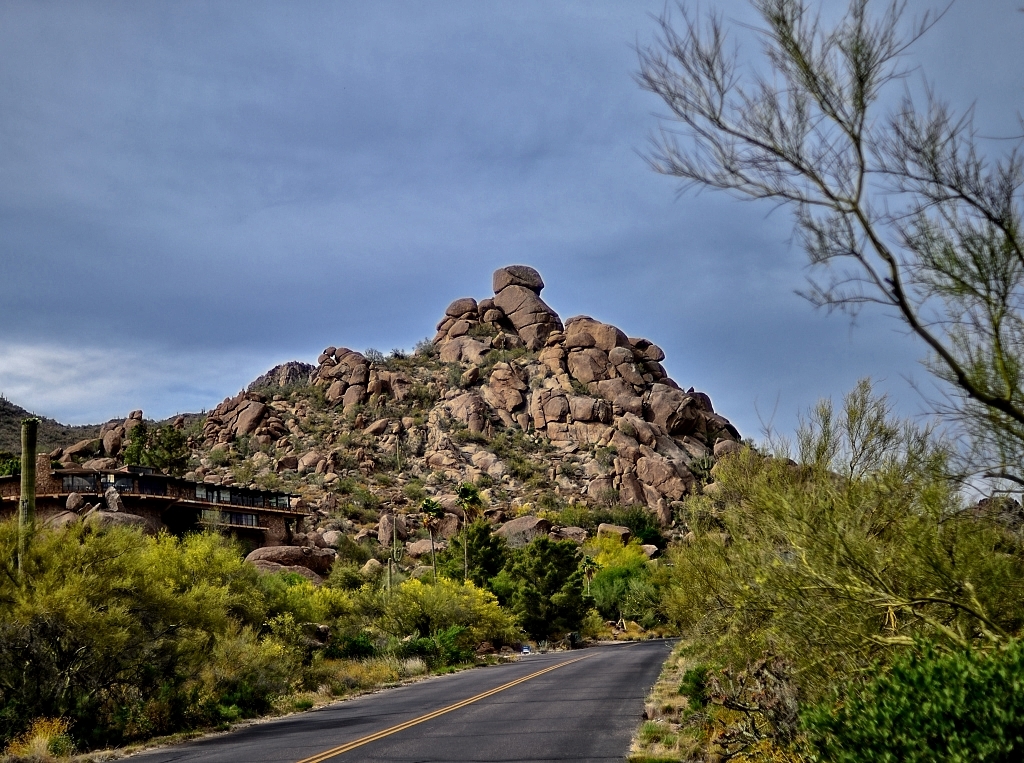
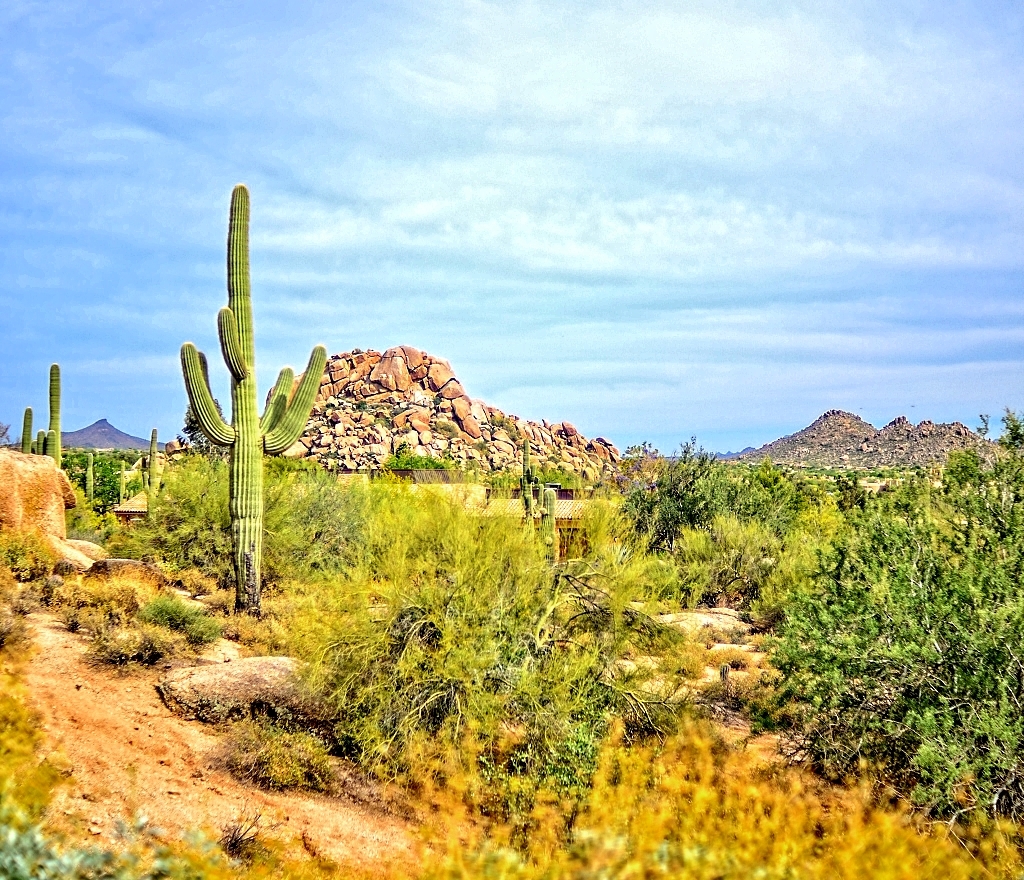
Here is a shot taken of a house that was built in the middle of a rock fall outside Scotsdale Arizona. I don't know if I'd sleep well with what was above me.
That appears to be a rather small exposure for astro shots - did you do that just to get those star bursts? I bet the lens isn't any shaper at f/11 than at f/5.6 or even f/4.0
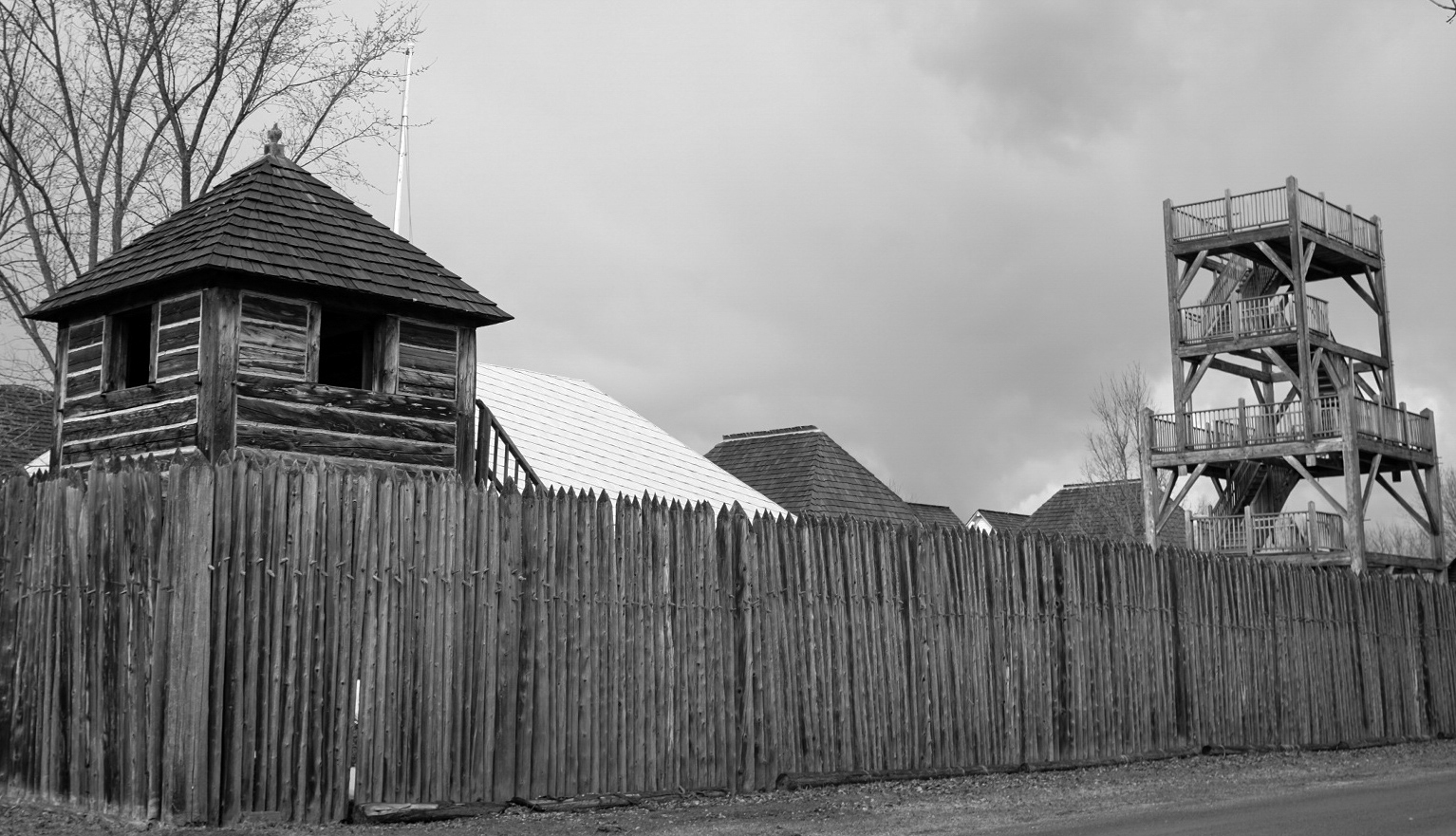
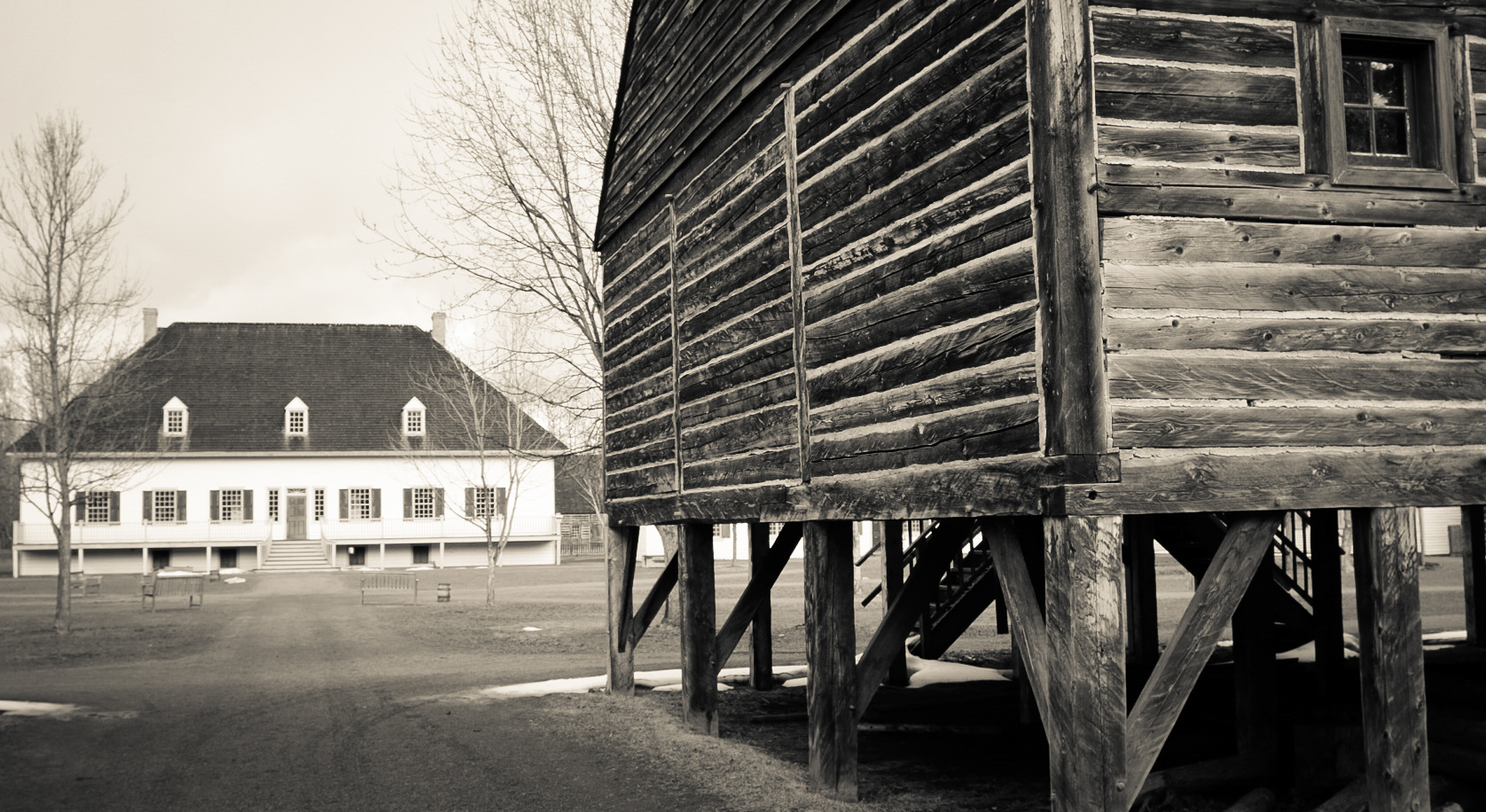
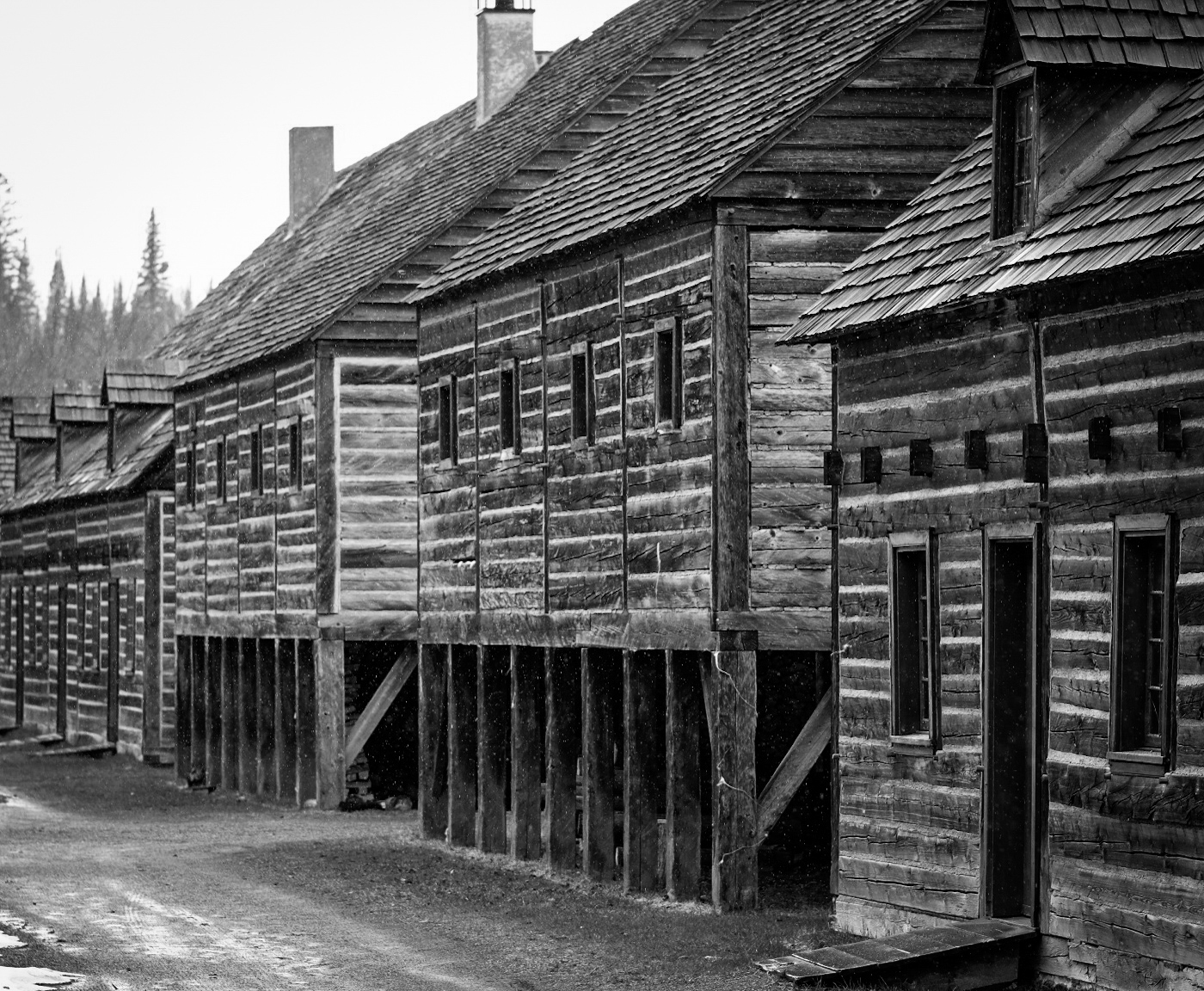
I'm loving this thread's posting pace these days, I must say! Here is a set of photos showing some building exteriors from Fort William, which is a national historic site in Thunder Bay, Ontario. It was a major fur trading post that was moved 9 km upriver (it was in the way of Thunder Bay) and reconstructed to replicate its form in the early 19th Century. Because we arrived there in the off-season, my wife and I were given a fantastic two-hour personal tour by a interpreter "flexible role-playing" (meaning that he would occasionally step out of his role to give us big-picture explanations and 21st Century understandings) the part of a lead voyageur named Ignace.
The wall around the post was built to keep out animals, not for defense against raiders or warriors. The buildings on stilts are grain warehouses; the stilts limit the extent to which vermin could get in and eat the people's food.
According to the Complete Nikon System book I have, the Micro Nikkor 55mm f/2.8 AI first production date of Dec 1979 Serial numbers begin with 179041.
Says the AIS version of the Micro Nikkor 55mm f/2.8 appeared in February 1980 with the beginning serial number 186211, although lower numbers are known.
A few grabshots and informations about the stuff needed to develop film at home. Please excuse the sloppy photography and my English.
That's what I use most of the time:
I usually develop two rolls of 135/36 together in a stainless-steel-tank. My copy is from Kindermann. Similar tanks are available new and used.
The pictured example will hold 2 reels filled with 35mm-film or a single reel for 120-type medium-format film in 16 fl oz (450ml) of developer.
I use 2 graduated jugs and 2 cheap funnel, each labeled for use of either developer or stop-bath/fixer. For larger tanks I have larger measuring-jugs, also 2 examples labeled/dedicated with a permanent-marker.
Many folks are using digital thermometers; I'm still happy with an old-style one ("Paterson Colour Thermometer", shown in the protective plastic tube at the bottom of the picture).
A cheap kitchen-timer is used to time the individual steps.
I prefer dedicated film-clips over clothespins.
The "Ilford"-thingy attached to the film-canister is a film-picker to get the leader out of a film-canister. Some people prefer to open the canister with a "bottle-opener-like" device. But this has to be done in the dark.
It's also possible to be careful when rewinding the exposed film into the canister to make the leader stay out.
My F5 can be set up to do this and at least one of my F90x (N90s) was programmed by the Nikon-Service to stop the rewinding-process after the "important part of the film" is back in the can.
I prefer plastic-bottles to store the stop-bath and the fixer, but glass-bottles for the developer.
To the chemicals needed do develop film at home:
The selection of different developers available today is fairly confusing. In most cases I use Kodak Xtol (most of the time diluted for one-shot-use) and Rodinal (the same receipt is available under different names).
But thats just a matter of personal preference. I stay away from expensive developers or stuff with a rather short shelf-life.
The stop-bath (to stop the development-process and to keep the following fixer longer alive) can be stuff from Ilford, Kodak, Adox or simple diluted citric-acid.
For low-strength-developers like highly diluted Rodinal a stop-bath is not really required - a couple of seconds in water are enough.
Today I prefer to use fairly high concentrated fixer and short fixing-times over the classic fixer mixed from powder. I use a two-stage fixing-process, more on this on request ;-)
After carefully rinsing the fixed film (still on the reels), including tanks, caps and my hands too I "wash" the films by filling the tank with tap-water, put the cap on again and inverse the tank like I did during the development.
5 inversions and a short rest-period, empty the tank, fill it with water again, this time 10 inversions and a couple of minutes rest.
And so on. Ilford recommends 3 cycles (if my memory serves) and I use 5-8 cycles with fresh tap-water, inversions and a resting time.
Exact timing is not needed here, you can do this while watching TV and change water/do some inversions during the commercial breaks ;-)
The final step is to give the film (still on the reels/spools) about 30 seconds or a minute (it doesn't matter at all) in distilled water.
After this final bath the film can be unwound from the reel and hung-up for drying.
An alternative to the classic stainless-steel-tanks are the plastic tanks and reels made by Jobo. The 1510 (bottom left) will hold one roll of 135/36 or two short rolls of 135/12.
The red clips is a simple stopping-device to protect the short films from overlapping.
The 1520 (bottom right) is for two reels of 35mm-film or one reel filled with 120-type-medium-format film. The reel/spool can hold a 220-type film or 2 120-type film (the red clip is really useful here too).
The 1540-tank is just a 1510 with extension-tube - for 4 reels of 35mm-fim.
And the fat tank is for 5 reels of 135/36, for sheet-film, for medium-format-film or a mixture of the different formats.
It's made to be used on a Jobo-processor or on a roller-base (I've used the big one a lot in the pre-digital-era).
The color-coded measuring graduates are from my Jobo-processor - I use the small 1510-tank with the dedicated graduates when I have to develop just a single roll of 135/36.
The Jobo-tanks can be filled and emptied much faster than my stainless-steel-tanks and loading the film onto the reels is faster for me too, but somehow I prefer the "haptic" of the stainless-steel-stuff.
I've used other brands of plastic-tanks too, but for me the Jobo-system is the "best in plastic".
To measure up Rodinal or other liquid developer-concentrate I use either a syringe or small measuring-graduates.
I've bought a set of "Kolbenhubpipetten" (sorry, couldn't resist to confuse the brave MFNG-folks
- that's a graduated piston pipette, not pictured here), but those things are to beautiful to be used in the lab ;-)
Please let me know if there are any questions. And I'm happy to edit the text above.
1st edit:
This very cheap rinsing-tub (from Ikea) can be used to organize/store the chemicals during the development. It could also serve as device to hold the bottles in a water-bath for temperature-control.
I place the tank during resting-periods next to the sink on a sponge cloth. This place is just occupied by fixing-trays right now ;-)
A sponge-cloth is always within reach. A towel for my hands and another for glass/plastic too.
I don't use beverage-bottles (and other stuff used in the kitchen) in the lab. The plastic-bottles from JOBO pictured here are hoarded old-stock and pretty expensive today. To use well-made bottles/measuring jugs and so on pays off on the long run.
I usually develop two rolls of 135/36 together in a stainless-steel-tank. My copy is from Kindermann. Similar tanks are available new and used.
The pictured example will hold 2 reels filled with 35mm-film or a single reel for 120-type medium-format film in 16 fl oz (450ml) of developer.
I use 2 graduated jugs and 2 cheap funnel, each labeled for use of either developer or stop-bath/fixer. For larger tanks I have larger measuring-jugs, also 2 examples labeled/dedicated with a permanent-marker.
Many folks are using digital thermometers; I'm still happy with an old-style one ("Paterson Colour Thermometer", shown in the protective plastic tube at the bottom of the picture).
A cheap kitchen-timer is used to time the individual steps.
I prefer dedicated film-clips over clothespins.
The "Ilford"-thingy attached to the film-canister is a film-picker to get the leader out of a film-canister. Some people prefer to open the canister with a "bottle-opener-like" device. But this has to be done in the dark.
It's also possible to be careful when rewinding the exposed film into the canister to make the leader stay out.
My F5 can be set up to do this and at least one of my F90x (N90s) was programmed by the Nikon-Service to stop the rewinding-process after the "important part of the film" is back in the can.
I prefer plastic-bottles to store the stop-bath and the fixer, but glass-bottles for the developer.
To the chemicals needed do develop film at home:
The selection of different developers available today is fairly confusing. In most cases I use Kodak Xtol (most of the time diluted for one-shot-use) and Rodinal (the same receipt is available under different names).
But thats just a matter of personal preference. I stay away from expensive developers or stuff with a rather short shelf-life.
The stop-bath (to stop the development-process and to keep the following fixer longer alive) can be stuff from Ilford, Kodak, Adox or simple diluted citric-acid.
For low-strength-developers like highly diluted Rodinal a stop-bath is not really required - a couple of seconds in water are enough.
Today I prefer to use fairly high concentrated fixer and short fixing-times over the classic fixer mixed from powder. I use a two-stage fixing-process, more on this on request ;-)
After carefully rinsing the fixed film (still on the reels), including tanks, caps and my hands too I "wash" the films by filling the tank with tap-water, put the cap on again and inverse the tank like I did during the development.
5 inversions and a short rest-period, empty the tank, fill it with water again, this time 10 inversions and a couple of minutes rest.
And so on. Ilford recommends 3 cycles (if my memory serves) and I use 5-8 cycles with fresh tap-water, inversions and a resting time.
Exact timing is not needed here, you can do this while watching TV and change water/do some inversions during the commercial breaks ;-)
The final step is to give the film (still on the reels/spools) about 30 seconds or a minute (it doesn't matter at all) in distilled water.
After this final bath the film can be unwound from the reel and hung-up for drying.
An alternative to the classic stainless-steel-tanks are the plastic tanks and reels made by Jobo. The 1510 (bottom left) will hold one roll of 135/36 or two short rolls of 135/12.
The red clips is a simple stopping-device to protect the short films from overlapping.
The 1520 (bottom right) is for two reels of 35mm-film or one reel filled with 120-type-medium-format film. The reel/spool can hold a 220-type film or 2 120-type film (the red clip is really useful here too).
The 1540-tank is just a 1510 with extension-tube - for 4 reels of 35mm-fim.
And the fat tank is for 5 reels of 135/36, for sheet-film, for medium-format-film or a mixture of the different formats.
It's made to be used on a Jobo-processor or on a roller-base (I've used the big one a lot in the pre-digital-era).
The color-coded measuring graduates are from my Jobo-processor - I use the small 1510-tank with the dedicated graduates when I have to develop just a single roll of 135/36.
The Jobo-tanks can be filled and emptied much faster than my stainless-steel-tanks and loading the film onto the reels is faster for me too, but somehow I prefer the "haptic" of the stainless-steel-stuff.
I've used other brands of plastic-tanks too, but for me the Jobo-system is the "best in plastic".
To measure up Rodinal or other liquid developer-concentrate I use either a syringe or small measuring-graduates.
I've bought a set of "Kolbenhubpipetten" (sorry, couldn't resist to confuse the brave MFNG-folks
- that's a graduated piston pipette, not pictured here), but those things are to beautiful to be used in the lab ;-)
Please let me know if there are any questions. And I'm happy to edit the text above.
gbohannon wrote:
According to the Complete Nikon System book I have, the Micro Nikkor 55mm f/2.8 AI first production date of Dec 1979 Serial numbers begin with 179041.
Says the AIS version of the Micro Nikkor 55mm f/2.8 appeared in February 1980 with the beginning serial number 186211, although lower numbers are known.
So there may be some AI versions out there?
G
I didn't even think to look in the book. I was going by the photosynthesis.com site.
dhamments wrote:
Hey George, as I said earlier, I'm back in Canada without a MF lens! I'd be interested in what inventory you might be letting go as I'd like to get back into posting more regularly....
Cheers and good light,
David
David - trying to remember what body you shoot, but assuming you are looking for AI/AI modified lenses only. I have the following AI/S lenses that I can part with. I have some Non-AI stuff too.
50mm f/1.8 Series E (good shooter)
50-135 f/3.5 (Leighton Lens). Body a little rough but optics great. Actually has a pretty tight zoom. Creeps some but not floppy loose. I have 3 copies of this lens. Don't ask
75-150 f/3.5 Series E - great shape, but classic loose zoom. Have the tape fix on it.
200mm f/4 AI - very good shape
dhamments wrote:
Here are two more shots of the superpit in Kalgoorlie, NT, both taken with the 35-200mm ai-s Zoom Nikkor. Definitely the largest mine I've ever seen. Here are a few links about the superpit, but to answer Leighton's question earlier, "Barrick's share of gold production in 2016 was 376,000 ounces, at a cost of sales of $762 per ounce"...