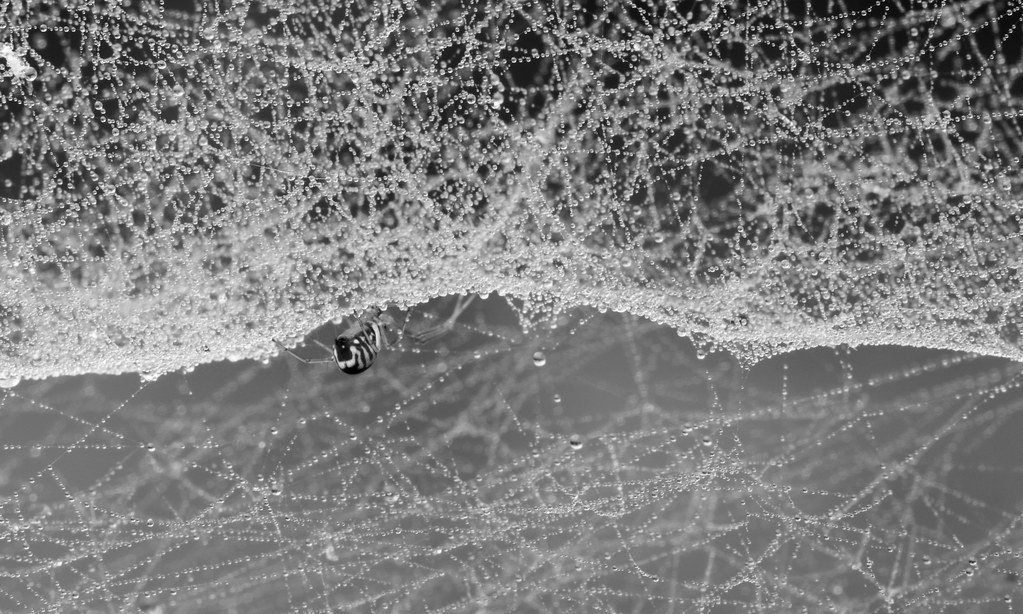
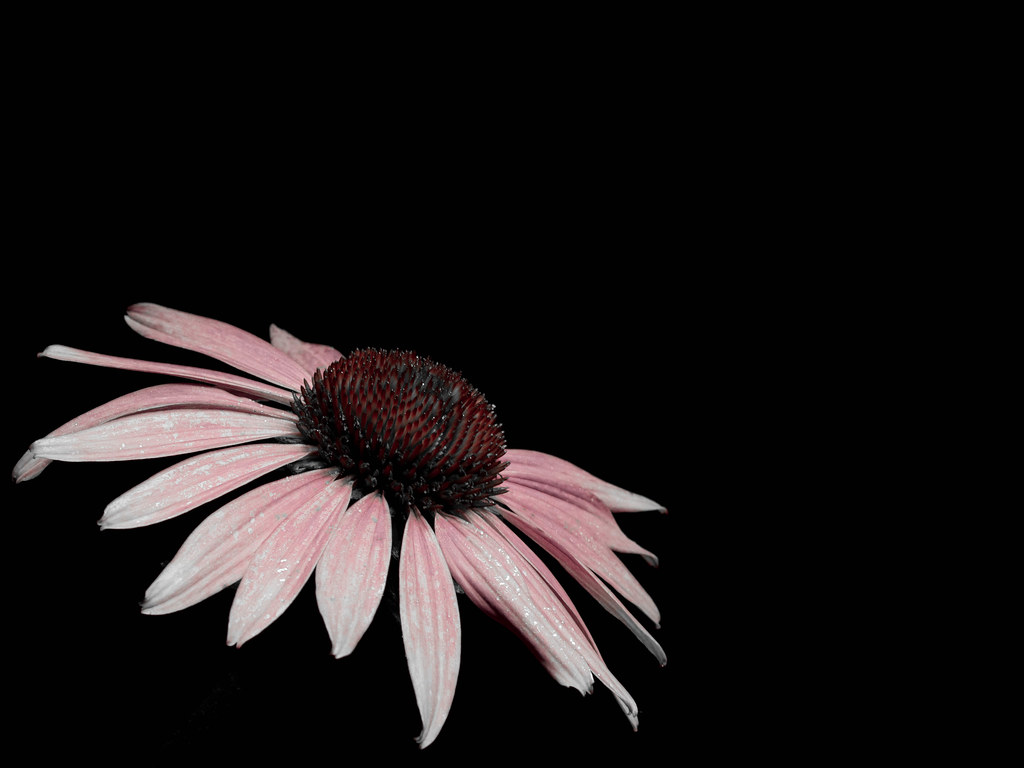
Long time no post. Just prove I still use R lens all the time.
These are with DF and all from recent, almost no process. You can see AF is not needed (not even works for some of images) for cases like this and manual focus is preferred. I don't need use EVF to focus case like this to get correct focus.(it gets in the way between me and scene PERSONALLY) I consider myself didn't miss focus in most cases, especially for images like these for family use, keeper is not defined by in focus but a flea moment. Before people give up manual focus on SLR and complain about focusing issue, I'd suggest spend some time improve skill. (especially for ones with good eyesight)
Very nice images. Good to see these fast lenses are being used as they are designed to be used, i.e. wide (or close to wide) open. I've never understood why people pay large premia for f/1.4 lenses only to use them at f/4. And what stunning lenses these are.
So I was wondering if anybody here would know if there are notable optical/coatings differences between late & early serial numbers of R lenses? Did Leica make undocumented changes over the years?
I've found some pretty good deals on the 50mm and 90mm Summicrons. They're in respectable condition, have clean optics, are 3-cam and the latest/2nd versions of the lenses, but have very early serial numbers (278xxxx and 283xxxx respectively).
According to this wiki: https://www.l-camera..._x_Focal_Length it would appear that those were in fact the first production year of the 50mm and 90mm summicrons making the ones I want to buy from 1976 and almost 40 years old.
So I was just wondering if people have ever noticed or if it's ever been reasonably inferred that the higher/later serial numbers of these lenses were improved over the years or had higher contrast, improved sharpness, etc.? Or if the the look and optics for the Leica R lenses were pretty consistent across their entire production span. Besides the addition of ROM contacts, I assume no optical changes were ever made to the latest version of R lenses, but sometimes the dedicated lens community will notice otherwise.
For example, it was well documented that certain Contax Zeiss lenses that were made in the 90s which had later serial numbers were noticeably sharper than the ones that had earlier serial numbers from the 70s-80s (I'm not talking about AE vs. MM; merely certain lenses like the 50mm f/1.7 got sharper over the course of it's production life).
I just want to make sure that regardless of the serial number for theses lenses, assuming the optics and body are in good condition, that I will be able to get the same image quality from an early serial numbered lens as a late one. So basically, assuming you had a mint copy of a 50mm summicron from the 70s and a mint copy from the late 90s, pictures taken with the two lenses should look practically identically in terms of color, sharpness, CA, etc.?
It depends on the specific lens, due to a number of factors:
* most lenses were made in batches: sometimes many years would pass before a new lens run was ordered, due to supply and demand
* lens design and assembly complexity: sometimes you get improvements in IQ based on just better assembly and QA through natural process improvements
* glass sourcing: was a design around long enough that some glass(es) became unavailable, thereby requiring a slight design change/tweak?
* same idea again, but it's now been, say, 20+ years since the last batch of elements was made, so you can't replicate the original coating even if you wanted to?
And so on.
You basically need to read up on each individual lens and find out its history, production run(s), and various other minutiae to get a good idea of how it'll perform between decades of manufacture.
Now, there are a few better known ones, like the Elmarit-R 2.8/24. Or the Super-Angulon-R 2.8/28, since they were made by Schneider-Kreuznach, and only the top-binned ones picked by Leica. (It gets worse with the cheaper zooms, which were sometimes outsourced to multiple parties, like Sigma or Kyocera for the same design/lens designation.)
Then there's some which, essentially had no need for any changes, and some users have actually reported a slight drop in quality between the 70s versions and the late 90s last-batch-runs, like the Apo-Macro-Elmarit-R 2.8/100.
Edit: To clarify: The Super-Angulon-R was made by Schneider. The Elmarit-R 2.8/24 was not, as it was a Minolta design assembled by Leica. That being said, the Elmarit-R 2.8/24 is known to have "improved" between the 70s runs and the 90s runs.
It depends on the specific lens, due to a number of factors:
* most lenses were made in batches: sometimes many years would pass before a new lens run was ordered, due to supply and demand
* lens design and assembly complexity: sometimes you get improvements in IQ based on just better assembly and QA through natural process improvements
* glass sourcing: was a design around long enough that some glass(es) became unavailable, thereby requiring a slight design change/tweak?
* same idea again, but it's now been, say, 20+ years since the last batch of elements was made, so you can't replicate the original coating even if you wanted to?
And so on.
You basically need to read up on each individual lens and find out its history, production run(s), and various other minutiae to get a good idea of how it'll perform between decades of manufacture.
Now, there are a few better known ones, like the Elmarit-R 2.8/24. Or the Super-Angulon-R 2.8/28, since they were made by Schneider-Kreuznach, and only the top-binned ones picked by Leica. (It gets worse with the cheaper zooms, which were sometimes outsourced to multiple parties, like Sigma or Kyocera for the same design/lens designation.)
Then there's some which, essentially had no need for any changes, and some users have actually reported a slight drop in quality between the 70s versions and the late 90s last-batch-runs, like the Apo-Macro-Elmarit-R 2.8/100.
Edit: To clarify: The Super-Angulon-R was made by Schneider. The Elmarit-R 2.8/24 was not, as it was a Minolta design assembled by Leica. That being said, the Elmarit-R 2.8/24 is known to have "improved" between the 70s runs and the 90s runs....Show more →
Wow you definitely gave me a lot to consider haha. I'll start reading up on the 50mm and 90mm Summicrons then. Intuition tells me that since those 2 lenses were so popular, that manufacturing for them probably didn't change over the years, but who knows.
So with regards to the 100mm f/2.8 Macro, I shouldn't go for models that were made in the 90s? That's good to know!
bigbuddha319 wrote:
So with regards to the 100mm f/2.8 Macro, I shouldn't go for models that were made in the 90s? That's good to know!
I've only got that feedback from one, possible two, people. I have yet to test it out for myself. I would be surprised if there was any practical difference in application. If anything, the late runs that had a ROM (cat 11 352) hold resale value better.
bigbuddha319 wrote:
So with regards to the 100mm f/2.8 Macro, I shouldn't go for models that were made in the 90s? That's good to know!
I'm traveling without it so I can't be sure but I believe my stellar copy is early 90's. You'd need a lot of data points to be sure about something like this, though. Also, they were almost all made in the 90's as you can see here.
am a sony a7rIII an A9 shooter and have literally every top lens Sony, Zeiss make for it and have been wanting to try a Leica 100 or 180 that I hear so much about and have went through many of these pictures 314 315 & 316 and they seem drab.
It is almost like there is a filter or haze between the image making it non vibrant or no POP is that the Leica look and an acquired taste or what am I missing?
Everyone of these looks like someone took hue or saturation and backed them off a fair bit. I am used to images like this sample.
Now that I am seen my own on these low rez files I see that i much of the problem I use a 5k Mac and save my files at 5120 pixels. But even these samples are more vibrant and alive than the ones I see in 314, 315 & 316
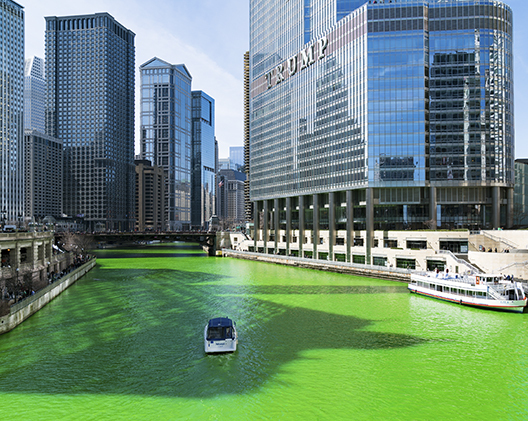
BTW the Chicago river on St Pats day was as shot other than a smart sharpen no color adjustments I know that is hard to believe but its true that shot just popped.