hulk2006 wrote:
I have a question regarding exposing for slide film. I keep reading about exposing for highlights for slide film and for the shadows with negative film. In my last post I showed two photos taken with negative film where I metered the darkest, lightest and mid tone of the scene with a light meter and averaged them out and used that for my shot.
So with slide film, instead of just metering the brightest area of the scene, should I average all three parts of the scene just like I've down with negative film or should I really just meter the brightest scene and go with that? I'm going to be shooting with Velvia 100 120 film....Show more →
Slide film typically has 5 stops latitude, 2 1/3 in the highlights and 2 2/3 in the shadows. Any detail exposed at above or below that will be lost. The best way to measure exposure is to take a spot reading of the brightest area in the scene and overexpose that by 2 stops, then measure a middle range area, and you should get a similar exposure value. If not, give the highlights priority. Or else, you can take an incident light reading and pray for the best (that’s what I do). Most meter brands are calibrated for slide film anyway. Sekonic for instance calibrates its meters for a 12% middle gray instead of 18%.
hulk2006 wrote:
I have a question regarding exposing for slide film. I keep reading about exposing for highlights for slide film and for the shadows with negative film. In my last post I showed two photos taken with negative film where I metered the darkest, lightest and mid tone of the scene with a light meter and averaged them out and used that for my shot.
So with slide film, instead of just metering the brightest area of the scene, should I average all three parts of the scene just like I've down with negative film or should I really just meter the brightest scene and go with that? I'm going to be shooting with Velvia 100 120 film....Show more →
Edward is right on here. Myself, I use 4 stops latitude as a general rule. Stretching that on either end can result in wonky colors that can be super diffiult to correct. I meter highlights, meter the shadows, and figure out how many stops difference in that range. If it is more than 4 stops, you need to pick which is more important to you - shadow detail or maintaining highlights. I feel that highlights are almost always more important for me to control. BTW - your last exposures look really good to me!
Gary Clennan wrote:
Edward is right on here. Myself, I use 4 stops latitude as a general rule. Stretching that on either end can result in wonky colors that can be super diffiult to correct. I meter highlights, meter the shadows, and figure out how many stops difference in that range. If it is more than 4 stops, you need to pick which is more important to you - shadow detail or maintaining highlights. I feel that highlights are almost always more important for me to control. BTW - your last exposures look really good to me!
You are right about the 4 stops Gary. Most consumer scanners cannot see into the last stop in the shadows, so if you shoot for a particular scanner you have to take its abilities in consideration. Luckily my Nikon Coolscan V can see in the deepest of shadows, so scanning slide film is easy and straightforward.
Thanks everyone for the advice on slide film. I have a couple more questions I'd like to ask just to confirm that I am getting the idea about shooting film.
You guys say to measure the highlights and add two stops to that.
So to clarify if the meter reads for example f5.6, I would set the camera to 2.8? Or if the meter reads f8 I set the camera to f4? This sound rather easy but confusing at the same time because I think my camera's lens starts at 3.5.
To make it easier couldn't I just set the ISO on my meter to 400? I'm going to be shooting Velvia 100, so if I add two stop to that I go 100--->200--->400. Then I can just meter the highlights and not worry about adding two stops and then developing normally.
This is sort of what I've been doing with my FUJI GA645 which has a built in meter. When using B&W film (ISO 400 for example) I shoot normally with it but for the photos where I use a yellow filter (ND2) I set the ISO on the camera to 200 (one stop) just for that one shot and when I take off the filter for the next shot I set the ISO back to 400. This is a correct method yes?
hulk2006 wrote:
Thanks everyone for the advice on slide film. I have a couple more questions I'd like to ask just to confirm that I am getting the idea about shooting film.
You guys say to measure the highlights and add two stops to that.
So to clarify if the meter reads for example f5.6, I would set the camera to 2.8? Or if the meter reads f8 I set the camera to f4? This sound rather easy but confusing at the same time because I think my camera's lens starts at 3.5.
To make it easier couldn't I just set the ISO on my meter to 400? I'm going to be shooting Velvia 100, so if I add two stop to that I go 100--->200--->400. Then I can just meter the highlights and not worry about adding two stops and then developing normally.
This is sort of what I've been doing with my FUJI GA645 which has a built in meter. When using B&W film (ISO 400 for example) I shoot normally with it but for the photos where I use a yellow filter (ND2) I set the ISO on the camera to 200 (one stop) just for that one shot and when I take off the filter for the next shot I set the ISO back to 400. This is a correct method yes? ...Show more →
You can’t measure the highlights without a spotmeter. As I mentioned, you can also use an incident light meter. If you absolutely want to use the camera meter, just take a reading off a grey card. In many instances I just set the camera on auto, which gives me acceptable results.
I plan on using Velvia 100 with both of my cameras. On the FUJI GA645 I'm just going to use the automatic exposure but with the FUJI GW690III I plan on using the spot meter since the camera has no built in meter.
I plan on using Velvia 100 with both of my cameras. On the FUJI GA645 I'm just going to use the automatic exposure but with the FUJI GW690III I plan on using the spot meter since the camera has no built in meter.
Then, you’re all set!
Take two readings, one for the highlights and one for the midtones. Use the midtones reading as long as highlights do not exceed + 2 1/3 stops. Adjust accordingly. In contrasty light, some highlights will be inevitably burned out, so you will have to decide which highlights are important for the scene. It’s much easier than it sounds. You should have no problem.
Minolta Prod20-S, Fuji C200, D850 scan, LR processing. Not sure if I like the colour version or the B&W more. Input from my fantastic fellow film freaks?
Desmolicious wrote:
Minolta Prod20-S, Fuji C200, D850 scan, LR processing. Not sure if I like the colour version or the B&W more. Input from my fantastic fellow film freaks?
Desmolicious wrote:
Minolta Prod20-S, Fuji C200, D850 scan, LR processing. Not sure if I like the colour version or the B&W more. Input from my fantastic fellow film freaks?
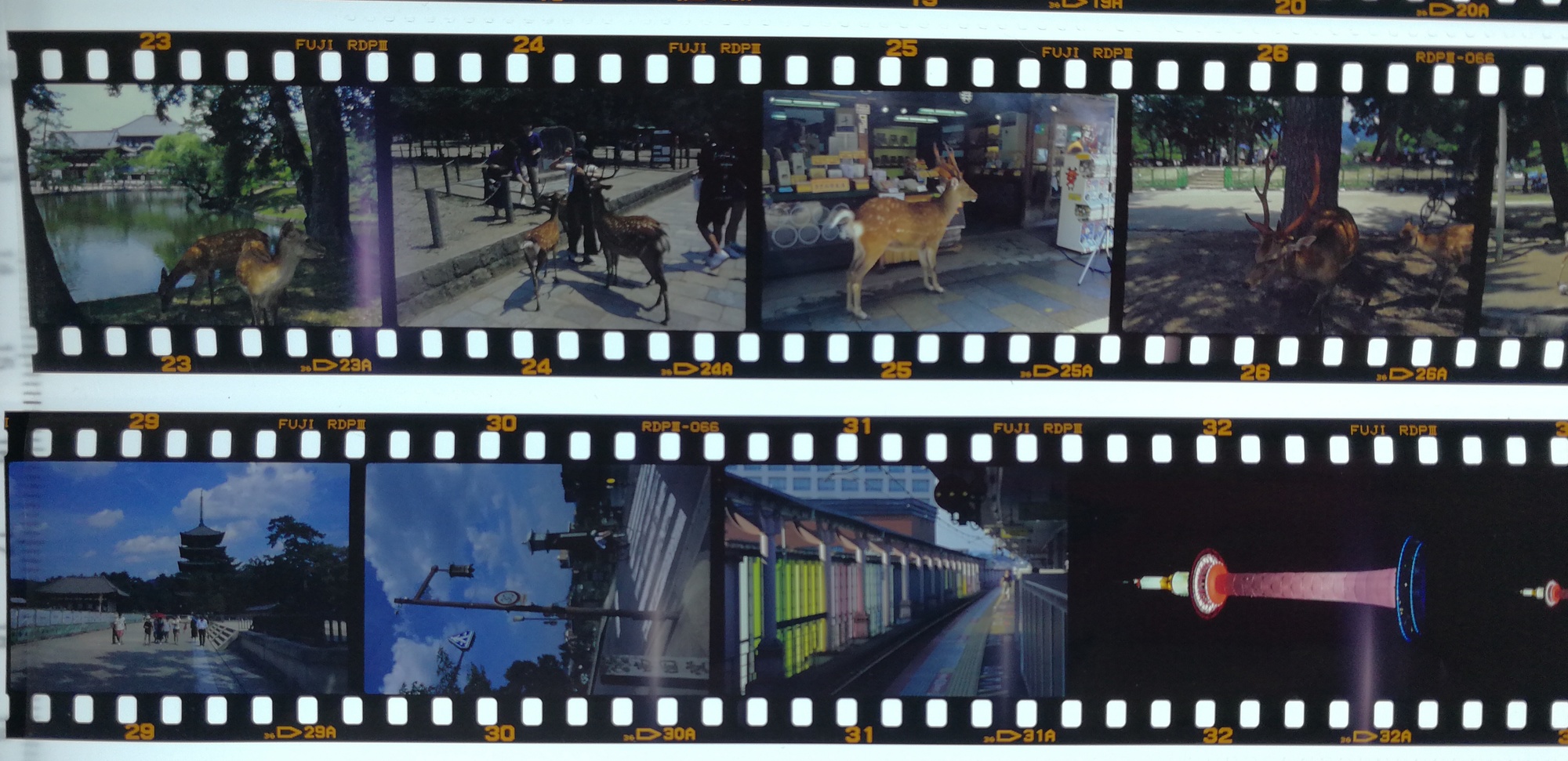
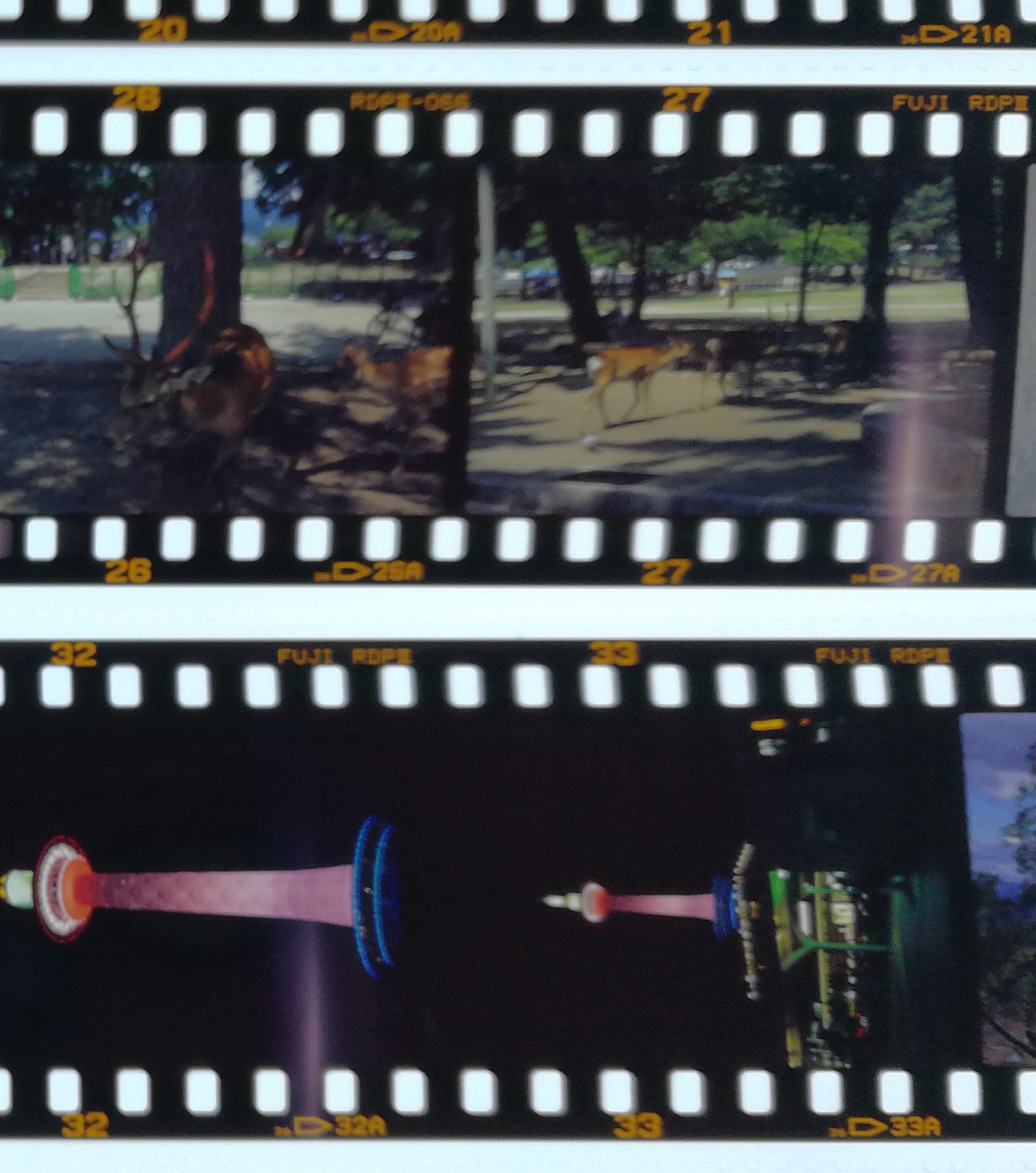
The attached is a straight phonecam pic of slides I had developed recently.
They are from a Pentax ME Super on which I replaced light seals and mirror damper. A B&W film showed no issues however you can see on Frames 23, 27 and 32 of the attached that there seems to be a light leak.
What's the collective wisdom as to what might be causing this? Shutter speed- dependant perhaps?
TIA
David
Fuji Provia 100. Pentax ME Super. FA31 and 77 f/1.8 lenses.
It could be shutter blade leak, David. It’s difficult to know but you should be able to inspect it in a darkened room and a flashlight. A light seal is also possible. Sometimes the leak will show more when you are outdoors and are not shooting continuously. The longer the frame stays in place the stronger the light leak.