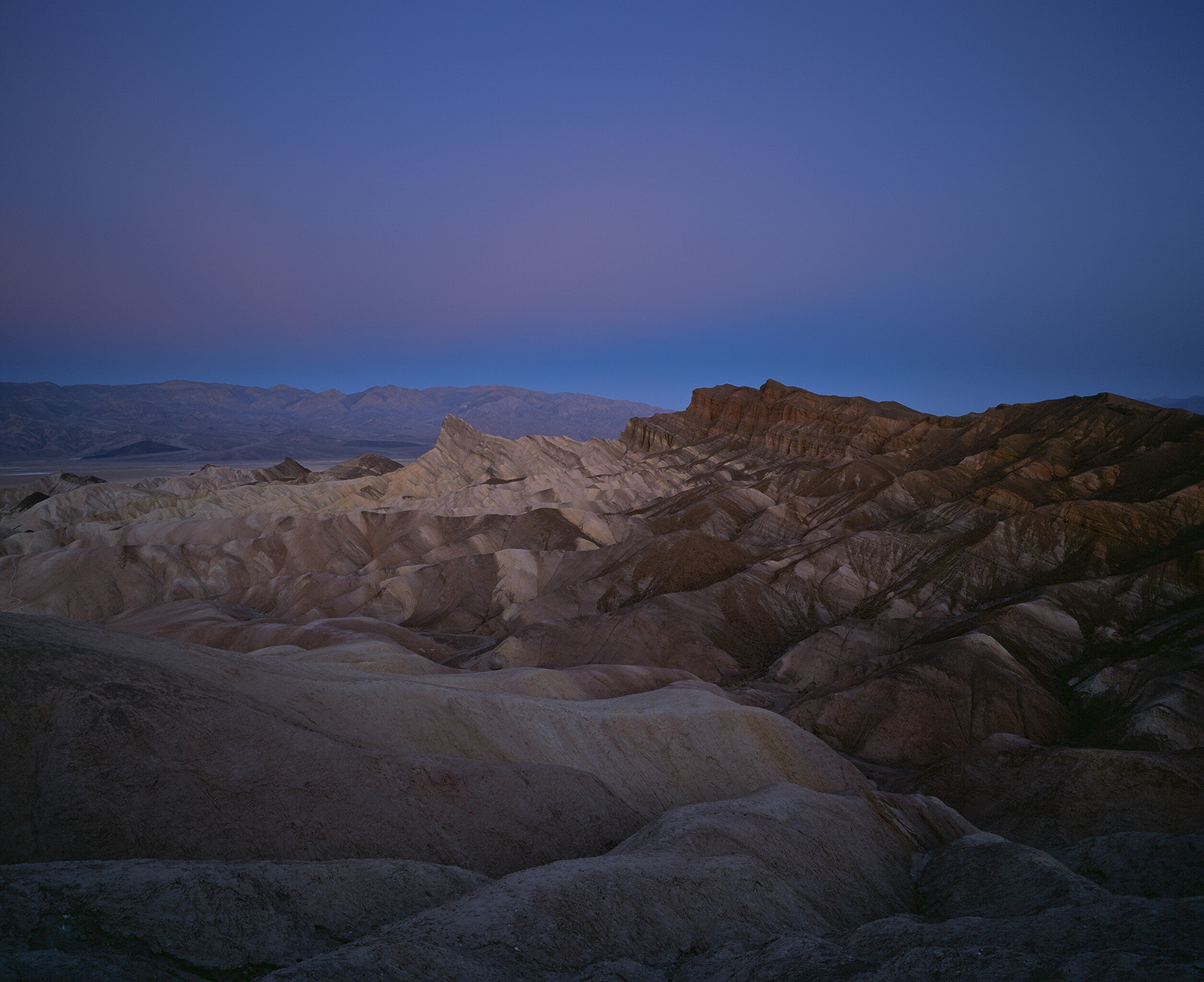
- I have shot Portra 400 at 800 and it looks great. I may have a 1600 roll or too - it can look good it just depends on the scene.
- Love Death Valley. I shot this scene in Feb of 2012 on Velvia from a slightly different vantage point - however probably 25-30 minutes before you when the sky was purple just as the sun started to poke out. You may have needed to start a little earlier to get both the sky and FG into slide film's comfort zone.
- Incidentally the exposure blend is interesting and a cool look but a little visually confusing since you have golden light on the mid-distance terrain but it looks like late morning off in the distance and in the sky....Show more →
Thanks for the comments.
I think was within the lattitude w/Provia BUT metered 2 stops to much open.
I just wasn't paying attention I guess.
Thanks for pointing out the difference in lighting! I wondered about that...
What do you think, 1 or two stops??
dswiger wrote:
Thanks for the comments.
I think was within the lattitude w/Provia BUT metered 2 stops to much open.
I just wasn't paying attention I guess.
Thanks for pointing out the difference in lighting! I wondered about that...
What do you think, 1 or two stops??
Dan
Not really sure what you're asking. Maybe this explanation and picture will help:
Here's an image I took that I referenced above - it's a straight lab (Noritsu) scan. Even though you can usually dig a lot of detail out of Velvia scans with several passes, or with a drum scan, I usually shoot it with the assumption I'll get 5ish stops. If Zone 1 is the darkest shadows and Zone 5 is the brightest highlights, I probably metered this one for the mountains in the distance to be Zone 3.
If I were scanning this today, I'd probably remove some of the blues on the terrain and add back some warmth, then darken the sky and start to play with the tonal contrasts globally and then specifically in the foreground, where there's a lot of interesting detail.
dswiger wrote:
Really like the feel of these. I've been trying to do this with stiches of film with some success. But a Pano camera does sound intriguing.
I've been looking at 35mm options for the Mamiya 7 & picked up the kit that was for the Mamiya 6 but everything fits, except the mask.
Thanks
Dan
Thanks Dan.
I think what makes a single frame pano camera like this unique is framing the whole scene at once in-camera. I've tried stitching images, and cropping images after the fact, but the experience and often the result is different.
I'm still trying to learn how to use it properly, but I'm warming up to it.
More nice colors here...I like how you are including not only the border, but more....a reminder that this is a physical print...something rare these days.
I read on another forum that even FP100C is being discontinued...looks like I need to buy a few more packs before the price skyrockets. Makes me sad because I really enjoy my Polaroid. I even bought one to convert to using a faster, large format lens...I may not even do that now.
corposant wrote:
Not really sure what you're asking. Maybe this explanation and picture will help:
Here's an image I took that I referenced above - it's a straight lab (Noritsu) scan. Even though you can usually dig a lot of detail out of Velvia scans with several passes, or with a drum scan, I usually shoot it with the assumption I'll get 5ish stops. If Zone 1 is the darkest shadows and Zone 5 is the brightest highlights, I probably metered this one for the mountains in the distance to be Zone 3.
If I were scanning this today, I'd probably remove some of the blues on the terrain and add back some warmth, then darken the sky and start to play with the tonal contrasts globally and then specifically in the foreground, where there's a lot of interesting detail.
That's OK, I think your explanation of metering clarifys it.
I do prefer your earlier shot
I had the Mamiya 7 & 43mm with me too, maybe I should have used it (jk)
astrodave wrote:
More nice colors here...I like how you are including not only the border, but more....a reminder that this is a physical print...something rare these days.
I read on another forum that even FP100C is being discontinued...looks like I need to buy a few more packs before the price skyrockets. Makes me sad because I really enjoy my Polaroid. I even bought one to convert to using a faster, large format lens...I may not even do that now.
Thanks a lot. Unfortunately, that rumor is true; Fuji is discontinuing FP-100c. It makes me sad, but I made an order to grab a handful of packs to shoot. FP-3000B was discontinued 2 years ago and you can still buy packs (but they are getting outlandishly expensive), so I suppose I have about 2 more years unless someone like impossible picks up the peel a part film market. Currently I'm researching ways to use Instax Wide in a large format camera since that seems to be the most affordable option moving forward.
VTHokiEE06 wrote:
Thanks a lot. Unfortunately, that rumor is true; Fuji is discontinuing FP-100c. It makes me sad, but I made an order to grab a handful of packs to shoot. FP-3000B was discontinued 2 years ago and you can still buy packs (but they are getting outlandishly expensive), so I suppose I have about 2 more years unless someone like impossible picks up the peel a part film market. Currently I'm researching ways to use Instax Wide in a large format camera since that seems to be the most affordable option moving forward.
I just bought a few more packs from B&H at $10 each (backordered)....already at $20 on Amazon. I've got several packs already in the fridge (as well as about 6 packs of the 3000B).
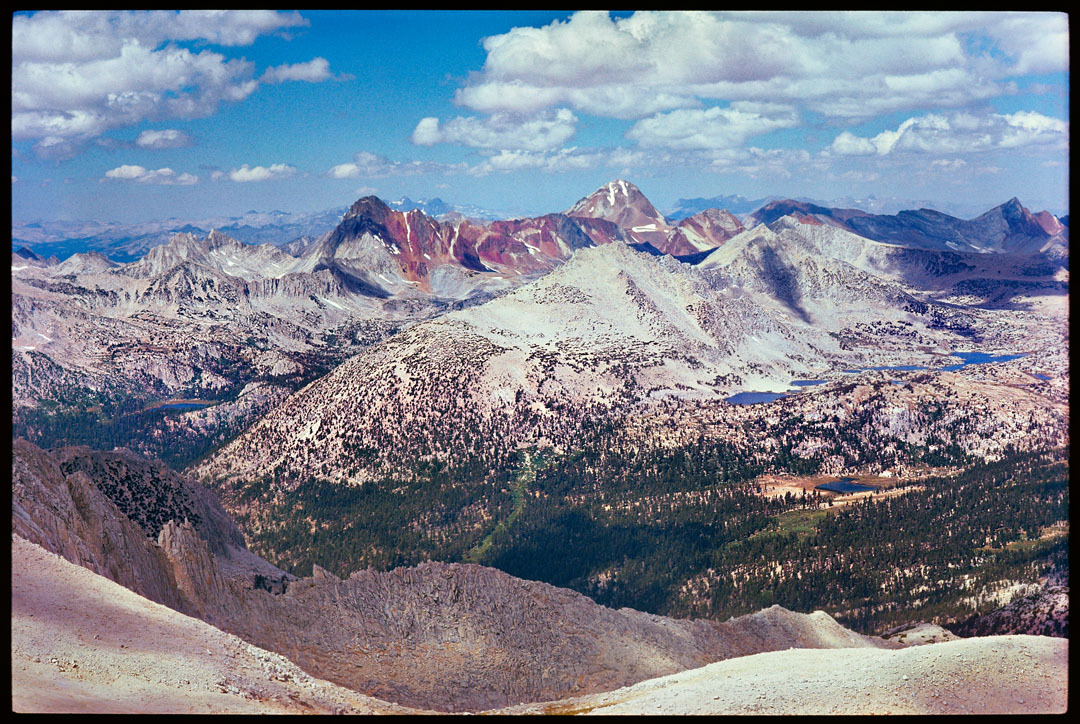
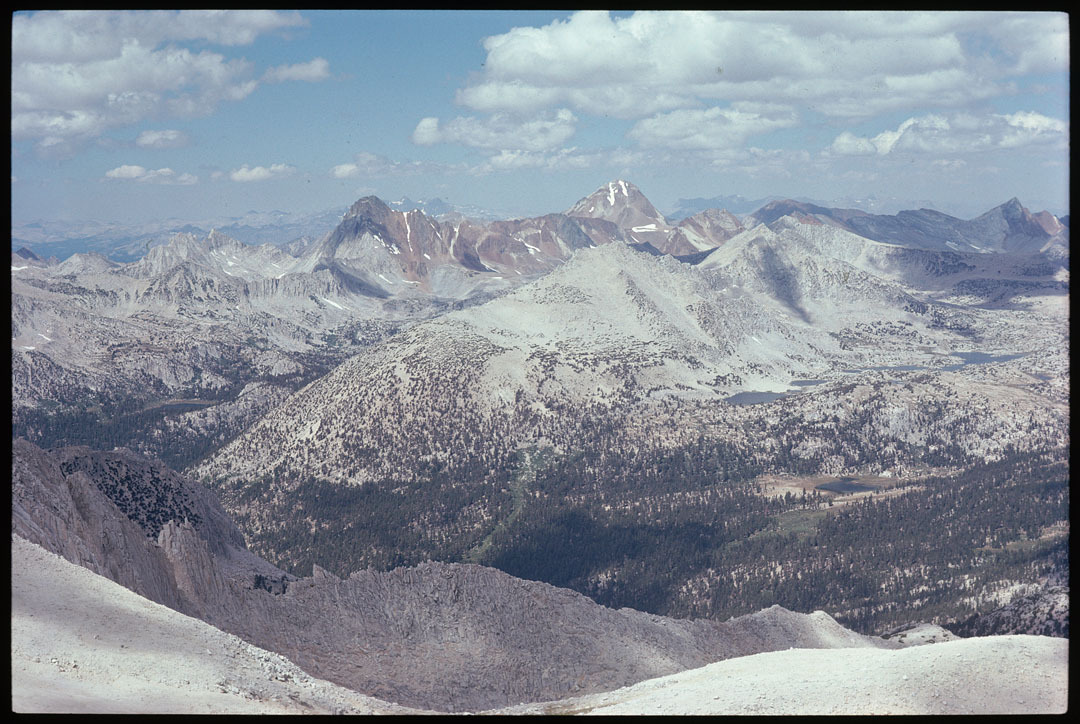
Cleaning out the back bedroom last week I came across a box full of old film. Here's a Kodachrome scan from a backpacking trip in the southern Sierras in 1974. Funny thing is that Kodak's processing (and that was all you could get then) was so hit or miss, you never knew if you were going to get fabulous looking slides or the flat monotone that this once was. If anyone recognizes where this is, please let me know. I'm thinking it's in the Mineral King area, but I really don't know. Both versions are here. Drum scanned on the Howtek.


 ).
).