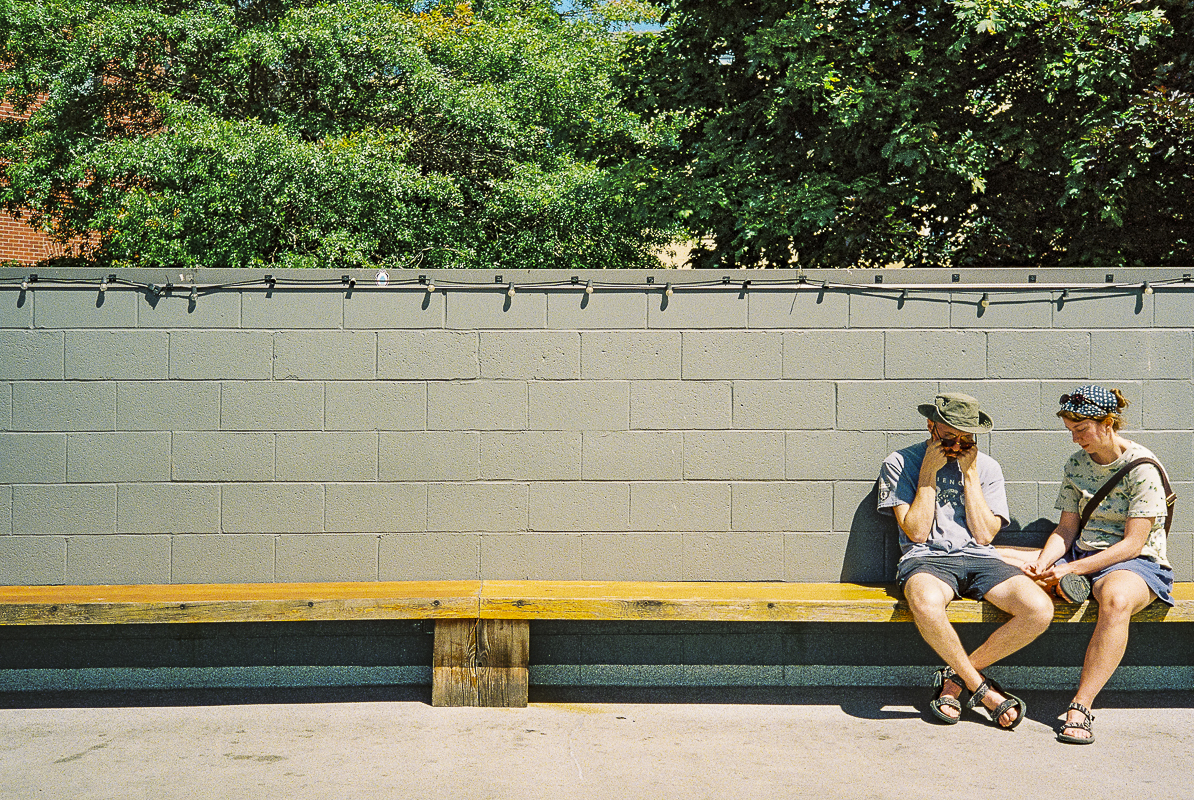
OregonSun wrote:
Nice, thanks for reminding me I need to use my pinhole camera more
I've been discovering the barriers to using a pinhole camera vary by season; both are related to having to stand around while the (typically long) exposure is being taken. In winter, the barrier is cold. In summer the barrier is mosquitoes.
The power of a leaf shutter! I was just recently thinking how underrated fill flash and leaf shutters are today. Need to use it more on the Minilux (and LX3 and GR IIIx 😅 )
First copy at home 35mm Contax RTSiii Zeiss 100mm Makro Planar Ektar 100 @ISO 80 and a bit too much Lightroom. A couple of images from around the house… I was a bit surprised at the resolution for a 35mm negative.
Roll 189: Curve for Kodak 2422. The data are not that great, and this is partly because I only have short rolls of this stuff. But these limited data are consistent with my previous observation that ISO 0.1 is about right. The data suggest that the actual speed is ISO 0.14.
I assumed ISO 0.1 and shot 5 frames: +10, +2, +1, -1, and -2. I used the end of the roll to measure the opacity of a blank exposure. Only the +2, +1, -1, and -2 were used in the curve fit below.
I assume that the film ISO is defined by where Zone 5 (a normal exposure) gives me a density exactly half way between transparent (+10) and opaque. The answer (-0.6) means that the film is 0.6 stops faster than metered, which I will round to 0.5 stops faster than metered, so ISO 0.14.
Took my Canon EOS 300 with the 35mm F2 IS on a business trip, loaded with a self spooled Fomapan 200 at ISO 400. Developed in Kodak HC110 for 7:10min in Dilution B. Grain is way better than thought, but contrast is a bit too high. Next time would try in Rodinal Stand Dev, and once the 17m roll is done, I would be switching to Kentmere 400 and control contrast in post.