Post your recent film shots!
p.1364 #1Post your recent film shots!
UC Davis, California. The London phone booth at the main campus bus terminal is a nod to the London double decker buses that Unitrans, the local transit system, operates. Unitrans is the only transit company in the United States to use authentic London double deck buses in daily service.
Nikon FM2n, AI Nikkor 50mm f/1.8S, Kentmere Pan 400, developed in LegacyPro L110 at 1:31 for 5.5 minutes.

2024.01.14 Roll #348-08506-positive.jpg by dourbalistar, on Flickr
Nikon FM2n, AI Nikkor 50mm f/1.8S, Kentmere Pan 400, developed in LegacyPro L110 at 1:31 for 5.5 minutes.
2024.01.14 Roll #348-08506-positive.jpg by dourbalistar, on Flickr
Dec 07, 2024 at 06:00 PM


p.1364 #5Post your recent film shots!
Digging the vibes you are getting with E100 Heron.
Minolta XD + Rokkor 58/1.2 + Ilford Pan F 50+
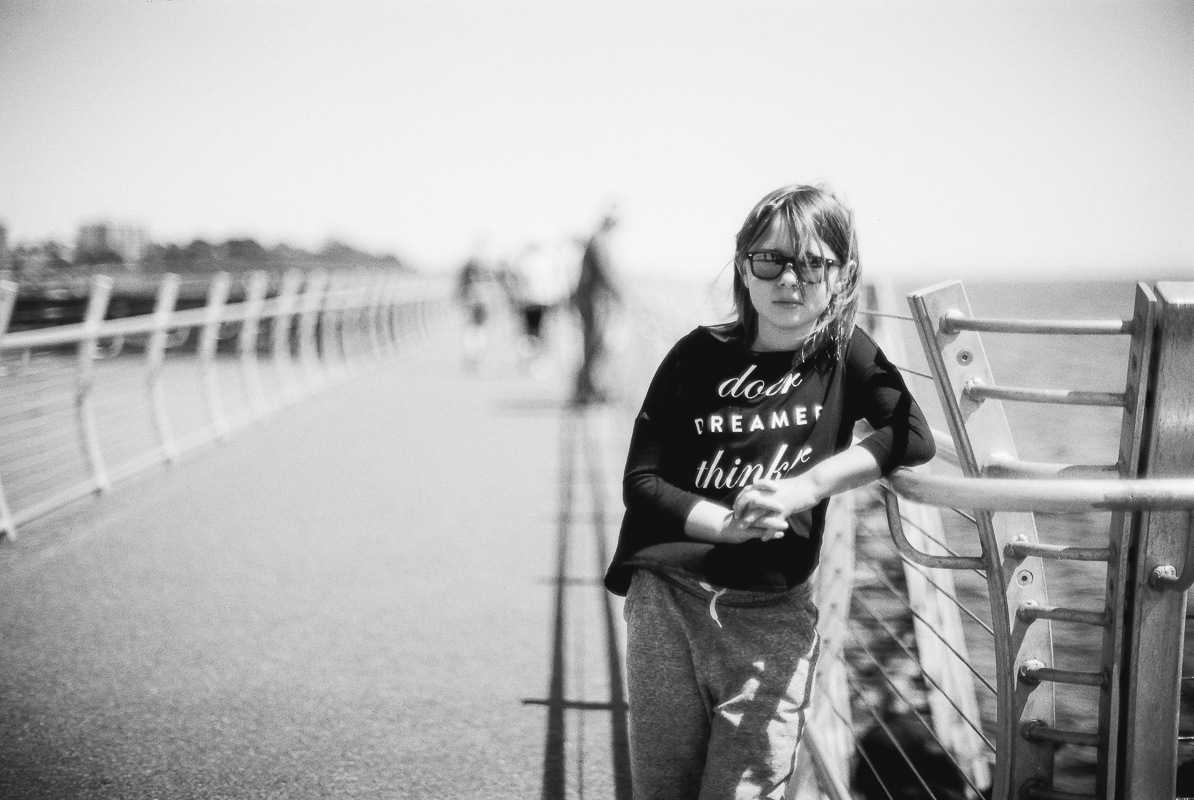
Edited on Dec 07, 2024 at 06:40 PM · View previous versions
Minolta XD + Rokkor 58/1.2 + Ilford Pan F 50+
Edited on Dec 07, 2024 at 06:40 PM · View previous versions
Dec 07, 2024 at 06:37 PM

p.1364 #7Post your recent film shots!
@Desmolicious Huss how many rolls of film a year have you averaged for the last decade do you think? And, great shot too--color pops.
Dec 07, 2024 at 06:47 PM


p.1364 #9Post your recent film shots!
BPsmith511 wrote:
How are you enjoying the M7? I know @Desmolicious@ likes his - I am debating between that or an M6 reissue at the moment.
I love mine, I have two. I've had all the film M's except for the m5 and it's my favorite. AE is fantastic when you want it, but AE lock and also shutter speed read out in the viewfinder are my favorite features over the m6.
lifeandmylens wrote
Girls at the arcade. M7 + 8e + 500t.I love mine, I have two. I've had all the film M's except for the m5 and it's my favorite. AE is fantastic when you want it, but AE lock and also shutter speed read out in the viewfinder are my favorite features over the m6.
Dec 07, 2024 at 06:53 PM
p.1364 #10Post your recent film shots!
BPsmith511 wrote:
Didn't take too many photos.
Hand check - Guangzhou/HK/Tokyo airports allow hand check but they are keep telling you the X-ray is not gonna affect the films. Gotta take a photo after hand checked.Interesting, I came through Haneda yesterday and all I did was hold up my bag of film and they knew immediately, took it aside, and waited for me post-scan. They were using the CT scanners and knew it would destroy the film. I just had to tell them my camera had film in it, and burn a frame by advancing and firing the camera and I was all set.
Very much different from JFK who were nice, but annoyed, because they had to hand-swab each roll (though the agent was appreciative I had them all out of the boxes and plastic...Show more →
Guangzhou/HK/Tokyo airports didn't hand-swab the films, but Guangzhou and Tokyo airports opened each box to check the plastic canisters.
zi464 wrote
Went to Guangzhou & HongKong ( China ) , Tokyo & Kawaguchiko ( Japan ) for 3 weeks.Didn't take too many photos.
Hand check - Guangzhou/HK/Tokyo airports allow hand check but they are keep telling you the X-ray is not gonna affect the films. Gotta take a photo after hand checked.
Very much different from JFK who were nice, but annoyed, because they had to hand-swab each roll (though the agent was appreciative I had them all out of the boxes and plastic...Show more →
Guangzhou/HK/Tokyo airports didn't hand-swab the films, but Guangzhou and Tokyo airports opened each box to check the plastic canisters.
Dec 07, 2024 at 09:33 PM
|
p.1364 #11Post your recent film shots!
nehemiahphoto wrote:
@Desmolicious@ Huss how many rolls of film a year have you averaged for the last decade do you think? And, great shot too--color pops.
Three or four a week on average…
@Desmolicious@ Huss how many rolls of film a year have you averaged for the last decade do you think? And, great shot too--color pops.
Three or four a week on average…
Dec 07, 2024 at 10:27 PM
p.1364 #12Post your recent film shots!
lifeandmylens wrote:
How are you enjoying the M7? I know @Desmolicious@@ likes his - I am debating between that or an M6 reissue at the moment.I love mine, I have two. I've had all the film M's except for the m5 and it's my favorite. AE is fantastic when you want it, but AE lock and also shutter speed read out in the viewfinder are my favorite features over the m6.
I approve of this statement.
I also have two M7s, but only one new release M6. Which means I like the 7 twice as much.
It really is the best shooter out of all the film Ms. There is a reason pro 35mm cameras all went to AE in the early 80s.
The one really important thing if you are looking at an M7 is to remember to check the
BPsmith511 wrote
lifeandmylens wrote
Girls at the arcade. M7 + 8e + 500t.I approve of this statement.
I also have two M7s, but only one new release M6. Which means I like the 7 twice as much.
It really is the best shooter out of all the film Ms. There is a reason pro 35mm cameras all went to AE in the early 80s.
The one really important thing if you are looking at an M7 is to remember to check the
Dec 07, 2024 at 10:30 PM
p.1364 #13Post your recent film shots!
Desmolicious wrote:
How are you enjoying the M7? I know @Desmolicious@@@ likes his - I am debating between that or an M6 reissue at the moment.I love mine, I have two. I've had all the film M's except for the m5 and it's my favorite. AE is fantastic when you want it, but AE lock and also shutter speed read out in the viewfinder are my favorite features over the m6.I approve of this statement.
I also have two M7s, but only one new release M6. Which means I like the 7 twice as much.
It really is the best shooter out of all the film Ms. There is a reason pro 35mm cameras all went to AE in the early 80s.
The one really important thing if you are looking at an M7 is to remember to check the
Remember to check the....what?! Don't leave us hanging man!
lifeandmylens wrote
BPsmith511 wrote
lifeandmylens wrote
Girls at the arcade. M7 + 8e + 500t.I also have two M7s, but only one new release M6. Which means I like the 7 twice as much.
It really is the best shooter out of all the film Ms. There is a reason pro 35mm cameras all went to AE in the early 80s.
The one really important thing if you are looking at an M7 is to remember to check the
Remember to check the....what?! Don't leave us hanging man!
Dec 08, 2024 at 12:38 AM

p.1364 #15Post your recent film shots!
Desmolicious wrote:
How are you enjoying the M7? I know @Desmolicious@@@ likes his - I am debating between that or an M6 reissue at the moment.I love mine, I have two. I've had all the film M's except for the m5 and it's my favorite. AE is fantastic when you want it, but AE lock and also shutter speed read out in the viewfinder are my favorite features over the m6.I approve of this statement.
I also have two M7s, but only one new release M6. Which means I like the 7 twice as much.
It really is the best shooter out of all the film Ms. There is a reason pro 35mm cameras all went to AE in the early 80s.
The one really important thing if you are looking at an M7 is to remember to check the
Does that mean you feel the new M6 is a better film shooter than the new MP? If so, I'm wondering why
lifeandmylens wrote
BPsmith511 wrote
lifeandmylens wrote
Girls at the arcade. M7 + 8e + 500t.I also have two M7s, but only one new release M6. Which means I like the 7 twice as much.
It really is the best shooter out of all the film Ms. There is a reason pro 35mm cameras all went to AE in the early 80s.
The one really important thing if you are looking at an M7 is to remember to check the
Does that mean you feel the new M6 is a better film shooter than the new MP? If so, I'm wondering why
Dec 08, 2024 at 08:43 AM
p.1364 #16Post your recent film shots!
brick33308 wrote:
How are you enjoying the M7? I know @Desmolicious@@@@ likes his - I am debating between that or an M6 reissue at the moment.I love mine, I have two. I've had all the film M's except for the m5 and it's my favorite. AE is fantastic when you want it, but AE lock and also shutter speed read out in the viewfinder are my favorite features over the m6.I approve of this statement.
I also have two M7s, but only one new release M6. Which means I like the 7 twice as much.
It really is the best shooter out of all the film Ms. There is a reason pro 35mm cameras all went to AE in the early 80s.
The one really important thing if you are looking at an M7 is to remember to check theDoes that mean you feel the new M6 is a better film shooter than the new MP? If so, I'm wondering why
Probably more that the M7 is better than either. The new M6 is basically MP internals with different paint, rewind and advance knob.Currently debating if I want the M7 or new M6, as I'm enjoying the MP but prefer matte black paint and the M6 style controls.
Desmolicious wrote
lifeandmylens wrote
BPsmith511 wrote
lifeandmylens wrote
Girls at the arcade. M7 + 8e + 500t.I also have two M7s, but only one new release M6. Which means I like the 7 twice as much.
It really is the best shooter out of all the film Ms. There is a reason pro 35mm cameras all went to AE in the early 80s.
The one really important thing if you are looking at an M7 is to remember to check the
Probably more that the M7 is better than either. The new M6 is basically MP internals with different paint, rewind and advance knob.Currently debating if I want the M7 or new M6, as I'm enjoying the MP but prefer matte black paint and the M6 style controls.
Dec 08, 2024 at 10:03 AM
p.1364 #17Post your recent film shots!
brick33308 wrote:
How are you enjoying the M7? I know @Desmolicious@@@@ likes his - I am debating between that or an M6 reissue at the moment.I love mine, I have two. I've had all the film M's except for the m5 and it's my favorite. AE is fantastic when you want it, but AE lock and also shutter speed read out in the viewfinder are my favorite features over the m6.I approve of this statement.
I also have two M7s, but only one new release M6. Which means I like the 7 twice as much.
It really is the best shooter out of all the film Ms. There is a reason pro 35mm cameras all went to AE in the early 80s.
The one really important thing if you are looking at an M7 is to remember to check theDoes that mean you feel the new M6 is a better film shooter than the new MP? If so, I'm wondering why
No. They are the same camera, just cosmetic differences. I replaced the hinged film advance lever on my M6 with the solid MP style, so it is actually even closer to my MP!
I have the solid style on all my Ms apart from the M5 (it doesn’t hard stop correctly on that one).
I prefer the black paint on the MP to the matte on the M6. It is warmer and grippier to touch.
Desmolicious wrote
lifeandmylens wrote
BPsmith511 wrote
lifeandmylens wrote
Girls at the arcade. M7 + 8e + 500t.I also have two M7s, but only one new release M6. Which means I like the 7 twice as much.
It really is the best shooter out of all the film Ms. There is a reason pro 35mm cameras all went to AE in the early 80s.
The one really important thing if you are looking at an M7 is to remember to check the
No. They are the same camera, just cosmetic differences. I replaced the hinged film advance lever on my M6 with the solid MP style, so it is actually even closer to my MP!
I have the solid style on all my Ms apart from the M5 (it doesn’t hard stop correctly on that one).
I prefer the black paint on the MP to the matte on the M6. It is warmer and grippier to touch.
Dec 08, 2024 at 10:17 AM
p.1364 #18Post your recent film shots!
In the mid 1990’s, Leica decided to update the M6. The design changes included a taller top plate to make room for the electronics that would not only be the light meter but could also do through the lens flash control. A larger, over hanging shutter speed dial that turned in the same direction as the light meter arrows was also incorporated. It made the camera easy to use at eye level. The shutter speeds could be changed without having the move the camera while viewing through it. That change annoyed many long time users because now the dial turned in the opposite direction from previous M cameras.
In the early 2000’s several M6A prototypes were made that now had an electronically controlled shutter and could offer a higher sync speed for flash, a higher top shutter speed and auto exposure. This became the M7.
It was an innovative camera for Leica. It had the great rangefinder, the same M camera ergonomics and AE, which other manufacturers had been using in their cameras since the 80’s. Early on, the M7 sold well but had some problems with the DX readers. By the time it was corrected, digital photography was dominant. Leica reverted to the older, traditional design of the M6 Classic, changed the crank rewind to a post and called it the MP.
Dec 08, 2024 at 10:39 AM
p.1364 #19Post your recent film shots!
BPsmith511 wrote:
How are you enjoying the M7? I know @Desmolicious@@@@@ likes his - I am debating between that or an M6 reissue at the moment.I love mine, I have two. I've had all the film M's except for the m5 and it's my favorite. AE is fantastic when you want it, but AE lock and also shutter speed read out in the viewfinder are my favorite features over the m6.I approve of this statement.
I also have two M7s, but only one new release M6. Which means I like the 7 twice as much.
It really is the best shooter out of all the film Ms. There is a reason pro 35mm cameras all went to AE in the early 80s.
The one really important thing if you are looking at an M7 is to remember to check theDoes that mean you feel the new M6 is a better film shooter than the new MP? If so, I'm wondering whyProbably more that the M7 is better than either. The new M6 is basically MP internals with different paint, rewind and advance knob.Currently debating if I want the M7 or new M6, as I'm enjoying the MP but prefer matte black paint and the M6 style controls.
I considered the M7 before landing on the MP, and rejected the M7 because it's too much electronics, any of which goes is likely to render the camera a brick - exactly what happened with my Q3 and M11P which is why I'm so gunshy of buying new Leica cams that rely on electronics. Yes the M7 has aperture priority, but that's not something I need or want. And if the MP meter goes out, the camera is still otherwise usable.
brick33308 wrote
Desmolicious wrote
lifeandmylens wrote
BPsmith511 wrote
lifeandmylens wrote
Girls at the arcade. M7 + 8e + 500t.I also have two M7s, but only one new release M6. Which means I like the 7 twice as much.
It really is the best shooter out of all the film Ms. There is a reason pro 35mm cameras all went to AE in the early 80s.
The one really important thing if you are looking at an M7 is to remember to check the
I considered the M7 before landing on the MP, and rejected the M7 because it's too much electronics, any of which goes is likely to render the camera a brick - exactly what happened with my Q3 and M11P which is why I'm so gunshy of buying new Leica cams that rely on electronics. Yes the M7 has aperture priority, but that's not something I need or want. And if the MP meter goes out, the camera is still otherwise usable.
Dec 08, 2024 at 10:57 AM
p.1364 #20Post your recent film shots!
Hasselblad 503CX
Zeiss 80/2.8 Planar
Kodak Portra 400

Flower girl by Graham Gibson, on Flickr
Zeiss 80/2.8 Planar
Kodak Portra 400
Flower girl by Graham Gibson, on Flickr
Dec 08, 2024 at 11:19 AM