NightOwl Cat
Offline
• • • • • •
Upload & Sell: On
|
Welcome. You need two sets of settings, one for props, and one for jets. Come back and post afterwards!
Do the lingo conversion from Nikon to Canon and this should get you going:
someone wrote:
I'm going to see the Blue Angels this weekend with a D300 w/ grip, 16 Maha 2700mHh AA batteries, a 70-200VR and a 1.7TC. Wish me luck.
Good luck!
Someone wrote:
Most of my experience is with sports, so I was going to start there:
-- AF-C
-- 21 point dynamic with the center point as the starting point.
-- Focus limiter set to 2.5m-inf on the lens.
-- Continous-high for frame rate
-- WB set to auto with +- adjustments to suit my tastes.
-- exposure to be set manually. I suspect if the weather is nice, f/8 should work since the sky is the backdrop.
Got any recomendations?
Given your background in sports, you're already pretty well set. That combo will give you f/4.8 as a max aperture, and it's still plenty sharp. Plus, your settings are darn good already. I think I'd only make these general comments:
1. On the jets, use Aperture priority and set it wide. Feel free to use the f/4.8, or stop down to f/5.6 if you're worried about ultimate sharpness. But you want the fastest bloody shutter speed you can get, so open wide and say "aaahhh". Don't bother to set the exposure manually... too much change as airplanes sweep the sky, clouds come and go, sun angles change, afterburners get lit, and so on. You'll be busy tracking them.
2. For prop-driven planes, setup #1 above is a disaster. You'll get stopped props, which just look stupid later. Move to Shutter priority, set the speed to 1/200 at most, and that'll get you enough prop blur to make the image look right. For a full, round prop disc, you need to be at 1/100 or 1/80... but I warn you, the keeper rate goes straight to hell, no detours. So I say, use 1/200 and be happy with it.
3. People keep telling me that using two modes is too complicated. Baloney... set up your S settings and your A settings beforehand, and then going from jets to props and back is a one-click operation. But do set things up beforehand, you'll get very little rest during the actual show.
4. Panning is critical. Panning is critical. Did I mention how critical panning is? Even on jets, you can get 1/1000 sometimes but the thing is going 600 mph on a fast pass, which means it moves forward almost a full foot (10.6 inches actually) in that one-thousandth. And that's enough to blur your shot just enough to matter. Some of the propeller-driven planes can rotate over 400 degrees per second, too, so even at 1/200 they've rotated two degrees; and I know that sounds like nothing, but on an 18-foot wingspan it means the tips moved up or down by a good 7 inches... again, enough to matter.
5. Just a reminder... panning is critical.
6. Takeoffs and landings are great times to pan with extra-slow motion, even for the jets, to get some great motion blur in the background. Shots of an aircraft just a few inches off the deck always get a good review from the crowd. Go down to 1/80 or 1/100 for those, and see what you get.
7. People underestimate just how hot it is out there for 4-6 hours. Sunblock, hat, water, gatorade, the works.
8. Use VR at your discretion... you already know what it's like to shoot fast-moving objects. Some say to use VR on "normal" for the props and "off" for the jets. I just leave it on "normal" all the time.
9. Don't waste buffer capacity on airplanes that are just too far to be more than a small bug in the final print. You'll be tempted to shoot them, but realize that there's a max range beyond which they're fun to watch but the images don't come out that way.
10. It's hard to show the action, adrenaline, and excitement of single airplanes in aerobatic competititons. What you have is an airplane against blue sky, and in the photo you can't see the wild hijinks the guy/gal was doing. So make sure you show aircraft turning, or keep some of the smoke trail in the shot to show motion, or something. You'll see what I mean when you get back.
11. Teams are much more fun. No matter what they're doing, the close formation makes for dynamic tension in the shot.
12. I like to use a polarizer all the time, twisted so that its max effect (perpendicular to the sun) won't be overpowering. But at all angles, it'll give you some benefit... removing some glare and giving you better saturation of colors. Unless you get careless with it and just overpolarize the crap out of the sky, it'll never hurt you.
13. Check out the "Mustangs Air-to-Air" thread in the Still Life forum. That's where all us "wing nuts" hang out, and there's some of the best aviation photography on the planet represented in that thread. No joke.
Hope I haven't forgotten anything, and I hope some of it's useful to you!
champ819 wrote:
Greetings all. I'm heading to the Joint Base Andrews show this Saturday (fingers crossed that the weather holds). I have been there and shot previously but I'd like to get some advice to hopefully get some more keepers this time around. With both the Blues and Thunderbirds there I should have plenty of opportunity 
I will be shooting with a Canon 7D (Mk I) and a rented 100-400 lens (Gen 2). I will have other lenses with me as well for static displays if necessary. My questions mostly revolve around camera settings and autofocus tracking for best air show performance.
I have tweaked some of my custom function settings in an attempt to improve burst speed/buffer and autofocus performance. Specifically, I have the following settings:
C.Fn II: Image
(2) High ISO speed noise reduction - Standard
(3) Highlight tone priority - Disable
C.Fn III: Autofocus/Drive
(1) AI Servo tracking sensitivity - one click towards slow
(2) AI Servo 1st/2nd image priority - 0 (default setting)
(3) AI Servo AF tracking method - 1
Do these settings seem reasonable? Any others I should be looking at?
I'm planning on shooting in JPEG vs. RAW mostly for the burst buffer size. I can get to 90 or so with JPEG and only about 12 with RAW I think. I know RAW is better overall but I'm afraid I might miss some shots without the extended buffer. These shots are for personal use (computer screen and maybe some 8x10 prints) so they don't need to be perfect. Thoughts on this choice?
In terms of focus, would it be better to go with the regular single point or switch to the zone focusing? I haven't had any problems per se with single point AI Servo in the past but wonder if zone might be more suited to air shows?
Thanks for any advice you all can provide.
...Show more →
|


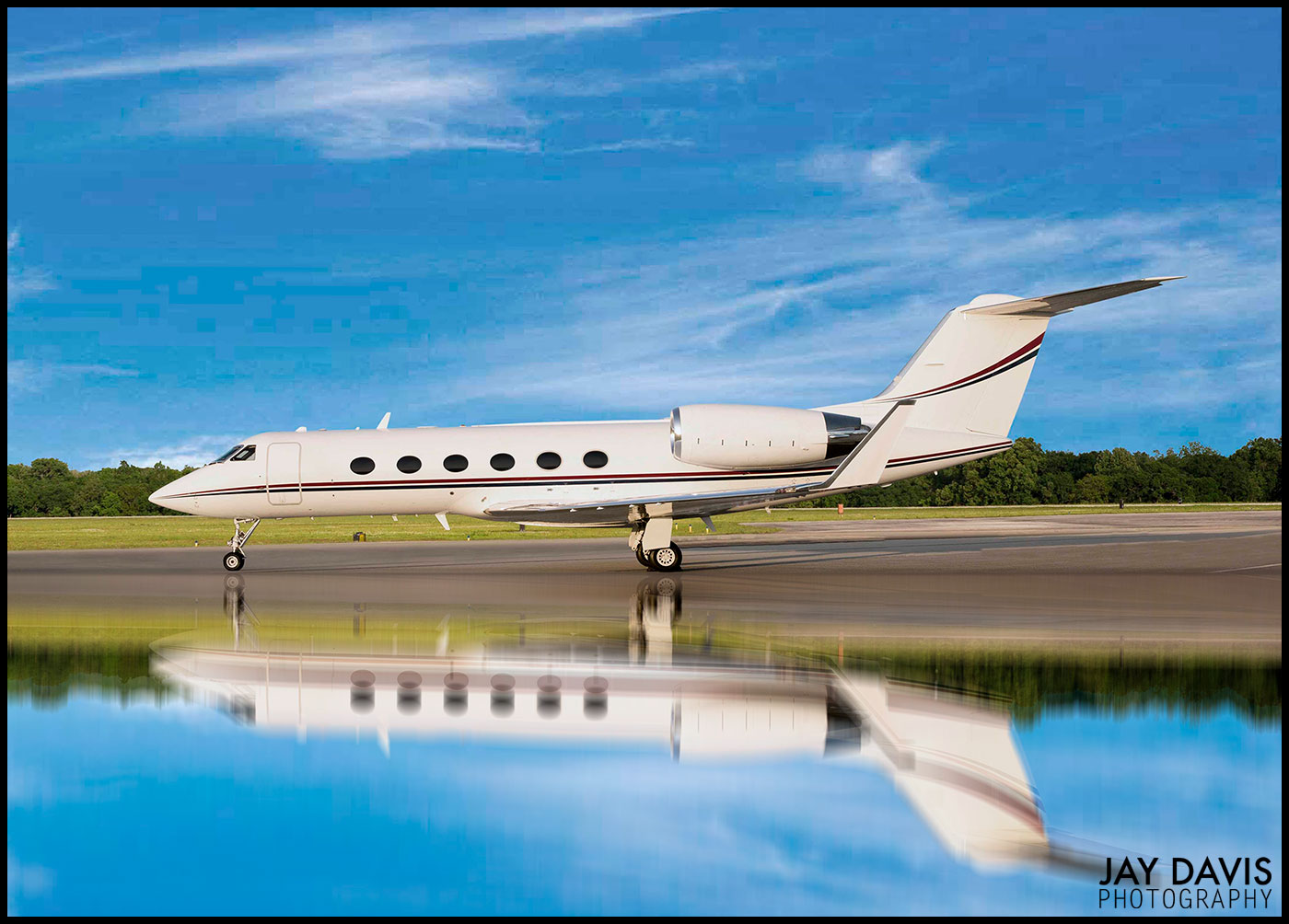
 Like the $4 million for his last mustang and a warehouse full of Merlins and other parts....he said "that's the price I'm asking, for the whole lot, take it or leave it, don't bother me with some low ball BS"