m.sommers00 wrote:
I have to wonder what the rationale was for this. Is the ISO performance of the D5 better than the Z9? Why D5 and not D6?!
Some article a few weeks ago said the D5 was apparently already approved to go on the mission and it was also better than the Z9 at handling radiation. Same article said Nikon was working on a modified Z9 to work better in space (or something to that effect). Also the D5 high-ISO performance really is still relevant.
m.sommers00 wrote:
I have to wonder what the rationale was for this. Is the ISO performance of the D5 better than the Z9? Why D5 and not D6?!
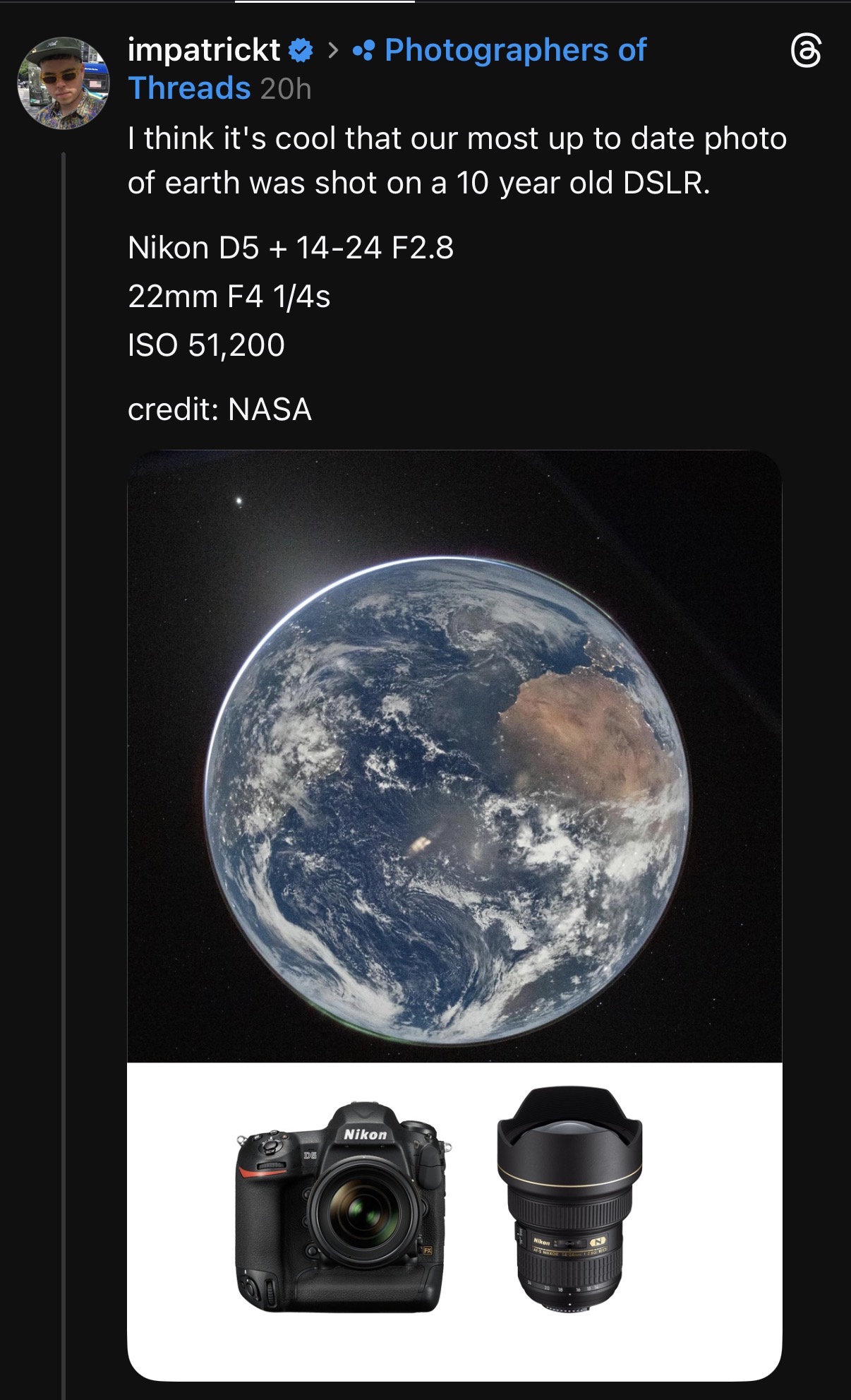
The D5 is certified for use in space as it was used in the ISS. Apparently they also have a Z9 on board for testing. But the ISO 51.200 image they shared wouldn’t have looked any better on the Z9, arguably a bit worse as the D5 has slightly cleaner high ISO.
Imo it’s a great showcase for Nikon gear - the good old 14-24mm f2.8 and D5 demonstrating their capabilities. And the photographer too, handholding 1/4s at 22mm without IBIS..
I would guess training and familiarity with it is a factor as well. I remember reading that NASA had purchased 100 (or was it 200?) D5 cameras for the space program shortly after the D5 came out. The brand selection goes back to Skylab days, when modified Nikon Fs were the go-to 35mm for the space program. Nothing wrong with a DSLR
GeofFX wrote:
I would guess training and familiarity with it is a factor as well. I remember reading that NASA had purchased 100 (or was it 200?) D5 cameras for the space program shortly after the D5 came out. The brand selection goes back to Skylab days, when modified Nikon Fs were the go-to 35mm for the space program. Nothing wrong with a DSLR
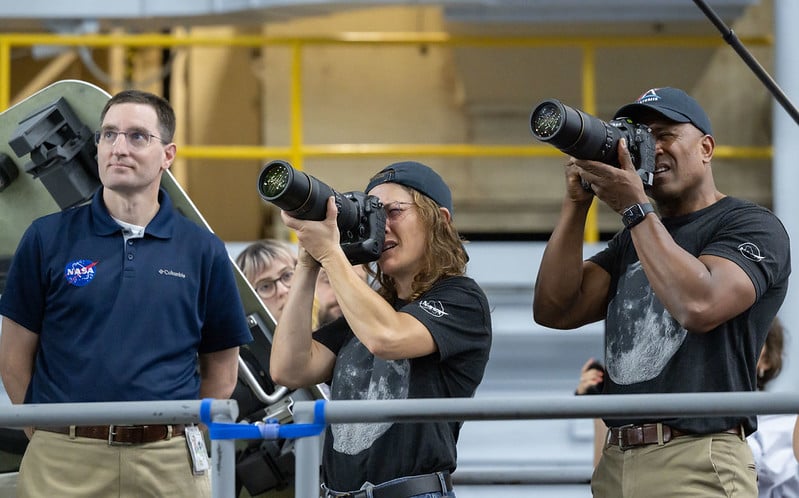
Correct, they were all extensively trained on the D5. Reed fought to get the Z9 on board for giggles, and because it's obviously the next gen camera that NASA will be using for the next decade plus.
The Nikon D5 remains the camera of choice for the Artemis II mission and will be assigned primary photographic duties. It is a proven, highly-tested camera that the Artemis II team knows will excel in the high-radiation environment of space. However, as Artemis II Commander Reid Wiseman explained ahead of yesterday’s launch, he successfully fought to have a single Nikon Z9 added to Artemis II’s manifest.
“That’s the camera that they’ll be using, the crew will be using on Artemis III plus, so we were fighting really hard to get that on the vehicle to test out in a high-radiation environment in deep space,” Wiseman said....Show more →
Alongside the single Nikon Z9, Wiseman and fellow Artemis II crew members, pilot Victor Glover and Mission Specialists Christina Koch and Jeremy Hansen, will be using a pair of Nikon D5 DSLRs, as initially planned.
“[The Nikon D5 is] great in low light and great for optical viewing of the lunar surface with our long lens, so lots of good photo/TV work,” Wiseman explained.
RoamingScott wrote:
I think the need for IBIS is largely obviated by zero gravity =)
Is it though? I've been considering it but the movement of your finger, slight shakes from holding the camera, the shutter and in this case also mirror slap, they all cause the camera to move, even more so in zero gravity. I could see how IBIS systems might not work as well in that environment because they rely on gravity to some degree, but the issue with handholding longer shutter speeds is just as real from what I can tell. Happy to be proven wrong if there's any reliable info on this..
Logically, it would require far less muscle exertion to lock the camera still in relation to yourself in zero gravity. The issue I can see is your entire body moving relative to the subject or cabin, unless you were foot-clamped in. Most of the effort in hand holding a large camera lens combination is counteracting the down forces of gravity and keeping your muscle contractions relatively in balance against those forces.
I have no idea if the internal gyroscope in a camera is functional in zero gravity.
fjablo wrote:
Is it though? I've been considering it but the movement of your finger, slight shakes from holding the camera, the shutter and in this case also mirror slap, they all cause the camera to move, even more so in zero gravity. I could see how IBIS systems might not work as well in that environment because they rely on gravity to some degree, but the issue with handholding longer shutter speeds is just as real from what I can tell. Happy to be proven wrong if there's any reliable info on this..
Indeed the D5 high ISO image quality is better than Z9. The difference between D6 and D5 is small though, but as the D5 is a bit slower it is a tiny bit less noisy.
Most likely the main reason they are using the D5 is because it has been tested more in space. But of course it is a high ISO optimized camera and the Z9 is a versatile all-rounder.
m.sommers00 wrote:
I have to wonder what the rationale was for this. Is the ISO performance of the D5 better than the Z9? Why D5 and not D6?!
I’m watching live coverage of the lunar flyby. It’s interesting to hear how much preparation is going into deciding how to get their shots. What to use the Z9 for, focal lengths, which windows for what, using a t-shirt as a shroud, and even which part of each window to shoot through.
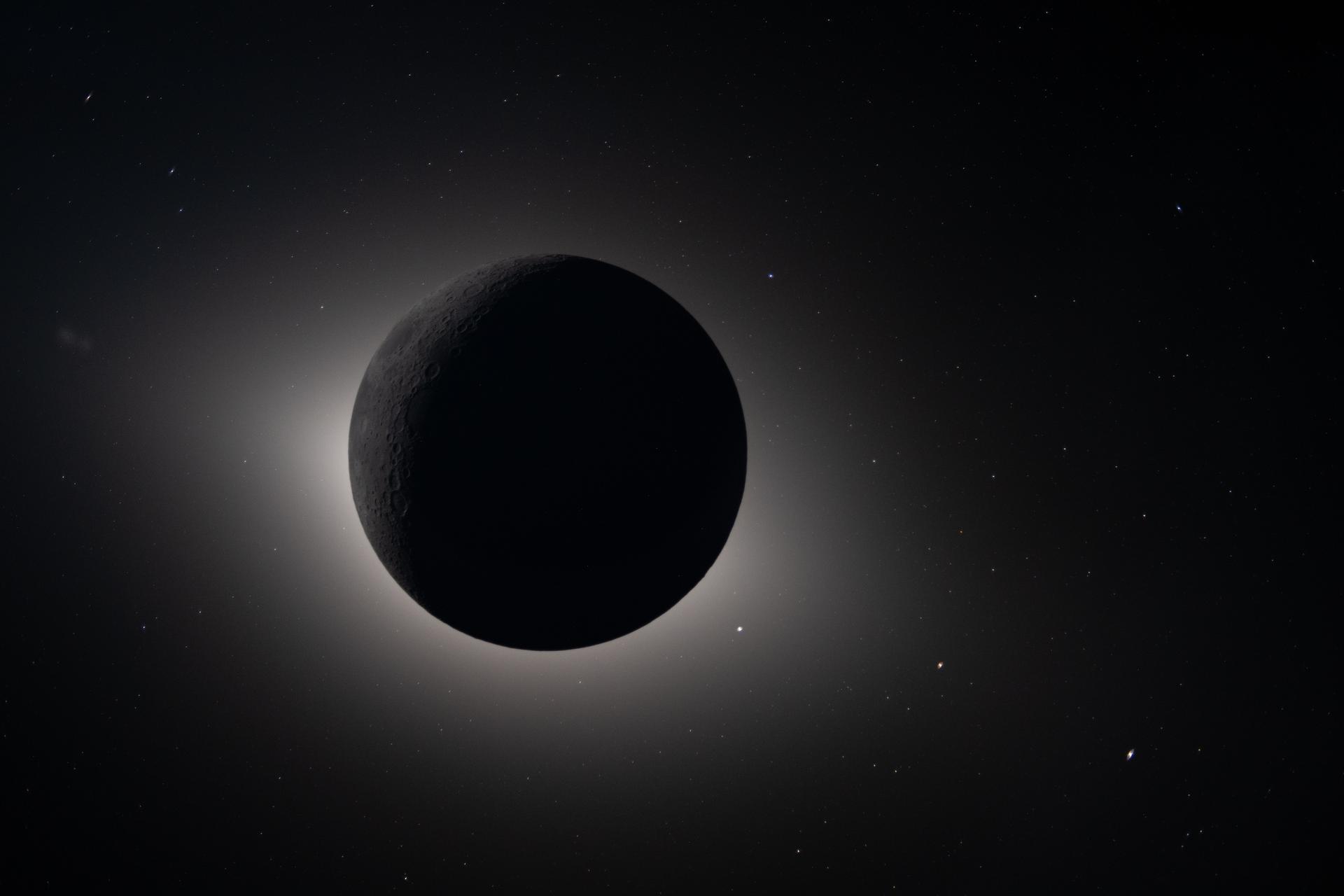
Wow, I just realised my favorite image taken by the Artemis II crew so far (the one below) was taken with the AF-D 35mm f2 (!) And at f/20, too, who cares about diffraction?
The new "earthset" image, taken with the D5 and 80-400mm at 400mm f/8 and 1/1000s. But if you zoom in, it's actually a bit blurry. Probably from the movement of the Orion capsule.