jaygould wrote:
SA is supposed to be a bad thing? I really like having a lot of SA. It makes for beautiful rendering. One of my favorite lenses on the E mount is the Sigma 45mm f2.8. If this Canon renders similarly, then that's great. And this lens is even cheaper than the Sigma, while being several stops faster too.
Can you provide an example of where it's being used effectively?
I understand sphere = circular ball and aberration = deviation / error. But I'm not entire sure how to pick out what you're referencing from a photo and how to utilize that characteristic for enhancing an image.
rscheffler wrote:
This is likely explained by focus shift, which Bryan stated in his review is strongest at f/2.8, combined with field curvature.
These chart tests are done at quite close focusing distances and most lenses are designed/optimized for infinity. When you consider this and combine it with the 45's relatively high spherical aberration at wider apertures, you get a lens that is softer at closer distances. Additionally, if the camera was focusing wide open for all taking aperture values (which I believe Canon R cameras do unless it's very bright), you get focus shift that is noticeable in a certain aperture range somewhat stopped down.
Another potential factor is field curvature. I don't see this discussed very often on the Canon board, but it's certainly a possible explanation for why sharpness across the image is uneven. Field curvature is another characteristic that can change depending on focus distance. And again, with the relatively near focusing distance for the test chart images, it's arguable that field curvature may have worsened compared to infinity. By the look of it from the test photos, if the center is soft due to focus shift (which in these cases always shifts focus behind the intended point of focus) and the midfield is sharp, field curvature is bending towards the camera as one moves towards the image periphery. One could argue that this actually may be an intentional 'feature' by Canon's designers because this type of field curvature will result in stronger background blur towards the image periphery. And considering that this lens is likely aimed at half-length and closer people photography, it will help enhance subject to background separation at wide apertures. If there has to be field curvature, then IMO this is the better direction of curvature. If it bent away from the camera towards the edges, you would see a reduction in background separation. There can be compositions where the effect is strong enough that it causes noticeable reduction in background blur towards the corners, to the point where corners look in focus whereas the central background area is well defocused. This was actually demonstrated a while back in a RF 35/1.4L thread where this effect was clearly noticeable. And IMO makes the RF 35/1.4L somewhat less desirable.
Given that a lot of people photos with this lens will probably be single person half-length and closer, with use of face/eye detection focus, the point of focus will be where the photographer intends it and whatever field curvature is present, will likely be unnoticeable when the subject is separated from the background.
From a technical perspective, none of this is desirable if one is pursuing high optical performance. But given these 'defects' exist, it also presents an opportunity to exploit them for creative effect. Understanding how this lens behaves across a range of camera to subject to background distances and at different aperture values will be more important for best exploiting these weaknesses. In this respect, I could see this being a fun lens due to the challenges this presents when compared to a predictable, well corrected, well behaved lens that offers no surprises....Show more →
Thank you for the through and detailed reply. I'm going to have to re-read this a few times to fully digest what you are saying.
Funny enough for me I actually understand FC better than SA because of the lensrental's blog articles Roger used to do.
That's what made be think of how he talked about adjusting focus manually to take advantage of the characteristic, but your explanation adds an additional nuance I don't recall about how it affects background separation. It definitely brings back some interesting conversations about how to make the most out of what you have, versus just having a lens that is optically superior.
bman212121 wrote:
Can you provide an example of where it's being used effectively?
I understand sphere = circular ball and aberration = deviation / error. But I'm not entire sure how to pick out what you're referencing from a photo and how to utilize that characteristic for enhancing an image.
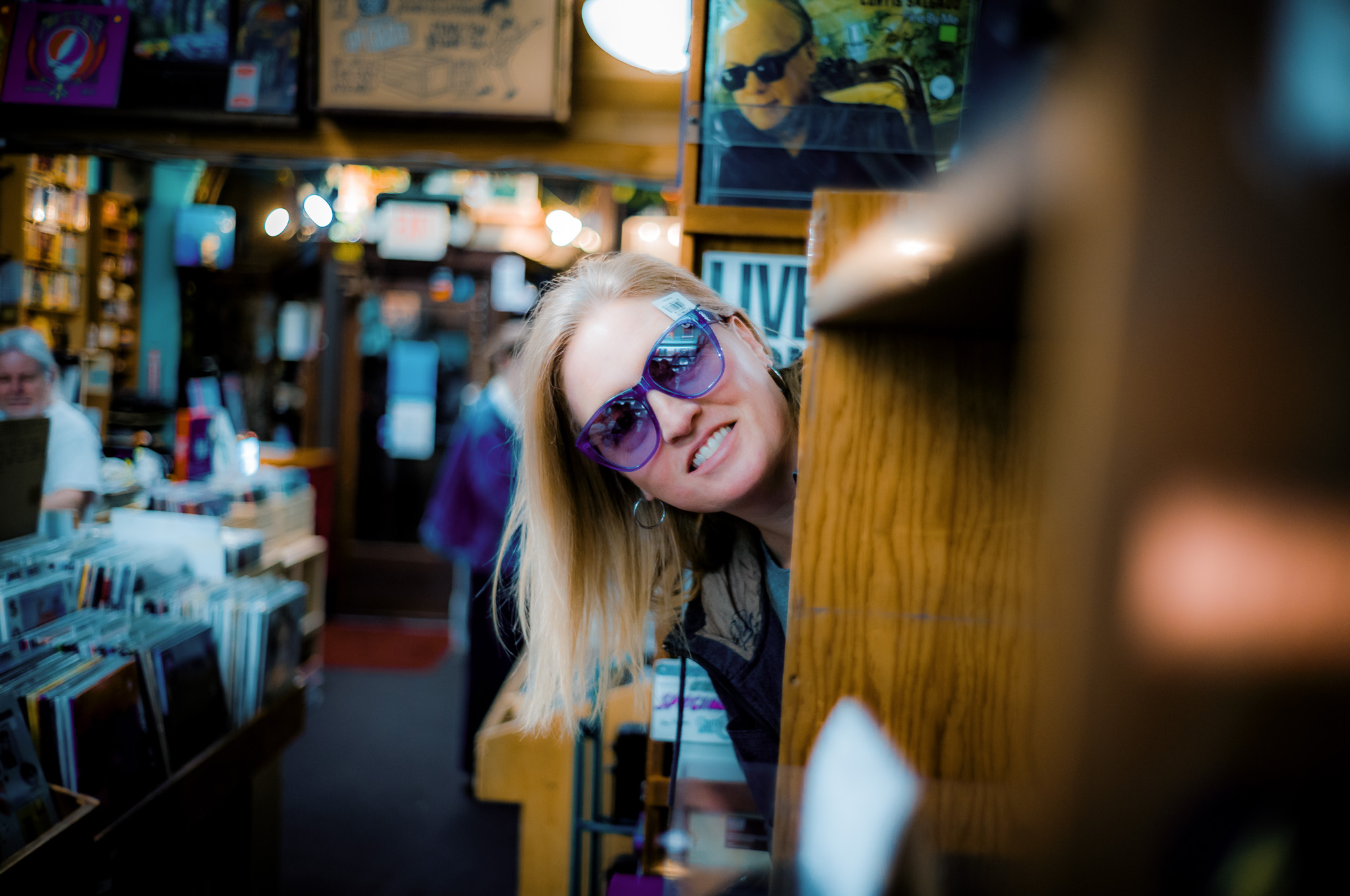
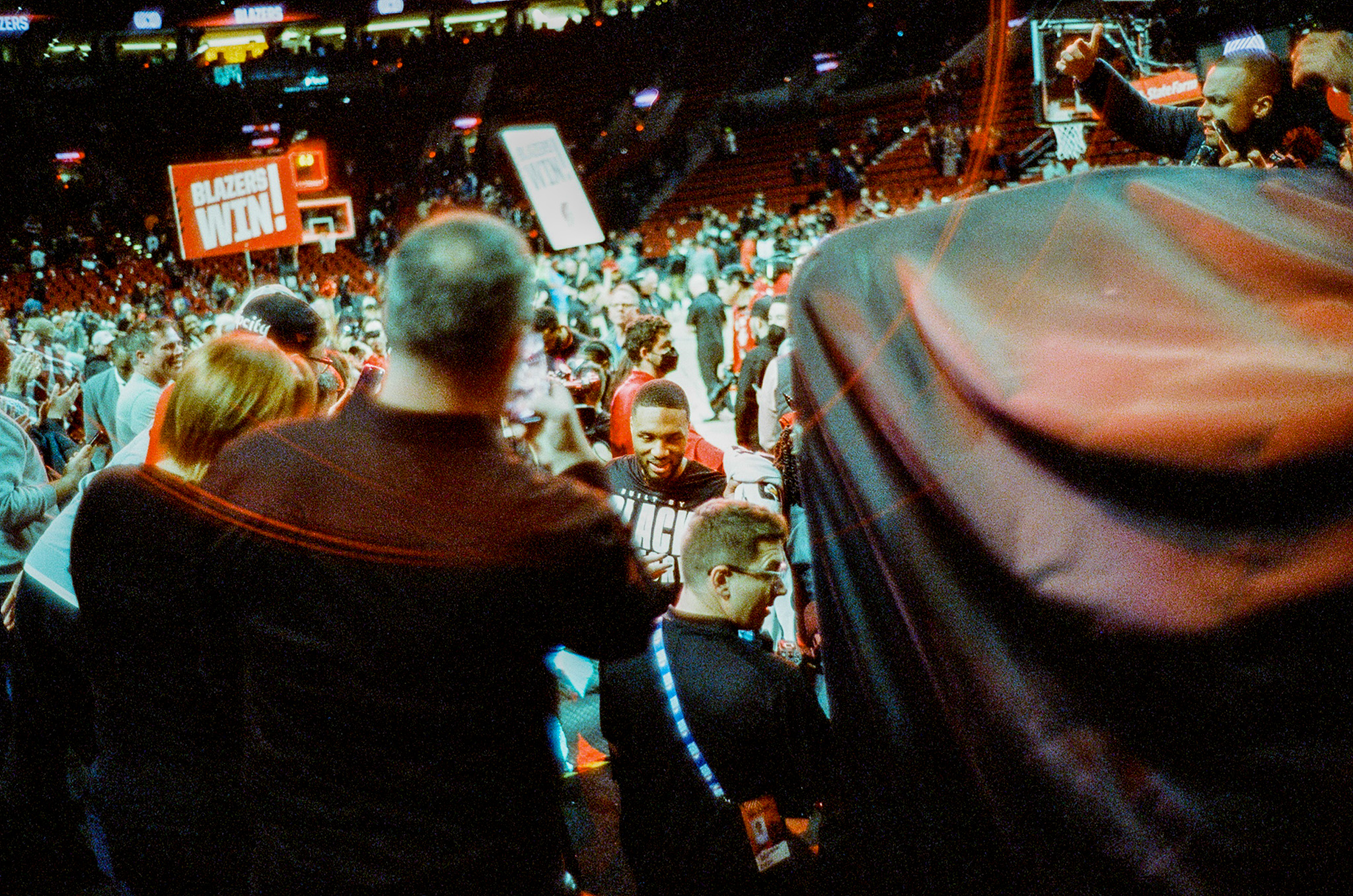
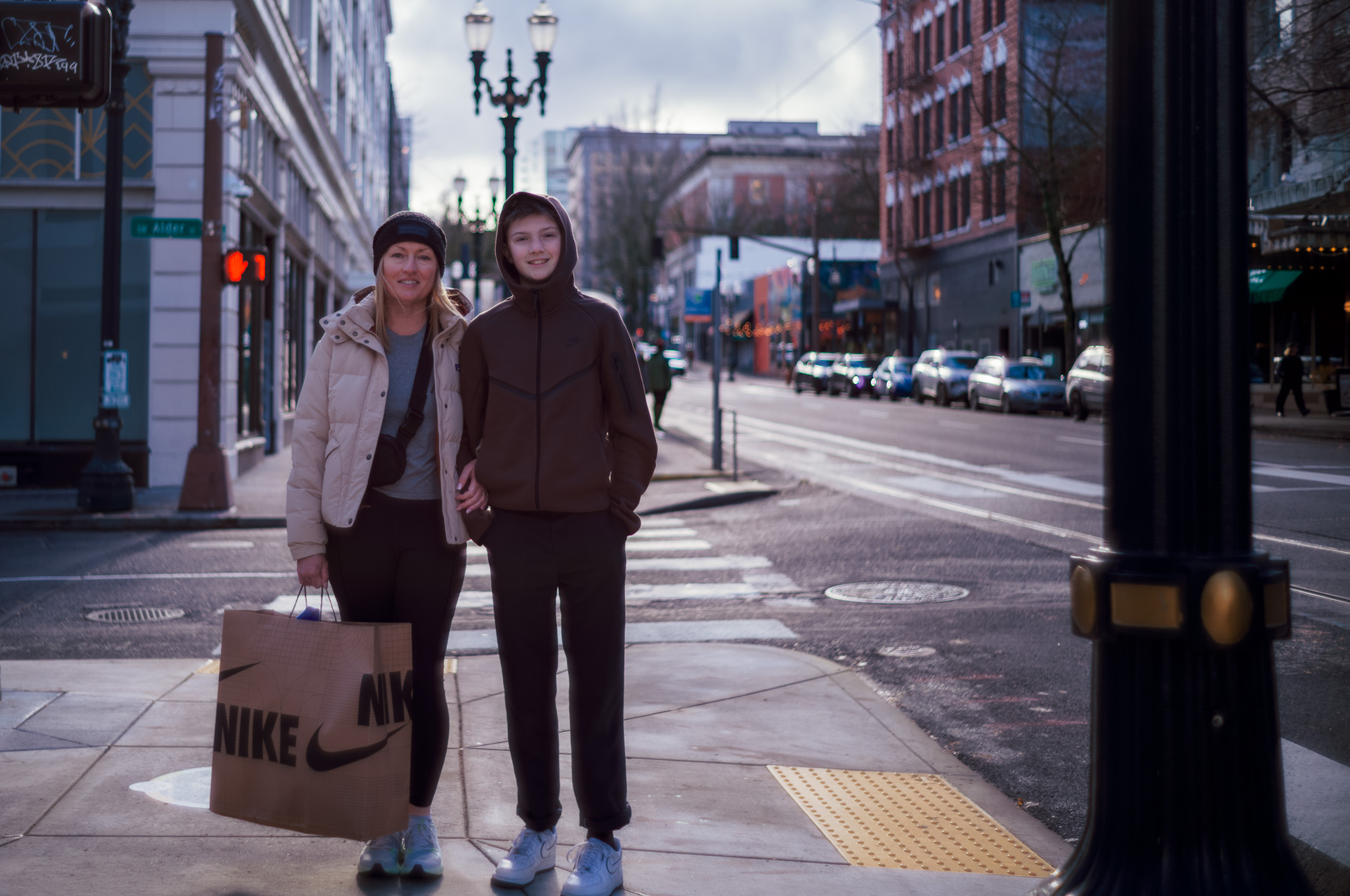
Here is an example- I have a bunch if you would like to see more. This is the first image I grabbed in Lightrrom.
I think its a great feature of a lens at times-
Leica Steel Rim
One Digital One on Film- Film is Cinestill 800T- Lillard drop 71 that night-
LEICA M11-PSummilux-M 1:1.4/35 lens35mmf/1.71/160s1600 ISO0.0 EV
I will ask the silly question, can you explain what in the photo was effected by SA and how it differs from a lens with less aberration? (I don't know what I'm looking for)
EDIT: I'll give my best guess as you're referring to things like the outline on all of the album covers on the first photo, where there is a separation of the edges which make them seem thicker and more pronounced.
EDIT2: This definition makes the most sense to me:
Spherical aberration occurs when the outer part of the lens fails to bring the light into the same focus as the central part. Therefore, the photo is undefined and lacks contour.
Light rays that enter the lens horizontally are not as refracted as those nearer the lens periphery, so they end up in different spots on the optical axis. This results in disbalance.
In other words, it’s when the object in the picture doesn’t have sharp edges, and the image is blurred. That happens frequently among photographers and people taking pictures with their phones.
So the long / short is soft edges caused by rays of light that don't meet in the same place. This is different than chromatic aberration because in chroma or color it's when different color wavelengths don't meet at the same place. Chromatic aberration can still be sharp if SA is low because all of say the red wavelengths across the lens are still coming in at the same place, just a different one from say the green wavelengths.
I would say I've heard of image blurring in the same way as the "vaseline" filter in video games. It's interesting that it's called "creamy" in photography. So it really depends on who you ask if they like the effect or not.
I haven't read through all the pages but are there any links to sample portrait images taken with this new 45mm f/1.2 lens?
Considering most of the youth today prefers imperfection and "character", Canon might have hit it out of the park with this little inexpensive lens. An inexpensive entry into portrait photography, especially street photography at night.
artsupreme wrote:
I haven't read through all the pages but are there any links to sample portrait images taken with this new 45mm f/1.2 lens?
Considering most of the youth today prefers imperfection and "character", Canon might have hit it out of the park with this little inexpensive lens. An inexpensive entry into portrait photography, especially street photography at night.
I am intrested in it-
Nikon has done an amazing job creating its 1.4 line of primes that have a vintage character to them- Love Canon is seemingly doing this as well-
bman212121 wrote:
Can you provide an example of where it's being used effectively?
I understand sphere = circular ball and aberration = deviation / error. But I'm not entire sure how to pick out what you're referencing from a photo and how to utilize that characteristic for enhancing an image.
There are some bokeh comparisons with other lenses. Sigma decided to under-correct spherical aberrations, so that the bokeh would look creamier.
“Leica glow” is another term you can look up that refers to under corrected spherical aberration. Basically not all of the light rays focus at the same point and result in a hazy, dreamy kind of a look. The SA masks fine details, resulting in a kind of soft but sharp look. It also can result in smooth bokeh but there are a lot of high SA lenses with energetic background bokeh, such as the vintage Zeiss Sonnar types. The bokeh generally calms down by stopping down a little. This will also boost contrast by reducing SA. In this way you can tune the look of the lens to taste.
rscheffler wrote:
If there has to be field curvature, then IMO this is the better direction of curvature. If it bent away from the camera towards the edges, you would see a reduction in background separation. There can be compositions where the effect is strong enough that it causes noticeable reduction in background blur towards the corners, to the point where corners look in focus whereas the central background area is well defocused. This was actually demonstrated a while back in a RF 35/1.4L thread where this effect was clearly noticeable. And IMO makes the RF 35/1.4L somewhat less desirable.
Except that the RF 35/1.4 VCM is well corrected for field curvature. For that lens the effect is due to optical vignetting, which is also responsible for the cat's eye effect and swirly bokeh. Most lenses have this to some extent.
I guess this is for those times when you can't come up with a compelling composition or capture dramatic lighting - you can fall back on flawed "lens character" or one of those grotesque "film recipes" to try to make your work interesting.
bman212121 wrote:
I will ask the silly question, can you explain what in the photo was effected by SA and how it differs from a lens with less aberration? (I don't know what I'm looking for)
EDIT: I'll give my best guess as you're referring to things like the outline on all of the album covers on the first photo, where there is a separation of the edges which make them seem thicker and more pronounced.
EDIT2: This definition makes the most sense to me:
So the long / short is soft edges caused by rays of light that don't meet in the same place. This is different than chromatic aberration because in chroma or color it's when different color wavelengths don't meet at the same place. Chromatic aberration can still be sharp if SA is low because all of say the red wavelengths across the lens are still coming in at the same place, just a different one from say the green wavelengths.
I would say I've heard of image blurring in the same way as the "vaseline" filter in video games. It's interesting that it's called "creamy" in photography. So it really depends on who you ask if they like the effect or not....Show more →
I didn't post the best examples but on the female, there is a glow around here. That is SA in an extreme case-
Here is another- Not posting this for its artistic qualities but more so in an extrem case where the SA really showed on this lens-
The next is a picture I like that still shows SA but in a much subtle form-
Hope this helps-
Cheers
LEICA M11Summilux-M 1:1.4/35 lens35mmf/1.71/160s200 ISO-1.0 EV
LEICA M11-PSummilux-M 1:1.4/35 lens35mmf/1.71/1250s64 ISO0.0 EV
Cliff L. wrote:
I guess this is for those times when you can't come up with a compelling composition or capture dramatic lighting - you can fall back on flawed "lens character" or one of those grotesque "film recipes" to try to make your work interesting.
IlyaSnopchenko wrote:
More like, didn't bother to bring it up a notch or two by adding corrective elements (which would've resulted in a more expensive lens that would also be cannibalizing some of the RF 50mm f/1.2L sales, and I guess they want to avoid that at all costs).
I guess this can be called the Cripple hammer of inaction.
I wouldn't be so harsh. The RF 45 / 1.2 STM is certainly not for me, but I imagine that it will appeal to a huge number of people, if only because it is f/1.2 on the cheap.
If you want something smaller, lighter, and less expensive than the RF 50 / 1.2L, but without skimping on IQ, then there's the RF 50 / 1.4L VCM, which I have, and am more than satisfied with (aside from the fact that I'd prefer color fringing had been more controlled, but in terms of sharpness and bokeh, 10/10).
However, for sure there's room for something between the 45 / 1.2 STM and RF 50 / 1.4L VCM, but that field is now a bit crowded. I'd prefer Canon handle that gap by allowing third party, but you, me, and everyone else knows they won't.
Cliff L. wrote:
I guess this is for those times when you can't come up with a compelling composition or capture dramatic lighting - you can fall back on flawed "lens character" or one of those grotesque "film recipes" to try to make your work interesting.
And it's an f/1.2 lens to boot, so just shoot everything wide open because the ultra shallow depth of field look is obviously the best for every situation.
Perhaps this is another one of Canon's 'anti-smartphone-photography' attempts to woo noobie 'creators' (gaah) with cheap fast lenses that counteract the infinite depth of field rendering of phone cameras without use of fake computational background bokeh/blur.
I'm surprised no one has yet used the term 'cinematic' to describe how this lens renders.